Unit 2 Morals and Virtues Discovering Useful Structures 课件-2025-2026学年高一英语人教版必修第三册
2026-05-11
|
40页
|
1561人阅读
|
2人下载
普通
资源信息
| 学段 | 高中 |
|---|---|
| 学科 | 英语 |
| 教材版本 | 高中英语人教版必修第三册 |
| 年级 | 高一 |
| 章节 | Discovering Useful Structures |
| 类型 | 课件 |
| 知识点 | - |
| 使用场景 | 同步教学-新授课 |
| 学年 | 2026-2027 |
| 地区(省份) | 全国 |
| 地区(市) | - |
| 地区(区县) | - |
| 文件格式 | PPTX |
| 文件大小 | 6.30 MB |
| 发布时间 | 2026-05-11 |
| 更新时间 | 2026-05-11 |
| 作者 | 小胡 |
| 品牌系列 | - |
| 审核时间 | 2026-05-11 |
| 下载链接 | https://m.zxxk.com/soft/57804214.html |
| 价格 | 2.00储值(1储值=1元) |
| 来源 | 学科网 |
内容正文:
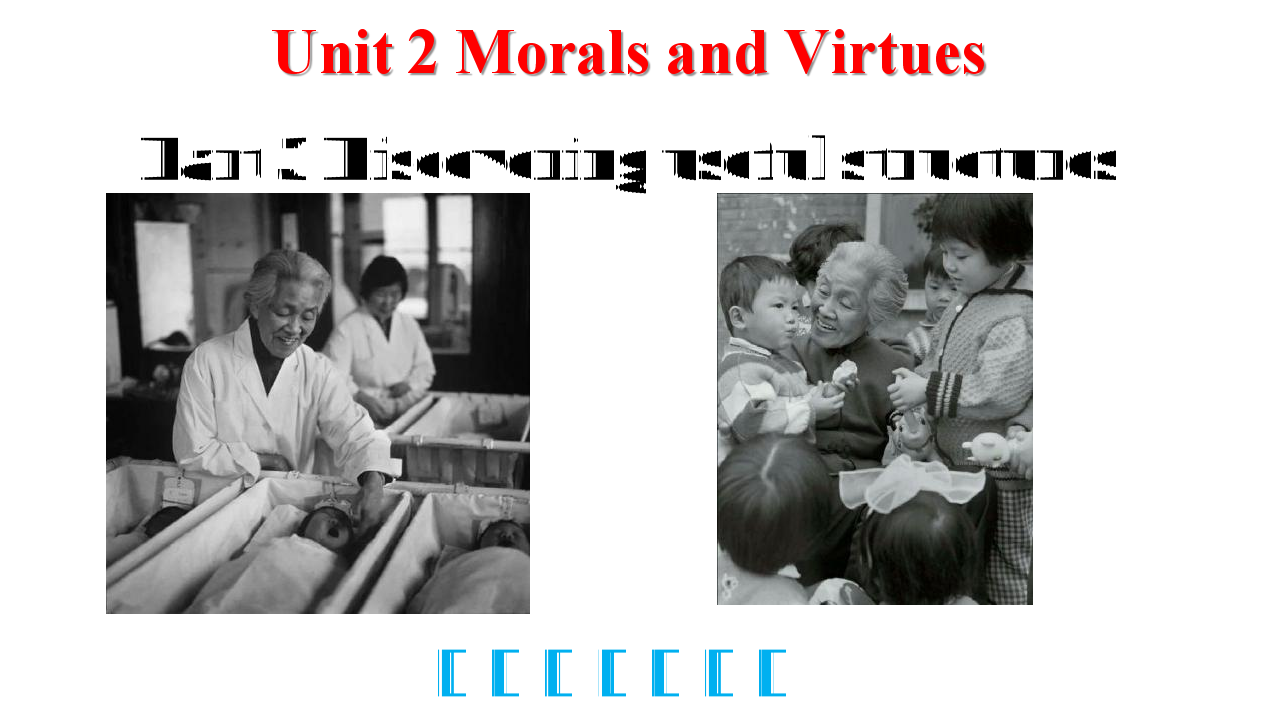
Unit 2 Morals and Virtues
Part 3 Discovering useful structures
高一英语备课组
1.道德困境 moral dilemma
2.做选择 make choices/make a choice
3.陷入困境;遇到麻烦 get/run into trouble
4.渴望做某事 (be) eager to do sth
5.与某人分享某物/事 share sth with sb
6.一直;始终 all the time
7.不同意 disagree with
8.听见某人/某物正在做某事 hear sb/sth doing sth
9.对······感到困惑 (be)confused about
10.对某事有把握 (be) sure about/of sth
导:激情朗读+铺路架桥 (课前三分钟+默写+互批+登分+小组评价)
1.道德困境 moral dilemma
2.做选择 make choices/make a choice
3.陷入困境;遇到麻烦 get/run into trouble
4.渴望做某事 (be) eager to do sth
5.与某人分享某物/事 share sth with sb
6.一直;始终 all the time
7.不同意 disagree with
8.听见某人/某物正在做某事 hear sb/sth doing sth
9.对······感到困惑 (be)confused about
10.对某事有把握 (be) sure about/of sth
导:激情朗读+铺路架桥 (课前三分钟+默写+互批+登分+小组评价)
单词
1.道德困境 moral dilemma
2.做选择 make choices/make a choice
3.陷入困境;遇到麻烦 get/run into trouble
4.渴望做某事 (be) eager to do sth
5.与某人分享某物/事 share sth with sb
6.一直;始终 all the time
7.不同意 disagree with
8.听见某人/某物正在做某事 hear sb/sth doing sth
9.对······感到困惑 (be)confused about
10.对某事有把握 (be) sure about/of sth
导:激情朗读+铺路架桥 (课前三分钟+默写+互批+登分+小组评价)
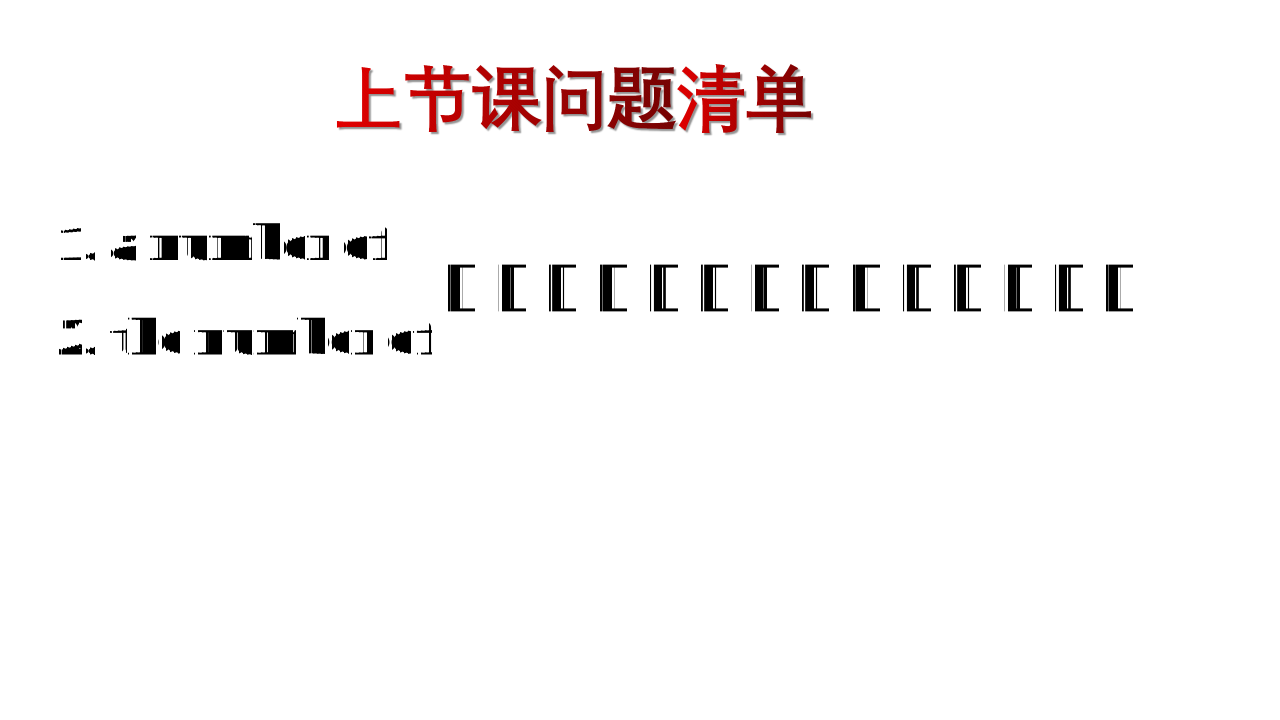
上节课问题清单
1. a number of
2. the number of
加名词做主语谓语单复数的确定
5
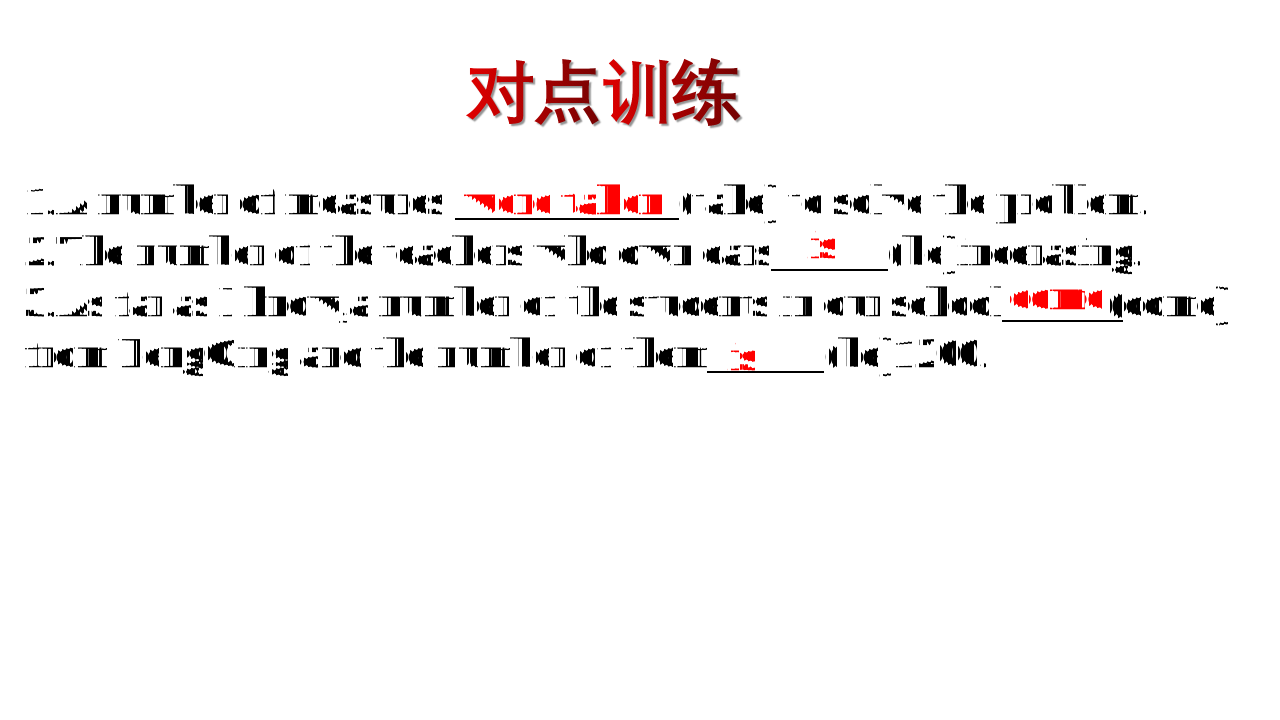
对点训练
1.A number of measures (take) to solve the problem.
2.The number of the teachers who own cars (be)incerasing.
3.As far as I know,a number of the students in our school (come) from FengQing and the number of them (be)1200.
were taken
is
come
is
6
学习目标
1.通过学习,我们要掌握V-ing形式在句子中作状语或宾语补语的用法。
2.通过学习与训练,我们要将所学知识运用到练习中,尤其是写作和语法填空。
7
V-ing形式在句中作状语和宾补
一个好人一生最好的部分,是他细小的、无名的、不被人记得的出于善良和爱的行为。
good traditional morals
and virtues
导
名言赏析
不定式 to do
过去分词 v-ed
动名词 v-ing
现在分词 v-ing
非谓语动词
1
2
3
4
动词
v-ing
动词-ing
导
知识点归纳,学生做好笔记
点击添加相关标题文字
ADD RELATED TITLE WORDS
动词 -ing
V-ing 形式由 “do+ing” 构成, 其否定形式是 “not doing”, V-ing 可以带宾语或状语构成 V-ing 短语, 没有人称和数的变化, 但有时态和语态的变化。
语态
时态 主动语态 被动语态
一般式
完成式
(not) doing
(not) being done
(not) having done
(not) having been done
doing的一般式和完成式
导
知识点归纳,学生做好笔记
1. Climbing mountains is dangerous.
主语
2. My broyher always loves playing basketball after school.
宾语
3. His hobby is playing games.
表语
观察下面句子并分析画线部分在句中所作的成分
思+议
观察、思考、讨论
12
5. Looking down at her phone as she walked, she hit the door.
定语
4. The lady doing the live broadcast is called Qiao Biluo.
正在做直播的这位女士名叫乔碧萝。
状语
6. The head teacher saw Li Ming playing with smart phone in the classroom.
宾语补足语
定语
状语
思+议
观察、思考、讨论
13
Focus on
基本用法
the –ing form used
as adverbial
1) Hearing the bell, the students rushed to the school canteen.
2) Not knowing the answer to this question , he turned to his deskmate.
3) The two girls stood there for half an hour talking about the boys who were playing basketball.
4) The COVID-19 broke out throughout the world,
causing hundreds of thousands of deaths.
5) Working harder, you will make some progress.
读句子,思考以下问题:
①. V-ing 作状语可以表示哪些情况?
②. V-ing 作状语应注意什么?
思+议
观察、思考、讨论
动词-ing形式是非谓语动词的一种,兼有动词和形容词的特征,在句中可作表语,定语,宾语补足语和状语,一般表示进行或主动的意思。
动词-ing形式用作状语时,其逻辑主语必须与句子的主语一致,动词-ing形式所表示的动作和句子的主语是主动关系。
动词-ing形式在句中可以作时间、原因、条件、让步、方式、伴随和结果状语。
动词-ing形式作状语
思+议
教师带领学生归纳,学生整理好笔记
16
现在分词作时间状语时,相当于时间状语从句。可在现在分词前加连词“when, while, until”等,使其时间
意义更明确。
Walking in the park,she saw an old friend.
=When/while(she was)walking in the park,she saw an old friend. 当她在公园里散步时,她看到了她的一个老朋友。
v-ing形式作时间状语
思+议
教师带领学生归纳,学生整理好笔记
e.g. Seeing the police, he made a run for the exit.
一看到警察,他就朝出口奔去。
分析:see的动作是由其逻辑主语“he”发出,与句子的主语he一致,且构成主动关系,所以用动词-ing形式。
将下面的时间状语从句改写成简单句。
When he walked out of the room, he saw a dog.
Walking out of the room, he saw a dog.
1. 作时间状语
思+议
观察、归纳、仿写
现在分词作原因状语时,可转换为由since, because或as引导的原因状语从句,这类状语多放在句子的前半部分。
Being ill,he couldn't go to school.
=As he was ill,he couldn't go to school.
v-ing形式作原因状语
思+议
观察、归纳、仿写
e.g. Being ill, he didn’t go to school yesterday.
因为生病了,他昨天没有上学。
分析: He is ill是He didn’t go to school的原因。be的逻辑主语和句子主语是一致, 主动关系。
Not knowing the way, he got lost.
翻译句子:由于不认路,他迷路了。
As he ____________________, he got lost.
didn’t know the way
动词-ing形式的否定式是在其前面加not。
2. 作原因状语
思+议
观察、归纳、仿写
现在分词作条件状语时,可转换为if, once或unless等引导的条件状语从句。
Working hard,you'll make great progress.
=If you work hard,you'll make great progress.
v-ing形式作条件状语
思+议
观察、归纳、仿写
e.g. Turning to the left, you will see a school.
向左转你就会看到一所学校。
If we ___________ , we will succeed.
翻译句子:努力学习, 我们就会成功。
Studying hard , we will succeed.
study hard
3. 作条件状语
思+议
观察、归纳、仿写
现在分词作让步状语时,相当于一个以though/although引导的让步状语从句。
Working or reading,she always did her best.
=Whether she worked or read,she always did her best.
v-ing形式作让步状语
思+议
观察、归纳、仿写
e.g. Granting this to be true, we cannot explain it.
虽然我们承认这是事实,却无法予以说明。
Knowing it is difficult, I don’t give up.
翻译句子:
虽然知道它很难,我也不放弃。
Although I _________________, I don’t give up.
know it is difficult
4. 作让步状语
思+议
观察、归纳、仿写
现在分词作方式,结果或伴随状语时,通常不能转换为状语从句,但可用并列分句代替。
I stood by the door,not daring to say a word.
=I stood by the door,and didn’t dare to say a word.
His parents died,leaving him an orphan.
=His parents died and left him an orphan.
v-ing形式作方式/结果状语
思+议
观察、归纳、仿写
e.g. You gave me such a fright creeping up on me like that!
你那样不声不响地从后面过来,吓我一跳!
用动词-ing形式作状语的结构翻译下列句子。
1) 请你用另一种方式回答问题。
2) 她跑进屋里来。
Please answer the question using another way.
She came running into the room.
5. 作方式状语
思+议
观察、归纳、仿写
e.g. The child fell, striking his head against the door and cutting it. 那孩子跌倒了,头碰在门上磕破了。
He went abroad, leaving his uncle a big house.
翻译句子:
他出国了,留给他叔叔一间大房子。
He went abroad and ________his uncle a big house.
left
作结果状语
思+议
观察、归纳、仿写
1. Having finished his homework, he rushed out to play basketball.
2.Not having studied his lessons very hard, he
failed the test.
当--ing表示的动作发生在谓语动词之前时,应使用完成式: having done.
思+议
观察、归纳、仿写
判断下列句子是否正确。
Entering the room, I found the wall newly-painted.
Entering the room, the first thing that met eyes was the newly-painted wall.
Being very busy, the film tickets were given to others.
Being very busy, I could not afford the time to go to the cinema.
Running after each other in the street, the two boys were knocking down by a bike.
Running after each other in the street, a bike knocked down the two boys.
T
F
F
T
T
F
议+展+评
学生自行完成,上台讲解
用-ing做状语翻译句子:
他在大街上散步到时候遇到了刘萍。
Walking along the street, he met LiuPing.
由于不知道如何做,他向老师求助。
Not knowing how to do it, he asked the teacher for help.
你能用身体语言同别人交流吗?
Can you communicate with others using body language?
向右转,你就会找到那家医院。
Turning to the right, you will find the hospital.
飓风刮到了大批房屋,使得成千上万的人无家可归。
The hurricane brought down a great number of houses, making thousands of people homeless.
议+展+评
学生自行完成,上台讲解
1. _______(hear) the news, they couldn’t help jumping.
2.Be careful when___________(cross)the street.
3.__________________(work) for three hours, he took a rest.
4.___________(use) your head, you’ll have a good idea.
5.___________(work) hard, he didn’t feel a bit tired.
6. The heavy rain lasted three days,__________(result) in serious traffic jams.
7.The girl came in,_________(follow) her parents.
8.________(walk) in the park, she saw an old friend.
9.Mary sat by the window of the classroom,_________(read) a book.
10._______________(finish) his homework, Tom listened to music.
对点训练
Hearing
crossing
Having worked
Using
Working
resulting
followling
Walking
reading
Having finished
Focus on
基本用法
the –ing form used
as object complement
观察归纳:
动词-ing形式作宾语补足语常放在宾语后面, 对宾语进行补充说明表示一个____________________的动作, 强调一个过程或一种状态。
正在进行的主动性
1. 读句子,思考V-ing 作宾语补足语的作用是什么?
1) When we returned to the school, we found a
stranger standing at the entrance.
2) The boss kept the workers working the whole night.
思+议
观察、归纳、仿写
2.接-ing形式作宾补的几类动词:
①感官动词 see, hear, feel, smell, notice, observe, look at, listen to等。
1. We saw a light burning in the window.
2. I felt someone patting me on the back.
3. Can you smell anything burning?
4. Listen to the birds singing.
思+议
观察、归纳、仿写
②使役动词:have, set, keep, get, catch, leave等.
1. I won't have you doing that.
2. This set me thinking.
3. I'm sorry to have kept you waiting.
4. I can't get the clock going again.
2.接-ing形式作宾补的几类动词:
思+议
观察、归纳、仿写
③ 在 with的复合结构中
1. I couldn’t do my homework with the noise going on outside.
2. With so many people looking at her, she felt nervous.
观察、归纳、复述、仿写
思+议
1.We passed by the classroom and saw the teacher__________(make) the experiment.
2.When I came in, I saw Dr. Li _____________(examine) a patient.
3.At the airport, a man dressed in a black suit was caught _______ (spit) on the clean floor.
4.Sitting by her side, I could feel her heart__________(beat).
5.Don’t leave her ________(wait)outside in the rain.
6.The film star walked towards his car, with a crowd of journalists _________ (follow) close behind.
7.With the boy __________ (lead) the way, the soldiers managed to walk through the forest.
8. The couple often take a walk after supper in the park with their pet dog___________(follow) them.
making
examining
spitting
waiting
following
对点训练
beating
leading
following
summary
现在分词作
状语和宾补
作状语
作宾补
定义
现在分词作状语用法
现在分词与过去分词作定语的区别
定义
易错点
使用宾补的情况
课堂小结:师生共同归纳,学生做好笔记
1. All customers _________ (travel) on TransLink services must be in _________ (possess) of a valid ticket before boarding.
2. In fact, anyone _________ (wish) to try race walking should probably first consult a coach or ___________ (experience) racer _________ (learn) proper technique.
3. One of his latest projects has been to make plants grow in experiments _________(use) some common vegetables.
travelling
possession
experienced
wishing
to learn
高考链接
using
当堂检测
操作策略:学生5mins内完成,写上解析
39
4. Nervously _________ (face) challenges, I know I will whisper to myself the two simple words “Be yourself”.
5. _______________ (work) for two days, Steve managed to finish his report on schedule.
6. All the football players on the playground cheered loudly, _____ (say) that I had a talent _________ football.
7. _________ (turn) around, we saw an old woman _________; (walk) towards the river.
高考链接
facing
Having worked
saying
for
Turning
walking
当堂检测
操作策略:学生5mins内完成,写上解析
40
$
资源预览图
1
2
3
4
5
6
相关资源
由于学科网是一个信息分享及获取的平台,不确保部分用户上传资料的 来源及知识产权归属。如您发现相关资料侵犯您的合法权益,请联系学科网,我们核实后将及时进行处理。