5月第三次月考复习之单元语法综合练(Units 5-6)-2025-2026学年七年级英语下学期单元重难点易错题精练(译林版)
2026-05-08
|
2份
|
21页
|
436人阅读
|
14人下载

摘要:
**基本信息**
本试卷为初中英语Units 5-6单元语法综合练(月考复习用),含60道选择题,聚焦情态动词(can/could/may)、形容词用法、不定代词及感叹句,通过真实语境巩固核心语法,适配语言能力与思维品质培养。
**题型特征**
|题型|题量/分值|知识覆盖|命题特色|
|----|-----------|----------|----------|
|选择题|60题|情态动词(如第12题could表过去能力)、形容词(如第24题enough位置)、不定代词(如第33题something/anything辨析)、感叹句(如第52题What a creative girl)|情境具时代性(如第12题赵心童斯诺克案例),问题梯度分明(从基础辨析到语境应用),通过对话情境考查语言运用,提升思维品质与学习能力。|
内容正文:
5月第三次月考复习之单元语法综合练
(Units 5-6)
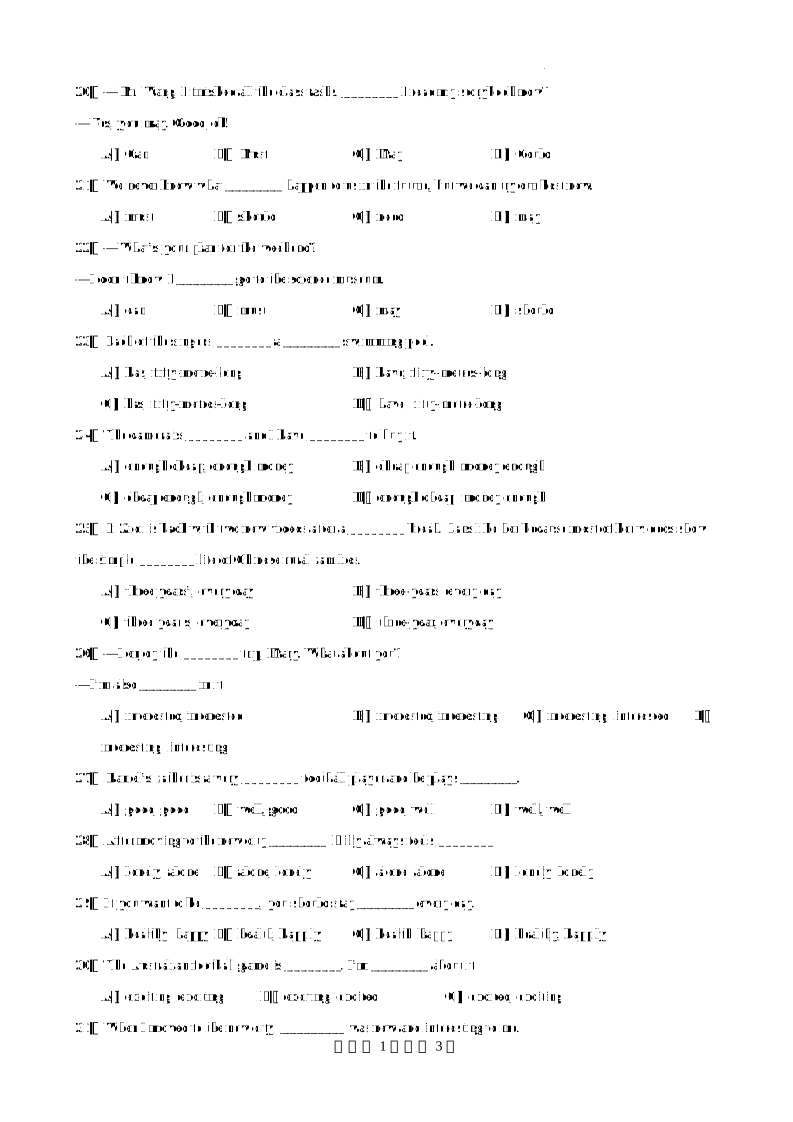
Unit 5 Animal friends 情态动词can,could,may和形容词作定语和表语
Unit 6 Beautiful landscapes 不定代词和感叹句
1.—________ I park my car here?
—I am afraid you ________. Look at the sign “No parking!”
A.Need; couldn’t B.Could; can’t C.Must; can’t D.Can; needn’t
【答案】B
【详解】句意:——我可以把车停在这里吗?——恐怕不能。看“禁止停车”的标志!
考查情态动词辨析。Need需要;couldn’t不能;Could可以;can’t不能;Must必须;Can可以;needn’t不必。根据“I park my car here”可知,此处是征求意见,可用can/could,排除A/C,其否定回答用can’t表示“不能”。故选B。
2.—________ I watch a film, Dad?
—No, you ________. It’s late. You ________ go to bed now.
A.Can; can’t; must B.Can; can; must C.Must; mustn’t; can
【答案】A
【详解】句意:——爸爸,我可以看电影吗?——不,你不能。很晚了。你现在必须去睡觉。
考查情态动词辨析。can可以;can’t不可以,不能;must必须;mustn’t不得。根据“...I watch a film, Dad?”可知,此处表示请求许可,Can符合语境;根据“No”可知,此处表示拒绝对方的请求,can’t符合语境;根据“You...go to bed now.”可知,此处表示命令,must符合语境。故选A。
3.—Could you lend me your laptop for a while now, Sandy? Mine is broken.
—Sorry, I ________. I’m using it for an important e-mail. But you can come to get it 3 hours later.
A.couldn’t B.cannot C.shouldn’t D.needn’t
【答案】B
【详解】句意:——桑迪,你现在能把你的笔记本电脑借我用一会儿吗?我的坏了。——对不起,我不能。我正在用它发一封重要的电子邮件。但你可以三小时后来取。
考查情态动词辨析。couldn’t不能,为can的过去式;cannot不能;shouldn’t不应该;needn’t不必。根据“I’m using it for an important e-mail.”可知,此处表示现在不能借,用cannot。故选B。
4.—________ I touch your rabbit?
—I’m afraid you ________. Sometimes it’s not friendly.
A.Can; can B.May; may C.Can; may not D.May; can’t
【答案】D
【详解】句意:——我可以摸摸你的兔子吗?——恐怕不行。有时候它不太友好。
考查情态动词辨析。can能;may可以,表示正式请求许可;can’t不能;may not可能不。根据“...I touch your rabbit?”可知用may更合适、更礼貌;回答“不行”应使用can’t表示禁止或拒绝。故选D。
5.—Can I take this book out of the library?
—Yes, you ________.
A.should B.must C.need D.can
【答案】D
【详解】句意:——我可以把这本书带出图书馆吗?——是的,你可以。
考查动词辨析。should应该;must必须;need需要;can可以,能够。根据“Can I take this book out of the library?”可知,此处问“可以不可以”,回答为肯定回答,故选D。
6.—Is that Miss Liu over there?
—No. It________ be her. She has gone to Beijing last Sunday.
A.mustn’t B.can’t C.won’t D.needn’t
【答案】B
【详解】句意:——那边是刘小姐吗?——不是。不可能是她。她上周日已经去北京了。
考查情态动词。mustn’t禁止;can’t不可能;won’t不会;needn’t不必。根据“She has gone to Beijing last Sunday”可知,刘小姐已去北京,因此“不可能是她”,表示否定推测用can’t,故选B。
7.Luo yang likes swimming very much and he ________ swim very well.
A.can’t B.can C.shouldn’t D.should
【答案】B
【详解】句意:罗阳非常喜欢游泳,他能游得很好。
考查情态动词辨析。can’t不能;can能;shouldn’t不应该;should应该。根据“Luo yang likes swimming very much and he…swim very well.”可知,此处指的是他能够游泳得很好。can“能”,符合语境。故选B。
8.—It’s too hot. _________ I swim in the lake near our home, mum?
—No, you _________. It’s so dangerous. You’d better go to the swimming pool.
A.Could; couldn’t B.Need; mustn’t
C.Must; needn’t D.Could; can’t
【答案】D
【详解】句意:——天气太热了。我能在我们家附近的湖里游泳吗,妈妈?——不,你不可以。太危险了。你最好去游泳池。
考查情态动词辨析。could能,表示委婉地请求;need需要;mustn’t不准;must必须;needn’t不必;can’t不能,不可以。根据“I swim in the lake near our home, mum?”可知,第一空表示请求许可,要用could,此时否定回答为“No,you can’t.”。第二空根据前面的No以及后面的“It’s so dangerous.”可知应表示“不可以”,用can’t,故选D。
9.—It’s such a long way!
—Don’t worry. You ______ share a ride with me.
A.can B.must C.need D.should
【答案】A
【详解】句意:——好长的一段路啊!——别担心。你可以和我搭一辆车。
考查情态动词。can可以;must必须;need需要;should应该。根据“Don’t worry. You...share a ride with me.”可知,可以和自己搭一辆车,故选A。
10.The little girl was sad because her pet bird ________ fly as high as it did before after being hurt.
A.couldn’t B.mustn’t C.needn’t D.shouldn’t
【答案】A
【详解】句意:小女孩很难过,因为她的宠物鸟受伤后不能再像以前那样飞得高了。
考查情态动词辨析。couldn’t不能,表示过去的能力缺失;mustn’t禁止;needn’t不必;shouldn’t不应该。根据原因“after being hurt”可知,鸟受伤后“不能”飞高了,表示过去的能力丧失,应用couldn’t。故选A。
11.Long ago, people ________ learn new things only from books and teachers, but now the Internet and AI make study easier.
A.can B.could C.may D.must
【答案】B
【详解】句意:很久以前,人们只能从书本和老师那里学习新事物,但现在互联网和人工智使学习变得更容易。
can能;could能(过去式);may可能;must必须。根据时间状语“Long ago”可知句子描述的是过去的情况,应用一般过去时,表示过去的能力用could。
12.— Zhao Xintong, a 28-year-old young man is the first Asian player to win the World Snooker Championship! He ________ play it well when he was young.
—________ a hard-working and talented (有天赋的) young man!
A.can; What B.could; What C.can; How D.could; How
【答案】B
【详解】句意:——赵心童,一个 28 岁的年轻人,是第一位赢得斯诺克世界锦标赛的亚洲选手!他年轻时能打得很好。——多么勤奋且有天赋的一个年轻人啊!
第一空根据when he was young可知是一般过去时,表示过去的能力用could;第二空中心词是名词man,符合What + a/an + 形容词 + 名词!的感叹句结构。
13.—You are so good at roller skating now!
—Thanks. But I ________ even stand up on my skates when I first tried it.
A.could B.couldn’t C.can’t D.may
【答案】B
【详解】句意:——你现在轮滑这么好。——谢谢。但是当我第一次尝试的时候,甚至连站起来都不会。
考查情态动词。could能,会,can的过去式;couldn’t不能,不会;can’t不能,不会;may可能。根据后文“when I first tried it.”可知,时态为一般过去时,此处应该使用can的过去式could,又由“But”可知,前后构成转折关系,所以此处应该表达但是当我第一次尝试的时候,甚至连站起来都不会,填入couldn’t。故选B。
14.— It’s too hot. ________ I swim in the lake near our home, mum?
—No, you ________. It’s so dangerous. You’d better go to the swimming pool.
A.Could; couldn’t B.Need; mustn’t C.Must; needn’t D.Could; can’t
【答案】D
【详解】句意:——天气太热了。我能在我们家附近的湖里游泳吗,妈妈?——不,你不可以。太危险了。你最好去游泳池。
考查情态动词。could能,表示委婉地请求;need需要;mustn’t不准;must必须;needn’t不必;can’t不能,不可以。根据“...I swim in the lake near our home, mum?”可知,第一空表示请求许可,要用could,此时否定回答为“No,you can’t.”。第二空根据前面的No以及后面的“It’s so dangerous.”可知应表示“不可以”,用can’t,故选D。
15.—What can we do for the left-behind children in the village?
—We ________ help them with their study online at weekends.
A.must B.can’t C.need D.could
【答案】D
【详解】句意:——我们能为村里的留守儿童做些什么?——我们可以在周末在线上帮助他们学习。
考查情态动词辨析。must必须;can’t不能;need需要;could能。根据“What can we do for the left-behind children in the village?”可知,答语应说可以帮助他们学习。故选D。
16._________ I see your ID card, sir? We have to check your information.
A.Must B.Do C.May D.Did
【答案】C
【详解】句意:先生,我可以看一下您的身份证吗?我们必须核查您的信息。
Must必须;Do助动词;May可以;Did助动词过去式。根据语境可知,此处是工作人员礼貌地请求查看对方的身份证,表示请求或许可应用情态动词May。
17.—I think she ________ a doctor, because she is wearing a white uniform.
—I don’t think so. ________.
A.maybe; May be B.may be; Maybe
C.maybe; Maybe D.may be; May be
【答案】B
【详解】句意:——我认为她可能是一名医生,因为她穿着白色制服。——我不这么认为,也许(不是)。
maybe是副词,意为“也许;大概”,在句中作状语,通常放在句首;may be是“情态动词+be动词”的结构,在句中作谓语,意为 “可能是”。第一空需要在句中作谓语,因此填may be;第二空需要在句首作状语,因此填Maybe。
18.—Do you have any plans for this Sunday?
—I’m not sure. I ________ go to the countryside to see my grandmother.
A.may B.must C.can D.have to
【答案】A
【详解】句意:——这个周日你有什么计划吗?——我不确定。我可能去乡下看我奶奶。
考查情态动词表推测。may可能,表示不确定的推测;must必须,表示义务或肯定推测;can能,通常不用于肯定句表推测;have to不得不,表示客观需要。根据前句“I’m not sure”可知,说话人并不确定,应用“may”表示“可能”。故选A。
19.—________ I borrow your book about animal protection?
—Sure, you can keep it for three days.
A.Must B.Should C.May D.Need
【答案】C
【详解】句意:——我可以借你那本关于动物保护的书吗?——当然,你可以借三天。
考查情态动词辨析。Must 必须;Should 应该;May 可以;Need 需要。根据答语“Sure, you can keep it for three days.”可知,此处是请求许可,应用“May”表示“可以”。故选C。
20.—Mr. Wang, I finished all the class tasks. ________ I read my storybook now?
—Yes, you may. Good job!
A.Can B.Must C.May D.Could
【答案】C
【详解】句意:——王先生,我完成了所有的课堂任务。我现在可以读我的故事书吗?——是的,你可以。干得好!
考查情态动词。Can能;Must必须;May可以;Could能。根据“Yes, you may.”可知,此处表示请求允许,“May I…?”是请求许可的常见句型,强调礼貌和正式性。故选C。
21.We never know what ________ happen to us in the future, but we can try our best now.
A.must B.should C.need D.may
【答案】D
【详解】句意:我们永远不知道未来可能发生什么,但我们现在可以尽力而为。
考查情态动词。must必须;should应该;need需要;may可能。根据“in the future”可知,未来的事情不确定,应用may。故选D。
22.—What’s your plan for the weekend?
—I don’t know. I ________ go to the science museum.
A.can B.must C.may D.should
【答案】C
【详解】句意:——你周末有什么计划? ——我不知道。我可能会去科学博物馆。
考查情态动词辨析。can能够;must必须;may可能;should应该。根据“I don’t know.”可知,不不知道要做什么,因此可能去科学博物馆,故选C。
23.Each of the singers ________ a ________ swimming pool.
A.has; fifty-metre-long B.have; fifty-metres-long
C.has; fifty-metres-long D.have; fifty-metre-long
【答案】A
【详解】句意:每个歌手都有一个五十米长的游泳池。
“Each of the singers”作主语,谓语动词用单数形式has;“fifty-metre-long”作定语修饰swimming pool,在该表达中,有连字符,单位词不加s。
24.The camera is ________ and I have ________ to buy it.
A.enough cheap; enough money B.cheap enough; money enough
C.cheap enough; enough money D.enough cheap; money enough
【答案】C
【详解】句意:这台相机足够便宜,我有足够的钱买它。
enough修饰形容词时,放在形容词之后,即“cheap enough”;enough修饰名词时,放在名词之前,即“enough money”。
25.Li Ziqi is back with two new videos after a ________ break. Fans like her because most of her videos show the simple ________ life of Chinese rural families.
A.three years’; every day B.three-years; every day
C.three year’s; everyday D.three-year; everyday
【答案】D
【详解】句意:李子柒在中断三年后带着两个新视频回归。粉丝们喜欢她是因为她的大部分视频展示了中国农村家庭的简单日常生活。
考查复合形容词和词汇辨析。根据“Li Ziqi is back with two new videos after a... break. Fans like her because most of her videos show the simple... life of Chinese rural families.”可知,第一个空表示“三年的”,需用连字符连接的复合形容词“three-year”,其中名词用单数;第二个空修饰“life”,需用形容词“everyday”,意为“日常的”,而“every day”是副词,短语意为“每天”。故选D。
26.—I enjoy the ________ trip, Mary. What about you?
—I’m also ________ in it.
A.interested; interested B.interested; interesting C.interesting; interested D.interesting; interesting
【答案】C
【详解】句意:——我喜欢这次有趣的旅行,玛丽。你呢?——我也对它感兴趣。
考查形容词辨析。interesting意为“有趣的”,修饰物;interested意为“感兴趣的”,修饰人。第一个空修饰名词trip,意为“有趣的”,应用interesting;第二个空主语是人,be interested in意为“对……感兴趣”,符合语境。故选C。
27.Daniel’s father is a very ________ football player and he plays ________.
A.good, good B.well, good C.good, well D.well, well
【答案】C
【详解】句意:丹尼尔的父亲是一个非常好的足球运动员,他踢得很好。
考查形容词和副词。good好的,形容词;well好,副词,作形容词时意为“健康的”。第一空修饰“football player”,需用形容词good作定语;第二空修饰动词“plays”,需填副词well。故选C。
28.After moving to the new city ________, Billy always feels ________.
A.lonely; alone B.alone; lonely C.alone; alone D.lonely; lonely
【答案】B
【详解】句意:比利独自搬到新城市后,总是感到孤独。
考查形容词与副词辨析。lonely孤独的(侧重情感上的孤单,作表语或定语);alone独自(侧重客观上独自一人,可作副词或形容词)。第一空修饰moving“搬家”这个动作,需要用副词,alone表示“独自地”,符合语境;第二空在系动词feels后作表语,需要用形容词,lonely表示“感到孤独的”,侧重情感。故选B。
29.If you want to be ________, you should stay ________ every day.
A.healthy; happy B.health; happily C.health; happy D.healthy; happily
【答案】A
【详解】句意:如果你想要健康,你应该每天保持快乐。
考查形容词用法及辨析。healthy健康的(形容词);health健康(名词);happy快乐的(形容词);happily快乐地(副词)。根据“be”和“stay”可知,二者均为系动词,其后都需接形容词作表语,用于描述主语的状态,因此第一空应填healthy,第二空应填happy。故选A。
30.The Australian football game is ________. I’m ________ about it.
A.exciting; exciting B.exciting; excited C.excited; exciting
【答案】B
【详解】句意:澳大利亚足球比赛令人兴奋。我对此感到兴奋。
考查形容词辨析。exciting令人兴奋的(主语是物);excited感到兴奋的(主语是人)。根据“The Australian football game is…”可知主语是物,需用exciting描述事物的特性;根据“I’m … about it”可知主语是人,需用excited描述人的感受。故选B。
31.When I moved to the new city, _________ was new and interesting to me.
A.anything B.something C.everything D.nothing
【答案】C
【详解】句意:当我搬到这座新城市时,一切对我来说都是新鲜有趣的。
anything任何事;something某事;everything一切事;nothing没有事。根据“When I moved to the new city”可知,搬到一个新城市,周围的环境通常都是陌生的,所以是一切事物都新鲜有趣。应填everything。
32.—I am sure there is ________ you want us to do.
—Yes, could you please clean the floor?
A.else something B.something else C.everything else D.else everything
【答案】B
【详解】句意:——我肯定还有别的事情你想让我们做。——是的,请你打扫一下地板好吗?
else修饰不定代词something或everything时,应放在不定代词之后,排除A、D选项。结合语境,此处表示“还有别的事”,something else符合题意;everything else意为“其他所有事”,语义不符。
33.—Would you like ________ to eat?
—No, thanks. I don’t want to eat ________.
A.something, anything B.anything, anything
C.something, something D.anything, something
【答案】A
【详解】句意:——你想吃点什么吗?——不,谢谢。我不想吃任何东西。
something某物;anything任何事物。something常用于肯定句或希望得到肯定回答的疑问句;anything常用于否定句或疑问句。第一句表示委婉建议,希望得到肯定回答,故用something;第二句是否定句,故用anything。
34.—Listen! ________ is singing in the next room.
—Really? I can’t hear ________.
A.Someone; anyone B.Anyone; someone
C.Everyone; anyone D.Anyone; everyone
【答案】A
【详解】句意:——听!有人在隔壁房间唱歌。——真的吗?我听不到任何人。
Someone某人,常用于肯定句中;anyone任何人,常用于否定句或疑问句中;Everyone每个人。根据句意和语境可知,第一个空所在的句子是肯定句,表示“有人在隔壁房间唱歌”,所以第一个空应填Someone;第二个空所在的句子是否定句,表示“我听不到任何人”,所以第二个空应填anyone。
35.When taking notes in class, we needn’t write ________ down.
A.nothing B.anything C.something D.everything
【答案】D
【详解】句意:在课堂上记笔记时,我们不必记下所有内容。
nothing没有什么;anything任何东西;something某物;everything每件事物。根据“needn’t”及记笔记的实际需求可知,不必记录所有内容,everything符合语境。
36.—Hey, Helen. ________ is waiting for you in the library.
—It must be Jenny.
A.Someone B.Everyone C.Anyone D.No one
【答案】A
【详解】句意:——嘿,海伦。有人在图书馆等你。——一定是珍妮。
Someone有人,某人;Everyone每个人;Anyone任何人;No one没有人。根据答语“It must be Jenny.”可知,此处指有某个人在等海伦,且用于肯定句中。因此选A。
37.—Coffee or tea, Alice?
—Coffee, please. To get relaxed, ________ is better than a cup of coffee.
A.nothing B.anything C.something D.everything
【答案】A
【详解】句意:——咖啡还是茶,爱丽丝?——请给我咖啡。为了放松,没有什么比一杯咖啡更好的了。
nothing没有什么;anything任何事物;something某物;everything一切。根据“To get relaxed...is better than a cup of coffee.”可知,说话人认为咖啡最能让人放松,“nothing+比较级”结构表示最高级含义,意为“没有什么比……更……”。应填nothing。
38.— ________ wants to make their dreams come true, but few can make it.
— Yes. But I think if we work hard, we can make it.
A.Somebody B.Everybody C.Nobody
【答案】B
【详解】句意:——每个人都想实现自己的梦想,但很少有人能做到。——是的。但我认为如果我们努力,我们可以做到。
Somebody某人;Everybody每个人;Nobody没有人。根据后半句“but few can make it”可知,前后构成转折关系,意为虽然每个人都想实现梦想,但很少有人能做到。故选B。
39.—Jenny, ________ is calling you on the phone.
—It must be Sandy.
A.everybody B.anybody C.somebody D.nobody
【答案】C
【详解】句意:——Jenny,有人在给你打电话。——肯定是Sandy。
everybody每个人;anybody任何人;somebody某人;nobody没有人。根据回答“It must be Sandy.”可知,空格处需填入表示“有人”的不定代词,且为肯定语境。
40.— Is there ________ about your life in the USA?
— Yes. I will tell you some when I have free time.
A.something interesting B.anything interesting
C.interesting something D.interesting anything
【答案】B
【详解】句意:——你在美国的生活有什么有趣的事吗?——有的,我有空的时候会告诉你一些。
something某事(多用于肯定句);anything任何事(多用于疑问句/否定句)。形容词修饰不定代词要后置;本句是一般疑问句,用anything。
41.The lecture was so boring that ________ left the hall before it ended.
A.somebody B.nobody C.everybody D.anybody
【答案】A
【详解】句意:讲座太无聊了,以至于结束前每个人都离开了大厅。
考查不定代词辨析。somebody某人;nobody没有人;everybody每个人;anybody任何人。根据“The lecture was so boring”可知讲座非常无聊,导致的结果是大家都离开了,everybody符合语境。
42.My mum always tells me: If you have ________ you want and don’t want what you can’t get, you will be very happy.
A.nothing B.anything C.everything D.something
【答案】C
【详解】句意:我妈妈总是告诉我:如果你拥有你想要的一切,并且不想要你得不到的东西,你会非常快乐。
nothing没有什么;anything任何东西;everything一切;something某物。根据后句“you will be very happy”可知,此处表示“拥有你想要的一切”你会非常快乐,应填everything。
43.Parents can’t do ______ for their children. They need to grow up on their own.
A.anything B.nothing C.everything D.something
【答案】C
【详解】句意:父母不能为他们的孩子做一切事情。他们需要自己成长。
anything任何东西;nothing没什么;everything一切;something某物。根据“They need to grow up on their own.”可知,孩子们需要独立成长,说明父母不能包办一切,应填everything。
44.The problem is easy,but not ________ knows what to do with it.
A.anyone B.everyone C.no one D.someone
【答案】B
【详解】句意:这个问题很简单,但不是每个人都知道怎么处理它。考查不定代词辨析及部分否定用法。anyone任何人;everyone每个人;no one没有人;someone某人。根据转折连词 but 可知,前后句意相反。not everyone 构成部分否定,意为“不是每个人”,符合“问题简单但并非人人都知道怎么处理”的语境。not no one 为双重否定,排除;not anyone习惯上用no one代替作主语。故填everyone。
45.Boys and girls, follow your heart and never let ________ take away your dream.
A.someone B.anyone C.no one D.everyone
【答案】B
【详解】句意:孩子们,遵循你们的内心,永远不要让任何人夺走你们的梦想。
someone某人;anyone任何人;no one没有人;everyone每个人。根据句中否定词“never”可知,此处表示否定含义,意为“不要让任何人”,应该用不定代词anyone。
46.There is ________ with my laptop. I will ask a computer engineer ________ it this afternoon.
A.something wrong; to fix B.nothing wrong; to fix
C.wrong something; to fix D.wrong nothing; to fix
【答案】A
【详解】句意:我的笔记本电脑出了一些毛病。今天下午我要找一位电脑工程师修理它。
形容词修饰不定代词something或nothing时需后置,排除C和D;根据后文找工程师修理可知电脑有问题,第一空应用something wrong;固定搭配ask sb. to do sth. 表示“让某人做某事”,第二空应用动词不定式to fix。
47.—Would you like something to eat?
—______ will be OK! I’m so hungry that I can eat like a horse.
A.Nothing B.Anything C.Something D.Everything
【答案】B
【详解】句意:——你想吃点东西吗?——任何东西都可以!我饿极了。
Nothing没什么;Anything任何事物;Something某事/某物;Everything一切。根据“I’m so hungry that I can eat like a horse.”可知,其中“eat like a horse”意为“吃得很多/极饿”,说明说话人目前非常饥饿。分析语境可知,在这种情况下,任何食物对说话人来说都是可以接受的。不定代词anything用于肯定句时,表示“任何一个;无论什么”。
48.—Is there anything in the box?
—No, there is nothing in it. I saw ________ take the things out just now.
A.no one B.someone C.anyone D.everyone
【答案】B
【详解】句意:——盒子里有什么东西吗?——没有,里面什么都没有。我刚才看见有人把东西拿走了。
考查不定代词辨析。no one没有人;someone某人;anyone任何人;everyone每个人。根据“I saw…take the things out just now”可知,此处表示“看见某人拿走东西”,且肯定句中表示“某人”应用someone。故选B。
49.________ delicious the stir-fried eggs look!
A.What B.What a C.How D.How a
【答案】C
【详解】句意:这些炒鸡蛋看起来多么美味啊!
What什么;What a一个多么……的;How多么;How a错误表达。根据空后的形容词“delicious”以及其后的主谓结构“the stir-fried eggs look”可知,本句是一个由How引导的感叹句,结构为“How+形容词+主语+谓语!”,用于强调程度。
50.—________ amazing the pumpkin pie tastes!
A.What B.What an C.How D.How an
【答案】C
【详解】——句意:南瓜派尝起来多么美味啊!
感叹句主要由What和How引导。What修饰名词,结构为“What + (a/an) + 形容词 + 名词 + 主语 + 谓语”;How修饰形容词或副词,结构为“How + 形容词/副词 + 主语 + 谓语”。本句中心词是形容词amazing,后面是主语the pumpkin pie和谓语tastes,符合How引导的结构,且How后不加冠词。故选C。
51.In my first year out of school, I travelled with a friend. ______ adventure we had!
A.What B.What an C.How an D.How
【答案】B
【详解】句意:在我毕业后的第一年,我和一个朋友去旅行了。我们有一次多么精彩的冒险经历啊!
What后接不可数名词;What an后接可数名词单数;How an不是感叹句结构;How后接形容词副词。中心词 adventure 是可数名词单数,且以元音音素开头,应用“What an”引导感叹句,结构为“What + a/an + 名词 + 主语 + 谓语!”。
52.— Can you believe that Lora made the beautiful kite by herself?
— ________ girl she is!
A.How creative B.What creative C.How a creative D.What a creative
【答案】D
【详解】句意:——你能相信劳拉独自制作了那个漂亮的风筝吗?——她是一个多么有创造力的女孩啊!
中心词是名词girl,应用What引导;girl是单数可数名词,前面需加冠词a。结构为What + a + 形容词 + 名词 + 主语 + 谓语!。D项符合。
53.—________ beautiful music it is! —Yes. I love the soft piano.
A.What B.What a C.How D.How a
【答案】A
【详解】句意:——多么美妙的音乐啊!——是的。我喜欢柔和的钢琴声。
What多么,What+形容词+不可数名词;What a多么……的一个,What+a+形容词+可数名词单数;How多么,How+形容词/副词;How a结构错误。根据“…beautiful music it is!”可知,感叹句中心词为名词music,且为不可数名词,应用What引导。应填What。
54._________ advice I have got from my teacher!
A.What a useful B.What useful C.How useful D.How usefully
【答案】B
【详解】句意:我从老师那里得到了多么有用的建议啊!
中心词advice是不可数名词,感叹句修饰名词用What,且不可数名词前不能加不定冠词a/an。How修饰形容词或副词。本句感叹句结构为“What+形容词+不可数名词+主谓!”。
55._________ serious the air pollution is in this industrial city!
A.How B.What C.What a D.What an
【答案】A
【详解】句意:这个工业城市的空气污染是多么严重啊!感叹句句型How+形容词/副词+主语+谓语!,用来强调形容词或副词,表达程度。试比较:What+(a/an)+形容词+名词+主语+谓语!(强调名词)。本句中,serious是形容词,air pollution是主语,is是谓语,符合How+形容词+主语+谓语的结构。
56.______ beautiful our blue planet is!
A.What B.What a C.How D.How a
【答案】C
【详解】句意:我们的蓝色星球多么美丽啊!
What引导感叹句修饰名词,结构为What+(a/an)+形容词+名词+主语+谓语;How引导感叹句修饰形容词或副词,结构为How+形容词/副词+主语+谓语。本句中心词是形容词beautiful,主语是our blue planet,谓语is,符合How引导的结构。
57._______ useful piece of advice Tom has offered!
A.How B.What C.What a D.What an
【答案】C
【详解】句意:汤姆提出了多么有用的一条建议啊!
How多么(用于修饰形容词或副词,结构为How + adj./adv. + 主谓);What多么(用于修饰名词,结构为What + (a/an) + adj. + n. + 主谓);What a多么(用于修饰以辅音音素开头的可数名词单数);What an多么(用于修饰以元音音素开头的可数名词单数)。根据题干“_____ useful piece of advice”可知,advice是不可数名词,但被piece修饰后成为可数概念,a piece of advice“一条建议”,useful以辅音音素开头,应用What a引导感叹句,应填What a。
58.________ nice melody he has created for the film’s love theme!
A.What B.What a C.How D.How a
【答案】B
【详解】句意:他为电影的爱情主题创作了多么美妙的旋律啊!
What多么,感叹可数名词复数或不可数名词;What a多么,感叹可数名词单数;How多么,感叹形容词或副词;How a不存在该用法。根据“nice melody he has created for the film’s love theme!”可知,此处感叹的是可数名词单数melody,且nice以辅音音素开头,应填What a。
59._________ useful advice you’ve shared with us! Thanks a lot.
A.What B.What a C.What an D.How
【答案】A
【详解】句意:你与我们分享的建议多么有用啊!非常感谢。
考查感叹句结构。本句是一个感叹句,句中“advice”为不可数名词,符合“What+形容词+不可数名词+主语+谓语”结构。故选A。
60.—________ useful advice you gave me on how to improve my English!
—You’re welcome. I hope it can help you.
A.What a B.What C.How a D.How
【答案】B
【详解】句意:——你给我的关于如何提高英语水平的建议真有用!——不客气。希望它能帮到你。
考查感叹句的用法。感叹句中,what修饰名词,how修饰形容词/副词;“advice”是不可数名词,不能用“a”修饰,结构为“What+形容词+不可数名词+主语+谓语”,“what”符合语境,故选B。
试卷第1页,共3页
试卷第1页,共3页
学科网(北京)股份有限公司
$
5月第三次月考复习之单元语法综合练
(Units 5-6)
Unit 5 Animal friends 情态动词can,could,may和形容词作定语和表语
Unit 6 Beautiful landscapes 不定代词和感叹句
1.—________ I park my car here?
—I am afraid you ________. Look at the sign “No parking!”
A.Need; couldn’t B.Could; can’t C.Must; can’t D.Can; needn’t
2.—________ I watch a film, Dad?
—No, you ________. It’s late. You ________ go to bed now.
A.Can; can’t; must B.Can; can; must C.Must; mustn’t; can
3.—Could you lend me your laptop for a while now, Sandy? Mine is broken.
—Sorry, I ________. I’m using it for an important e-mail. But you can come to get it 3 hours later.
A.couldn’t B.cannot C.shouldn’t D.needn’t
4.—________ I touch your rabbit?
—I’m afraid you ________. Sometimes it’s not friendly.
A.Can; can B.May; may C.Can; may not D.May; can’t
5.—Can I take this book out of the library?
—Yes, you ________.
A.should B.must C.need D.can
6.—Is that Miss Liu over there?
—No. It________ be her. She has gone to Beijing last Sunday.
A.mustn’t B.can’t C.won’t D.needn’t
7.Luo yang likes swimming very much and he ________ swim very well.
A.can’t B.can C.shouldn’t D.should
8.—It’s too hot. _________ I swim in the lake near our home, mum?
—No, you _________. It’s so dangerous. You’d better go to the swimming pool.
A.Could; couldn’t B.Need; mustn’t
C.Must; needn’t D.Could; can’t
9.—It’s such a long way!
—Don’t worry. You ______ share a ride with me.
A.can B.must C.need D.should
10.The little girl was sad because her pet bird ________ fly as high as it did before after being hurt.
A.couldn’t B.mustn’t C.needn’t D.shouldn’t
11.Long ago, people ________ learn new things only from books and teachers, but now the Internet and AI make study easier.
A.can B.could C.may D.must
12.— Zhao Xintong, a 28-year-old young man is the first Asian player to win the World Snooker Championship! He ________ play it well when he was young.
—________ a hard-working and talented (有天赋的) young man!
A.can; What B.could; What C.can; How D.could; How
13.—You are so good at roller skating now!
—Thanks. But I ________ even stand up on my skates when I first tried it.
A.could B.couldn’t C.can’t D.may
14.— It’s too hot. ________ I swim in the lake near our home, mum?
—No, you ________. It’s so dangerous. You’d better go to the swimming pool.
A.Could; couldn’t B.Need; mustn’t C.Must; needn’t D.Could; can’t
15.—What can we do for the left-behind children in the village?
—We ________ help them with their study online at weekends.
A.must B.can’t C.need D.could
16._________ I see your ID card, sir? We have to check your information.
A.Must B.Do C.May D.Did
17.—I think she ________ a doctor, because she is wearing a white uniform.
—I don’t think so. ________.
A.maybe; May be B.may be; Maybe
C.maybe; Maybe D.may be; May be
18.—Do you have any plans for this Sunday?
—I’m not sure. I ________ go to the countryside to see my grandmother.
A.may B.must C.can D.have to
19.—________ I borrow your book about animal protection?
—Sure, you can keep it for three days.
A.Must B.Should C.May D.Need
20.—Mr. Wang, I finished all the class tasks. ________ I read my storybook now?
—Yes, you may. Good job!
A.Can B.Must C.May D.Could
21.We never know what ________ happen to us in the future, but we can try our best now.
A.must B.should C.need D.may
22.—What’s your plan for the weekend?
—I don’t know. I ________ go to the science museum.
A.can B.must C.may D.should
23.Each of the singers ________ a ________ swimming pool.
A.has; fifty-metre-long B.have; fifty-metres-long
C.has; fifty-metres-long D.have; fifty-metre-long
24.The camera is ________ and I have ________ to buy it.
A.enough cheap; enough money B.cheap enough; money enough
C.cheap enough; enough money D.enough cheap; money enough
25.Li Ziqi is back with two new videos after a ________ break. Fans like her because most of her videos show the simple ________ life of Chinese rural families.
A.three years’; every day B.three-years; every day
C.three year’s; everyday D.three-year; everyday
26.—I enjoy the ________ trip, Mary. What about you?
—I’m also ________ in it.
A.interested; interested B.interested; interesting C.interesting; interested D.interesting; interesting
27.Daniel’s father is a very ________ football player and he plays ________.
A.good, good B.well, good C.good, well D.well, well
28.After moving to the new city ________, Billy always feels ________.
A.lonely; alone B.alone; lonely C.alone; alone D.lonely; lonely
29.If you want to be ________, you should stay ________ every day.
A.healthy; happy B.health; happily C.health; happy D.healthy; happily
30.The Australian football game is ________. I’m ________ about it.
A.exciting; exciting B.exciting; excited C.excited; exciting
31.When I moved to the new city, _________ was new and interesting to me.
A.anything B.something C.everything D.nothing
32.—I am sure there is ________ you want us to do.
—Yes, could you please clean the floor?
A.else something B.something else C.everything else D.else everything
33.—Would you like ________ to eat?
—No, thanks. I don’t want to eat ________.
A.something, anything B.anything, anything
C.something, something D.anything, something
34.—Listen! ________ is singing in the next room.
—Really? I can’t hear ________.
A.Someone; anyone B.Anyone; someone
C.Everyone; anyone D.Anyone; everyone
35.When taking notes in class, we needn’t write ________ down.
A.nothing B.anything C.something D.everything
36.—Hey, Helen. ________ is waiting for you in the library.
—It must be Jenny.
A.Someone B.Everyone C.Anyone D.No one
37.—Coffee or tea, Alice?
—Coffee, please. To get relaxed, ________ is better than a cup of coffee.
A.nothing B.anything C.something D.everything
38.— ________ wants to make their dreams come true, but few can make it.
— Yes. But I think if we work hard, we can make it.
A.Somebody B.Everybody C.Nobody
39.—Jenny, ________ is calling you on the phone.
—It must be Sandy.
A.everybody B.anybody C.somebody D.nobody
40.— Is there ________ about your life in the USA?
— Yes. I will tell you some when I have free time.
A.something interesting B.anything interesting
C.interesting something D.interesting anything
41.The lecture was so boring that ________ left the hall before it ended.
A.somebody B.nobody C.everybody D.anybody
42.My mum always tells me: If you have ________ you want and don’t want what you can’t get, you will be very happy.
A.nothing B.anything C.everything D.something
43.Parents can’t do ______ for their children. They need to grow up on their own.
A.anything B.nothing C.everything D.something
44.The problem is easy,but not ________ knows what to do with it.
A.anyone B.everyone C.no one D.someone
45.Boys and girls, follow your heart and never let ________ take away your dream.
A.someone B.anyone C.no one D.everyone
46.There is ________ with my laptop. I will ask a computer engineer ________ it this afternoon.
A.something wrong; to fix B.nothing wrong; to fix
C.wrong something; to fix D.wrong nothing; to fix
47.—Would you like something to eat?
—______ will be OK! I’m so hungry that I can eat like a horse.
A.Nothing B.Anything C.Something D.Everything
48.—Is there anything in the box?
—No, there is nothing in it. I saw ________ take the things out just now.
A.no one B.someone C.anyone D.everyone
49.________ delicious the stir-fried eggs look!
A.What B.What a C.How D.How a
50.—________ amazing the pumpkin pie tastes!
A.What B.What an C.How D.How an
51.In my first year out of school, I travelled with a friend. ______ adventure we had!
A.What B.What an C.How an D.How
52.— Can you believe that Lora made the beautiful kite by herself?
— ________ girl she is!
A.How creative B.What creative C.How a creative D.What a creative
53.—________ beautiful music it is! —Yes. I love the soft piano.
A.What B.What a C.How D.How a
54._________ advice I have got from my teacher!
A.What a useful B.What useful C.How useful D.How usefully
55._________ serious the air pollution is in this industrial city!
A.How B.What C.What a D.What an
56.______ beautiful our blue planet is!
A.What B.What a C.How D.How a
57._______ useful piece of advice Tom has offered!
A.How B.What C.What a D.What an
58.________ nice melody he has created for the film’s love theme!
A.What B.What a C.How D.How a
59._________ useful advice you’ve shared with us! Thanks a lot.
A.What B.What a C.What an D.How
60.—________ useful advice you gave me on how to improve my English!
—You’re welcome. I hope it can help you.
A.What a B.What C.How a D.How
试卷第1页,共3页
试卷第1页,共3页
学科网(北京)股份有限公司
$
资源预览图

1

2
3

相关资源
示范课
由于学科网是一个信息分享及获取的平台,不确保部分用户上传资料的 来源及知识产权归属。如您发现相关资料侵犯您的合法权益,请联系学科网,我们核实后将及时进行处理。