Unit10 课时2 Function(课件)【趣味课堂】英语新教材仁爱科普版七年级下册
2026-04-29
|
3份
|
29页
|
583人阅读
|
5人下载
精品
资源信息
| 学段 | 初中 |
|---|---|
| 学科 | 英语 |
| 教材版本 | 初中英语仁爱科普版七年级下册 |
| 年级 | 七年级 |
| 章节 | Function |
| 类型 | 课件 |
| 知识点 | - |
| 使用场景 | 同步教学-新授课 |
| 学年 | 2026-2027 |
| 地区(省份) | 全国 |
| 地区(市) | - |
| 地区(区县) | - |
| 文件格式 | ZIP |
| 文件大小 | 21.88 MB |
| 发布时间 | 2026-04-29 |
| 更新时间 | 2026-04-29 |
| 作者 | 小辣椒 初中英语课件 |
| 品牌系列 | - |
| 审核时间 | 2026-04-29 |
| 下载链接 | https://m.zxxk.com/soft/57615814.html |
| 价格 | 5.00储值(1储值=1元) |
| 来源 | 学科网 |
内容正文:
Activity three, listen and read. And then mark tea, true or f false? Shels neighbor mrs. Lee knocks at the door and shelf a opens the door. Hi ah, could you help me? Sure, miss lee, what's up? I left my keys and my phone at home. Now I can't open the door. May I use your phone to call my daughter . just a minute? Please let me get my phone for you . two minutes later. Thank you so much. Here is your phone. You are welcome. Is your daughter coming? Yes, he is on her way back now. great. Would you come in and wait for her at my home? Oh, that's very kind of you, but I need to do some shopping. Thank you very much for your help. That's all right.
Activity to listen to the conversation and answer the question. Shay's neighbor miss lee knocks at the door and share opens the door. Hi ah, could you help me? Sure, miss lee, what's up? I left my keys and my phone at home. Now I can't open the door. May I use your phone to call my daughter . just a minute? Please let me get my phone for you . two minutes later. Thank you so much. Here is your phone. You are welcome. Is your daughter coming? Yes, he is on her way back now. great. Would you come in and wait for her at my home? Oh, that's very kind of you, but I need to do some shopping. Thank you very much . for your help. That's all right.
Preparing
Lesson 2 Function
Xiao Ya’s helping hand
Unit 10 Lending a Helping Hand
目
录
contents
01
Lead in
02
Pre-listening
03
While-listening
04
Post-listening
05
Language points
06
Exercise&Homework
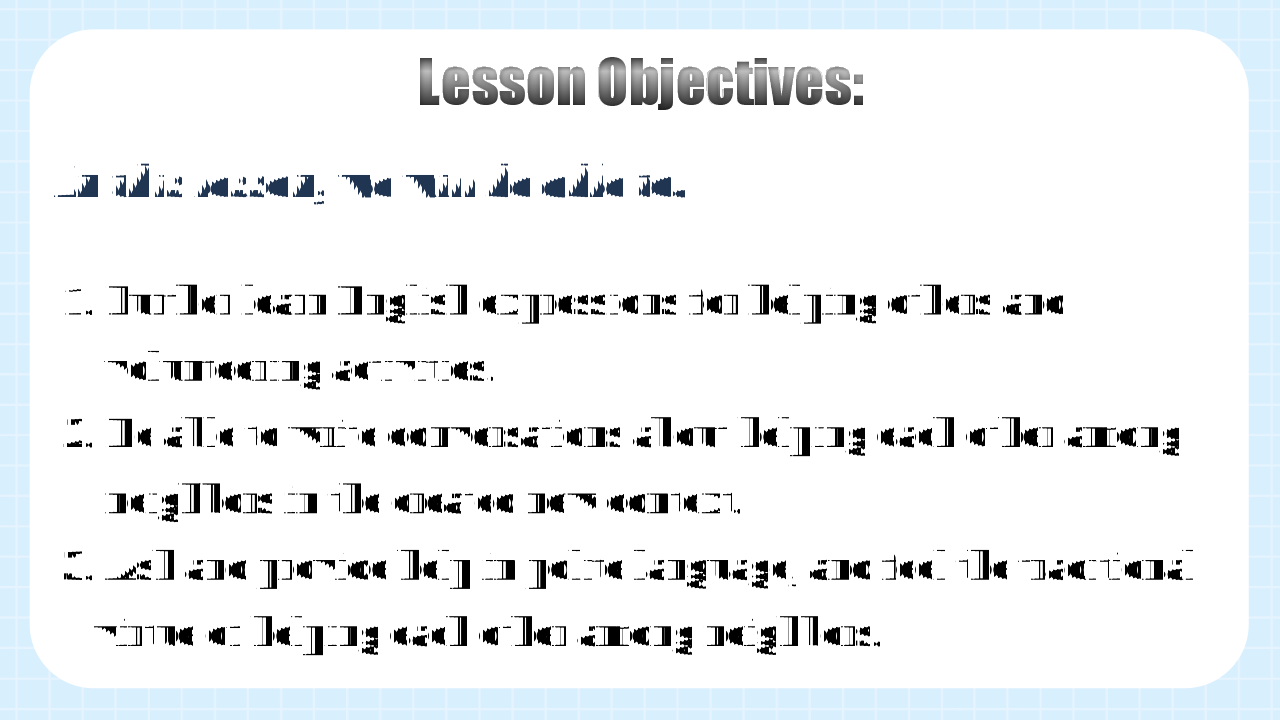
Lesson Objectives:
In this lesson, we will be able to:
1. Further learn English expressions for helping others and
volunteering activities.
2. Be able to write conversations about helping each other among
neighbors in the created new context.
3. Ask and provide help in polite language, and feel the traditional
virtue of helping each other among neighbors.
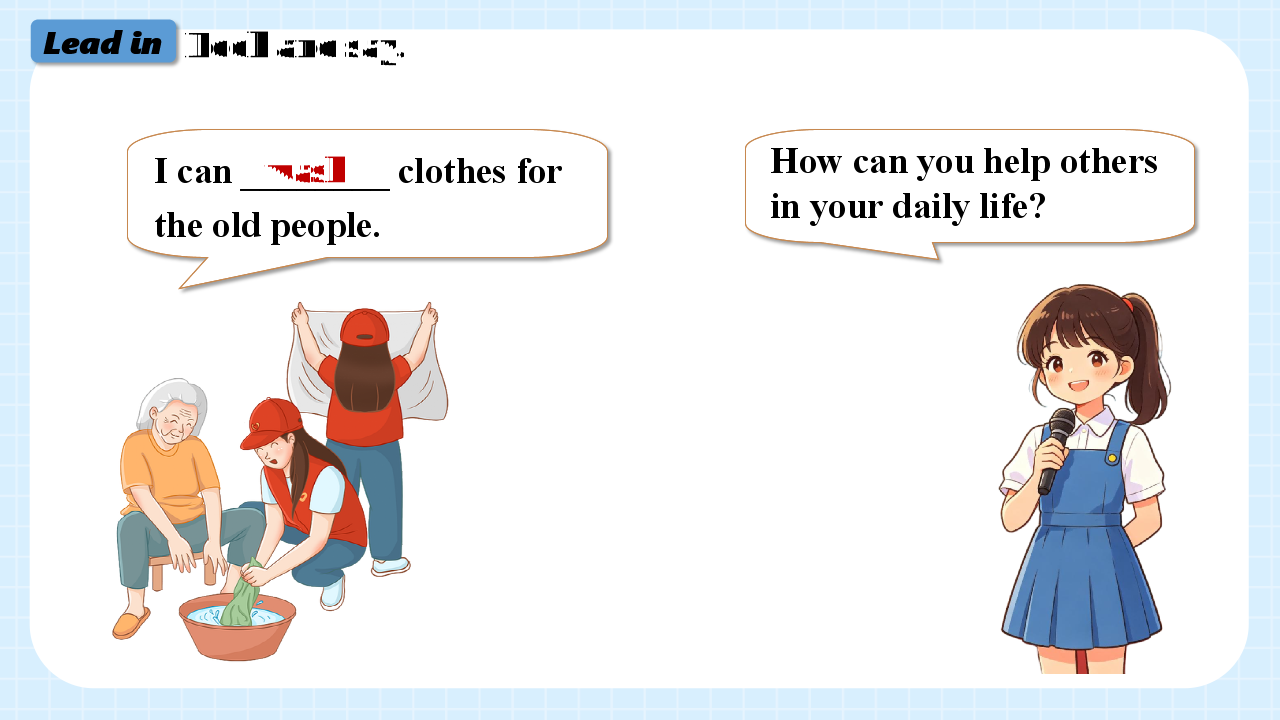
Lead in
How can you help others in your daily life?
Look and say.
I can ________ clothes for the old people.
wash
Lead in
How can you help others in your daily life?
Look and say.
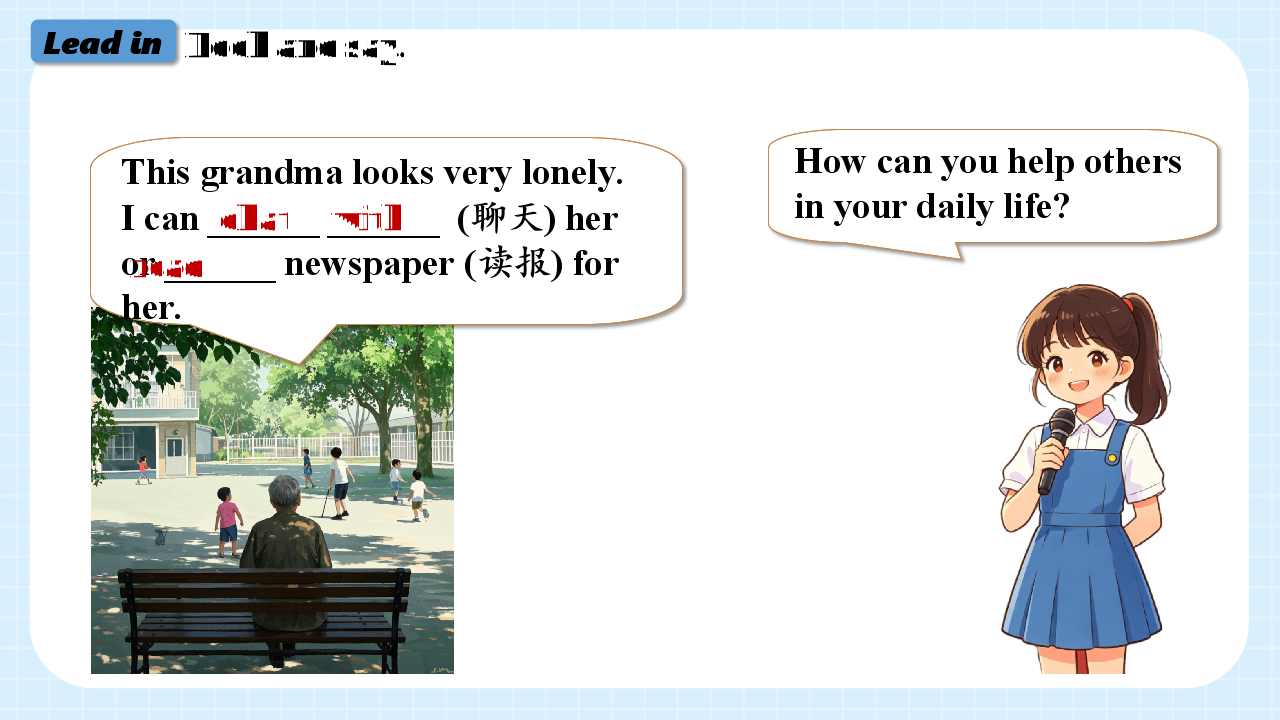
This grandma looks very lonely.
I can ______ ______ (聊天) her or ______ newspaper (读报) for her.
chat with
read
Lead in
How can you help others in your daily life?
Look and say.
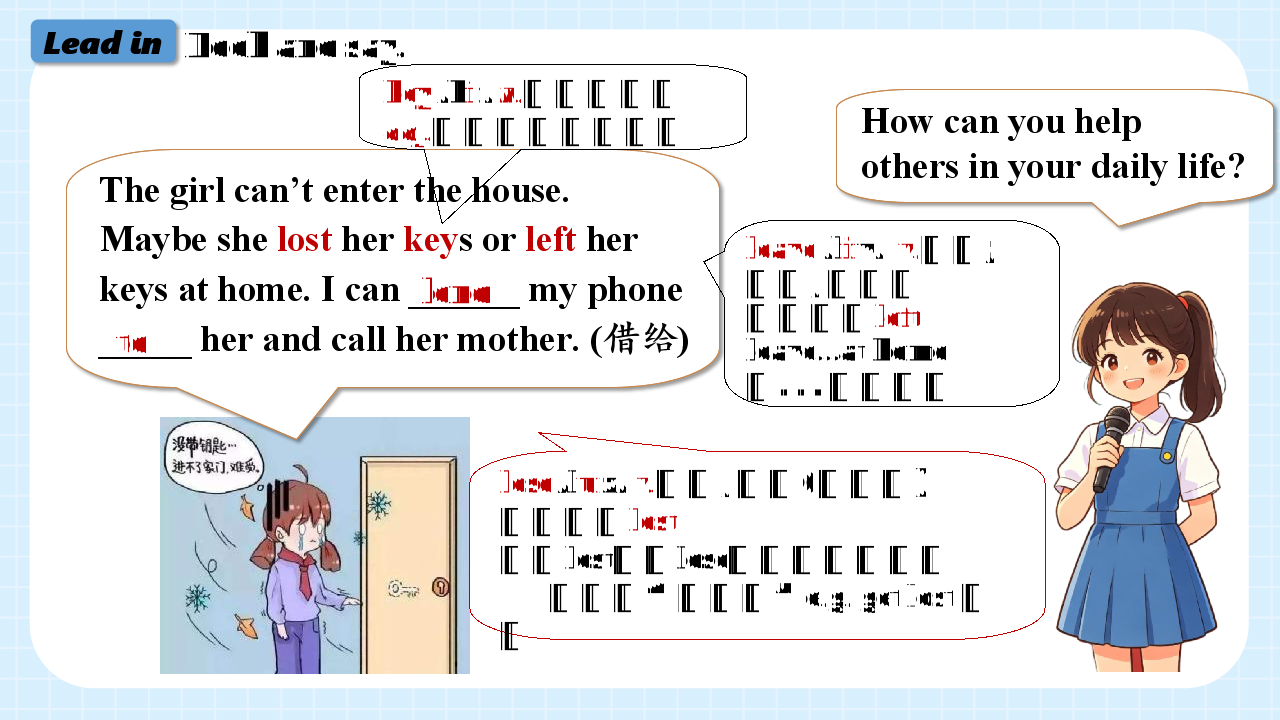
The girl can’t enter the house.
Maybe she lost her keys or left her keys at home. I can ______ my phone _____ her and call her mother. (借给)
lend
to
lose /luːz/ v.丢失;输掉(比赛等)
过去式:lost
注:lost既是lose的过去式,也作
形容词“迷路的”e.g. get lost 迷路
key /kiː/ n.钥匙;关键
adj.关键的;最重要的
leave /liːv/ v.离开;
丢下,忘记带
过去式:left
leave...at home
把...落在家里
Activity 1
Pair work. Talk about how you can help others in your daily life. Add more ideas in the blanks.
How can you help others in your daily life?
How did they feel?
tell stories to children
share your experience
water flowers
do voluntary work
/'vɑːlənteri/ adj.志愿的
/ɪk'spɪəriəns/ n.经验(不可数)
/经历(可数) v.经历/体验
_____________________
__________________
do voluntary work
做志愿服务
share one’s experience
分享某人的经验
water flowers
浇花
tell stories to sb.
给某人讲故事
help the old do cleaning
sing songs to the old
Activity 1
Pair work. Add more ideas in the blanks.
We can also ... (to help others).
do some cooking
do some washing
walk a dog
carry heavy bags
Activity 2
Listen to the conversation and answer the question.
What did Xiao Ya do for Mrs. Li?
She lent her phone to Mrs. Li.
Invite Mrs. Li to come inside and wait.
Activity 3
Listen again and mark T (True) or F (False).
1. Mrs. Li lost her keys and her phone. ( )
2. Xiao Ya called Mrs.Li's daughter. ( )
3. Mrs.Li's daughter was coming back. ( )
4. Xiao Ya asked Mrs.Li to wait at her home. ( )
5. Mrs. Li asked Xiao Ya to help her do some shopping. ( )
F
I left my keys and my phone at home.
F
May I use your phone to call my daughter?
T
Yes. She is on her way back now.
T
Would you come in and wait for her at my home?
F
Oh, that’s very kind of you, but I need to do some shopping.
come back 回来
ask sb. to do sth.
要求某人做某事
Read and answer the questions.
(Xiao Ya's neighbor, Mrs. Li, knocks at the door, and Xiao Ya opens the door.)
Mrs. Li: Hi, Xiao Ya. Could you help me?
Xiao Ya: Sure, Mrs. Li. What's up?
Mrs. Li: I left my keys and my phone at home. Now I can't open the door.
May I use your phone to call my daughter?
Xiao Ya: Just a minute, please. Let me get my phone for you.
(Two minutes later)
Mrs. Li: Thank you so much. Here is your phone.
Xiao Ya: You're welcome. Is your daughter coming.
Mrs. Li: Yes. She is on her way back now.
Xiao Ya: Great! Would you come in and wait for her at my home?
Mrs. Li: Oh, that's very kind of you, but I need to do some shopping.
Thank you very much for your help.
Xiao Ya: That's all right.
Q1:Why couldn't Mrs. Li open her door?
Because she left her keys at home.
Q2:How do you know Xiao Ya is a helpful person? Give two examples.
She lent her phone to Mrs. Li.
She invited Mrs. Li to wait inside.
Q3:If Mrs. Li didn't need to do shopping, what might happen next?
Mrs. Li might wait (for her daughter) at Xiao Ya’s home.
Role play
(Xiao Ya's neighbor, Mrs. Li, knocks at the door, and Xiao Ya opens the door.)
Mrs. Li: Hi, Xiao Ya. Could you help me?
Xiao Ya: Sure, Mrs. Li. What's up?
Mrs. Li: I left my keys and my phone at home. Now I can't open the door.
May I use your phone to call my daughter?
Xiao Ya: Just a minute, please. Let me get my phone for you.
(Two minutes later)
Mrs. Li: Thank you so much. Here is your phone.
Xiao Ya: You're welcome. Is your daughter coming.
Mrs. Li: Yes. She is on her way back now.
Xiao Ya: Great! Would you come in and wait for her at my home?
Mrs. Li: Oh, that's very kind of you, but I need to do some shopping.
Thank you very much for your help.
Xiao Ya: That's all right.
Listen and follow.
Role-play
Role-play the conversation.
Actor 1: Xiao Ya
Actor 2: Mrs. Li
Actors should:
✭✭✭Use correct language.
(使用正确语言)
✭✭Speak loudly and clearly with feelings.
(言语饱含热情,大声且清晰)
✭✭Correct tones and proper body language.
(正确语调和恰当的身体语言)
✭✭✭Without books.(脱离课本)
Activity 4
Pair work. Suppose your neighbor lost his cat and you want to help him, and then make up a new conversation.
A: Hi, ... Could you help me?
B: Sure, ... What's up?
A: ...
B: ...
A: ...
B: ...
A: Thank you very much for your help.
/ Thank you so much.
B: That's OK. /That's all right./ You're welcome.
Pair work
Your neighbor, Mr. Johnson, lost his cat. You want to help him find it.
Hi, Mr. Johnson! You look worried. Is ____________ OK? (一切还好吗)
Oh, hello! Actually, I can’t find my ______, Sam.
everything
cat
Don’t worry, I’ll help you
______ _____ him. (寻找)
That’s very kind _____ you. I really thank for your help!
of
No problem! We’ll find Sam together.
look for
Thinking
Why did Xiao Ya offer extra help (邀请等待)?
What makes a ‘warm community’?
Helping others is not just about big things. Small acts of kindness can light up the whole community!
Sumamry
Summary the useful expressions.
(Xiao Ya's neighbor, Mrs. Li, knocks at the door, and Xiao Ya opens the door.)
Mrs. Li: Hi, Xiao Ya. Could you help me?
Xiao Ya: Sure, Mrs. Li. What's up?
Mrs. Li: I left my keys and my phone at home. Now I can't open the door.
May I use your phone to call my daughter?
Xiao Ya: Just a minute, please. Let me get my phone for you.
(Two minutes later)
Mrs. Li: Thank you so much. Here is your phone.
Xiao Ya: You're welcome. Is your daughter coming.
Mrs. Li: Yes. She is on her way back now.
Xiao Ya: Great! Would you come in and wait for her at my home?
Mrs. Li: Oh, that's very kind of you, but I need to do some shopping.
Thank you very much for your help.
Xiao Ya: That's all right.
Asking for Help(请求帮助)
Could you…?
/ May I…?
Offering Help(提供帮助)
Let me…
/ Would you like…?
Thanks & Responses(感谢与回应)
Thank you! → You’re welcome./That’s all right.
Find the phrases.
(Xiao Ya's neighbor, Mrs. Li, knocks at the door, and Xiao Ya opens the door.)
Mrs. Li: Hi, Xiao Ya. Could you help me?
Xiao Ya: Sure, Mrs. Li. What's up?
Mrs. Li: I left my keys and my phone at home. Now I can't open the door.
May I use your phone to call my daughter?
Xiao Ya: Just a minute, please. Let me get my phone for you.
(Two minutes later)
Mrs. Li: Thank you so much. Here is your phone.
Xiao Ya: You're welcome. Is your daughter coming.
Mrs. Li: Yes. She is on her way back now.
Xiao Ya: Great! Would you come in and wait for her at my home?
Mrs. Li: Oh, that's very kind of you, but I need to do some shopping.
Thank you very much for your help.
Xiao Ya: That's all right.
knock at/on 敲
open the door 开门
leave...at home 把....落在家里
two minutes later 两分钟后
on one’s way 在路上
come in 进来
wait for 等待
do some shopping 购物
_____________________
Language points
Activity 1
tell stories to children
share your experience
water flowers
do voluntary work
__________________
share your experience 分享你的经验
experience 此处作不可数名词, 意为“经验”。
e.g. She is a good teacher with a lot of experience.
她是一位富有经验的好老师。
拓展: experience的其他用法
experience 可数名词,意为“经历”。
动词,意为“经历;经受;遭受;体验”。
e.g. A trip to Guilin is a wonderful experience.
(作名词) 去桂林的旅行是一次很棒的经历。
They had the chance to experience life at sea.
(作动词) 他们有机会体验海上生活。
Language points
Activity 2
(Xiao Ya's neighbor, Mrs. Li, knocks at the door, and Xiao Ya opens the door.)
Mrs. Li: Hi, Xiao Ya. Could you help me?
Xiao Ya: Sure, Mrs. Li. What's up?
Mrs. Li: I left my keys and my phone at home. Now I can't open the door.
May I use your phone to call my daughter?
Xiao Ya: Just a minute, please. Let me get my phone for you.
(Two minutes later)
Mrs. Li: Thank you so much. Here is your phone.
Xiao Ya: You're welcome. Is your daughter coming.
Mrs. Li: Yes. She is on her way back now.
Xiao Ya: Great! Would you come in and wait for her at my home?
Mrs. Li: Oh, that's very kind of you, but I need to do some shopping.
Thank you very much for your help.
Xiao Ya: That's all right.
1) “What's up?” 意为“怎么了?”,相当于“What's wrong?”。
后面可接with sb./sth., 表示“某人或某事物怎么了?”。
2) leave v. “忘了带,丢下”。
leave sth./sb.+地点状语,意为“把某物/某人遗忘在某处”。
e.g. I ______ my phone at home. 我把手机落在家里了。
left
3) key n. “钥匙;关键;答案”。复数形式为keys。
常用短语: the key to... ......的钥匙/关键 a set of keys 一串钥匙
e.g. the key to the door 门的钥匙
the key to success 成功的关键
Language points
Activity 2
(Xiao Ya's neighbor, Mrs. Li, knocks at the door, and Xiao Ya opens the door.)
Mrs. Li: Hi, Xiao Ya. Could you help me?
Xiao Ya: Sure, Mrs. Li. What's up?
Mrs. Li: I left my keys and my phone at home. Now I can't open the door.
May I use your phone to call my daughter?
Xiao Ya: Just a minute, please. Let me get my phone for you.
(Two minutes later)
Mrs. Li: Thank you so much. Here is your phone.
Xiao Ya: You're welcome. Is your daughter coming.
Mrs. Li: Yes. She is on her way back now.
Xiao Ya: Great! Would you come in and wait for her at my home?
Mrs. Li: Oh, that's very kind of you, but I need to do some shopping.
Thank you very much for your help.
Xiao Ya: That's all right.
1) call v. “(给···)打电话”。 call sb. “给某人打电话”。
e.g. You can call me if you are free. 如果你有时间,可以给我打电话。
常用短语: make a call (to sb.) (给某人) 打电话
give sb. a call 给某人打电话
2) just a minute 意为“等一下”,常用于日常交际用语中,
相当于wait a moment/second/minute。
e.g. —Xixi, hurry up! We are late for school.
西西,快点!我们上学要迟到了。
—Just a minute, please. 请等一下。
Language points
Activity 2
(Xiao Ya's neighbor, Mrs. Li, knocks at the door, and Xiao Ya opens the door.)
Mrs. Li: Hi, Xiao Ya. Could you help me?
Xiao Ya: Sure, Mrs. Li. What's up?
Mrs. Li: I left my keys and my phone at home. Now I can't open the door.
May I use your phone to call my daughter?
Xiao Ya: Just a minute, please. Let me get my phone for you.
(Two minutes later)
Mrs. Li: Thank you so much. Here is your phone.
Xiao Ya: You're welcome. Is your daughter coming.
Mrs. Li: Yes. She is on her way back now.
Xiao Ya: Great! Would you come in and wait for her at my home?
Mrs. Li: Oh, that's very kind of you, but I need to do some shopping.
Thank you very much for your help.
Xiao Ya: That's all right.
get sth. for sb. = get sb. sth. “为某人拿某物”
e.g. I got some flowers for my mother today.
= I got my mother some flowers today.
我今天给我妈妈拿了一些花儿。
归纳: get的相关短语
get on 上车 get off 下车
get along with sb. 与某人和睦相处
get out of 离开(某地);从···出来
get to 到达 get back 返回;回去
Language points
Activity 2
(Xiao Ya's neighbor, Mrs. Li, knocks at the door, and Xiao Ya opens the door.)
Mrs. Li: Hi, Xiao Ya. Could you help me?
Xiao Ya: Sure, Mrs. Li. What's up?
Mrs. Li: I left my keys and my phone at home. Now I can't open the door.
May I use your phone to call my daughter?
Xiao Ya: Just a minute, please. Let me get my phone for you.
(Two minutes later)
Mrs. Li: Thank you so much. Here is your phone.
Xiao Ya: You're welcome. Is your daughter coming.
Mrs. Li: Yes. She is on her way back now.
Xiao Ya: Great! Would you come in and wait for her at my home?
Mrs. Li: Oh, that's very kind of you, but I need to do some shopping.
Thank you very much for your help.
Xiao Ya: That's all right.
1) be coming意为“要来了”,现在进行时表示将来的意义。
在英语中有一些表示位移的动词,如arrive、come、fly、
go、leave、move、meet等,都可用现在进行时表示将来。
e.g. We are coming! 我们来了!
They are leaving for England. 他们将动身去英国。
2) on one's way to... 意为“在去......的路上;在行进中”。
注意: 若后接 here、there、home等地点副词时,则不加介词to。
e.g. On my way home, I met Mr. Li. 我在回家的路上遇见了李老师。
Language points
Activity 2
(Xiao Ya's neighbor, Mrs. Li, knocks at the door, and Xiao Ya opens the door.)
Mrs. Li: Hi, Xiao Ya. Could you help me?
Xiao Ya: Sure, Mrs. Li. What's up?
Mrs. Li: I left my keys and my phone at home. Now I can't open the door.
May I use your phone to call my daughter?
Xiao Ya: Just a minute, please. Let me get my phone for you.
(Two minutes later)
Mrs. Li: Thank you so much. Here is your phone.
Xiao Ya: You're welcome. Is your daughter coming.
Mrs. Li: Yes. She is on her way back now.
Xiao Ya: Great! Would you come in and wait for her at my home?
Mrs. Li: Oh, that's very kind of you, but I need to do some shopping.
Thank you very much for your help.
Xiao Ya: That's all right.
kind adj. “友好的;体贴的;慈祥的”。
be kind to sb. “对……友好” 侧重描述对某人的态度或行为
be kind of sb. “某人友好” 侧重描述人的品质
e.g. Mr. Geng is kind ______ us. 耿老师对我们很好。
That's/It's very kind ______ you to help me learn English.
你帮助我学英语真是太好了。
链接:kind n.“种类”。
a kind of 一种 different kinds of 不同种类的
all kinds of 各种各样的 many kinds of 许多种类的
to
of
Exercises
I. 根据语境及所给提示填空。
1. I _________ (leave) my ruler at home. Can I use yours?
2. I _________ (lose) my key when I was on _________ (I) way home.
3. Remember _________ (knock) on the door before you go into the
office.
4. Linda always loses her _________ (key) and she _________
(lose) them again last weekend.
5. My grandpa is 70 years old, but he still takes ______ active part in
___________ (volunteer) work.
6. Volunteering is a good way _____________ (experience) life.
left
lost
my
to knock
keys
lost
an
volunteer
to experience
Exercises
II. 完成句子。
1. Zoe left her schoolbag at home. (改为一般疑问句)
________ Zoe ________ her schoolbag at home?
2. He lost the key of his bike on his way home. (对画线部分提问)
________ did he ________ on his way home?
3. She asked Xiao Ya to help kids learn to read. (对画线部分提问)
________ did she ask Xiao Ya to ________?
4. 我敲了三次门,但没有人回应。(完成译句)
I ________ ________ the door three times, but no one answered.
5. 请记得把你所有的东西带回家。不要把它们留在学校。(完成译句)
Please remember to take all your things home. ________ ________
them at school.
Did leave
What lose
What do
knocked on
Don’t leave
Summary
In this class, we learnt
1. some new words and expressions, such as voluntary,
experience, leave, daughter, just a minute,
that's very kind of you and so on.
2. to give others a hand in our daily life.
3. more about the simple past tense.
Homework
Must do:
1. Review the new words, expressions and the dialogue.
2. Describe in 5 sentences an experience where you helped
someone.
Choose to do:
Interview family/neighbors, record the difficulties they meet,
and write down a help plan.
Thank you!
null
66767.68
null
67969.43
Lavf58.46.101
$
资源预览图
1
2
3
4
5
6

相关资源
由于学科网是一个信息分享及获取的平台,不确保部分用户上传资料的 来源及知识产权归属。如您发现相关资料侵犯您的合法权益,请联系学科网,我们核实后将及时进行处理。