阅读理解期末模拟练习 2025-2026学年湖北人教版英语七年级下册
2026-04-29
|
13页
|
375人阅读
|
11人下载
资源信息
| 学段 | 初中 |
|---|---|
| 学科 | 英语 |
| 教材版本 | 初中英语人教版七年级下册 |
| 年级 | 七年级 |
| 章节 | - |
| 类型 | 题集-专项训练 |
| 知识点 | - |
| 使用场景 | 同步教学-期末 |
| 学年 | 2026-2027 |
| 地区(省份) | 湖北省 |
| 地区(市) | - |
| 地区(区县) | - |
| 文件格式 | DOCX |
| 文件大小 | 51 KB |
| 发布时间 | 2026-04-29 |
| 更新时间 | 2026-04-29 |
| 作者 | 匿名 |
| 品牌系列 | - |
| 审核时间 | 2026-04-28 |
| 下载链接 | https://m.zxxk.com/soft/57591738.html |
| 价格 | 0.50储值(1储值=1元) |
| 来源 | 学科网 |
内容正文:
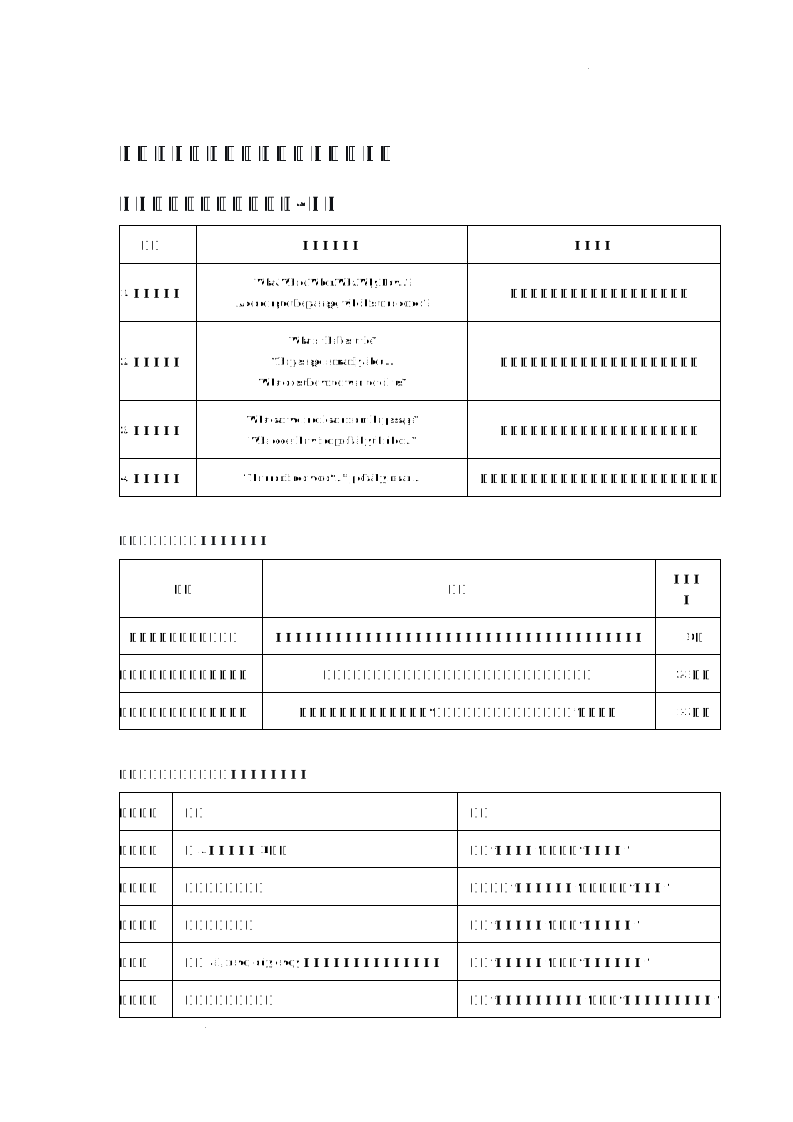
七年级英语阅读理解解题核心知识点
一、阅读理解常考题型(4种)
题型
常见提问方式
解题核心
1. 细节理解题
What/Where/When/Who/Why/How...?
According to the passage, which is true/correct?
回原文定位关键词,找到原句直接比对。
2. 主旨大意题
What is the best title?
The passage is mainly about...
What does the writer want to tell us?
关注首段、尾段、每段首句;排除细节选项。
3. 推理判断题
What can we infer/learn from the passage?
What does the writer probably think of...?
原文没有直接说,但要能根据事实合理推断。
4. 词义猜测题
The underlined word “...” probably means...
利用上下文(定义、同义、反义、例子、因果)猜词。
二、三步解题法(考场实战流程)
步骤
做法
时间建议
第一步:先读题,后读文
快速浏览题目(不看选项),圈出题干中的关键词(人名、地名、数字、疑问词)。
30秒
第二步:扫读原文,定位信息
带着关键词扫读文章(不逐词翻译),找到对应句子或段落。
2-3分钟
第三步:比对选项,排除干扰
把选项和原文逐一比对,排除“张冠李戴、无中生有、反向表述”的选项。
1-2分钟
三、常见错误选项特征(干扰项设置套路)
干扰类型
说明
例子
张冠李戴
把A做的事说成B做的
文中“爸爸洗车”,选项说“爷爷洗车”
无中生有
原文没提到的信息
文中没写“李明喜欢音乐”,选项却说“他喜欢”
反向表述
意思与原文相反
原文“作业有点难”,选项“作业很容易”
绝对化
出现 all, never, only, every 等绝对词,原文通常没这么绝对
原文“他经常跑步”,选项“他每天都跑步”
部分捏造
前半句对,后半句错
原文“妈妈在厨房做热干面”,选项“妈妈在客厅做热干面”
四、不同题型的专属技巧
1. 细节理解题
顺序原则:题目顺序一般与文章段落顺序一致。
同义替换:正确选项往往用近义词改写原文,而不是照抄原词。
数字/时间/人名:最易定位,看到立刻标记。
2. 主旨大意题
标题选择:
正确标题要覆盖全文主要内容,不能只覆盖一段或一个细节。
排除“太小”(只讲一件事)、“太大”(超出文章范围)的选项。
写作目的:记叙文往往是“分享一段经历/介绍一个人/讲述一个故事”;说明文是“介绍某事物”。
3. 推理判断题
常见推理角度:作者态度(喜欢/不喜欢/中立)、人物心情(开心/难过/busy)、后续可能发生什么。
注意:只推一步,不要过度推理。原文“很晚了,他还在看书”,可推“他可能不想睡”,但不能推“他明天一定会迟到”。
4. 词义猜测题
上下文线索:
定义:... is ... / means / called as
并列:and / or——前后意思相近
转折:but / however——前后意思相反
例子:for example / such as——举例说明词义
因果:because / so——推出词义方向
五、湖北地区七年级阅读特点与备考建议
特点
说明
备考建议
词汇量要求
约600-800词,以教材词汇为主
熟记七年级下册各单元黑体词
语法焦点
现在进行时、一般现在时、be going to
做阅读时主动圈出谓语动词,判断时态
话题范围
日常生活、家庭、学校、季节、爱好、节日
多读教材对话和课文,熟悉话题词汇
文章长度
约120-180词
练习限时阅读(每篇4-6分钟)
本地文化
可能少量出现湖北特色(热干面、东湖、端午节等)
了解家乡文化词汇,但不作为考点难题
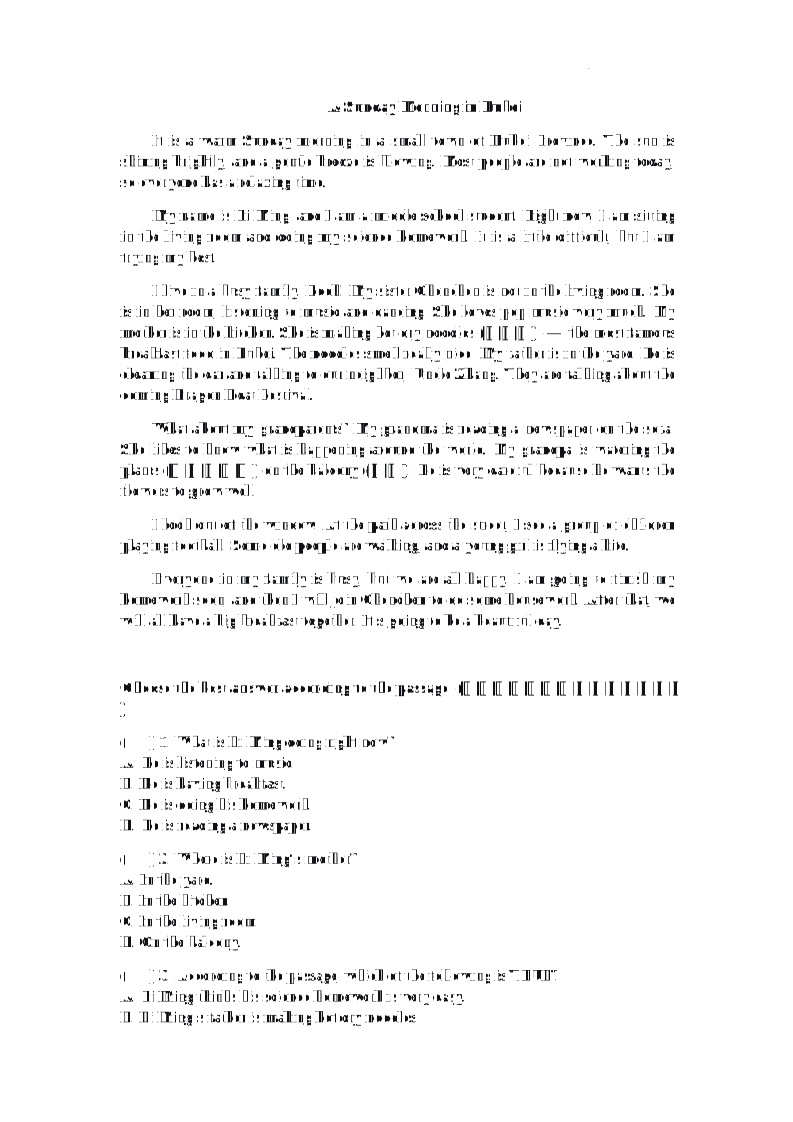
A Sunday Morning in Hubei
It is a warm Sunday morning in a small town of Hubei Province. The sun is shining brightly, and a gentle breeze is blowing. Most people are not working today, so everyone has a relaxing time.
My name is Li Ming, and I am a middle school student. Right now, I am sitting in the living room and doing my science homework. It is a little difficult, but I am trying my best.
I live in a busy family. Look! My sister Chenchen is not in the living room. She is in her room, listening to music and dancing. She loves pop music very much. My mother is in the kitchen. She is making hot dry noodles (热干面) — the most famous breakfast food in Hubei. The noodles smell really nice! My father is in the yard. He is cleaning the car and talking to our neighbor, Uncle Zhang. They are talking about the coming Dragon Boat Festival.
What about my grandparents? My grandma is reading a newspaper on the sofa. She likes to know what is happening around the world. My grandpa is watering the plants (给植物浇水) on the balcony (阳台). He is very careful because he wants the flowers to grow well.
I look out of the window. At the park across the street, I see a group of children playing football. Some old people are walking, and a young girl is flying a kite.
Everyone in my family is busy, but we are all happy. I am going to finish my homework soon, and then I will join Chenchen to do some housework. After that, we will all have a big breakfast together. It’s going to be a beautiful day.
Choose the best answer according to the passage. (根据短文内容,选择最佳答案。)
( ) 1. What is Li Ming doing right now?
A. He is listening to music.
B. He is having breakfast.
C. He is doing his homework.
D. He is reading a newspaper.
( ) 2. Where is Li Ming‘s mother?
A. In the yard.
B. In the kitchen.
C. In the living room.
D. On the balcony.
( ) 3. According to the passage, which of the following is TRUE?
A. Li Ming thinks his science homework is very easy.
B. Li Ming’s father is making hot dry noodles.
C. Li Ming‘s grandma is watering the plants.
D. Li Ming’s sister is listening to music in her room.
( ) 4. What can we know from the last paragraph (段落)?
A. Li Ming doesn‘t like doing housework.
B. Li Ming is going to have breakfast after finishing his homework.
C. Chenchen is doing her homework and will join Li Ming.
D. Li Ming’s grandpa is cleaning the car in the yard.
( ) 5. Which is the best title (标题) for this passage?
A. How to Make Hot Dry Noodles
B. A Busy Family in the Morning
C. Children Playing in the Park
D. My Science Homework
A Visit to the Zoo
It is Saturday morning. The sun is shining, but it is not too hot. Amy and her brother Tom are going to the zoo with their parents.
There are many animals in the zoo. Amy likes pandas best. She is watching two pandas eating bamboo. “Look, Tom! The pandas are so cute and fat,” says Amy. Tom is interested in monkeys. He sees a group of monkeys climbing and jumping. One small monkey is eating a banana. Tom laughs.
Their father is taking photos of the elephants. The elephants are very big and they are spraying water with their long noses. Their mother is sitting on a bench and drinking water. She looks tired but happy.
At 12 o’clock, they go to a small restaurant inside the zoo and have lunch. Amy says, “This is a great day. I want to come again next weekend!”
Choose the best answer according to the passage. (根据短文内容,选择最佳答案。)
( ) 1. What is the weather like on Saturday morning?
A. It is raining.
B. It is too hot.
C. It is sunny but not very hot.
D. It is cloudy.
( ) 2. What animal does Amy like best?
A. Monkeys.
B. Elephants.
C. Pandas.
D. Giraffes.
( ) 3. What is Tom doing?
A. He is taking photos.
B. He is watching monkeys.
C. He is eating a banana.
D. He is drinking water.
( ) 4. Where is their mother?
A. She is taking photos of elephants.
B. She is sitting on a bench.
C. She is having lunch.
D. She is watching pandas.
( ) 5. What can we learn from the last paragraph?
A. Amy doesn’t like the zoo.
B. They will go home at 12 o’clock.
C. Amy wants to come to the zoo again.
D. They have no time for lunch.
A Helping Hand
It is Tuesday afternoon. After school, Lucy is walking home with her friend Mike. Suddenly, they see an old woman standing on the side of the road. She is carrying two heavy bags and looks very tired.
Lucy stops and asks, “Excuse me, Grandma. Can we help you?” The old woman smiles and says, “Thank you, dear. My home is not far, but the bags are very heavy.”
“We can help you carry them,” says Mike. He takes one bag, and Lucy takes the other. They walk slowly with the old woman. On the way, they learn that her name is Mrs. Green. She is 72 years old and lives alone.
vAfter ten minutes, they arrive at Mrs. Green’s house. She thanks them again and gives them each an apple. “You are very kind children,” she says.
Lucy and Mike feel happy. “Helping others makes us feel good,” Lucy says to Mike.
Choose the best answer.
Choose the best answer according to the passage. (根据短文内容,选择最佳答案。)
( ) 1. When does the story happen?
A. On a Saturday morning.
B. On a Tuesday afternoon.
C. On a Sunday evening.
D. On a Monday morning.
( ) 2. What problem does the old woman have?
A. She lost her way.
B. She is ill.
C. Her bags are too heavy.
D. She can’t find her son.
( ) 3. How do Lucy and Mike help the old woman?
A. They give her some money.
B. They carry her bags.
C. They call a taxi for her.
D. They buy her some food.
( ) 4. What does Mrs. Green give the children?
A. Some candies.
B. Some apples.
C. Some bread.
D. Some water.
( ) 5. What can we learn from the story?
A. The old woman is Mike’s grandma.
B. Helping others makes people happy.
C. Lucy doesn’t want to help at first.
D. Mrs. Green’s home is very far.
A New Hobby
My name is Jack. I am a 13-year-old student. I used to spend a lot of time playing computer games after school. But now I have a new hobby — playing the guitar.
It all started three weeks ago. My uncle gave me an old guitar for my birthday. At first, I didn’t know how to play it. The strings felt strange under my fingers. I asked my father to teach me, because he could play the guitar when he was young.
Every evening, after finishing my homework, I practice for about 40 minutes. It is not easy. Sometimes my fingers hurt, but I don’t give up. Now I can play a few simple songs, like “Twinkle, Twinkle, Little Star”.
My father is very proud of me. He says, “Keep practicing, and you will become a great guitarist one day.” I believe him. Next month, I want to play a song for my classmates at the school talent show.
Choose the best answer according to the passage. (根据短文内容,选择最佳答案。)
( ) 1. What hobby does Jack have now?
A. Playing computer games.
B. Playing the guitar.
C. Playing the piano.
D. Singing.
( ) 2. Who gave Jack the guitar?
A. His father.
B. His mother.
C. His uncle.
D. His classmate.
( ) 3. How long does Jack practice every evening?
A. 20 minutes.
B. 30 minutes.
C. 40 minutes.
D. One hour.
( ) 4. What does Jack plan to do next month?
A. Give the guitar back.
B. Play a song at the talent show.
C. Teach his father to play.
D. Buy a new guitar.
( ) 5. What can we infer about Jack?
A. He is lazy and gives up easily.
B. He doesn’t like music.
C. He is hard-working and hopeful.
D. His father doesn’t support him.
A Rainy Day Plan
It is raining outside. The sky is gray, and the raindrops are hitting the window. Lily is at home with her little brother Ben. They cannot go to the park as they planned.
“What can we do now?” asks Ben. He looks a little sad.
Lily thinks for a moment and says, “Let’s make a fort!”
They take blankets, pillows, and chairs from the living room. Together, they build a small tent-like fort under the dining table. It is cozy inside. They bring in some storybooks, a flashlight, and a box of cookies.
For the next hour, Lily reads stories to Ben. Ben listens carefully and sometimes asks questions. When the rain stops, their mother comes home from work. She sees the fort and laughs. “What a creative way to spend a rainy afternoon!” she says.
Ben says, “It is more fun than going to the park!” Lily smiles. She is happy that she can turn a boring day into a special memory.
Choose the best answer according to the passage. (根据短文内容,选择最佳答案。)
( ) 1. Why can’t Lily and Ben go to the park?
A. Because it is too late.
B. Because it is raining.
C. Because their mother is not at home.
D. Because Ben is ill.
( ) 2. What does Lily suggest doing?
A. Watching TV.
B. Making a fort.
C. Playing computer games.
D. Cooking dinner.
( ) 3. Where do they build the fort?
A. In the bedroom.
B. In the yard.
C. Under the dining table.
D. On the sofa.
( ) 4. What does Lily do inside the fort?
A. She eats all the cookies.
B. She sleeps.
C. She reads stories to Ben.
D. She draws pictures.
( ) 5. How does Ben feel at the end?
A. Sad and bored.
B. Angry.
C. Happy and satisfied.
D. Scared.
参考答案:
1. C 2. B 3. D 4. B 5. B
2. C 2. C 3. B 4. B 5.C
3. B 2. C 3. B 4. B 5. B
4. B 2. C 3. C 4. B 5. C
5. B 2. B 3. C 4. C 5. C
单词 / 短语
音标
中文释义
alone
/əˈləʊn/
独自的;孤独的
bamboo
/bæmˈbuː/
竹子
bench
/bentʃ/
长椅
blanket
/ˈblæŋkɪt/
毯子
carry
/ˈkæri/
提;扛;搬运
cookie
/ˈkʊki/
饼干
cozy
/ˈkəʊzi/
舒适温暖的
creative
/kriˈeɪtɪv/
有创造力的
flashlight
/ˈflæʃlaɪt/
手电筒
fort
/fɔːt/
堡垒;(用毯子等搭的)小屋
give up
/ɡɪv ʌp/
放弃
guitarist
/ɡɪˈtɑːrɪst/
吉他手
guitar
/ɡɪˈtɑː(r)/
吉他
heavy
/ˈhevi/
重的
hit
/hɪt/
击打;碰撞
hobby
/ˈhɒbi/
爱好
hurt
/hɜːt/
疼痛;受伤
inside
/ɪnˈsaɪd/
在…里面;内部
kind
/kaɪnd/
善良的;和蔼的
memory
/ˈmeməri/
记忆;回忆
pencil
/ˈpensl/
铅笔
pillow
/ˈpɪləʊ/
枕头
practice
/ˈpræktɪs/
练习(动词)
proud
/praʊd/
自豪的
raindrop
/ˈreɪndrɒp/
雨滴
restaurant
/ˈrestrɒnt/
餐厅
spray
/spreɪ/
喷洒;喷射
stationery store
/ˈsteɪʃənri stɔː(r)/
文具店
string
/strɪŋ/
弦
suddenly
/ˈsʌdənli/
突然地
talent show
/ˈtælənt ʃəʊ/
才艺表演
watercolor
/ˈwɔːtəkʌlə(r)/
水彩
语法一:现在进行时(am/is/are + doing)
用法:表示此时此刻正在进行的动作。
例句
出处
The sun is shining, but it is not too hot.
阅读1(动物园)
She is watching two pandas eating bamboo.
阅读1(动物园)
One small monkey is eating a banana.
阅读1(动物园)
Their father is taking photos of the elephants.
阅读1(动物园)
The elephants are very big and they are spraying water with their long noses.
阅读1(动物园)
Their mother is sitting on a bench and drinking water.
阅读1(动物园)
It is raining outside. The raindrops are hitting the window.
阅读4(雨天计划)
Lily is at home with her little brother Ben. (表状态,非进行时但常见搭配)
阅读4
“What are we doing now?” asks Ben. (原文为What can we do now? 进行时练习可改编)
—
语法二:一般现在时(主语 + 动词原形/三单)
用法:表示事实、习惯、爱好或普遍状态。
例句
出处
Amy likes pandas best.
阅读1
Tom is interested in monkeys.
阅读1
She looks tired but happy.
阅读1
It is Tuesday afternoon.
阅读2
She is 72 years old and lives alone.
阅读2
“You are very kind children,” she says.
阅读2
Helping others makes us feel good.
阅读2
My name is Jack.
阅读3
I am a 13-year-old student.
阅读3
The strings feel strange under my fingers.
阅读3
Sometimes my fingers hurt, but I don’t give up.
阅读3
My father is very proud of me.
阅读3
“Keep practicing, and you will become a great guitarist one day.”(will为将来时,但一般现在时语境)
阅读3
The sky is gray.
阅读4
He looks a little sad.
阅读4
Ben listens carefully and sometimes asks questions.
阅读4
She sees the fort and laughs.
阅读4
语法三:一般将来时(will + 动词原形 / be going to)
用法:表示将要发生的动作或计划。
例句
出处
“Keep practicing, and you will become a great guitarist one day.”
阅读3
Next month, I want to play a song for my classmates.(want to 表意愿,相当于将来计划)
阅读3
They cannot go to the park as they planned.(planned表过去计划,但涉及将来)
阅读4
“What can we do now?”(can不表将来,但语境针对当下之后)
阅读4
语法四:情态动词 can / can’t(能力、许可、可能性)
用法:表示“能、会”或“不可以”。
例句
出处
“Can we help you?”
阅读2
“We can help you carry them,” says Mike.
阅读2
They cannot go to the park as they planned.
阅读4
“What can we do now?” asks Ben.
阅读4
Now I can play a few simple songs.
阅读3
I didn’t know how to play it.(隐含can的反面)
阅读3
语法五:感叹句与祈使句(基础句型)
句式
例句
出处
感叹句
“What a creative way to spend a rainy afternoon!”
阅读4
祈使句
“Let’s make a fort!”
阅读4
祈使句
“Keep practicing!”
阅读3
学科网(北京)股份有限公司
$
资源预览图
1

2
3
相关资源
由于学科网是一个信息分享及获取的平台,不确保部分用户上传资料的 来源及知识产权归属。如您发现相关资料侵犯您的合法权益,请联系学科网,我们核实后将及时进行处理。