Unit 5 Good manners 重点单词、短语、词性转换巩固复习练100题(四题型)-2025-2026学年八年级英语下册核心题型讲通练透(译林版)
2026-04-24
|
2份
|
19页
|
1227人阅读
|
33人下载

资源信息
| 学段 | 初中 |
|---|---|
| 学科 | 英语 |
| 教材版本 | 初中英语译林版八年级下册 |
| 年级 | 八年级 |
| 章节 | Unit 5 Good manners |
| 类型 | 题集-专项训练 |
| 知识点 | - |
| 使用场景 | 同步教学-单元练习 |
| 学年 | 2026-2027 |
| 地区(省份) | 全国 |
| 地区(市) | - |
| 地区(区县) | - |
| 文件格式 | ZIP |
| 文件大小 | 85 KB |
| 发布时间 | 2026-04-24 |
| 更新时间 | 2026-04-24 |
| 作者 | 赢未来学科培优教研室 |
| 品牌系列 | - |
| 审核时间 | 2026-04-24 |
| 下载链接 | https://m.zxxk.com/soft/57511485.html |
| 价格 | 3.00储值(1储值=1元) |
| 来源 | 学科网 |
摘要:
**基本信息**
聚焦Unit 5 "Good manners"核心词汇,通过四题型分层训练构建词汇识别-应用-转换的完整逻辑链,强化语言能力与文化意识培养。
**专项设计**
|模块|题量/典例|题型特征|知识逻辑|
|----|-----------|----------|----------|
|音标写单词|20题|语音识别与拼写结合|从语音输入到词汇形义关联,奠定语言基础能力|
|汉语提示填空|20题|汉英词汇精准转换|聚焦礼貌主题核心词汇(如manners, impolite),强化文化意识相关表达|
|首字母填空|30题|语境线索词汇补全|通过首字母提示考查词汇在礼仪场景中的应用(如queue, litter)|
|单词适当形式填空|30题|语法变形与语境匹配|覆盖词性转换(如please→pleased)、非谓语等,构建词汇-语法-语境的思维链条|
内容正文:
2025-2026学年一线教师制作新教材英语核心题型讲通练透系列资料,名师甄选!
2025-2026学年一线教师制作新教材英语核心题型讲通练透系列资料,名师甄选!
Unit 5 Good manners
重点单词、短语、词性转换巩固复习练100题(四题型)
(
建议用时:
10
分钟
实际
用时:分钟
)
一、根据音标写单词,每小题1分,满分20分
1.We had a ________ [dɪˈskʌs] about where to have a party.
【答案】discussion
【详解】句意:我们讨论了在哪里举办派对。根据音标“[dɪˈskʌs]”可知,此处是动词discuss“讨论”;空前有冠词a,应填其名词单数形式discussion。故填discussion。
2.The bird ________ /ˈsɜːkld/ around above his head.
【答案】circled
【详解】句意:那只鸟在他头顶上方盘旋。/ˈsɜːkld/是单词“circled”的音标,意为“盘旋”,此处是动词的过去式作谓语,描述鸟的动作。故填circled。
3.You can’t find the address so quickly ________ /ənˈles/ you have a map.
【答案】unless
【详解】句意:除非你有地图,否则你无法这么快找到地址。/ənˈles/提示此处填“unless”(除非),引导条件状语从句,表示“如果没有地图”这一条件。故填unless。
4.If you have any ________ /’trʌbl/, you can ask me for help.
【答案】trouble
【详解】句意:如果你有什么困难,可以找我帮忙。根据所给音标可知,trouble“麻烦,困难”,名词。故填trouble。
5.I used to think it was easy to get clean water. I didn’t ['ri:əlaɪz] ________ it was so hard.
【答案】realize/realise
【详解】句意:我以前觉得获取干净的水很容易。我没意识到这竟然这么难。音标['ri:əlaɪz]对应的是realize/realise,意为“意识到”。故填realize/realise。
6.We know that it is dishonest of students to ________ /tʃiːt/ in exams.
【答案】cheat
【详解】句意:我们都知道学生在考试中作弊是不诚实的。根据音标可知,cheat“欺骗,作弊”符合语境。故填cheat。
7.Many people describe the same person _________ (['dɪfrəntlɪ]).
【答案】differently
【详解】句意:许多人对同一个人的描述不同。根据音标提示可知,该单词是differently“不同地”,副词修饰动词describe。故填differently。
8.The dog saved its owner. We all wanted to ________ /'preɪz/ it for what it did.
【答案】praise
【详解】句意:这只狗救了他的主人。我们都想因它做的事情而表扬它。根据音标提示可知英文表达是praise,意为“表扬”,动词;want to do sth想要做某事,praise应为动词原形。故填praise。
9.I can hear him in the ________ /ˈhɔːlweɪ/.
【答案】hallway
【详解】句意:我能听到他在走廊里。根据音标提示,hallway“走廊”符合题意。故填hallway。
10.I’m busy now. I will give you a _______ [rɪ’plaɪ] later.
【答案】reply
【详解】句意:我现在很忙。我稍后会给你一个答复。根据音标可知,此处为reply“答复;回复” 。give sb. a reply是常用短语,意为“给某人一个答复” ,故填reply。
11.Tell me his ________ so that I can find him without too much trouble. /əˈdres/
【答案】address
【详解】句意:告诉我他的地址,这样我就可以轻松找到他。根据音标可知,address“地址”符合句意,故填address。
12.The radio plays too ________ [ˈlaʊdli]. Please turn it down.
【答案】loudly
【详解】句意:收音机的声音太大了。请把它关小一点。根据音标提示可知,此处为副词loudly“大声地”。故填loudly。
13.There is a ________ /peə (r) / on the table. Would you like to eat it?
【答案】pear
【详解】句意:桌子上有一个梨。你想吃吗?根据音标 /peə(r) / 可知,此空为pear,表示“梨”,a后接可数名词单数。故填pear。
14.When you visit the countryside, you can enjoy the natural and _________ /pi:sfl/ scenery.
【答案】peaceful
【详解】句意:当你游览乡村时,你可以欣赏到自然和宁静的景色。根据句意和音标可知,空处应是peaceful“宁静的”,形容词。故填peaceful。
15.Sometimes, it is ________ /ˌɪmpəˈlaɪt/ for us to ask a direct question.
【答案】impolite
【详解】句意:有时,对于我们来说问一个直接的问题是不礼貌的。根据音标提示可知英文表达为impolite,意为“不礼貌的”,形容词作表语,故填impolite。
16.We can take our ________ /əʊn/ shopping bags to the supermarket.
【答案】own
【详解】句意:我们可以带自己的购物袋去超市。根据音标“/əʊn/”可知,应填own,意为“自己的”。故填own。
17.I usually ________ [hʌɡ] my mother when she gets home.
【答案】hug
【详解】句意:当我妈妈回家时,我通常会拥抱她。根据所给音标提示,该单词为hug“拥抱”,主语是I,时态为一般现在时,所以用动词原形。故填hug。
18.________ /ˈpɪkɪŋ/ strawberries is great fun. Would you like to have a try?
【答案】Picking
【详解】句意:摘草莓非常有趣,你想试一试吗?根据所给音标,picking“采摘”,动名词作主语,句首首字母要大写。
19.It is unfair to ________ /preɪz/ only one of those students because each of them did a good job.
【答案】praise
【详解】句意:只表扬那些学生中的一个人是不公平的,因为他们每个人都做得很好。根据音标可知,应填praise“称赞,表扬”,动词,“to praise only one of those students”为to do不定式短语作真正主语。故填praise。
20.About 1,000,000 sea birds and 100,000 mammals in the sea die because of _________ /ˈlɪtə(r)/ every year.
【答案】litter
【详解】句意:每年大约有100万只海鸟和10万只海洋哺乳动物因为垃圾而死亡。根据句意以及音标可知,此处对应的单词是“litter”,意为“垃圾”,是不可数名词。故填litter。
(
建议用时:
10
分钟
实际
用时:分钟
)二、根据汉语提示填空,每小题1分,满分20分
21.After dinner, we should help collect the ________ (盘子) and take them to the kitchen.
【答案】plates
【详解】句意:晚饭后,我们应该帮忙收拾盘子并把它们拿到厨房。“盘子”的英文是plate,是可数名词;句中代词“them”指代空处的名词,说明空处需用复数形式plates。
22.The Nobel Prize winners’ efforts are worth our high ________ (赞美).
【答案】praise
【详解】句意:诺贝尔奖得主们的付出值得我们高度赞扬。根据中文提示“赞美”,且空前形容词high(高度的)后接名词, praise作名词,意为“赞美、赞扬”,为不可数名词,符合语法与句意。故填praise。
23.All the students ________ (表现) well at the meeting, following the rules and keeping quiet.
【答案】behaved
【详解】句意:所有学生在会议上都表现良好,遵守规则并保持安静。behave“表现”。结合语境,会议为过去发生的事情,时态用一般过去时;behave过去式为behaved。
24.He _________ (欺骗) his desk mate to get the last chance in the robotics competition training.
【答案】cheated
【详解】句意:他欺骗同桌,以获取机器人竞赛训练的最后机会。根据括号内中文提示“欺骗”可知,此处应填动词cheat。句子描述过去发生的动作,应用一般过去时,cheat的过去式为cheated。
25.Do you find it rude to _________ (挤开) others to get a seat?
【答案】push
【详解】句意:你觉得为了抢座位而挤开别人是粗鲁的行为吗?根据中文提示可知,“挤开”对应的英文是push,是动词,位于不定式符号to之后,用动词原形,故填push。
26.Don’t run _________ (到另一侧) your classmates in the school hallway. It’s against the rules.
【答案】past
【详解】句意:不要在学校的走廊里从你同学身边跑过去。这是违反规定的。“Don’t run…your classmates in the school hallway.”和中文提示,past作介词时,可以表示“从……旁边经过;到……的另一侧”,此处表达不要在学校的走廊里从你同学身边跑过去。故填past。
27.Students stood in a neat ________ (圆圈) to greet the headmaster politely.
【答案】circle
【详解】句意:学生们站成一个整齐的圆圈,礼貌地向校长致意。根据括号中的中文提示“圆圈”以及空格前的“a neat”(一个整齐的),可知此处需要填入一个可数名词的单数形式,circle意为“圆圈”。故填circle。
28.Sometimes only a noisy child in the library ________ (使烦恼) all the people reading quietly.
【答案】annoys
【详解】句意:有时候,图书馆里只要有一个吵闹的孩子,就会打扰到所有正在安静看书的人。“使烦恼”英文为annoy,句子主语是“a noisy child”,时态为一般现在时,谓语动词需用第三人称单数形式annoys。
29.Don’t you think that wearing ________ (耳机) while talking to others is rude?
【答案】earphones
【详解】句意:你不觉得和别人说话时戴耳机是无礼的吗?“耳机” 英文为earphone,常用复数形式earphones表示泛指。
30.The volunteer’s story in Wuxi’s Qingmingqiao Historic District deeply ________ (打动) everyone.
【答案】moved
【详解】句意:这位志愿者在无锡清明桥历史街区的故事深深打动了每个人。move“打动”,动词原形;句意表明,此处在描述已经发生的事情,所以时态是一般过去时,应用过去式作谓语,move的过去式是moved。故填moved。
31.When the important guest arrived, she ________ (拥抱) her gently to show good manners.
【答案】hugged
【详解】句意:当重要的客人到达时,她轻轻地拥抱了她,以显示良好的礼貌。分析句子结构可知,空格在句中作谓语。根据从句中的动词“arrived”提示,主句动作也发生在过去,应用一般过去时。根据中文提示“拥抱”可知,其对应的英文单词为hug。动词hug是重读闭音节词,且末尾只有一个辅音字母,变为过去式时需双写g再加-ed。
32.You should not ask someone about their age or weight ________ (除非) they openly discuss these topics themselves.
【答案】unless
【详解】句意:你不应该询问别人的年龄或体重,除非他们自己主动谈论这些话题。“除非”对应unless,引导条件状语从句。
33.When entering the concert hall, please walk at a slow pace and don’t ________ (冲).
【答案】rush
【详解】句意:进入音乐厅时,请慢步行走,不要冲撞或奔跑。空格前的“don’t”为助动词否定形式,其后需接动词原形,共同构成否定祈使句。“rush”意为“冲、奔、急促行动”,强调因着急而动作过快、过猛。前文“walk at a slow pace”(以缓慢的步伐行走)明确提出了应有的行为方式,与“rush”所代表的急促动作形成直接而鲜明的对比。在音乐厅这一需要保持安静、有序的公共场所,提示人们避免冲撞或奔跑,以维护安全与礼仪。因此,填入rush符合句意与语法要求。
34.The Book of Rites is a very important book about ________ (礼仪) in ancient China.
【答案】manners
【详解】句意:《礼记》是一本关于中国古代礼仪的非常重要的书。根据中文提示可知,“礼仪”对应的英文是manners,是名词,此处作宾语。“manners”常以复数形式出现,用来表示社交行为、举止、礼节等。
35.We had a big dinner in a ________ (当地的) restaurant when we travelled to Nanjing.
【答案】local
【详解】句意:当我们去南京旅行时,我们在一家当地的餐厅吃了一顿丰盛的晚餐。根据“ restaurant ”可知,此处使用形容词修饰名词,local“当地的”,形容词。
36.It’s ________ (不礼貌的) to shout loudly in public places.
【答案】impolite
【详解】句意:在公共场所大声喊叫是不礼貌的。根据中文提示 “不礼貌的” 可知,此处应填形容词impolite。
37.You must not take photos in the museum if there is a “No Photos” ________ (标志).
【答案】sign
【详解】句意:如果博物馆里有“禁止拍照”的标志,你就不能拍照。a后跟名词单数形式,“标志”的英文是sign。
38.We should learn about the ________ (传统的) manners in China to know more about our culture.
【答案】traditional
【详解】句意:我们应该了解中国的传统礼仪,以便更多地了解我们的文化。根据“the...manners”以及汉语提示可知,此处需要一个形容词来修饰名词“manners”,表示“传统的礼仪”,因此用“traditional”,意为“传统的”。
39.He gave a very ________ (精彩的) speech about good manners at the school meeting.
【答案】wonderful
【详解】句意:他在学校会议上做了一场关于礼貌的非常精彩的演讲。“精彩的”对应单词“wonderful”,故填wonderful。
40.It’s important to learn about the cultural ________ (差异) between different countries.
【答案】differences
【详解】句意:了解不同国家之间的文化差异很重要。difference“差异”,可数名词,此处表示泛指,应用复数名词differences。
(
建议用时:
10
分钟
实际
用时:分钟
)三、根据首字母填空,每小题1分,满分30分
41.It’s common to leave a t________ in a restaurant in the UK, but not in China.
【答案】tip/ip
【详解】句意:在英国的餐厅里留下小费是很常见的,但在中国并非如此。首字母为t,结合“餐厅场景 + 中英文化差异”的语境,tip(名词)意为“小费”,符合语境;且leave a tip是固定短语,意为“付小费、留小费”。
42.The teacher will p________ the students if they break the school rules.
【答案】punish/unish
【详解】句意:如果学生违反校规,老师会惩罚他们。根据“if they break the school rules”和首字母提示可知,punish符合语境,意为“惩罚”,是动词,“will+动词原形”构成一般将来时。故填punish。
43.We should learn to c________ our feelings properly in public.
【答案】control/ontrol
【详解】句意:我们应该学会在公共场合恰当地控制自己的情绪。句中结合首字母c与空后名词our feelings,可判断此处填动词。固定搭配control feelings表示“控制情绪”,又因learn to do sth,to后接动词原形,故填control。
44.If you don’t want to go, you can r________ his invitation politely.
【答案】refuse/efuse
【详解】句意:如果你不想去,可以礼貌地拒绝他的邀请。根据“his invitation politely”和首字母可知,不想去可以拒绝邀请,refuse“拒绝”符合语境,情态动词can后接动词原形。
45.My h________ was very warm and friendly. He kept offering me food and drinks at the dinner.
【答案】host/ost
【详解】句意:我的主人非常热情友好,晚餐时他不停地给我端上食物和饮料。根据语境“kept offering me food and drinks at the dinner(在晚餐时不停地给我提供食物和饮料)”及首字母提示“h”可知,此处表示“主人”,名词host意为“主人、东道主”,符合语境,且空后be动词为was,应用单数形式,故填host。
46.When we receive p________ from others, we should say “thank you” in Western countries.
【答案】praise/raise
【详解】句意:在西方国家,当我们收到他人的赞扬时,我们应该说 “谢谢”。 单词填空解析首字母为p,结合语境可知此处应填praise。praise 在这里是不可数名词,意为 “表扬、赞扬”,无需变复数。
47.We often use “n________” to address others in a formal situation in China to show respect.
【答案】nin/in
【详解】句意:在中国,我们在正式场合经常用“您”来称呼别人,以表示尊重。根据中国礼仪常识可知,在中国正式场合,我们常用 “您” 来称呼他人,对应nin。
48.It’s i________ to shout loudly in the reading room.
【答案】impolite/mpolite
【详解】句意:在阅览室大声喧哗是不礼貌的。这是It is + 形容词 + to do sth的固定句型,意为“做某事是……”。结合句子描述“to shout loudly in the reading room.”以及首字母提示 ,impolite完全符合语境。故填impolite。
49.We should always speak to the elderly in a p________ way.
【答案】polite/olite
【详解】句意:我们应该是用一种礼貌的方式和老人说话。空格前是不定冠词a,后是名词way,空格应为形容词。根据生活常识,与老人说话时要礼貌。故填polite。
50.We should wait in l________ when we buy tickets at the station.
【答案】line/ine
【详解】句意:当我们在车站买票时,应该排队等候。根据“when we buy tickets at the station.”可知,公共场合买票需遵守秩序排队,wait in line是固定搭配,表示“排队等候”,故填line。
51.Please remember to turn off the t________ after washing your hands to save water.
【答案】tap/ap
【详解】句意:洗手后请记得关掉水龙头,以节约用水。根据语境及首字母t可知,洗手后记得关掉水龙头来节约水,tap“水龙头”符合。
52.We shouldn’t drop l________ in the street. We should keep our city clean.
【答案】litter/itter
【详解】句意:我们不应该在街上乱扔垃圾。我们应该保持城市清洁。根据语境和结合首字母“l”,可以想到litter这个单词,它的意思是“垃圾;废弃物”,符合句子的逻辑和语境,所以横线处应填litter。
53.Don’t c________ in the exam. You should be an honest student.
【答案】cheat/heat
【详解】句意:不要在考试中作弊。你应该做一个诚实的学生。根据“in the exam”和“You should be an honest student”以及首字母可知,此处表示作弊行为,cheat“作弊”符合语境;Don’t后接动词原形。故填cheat。
54.He is a m________ boy. He never accepts praise openly.
【答案】modest/odest
【详解】句意:他是一个谦虚的男孩。他从不公开接受赞扬。根据“He never accepts praise openly.”和首字母提示可知,此处指男孩很谦虚。形容词modest“谦虚的”符合语境。
55.Chinese people are very h________, so they often keep putting food on your plate.
【答案】hospitable/ospitable
【详解】句意:中国人非常好客,所以他们总是不停地给你夹菜。根据首字母提示和 “they often keep putting food on your plate” 可知,此处表示中国人热情好客、喜欢给客人夹菜,形容词hospitable“好客的、热情好客的” 符合语境。
56.It’s bad m________ to talk loudly in the library.
【答案】manners/anners
【详解】句意:在图书馆大声喧哗是不礼貌的。固定搭配bad manners表示“不礼貌、没教养”,结合首字母m填manners,符合句子表意和语法要求。
57.When you enter a friend’s house in Japan, you should r________ your shoes at the door.
【答案】remove/emove
【详解】 句意:在日本,当你进入朋友家时,你应该在门口脱掉鞋子。 情态动词should后接动词原形,结合首字母r和日本的礼仪常识,填remove,表示“脱掉、取下”,符合句子语境和语法要求。
58.The library has a special section for p________ school children with large print books.
【答案】primary/rimary
【详解】句意:图书馆为小学生设有专门区域,提供大字书籍。 结合首字母“p”和“school children(学龄儿童)”的搭配,“primary school children”表示“小学生”,此处应填“primary”。
59.Don’t l________ at people who make mistakes. Everyone makes them.
【答案】laugh/augh
【详解】句意:不要嘲笑犯错误的人,每个人都会犯错。
这是一个祈使句的否定形式,Don’t后接动词原形,固定搭配laugh at表示“嘲笑”,结合首字母 l,填laugh,符合句子语境和语法要求。
60.If you step on someone’s foot, you should a________ immediately.
【答案】apologize/pologize
【详解】句意:踩到别人的脚时,你应该立即道歉。根据日常社交礼仪,当踩到别人脚这种不小心冒犯他人的情况发生时,应该马上道歉。“apologize”是动词,意为“道歉”,should后接动词原形。
61.The little girl w________ “good night” to her mum before sleeping.
【答案】whispered/hispered
【详解】句意:这个小女孩在睡觉前对妈妈小声说了“晚安”。结合首字母与“good night”可知,此处表示“女孩对妈妈小声说晚安”,whisper“小声说”,动词,结合语境,时态应为一般过去时,谓语动词需用动词的过去式。故填whispered。
62.You should never p________ your finger at others. It’s not polite.
【答案】point/oint
【详解】句意:你永远不应该用手指指着别人,这是不礼貌的。情态动词should后接动词原形,固定搭配point at/to sb.表示“用手指指着某人”,结合首字母p,填point,符合句子语境和语法要求。
63.In Japan, people b________ to show respect.
【答案】bow/ow
【详解】句意:在日本,人们鞠躬以示尊重。句子主语“people”为复数,时态为一般现在时,动词用原形;结合日本的礼仪常识,首字母b对应单词bow,表示“鞠躬”,符合句子语境和语法要求。
64.When you meet a friend, you may give a warm h________.
【答案】hug/ug
【详解】句意:当你见到朋友时,你可以给一个温暖的拥抱。 不定冠词a后接可数名词单数,结合首字母h和“见到朋友”的语境,填hug,表示“拥抱”,符合句子语境和语法要求。
65.Please close the door q________ so that we don’t wake the baby.
【答案】quietly/uietly
【详解】句意:请轻声关门,这样我们就不会吵醒宝宝了。 此处需要副词修饰动词“close”,结合首字母“q”,应填“quietly”(轻声地)。
66.The guests sat in a c________ around the dinner table.
【答案】circle/ircle
【详解】句意:客人们围着餐桌坐成了一个圆圈。 不定冠词a后接可数名词单数,结合首字母c和“围着餐桌”的语境,填circle,表示“圆圈”,符合句子语境和语法要求。
67.The soup is too hot. Please blow on it g________ to cool it down.
【答案】ently/gently
【详解】句意:汤太烫了。请轻轻地吹一下,让它凉下来。根据“Please blow on it…to cool it down.”及首字母提示可知,需用副词修饰动词blow,gently表示“轻轻地”,符合逻辑。
68.The host asked us to help o________ to the food at the buffet.
【答案】ourselves/urselves
【详解】句意:主人让我们在自助餐上随便吃。“help o... to the food”表明此处是固定搭配help oneself to sth“随便吃”,空处应用反身代词,us是复数第一人称,对应的反身代词是ourselves。
69.We should r________ the rules and behave well in public.
【答案】respect/espect
【详解】句意:我们应该遵守规则,在公共场合举止得体。情态动词should后接动词原形,结合首字母r,填动词respect,符合句子表意和语法要求。
70.He was very n________ before the exam because he didn’t prepare well.
【答案】nervous/ervous
【详解】句意:考试前他很紧张,因为他没有好好准备。系动词was后需要接形容词作表语,描述人的状态。结合首字母n和“没准备好及考前”的语境,对应的单词是nervous(紧张的),符合语义和语法要求。
(
建议用时:
15
分钟
实际
用时:分钟
)
四、用单词的适当形式填空,每小题1分,满分30分
71.________ (normal), people shake hands when they meet for the first time.
【答案】Normally
【详解】句意:通常情况下,人们初次见面时握手。normal“正常的”,形容词,此处修饰整个句子,用副词形式Normally,句首首字母大写。
72.His father showed a ________ (please) look because he offered to set the table before dinner.
【答案】pleased
【详解】句意:他的父亲面露喜色,因为他主动提出在晚饭前摆好餐具。please“使愉快”,a pleased look(高兴的样子),此处用形容词pleased修饰名词look,故填pleased。
73.When having disagreements, we should talk ________ (open) but politely instead of shouting.
【答案】openly
【详解】句意:当有分歧时,我们应该开诚布公且礼貌地交谈,而不是大喊大叫。此处需要修饰动词talk,应使用副词形式,open的副词形式为openly。
74.________ (refuse) others’ help politely is also a kind of good manners, like saying “Thanks, but I can manage it myself”.
【答案】Refusing
【详解】句意:礼貌地拒绝他人的帮助也是一种良好的礼仪,比如说“谢谢,但我自己可以应对”。根据“is”提示,需填动名词短语作主语。“refuse”的动名词形式是refusing,位于句首首字母大写。
75.If someone ________ (drop) something, she would always stop and help to pick it up.
【答案】dropped
【详解】句意:如果有人掉了东西,她总会停下来帮忙捡起来。if引导的条件状语从句,时态遵循“主将从现”原则,主句用would表示过去习惯性动作,if从句用一般过去时dropped。
76.The teacher keeps walking around the classroom and asking questions while the students ________ (prepare) their answers in a low voice.
【答案】are preparing
【详解】句意:当学生们正低声准备答案时,老师在教室里来回走动并提问。while引导时间状语从句,强调主从句动作同时进行,从句常用进行时;主语students是复数,此处用are preparing。
77.Parents must be patient enough _________ (talk) with kids about their social media use.
【答案】to talk
【详解】句意:父母必须有足够的耐心与孩子谈论他们的社交媒体使用情况。talk意为“谈话”,是动词。“be+adj.+ enough to do sth”为固定结构,表示“足够……去做某事”,后接动词不定式。故填to talk。
78.We need to _________ (full) understand the proper way to ask questions and give feedback politely.
【答案】fully
【详解】句意:我们需要充分理解礼貌提问和给出反馈的恰当方式。full意为“完全的、满的”。句中动词为understand,修饰动词需要使用副词, full的副词变形为fully。故填fully。
79.We are talking about where ________(spend) our summer holiday.
【答案】to spend
【详解】句意:我们正在谈论我们即将到来的暑假将在哪里度过。where“在哪里”,特殊疑问词,后续动词不定式,作about的宾语。故填to spend。
80.The box is too heavy for the little girl ________ (carry).
【答案】to carry
【详解】句意:这个箱子对这个小女孩来说太重了,她搬不动。“too...to...”为固定结构,意为“太……以至于不能……”,其中to后接动词原形,构成不定式作结果状语。
81.The little boy is brave enough ________ (save) the cat from the big dog.
【答案】to save
【详解】句意:这个小男孩足够勇敢,把那只猫从大狗身边救了下来。本句有“形容词+enough+to do sth”结构,意为“足够……去做某事”,enough后必须接不定式to do,所给提示词save是动词,意为“拯救、救助”。
82.It’s polite ________(greet) others with a smile when you meet them.
【答案】to greet
【详解】句意:当你遇到别人的时候,对他们微笑着打招呼是一种礼貌。这是It’s adj. to do句式。故填to greet。
83.It’s rude ________ (push) past others in the street.
【答案】to push
【详解】句意:在街上从别人身边挤过去是不礼貌的。 It is + 形容词 + to do sth是固定句型,表示“做某事是……”,所以空格处用不定式,故填to push。
84.The problem is easy enough for him ________ (work) out.
【答案】to work
【详解】句意:这个问题对他来说很容易解决。固定表达be+adj.+enough for sb to do sth意为“对某人来说足够……做某事”,故填to work。
85.Can you tell me which way ________ (choose) to get to the museum?
【答案】to choose
【详解】句意:您能告诉我去博物馆该走哪条路吗?choose意为“选择”,是动词。“疑问词 + 不定式”结构作宾语,表示“哪条路选”。故填to choose。
86.He didn’t know who ________ (ask) for help when he got lost.
【答案】to ask
【详解】句意:当他迷路时,他不知道该向谁求助。空格前为动词“know”,后接“疑问词+动词不定式”结构作宾语。“who to ask for help”相当于“whom he should ask for help”,表示“该向谁求助”。不定式符号“to”后接动词原形“ask”。故填to ask。
87.It’s important for us ________ (learn) how to behave properly in public.
【答案】to learn
【详解】句意:对我们来说,学会在公共场合举止得体是很重要的。本句结构为:It is+形容词(描述事物性质,如 important/necessary/difficult)+for sb.+to do sth.,其中,It是形式主语,真正的主语是后面的动词不定式to do sth.,因此括号内的动词learn要用to learn。
88.She gave us a clear ________ (explain) about the plan.
【答案】explanation
【详解】句意:她给了我们一个关于这个计划的清晰解释。空处前有不定冠词a和形容词clear,冠词和形容词共同修饰名词,因此需要将动词explain转换为名词形式explanation,且a后接单数名词。
89.It’s necessary for us to learn table ________ (manner) in different countries.
【答案】manners
【详解】句意:对我们来说,学习不同国家的餐桌礼仪是必要的。“manner”可数名词,意为“礼仪”。根据句末的“different countries”,空格应填名词复数。故填manners。
90.He is a kind man and always talks to others ________ (soft).
【答案】softly
【详解】句意:他是一个温和的人,总是温柔地和别人说话。soft形容词,意为“柔软的;温和的”。动词短语talks to others(和别人交谈)需要副词来修饰。故填softly。
91.If you keep doing things like that, you’ll be ________ (punish) sooner or later.
【答案】punished
【详解】句意:如果你一直这样做,迟早会被惩罚的。 句子中“you’ll be...”是被动语态结构(be + 过去分词),表示“被……”,因此需要将动词punish变为过去分词形式punished,构成被动语态be punished,意为“被惩罚”。故填punished。
92.His ________ (behave) in public makes everyone like him very much.
【答案】behavior/behaviour
【详解】句意:他在公共场合的行为举止让大家都非常喜欢他。空前面是形容词性物主代词His,形容词性物主代词后需要接名词,因此要将动词behave变为名词形式behaviour/behavior。
93.We are supposed to behave ________ (respectful) when visiting a former residence of a celebrity.
【答案】respectfully
【详解】句意:参观名人故居时,我们应该举止恭敬。空处修饰动词behave,需用副词形式,respectful的副词形式为respectfully。
94.Warm ________ (hug) from family members always make me feel loved and supported.
【答案】hugs
【详解】句意:家人温暖的拥抱总是让我感到被爱与被支持。hug“拥抱”,空后谓语动词make为原形,说明主语为复数,因此填名词复数hugs。
95.The ________ (peace) shore of Yuantouzhu by Taihu Lake needs quiet manners.
【答案】peaceful
【详解】句意:太湖畔鼋头渚宁静的岸边,需要安静的举止。shore是名词,空处应填形容词修饰,peace的形容词是peaceful“宁静的”。
96.My brother is old enough ________ (take) care of himself.
【答案】to take
【详解】句意:我哥哥已经足够大了,可以照顾自己了。形容词+enough+to do sth.为固定结构,意为“足够……可以做某事”,应填to take。
97.Even though you don’t find the food ________ (taste), it’s good manners to thank the host sincerely all the same.
【答案】tasty
【详解】句意:即使你觉得食物不可口,真诚地感谢主人依然是礼貌的行为。分析句子结构可知,此处是“find+宾语+宾语补足语”结构,空格处需用形容词作宾补来描述宾语the food的特征。名词taste的形容词形式为tasty,意为“美味的;可口的”。
98.All the students left the hall ________ (quiet) after the talk on traditional customs.
【答案】quietly
【详解】句意:听完关于传统习俗的讲座后,所有的学生都安静地离开了大厅。分析句子结构可知,空格处用于修饰动词left,表示“安静地”离开,需用副词形式作状语。形容词quiet变为副词在其后直接加-ly。
99.Chinese people rarely exchange ________ (kiss) to greet each other, even in formal situations.
【答案】kisses
【详解】句意:即使在正式场合,中国人也很少交换亲吻问候对方。kiss意为“亲吻”,是可数名词,根据“exchange”可知,此处用其复数形式kisses,在句中作宾语。
100.He is patient enough ________ (listen) to others carefully.
【答案】to listen
【详解】句意:他有足够耐心认真倾听别人说话。根据固定结构“adj./adv.+enough+to do sth.”表示“足够……去做某事”,“enough”后需接动词不定式作结果状语;因此,括号内的动词“listen”变为不定式形式“to listen”。
14
立足新教材,自学有章法,练习有重点!
15
立足新教材,自学有章法,练习有重点!
学科网(北京)股份有限公司
$
2025-2026学年一线教师制作新教材英语核心题型讲通练透系列资料,名师甄选!
2025-2026学年一线教师制作新教材英语核心题型讲通练透系列资料,名师甄选!
Unit 5 Good manners
重点单词、短语、词性转换巩固复习练100题(四题型)
(
建议用时:
10
分钟
实际
用时:分钟
)
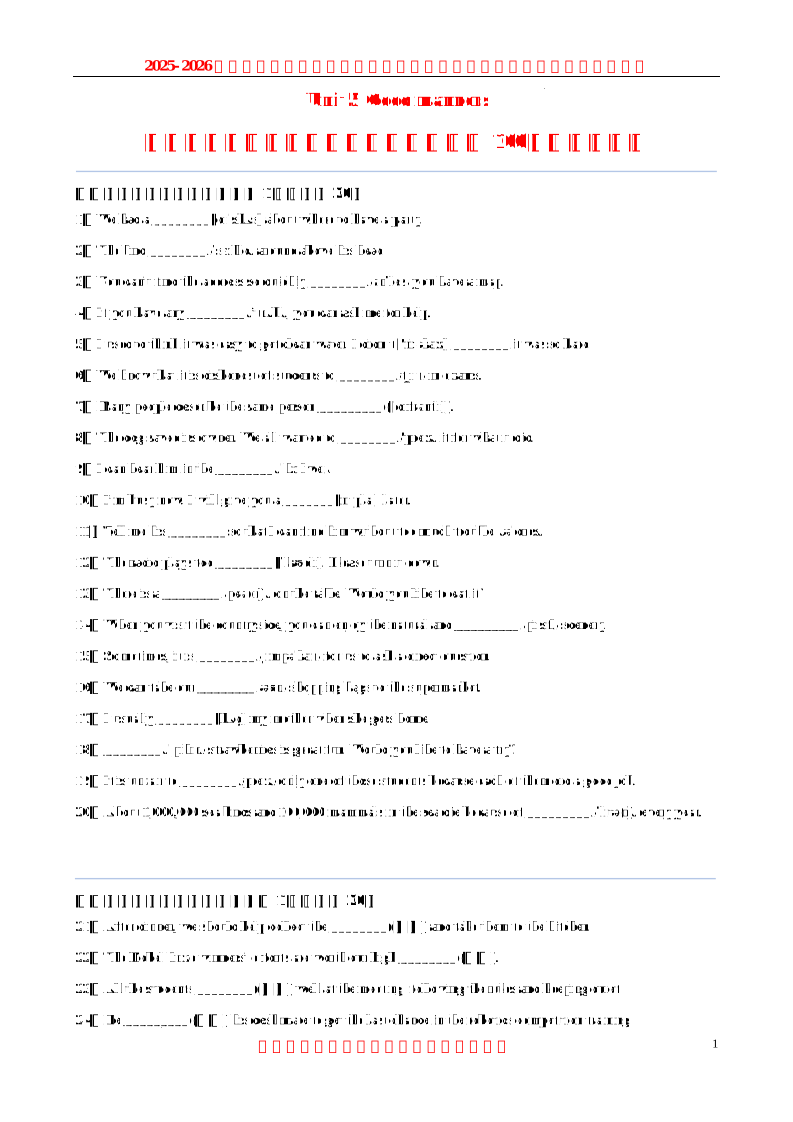
一、根据音标写单词,每小题1分,满分20分
1.We had a ________ [dɪˈskʌs] about where to have a party.
2.The bird ________ /ˈsɜːkld/ around above his head.
3.You can’t find the address so quickly ________ /ənˈles/ you have a map.
4.If you have any ________ /’trʌbl/, you can ask me for help.
5.I used to think it was easy to get clean water. I didn’t ['ri:əlaɪz] ________ it was so hard.
6.We know that it is dishonest of students to ________ /tʃiːt/ in exams.
7.Many people describe the same person _________ (['dɪfrəntlɪ]).
8.The dog saved its owner. We all wanted to ________ /'preɪz/ it for what it did.
9.I can hear him in the ________ /ˈhɔːlweɪ/.
10.I’m busy now. I will give you a _______ [rɪ’plaɪ] later.
11.Tell me his ________ so that I can find him without too much trouble. /əˈdres/
12.The radio plays too ________ [ˈlaʊdli]. Please turn it down.
13.There is a ________ /peə (r) / on the table. Would you like to eat it?
14.When you visit the countryside, you can enjoy the natural and _________ /pi:sfl/ scenery.
15.Sometimes, it is ________ /ˌɪmpəˈlaɪt/ for us to ask a direct question.
16.We can take our ________ /əʊn/ shopping bags to the supermarket.
17.I usually ________ [hʌɡ] my mother when she gets home.
18.________ /ˈpɪkɪŋ/ strawberries is great fun. Would you like to have a try?
19.It is unfair to ________ /preɪz/ only one of those students because each of them did a good job.
20.About 1,000,000 sea birds and 100,000 mammals in the sea die because of _________ /ˈlɪtə(r)/ every year.
(
建议用时:
10
分钟
实际
用时:分钟
)二、根据汉语提示填空,每小题1分,满分20分
21.After dinner, we should help collect the ________ (盘子) and take them to the kitchen.
22.The Nobel Prize winners’ efforts are worth our high ________ (赞美).
23.All the students ________ (表现) well at the meeting, following the rules and keeping quiet.
24.He _________ (欺骗) his desk mate to get the last chance in the robotics competition training.
25.Do you find it rude to _________ (挤开) others to get a seat?
26.Don’t run _________ (到另一侧) your classmates in the school hallway. It’s against the rules.
27.Students stood in a neat ________ (圆圈) to greet the headmaster politely.
28.Sometimes only a noisy child in the library ________ (使烦恼) all the people reading quietly.
29.Don’t you think that wearing ________ (耳机) while talking to others is rude?
30.The volunteer’s story in Wuxi’s Qingmingqiao Historic District deeply ________ (打动) everyone.
31.When the important guest arrived, she ________ (拥抱) her gently to show good manners.
32.You should not ask someone about their age or weight ________ (除非) they openly discuss these topics themselves.
33.When entering the concert hall, please walk at a slow pace and don’t ________ (冲).
34.The Book of Rites is a very important book about ________ (礼仪) in ancient China.
35.We had a big dinner in a ________ (当地的) restaurant when we travelled to Nanjing.
36.It’s ________ (不礼貌的) to shout loudly in public places.
37.You must not take photos in the museum if there is a “No Photos” ________ (标志).
38.We should learn about the ________ (传统的) manners in China to know more about our culture.
39.He gave a very ________ (精彩的) speech about good manners at the school meeting.
40.It’s important to learn about the cultural ________ (差异) between different countries.
(
建议用时:
10
分钟
实际
用时:分钟
)三、根据首字母填空,每小题1分,满分30分
41.It’s common to leave a t________ in a restaurant in the UK, but not in China.
42.The teacher will p________ the students if they break the school rules.
43.We should learn to c________ our feelings properly in public.
44.If you don’t want to go, you can r________ his invitation politely.
45.My h________ was very warm and friendly. He kept offering me food and drinks at the dinner.
46.When we receive p________ from others, we should say “thank you” in Western countries.
47.We often use “n________” to address others in a formal situation in China to show respect.
48.It’s i________ to shout loudly in the reading room.
49.We should always speak to the elderly in a p________ way.
50.We should wait in l________ when we buy tickets at the station.
51.Please remember to turn off the t________ after washing your hands to save water.
52.We shouldn’t drop l________ in the street. We should keep our city clean.
53.Don’t c________ in the exam. You should be an honest student.
54.He is a m________ boy. He never accepts praise openly.
55.Chinese people are very h________, so they often keep putting food on your plate.
56.It’s bad m________ to talk loudly in the library.
57.When you enter a friend’s house in Japan, you should r________ your shoes at the door.
58.The library has a special section for p________ school children with large print books.
59.Don’t l________ at people who make mistakes. Everyone makes them.
60.If you step on someone’s foot, you should a________ immediately.
61.The little girl w________ “good night” to her mum before sleeping.
62.You should never p________ your finger at others. It’s not polite.
63.In Japan, people b________ to show respect.
64.When you meet a friend, you may give a warm h________.
65.Please close the door q________ so that we don’t wake the baby.
66.The guests sat in a c________ around the dinner table.
67.The soup is too hot. Please blow on it g________ to cool it down.
68.The host asked us to help o________ to the food at the buffet.
69.We should r________ the rules and behave well in public.
70.He was very n________ before the exam because he didn’t prepare well.
(
建议用时:
15
分钟
实际
用时:分钟
)
四、用单词的适当形式填空,每小题1分,满分30分
71.________ (normal), people shake hands when they meet for the first time.
72.His father showed a ________ (please) look because he offered to set the table before dinner.
73.When having disagreements, we should talk ________ (open) but politely instead of shouting.
74.________ (refuse) others’ help politely is also a kind of good manners, like saying “Thanks, but I can manage it myself”.
75.If someone ________ (drop) something, she would always stop and help to pick it up.
76.The teacher keeps walking around the classroom and asking questions while the students ________ (prepare) their answers in a low voice.
77.Parents must be patient enough _________ (talk) with kids about their social media use.
78.We need to _________ (full) understand the proper way to ask questions and give feedback politely.
79.We are talking about where ________(spend) our summer holiday.
80.The box is too heavy for the little girl ________ (carry).
81.The little boy is brave enough ________ (save) the cat from the big dog.
82.It’s polite ________(greet) others with a smile when you meet them.
83.It’s rude ________ (push) past others in the street.
84.The problem is easy enough for him ________ (work) out.
85.Can you tell me which way ________ (choose) to get to the museum?
86.He didn’t know who ________ (ask) for help when he got lost.
87.It’s important for us ________ (learn) how to behave properly in public.
88.She gave us a clear ________ (explain) about the plan.
89.It’s necessary for us to learn table ________ (manner) in different countries.
90.He is a kind man and always talks to others ________ (soft).
91.If you keep doing things like that, you’ll be ________ (punish) sooner or later.
92.His ________ (behave) in public makes everyone like him very much.
93.We are supposed to behave ________ (respectful) when visiting a former residence of a celebrity.
94.Warm ________ (hug) from family members always make me feel loved and supported.
95.The ________ (peace) shore of Yuantouzhu by Taihu Lake needs quiet manners.
96.My brother is old enough ________ (take) care of himself.
97.Even though you don’t find the food ________ (taste), it’s good manners to thank the host sincerely all the same.
98.All the students left the hall ________ (quiet) after the talk on traditional customs.
99.Chinese people rarely exchange ________ (kiss) to greet each other, even in formal situations.
100.He is patient enough ________ (listen) to others carefully.
4
立足新教材,自学有章法,练习有重点!
3
立足新教材,自学有章法,练习有重点!
学科网(北京)股份有限公司
$
资源预览图
1

2

相关资源
由于学科网是一个信息分享及获取的平台,不确保部分用户上传资料的 来源及知识产权归属。如您发现相关资料侵犯您的合法权益,请联系学科网,我们核实后将及时进行处理。