Unit 5 Good manners 单词短语句型语法巩固复习练90题-2025-2026学年八年级英语下册核心题型讲通练透(译林版)
2026-04-24
|
2份
|
23页
|
298人阅读
|
7人下载

资源信息
| 学段 | 初中 |
|---|---|
| 学科 | 英语 |
| 教材版本 | 初中英语译林版八年级下册 |
| 年级 | 八年级 |
| 章节 | Unit 5 Good manners |
| 类型 | 题集-专项训练 |
| 知识点 | - |
| 使用场景 | 同步教学-单元练习 |
| 学年 | 2026-2027 |
| 地区(省份) | 全国 |
| 地区(市) | - |
| 地区(区县) | - |
| 文件格式 | ZIP |
| 文件大小 | 87 KB |
| 发布时间 | 2026-04-24 |
| 更新时间 | 2026-04-30 |
| 作者 | 赢未来学科培优教研室 |
| 品牌系列 | - |
| 审核时间 | 2026-04-24 |
| 下载链接 | https://m.zxxk.com/soft/57511479.html |
| 价格 | 3.00储值(1储值=1元) |
| 来源 | 学科网 |
摘要:
**基本信息**
聚焦“礼貌行为”主题,以“too...to/enough to”等核心结构为纲,系统整合语法规则、词汇应用与语用表达的单元复习专项。
**专项设计**
|模块|题量/典例|题型特征|知识逻辑|
|----|-----------|----------|----------|
|单项选择|20题|固定句型辨析(如too...to/ enough to)|从基础句型到语境应用,构建“结构规则-语义辨析-情景选择”逻辑链|
|单词拼写|30题|词汇形态转换(时态/词性/非谓语)|围绕“礼貌行为”主题词,形成“动词时态-词性变化-语境拼写”递进训练|
|完成句子|40题|语境语法应用(句型转换/译句)|融合语法结构与文化意识,实现“规则理解-词汇运用-语用表达”能力提升|
内容正文:
2025-2026学年一线教师制作新教材英语核心题型讲通练透系列资料,名师甄选!
2025-2026学年一线教师制作新教材英语核心题型讲通练透系列资料,名师甄选!
Unit 5 Good manners
单词短语句型语法巩固复习练90题
(
建议用时:
30
分钟
实际
用时:分钟
)
一、单项选择
1.Sometimes we are just ________ to refuse to do what we don’t want to do.
A.polite enough B.too polite C.rude enough D.too rude
【答案】B
【详解】句意:有时候我们只是太礼貌了而不能拒绝做我们不想做的事情。
polite enough足够礼貌;too polite太礼貌;rude enough足够粗鲁;too rude太粗鲁。too... to...表示“太……而不能……”,具有否定含义;adj.+ enough to表示“足够……去做……”,具有肯定含义。根据“refuse to do what we don’t want to do”,可知因为过于礼貌导致无法拒绝,符合too...to...结构表示否定结果的逻辑。
2.The little girl is old enough ________ dress herself. She is no longer a baby.
A.to B.for C.of D.with
【答案】A
【详解】句意:这个小女孩已经到了自己穿衣服的年龄了,她不再是一个婴儿了。
to可作介词,也可作不定式符号,后接动词原形;for为了,对于;of……的;with和……一起,带有。根据“The little girl is old enough...dress herself.”可知,此处是“be+形容词+enough+to do sth.”结构,表示“足够……去做某事”,空处需用不定式符号to。
3.As teenagers, we are old enough ________ our parents with housework.
A.helping B.to help C.helped D.help
【答案】B
【详解】句意:作为青少年,我们足够大,去帮助父母做家务。
固定搭配adj.+enough+to do sth.意为“足够……去做某事”。
4.It’s not _________ fix the problem, although time is clearly getting short.
A.late enough B.early enough C.too late to D.too early to
【答案】C
【详解】句意:虽然时间明显变得紧迫了,但解决问题还不太晚。
late enough足够晚;early enough足够早;too late to太晚而不能去……;too early to太早而不能去……。根据句中连词although可知,前后分句之间存在转折关系,尽管时间紧迫,但解决问题仍然来得及。固定结构too... to...,其否定形式not too...to...意为“还来得及做某事”,结合语境,“not too late to fix the problem”符合逻辑。
5.We need to be quick enough ________ the injured bird.
A.help B.helping C.to help D.helped
【答案】C
【详解】句意:我们需要足够快去帮助那只受伤的鸟。
“adj. + enough + to do sth.”意为“足够……去做某事”。根据“quick enough”可知,后接动词不定式。
6.—Why do you recommend Sandy to be a volunteer for the meeting?
—She is ________ to notice small changes around her and ready to give help in need.
A.too careful B.careless enough C.careful enough D.too careless
【答案】C
【详解】句意:——你为什么推荐桑迪做这次会议的志愿者?——她足够细心,能注意到身边细微的变化,并且愿意在有需要时提供帮助。
careful细心的;careless粗心的。too…to…意为“太……而不能……”,表示否定含义;enough to do意为“足够……去做某事”,表示肯定含义。根据“Why do you recommend Sandy to be a volunteer for the meeting?”可知,推荐她做志愿者,是因为她细心且能留意细节,应填careful enough。
7.The little girl is ________ to go to school. She is only two years old.
A.young enough B.old enough C.too old D.too young
【答案】D
【详解】句意:这个小女孩太小了,还不能上学。她只有两岁。
young enough年龄足够小(通常用于肯定句,表示“小到可以……”);old enough年龄足够大(表示已达到某年龄要求);too old太老;too young太小(常与to do连用,表示“太小而不能……”)。根据“She is only two years old”(她只有两岁)可知,她未到入学年龄,应用too...to...结构表示否定意义,意为“太……而不能……”,too young符合语境。
8.The instructions for the table setting in the lab are_________ difficult _________ the new students to understand in two minutes.
A.too; for B.so; that C.enough; for D.such; that
【答案】A
【详解】句意:实验室里餐桌摆放的说明太难了,新生们在两分钟内无法理解。
分析句子结构,空后为形容词difficult和不定式to understand,符合“too+adj.+for sb.+to do sth.”结构,表示“太……以至于某人不能……”。so... that...和 such... that...后需接从句,此处是不定式短语,故排除B、D;enough 修饰形容词时应后置,即difficult enough,排除C。
9.The soup is ________ hot. Please wait for a few minutes for it to ________.
A.too; cool off B.enough; cool down C.so; turn off D.very; fall off
【答案】A
【详解】句意:汤太烫了。请等几分钟让它凉下来。
too; cool off太;冷却;enough; cool down足够;冷却;so; turn off如此;关闭;very; fall off非常;掉落。第一空根据题干“The soup is ________ hot”可知,汤“太”烫了,应用too修饰hot;第二空根据题干“wait for a few minutes for it to ________”可知,汤需要冷却,应用cool off;
10.There are ________ many people in the room. It is ________ crowded.
A.too; too B.too; much C.very; so D.so; much
【答案】A
【详解】句意:房间里有太多人了。太拥挤了。
much不能直接修饰原级形容词,排除B、D项;very表示“非常”,不能修饰many,排除C项。too作副词表示“太、过于”,可以修饰形容词或限定词many。
11.The box is ________ heavy ________ the little girl to carry.
A.too; to B.enough; to C.too; for D.enough; for
【答案】C
【详解】句意:这个箱子太重了,这个小女孩搬不动。
too...to...太……而不能……;enough...to...足够……去做……;too....for...对……来说太……;enough...for...对……来说足够……。根据“The box is...heavy...the little girl to carry.”和结构可知,此处表示“对这个小女孩来说太重而搬不动”,应填too; for。
12.The problem is ________ hard for me to solve alone.
A.so B.very C.too D.quite
【答案】C
【详解】句意:这道题对我来说太难了,我无法独自解决。
too太;so如此;very非常;quite相当。根据固定结构“too…to…”(表示 “太…… 而不能……”),结合语境中“无法独自解决”的逻辑,可知此处需用“too hard to solve”表示“太难而无法解决”,应填too。
13.—My favourite subject is English. But I don’t like maths.
—I like English _______ and I don’t like maths ______.
A.too; either B.either; either
C.either; too D.too;too
【答案】A
【详解】句意:——我最喜欢的科目是英语。但我不喜欢数学。——我也喜欢英语,并且我也不喜欢数学。
too也(用于肯定句句末);either也(用于否定句句末)。第一空“I like English”是肯定句,应用too;第二空“I don’t like maths”是否定句,应用either;应填too; either。
14.The young man was ________ tired ________ say a word after running 10 kilometres.
A.so; that B.such; that C.too; to D.enough; to
【答案】C
【详解】句意:这个年轻人跑完10公里后,累得一个字都说不出来。
so…that和such…that后需要接完整的从句,第二空后是动词原形短语,不是完整从句;too +形容词/副词+ to do,含义为“太……而不能……”,符合句子结构和语义逻辑;enough…to表示“足够……去做……”,语义不符合语境。
15.My grandma started making short videos at 80. She says it’s never ________ late to learn.
A.enough B.so C.too D.quite
【答案】C
【详解】句意:我奶奶80岁开始制作短视频。她说学习永远不嫌太晚。
enough足够地;so如此;too太;quite相当。根据“She says it’s never…late to learn.”可知,此处为固定句型“never too…to…”意为“永远不会太……而不能……”,此处引申为“活到老,学到老”。应填too。
16.—It’s unbelievable that scientists are starting to use tools to talk with animals in their languages now.
—Sounds ________ to be true. How does it work?
A.good enough B.well enough C.too good D.too well
【答案】C
【详解】句意:——难以置信,科学家们现在开始使用工具,用动物的语言和它们交流了。——听起来好得令人难以置信。它是怎么运作的?
good enough足够好;well enough足够好(侧重方式);too good太好;too well太好(侧重身体或方式)。根据答句“Sounds…to be true”可知,此处使用固定结构“too...to...”,表示“太……而不能……”,且“sounds”为系动词,后接形容词作表语,应填too good。
17.—I like reading, but I don’t like sports. What about you?
—I like reading ________, and I don’t like sports ________.
A.too; too B.either; either C.too; either D.either; too
【答案】C
【详解】句意:——我喜欢阅读,但我不喜欢运动。你呢?——我也喜欢阅读,而且我也不喜欢运动。
考查副词辨析。too“也”,用于肯定句句末;either“也”,用于否定句句末。第一空前的“I like reading”是肯定句,应用too;第二空前的“I don’t like sports”是否定句,应用either。故选C。
18.We have some rice and meat for lunch. But today we had some pizza and soup ________.
A.too B.instead C.but D.even
【答案】B
【详解】句意:我们午餐吃一些米饭和肉。但今天我们吃了一些比萨和汤代替。
考查副词辨析。too也;instead代替;but但是;even甚至。根据“We have some rice and meat for lunch. But today we had some pizza and soup”可知,今天没吃米饭和肉,而是吃了比萨和汤,instead符合语境。故选B。
19.The young man is brave ________ to save the drowning child from the river.
A.enough B.too C.very D.so
【答案】A
【详解】句意:这个年轻人足够勇敢,从河里救起了溺水的孩子。
enough足够;too太;very非常;so如此。“adj. + enough + to do sth.”意为“足够……去做某事”,根据“The young man is brave ... to save the drowning child from the river.”可知,这个年轻人足够勇敢去救溺水的孩子。应填enough。
20.She didn’t speak clearly __________ for us to understand.
A.too B.so C.enough D.such
【答案】C
【详解】句意:她说得不够清楚,我们不能理解。
too太;so如此;enough足够;such如此。固定搭配“adj./adv. + enough + for sb. to do sth.”表示“足够……去做某事”,enough 修饰副词clearly需后置。
二、单词拼写
21.The teacher keeps walking around the classroom and asking questions while the students ________ (prepare) their answers in a low voice.
【答案】are preparing
【详解】句意:当学生们正低声准备答案时,老师在教室里来回走动并提问。while引导时间状语从句,强调主从句动作同时进行,从句常用进行时;主语students是复数,此处用are preparing。
22.If someone ________ (drop) something, she would always stop and help to pick it up.
【答案】dropped
【详解】句意:如果有人掉了东西,她总会停下来帮忙捡起来。if引导的条件状语从句,时态遵循“主将从现”原则,主句用would表示过去习惯性动作,if从句用一般过去时dropped。
23.My cousin got used to ________ (read) English aloud in the morning after he moved to the new school.
【答案】reading
【详解】句意:我表弟搬到新学校后,习惯了早上大声朗读英语。get used to doing sth是固定搭配,意为“习惯于做某事”,其中to是介词,后面接动名词形式reading。
24.Our class ________ (organize) three volunteer activities in the last few weeks.
【答案】has organized
【详解】句意:在过去的几周里,我们班已经组织了三次志愿活动。根据时间标志词in the last few weeks(在过去几周里),判定时态为现在完成时,结构为:have/has+过去分词。主语Our class为单数集体名词,助动词用has;organize的过去分词为organized。
25.He is too modest ________ (tell) others about his own good deeds and kind actions.
【答案】to tell
【详解】句意:他太谦虚了,不会向别人说起自己做的好事和善举。too...to do sth.是固定短语,表示“太……而不能做某事”,此处用动词不定式to tell。
26.________ (polite), through small kind actions, helps people get along well with each other.
【答案】Politeness
【详解】句意:礼貌,通过小小的善举,帮助人们彼此友好相处。句子缺少主语,需要用名词形式;polite是形容词,名词为politeness,位于句首首字母大写。
27.Online and offline communication may work ________ (different), but friendliness always matters.
【答案】differently
【详解】句意:线上和线下交流的方式可能有所不同,但友善永远很重要。work是动词,需要用副词来修饰。different是形容词,副词形式为differently。
28.The ________ (host) kindness made all guests feel welcome at the party.
【答案】host’s
【详解】句意:主人的善意让派对上所有客人都感到备受欢迎。kindness是名词,此处表示“主人的”,需用名词所有格形式,在host后加’s。
29.My deskmate ________ (回答) to my question patiently, with a smile. He made my day!
【答案】replied
【详解】句意:我的同桌面带微笑,耐心地回答了我的问题。他让我开心极了!reply to是固定短语,译为“回答、回复”,后句made为过去式,时态保持一致,故用replied。
30.It was too late to ________ (意识到) he was wrong to cut in on his classmate.
【答案】realize
【详解】句意:当意识到他打断同学是不对的时,已经太晚了。“意识到”可译为realize,too + 形容词 + to do sth.是固定用法,意为“太……而不能做某事”,to后面用动词原形realize。
31.Students should often ________ (称呼) teachers and elders in a formal way.
【答案】address
【详解】句意:学生应该经常用正式的方式称呼老师和长辈。“称呼” 英文为address,情态动词should后接动词原形。
32.We should talk ________ (恭敬地) to the elderly and listen to their advice carefully.
【答案】respectfully
【详解】句意:我们应该恭敬地和老年人交谈,并认真听取他们的建议。respectfully“恭敬地”,副词,修饰动词talk。
33.When Mr Wu came in, the students stopped talking and ________ (go) back to their seats.
【答案】went
【详解】句意:当吴老师进来时,学生们停止讲话,回到了自己的座位上。根据“When Mr Wu came in”可知,句子描述过去发生的动作,使用一般过去时,and连接并列的谓语动词,空处时态需要和stopped保持一致,因此要用go的过去式形式went。
34.We had a warm ________ (讨论) about how to be a polite person in our class meeting.
【答案】discussion
【详解】句意:我们在班会上就如何做一个有礼貌的人进行了热烈的讨论。形容词warm后接名词,根据中文提示“讨论”,discussion是名词,意为“讨论”,have a discussion表示“讨论”符合语境,所以填discussion。
35.It’s polite of you _________ (help) the old man cross the street.
【答案】to help
【详解】句意:你帮助那位老人过马路,真是很有礼貌啊。分析句子可知it是形式主语,此处应用动词不定式to help作真正主语。
36.Seasonal ________ (疾病) like the flu (流感) and colds are very common in winter.
【答案】diseases
【详解】句意:流感和感冒等季节性疾病在冬天很常见。“疾病”用disease表达,既可用作不可数名词,也可用作可数名词,在表示疾病的“种类”时,作可数名词。此处表示多种疾病,用复数形式 diseases,在句中作主语。
37.Listen carefully when others talk because it ________ (show) you value their words and feelings.
【答案】shows
【详解】句意:别人说话时认真倾听,因为这表明你重视他们的话语和感受。主语it是第三人称单数,且主句是一般现在时,从句谓语动词用三单形式shows。
38.—Did you hear the loud noise from the neighborhood last night?
—Sorry. I ________ (chat) with my classmates online about table manners.
【答案】was chatting
【详解】句意:——你昨晚听到附近传来的巨大声响了吗?——不好意思。我当时正在网上和同学聊餐桌礼仪。问句last night,询问过去某一时刻正在发生的事,用过去进行时was/were+doing 。主语为I ,be动词用was,chat变为chatting。
39.He looked quite worried. Nobody knew what ________ (happen) to him.
【答案】had happened
【详解】句意:他看起来很担心。没人知道他发生了什么事。句中前半句He looked quite worried是一般过去时,说明动作发生在过去。“发生了事”发生在“不知道”之前,即过去的过去,应用过去完成时。happen的过去完成时结构为had+过去分词,happen的过去分词是happened,故填had happened。
40.What do you think we can do ________ (help) students show better manners during online learning?
【答案】to help
【详解】句意:你认为我们可以做些什么来帮助学生在网课期间表现出更好的礼仪?句子的谓语为can do,空格前面是完整的主干,后用不定式to do表示目的,意为为了帮助。
41.The government helps teenagers in need by ________ (offer) them part-time jobs in many places.
【答案】offering
【详解】句意:政府通过在多地为有需要的青少年提供兼职工作来帮助他们。介词by后面必须跟动名词doing,offer变为offering。
42.Pointing at others is generally considered ________ (polite) in many cultures.
【答案】impolite
【详解】句意:在许多文化中,用手指指着别人通常被认为是不礼貌的。句中“Pointing at others”(用手指指着别人)在多数文化中是不礼貌的行为,因此需将形容词polite变为其反义词impolite。
43.The English teacher always waits ________ (patient) for the student to finish his or her answer before moving on to the next question.
【答案】patiently
【详解】句意:英语老师总是耐心地等待学生说完答案,再继续下一个问题。句中动词是waits(等待),修饰动词需要用副词。patient是形容词,意为“耐心的”,对应的副词形式是patiently(在形容词后直接加-ly),用来修饰动词waits,表示“等待”这个动作的状态。故填patiently。
44.Yulan Bing is ________ (taste) all because of its crispy outside and sticky, sweet inside.
【答案】tasty
【详解】句意:玉兰饼很美味,因为它外酥里糯香甜。be动词is后面用形容词作表语,taste 变为形容词tasty,意为美味的、可口的。
45.The students from the UK thanked their ________ (主人) families for the hospitality.
【答案】host
【详解】句意:来自英国的学生们感谢他们寄宿家庭的热情款待。host family是固定短语,意为寄宿家庭。host主人;东道主 。
46.He r________ (拒绝) the offer of more food politely because he had had more than enough.
【答案】refused/efused
【详解】句意:他礼貌地拒绝了再添食物的提议,因为他已经吃得很饱了。句中原因状语从句because he had had more than enough使用了过去完成时,说明“拒绝”这个动作发生在过去,需要用一般过去时。“拒绝”对应的英文单词是refuse,它的过去式是refused(以不发音的e结尾,直接加-d)。
47.The people who often ________ (赞美) others are usually popular.
【答案】praise
【详解】句意:经常赞美别人的人通常很受欢迎。“赞美”的英文为praise,主语who指代The people,为复数,一般现在时用原形。
48.Not ________ (答复) to an invitation message is thought to be rude in online communication.
【答案】replying
【详解】句意:在线交流中,不回复邀请消息被认为是不礼貌的。句中“答复”对应的英文单词是reply,此处动词短语作主语,常用动名词形式,所以填replying;且句中已有否定词Not,因此填replying,构成Not replying to...(不回复……)的动名词短语作主语。故填replying。
49.Many students have made ________ (承诺) to improve their dining manners and they have.
【答案】promises
【详解】句意:许多学生已经许下承诺要改进他们的用餐礼仪,而且他们也确实这么做了。固定短语,make promises做出承诺、许下承诺,因为主语Many students是复数,故名词用复数形式promises。
50.She is too shy ________ (express) her ideas in front of the class.
【答案】to express
【详解】句意:她太害羞了,以至于不敢在全班同学面前表达她的想法。句中“too…to…”意为“太……而不能……”,to为不定式符号,空处应填动词不定式to express。
51.They both _________ (record) funny moments during the class trip to the science museum.
【答案】recorded
【详解】句意:他们都在去科学博物馆的班级旅行中记录下了有趣的时刻。record意为“记录”,是动词。根据语境,描述过去发生的动作,应用一般过去时,record的过去式是recorded。
52.Nobody knows what he _________ (do) when the online class started.
【答案】was doing
【详解】句意:没有人知道在线课程开始时他在做什么。do意为“做”,是动词。根据时间状语从句“when the online class started”可知,主句动作在过去某一时刻正在进行,应用过去进行时。主语he为第三人称单数,助动词用was,do的现在分词为doing。故填was doing。
53.He was too shy _________ (say) “thank you” loudly, so he wrote a note instead.
【答案】to say
【详解】句意:他太害羞了而不能够大声说“谢谢你”,于是写了一张便条。say意为“说”,是动词,too...to...为固定结构,表示“太……而不能……”,后接动词原形。故填to say。
54.Our monitor _________ (organize) the class meeting about “cyber manners” at the moment.
【答案】is organizing
【详解】句意:我们的班长此刻正在组织关于“网络礼仪”的班会。organize意为“组织”,是动词,根据时间状语“at the moment”可知,动作正在进行,应用现在进行时,主语“Our monitor”为第三人称单数,be动词用is,organize的现在分词是organizing。
55.You can’t go wrong with _________ (make) a habit of saying “please,” “thank you,” and “excuse me” sincerely.
【答案】making
【详解】句意:养成真诚地说“请”“谢谢”“打扰了”的习惯是不会出错的。make是动词,with为介词,其后应接动名词作宾语,make的动名词形式是making。
56.So far, half of my classmates _________ (finish) the survey on how to communicate politely and respectfully in online classes.
【答案】have finished
【详解】句意:到目前为止,我一半的同学已经完成了关于如何礼貌且恭敬地在网课中进行交流的调查。finish意为“完成”,是动词。根据时间状语“So far”可知,应用现在完成时。主语是“half of my classmates”,助动词用have,finish的过去分词为finished。
57.At the community picnic, everyone brought something and the sweet _________ (pear) Amy brought were the most popular.
【答案】pears
【详解】句意:在社区野餐会上,每个人都带来了某物,Amy带来的甜梨是最受欢迎的。根据括号内所给单词提示可知,pear“梨”是可数名词,因为空后是were,所以此处要用复数形式,pear的复数形式是pears。
58.We have a weekly class _________ (discuss) about how to use learning apps properly and effectively.
【答案】discussion
【详解】句意:我们每周有一次课堂讨论,主题是如何正确有效地使用学习应用程序。discuss意为“讨论”,是动词。空处作宾语,应用名词形式discussion,a后接单数名词。故填discussion。
59.Talking _________ (loud) in the school dining hall or a restaurant is not good manners.
【答案】loudly
【详解】句意:在学校食堂或餐厅里大声说话是不礼貌的。loud意为“大声的”,是形容词。此处修饰动词Talking,应用副词形式loudly。故填loudly。
60.My grandparents _________ (拥有) a small farm in the countryside where they grow vegetables.
【答案】own
【详解】句意:我的祖父母在乡下拥有一个小农场,他们在那里种蔬菜。根据括号内中文提示“拥有”可知,此处应填动词own。根据从句“where they grow vegetables.”可知,主句时态为一般现在时,主语为复数,故用动词原形。
三、完成句子
61.我过去常常花很多时间玩游戏。
I ________________ spend a lot of time playing games.
【答案】 used to
【详解】原句中“过去常常”是关键词,表示“过去常常”的短语是used to,后接动词原形。
62.我们应该排队等候公共汽车。(完成译句)
We ________________________________ for the bus.
【答案】 should stand in line
【详解】原文中“应该排队”为关键词,should“应该”为情态动词,其后跟动词原形,stand in line“排队”,动词短语。
63.说到节水,记得别让水龙头一直开着。
When it ________ saving water, please remember not to ________.
【答案】 comes to leave the tap running
【详解】原句中“说到”和“让水龙头一直开着”是关键词,“说到……” 是固定搭配when it comes to...,其中to是介词,后接名词或动名词;“让水龙头一直开着”对应表达leave the tap running,且remember not to do sth.结构中to后接动词原形,故①填comes to;②填leave the tap running。
64.即使在家里用餐,嘴里含着食物说话也是不礼貌的。
It is ________ even when eating at home.
【答案】impolite to talk/speak with food in your mouth
【详解】原句中“是不礼貌的”是关键词,对应的英文单词为“impolite”;“嘴里含着食物说话”对应的英文短语为“talk/speak with food in your mouth”。分析本句结构,此处是固定句型“It is + adj. + to do sth.”,意为“做某事是……的”,需接动词不定式作真正的主语。
65.在正式场合, 我们应该礼貌地称呼他人而不是直接叫他们的名字, 以表示尊重。
In formal situations, we should ________ instead of calling them by their first names directly to show respect.
【答案】address others politely
【详解】原句的关键词是“礼貌地称呼他人”,对应的表达为address sb称呼某人(译林八下Unit5,Reading课本原词) others他人, politely礼貌地,副词修饰动词address,情态动词should后跟动词原形。
66.罗伯特的中国朋友足够友好, 邀请他吃晚餐并让他宾至如归。
Robert’s Chinese friend is ________ him to dinner and make him ________.
【答案】 kind enough to invite feel at home
【详解】原句的关键词是“足够友好去邀请”和“宾至如归”,be kind enough to do sth.可表示足够友好去做某事;invite sb to dinner表示邀请某人吃晚餐;make sb do sth.让某人做某事,动词用原形;feel at home宾至如归,固定短语。
67.在中国, 人们太谦逊了, 不会像英国人那样公开接受赞美。
In China, people are ________ like British people do.
【答案】too modest to accept praise openly
【详解】原句中“太谦逊了”和“公开接受赞美”是关键词,“太……而不……”用too...to...结构表达,“谦逊”对应modest,“公开接受赞美”对应accept praise openly;同时结合 “不像…… 那样”的对比逻辑,完整表达为too modest to accept praise openly,故填too modest to accept praise openly。
68.永远不要承诺你无法给予他人的东西,因为这会破坏信任和尊重。
Never __________________ you cannot give, as it breaks trust and respect.
【答案】promise others something
【详解】原句中“承诺他人……东西”是关键词,表示“向某人承诺某事”的英文是promise sb. sth.,是动词短语。祈使句用动词原形开头,never后接动词原形;表示“他人”的英文是others;用代词表示“某事;某物”。故填promise others something。
69.她小心地端着餐盘,以防撞上别人。
She held her tray carefully __________________ someone else.
【答案】in case she ran into
【详解】原句中“以防撞上”是关键词。in case“以防”,引导目的状语从句。run into“撞上”,动词短语。此句是一般过去时,动词用过去式ran。同时这是一个从句,需要主语she。
70.当其他人一直在耐心排队时,插队是非常粗鲁的。
It is very rude to __________________ when other people have been waiting patiently for their turn.
【答案】jump the line
【详解】原句中“插队”是关键词,表示“插队”的英文是jump the line,是动词短语,不定式符号to后接动词原形。
71.请不要同时说话,这样每个人都有礼貌发言的机会。
Please don’t talk __________________ so everyone gets a chance to speak politely.
【答案】at the same time
【详解】原句中关键词 “同时”,对应的固定英文短语表达为“at the same time”。 故填at the same time。答案不唯一。
72.The background music in the restaurant is so loud that we can’t have a conversation. (同义句转换)
The background music in the restaurant is ______________________________________________________ a conversation.
【答案】 too loud for us to have
【详解】句意:这家餐厅里的背景音乐太吵了,我们根本没法正常交谈。英语固定搭配too+形容词+for sb. to do sth.,意为 “太……以至于某人不能做某事”,和原句so loud that we can’t表意完全对等。 loud表示“吵闹的”;for us表示 “对我们来说”;to have a conversation表示“进行交谈”。 结合原句so loud that we can’t have a conversation的否定结果含义,故填too;loud;for;us;to;have。
73.The line at the bank isn’t short enough for the impatient customers to wait in.
The line at the bank is __________________ for the impatient customers __________________ in.
【答案】 too long to wait
【详解】句意:银行的队伍不够短,无法让不耐烦的顾客排队等候。分析句子可知,该句进行同义转换,需要把原句中“isn’t short enough…to wait”替换为is too long…to wait即可,其中too是副词,修饰形容词long,to是不定式符号,后跟动词原形wait作结果状语,too…to…“太……以至于不能……”,固定搭配。故填too;long;to;wait。
74.There are too many rules, so visitors cannot remember them all at once. (同义句转换)
There are ___________________________ for visitors __________________ them all at once.
【答案】 too many rules to remember
【详解】句意:规则太多了,所以游客没办法一下子全部记住。此处可表述为“对游客来说,规则太多了,而不能一下子全部记住”,“too…to…”表示“太……而不能……”,故填too;many;rules;to;remember。
75.She was very honest and kept the lost wallet for its owner. (改为enough to…结构)
She was ____________________________________ the lost wallet for its owner.
【答案】 honest enough to keep
【详解】句意:她非常诚实,为失主保管丢失的钱包。原句用并列句表达“足够诚实从而做某事”的含义,改写时可使用固定结构“adj.+enough to do sth.”来替换,表示“足够……去做某事”。原句中的“very honest”对应“honest enough”,“and kept”对应 “to keep”,因此填入honest enough to keep。
76.The child isn’t very patient, so he can’t wait for his turn quietly.
The child isn’t ____________________________________ for his turn quietly.
【答案】 patient enough to wait
【详解】句意:这孩子不是很有耐心,所以他不能安静地等待轮到他。分析句子可知,进行同义句转化,可以用enough来替换very修饰形容词patient并后置,enough…to do sth“足够…做某事”,固定搭配,wait“等待”,用不定式to wait作结果状语。
77.The tourist was so polite that he always kept his voice down in the museum.
The tourist was ___________________________ always _________ his voice down in the museum.
【答案】 polite enough to keep
【详解】句意:这位游客很有礼貌,在博物馆里总是压低声音。原句“so...that...”引导结果状语从句,表示“如此……以至于……”,同义句可用“enough to do sth.”结构,表示“足够……可以做某事”,polite enough意为“足够礼貌”,后跟不定式to keep。
78.我们必须学会如何在不同的场合表现得体。
We must learn ________________________ properly in different situations.
【答案】 how to behave
【详解】原句中“如何表现得体”是关键词,本句中learn后接“疑问词+不定式”结构作宾语,“如何”用疑问词how表示,“表现”用动词behave表示,构成how to behave,故填how to behave。
79.在中国,用筷子指着别人是不礼貌的。
________________________ point at others with chopsticks in China.
【答案】 It’s impolite to
【详解】原句中“不礼貌的”是关键词,“不礼貌的”用impolite表达,句子是固定句型“It’s/It is+形容词+to do sth.”,意为“做某事是……的”,其中it是形式主语,不定式是真正主语。句首单词的首字母要大写。
80.他足够有耐心,能一遍又一遍地给我们解释规则。
He is ________________________________ the rules to us again and again.
【答案】 patient enough to explain
【详解】原句中“足够有耐心”和“解释”是关键词,表示“足够……去做某事”的固定结构是be+形容词+enough to do sth.,“耐心的”用形容词patient,enough后置。“解释”用动词explain,与to构成不定式短语作结果状语。
81.直到所有人都准备好了,你才能开始吃饭。
You ________ start eating ________ everyone is ready.
【答案】 shouldn’t/can’t until
【详解】首先,句子表达“直到…… 才……”的含义,需用到英语中的固定结构not…until…。其次,“不应该”的英文表达为情态动词的否定形式shouldn’t,对应结构中的“not”部分。最后,“直到”的英文表达为连词until,引导时间状语从句,构成完整的“not…until…”结构。因此,①填shouldn’t,②填until。
82.我们应该避免在吃饭的时候谈论不愉快的事情。
We should ________________ about unpleasant things while having dinner.
【答案】 avoid talking
【详解】原句中“避免”和“谈论”是关键词,表示“避免做某事”的固定搭配是avoid doing sth.,“谈论”用动词talk,此处需变为talking。情态动词should后接动词原形,故填avoid talking。
83.这个孩子已经足够大了,可以自己穿衣服了。
The child is ________________________________ himself.
【答案】 old enough to dress
【详解】原句中“足够大”和“可以自己穿衣服了”是关键词,表示“足够大可以做某事”的英文是old enough to do sth;表示“给……穿衣服”的英文是dress,to后接动词原形。
84.他太害羞了,不敢在全班同学面前发表演讲。
He is ________________________________ a speech in front of the whole class.
【答案】 too shy to give
【详解】原句中“太害羞了,不敢……做……”是关键词,表示“太……而不能……”的短语是too...to...;表示“害羞的”形容词为shy;“发表演讲”用give a speech。
85.在公共场合压低你的声音是有礼貌的。
It’s polite to ________________________________________________.
【答案】 keep your voice down in public
【详解】原句中“在公共场合压低你的声音”是关键词,“在公共场合”用in public表达;“压低你的声音”用keep your voice down表达,句子是固定句型“It’s+形容词+to do sth.”,意为“做某事是……的”,其中it是形式主语;不定式是真正主语,不定式由“to+动词原形”构成。
86.如果你挡了别人的路,你应该说声”对不起”然后让开。
If you are ________________________, you should say “sorry” and move away.
【答案】 in others’ way
【详解】原句中“挡了别人的路”是关键词,“挡了别人的路”用in others’ way表达,是固定短语,是介词短语在句中作表语。
87.入乡随俗,当你在国外旅行时,你应该遵循当地的习俗。
________________________, ________________________________________. When you travel abroad, you should follow the local customs.
【答案】 When in Rome do as the Romans do
【详解】原文中的关键词是“入乡随俗”,表示入乡随俗的谚语是“When in Rome, do as the Romans do.”。
88.He spent 2 hours finishing his report yesterday.(改为同义句)
It ________ him 2 hours ________________ his report yesterday.
【答案】 took to finish
【详解】句意:他昨天花了两个小时写完他的报告。原句:sb. spend some time doing sth.,表示“某人花时间做某事”,同义句型:It takes sb. some time to do sth.,表示“做某事花费某人多长时间”,原句是yesterday,改写后的句子也应用一般过去时,所以take变过去式took,后面用to finish。
89.We should keep the classroom clean and tidy.(改为被动语态)
The classroom should ________________ clean and tidy by us.
【答案】 be kept
【详解】句意:我们应该保持教室干净整洁。改为被动语态时,主语The classroom与keep之间为被动关系。被动结构为“情态动词 + be + 过去分词”,should后接be,keep的过去分词为kept。
90.The problem is too difficult for us to solve.(改为同义句)
The problem isn’t ________________ for us to solve.
【答案】 easy enough
【详解】句意:这道题对我们来说太难了,解不出来。原句用了too...to...结构,表示“太……而不能……”,要改写为同义句,需要转换为not...enough to...结构,意为“不够……而不能……”。原句的too difficult(太难)可以转换为not easy enough(不够容易),两者表达的是同一个意思。 故填easy;enough。
16
立足新教材,自学有章法,练习有重点!
17
立足新教材,自学有章法,练习有重点!
学科网(北京)股份有限公司
$
2025-2026学年一线教师制作新教材英语核心题型讲通练透系列资料,名师甄选!
2025-2026学年一线教师制作新教材英语核心题型讲通练透系列资料,名师甄选!
Unit 5 Good manners
单词短语句型语法巩固复习练90题
(
建议用时:
30
分钟
实际
用时:分钟
)
一、单项选择
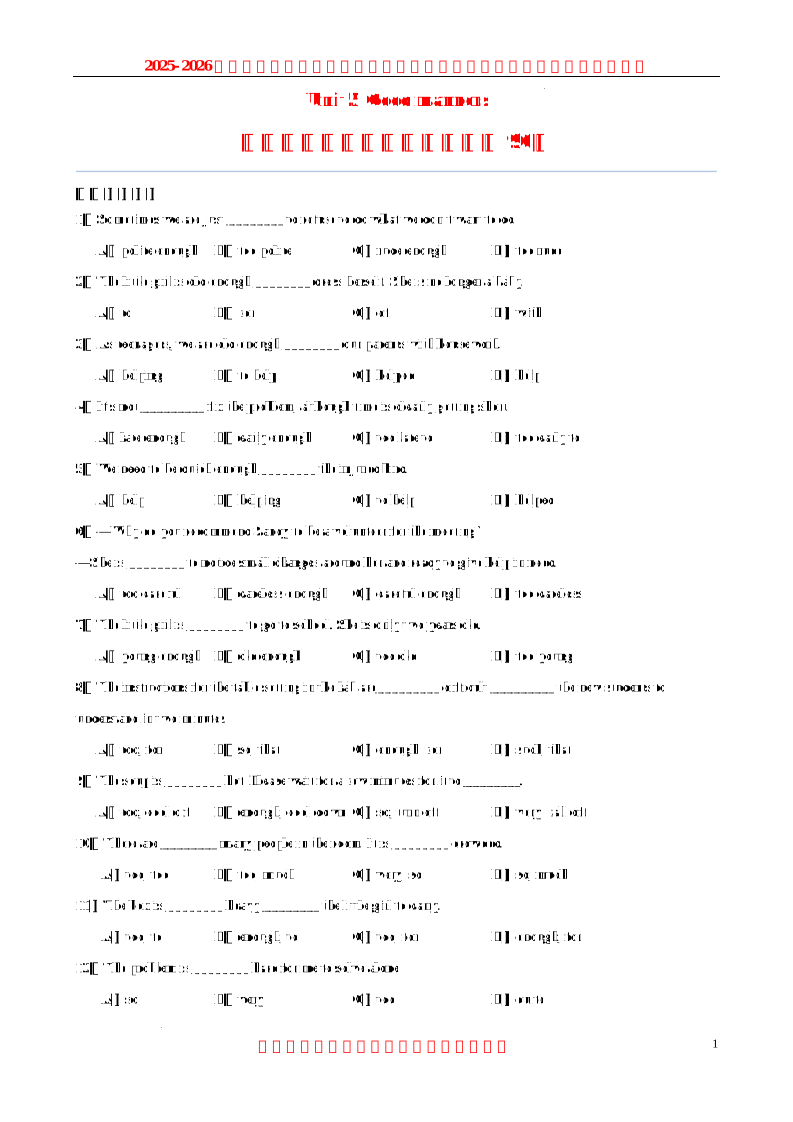
1.Sometimes we are just ________ to refuse to do what we don’t want to do.
A.polite enough B.too polite C.rude enough D.too rude
2.The little girl is old enough ________ dress herself. She is no longer a baby.
A.to B.for C.of D.with
3.As teenagers, we are old enough ________ our parents with housework.
A.helping B.to help C.helped D.help
4.It’s not _________ fix the problem, although time is clearly getting short.
A.late enough B.early enough C.too late to D.too early to
5.We need to be quick enough ________ the injured bird.
A.help B.helping C.to help D.helped
6.—Why do you recommend Sandy to be a volunteer for the meeting?
—She is ________ to notice small changes around her and ready to give help in need.
A.too careful B.careless enough C.careful enough D.too careless
7.The little girl is ________ to go to school. She is only two years old.
A.young enough B.old enough C.too old D.too young
8.The instructions for the table setting in the lab are_________ difficult _________ the new students to understand in two minutes.
A.too; for B.so; that C.enough; for D.such; that
9.The soup is ________ hot. Please wait for a few minutes for it to ________.
A.too; cool off B.enough; cool down C.so; turn off D.very; fall off
10.There are ________ many people in the room. It is ________ crowded.
A.too; too B.too; much C.very; so D.so; much
11.The box is ________ heavy ________ the little girl to carry.
A.too; to B.enough; to C.too; for D.enough; for
12.The problem is ________ hard for me to solve alone.
A.so B.very C.too D.quite
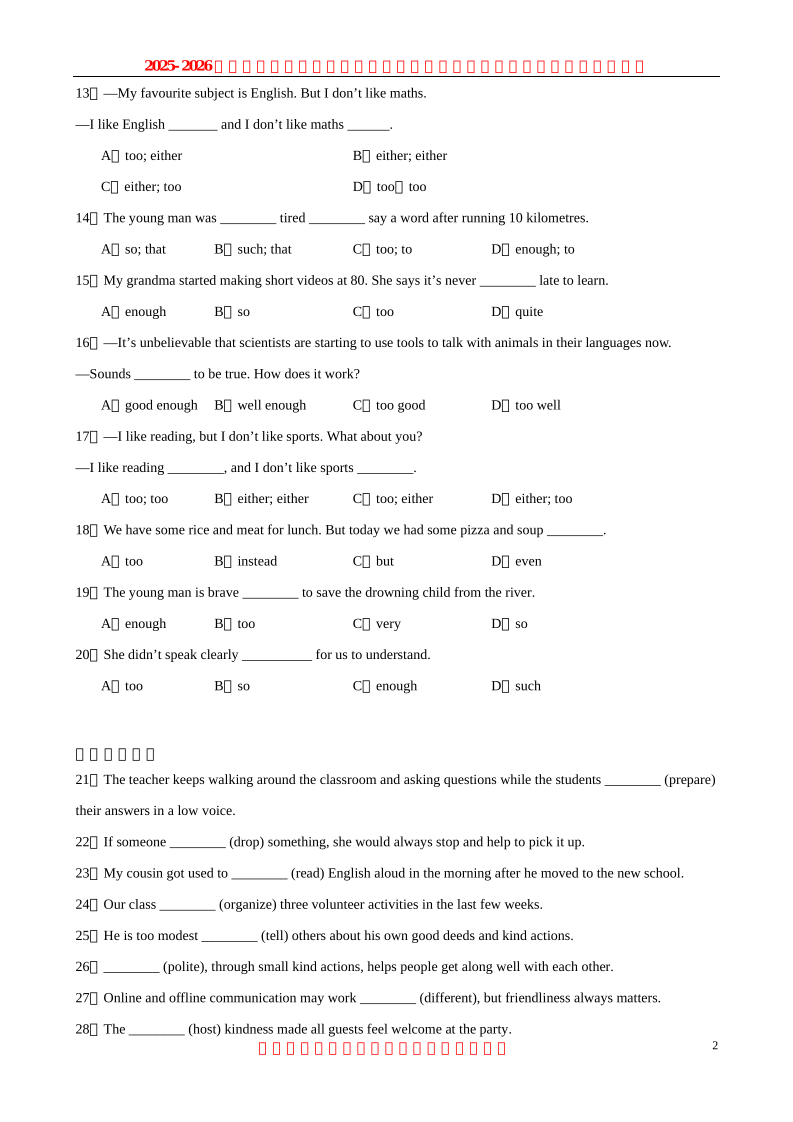
13.—My favourite subject is English. But I don’t like maths.
—I like English _______ and I don’t like maths ______.
A.too; either B.either; either
C.either; too D.too;too
14.The young man was ________ tired ________ say a word after running 10 kilometres.
A.so; that B.such; that C.too; to D.enough; to
15.My grandma started making short videos at 80. She says it’s never ________ late to learn.
A.enough B.so C.too D.quite
16.—It’s unbelievable that scientists are starting to use tools to talk with animals in their languages now.
—Sounds ________ to be true. How does it work?
A.good enough B.well enough C.too good D.too well
17.—I like reading, but I don’t like sports. What about you?
—I like reading ________, and I don’t like sports ________.
A.too; too B.either; either C.too; either D.either; too
18.We have some rice and meat for lunch. But today we had some pizza and soup ________.
A.too B.instead C.but D.even
19.The young man is brave ________ to save the drowning child from the river.
A.enough B.too C.very D.so
20.She didn’t speak clearly __________ for us to understand.
A.too B.so C.enough D.such
二、单词拼写
21.The teacher keeps walking around the classroom and asking questions while the students ________ (prepare) their answers in a low voice.
22.If someone ________ (drop) something, she would always stop and help to pick it up.
23.My cousin got used to ________ (read) English aloud in the morning after he moved to the new school.
24.Our class ________ (organize) three volunteer activities in the last few weeks.
25.He is too modest ________ (tell) others about his own good deeds and kind actions.
26.________ (polite), through small kind actions, helps people get along well with each other.
27.Online and offline communication may work ________ (different), but friendliness always matters.
28.The ________ (host) kindness made all guests feel welcome at the party.
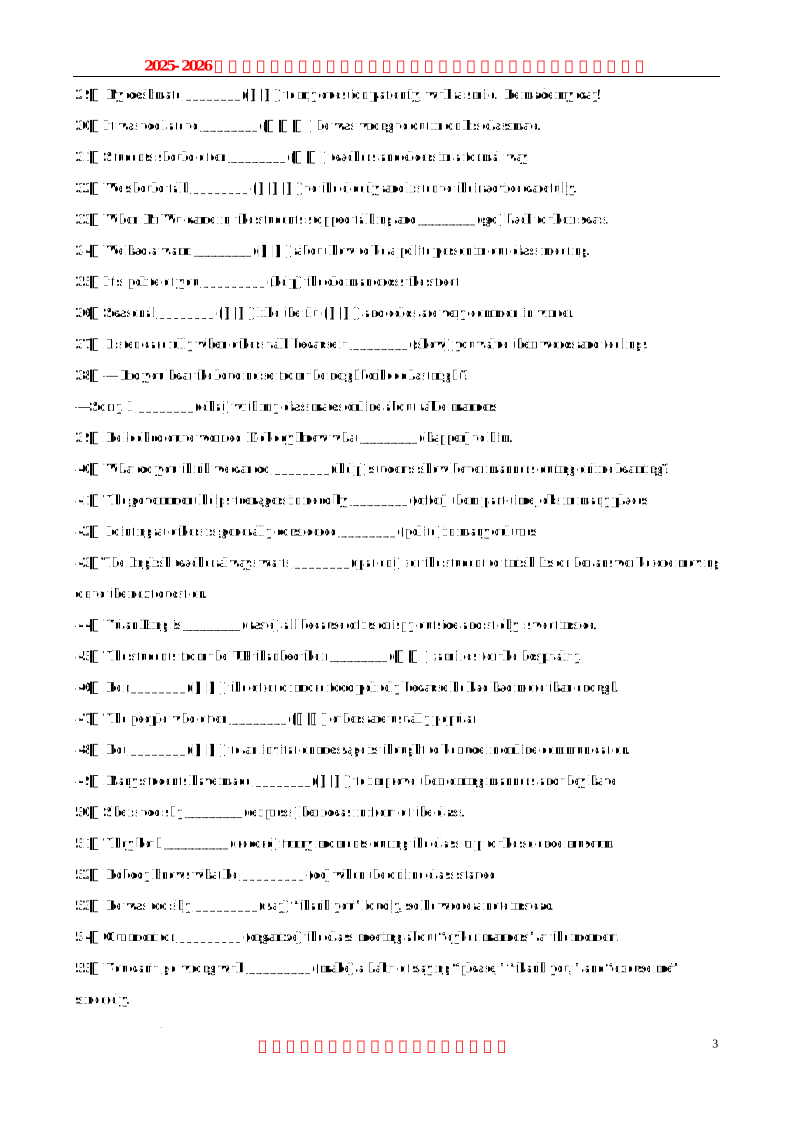
29.My deskmate ________ (回答) to my question patiently, with a smile. He made my day!
30.It was too late to ________ (意识到) he was wrong to cut in on his classmate.
31.Students should often ________ (称呼) teachers and elders in a formal way.
32.We should talk ________ (恭敬地) to the elderly and listen to their advice carefully.
33.When Mr Wu came in, the students stopped talking and ________ (go) back to their seats.
34.We had a warm ________ (讨论) about how to be a polite person in our class meeting.
35.It’s polite of you _________ (help) the old man cross the street.
36.Seasonal ________ (疾病) like the flu (流感) and colds are very common in winter.
37.Listen carefully when others talk because it ________ (show) you value their words and feelings.
38.—Did you hear the loud noise from the neighborhood last night?
—Sorry. I ________ (chat) with my classmates online about table manners.
39.He looked quite worried. Nobody knew what ________ (happen) to him.
40.What do you think we can do ________ (help) students show better manners during online learning?
41.The government helps teenagers in need by ________ (offer) them part-time jobs in many places.
42.Pointing at others is generally considered ________ (polite) in many cultures.
43.The English teacher always waits ________ (patient) for the student to finish his or her answer before moving on to the next question.
44.Yulan Bing is ________ (taste) all because of its crispy outside and sticky, sweet inside.
45.The students from the UK thanked their ________ (主人) families for the hospitality.
46.He r________ (拒绝) the offer of more food politely because he had had more than enough.
47.The people who often ________ (赞美) others are usually popular.
48.Not ________ (答复) to an invitation message is thought to be rude in online communication.
49.Many students have made ________ (承诺) to improve their dining manners and they have.
50.She is too shy ________ (express) her ideas in front of the class.
51.They both _________ (record) funny moments during the class trip to the science museum.
52.Nobody knows what he _________ (do) when the online class started.
53.He was too shy _________ (say) “thank you” loudly, so he wrote a note instead.
54.Our monitor _________ (organize) the class meeting about “cyber manners” at the moment.
55.You can’t go wrong with _________ (make) a habit of saying “please,” “thank you,” and “excuse me” sincerely.
56.So far, half of my classmates _________ (finish) the survey on how to communicate politely and respectfully in online classes.
57.At the community picnic, everyone brought something and the sweet _________ (pear) Amy brought were the most popular.
58.We have a weekly class _________ (discuss) about how to use learning apps properly and effectively.
59.Talking _________ (loud) in the school dining hall or a restaurant is not good manners.
60.My grandparents _________ (拥有) a small farm in the countryside where they grow vegetables.
三、完成句子
61.我过去常常花很多时间玩游戏。
I ________________ spend a lot of time playing games.
62.我们应该排队等候公共汽车。(完成译句)
We ________________________________ for the bus.
63.说到节水,记得别让水龙头一直开着。
When it ________ saving water, please remember not to ________.
64.即使在家里用餐,嘴里含着食物说话也是不礼貌的。
It is ________ even when eating at home.
65.在正式场合, 我们应该礼貌地称呼他人而不是直接叫他们的名字, 以表示尊重。
In formal situations, we should ________ instead of calling them by their first names directly to show respect.
66.罗伯特的中国朋友足够友好, 邀请他吃晚餐并让他宾至如归。
Robert’s Chinese friend is ________ him to dinner and make him ________.
67.在中国, 人们太谦逊了, 不会像英国人那样公开接受赞美。
In China, people are ________ like British people do.
68.永远不要承诺你无法给予他人的东西,因为这会破坏信任和尊重。
Never __________________ you cannot give, as it breaks trust and respect.
69.她小心地端着餐盘,以防撞上别人。
She held her tray carefully __________________ someone else.
70.当其他人一直在耐心排队时,插队是非常粗鲁的。
It is very rude to __________________ when other people have been waiting patiently for their turn.
71.请不要同时说话,这样每个人都有礼貌发言的机会。
Please don’t talk __________________ so everyone gets a chance to speak politely.
72.The background music in the restaurant is so loud that we can’t have a conversation. (同义句转换)
The background music in the restaurant is ______________________________________________________ a conversation.
73.The line at the bank isn’t short enough for the impatient customers to wait in.
The line at the bank is __________________ for the impatient customers __________________ in.
74.There are too many rules, so visitors cannot remember them all at once. (同义句转换)
There are ___________________________ for visitors __________________ them all at once.
75.She was very honest and kept the lost wallet for its owner. (改为enough to…结构)
She was ____________________________________ the lost wallet for its owner.
76.The child isn’t very patient, so he can’t wait for his turn quietly.
The child isn’t ____________________________________ for his turn quietly.
77.The tourist was so polite that he always kept his voice down in the museum.
The tourist was ___________________________ always _________ his voice down in the museum.
78.我们必须学会如何在不同的场合表现得体。
We must learn ________________________ properly in different situations.
79.在中国,用筷子指着别人是不礼貌的。
________________________ point at others with chopsticks in China.
80.他足够有耐心,能一遍又一遍地给我们解释规则。
He is ________________________________ the rules to us again and again.
81.直到所有人都准备好了,你才能开始吃饭。
You ________ start eating ________ everyone is ready.
82.我们应该避免在吃饭的时候谈论不愉快的事情。
We should ________________ about unpleasant things while having dinner.
83.这个孩子已经足够大了,可以自己穿衣服了。
The child is ________________________________ himself.
84.他太害羞了,不敢在全班同学面前发表演讲。
He is ________________________________ a speech in front of the whole class.
85.在公共场合压低你的声音是有礼貌的。
It’s polite to ________________________________________________.
86.如果你挡了别人的路,你应该说声”对不起”然后让开。
If you are ________________________, you should say “sorry” and move away.
87.入乡随俗,当你在国外旅行时,你应该遵循当地的习俗。
________________________, ________________________________________. When you travel abroad, you should follow the local customs.
88.He spent 2 hours finishing his report yesterday.(改为同义句)
It ________ him 2 hours ________________ his report yesterday.
89.We should keep the classroom clean and tidy.(改为被动语态)
The classroom should ________________ clean and tidy by us.
90.The problem is too difficult for us to solve.(改为同义句)
The problem isn’t ________________ for us to solve.
6
立足新教材,自学有章法,练习有重点!
5
立足新教材,自学有章法,练习有重点!
学科网(北京)股份有限公司
$
资源预览图
1
2
3

相关资源
由于学科网是一个信息分享及获取的平台,不确保部分用户上传资料的 来源及知识产权归属。如您发现相关资料侵犯您的合法权益,请联系学科网,我们核实后将及时进行处理。