Unit 2 Section A 1a-1d 课件 2025-2026学年人教版英语八年级下册
2026-04-23
|
25页
|
101人阅读
|
1人下载
普通
资源信息
| 学段 | 初中 |
|---|---|
| 学科 | 英语 |
| 教材版本 | 初中英语人教版八年级下册 |
| 年级 | 八年级 |
| 章节 | Section A,1a-1d,Unit 2 Stay Healthy |
| 类型 | 课件 |
| 知识点 | - |
| 使用场景 | 同步教学-新授课 |
| 学年 | 2026-2027 |
| 地区(省份) | 全国 |
| 地区(市) | - |
| 地区(区县) | - |
| 文件格式 | PPTX |
| 文件大小 | 7.18 MB |
| 发布时间 | 2026-04-23 |
| 更新时间 | 2026-04-23 |
| 作者 | 危险化学品 |
| 品牌系列 | - |
| 审核时间 | 2026-04-23 |
| 下载链接 | https://m.zxxk.com/soft/57503402.html |
| 价格 | 2.00储值(1储值=1元) |
| 来源 | 学科网 |
内容正文:
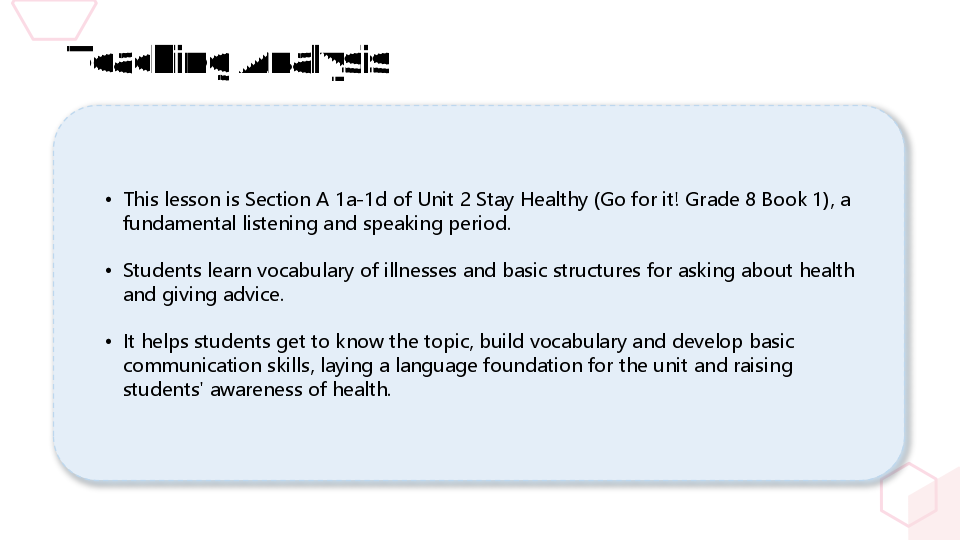
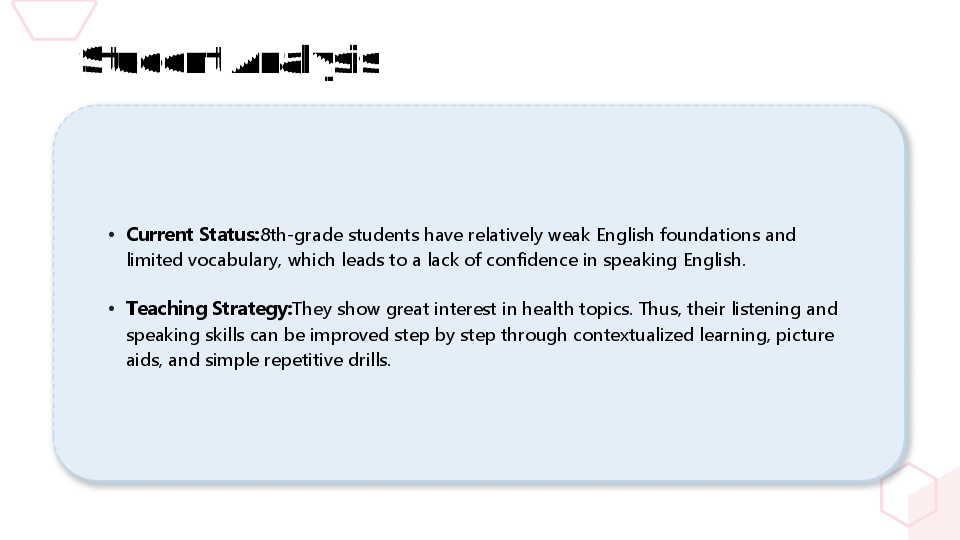
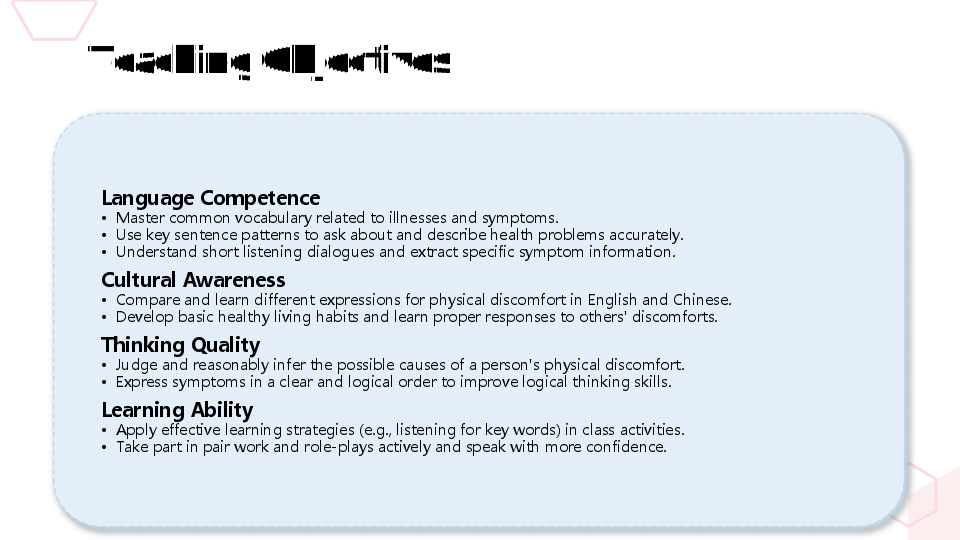
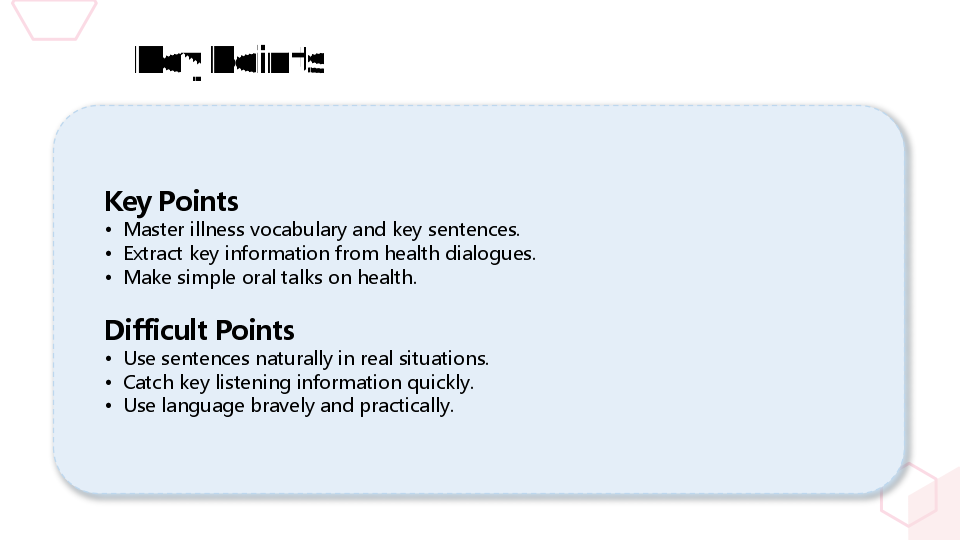
Lesson Presentation for Section A 1a-1d Speaker: Liu Qiao PEP English for Grade 8, Book 2, Unit 2 Stay Healthy 1.7.2013 Good morning, everyone. Today, I'm very glad to present my lesson for Unit 2, Stay Healthy, Section A, first period. This lesson focuses on the topic of health and illness, aiming to equip students with the necessary vocabulary and sentence patterns to communicate about their physical well-being. ‹#› CONTENTS Teaching Analysis This lesson is Section A 1a-1d of Unit 2 Stay Healthy (Go for it! Grade 8 Book 1), a fundamental listening and speaking period. Students learn vocabulary of illnesses and basic structures for asking about health and giving advice. It helps students get to know the topic, build vocabulary and develop basic communication skills, laying a language foundation for the unit and raising students' awareness of health. 1.7.2013 First, let's look at the teaching analysis. This lesson is the foundational listening-and-speaking section of Unit 2. It's designed to introduce students to the topic of health, build their vocabulary related to illnesses, and develop their basic communicative skills. This lesson is crucial as it lays a solid language foundation for the entire unit and, more importantly, raises students' awareness about staying healthy. ‹#› Student Analysis Current Status:8th-grade students have relatively weak English foundations and limited vocabulary, which leads to a lack of confidence in speaking English. Teaching Strategy:They show great interest in health topics. Thus, their listening and speaking skills can be improved step by step through contextualized learning, picture aids, and simple repetitive drills. 1.7.2013 Next, let's consider the student analysis. My students are in Grade 8. They have a relatively weak English foundation and limited vocabulary, which sometimes makes them lack confidence in speaking. However, they show a strong interest in health topics. By using contextualized activities, picture assistance, and simple repeated drills, I believe their listening and speaking abilities can be effectively improved. ‹#› Teaching Objectives Language Competence Master common vocabulary related to illnesses and symptoms. Use key sentence patterns to ask about and describe health problems accurately. Understand short listening dialogues and extract specific symptom information. Cultural Awareness Compare and learn different expressions for physical discomfort in English and Chinese. Develop basic healthy living habits and learn proper responses to others' discomforts. Thinking Quality Judge and reasonably infer the possible causes of a person's physical discomfort. Express symptoms in a clear and logical order to improve logical thinking skills. Learning Ability Apply effective learning strategies (e.g., listening for key words) in class activities. Take part in pair work and role-plays actively and speak with more confidence. 1.7.2013 Based on the analysis, I've set the following teaching objectives aligned with the core competencies. In terms of Language Competence, students will master key vocabulary and sentences. For Cultural Awareness, they will learn about health expressions and develop healthy habits. In terms of Thinking Quality, they will learn to infer causes and express themselves logically. Finally, for Learning Ability, they will learn effective strategies and build confidence. ‹#› Key Points Key Points Master illness vocabulary and key sentences. Extract key information from health dialogues. Make simple oral talks on health. Difficult Points Use sentences naturally in real situations. Catch key listening information quickly. Use language bravely and practically. 1.7.2013 The key points of this lesson are to master the illness vocabulary and core sentences, to extract information from dialogues, and to conduct simple oral communication. The difficult points lie in using the sentences naturally in real situations, quickly catching key information during listening, and ultimately, transitioning from just knowing the language to using it bravely and practically. ‹#› Methods & Strategies Teaching Methods • Demonstration Method • Situational Teaching Method • Task-based Teaching Method Learning Methods • Listening-Speaking Combined Method • Group Cooperative Learning Method Learning Tools • PPT, audio and video materials 1.7.2013 To achieve these objectives, I will employ a combination of teaching methods, including demonstration, situational teaching, and task-based learning. For students, I encourage listening-speaking integration and group cooperation. The main teaching aids will be PPT, audio materials, and pictures to create an engaging learning environment. ‹#› Teaching Process This section is carried out in six progressive steps, emphasizing "student-centered and teacher-led" principles, and breaks through key and difficult points in a progressive way. 1.7.2013 The teaching process will follow six progressive steps, adhering to the "student-centered and teacher-led" principle. Each step is designed to build upon the previous one, ensuring that students can grasp the key points and overcome the difficulties gradually. ‹#› 01 Warming up Teaching Process 1.7.2013 Let's begin with Step 1: Warming up. This step aims to engage students and introduce the topic of health in a fun and interactive way. ‹#› Instruction: Play the video to the class. Goal: Activate Students' prior knowledge about health vocabulary. 1.7.2013 In the warming-up activity, I will play the video. I'll ask questions like "Are they OK?", "What's wrong with him?", to naturally lead into the topic of health problems and activate their prior knowledge. ‹#› 02 Presentation Teaching Process 1.7.2013 Now we move to Step 2: Pre-listening. This stage is important for preparing students for the listening task by teaching them the necessary vocabulary and sentence patterns. ‹#› 核心词汇 (Key Vocabulary) sore throat toothache stomachache backache headache cut Present the new vocabulary and students will match these words with the corresponding pictures. This helps them visually match the words with their meanings. 1.7.2013 First, we'll do activity 1a. I will present the new vocabulary: sore throat, stomachache, headache, toothache, backache, and cut. Then, students will match these words with the corresponding pictures. This helps them visually associate the words with their meanings. ‹#› Language Competence Use key sentence patterns to ask about and describe health problems accurately. Practice the key 3 sentence patterns to ensures students who are familiar with all the target vocabulary and structures . Prepare for the listening task. 1.7.2013 After learning the vocabulary, we'll practice the key sentence patterns. For example, pointing to a picture of a boy with a toothache, I'll ask "What's the matter with him?" and guide students to answer "He has a toothache." This drills the core structure. We'll continue practicing with other symptoms. For instance, showing a girl with a sore throat, we'll practice the dialogue: "What's wrong with her?" "She has a sore throat." This repetitive practice helps students internalize the sentence structure. Similarly, we'll practice with a man who has a backache. The question "What's wrong with him?" will elicit the answer "He has a backache." This ensures students are familiar with all the target vocabulary and structures before moving on to the listening task. ‹#› 03 While- listening Teaching Process 1.7.2013 Now for Step 3: While-listening. This is the core part of the lesson where students apply what they've learned to understand authentic listening material. ‹#› Task 1: Listen and write Listening Instruction Listen carefully to the four short conversations. Identify and write down the specific health problems mentioned for the four characters:David, Ben, Nancy, and Judy. Focus on extracting the key symptom information from the audio. Core Objective Develop the skill of listening for specific details (symptoms) and accurately record the information. Target Characters Pay attention to the health conditions reported by the four people in the dialogues. 1.7.2013 For the first listening task, students will listen to four short conversations and write down the health problems of four different people. This task focuses on extracting the key symptom information, which is one of our key points. ‹#› Task 2: Listen again and complete Listen again and complete the table about the causes of their health problems to address one of the difficult points. 1.7.2013 For the second listening task, students will listen again, but this time they need to focus on the causes of the health problems. This task is more challenging as it requires them to grasp more detailed information, addressing one of our difficult points. ‹#› 04 Post- listening Teaching Process 1.7.2013 Following the listening tasks, we enter Step 4: Post-listening. This stage focuses on oral output, allowing students to practice using the language they've just learned. ‹#› Work in Pairs: Role-play Student A:What's the matter with you? Student B:I have a stomachache. Student A:What happened? Student B:I ate too much ice cream. Students will work in pairs to role-play the conversations and create their own dialogues using the provided structure. This encourages personalized and meaningful communication 1.7.2013 In the post-listening activity, students will work in pairs to role-play the conversations from the listening material. Then, they will create their own dialogues using the provided structure, asking about health, describing the problem, and explaining the cause. This encourages personalized and meaningful communication. ‹#› 05 Summary Teaching Process 1.7.2013 Step 5 is Summary. It's important to consolidate what has been learned. I will guide students to summarize the key language points of the lesson. ‹#› Summary: Key Sentences Asking about health problems • What's wrong? / What's the matter? • Are you OK? / What happened? Describing health problems • I have a stomachache / toothache / backache. • I cut myself. • I'm suffering from a sore throat now. Explaining the cause • I ate too much. / I fell down. • I didn't drink enough water. I will summarize the key sentences in three categories to helps students remember and review the language points effectively. 1.7.2013 We will summarize the key sentences in three categories: how to ask about health problems, how to describe them, and how to explain the causes. This clear organization helps students remember and review the language points effectively. ‹#› 06 Homework Teaching Process 1.7.2013 Finally, Step 6 is Homework. The homework is designed to reinforce the lesson content and extend learning beyond the classroom. ‹#› Basic Homework Make sentences with "I have a..." for each illness word. You need to write 4 complete sentences to practice the new vocabulary. Advanced Homework Create a 5–8 sentence dialogue about caring for a sick classmate. The dialogue should include asking about health, describing symptoms, and explaining the causes of the illness. I've designed two levels of homework. The basic homework is to ensure everyone masters the basics. The advanced homework is to use the language in a more complex and creative way. 1.7.2013 I've designed two levels of homework. The basic homework is to make sentences with the new vocabulary, ensuring everyone masters the basics. The advanced homework is to create a dialogue, challenging students to use the language in a more complex and creative way. ‹#› Blackboard Design Unit 2 Stay Healthy (Section A 1a-1d) Blackboard design clearly displays the key sentence patterns which serves as a visual aid throughout the lesson and a useful reference for students. 1.7.2013 This is my blackboard design. It clearly displays the key sentence patterns categorized into asking, describing, and explaining causes. This serves as a visual aid throughout the lesson and a useful reference for students. ‹#› Teaching Reflection Strengths Clear objectives and prominent key/difficult points. Suitable teaching methods with practical interactive tasks. Weaknesses Single form of listening practice (lacking layered tasks). Limited opportunities for oral practice. Improvement Measures Design layered listening activities and add interactive practice. Expand the scope of oral practice to ensure full participation. 1.7.2013 In my opinion,this lesson has good goals and methods.But listening practice is too simple and there is not enough speaking practice.In the following teaching,I will make listening tasks harder. At the same time,let more students speak. ‹#› Thank you for listening! 1.7.2013 That's all for my lesson presentation. Thank you very much for your attention. ‹#› $
资源预览图
1
2
3
4
5
6
相关资源
由于学科网是一个信息分享及获取的平台,不确保部分用户上传资料的 来源及知识产权归属。如您发现相关资料侵犯您的合法权益,请联系学科网,我们核实后将及时进行处理。