2026年河北石家庄市九年级模拟预测定心卷(三)英语试卷
 切换试卷
切换试卷
2026-04-19
|
2份
|
14页
|
159人阅读
|
0人下载
资源信息
| 学段 | 初中 |
|---|---|
| 学科 | 英语 |
| 教材版本 | - |
| 年级 | 九年级 |
| 章节 | - |
| 类型 | 试卷 |
| 知识点 | - |
| 使用场景 | 中考复习-三模 |
| 学年 | 2026-2027 |
| 地区(省份) | 河北省 |
| 地区(市) | 石家庄市 |
| 地区(区县) | 裕华区 |
| 文件格式 | ZIP |
| 文件大小 | 711 KB |
| 发布时间 | 2026-04-19 |
| 更新时间 | 2026-04-19 |
| 作者 | 匿名 |
| 品牌系列 | - |
| 审核时间 | 2026-04-19 |
| 下载链接 | https://m.zxxk.com/soft/57420305.html |
| 价格 | 3.00储值(1储值=1元) |
| 来源 | 学科网 |
内容正文:
听力材料及答案 听力材料 听力材料 第一节 听句子,选择最佳答语 下面你将听到五个句子,每个句子读两遍。请你听完句子的第二遍朗读后,从每小题所给出的 A、B、C 三个选项中,选出该句的最佳答语。 No. 1. You look so beautiful in this blue coat. No. 2. Where did you fly kites yesterday afternoon? No. 3. I’m sorry that I can’t come to your birthday party. No. 4. Why don’t you clean the classroom first? No. 5. Thank you for your invitation. 第二节 听对话和问题,选择正确答案 下面你将听到六组对话和十三个问题,每组对话和问题读两遍。请你听完对话和问题的第二遍朗读后,根据所听内容,从每小题所给出的 A、B、C 三个选项中,选出正确答案。 请听第一组对话,回答第 6 小题 M: Beautiful day, isn’t it? W: Yeah. But I hear it will be windy this afternoon. Maybe it will rain tonight. M: Really? Farmers need rain very much. Question No. 6. What will the weather be like tonight? 请听第二组对话,回答第 7 小题 M: Rose, what did you have for breakfast? W: Some bread and a bottle of milk. How about you, Jack? M: I only had two eggs. Question No. 7. What did Jack have for breakfast? 请听第三组对话,回答第 8、9 小题 M: Hi, Linda, what do you plan to do on the weekend? W: I have no idea. Do you have any advice, John? M: Why not go to the new mall with me? I want to buy a new T-shirt. W: Great idea. Then we can have lunch there. M: After lunch we can see a film. I’m sure we will have a good time. W: Of course. I can’t wait. Question No. 8. Where will the speakers go first? Question No. 9. What will the speakers do after lunch? 请听第四组对话,回答第 10~12 小题 M: Hey, Jenny! What’s your next class? W: Math, my favorite. You? M: Art. Any plans after class? W: Not really. What about you? M: We’ve got an exam next week. I’m going to study at the library. Want to join me? W: Sure. I’ve got some books to return. Besides, I might read some magazines and newspapers. M: Great! Let’s study first and then go to the gym’s swimming pool, shall we? W: Perfect. Oh, the bell is ringing. Gotta go! Meet you at the library after class. Bye. M: Cool. See you there. Question No. 10. What class does Jenny have next? Question No. 11. What does the boy plan to do first? Question No. 12. Where will they meet after class? 请听第五组对话,回答第 13~15 小题 M: Hello, Mary. W: Hello, David. What happened? M: Oh, I lost my library book. W: What can I do for you? Please tell me when you used it last time. M: I read it in the reading room yesterday afternoon. W: And then where did you go next? M: I… I took it to the classroom and put it in my desk. W: Have you looked for it in your desk? M: Yes, but I found nothing. W: Maybe you have lent it to others. M: Ah, I remember. My friend Lily and Jack both wanted to borrow it and I lent it to Lily first. Thank you. W: Not at all. Question No. 13. What happened to David yesterday? Question No. 14. Where did David put the library book? Question No. 15. Who has David lent the library book to? 请听第六组对话,回答第 16~18 小题 M: Good morning, Kate. Did you move into your new house? W: Yes. I moved in last weekend. It’s in a place out of town. M: Oh, great! So how is your neighborhood? W: I guess it’s not bad. The air is fresh. There is no heavy traffic, even in the rush hours. M: Good place. And is there any public transportation near your home? W: Well, there is no bus at that moment. I could take our company’s bus, but I never do that. I prefer to drive myself about thirty minutes. M: Are there any stores nearby? W: Yes, there are. There is also a supermarket nearby. M: That’s good for you. Oh, it’s time to work. Nice talking to you. Have a nice day! W: Thanks. You, too. Question No. 16. When did Kate move into her new house? Question No. 17. How is Kate’s neighborhood? Question No. 18. What is the probable relationship between the speakers? 第三节 听短文和问题,选择正确答案 下面你将听到两篇短文和七个问题,每篇短文和问题读两遍。请你听完短文和问题的第二遍朗读后,根据所听内容,从每小题所给出的 A、B、C 三个选项中,选出正确答案。 请听第一篇短文,回答第 19~21 小题 Hello, I’m John. Last weekend I was busy. On Saturday morning, I rode my bike to visit my aunt. She didn’t feel well. I took her to see the doctor. On Saturday afternoon, I went to Tom’s party. I made two new friends, Tim and Jim. They are brothers. I had a good time with them. On Saturday evening, I went to a movie with my friends. On Sunday, I went shopping with my mother. At about twelve thirty I was hungry. We had a delicious meal in the restaurant. After lunch we went home. I was really tired. Question No. 19. When did John ride to visit his aunt? Question No. 20. What did John do on Saturday evening? Question No. 21. Where did John have lunch on Sunday? 请听第二篇短文,回答第 22~25 小题 Welcome to the Manor House Museum. Before you go around, I’d like to tell you about some of the interesting things here. In the entrance hall, you can see some old photos of the town. Over there in the Ford Room we have some pictures of gardens. The colors of the flowers are really beautiful. On the left of the second floor is our famous clock collection. We have more than a hundred and fifty different clocks and they all tell the right time. On the right we have a clothes show. Some actors once wore these clothes on show. We’re open until five thirty today. So you have lots of time. Enjoy your visit. Question No. 22. What can the visitors see in the Ford Room? Question No. 23. How many clocks are on display? Question No. 24. Who once wore the clothes on show? Question No. 25. What time will the museum close today? 第四节 听短文填空 下面你将听到一篇短文,短文读两遍。请你听完短文的第二遍朗读后,根据短文的内容和提示,在信息表中相应的横线上填入所缺信息。 My family and I are going on a holiday to France next week. We are leaving on June 21st. We’re going to arrive in Paris late in the afternoon. We will stay at one of the biggest hotels in Paris. I’m going to share a room with my brother Jack. And I’m not happy about that. He’s very noisy. On the second day of our trip, we’re going to visit Eiffel Tower. John is also going to take a boat trip with my dad. On the third day my mom and I will go shopping in the open markets in Paris. I’m so excited. I’m going to learn so much about France. 听力部分到此结束,预祝同学们取得好成绩。 参考答案 听力 1.B 2.A 3.C 4.A 5.B 6.C 7.C 8.B 9.C 10.A 11.C 12.C 13.B 14.C 15.B 16.C 17.B 18.A 19.C 20.C 21.A 22.B 23.B 24.C 25.C 26.June 27.late 28.share 29.boat 30.open 完形填空 31.D 32.A 33.B 34.B 35.D 36.A 37.D 38.C 39.B 40.A 短文填空 41.jobs 42.My 43.opening/to open 44.On 45.waters 46.wanted 47.swept 48.better 49.is cleaned 50.a 51.third 52.the 53.At 54.happily 55.to do 阅读理解 56.A 57.D 58.B 59.D 60.A 61.D 62.C 63.C 64.A 65.D 66.D 67.D 68.C 69.B 70.A 阅读表达 71. Yes./Yes, it can. 72. Yes./Yes, they can. 73. They may record lots of information about us and even invade our privacy. 74. They may support Emily more. Because they want to keep an eye on their pets and young children. 75. Yes, I think home robots are a good idea. Home robots can help us with housework and make us safer at home. 补全对话 76. Could you give me some advice?/… 77. What do you want to buy for him?/… 78. It’s a bit old./… 79. Why don’t you buy some tea for him?/… 80. It’s a good idea./… 书面表达 范文 Living in the AI Age AI products are changing our living ways greatly. On the bright side, they can take over repetitive, boring and tiring work, making our life more convenient and freeing us to focus on creative tasks. However, we also have worries, especially about information safety. To live well in the AI age, we should use AI properly and never share personal information carelessly. Most importantly, we should keep improving ourselves, because AI is just a tool, not a replacement for human creativity. 学科网(北京)股份有限公司 $
2026年河北省石家庄市九年级模拟预测定心卷(三)
英语试卷
注意事项:
1. 本试卷共8页,总分120分,考试时间120分钟。
2. 答题前,考生务必将姓名、准考证号填写在试卷和答题卡的相应位置。
3. 所有答案均在答题卡上作答,在本试卷或草稿纸上作答无效。答题前,请仔细阅读答题卡上的“注意事项”,按照“注意事项”的规定答题。
4. 答选择题时,用2B铅笔将答题卡上对应题目的答案标号涂黑;答非选择题时,请在答题卡上对应题目的答题区域内答题。
5. 考试结束时,请将答题卡、试卷和草稿纸一并交回。
第一部分 听力(共四节,满分30分)
第一节 听句子,选择最佳答语(共5小题;每小题1分,满分5分)
1. A. Have nice day! B. Thank you. C. I don't mind.
2. A. In the park. B. About an hour. C. Go camping.
3. A. I'm not sure. B. I agree with you. C. It doesn't matter.
4. A. Good idea! B. That's too bad. C. See you later.
5. A. All right. B. You're welcome. C. Good for you.
第二节 听对话和问题,选择正确答案(共 13 小题;每小题 1 分,满分 13 分)
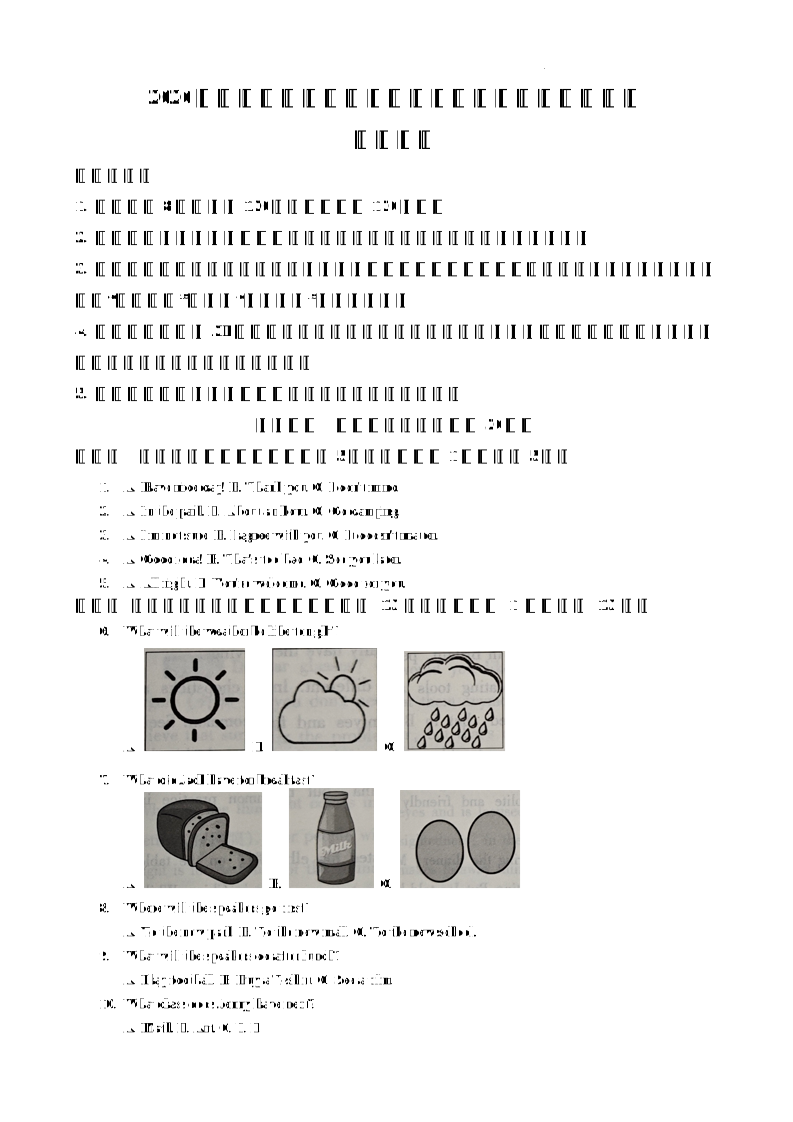
6. What will the weather be like tonight?
A. B. C.
7. What did Jack have for breakfast?
A. B. C.
8. Where will the speakers go first?
A. To the new park. B. To the new mall. C. To the new school.
9. What will the speakers do after lunch?
A. Play football. B. Buy a T-shirt. C. See a film.
10. What class does Jenny have next?
A. Math. B. Art. C. P. E.
11. What does the boy plan to do first?
A. To go swimming. B. To return some books. C. To study at the library.
12. Where will they meet after class?
A. At the gym. B. At the school gate. C. At the library.
13. What happened to David yesterday?
A. He returned a book. B. He lost a book. C. He borrowed a book.
14. Where did David put the library book?
A. In the library. B. In the reading room. C. In the classroom.
15. Who has David lent the library book to?
A. Mary. B. Lily. C. Jack.
16. When did Kate move into her new house?
A. Last month. B. Last year. C. Last weekend.
17. How is Kate's neighborhood?
A. The air isn't fresh. B. There is no heavy traffic. C. It is not convenient for stores.
18. What is the probable relationship between the speakers?
A. Workmates. B. Neighbors. C. A couple.
第三节 听短文和问题,选择正确答案(共 7 小题;每小题 1 分,满分 7 分)
19. When did John ride to visit his aunt?
A. On Sunday morning. B. On Saturday afternoon. C. On Saturday morning.
20. What did John do on Saturday evening?
A. He went shopping. B. He visited his aunt. C. He went to a movie.
21. Where did John have lunch on Sunday?
A. In the restaurant. B. At home. C. In his aunt's home.
22. What can the visitors see in the Ford Room?
A. Old photos of the town. B. Pictures of gardens. C. Some clocks.
23. How many clocks are on display?
A. Less than 115. B. Over 150. C. About 250.
24. Who once wore the clothes on show?
A. Some artists. B. Some athletes. C. Some actors.
25. When will the museum close today?
A. At 3:30. B. At 4:30. C. At 5:30.
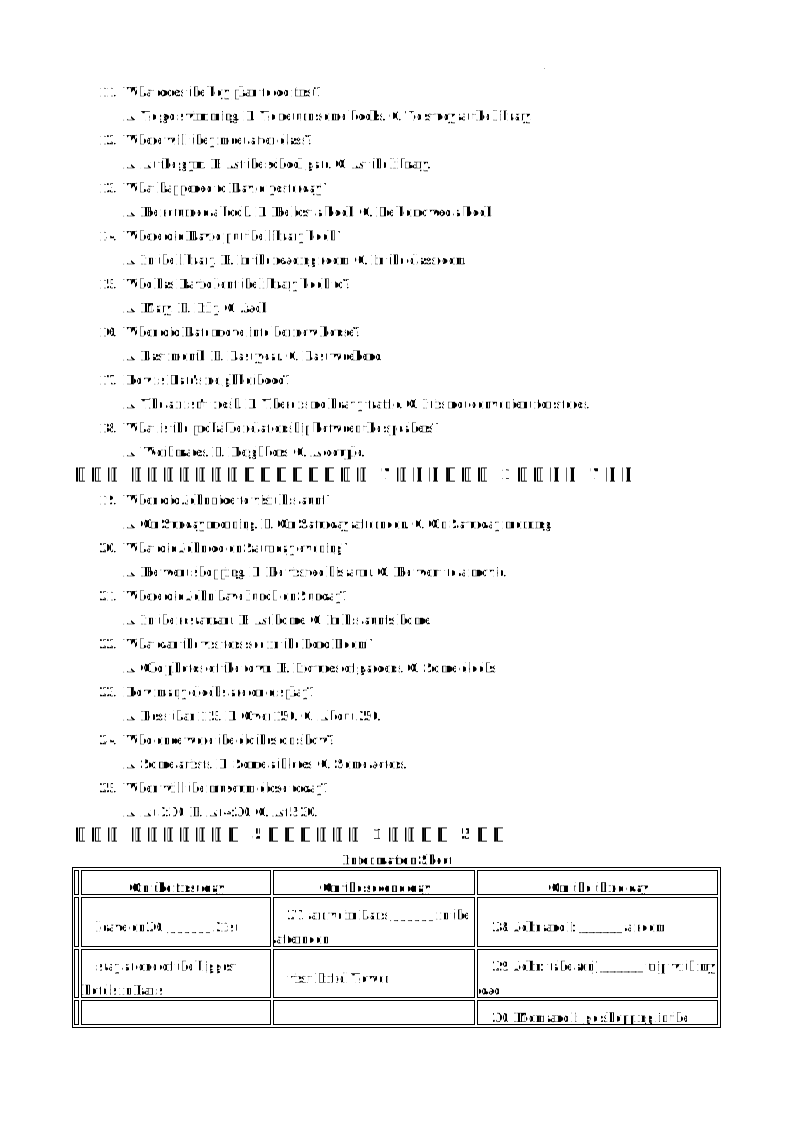
第四节 听短文填空(共 5 小题;每小题 1 分,满分 5 分)
Information Sheet
On the first day
On the second day
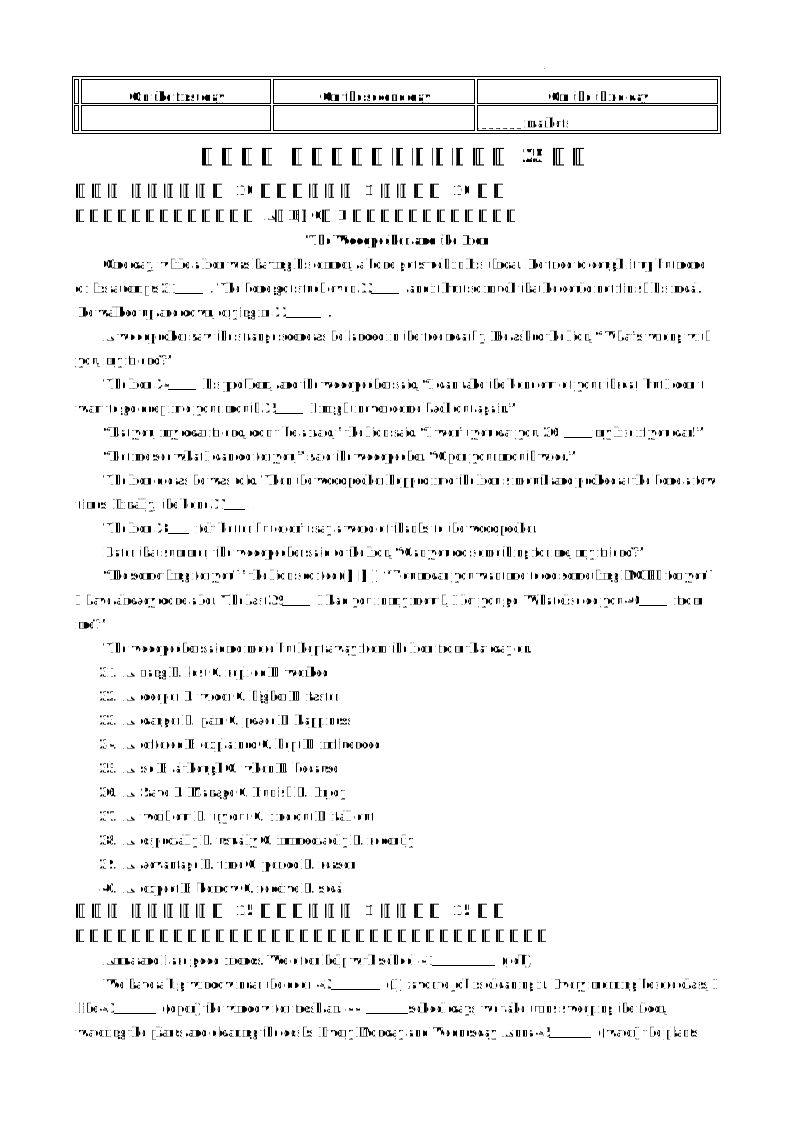
On the third day
leave on 26. ______ 21st
27. arrive in Paris ______ in the afternoon
28. John and I: ______ a room
stay at one of the biggest hotels in Paris
visit Eiffel Tower
29. John: take a(n) ______ trip with my dad
30. Mom and I: go shopping in the ______ markets
第二部分 语言运用(共两节,满分 25 分)
第一节 完形填空(共 10 小题;每小题 1 分,满分 10 分)
阅读下面短文,从每题所给的 A、B、C、D 四个选项中选出最佳选项。
The Woodpecker and the Lion
One day, while a lion was having his dinner, a bone got stuck in his throat. He tried to cough it up but none of his attempts 31 . The bone got stuck even 32 and it hurt so much that he could not finish his meal. He walked up and down, crying in 33 .
A woodpecker saw the strange scene as he landed in the tree nearby. He asked the lion, “What’s wrong with you, my friend?”
The lion 34 his problem, and the woodpecker said, “I can take the bone out of your throat, but I don’t want to go deep into your mouth 35 I might never come back out again.”
“Eat you, my dear friend, don’t be afraid,” the lion said. “I won’t you eat you. 36 my life if you can!”
“Let me see what I can do for you,” said the woodpecker. “Open your mouth wide.”
The lion did as he was told. Then the woodpecker hopped into the lion’s mouth and pecked at the bone a few times. Finally, the bone 37 .
The lion 38 felt better but didn’t say a word of thanks to the woodpecker.
Later that summer, the woodpecker said to the lion, “Can you do something for me, my friend?”
“Do something for you?” the lion scoffed (嘲笑). “You mean you want me to do something MORE for you? I have already done a lot. The last 39 I had you in my mouth, I let you go. What else do you 40 from me?”
The woodpecker said no more but kept away from the lion from that day on.
31. A. rang B. lost C. replied D. worked
32. A. deeper B. wider C. higher D. faster
33. A. danger B. pain C. peace D. happiness
34. A. offered B. explained C. kept D. influenced
35. A. so B. although C. when D. because
36. A. Save B. Manage C. Punish D. Enjoy
37. A. work out B. try out C. find out D. fall out
38. A. especially B. usually C. immediately D. recently
39. A. advantage B. time C. period D. reason
40. A. expect B. borrow C. receive D. steal
第二节 短文填空(共 15 小题;每小题 1 分,满分 15 分)
阅读下面短文,在空白处填入一个适当的单词或填入括号内单词的正确形式。
Anna and I are good friends. We often help with school 41 (job).
We have a big window near the door. 42 (I) favorite job is cleaning it. Every morning before class, I like 43 (open) the window for fresh air. 44 school days, we take turns sweeping the floor, watering the plants and cleaning the desks. Every Monday and Wednesday, Anna 45 (water) the plants and I clean the desks. Yesterday, she 46 (want) to try my job. She cleaned the desks, and I 47 (sweep) the floor. She thought it was 48 (good) than before.
The classroom 49 (clean) every day after school. Last Friday, we had 50 big clean-up in our school. It was the 51 (three) time we did it this term. Anna and I stayed at 52 classroom. 53 the same time, some other classmates went outside. We cleaned our classroom and they cleaned the ground. Anna and I sang 54 (happy) when we worked together.
It’s really happy for us 55 (do) something for our school.
第三部分 阅读(共两节,满分 40 分)
第一节 阅读理解(共 15 小题;每小题 2 分,满分 30 分)
阅读下列短文,从每题所给的 A、B、C、D 四个选项中选出最佳选项。
A
How to Deal with Earthquakes
· Understand local plans:
Learn about the earthquake emergency plans in your area.
· Know the nearest safe places: like open spaces and strong buildings away from high rises.
· Prepare a survival kit.
· Include food and water.
· Have a flashlight, a first-aid kit and a whistle.
· During an earthquake:
· Stay calm.
· ·If indoors:
Stay beneath a solid piece of furniture or stand in a corner.
· ·If outdoors:
Move away from buildings.
Stay away from trees and power lines.
56. What should you know according to the local plans?
A. The nearest safe places and strong buildings. B. The names of all the people in your area.
C. The types of buildings in your neighborhood. D. The number of earthquakes that happened before.
57. What should be included in a survival kit?
A. Toys and books. B. A blanket and a pillow.
C. A mobile phone and some money. D. Food, water, a flashlight, a first-aid kit and a whistle.
58. When you are indoors during an earthquake, you can ______.
A. rush towards the exit right away B. hide under a strong table
C. stand close to the window D. stand still and wait for rescue
B
Mike was an exchange student from Britain. He was invited to have dinner at his Chinese friend Joe’s home. ▲
In China, it’s common for everyone to share dishes from the same plate. But in Britain, people usually have their own servings.
The eating tools are also different. In China, chopsticks are mainly used, but in Britain, knives and forks are common. Seeing Mike having trouble with his chopsticks, Joe patiently taught him how to use them. He also started serving Mike food, which is a sign of being polite and friendly in China, but not common in Britain.
During the dinner, Mike rested his elbows (肘) on the table while eating. But Joe told him it’s not proper to do so in China. While in Britain, it might not be such a strict rule. Also, in China, it’s important not to eat too fast or too much at once, but in Britain, the way of eating can be different. Mike ate quite quickly, which made Joe notice the difference.
When they enjoyed their meal, Joe noticed Mike’s confusion (困惑) and explained Chinese table manners to him, and Mike, in return, shared the usual practices in Britain.
Through dinner, they realized that although there are differences in table manners, the most important thing is to respect and understand each other’s customs and cultures.
59. What’s the best sentence for “ ▲ ” in Paragraph 1?
A. They both made many mistakes.
B. Mike knew little about Chinese culture.
C. Joe was happy Mike loved Chinese food.
D. They noticed many differences in table manners.
60. What did Joe do to show he was polite and friendly to Mike?
A. He served food to Mike.
B. He showed the menu to Mike.
C. He allowed Mike to use knives.
D. He provided different servings for Mike.
61. Why was Mike confused?
A. Because he didn’t know how to use chopsticks.
B. Because he didn’t know how to taste Chinese dishes.
C. Because the Chinese language was difficult to understand.
D. Because he didn’t understand some of the usual practices in China.
C
Do you wear glasses? If yes, would you like to have surgery (外科手术) so you don’t need to wear them anymore? Many believe that surgery can fix the problem forever, but that’s not always the case.
Most people wear glasses because of nearsightedness (近视). When we see things, light comes into our eyes and is focused on the retina (视网膜). But for people with nearsightedness, in their eyes, light is focused in front of the retina. This makes faraway things seem blurry but close things seem clear.
Surgery can treat this. Xu Jiayi, a 19-year-old student from Beijing, had the surgery five months ago during the winter vacation. “After the surgery, I can see very clearly. Life is more convenient without having to wear glasses,” said Xu.
However, the process is not as easy as you might think. Xu said that her eyes hurt badly right after the surgery. Also, she needed to use medicines for at least three months. “At first, there were four types of medicines, and then the number became six,” she said. These medicines help the eyes heal and prevent eye problems.
Moreover, if you don’t take care of your eyes well, nearsightedness may return even after surgery. “Because I use my eyes too much both at work and at home, things have started to look blurry to me again,” said Du Anni, 32, who had the surgery nine years ago. “Instead of fixing nearsightedness, the surgery just lets you take off your glasses,” said a doctor from a hospital in July. He said that the surgery doesn’t fix the changes in the eyes’ structure.
62. How does the writer start the text?
A. By showing ideas. B. By giving examples. C. By asking questions. D. By telling a story.
63. How is light normally focused in our eyes when we see things?
A. B.
C. D.
64. According to the text, what is a possible reason for nearsightedness to return after surgery?
A. Not taking good care of eyes.
B. The age of the patient.
C. The type of surgery performed.
D. The length of time after the surgery.
65. 新考法 写作目的 What’s the purpose of the text?
A. To teach us how to wear glasses correctly.
B. To advise us to do surgery to take off the glasses.
C. To prevent us from doing surgery on eyes.
D. To let us know more about nearsightedness and surgery on eyes.
D
Did you know that one third of the food we eat every day gets thrown away, while one in nine people around the world goes hungry? It takes about 3,072 hours to produce a single grain (谷粒) of rice, yet it only takes a second to waste it. In October, students from Beijing No.8 Middle School visited an exhibition center that showed how to recycle kitchen waste.
They saw how kitchen waste, such as fruit peels and leftovers, could be turned into something useful. “First, people collect the kitchen waste and then crush (压碎) it. After that, they take out the solid (固体的) part and break it down before turning it into a soil conditioner (土壤改良剂),” the 13-year-old Lu Zichen said. He added that this conditioner could help improve the quality of the soil.
The students also learned how to make liquid fertilizer (液体肥料) from kitchen waste. This fertilizer helps plants grow. Qi Yiming, 13, even tried making it himself. “It’s quite simple. First, you place the kitchen waste into a container. Then you add microbial agents (微生物菌剂), and let it sit for a few days to get the fertilizer,” Qi explained. “I am so glad to use the chemical knowledge I learned to make liquid fertilizer myself. It is beneficial in daily life. It is a wonderful experience.”
Yu Qiun, a teacher from the school and an organizer of the activity, talked about the importance of hands-on learning. “I hope students not only focus on the textbook but also go outside to put their knowledge into practice. It makes learning more interesting and useful,” she said.
66. How does the writer begin the text?
A. By using a saying. B. By telling a story. C. By sending a message. D. By asking a question.
67. What is the soil conditioner used for?
A. To break the solid part down.
B. To crush the kitchen waste.
C. To improve the quality of the soil.
D. To collect the kitchen waste.
68. What does Paragraph 3 mainly tell us?
A. How to learn chemistry well.
B. How to collect kitchen waste.
C. How to make liquid fertilizer.
D. How to grow plants better.
69. Which word is close to the underlined word “beneficial”?
A. Thankful. B. Helpful. C. Useless. D. Hopeless.
70. Which can be a proper title for the text?
A. Ways to Recycle Kitchen Waste
B. The Serious Problem of Food Waste
C. A Visit to the Science Center
D. The Importance of Protecting the Environment
第二节 阅读表达(共 5 小题;每小题 2 分,满分 10 分)
阅读下面短文,简略回答问题。
Are Home Robots a Good Idea?
There are many types of home robots on the market today. They can perform many tasks, such as carrying drinks and playing music. A kind of robot can even be controlled when the owner isn’t at home. It can be used to check on pets and people, or whether the oven is left on. Other home robots can be used to do chores and more. Do you think home robots are a good idea?
Emily: Yes! Home robots can help with chores around the house. This gives people more time to do the things they enjoy. Home robots can also make people feel safer in their houses. For example, they can alert the owner when there is a water leak or a broken window. They can keep an eye on pets or young children. What’s more, home robots can accompany people and make them feel less lonely. They can also help people stay in touch with other people.
Lucas: No! Doing housework stay active and healthy. If home robots do everything for us, we’ll become lazy. Even worse, we will forget how to do certain tasks. If home robots break down, we may not be able to clean our home or cook for ourselves. Lots of people have already relied on phones for navigation (导航) and can’t read maps. Also, many home robots have cameras and microphones. They may record lots of information about us, including our conversations, and even invade (侵犯) our privacy.
71. Can the home robot bring drinks to people?
_______________________________________________________________________________
72. In Emily’s opinion, can home robots help out with chores around the house?
_______________________________________________________________________________
73. What problems may home robots with cameras and microphones cause?
_______________________________________________________________________________
74. If a family has pets and young children, who do they probably support more? (Give one reason.)
_______________________________________________________________________________
75. Do you think home robots are a good idea? Why or why not?
_______________________________________________________________________________
第四部分 情景交际(满分 10 分)
补全对话(共 5 小题;每小题 2 分,满分 10 分)
根据下面的对话情景,在空白处填入一个适当的句子,使对话的意思连贯、完整。
(Tony and his mother are talking about his father’s upcoming birthday in the living room at home.)
Tony: Mom, Dad’s birthday is coming, and I want to buy him a gift.
Mom: Of course. 76. ________________________
Tony: A sweater. He has worn that blue sweater for several years.
Mom: 77. ________________________
Tony: Then what should I buy?
Mom: Oh, I just bought him a new one yesterday.
Tony: 78. ________________________
Mom: 79. ________________________ Your father likes to drink tea.
Tony: 80. ________________________ I know Xinyang Maojian is his favorite.
Mom: Yes, Xinyang Maojian and delicious food are his favorites.
Tony: I like them, too, especially the Gushi Goose, and it is one of the symbols of Xinyang’s culture.
第五部分 写作(满分 15 分)
书面表达
81. 人工智能技术的快速发展和 DeepSeek 的问世给人们的学习和生活方式带来了巨大的变化。你校英文网站 Teenagers Say 专栏正在就 “Living in the AI Age” 这一话题进行讨论。请你根据以下图示写一篇短文发帖参与讨论。
Living in the AI Age,分支包括
AI Products、
Living Ways; Good Sides(1. 重复、无聊和累人的工作)、
Worries(. …)、
Advice(1. …;2. …))
要求:(1) 须全面反映图文信息,内容简洁明了,衔接过渡自然;
(2) 文中不能出现真实姓名及所在学校的名称;
(3) 词数 80 个左右。
Living in the AI Age
_________________________________________________________________________________________________________________________________________________________________________________________________________________________________________________________________________________________________________________________________________________________________________________________________________________________________________________________________________________________________________________________________________________________________________________________________________________________________________________________________________________________________________________________________________________________________________________________________________________________________________________________________________________________________________________________________________________________________________________________________________________________________________________________________________________________________________________________________________________________________________________________________________________________________________________________________________________________________________________________________________________________________________________________________________________________________________________________________________________________________________________________________________________________________
学科网(北京)股份有限公司
$
资源预览图
1
2
3
相关资源
由于学科网是一个信息分享及获取的平台,不确保部分用户上传资料的 来源及知识产权归属。如您发现相关资料侵犯您的合法权益,请联系学科网,我们核实后将及时进行处理。