Unit6知识点-Section A 2a-2d练习2025-2026学年人教版英语八年级下册
2026-04-18
|
6页
|
241人阅读
|
0人下载
内容正文:
八年级英语下册Unit6知识点-Section A 2a-2d练习
小试牛刀
A. 用所给动词的适当形式填空(一般现在时)
1. In India, people __________ (have) a special greeting. They press their palms together and say “Namaste”.
2. People in India __________ (use) their right hand to eat.
3. They seldom __________ (eat) with a knife and fork.
4. Cows __________ (be) very special to many people in India.
5. Many people in India __________ (like) curry.
B. 选用方框中的短语填空(每个限用一次)
| press palms together | with your left hand | be special to | eat with a knife and fork | cover their arms |
1. In India, people often ____________________ and say “Namaste”.
2. It is rude to give or take things ____________________.
3. People usually wear clothes which ____________________.
4. In India, cows ____________________ many people.
5. Indians seldom ____________________; they use their right hand.
C. 句型转换(改为一般疑问句并作肯定或否定回答)
1. People in India use their right hand to eat.
一般疑问句:________________________________________________
肯定回答:________________ 否定回答:________________
2. It is rude to give things with your left hand in India.
一般疑问句:________________________________________________
肯定回答:________________ 否定回答:________________
3. Many people in India like curry.
一般疑问句:________________________________________________
肯定回答:________________ 否定回答:________________
配套练习
A. 单项选择(★)
从A、B、C、D中选择最佳答案。
1. How do people in India greet each other?
A. Shake hands.
B. Bow.
C. Press palms together and say “Namaste”.
D. Kiss cheeks.
2. Which hand do people in India use to eat?
A. Left hand.
B. Right hand.
C. Both hands.
D. No hands.
3. What kind of food is popular in India?
A. Pizza.
B. Sushi.
C. Curry.
D. Hamburger.
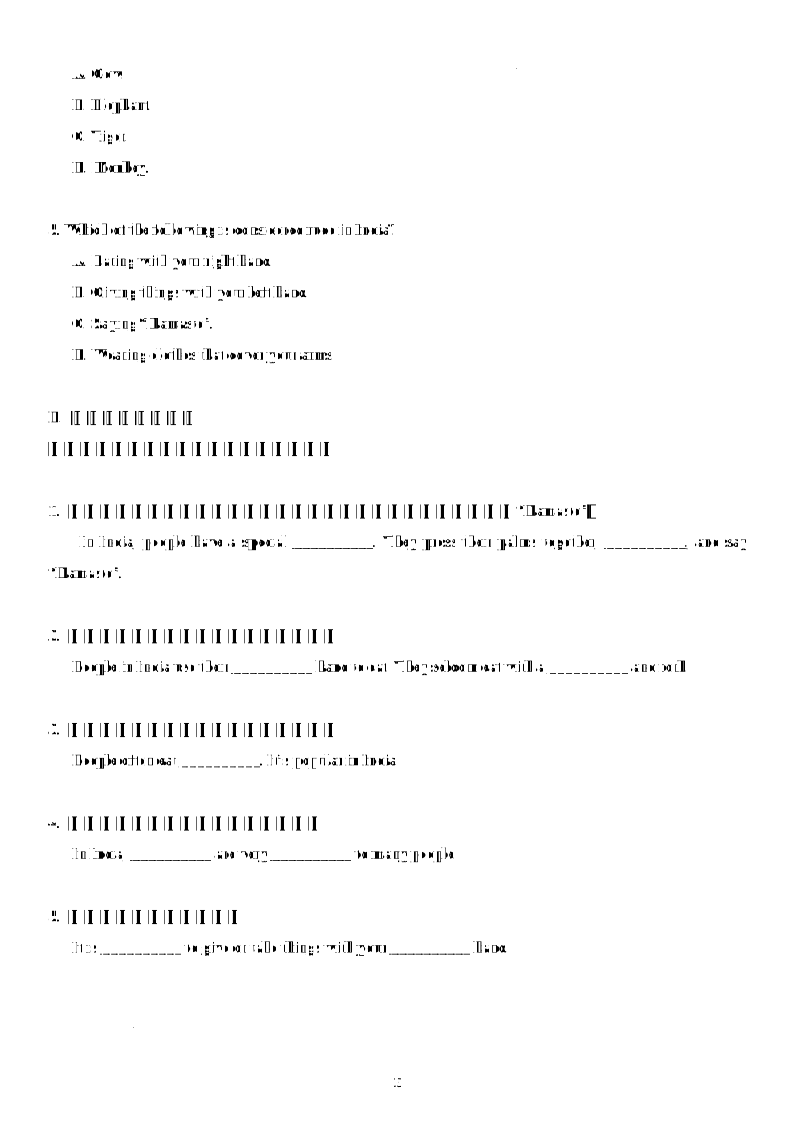
4. What animal is very special to many people in India?
A. Cow.
B. Elephant.
C. Tiger.
D. Monkey.
5. Which of the following is considered rude in India?
A. Eating with your right hand.
B. Giving things with your left hand.
C. Saying “Namaste”.
D. Wearing clothes that cover your arms.
B. 完成句子(★★)
根据句子内容,用正确的词汇完成句子。
1. 在印度,人们有一种特殊的问候方式。他们双手合十,鞠躬,说“Namaste”。
In India, people have a special __________. They press their palms together, __________, and say “Namaste”.
2. 印度人用右手吃饭。他们很少用刀叉。
People in India use their __________ hand to eat. They seldom eat with a __________ and fork.
3. 人们经常吃咖喱。它在印度很受欢迎。
People often eat __________. It’s popular in India.
4. 在印度,牛对很多人来说非常特别。
In India, __________ are very __________ to many people.
5. 用左手递东西是粗鲁的。
It is __________ to give or take things with your __________ hand.
拓展思考
Part 1(描述印度文化中你印象最深的一点)
写一段话(至少5句)。你对印度文化的哪个习俗最感兴趣?为什么?
使用以下表达:I am most interested in, because, it is different from, I think it is, I would like to learn more about
__________________________________________________________________
__________________________________________________________________
__________________________________________________________________
__________________________________________________________________
__________________________________________________________________
Part 2(给一位即将去印度旅行的朋友写一段建议)
写一段话(至少5句)。你会提醒朋友注意哪些印度文化习俗?
使用以下表达:When you visit India, remember to, don’t, you should, it is polite to, have a great trip
__________________________________________________________________
__________________________________________________________________
__________________________________________________________________
__________________________________________________________________
__________________________________________________________________
Part 3(为什么了解其他国家的文化习俗很重要?)
写一段话(至少5句)。解释了解文化差异如何避免误会、表达尊重。
使用以下表达:Learning about other cultures is important because, if you don’t know, you may, for example, in India, while in my country, showing respect for local customs helps
__________________________________________________________________
__________________________________________________________________
__________________________________________________________________
__________________________________________________________________
__________________________________________________________________
参考答案与解析
小试牛刀 A
1. have (一般现在时)
2. use (一般现在时)
3. eat (一般现在时)
4. are (一般现在时)
5. like (一般现在时)
小试牛刀 B
1. press palms together
2. with your left hand
3. cover their arms
4. are special to
5. eat with a knife and fork
小试牛刀 C
1. Do people in India use their right hand to eat?
Yes, they do. / No, they don’t.
2. Is it rude to give things with your left hand in India?
Yes, it is. / No, it isn’t.
3. Do many people in India like curry?
Yes, they do. / No, they don’t.
配套练习 A
1. C(图片:Namaste)
2. B(右手指南)
3. C(curry)
4. A(cow)
5. B(左手不礼貌)
配套练习 B
1. greeting, bow
2. right, knife
3. curry
4. cows, special
5. rude, left
拓展思考(示例)
Part 1
I am most interested in the greeting “Namaste” in Indian culture because it is peaceful and respectful. It is different from shaking hands or bowing. I think it shows inner respect. I would like to learn more about Indian traditions and festivals.
Part 2
When you visit India, remember to use your right hand for eating and giving things. Don’t use your left hand because it is rude. You should try the delicious curry. It is polite to say “Namaste” when you meet people. Have a great trip and enjoy the culture!
Part 3
Learning about other cultures is important because if you don’t know local customs, you may accidentally offend someone. For example, in India, using your left hand is rude, while in my country it is not a problem. Showing respect for local customs helps you make friends and avoid embarrassment. So always learn before you travel.
1
学科网(北京)股份有限公司
$
资源预览图

1

2
3
相关资源
示范课
由于学科网是一个信息分享及获取的平台,不确保部分用户上传资料的 来源及知识产权归属。如您发现相关资料侵犯您的合法权益,请联系学科网,我们核实后将及时进行处理。