Unit4 Adversity and Courage Reading and Thinking 教学设计-2025-2026学年高中英语人教版选择性必修第三册
2026-04-17
|
6页
|
636人阅读
|
0人下载
普通
资源信息
| 学段 | 高中 |
|---|---|
| 学科 | 英语 |
| 教材版本 | 高中英语人教版选择性必修第三册 |
| 年级 | 高二 |
| 章节 | Reading and Thinking |
| 类型 | 教案-教学设计 |
| 知识点 | - |
| 使用场景 | 同步教学-新授课 |
| 学年 | 2026-2027 |
| 地区(省份) | 全国 |
| 地区(市) | - |
| 地区(区县) | - |
| 文件格式 | DOCX |
| 文件大小 | 120 KB |
| 发布时间 | 2026-04-17 |
| 更新时间 | 2026-04-17 |
| 作者 | IEnglish的牛 |
| 品牌系列 | - |
| 审核时间 | 2026-04-14 |
| 下载链接 | https://m.zxxk.com/soft/57332492.html |
| 价格 | 1.50储值(1储值=1元) |
| 来源 | 学科网 |
内容正文:
Unit 4 Adversity and Courage
Reading and Writing
一、课程标准
本写作内容贴合新课标“人与自我”主题语境要求,落实选择性必修阶段“读写结合、以读促写”的教学目标:要求学生基于文本整合信息,撰写兼具叙事与议论的随笔,符合课标中“能用英语描述事件、表达观点”的语言能力要求;同时通过逆境求生主题,培养学生乐观坚毅的文化意识与正向思维品质,引导学生在自主合作中提升写作学习能力,契合核心素养导向下的英语教学要求
二、教材分析
1.[What]主题语境和主要内容
本语篇的主题语境属于“人与自我——应对困难与挫折”子主题,核心内容是依托沙克尔顿探险队在南极象岛绝境求生的回忆录文本,完成一篇融合故事概述与个人评价的随笔写作。文本呈现了队员在资源匮乏、环境极端的困境中,依靠乐观心态、团队精神与坚韧毅力等待救援的经历,写作任务要求学生梳理故事关键情节(绝境处境、生存举措、心理变化、最终获救),再结合自身思考表达对探险精神的理解,实现文本输入到结构化书面输出的转化。
2.[Why]作者意图和价值取向
作者撰写回忆录旨在传递逆境中乐观与坚持的力量,用真实求生细节唤醒读者对坚韧品质的共鸣;写作任务则引导学生从文本中汲取精神养分,学会用英语评价人物与事件,深化面对挫折的积极价值观,同时落实“读写结合”路径,让学生在输出中内化语言与文化内涵,明白团队协作与坚定信念是跨越困境的核心支撑。
3.[How]文体特征和语言特点
文本为第一人称回忆录,语言平实且极具感染力,以细节描写(如取冰化水、用动物脂肪生火)展现人物处境与心理,口语化叙事拉近距离;写作要求的随笔需兼具叙事性与议论性,需用时间线梳理情节,借助连接词(however, therefore)搭建逻辑,用描述性语言刻画人物品质,结合个人观点提升深度,语言风格正式与平实结合,符合随笔文体特点。
三、学情分析
高二选择性必修阶段学生已具备记叙文写作基础,能梳理文本基本信息,掌握adversity、perseverance等主题词汇,但整合多文本信息、将零散细节转化为结构化书面表达的能力有待提升;认知上能理解逆境求生主题,但深度剖析人物精神并结合思考表达观点的逻辑组织能力不足。
学生对探险类主题有兴趣,偏好合作讨论梳理思路,但写作中易出现情节罗列无重点、观点与事实脱节、语言表达单一等问题;核心难点在于平衡故事概述与个人评价的比例,以及用精准语言传递对探险精神的深度感悟,需借助框架引导与互评反馈突破瓶颈。
四、教学目标
1.语言能力:能准确运用主题词汇与逻辑连接词梳理沙克尔顿探险故事核心情节,完成一篇80-100词的随笔写作,做到语言规范、逻辑清晰,掌握“概述-评价-感悟”的写作结构;
2.文化意识与思维品质:通过分析探险队员的行为与心理,理解西方探险文化中“坚韧、团队、信念”的精神内涵,培养逆境中保持乐观的正向思维,能理性表达对“坚持的意义”的个人见解;
3.学习能力:能通过小组合作搭建写作框架,借助同伴互评清单修改作文,掌握“文本梳理-框架搭建-初稿撰写-修改完善”的写作流程,提升自主写作与合作学习的能力。
五、教学重点和难点
1.教学重点
梳理沙克尔顿探险故事的核心情节,掌握“故事概述+观点表达”的写作结构,能准确运用主题词汇与逻辑连接词组织内容,确保写作要素完整、逻辑顺畅。
2.教学难点
平衡故事叙述与个人评价的比例,深度挖掘探险精神的内涵并结合自身思考写出有温度的感悟,避免内容空洞、观点肤浅。
六、教学方法
采用读写结合法、小组合作法;教师引导文本梳理与框架搭建,学生通过讨论互评完成写作,落实“输入-内化-输出”的学习路径。
七、教学准备
准备多媒体课件(含故事时间线、写作框架模板),打印同伴互评清单与文本重点词汇汇总卡片。
八、教学过程
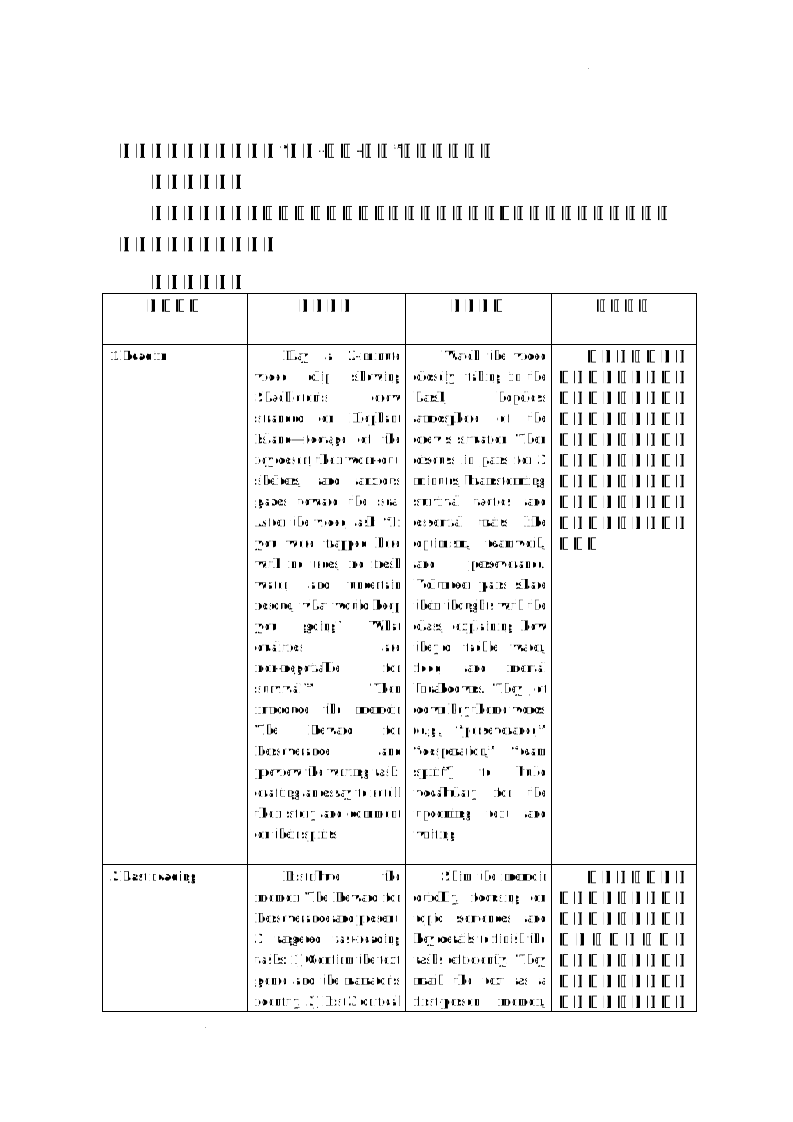
教学环节
教师活动
学生活动
设计意图
1.Lead in
Play a 2-minute video clip showing Shackleton’s crew stranded on Elephant Island—footage of the icy desert, their worn-out shelters, and anxious gazes toward the sea. After the video, ask: “If you were trapped here with no trees, no fresh water, and uncertain rescue, what would keep you going? What qualities are non-negotiable for survival?” Then introduce the memoir The Reward for Perseverance and preview the writing task: crafting an essay to retell their story and comment on their spirits.
Watch the video closely, taking in the harsh, hopeless atmosphere of the crew’s situation. Then discuss in pairs for 3 minutes, brainstorming survival tactics and essential traits like optimism, teamwork, and perseverance. Volunteer pairs share their thoughts with the class, explaining how they’d tackle water, food, and mental breakdowns. They jot down key theme words (e.g., “perseverance,” “desperation,” “team spirit”) to build vocabulary for the upcoming text and writing.
以震撼视频构建情境,结合问题讨论唤醒学生对逆境求生的思考,积累主题词汇,自然衔接回忆录文本与写作任务,激发学生对探险队精神的探究兴趣,为后续写作的观点表达做好铺垫。
2.Fast reading
Distribute the memoir The Reward for Perseverance and present 3 targeted fast-reading tasks: 1) Confirm the text genre and the narrator’s identity; 2) List 3 critical survival challenges the crew encountered; 3) Note 2 effective solutions they adopted. Set a 5-minute time limit, then facilitate a whole-class share-out, guiding students to organize the core plot into a simple timeline on the board to clarify the story’s structure.
Skim the memoir quickly, focusing on topic sentences and key details to finish the tasks efficiently. They mark the text as a first-person memoir, underline challenges like water scarcity, fire-making difficulties, and food shortages, and highlight solutions such as melting sea ice for water and using animal fat for fire. Afterward, they compare answers in small groups, correcting mistakes and refining their notes to outline the story for the writing task.
通过分层快速阅读任务引导学生精准提取文本核心信息,明确体裁与关键情节,梳理出写作所需的故事要素,为后续随笔的故事概述搭建清晰框架,同时提升学生快速获取信息的能力,服务于读写结合的教学目标。
3.Careful reading
Display the memoir with highlighted key paragraphs. Guide students to do careful reading paragraph by paragraph, focusing on sentences describing desperation, problem-solving, and team spirit. Ask them to identify useful writing structures, such as “We felt so... But it didn’t last long” (expressing emotional shifts) and “...was also a problem, so we tried...” (stating problems and solutions). Facilitate a whole-class discussion to categorize these sentences, then write them on the board as model expressions for their essay.
Read each paragraph carefully, underlining details about the crew’s struggles (e.g., water/food shortages, harsh weather) and their coping strategies. They extract and note down the targeted sentence structures from the text, analyzing how each structure functions to link plot and emotion. In pairs, they practice adapting these structures to retell small parts of the story, then share their adapted sentences with the class, explaining how they can use these models to make their essay’s narrative and comments more coherent.
通过精读挖掘文本中困境描述、情感转变、问题解决类的核心句式,让学生积累写作可用的地道表达,同时梳理细节深化对探险队精神的理解,为后续随笔的故事叙述与观点表达提供语言支架,落实以读促写的目标。
3. Writing
Present the official writing topic An Essay on Shackleton's Crew: Resilience and Hope in Adversity on the PPT, and clarify a 3-section structural outline:
1.Introduction: Hook sentence + 1-sentence story overview;
2.Body: Two sub-paragraphs (Paragraph 1: Survival challenges & solutions with team spirit details; Paragraph 2: Optimistic mindset reflected in daily small moments);
3.Conclusion: Personal reflection linking the crew’s spirits to real-life experiences.
Specify the word count (80-100 words) and core assessment criteria: logical structure, text-based evidence, natural perspective shift, and accurate use of learned sentence structures.
Understand the topic and outline requirements, then map their pre-class and in-class notes (plot timeline, survival details, theme vocabulary) to each section. They mark where to apply the "negative emotion + But + action shift" structure, problem-solution logical chains, and third-person to first-person perspective transitions. In pairs, they discuss how to adjust their notes to fit the outline, e.g., deciding to place the "melting sea ice for water" detail in the body’s challenge-solution paragraph.
明确贴合单元主题的写作话题,用结构化框架将课中积累的情感转变、逻辑链、视角切换等技能对应到写作各部分,帮助学生把零散的文本信息转化为有条理的写作思路,为初稿撰写提供清晰的方向,避免内容杂乱无章。
4. Summary
Guided students through a reading-to-writing process: first analyzing the memoir’s emotional shifts, problem-solution chains, and spirit details; then scaffolding a 3-section essay outline and categorized word banks; facilitating peer review with targeted checklists; finally highlighting excellent drafts and leading a revision discussion. Provided one-on-one support for structure adjustments and language polish, ensuring alignment with adversity-themed writing goals.
Engaged in close reading to extract narrative structures and spirit-focused details; collaborated to map story points to the essay outline, practiced applying theme word chunks and emotional shift sentences; wrote first drafts independently, then used checklists to give specific peer feedback; revised drafts based on comments, and shared polished essays, explaining how they integrated learned skills to balance retelling and reflection.
通过读促写的分层引导与互评反馈,帮助学生内化叙事逻辑与主题语言,落实“概述-评价-感悟”的随笔结构,在提升写作能力的同时深化对逆境中坚韧精神的理解。
5. Homework
Revise your final essay to add 1-2 real-life examples (e.g., a sports team’s comeback) echoing the crew’s spirits, then design a 1-page Adversity & Courage story card: paste your essay snippet on one side and draw a symbolic image (e.g., a burning fat lamp) on the other. Submit it next class.
Blackboard design
教学反思
学科网(北京)股份有限公司
$
资源预览图
1
2
3
相关资源
由于学科网是一个信息分享及获取的平台,不确保部分用户上传资料的 来源及知识产权归属。如您发现相关资料侵犯您的合法权益,请联系学科网,我们核实后将及时进行处理。