英语二模模拟卷(陕西专用)学易金卷:2026年中考第二次模拟考试
2026-04-08
|
5份
|
34页
|
587人阅读
|
11人下载
资源信息
| 学段 | 初中 |
|---|---|
| 学科 | 英语 |
| 教材版本 | - |
| 年级 | 九年级 |
| 章节 | - |
| 类型 | 试卷 |
| 知识点 | - |
| 使用场景 | 中考复习-二模 |
| 学年 | 2026-2027 |
| 地区(省份) | 陕西省 |
| 地区(市) | - |
| 地区(区县) | - |
| 文件格式 | ZIP |
| 文件大小 | 5.08 MB |
| 发布时间 | 2026-04-08 |
| 更新时间 | 2026-04-08 |
| 作者 | 涵默 |
| 品牌系列 | 学易金卷·第二次模拟卷 |
| 审核时间 | 2026-04-08 |
| 下载链接 | https://m.zxxk.com/soft/57232957.html |
| 价格 | 4.00储值(1储值=1元) |
| 来源 | 学科网 |
内容正文:
2026年中考第二次模拟考试(陕西专用)
英语·参考答案
第一部分(听力 共30分)
I. 听选答案
第一节(共10小题,计10分) 1~5 CAACB 6~10 BCCBB
第二节(共5小题,计10分) 11~15 BACAC
II. 听填信息(共5小题,计10分)
16. healthy 17. sleep 18. eight / 8 19. screen 20. exercise
第二部分(笔试 共90分)
第Ⅰ卷 选择题(满分40分)
Ⅲ. 完形填空(共20小题,计20分)
第一节:21~25 ACCAC 26~30 BADCA
第二节:31~35 BAABB 36~40 BAACA
Ⅳ. 阅读理解 (共15小题,计20分)
第一节:41. C 42. D 43. E 44. B 45. A
第二节:
A篇:46. B 47. C 48. C
B篇:49. C 50. B 51. B 52. B
C篇:53. B 54. C 55. B
第II卷 非选择题(满分50分)
Ⅴ. 完成句子(共5小题,计10分)
56. is changing
57. help / assist
58. complex / difficult questions
59. depend on / rely on
60. replacement / substitute
Ⅵ. 短文填空(共10小题,计10分)
61. built 62. visitors 63. importance 64. traditional 65. connects
66. young 67. it 68. protected 69. rapidly 70. Countries
Ⅶ. 任务型阅读(共5小题,计10分)
71. five / 5
72. roads
73. Shaanxi Apple
74. track
75. achieved poverty alleviation
Ⅷ. 交流与表达(共6小题,计20分)
第一节:补全对话(共5小题,计5分)
76. How is it going? / What do you think of it?
77. What do you do there?
78. How long did you practice before starting?
79. Were you nervous at first?
80. That sounds wonderful / That’s great.
第二节:书面表达(共1题,计15分)
参考范文:
Dear Peter,
How's it going? I'd like to share an unforgettable cultural activity with you.
Last week, our school organized an activity called "Getting Close to Intangible Cultural Heritage". It was held in the school lecture hall and the playground. We watched a wonderful shadow play performance, learned paper cutting from artists, and even tried making flower buns. I made a small bun in the shape of a rabbit!
I was deeply impressed by the beauty of these traditional arts. They carry the wisdom and feelings of our ancestors. I feel it is our responsibility to inherit and protect them. I hope more young people will fall in love with our culture.
What traditional activities do you have in your country? Hope to hear from you soon.
Yours,
Li Hua
2 / 2
学科网(北京)股份有限公司
$
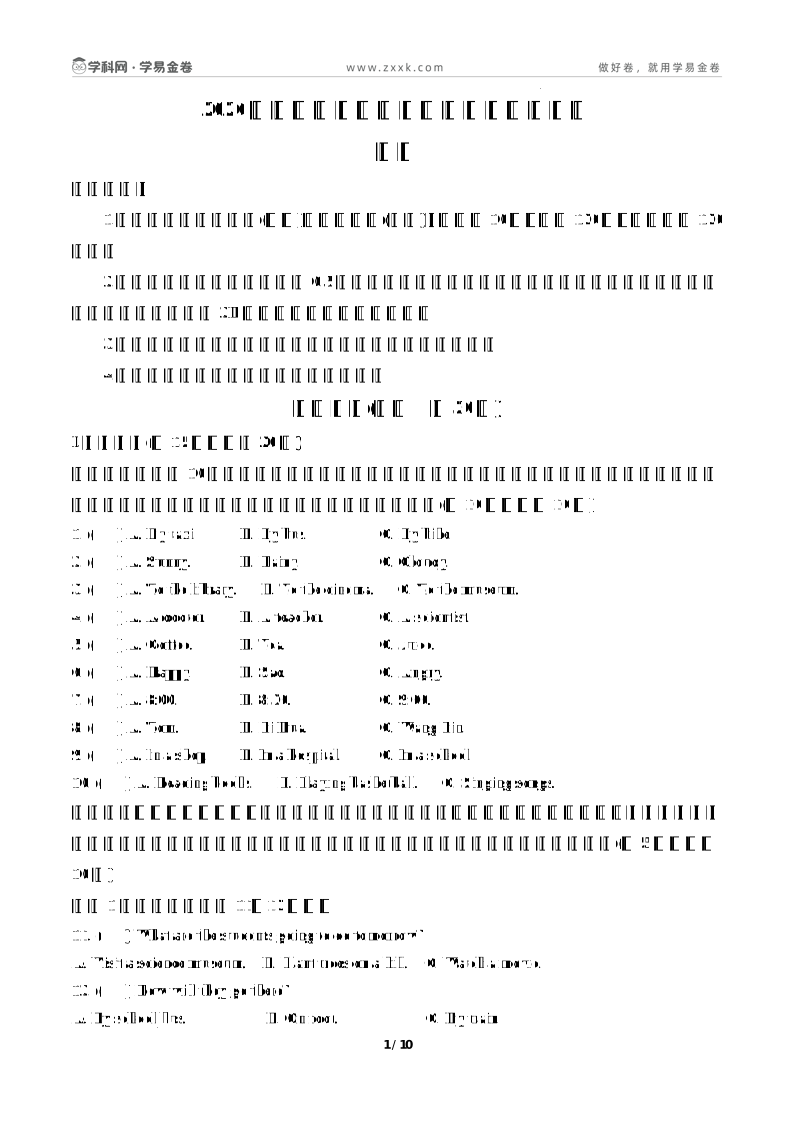
2026年中考第二次模拟考试(陕西专用)
英语
注意事项:
1.本试卷分为第一部分(听力)和第二部分(笔试)。全卷共10页,总分120分。考试时间120分钟。
2.领到试卷和答题卡后,请用0.5毫米黑色墨水签字笔,分别在试卷和答题卡上填写姓名和准考证号,同时用2B铅笔在答题卡上进行填涂。
3.请在答题卡上各题的指定区域内作答,否则作答无效。
4.考试结束,本试卷和答题卡一并交回。
第一部分(听力 共30分)
I.听选答案(共15小题,计20分)
第一节:听下面10段对话,每段对话后有一个问题,读两遍。请根据每段对话的内容和后面的问题,从所给的三个选项中选出问题的正确答案。(共10小题,计10分)
1. ( ) A. By taxi. B. By bus. C. By bike.
2. ( ) A. Sunny. B. Rainy. C. Cloudy.
3. ( ) A. To the library. B. To the cinema. C. To the museum.
4. ( ) A. A doctor. B. A teacher. C. A scientist.
5. ( ) A. Coffee. B. Tea. C. Juice.
6. ( ) A. Happy. B. Sad. C. Angry.
7. ( ) A. 8:00. B. 8:30. C. 9:00.
8. ( ) A. Tom. B. Li Hua. C. Wang Lin.
9. ( ) A. In a shop. B. In a hospital. C. In a school.
10. ( ) A. Reading books. B. Playing basketball. C. Singing songs.
第二节:听下面两段材料,包括一段对话和一段独白,每段材料后有几道小题。请根据材料的内容,从题目所给的问题和三个选项中选出最恰当的答案。每段材料读两遍。(共5小题,计10分)
听第1段材料,回答第11、12小题。
11. ( ) What are the students going to do tomorrow?
A. Visit a science museum. B. Plant trees on a hill. C. Watch a movie.
12. ( ) How will they go there?
A. By school bus. B. On foot. C. By train.
听第2段材料,回答第13至15小题。
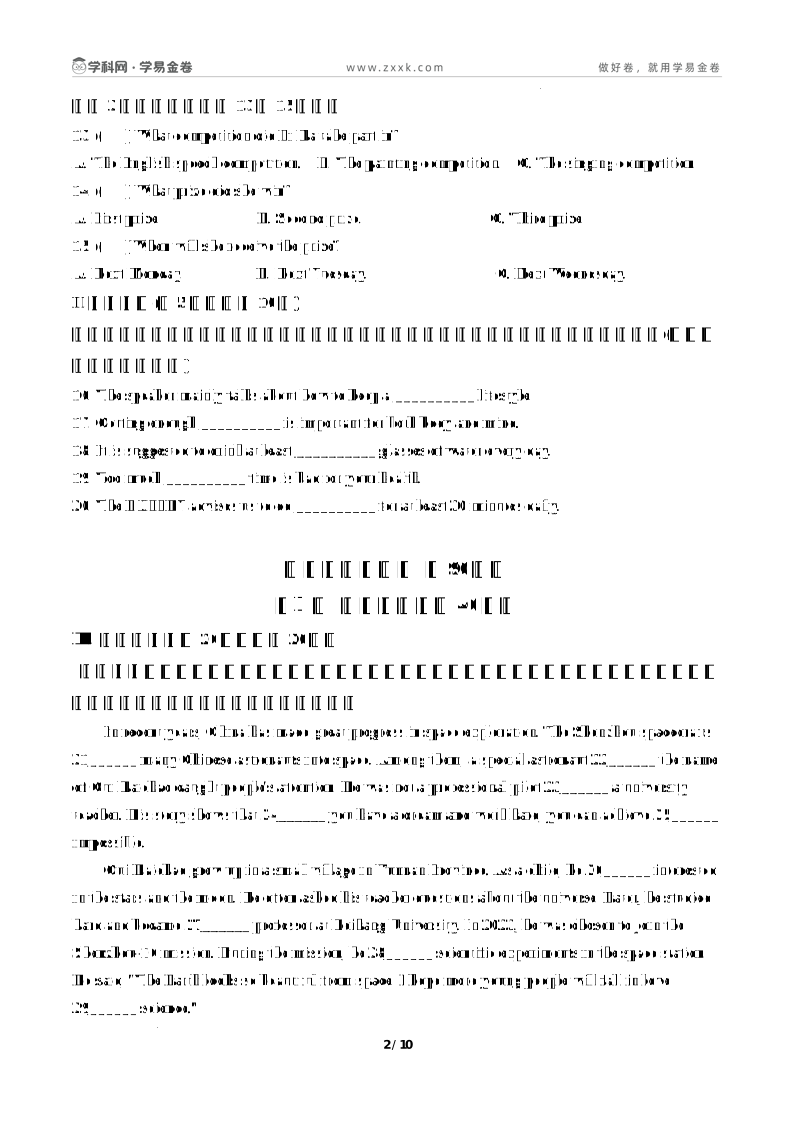
13. ( ) What competition did Li Na take part in?
A. The English speech competition. B. The painting competition. C. The singing competition.
14. ( ) What prize did she win?
A. First prize. B. Second prize. C. Third prize.
15. ( )When will she receive the prize?
A. Next Monday. B. Next Tuesday. C. Next Wednesday.
II.听填信息(共5小题,计10分)
本题你将听到一段独白,读两遍。请根据独白内容,用所听到的信息完成下列各题。(每空不超过三个单词。)
16. The speaker mainly talks about how to keep a __________ lifestyle.
17. Getting enough __________ is important for both body and mind.
18. It is suggested to drink at least __________ glasses of water every day.
19. Too much __________ time is bad for your health.
20. The EXPERT advises us to do __________ for at least 30 minutes daily.
第二部分(笔试 共90分)
第Ⅰ卷 选择题(满分40分)
Ⅲ. 完形填空(共20小题,计20分)
第一节:阅读下面短文,按照句子结构的语法性和上下文连贯的要求,从各小题的四个选项中选出一个最佳答案,使短文连贯完整。
In recent years, China has made great progress in space exploration. The Shenzhou spacecrafts 21______ many Chinese astronauts into space. Among them, a special astronaut 22______ the name of Gui Haichao caught people's attention. He was not a professional pilot 23______ a university teacher. His story shows that 24______ you have a dream and work hard, you can achieve 25______ impossible.
Gui Haichao grew up in a small village in Yunnan Province. As a child, he 26______ interested in the stars and the moon. He often asked his teacher questions about the universe. Later, he studied hard and became 27______ professor at Beihang University. In 2023, he was chosen to join the Shenzhou-16 mission. During the mission, he 28______ scientific experiments in the space station. He said, "The Earth looks so beautiful from space. I hope more young people will fall in love 29______ science."
His story has inspired millions of students across China, especially those in poor areas. It tells us that 330______ we are from, we can reach for the stars.
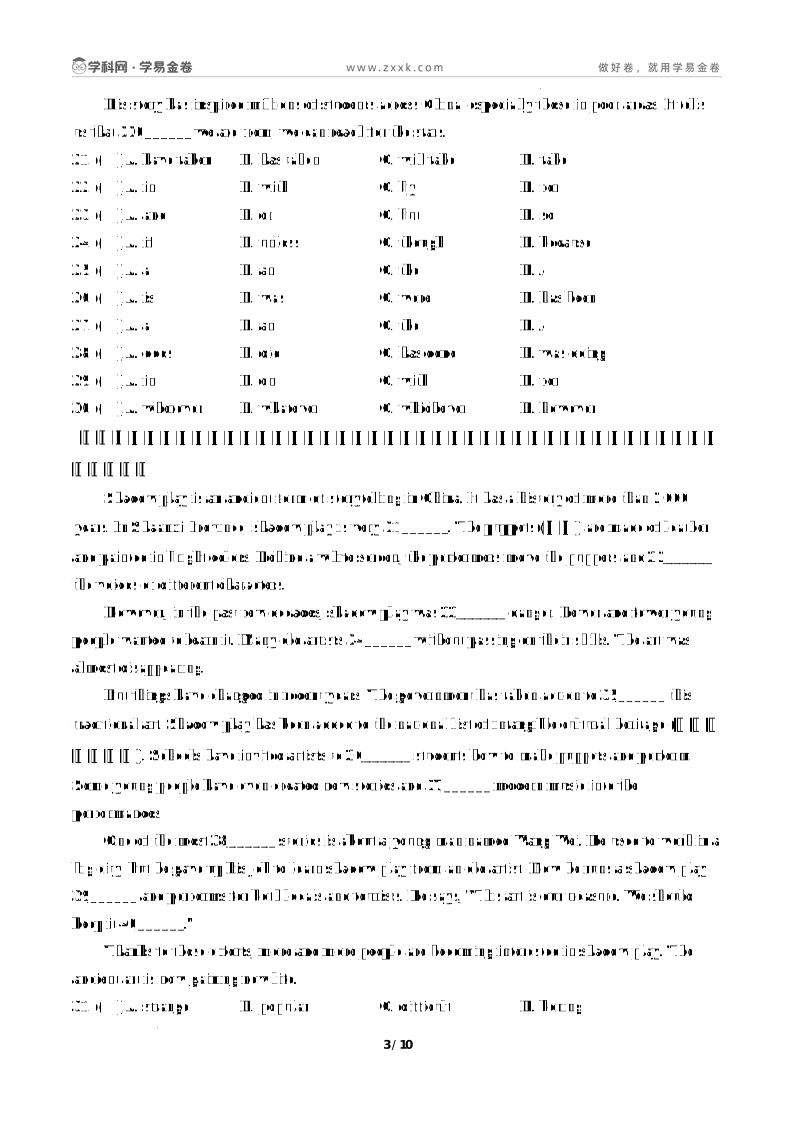
21. ( )A. have taken B. has taken C. will take D. take
22. ( )A. in B. with C. by D. for
23. ( )A. and B. or C. but D. so
24. ( )A. if B. unless C. though D. because
25. ( )A. a B. an C. the D. /
26. ( )A. is B. was C. were D. has been
27. ( )A. a B. an C. the D. /
28. ( )A. does B. did C. has done D. was doing
29. ( )A. in B. on C. with D. for
30. ( )A. wherever B. whatever C. whichever D. however
第二节:阅读下面短文,理解大意,然后从各小题的四个选项中选出一个最佳答案,使短文连贯完整。
Shadow play is an ancient form of storytelling in China. It has a history of more than 2,000 years. In Shaanxi Province, shadow play is very 31______. The puppets (皮影) are made of leather and painted in bright colors. Behind a white screen, the performers move the puppets and 32______ the voices of different characters.
However, in the past few decades, shadow play was 33______ danger. Fewer and fewer young people wanted to learn it. Many old artists 34______ without passing on their skills. The art was almost disappearing.
But things have changed in recent years. The government has taken action to 35______ this traditional art. Shadow play has been added to the national list of intangible cultural heritage (非物质文化遗产). Schools have invited artists to 36______ students how to make puppets and perform. Some young people have even created new stories and 37______ modern music into the performances.
One of the most 38______ stories is about a young man named Wang Wei. He used to work in a big city, but he gave up his job to learn shadow play from an old artist. Now he runs a shadow play 39______ and performs for both locals and tourists. He says, "This art is our treasure. We should keep it 40______."
Thanks to these efforts, more and more people are becoming interested in shadow play. The ancient art is now gaining new life.
31. ( )A. strange B. popular C. difficult D. boring
32. ( )A. make B. hear C. provide D. record
33. ( )A. in B. out of C. away from D. without
34. ( )A. came back B. passed away C. moved around D. grew up
35. ( )A. destroy B. protect C. change D. forget
36. ( )A. ask B. teach C. warn D. force
37. ( )A. added B. connected C. compared D. led
38. ( )A. touching B. frightening C. embarrassing D. confusing
39. ( )A. school B. factory C. theater D. library
40. ( )A. alive B. quiet C. clean D. open
IV.阅读理解(共15小题,计20分)
第一节:根据短文内容,从短文后的选项中选出能填入空白处的最佳选项。(共5小题,计5分)
How to Reduce Phone Dependency
Do you find yourself checking your phone every few minutes? Do you feel anxious when you can't find your phone? You are not alone. Many teenagers today are addicted to their phones. 41______. Here are some practical tips.
First, turn off unnecessary notifications. You don't need to know every like or comment immediately. 42______. This will reduce the urge to check your phone constantly.
Second, set "no-phone" zones and times. For example, keep your phone out of your bedroom at night. 43______. You can also make it a rule not to use phones during meals or while doing homework.
Third, find other activities to fill your free time. 44______. When you are busy with things you enjoy, you will naturally use your phone less.
Fourth, use apps that track your screen time. Many phones have built-in features that show how many hours you spend on different apps. 45______. Once you know the numbers, you can set goals to reduce them.
Remember, phones are tools, not masters. Taking control of your phone use will make you feel freer and happier.
A. This can be a wake-up call.
B. Join a club, play sports, or read a book.
C. Spending too much time on phones can harm your eyes.
D. Only keep notifications for important messages.
E. Instead, use an alarm clock to wake up.
F. Delete all social media apps from your phone immediately.
第二节:阅读下面A、B、C三篇材料,从所给的四个选项中选出能回答所提问题或完成所给句子的一个最佳答案。(共10小题,计15分)
A
School Notice
Mental Health Week: Take Care of Your Mind
Feeling stressed about exams? Worried about friendships? You are not alone. Our school is holding a Mental Health Week to help students relax and learn to manage emotions.
Activities:
Time
Activity
Location
Monday 4:00-5:00 p.m.
Yoga Class
School Gym
Tuesday 12:30-1:30 p.m.
"Stress Less" Workshop
Room 201
Wednesday 3:00-4:30 p.m.
Movie: Inside Out
School Hall
Thursday 4:00-5:00 p.m.
Art Therapy (绘画治疗)
Art Room
Friday All Day
"Wish Tree" — write down your worries and hang them on the tree
School Yard
All activities are free for students.
Sign up at the school office before this Friday.
For more information, email Ms. Chen at chenmei@school.com.
46. Where is the yoga class held?
A. In Room 201. B. In the School Gym. C. In the Art Room. D. In the School Hall.
47. Which activity lasts the longest?
A. Yoga Class. B. "Stress Less" Workshop. C. Movie. D. Art Therapy.
48. What can students do on Friday?
A. Watch a movie. B. Do yoga. C. Write down their worries. D. Learn art therapy.
B
Last month, our school organized a volunteer activity called "Qinling Clean-up". I signed up without hesitation because I had heard about the pollution problem in the Qinling Mountains. But I didn't expect it to change me so deeply.
On the morning of the activity, we took a bus to the foot of the mountains. The air was fresh, and the trees were green. But as we started walking along the hiking path, I saw plastic bottles, snack bags, and even broken glass lying on the ground. My heart sank. This beautiful place was being hurt by careless visitors.
Our job was to pick up litter along a three-kilometer path. We were given gloves and large garbage bags. At first, I felt a bit embarrassed. But soon, I got into it. Every piece of trash we picked up made the path look cleaner. Some tourists saw us and gave us thumbs-up. A little girl even joined us for a while.
Halfway through, my back hurt and my hands were dirty. I wanted to stop. Then I saw Mr. Li, our guide, carrying two heavy bags of trash. He was 65 years old. "Every piece we pick up today is one less piece that will hurt the animals," he said. I kept going.
By the end of the day, our group had collected 24 large bags of trash. We placed them near the parking lot for the local cleaners to take away. On the bus ride back, I was tired but proud. I realized that protecting the environment is not just something to talk about. It's something to do, one piece of trash at a time.
Now I go to the Qinling Mountains once a month with a few classmates. We are not heroes. We are just ordinary students who want to make a difference.
49. How did the writer feel when she first saw the trash on the path?
A. Excited. B. Angry. C. Sad. D. Surprised.
50. What made the writer continue the clean-up halfway?
A. The little girl's help. B. Mr. Li's example and words.
C. The tourists' praise. D. The hope of getting a prize.
51. What did the group do with the collected trash?
A. They took it back to school. B. They left it for the local cleaners.
C. They buried it in the mountain. D. They burned it.
52. What does the writer mainly want to tell us?
A. Qinling Mountains are seriously polluted.
B. Volunteer work is tiring but meaningful.
C. Young people should not go to the mountains.
D. Cleaning up is the only way to protect nature.
C
China's "Double Carbon" Goals: A Green Future
In 2020, China announced its "double carbon" goals: to reach peak carbon emissions (碳排放峰值) by 2030 and achieve carbon neutrality by 2060. This is one of the most ambitious climate plans in the world.
What does carbon neutrality mean? It means that the amount of carbon dioxide a country releases into the air is balanced by the amount it removes. This can be done by planting more trees, using clean energy, and reducing pollution.
China has already made great progress. In 2023, renewable energy (可再生能源) made up more than 50% of the country's new power capacity. Solar and wind power are growing faster than ever. Many cities are now using electric buses and shared bikes.
Shaanxi Province is also playing its part. The Qinling Mountains, known as the "Central National Park of China," help absorb carbon dioxide. The government has planted millions of trees there. In Xi'an, many factories have been closed or moved to reduce pollution.
However, there are still challenges. Many industries still rely on coal. Changing people's habits takes time. But the government is confident. As Chairman Xi said, "Green mountains are gold mountains."
The "double carbon" goals are not just about protecting the environment. They also create new jobs in clean energy and green technology. China is showing the world that economic development and environmental protection can go hand in hand.
53. What does "carbon neutrality" mean according to the passage?
A. Releasing more carbon dioxide.
B. Balancing carbon emissions and removal.
C. Stopping all industrial activities.
D. Using only coal for energy.
54. What progress has China made in renewable energy?
A. Renewable energy makes up 100% of new power capacity.
B. Solar and wind power are growing slowly.
C. Renewable energy made up over half of new power capacity in 2023.
D. China has stopped using coal completely.
55. Which of the following is TRUE according to the passage?
A. The "double carbon" goals were announced in 2022.
B. The Qinling Mountains help absorb carbon dioxide.
C. Shaanxi has not taken any action for the goals.
D. The goals will not create new jobs.
第II卷 非选择题(满分50分)
V.完成句子:根据所给汉语意思,用单词或短语完成下列英文句子。(共5小题,计10分)
56. 人工智能正在改变我们的生活方式。
Artificial intelligence ______________ our way of life.
57. 许多学生使用AI工具来帮助他们学习。
Many students use AI tools to ______________ them with their studies.
58. AI可以在几秒钟内回答复杂的问题。
AI can answer ______________ in just a few seconds.
59. 然而,我们不应该过度依赖人工智能。
However, we should not ______________ artificial intelligence too much.
60. 人工智能是一种工具,而不是我们思考的替代品。
AI is a tool, not a ______________ for our own thinking.
Ⅵ.短文填空:用方框中所给单词的适当形式填空,使短文完整正确。(每个单词限用一次,每空限填一个单词。) (共10小题,计10分)
build it tradition protect visit rapid important connect country youth
The Great Wall is one of the most famous symbols of China. It was 61______ over many dynasties to protect the northern border. Today, it attracts millions of 62______ every year. However, parts of the Great Wall are in danger because of natural erosion (侵蚀) and human activities.
In recent years, the government has realized the 63______ of protecting this cultural treasure. Special laws have been made to prevent people from damaging the wall. Some sections have been repaired using 64______ methods.
The Great Wall is not just a wall. It 65______ different parts of China and tells the story of the Chinese people. Many 66______ people have become volunteers to clean and guard the wall. They want to keep 67______ alive for future generations.
Thanks to these efforts, the Great Wall is now better 68______ than before. Technology is also helping. Drones (无人机) are used to check the wall 69______ and find damaged areas. The Great Wall is not only a treasure of China but also of the world. 70______ from all over the world come to admire its greatness.
VII.任务型阅读:阅读下面短文,根据短文内容,完成下列各题。(共5小题,计10分)
In 2021, China announced that it had lifted all 98.99 million rural poor out of poverty. This is one of the greatest achievements in human history. How did China do it?
First, the government built infrastructure (基础设施) in poor areas. From 2013 to 2020, China built over 1.1 million kilometers of roads in rural areas. It also brought 4G and 5G networks to even the most remote villages. This allowed farmers to sell their products online.
Second, China developed local industries. Each poor area was encouraged to find its own special product. For example, in Shaanxi's Loess Plateau(黄土高原), people started growing apples. The "Shaanxi Apple" is now known worldwide. In Guizhou, big data centers were built, creating thousands of jobs.
Third, China provided education and training. Poor students received subsidies (补贴) to go to school. Adults learned new skills, such as how to use computers or how to start a business. Over 20 million people received vocational training.
Fourth, China relocated people from areas with very poor natural conditions. New villages with modern houses, schools, and hospitals were built. This improved their lives and protected the environment.
Fifth, China used technology. A national database was created to track every poor family. Local officials used mobile apps to report progress. This helped the government target help where it was most needed.
The success of poverty alleviation(扶贫) shows that with strong leadership and hard work, any problem can be solved. China's experience is now being shared with other developing countries.
71. How many ways of poverty alleviation are mentioned?
The passage mentions ________ ways.
72. What did the government build in rural areas from 2013 to 2020?
It built over 1.1 million kilometers of ________.
73. What special product is mentioned for Shaanxi's Loess Plateau?
The ________.
74. How did technology help in poverty alleviation?
A national database was created to ________ every poor family.
75. What is the passage mainly about?
It's mainly about how China ________.
Ⅷ.交流与表达(共6小题,计20分)
第一节:补全对话。(共5小题,计5分)
A: Hi, Chen Jie. I heard you joined the "Little Interpreters" volunteer group. 76________________________?
B: It's great! We help foreign tourists at the Terracotta Warriors.
A: 77________________________?
B: We explain the history and answer their questions in English.
A: That sounds challenging. 78________________________?
B: We practiced for two months before we started. The teacher taught us a lot.
A: 79________________________?
B: Yes, I was very nervous at first. But now I enjoy it.
A: 80________________________. I want to join too.
B: Sure! They are recruiting new members next week.
第二节:书面表达。(共1题,计15分)
假设你是李华,你的学校上周组织了“走进非遗”活动,让学生了解陕西的传统文化。请你给英国笔友Peter写一封邮件,分享这次活动的经历和感受。
内容要点:
1. 活动时间、地点(学校报告厅、操场)
2. 活动内容(观看皮影戏表演、学习剪纸、尝试做花馍等)
3. 你的感受(对传统文化的热爱、传承的责任等)
要求:
1. 包含所有要点,可适当发挥;
2. 语句通顺,意思连贯,书写工整;
3. 不得出现真实信息;
4. 词数不少于70(开头结尾已给出,不计入总词数)。
参考词汇: intangible cultural heritage, shadow play, paper cutting, flower bun (花馍), inherit, responsibility
Dear Peter,
How's it going? I'd like to share an unforgettable cultural activity with you.
_____________________________________________________________________________________________________________________________________________________________________________________________________________________________________________________________________________________________________________________________________________________________________________________________________________________
What traditional activities do you have in your country? Hope to hear from you soon.
Yours,
Li Hua
2 / 2
学科网(北京)股份有限公司
$请听下面一段音乐并调试音量。2026年中考第二次模拟考试听力测试现在开始。听选。答案。第一节,听下面一段对话,每段对话后有一个问题读两遍。请根据每段对话的内容和后面的问题,从所给的三个选项中选出问题的正确答案。One, how do you go to school? I ride my bike. Question, how does the girl go to school? How do you go to school? I ride my bike. Question, how does the girl go to school? Two, what's the weather like . today is Sunny. Let's go out . question, what's the weather like? What's the weather like today? It's Sunny. Let's go . out question, what's the weather like? Three, where are you going to the . library to borrow some books? Question, where is the woman going? Where are you going to . the library to borrow some books? Question, where is the woman going? For what do you want to . be a scientist . like kin? Susan . question, what does the boy . want to be? What do you want to be . a scientist like kin? Susan question, what does the boy want to be? Five, would you like some . coffee? No, I prefer tea. Question, what does the woman prefer? Would you like some coffee? No, I prefer tea. Question, what does the woman prefer? Six, I lost my new watch. I'm sorry to . hear that question. How does the woman feel? I lost my new watch. I'm sorry to hear that . question. How does the woman feel? Seven what time does the museum open . at nine o'clock? Question, when does the museum open? What time does the . museum open at nine o'clock? Question, when does the museum open? Who won the singing . competition? Wangling, her voice was amazing. Question. who won? Who want a singing competition . when her voice was amazing? Question, who won? Nine, I have a headache. Let me . check your temperature . question. Where are they? I have a headache. Let me check your . temperature question. Where are they? Ten, what's your hobby? I like playing basketball. Question, what does the . man like? What's your hobby? I like playing . basketball. Question, what does the man like? 第二节听下面两段材料,包括一段对话和一段独白。每段材料后有几道小题请,根据材料的内容,从题目所给的问题和三个选项中选出最恰当的答案。每段材料读两遍,听第一段材料,回答第十一、十二小题。Hide liming. What are we going to do tomorrow? Our classes is going to plant trees on the hill behind the . school sounds great. How will we get there? We'll take the school bus. The hill is . a bit far. okay. I'll bring my gloves and a water bottles. Good, don't forget to wear comfortable shoes. Hide liming. What are we going to do tomorrow? Our classes is going to plant trees on the hill behind the . school sounds great. How will we get there? We'll take the school bus. The hill is . a bit far, okay? I'll bring my gloves and a water bottles. Good, don't forget to wear comfortable shoes. 听第二段材料,回答第13至15小题。Lena is a student from the C. N. SHE love singing folk songs. Last week, he took part in the school singing competition SHE, saying a famous northern shanky folk song, the eastern red. Her voice was powerful and touch. All the judges were impressed in the end. SHE one first prize, the Price giving ceremony, will be held next wednesday in the school hall. Her parents and friends are very proud of her. Lena is a student from the C. N. SHE. Love singing folk songs. Last week, SHE took part in the school singing competition SHE, saying a famous northern shanky folk song the eastern red, her voice was powerful and touching. All the judges were impressed. In the end, he won first prize. The Price giving ceremony will be held next wednesday in the school hall. Her parents and friends are very proud of her. 听填信息本题,你将听到一段独白读两遍,请根据独白内容用所听到的信息完成下列各题。Hello, everyone, today i'd like to share some simple ways to keep healthy. I will mainly talk about how to keep a healthy lifestyle. First, getting enough sleep is important for both body and mind. You should sleep for about eight hours each night. Second, drinking water is necessary. IT is suggested to drink at least eight glasses of water every day. Water helps your body work well. Third, be careful with screen time. Too much screen time is bad for your health. IT can hurt your eyes and make you less active. Finally, exercise regularly. The expert advises us to do exercise for at least thirty minutes daily. You can walk, run or play ball games. A healthy lifestyle leads to a happy life. Let's start today. Hello, everyone. Today i'd like to share some simple ways to keep healthy. I will mainly talk about how to keep a healthy lifestyle. First, getting enough sleep is important for both body and mind. You should sleep for about eight hours each night. Second, drinking water is necessary. IT is suggested to drink at least eight glasses of water every day. Water helps your body work well. Third, be careful with screen time. Too much screen time is bad for your health. IT can hurt your eyes and make you less active. Finally, exercise regularly. The expert advises us to do exercise for at least thirty minutes daily. You can walk, run or play ball games. A healthy lifestyle leads to a happy life. Let's start today. 本次听力到此结束,请大家认真完成后面的考试。
………………○………………外………………○………………装………………○………………订………………○………………线………………○………………
………………○………………内………………○………………装………………○………………订………………○………………线………………○………………
此卷只装订不密封
………………○………………内………………○………………装………………○………………订………………○………………线………………○………………
………………○………………外………………○………………装………………○………………订………………○………………线………………○………………
… 学校:______________姓名:_____________班级:_______________考号:______________________
2026年中考第二次模拟考试(陕西专用)
英语
注意事项:
1.本试卷分为第一部分(听力)和第二部分(笔试)。全卷共11页,总分120分。考试时间120分钟。
2.领到试卷和答题卡后,请用0.5毫米黑色墨水签字笔,分别在试卷和答题卡上填写姓名和准考证号,同时用2B铅笔在答题卡上进行填涂。
3.请在答题卡上各题的指定区域内作答,否则作答无效。
4.考试结束,本试卷和答题卡一并交回。
第一部分(听力 共30分)
I.听选答案(共15小题,计20分)
第一节:听下面10段对话,每段对话后有一个问题,读两遍。请根据每段对话的内容和后面的问题,从所给的三个选项中选出问题的正确答案。(共10小题,计10分)
1. ( ) A. By taxi. B. By bus. C. By bike.
2. ( ) A. Sunny. B. Rainy. C. Cloudy.
3. ( ) A. To the library. B. To the cinema. C. To the museum.
4. ( ) A. A doctor. B. A teacher. C. A scientist.
5. ( ) A. Coffee. B. Tea. C. Juice.
6. ( ) A. Happy. B. Sad. C. Angry.
7. ( ) A. 8:00. B. 8:30. C. 9:00.
8. ( ) A. Tom. B. Li Hua. C. Wang Lin.
9. ( ) A. In a shop. B. In a hospital. C. In a school.
10. ( ) A. Reading books. B. Playing basketball. C. Singing songs.
第二节:听下面两段材料,包括一段对话和一段独白,每段材料后有几道小题。请根据材料的内容,从题目所给的问题和三个选项中选出最恰当的答案。每段材料读两遍。(共5小题,计10分)
听第1段材料,回答第11、12小题。
11. ( ) What are the students going to do tomorrow?
A. Visit a science museum. B. Plant trees on a hill. C. Watch a movie.
12. ( ) How will they go there?
A. By school bus. B. On foot. C. By train.
听第2段材料,回答第13至15小题。
13. ( ) What competition did Li Na take part in?
A. The English speech competition. B. The painting competition. C. The singing competition.
14. ( ) What prize did she win?
A. First prize. B. Second prize. C. Third prize.
15. ( )When will she receive the prize?
A. Next Monday. B. Next Tuesday. C. Next Wednesday.
II.听填信息(共5小题,计10分)
本题你将听到一段独白,读两遍。请根据独白内容,用所听到的信息完成下列各题。(每空不超过三个单词。)
16. The speaker mainly talks about how to keep a __________ lifestyle.
17. Getting enough __________ is important for both body and mind.
18. It is suggested to drink at least __________ glasses of water every day.
19. Too much __________ time is bad for your health.
20. The EXPERT advises us to do __________ for at least 30 minutes daily.
第二部分(笔试 共90分)
第Ⅰ卷 选择题(满分40分)
Ⅲ. 完形填空(共20小题,计20分)
第一节:阅读下面短文,按照句子结构的语法性和上下文连贯的要求,从各小题的四个选项中选出一个最佳答案,使短文连贯完整。
In recent years, China has made great progress in space exploration. The Shenzhou spacecrafts 21______ many Chinese astronauts into space. Among them, a special astronaut 22______ the name of Gui Haichao caught people's attention. He was not a professional pilot 23______ a university teacher. His story shows that 24______ you have a dream and work hard, you can achieve 25______ impossible.
Gui Haichao grew up in a small village in Yunnan Province. As a child, he 26______ interested in the stars and the moon. He often asked his teacher questions about the universe. Later, he studied hard and became 27______ professor at Beihang University. In 2023, he was chosen to join the Shenzhou-16 mission. During the mission, he 28______ scientific experiments in the space station. He said, "The Earth looks so beautiful from space. I hope more young people will fall in love 29______ science."
His story has inspired millions of students across China, especially those in poor areas. It tells us that 30______ we are from, we can reach for the stars.
21. ( )A. have taken B. has taken C. will take D. take
22. ( )A. in B. with C. by D. for
23. ( )A. and B. or C. but D. so
24. ( )A. if B. unless C. though D. because
25. ( )A. a B. an C. the D. /
26. ( )A. is B. was C. were D. has been
27. ( )A. a B. an C. the D. /
28. ( )A. does B. did C. has done D. was doing
29. ( )A. in B. on C. with D. for
30. ( )A. wherever B. whatever C. whichever D. however
第二节:阅读下面短文,理解大意,然后从各小题的四个选项中选出一个最佳答案,使短文连贯完整。
Shadow play is an ancient form of storytelling in China. It has a history of more than 2,000 years. In Shaanxi Province, shadow play is very 31______. The puppets (皮影) are made of leather and painted in bright colors. Behind a white screen, the performers move the puppets and 32______ the voices of different characters.
However, in the past few decades, shadow play was 33______ danger. Fewer and fewer young people wanted to learn it. Many old artists 34______ without passing on their skills. The art was almost disappearing.
But things have changed in recent years. The government has taken action to 35______ this traditional art. Shadow play has been added to the national list of intangible cultural heritage (非物质文化遗产). Schools have invited artists to 36______ students how to make puppets and perform. Some young people have even created new stories and 37______ modern music into the performances.
One of the most 38______ stories is about a young man named Wang Wei. He used to work in a big city, but he gave up his job to learn shadow play from an old artist. Now he runs a shadow play 39______ and performs for both locals and tourists. He says, "This art is our treasure. We should keep it 40______."
Thanks to these efforts, more and more people are becoming interested in shadow play. The ancient art is now gaining new life.
31. ( )A. strange B. popular C. difficult D. boring
32. ( )A. make B. hear C. provide D. record
33. ( )A. in B. out of C. away from D. without
34. ( )A. came back B. passed away C. moved around D. grew up
35. ( )A. destroy B. protect C. change D. forget
36. ( )A. ask B. teach C. warn D. force
37. ( )A. added B. connected C. compared D. led
38. ( )A. touching B. frightening C. embarrassing D. confusing
39. ( )A. school B. factory C. theater D. library
40. ( )A. alive B. quiet C. clean D. open
IV.阅读理解(共15小题,计20分)
第一节:根据短文内容,从短文后的选项中选出能填入空白处的最佳选项。(共5小题,计5分)
How to Reduce Phone Dependency
Do you find yourself checking your phone every few minutes? Do you feel anxious when you can't find your phone? You are not alone. Many teenagers today are addicted to their phones. 41______. Here are some practical tips.
First, turn off unnecessary notifications. You don't need to know every like or comment immediately. 42______. This will reduce the urge to check your phone constantly.
Second, set "no-phone" zones and times. For example, keep your phone out of your bedroom at night. 43______. You can also make it a rule not to use phones during meals or while doing homework.
Third, find other activities to fill your free time. 44______. When you are busy with things you enjoy, you will naturally use your phone less.
Fourth, use apps that track your screen time. Many phones have built-in features that show how many hours you spend on different apps. 45______. Once you know the numbers, you can set goals to reduce them.
Remember, phones are tools, not masters. Taking control of your phone use will make you feel freer and happier.
A. This can be a wake-up call.
B. Join a club, play sports, or read a book.
C. Spending too much time on phones can harm your eyes.
D. Only keep notifications for important messages.
E. Instead, use an alarm clock to wake up.
F. Delete all social media apps from your phone immediately.
第二节:阅读下面A、B、C三篇材料,从所给的四个选项中选出能回答所提问题或完成所给句子的一个最佳答案。(共10小题,计15分)
A
School Notice
Mental Health Week: Take Care of Your Mind
Feeling stressed about exams? Worried about friendships? You are not alone. Our school is holding a Mental Health Week to help students relax and learn to manage emotions.
Activities:
Time
Activity
Location
Monday 4:00-5:00 p.m.
Yoga Class
School Gym
Tuesday 12:30-1:30 p.m.
"Stress Less" Workshop
Room 201
Wednesday 3:00-4:30 p.m.
Movie: Inside Out
School Hall
Thursday 4:00-5:00 p.m.
Art Therapy (绘画治疗)
Art Room
Friday All Day
"Wish Tree" — write down your worries and hang them on the tree
School Yard
All activities are free for students.
Sign up at the school office before this Friday.
For more information, email Ms. Chen at chenmei@school.com.
46. Where is the yoga class held?
A. In Room 201. B. In the School Gym. C. In the Art Room. D. In the School Hall.
47. Which activity lasts the longest?
A. Yoga Class. B. "Stress Less" Workshop. C. Movie. D. Art Therapy.
48. What can students do on Friday?
A. Watch a movie. B. Do yoga. C. Write down their worries. D. Learn art therapy.
B
Last month, our school organized a volunteer activity called "Qinling Clean-up". I signed up without hesitation because I had heard about the pollution problem in the Qinling Mountains. But I didn't expect it to change me so deeply.
On the morning of the activity, we took a bus to the foot of the mountains. The air was fresh, and the trees were green. But as we started walking along the hiking path, I saw plastic bottles, snack bags, and even broken glass lying on the ground. My heart sank. This beautiful place was being hurt by careless visitors.
Our job was to pick up litter along a three-kilometer path. We were given gloves and large garbage bags. At first, I felt a bit embarrassed. But soon, I got into it. Every piece of trash we picked up made the path look cleaner. Some tourists saw us and gave us thumbs-up. A little girl even joined us for a while.
Halfway through, my back hurt and my hands were dirty. I wanted to stop. Then I saw Mr. Li, our guide, carrying two heavy bags of trash. He was 65 years old. "Every piece we pick up today is one less piece that will hurt the animals," he said. I kept going.
By the end of the day, our group had collected 24 large bags of trash. We placed them near the parking lot for the local cleaners to take away. On the bus ride back, I was tired but proud. I realized that protecting the environment is not just something to talk about. It's something to do, one piece of trash at a time.
Now I go to the Qinling Mountains once a month with a few classmates. We are not heroes. We are just ordinary students who want to make a difference.
49. How did the writer feel when she first saw the trash on the path?
A. Excited. B. Angry. C. Sad. D. Surprised.
50. What made the writer continue the clean-up halfway?
A. The little girl's help. B. Mr. Li's example and words.
C. The tourists' praise. D. The hope of getting a prize.
51. What did the group do with the collected trash?
A. They took it back to school. B. They left it for the local cleaners.
C. They buried it in the mountain. D. They burned it.
52. What does the writer mainly want to tell us?
A. Qinling Mountains are seriously polluted.
B. Volunteer work is tiring but meaningful.
C. Young people should not go to the mountains.
D. Cleaning up is the only way to protect nature.
C
China's "Double Carbon" Goals: A Green Future
In 2020, China announced its "double carbon" goals: to reach peak carbon emissions (碳排放峰值) by 2030 and achieve carbon neutrality by 2060. This is one of the most ambitious climate plans in the world.
What does carbon neutrality mean? It means that the amount of carbon dioxide a country releases into the air is balanced by the amount it removes. This can be done by planting more trees, using clean energy, and reducing pollution.
China has already made great progress. In 2023, renewable energy (可再生能源) made up more than 50% of the country's new power capacity. Solar and wind power are growing faster than ever. Many cities are now using electric buses and shared bikes.
Shaanxi Province is also playing its part. The Qinling Mountains, known as the "Central National Park of China," help absorb carbon dioxide. The government has planted millions of trees there. In Xi'an, many factories have been closed or moved to reduce pollution.
However, there are still challenges. Many industries still rely on coal. Changing people's habits takes time. But the government is confident. As Chairman Xi said, "Green mountains are gold mountains."
The "double carbon" goals are not just about protecting the environment. They also create new jobs in clean energy and green technology. China is showing the world that economic development and environmental protection can go hand in hand.
53. What does "carbon neutrality" mean according to the passage?
A. Releasing more carbon dioxide.
B. Balancing carbon emissions and removal.
C. Stopping all industrial activities.
D. Using only coal for energy.
54. What progress has China made in renewable energy?
A. Renewable energy makes up 100% of new power capacity.
B. Solar and wind power are growing slowly.
C. Renewable energy made up over half of new power capacity in 2023.
D. China has stopped using coal completely.
55. Which of the following is TRUE according to the passage?
A. The "double carbon" goals were announced in 2022.
B. The Qinling Mountains help absorb carbon dioxide.
C. Shaanxi has not taken any action for the goals.
D. The goals will not create new jobs.
第II卷 非选择题(满分50分)
V.完成句子:根据所给汉语意思,用单词或短语完成下列英文句子。(共5小题,计10分)
56. 人工智能正在改变我们的生活方式。
Artificial intelligence ______________ our way of life.
57. 许多学生使用AI工具来帮助他们学习。
Many students use AI tools to ______________ them with their studies.
58. AI可以在几秒钟内回答复杂的问题。
AI can answer ______________ in just a few seconds.
59. 然而,我们不应该过度依赖人工智能。
However, we should not ______________ artificial intelligence too much.
60. 人工智能是一种工具,而不是我们思考的替代品。
AI is a tool, not a ______________ for our own thinking.
Ⅵ.短文填空:用方框中所给单词的适当形式填空,使短文完整正确。(每个单词限用一次,每空限填一个单词。) (共10小题,计10分)
build it tradition protect visit rapid important connect country youth
The Great Wall is one of the most famous symbols of China. It was 61______ over many dynasties to protect the northern border. Today, it attracts millions of 62______ every year. However, parts of the Great Wall are in danger because of natural erosion (侵蚀) and human activities.
In recent years, the government has realized the 63______ of protecting this cultural treasure. Special laws have been made to prevent people from damaging the wall. Some sections have been repaired using 64______ methods.
The Great Wall is not just a wall. It 65______ different parts of China and tells the story of the Chinese people. Many 66______ people have become volunteers to clean and guard the wall. They want to keep 67______ alive for future generations.
Thanks to these efforts, the Great Wall is now better 68______ than before. Technology is also helping. Drones (无人机) are used to check the wall 69______ and find damaged areas. The Great Wall is not only a treasure of China but also of the world. 70______ from all over the world come to admire its greatness.
VII.任务型阅读:阅读下面短文,根据短文内容,完成下列各题。(共5小题,计10分)
In 2021, China announced that it had lifted all 98.99 million rural poor out of poverty. This is one of the greatest achievements in human history. How did China do it?
First, the government built infrastructure (基础设施) in poor areas. From 2013 to 2020, China built over 1.1 million kilometers of roads in rural areas. It also brought 4G and 5G networks to even the most remote villages. This allowed farmers to sell their products online.
Second, China developed local industries. Each poor area was encouraged to find its own special product. For example, in Shaanxi's Loess Plateau(黄土高原), people started growing apples. The "Shaanxi Apple" is now known worldwide. In Guizhou, big data centers were built, creating thousands of jobs.
Third, China provided education and training. Poor students received subsidies (补贴) to go to school. Adults learned new skills, such as how to use computers or how to start a business. Over 20 million people received vocational training.
Fourth, China relocated people from areas with very poor natural conditions. New villages with modern houses, schools, and hospitals were built. This improved their lives and protected the environment.
Fifth, China used technology. A national database was created to track every poor family. Local officials used mobile apps to report progress. This helped the government target help where it was most needed.
The success of poverty alleviation(扶贫) shows that with strong leadership and hard work, any problem can be solved. China's experience is now being shared with other developing countries.
71. How many ways of poverty alleviation are mentioned?
The passage mentions ________ ways.
72. What did the government build in rural areas from 2013 to 2020?
It built over 1.1 million kilometers of ________.
73. What special product is mentioned for Shaanxi's Loess Plateau?
The ________.
74. How did technology help in poverty alleviation?
A national database was created to ________ every poor family.
75. What is the passage mainly about?
It's mainly about how China ________.
Ⅷ.交流与表达(共6小题,计20分)
第一节:补全对话。(共5小题,计5分)
A: Hi, Chen Jie. I heard you joined the "Little Interpreters" volunteer group. 76________________________?
B: It's great! We help foreign tourists at the Terracotta Warriors.
A: 77________________________?
B: We explain the history and answer their questions in English.
A: That sounds challenging. 78________________________?
B: We practiced for two months before we started. The teacher taught us a lot.
A: 79________________________?
B: Yes, I was very nervous at first. But now I enjoy it.
A: 80________________________. I want to join too.
B: Sure! They are recruiting new members next week.
第二节:书面表达。(共1题,计15分)
假设你是李华,你的学校上周组织了“走进非遗”活动,让学生了解陕西的传统文化。请你给英国笔友Peter写一封邮件,分享这次活动的经历和感受。
内容要点:
1.活动时间、地点(学校报告厅、操场)
2.活动内容(观看皮影戏表演、学习剪纸、尝试做花馍等)
3.你的感受(对传统文化的热爱、传承的责任等)
要求:
1. 包含所有要点,可适当发挥;
2. 语句通顺,意思连贯,书写工整;
3. 不得出现真实信息;
4. 词数不少于70(开头结尾已给出,不计入总词数)。
参考词汇: intangible cultural heritage, shadow play, paper cutting, flower bun (花馍), inherit, responsibility
Dear Peter,
How's it going? I'd like to share an unforgettable cultural activity with you.
________________________________________________________________________________________________________________________________________________________________________________________________________________________________________________________________________________________________________________________________________________________________________________________________________________________________________________________________________________________________
What traditional activities do you have in your country? Hope to hear from you soon.
Yours,
Li Hua
试题 第3页(共10页) 试题 第4页(共10页)
试题 第1页(共10页) 试题 第2页(共10页)
学科网(北京)股份有限公司
$
2026年中考第二次模拟考试(陕西专用)
英语
注意事项:
1.本试卷分为第一部分(听力)和第二部分(笔试)。全卷共10页,总分120分。考试时间120分钟。
2.领到试卷和答题卡后,请用0.5毫米黑色墨水签字笔,分别在试卷和答题卡上填写姓名和准考证号,同时用2B铅笔在答题卡上进行填涂。
3.请在答题卡上各题的指定区域内作答,否则作答无效。
4.考试结束,本试卷和答题卡一并交回。
第一部分(听力 共30分)
I.听选答案(共15小题,计20分)
第一节:听下面10段对话,每段对话后有一个问题,读两遍。请根据每段对话的内容和后面的问题,从所给的三个选项中选出问题的正确答案。(共10小题,计10分)
1. ( ) A. By taxi. B. By bus. C. By bike.
2. ( ) A. Sunny. B. Rainy. C. Cloudy.
3. ( ) A. To the library. B. To the cinema. C. To the museum.
4. ( ) A. A doctor. B. A teacher. C. A scientist.
5. ( ) A. Coffee. B. Tea. C. Juice.
6. ( ) A. Happy. B. Sad. C. Angry.
7. ( ) A. 8:00. B. 8:30. C. 9:00.
8. ( ) A. Tom. B. Li Hua. C. Wang Lin.
9. ( ) A. In a shop. B. In a hospital. C. In a school.
10. ( ) A. Reading books. B. Playing basketball. C. Singing songs.
【答案】1~5 CAACB 6~10 BCCBB
【解析】
1. C. By bike
解析:对话中女生明确回答“I ride my bike”,问题询问女孩如何去上学,故选择“骑自行车”。
2. A. Sunny
解析:男生说“It's sunny”,问题询问天气如何,故选择“晴朗”。
3. A. To the library
解析:女生回答“To the library to borrow some books”,问题询问女士去哪里,故选择“图书馆”。
4. C. A scientist
解析:男生说“A scientist like Qian Xuesen”,问题询问男孩想成为什么,故选择“科学家”。
5. B. Tea
解析:女生说“No, I prefer tea”,问题询问女士更喜欢什么,故选择“茶”。
6. B. Sad
解析:女生说“I lost my new watch”,男生表示遗憾。丢了东西应感到“难过”,故选择Sad。
7. C. 9:00
解析:女生明确回答“At 9 o'clock”,问题询问博物馆开门时间,故选择9:00。
8. C. Wang Lin
解析:男生说“Wang Lin. Her voice was amazing”,问题询问谁赢了歌唱比赛,故选择Wang Lin。
9. B. In a hospital
解析:男生说头痛,女生说要量体温,这种对话通常发生在“医院”或诊所,故选择In a hospital。
10. B. Playing basketball
解析:男生回答“I like playing basketball”,问题询问男士的爱好,故选择Playing basketball。
第二节:听下面两段材料,包括一段对话和一段独白,每段材料后有几道小题。请根据材料的内容,从题目所给的问题和三个选项中选出最恰当的答案。每段材料读两遍。(共5小题,计10分)
听第1段材料,回答第11、12小题。
11. ( ) What are the students going to do tomorrow?
A. Visit a science museum. B. Plant trees on a hill. C. Watch a movie.
12. ( ) How will they go there?
A. By school bus. B. On foot. C. By train.
听第2段材料,回答第13至15小题。
13. ( ) What competition did Li Na take part in?
A. The English speech competition. B. The painting competition. C. The singing competition.
14. ( ) What prize did she win?
A. First prize. B. Second prize. C. Third prize.
15. ( )When will she receive the prize?
A. Next Monday. B. Next Tuesday. C. Next Wednesday.
【答案】11~15 BACAC
【解析】
11. B. Plant trees on a hill
解析:对话中李明说“Our class is going to plant trees on the hill behind the school”,问题询问学生们明天打算做什么,故选择“在山上种树”。
12. A. By school bus
解析:李明说“We'll take the school bus. The hill is a bit far”,问题询问如何去那里,故选择“乘校车”。
13. C. The singing competition
解析:独白第一句提到李娜,后面说“she took part in the school singing competition”,问题询问她参加了什么比赛,故选择“歌唱比赛”。
14. A. First prize
解析:独白明确说“In the end, she won first prize”,问题询问她得了什么奖,故选择“一等奖”。
15. C. Next Wednesday
解析:独白最后说“The prize-giving ceremony will be held next Wednesday”,问题询问她何时领奖,故选择“下周三”。
II.听填信息(共5小题,计10分)
本题你将听到一段独白,读两遍。请根据独白内容,用所听到的信息完成下列各题。(每空不超过三个单词。)
16. The speaker mainly talks about how to keep a __________ lifestyle.
17. Getting enough __________ is important for both body and mind.
18. It is suggested to drink at least __________ glasses of water every day.
19. Too much __________ time is bad for your health.
20. The EXPERT advises us to do __________ for at least 30 minutes daily.
【答案与解析】
16. 答案:healthy
解析:独白第一句“I will mainly talk about how to keep a healthy lifestyle”,注意题目中已有“lifestyle”,故填healthy。
17. 答案:sleep
解析:独白中说“First, getting enough sleep is important for both body and mind”,直接提取sleep。
18. 答案:eight/8
解析:独白中说“It is suggested to drink at least eight glasses of water every day”,填数字eight。
19. 答案:screen
解析:独白中说“Too much screen time is bad for your health”,题目中已给出“time”,故只填screen。
20. 答案:exercise
解析:独白最后说“The expert advises us to do exercise for at least 30 minutes daily”,填exercise。注意题目中“EXPERT”与独白中的“expert”一致,无需改动。
第二部分(笔试 共90分)
第Ⅰ卷 选择题(满分40分)
Ⅲ. 完形填空(共20小题,计20分)
第一节:阅读下面短文,按照句子结构的语法性和上下文连贯的要求,从各小题的四个选项中选出一个最佳答案,使短文连贯完整。
In recent years, China has made great progress in space exploration. The Shenzhou spacecrafts 21______ many Chinese astronauts into space. Among them, a special astronaut 22______ the name of Gui Haichao caught people's attention. He was not a professional pilot 23______ a university teacher. His story shows that 24______ you have a dream and work hard, you can achieve 25______ impossible.
Gui Haichao grew up in a small village in Yunnan Province. As a child, he 26______ interested in the stars and the moon. He often asked his teacher questions about the universe. Later, he studied hard and became 27______ professor at Beihang University. In 2023, he was chosen to join the Shenzhou-16 mission. During the mission, he 28______ scientific experiments in the space station. He said, "The Earth looks so beautiful from space. I hope more young people will fall in love 29______ science."
His story has inspired millions of students across China, especially those in poor areas. It tells us that 30______ we are from, we can reach for the stars.
21. ( )A. have taken B. has taken C. will take D. take
22. ( )A. in B. with C. by D. for
23. ( )A. and B. or C. but D. so
24. ( )A. if B. unless C. though D. because
25. ( )A. a B. an C. the D. /
26. ( )A. is B. was C. were D. has been
27. ( )A. a B. an C. the D. /
28. ( )A. does B. did C. has done D. was doing
29. ( )A. in B. on C. with D. for
30. ( )A. wherever B. whatever C. whichever D. however
【答案】:21. A 22. C 23. C 24. A 25. C 26. B 27. A 28. D 29. C 30. A
【解析】:
21. A 主语“The Shenzhou spacecrafts”为复数,且根据语境“近年来已经将多名宇航员送入太空”应用现在完成时,故选 A。
22. C “by the name of”为固定搭配,意为“名叫……的”,故选 C。
23. C “not...but...”结构,意为“不是……而是……”,故选 C。
24. A “如果你有梦想并努力,就能实现看似不可能的事”,if 引导条件状语从句,故选 A。
25. C “the impossible”表示“不可能的事情”,the + 形容词表示一类事物,故选 C。
26. B 描述小时候的状态,用一般过去时,主语 he 用 was,故选 B。
27. A “教授”为可数名词,第一次提到用 a,故选 A。
28. D 描述在任务期间正在进行的动作,用过去进行时 was doing,故选 D。
29. C “fall in love with”固定搭配,意为“爱上”,故选 C。
30. A “无论我们来自哪里”,where 引导让步状语从句,故选 A。
第二节:阅读下面短文,理解大意,然后从各小题的四个选项中选出一个最佳答案,使短文连贯完整。
Shadow play is an ancient form of storytelling in China. It has a history of more than 2,000 years. In Shaanxi Province, shadow play is very 31______. The puppets (皮影) are made of leather and painted in bright colors. Behind a white screen, the performers move the puppets and 32______ the voices of different characters.
However, in the past few decades, shadow play was 33______ danger. Fewer and fewer young people wanted to learn it. Many old artists 34______ without passing on their skills. The art was almost disappearing.
But things have changed in recent years. The government has taken action to 35______ this traditional art. Shadow play has been added to the national list of intangible cultural heritage (非物质文化遗产). Schools have invited artists to 36______ students how to make puppets and perform. Some young people have even created new stories and 37______ modern music into the performances.
One of the most 38______ stories is about a young man named Wang Wei. He used to work in a big city, but he gave up his job to learn shadow play from an old artist. Now he runs a shadow play 39______ and performs for both locals and tourists. He says, "This art is our treasure. We should keep it 40______."
Thanks to these efforts, more and more people are becoming interested in shadow play. The ancient art is now gaining new life.
31. ( )A. strange B. popular C. difficult D. boring
32. ( )A. make B. hear C. provide D. record
33. ( )A. in B. out of C. away from D. without
34. ( )A. came back B. passed away C. moved around D. grew up
35. ( )A. destroy B. protect C. change D. forget
36. ( )A. ask B. teach C. warn D. force
37. ( )A. added B. connected C. compared D. led
38. ( )A. touching B. frightening C. embarrassing D. confusing
39. ( )A. school B. factory C. theater D. library
40. ( )A. alive B. quiet C. clean D. open
【答案】:
31. B 32. A 33. A 34. B 35. B
36. B 37. A 38. A 39. C 40. A
【解析】:
31. B 皮影戏在陕西很“受欢迎”,故选 B(popular)。
32. A 表演者操纵皮影并“发出”不同角色的声音,make the voices,故选 A。
33. A “in danger”固定搭配,意为“处于危险中”,故选 A。
34. B 老艺人“去世”时没有传承技艺,pass away,故选 B。
35. B 政府采取行动“保护”传统艺术,protect,故选 B。
36. B 学校邀请艺术家“教”学生,teach,故选 B。
37. A “将现代音乐加入表演”,add...into,故选 A。
38. A 最“感人的”故事,touching,故选 A。
39. C 他经营一个皮影戏“剧场”,theater,故选 C。
40. A “keep it alive”意为“让它保持活力”,alive,故选 A。
IV.阅读理解(共15小题,计20分)
第一节:根据短文内容,从短文后的选项中选出能填入空白处的最佳选项。(共5小题,计5分)
How to Reduce Phone Dependency
Do you find yourself checking your phone every few minutes? Do you feel anxious when you can't find your phone? You are not alone. Many teenagers today are addicted to their phones. 41______. Here are some practical tips.
First, turn off unnecessary notifications. You don't need to know every like or comment immediately. 42______. This will reduce the urge to check your phone constantly.
Second, set "no-phone" zones and times. For example, keep your phone out of your bedroom at night. 43______. You can also make it a rule not to use phones during meals or while doing homework.
Third, find other activities to fill your free time. 44______. When you are busy with things you enjoy, you will naturally use your phone less.
Fourth, use apps that track your screen time. Many phones have built-in features that show how many hours you spend on different apps. 45______. Once you know the numbers, you can set goals to reduce them.
Remember, phones are tools, not masters. Taking control of your phone use will make you feel freer and happier.
A. This can be a wake-up call.
B. Join a club, play sports, or read a book.
C. Spending too much time on phones can harm your eyes.
D. Only keep notifications for important messages.
E. Instead, use an alarm clock to wake up.
F. Delete all social media apps from your phone immediately.
【答案】: 41. C 42. D 43. E 44. B 45. A
【解析】:
41. C 上文说很多青少年沉迷手机,下文给出建议,此处应说明手机过度使用的危害,C 项“花太多时间在手机上会伤害眼睛”符合逻辑。
42. D 前句说不需要知道每个点赞和评论,后句说减少查看手机的冲动,D 项“只保留重要消息的通知”衔接合理。
43. E 前句建议卧室不放手机,后句说可以用闹钟起床,E 项“改用闹钟叫醒”直接呼应。
44. B 前句说找其他活动填充空闲时间,B 项“参加俱乐部、运动或读书”是具体活动,符合。
45. A前句说手机有屏幕时间追踪功能,后句说知道数字后可以设定目标,A 项“这可以成为一个警钟”中的“这”指代追踪功能,衔接自然。
第二节:阅读下面A、B、C三篇材料,从所给的四个选项中选出能回答所提问题或完成所给句子的一个最佳答案。(共10小题,计15分)
A
School Notice
Mental Health Week: Take Care of Your Mind
Feeling stressed about exams? Worried about friendships? You are not alone. Our school is holding a Mental Health Week to help students relax and learn to manage emotions.
Activities:
Time
Activity
Location
Monday 4:00-5:00 p.m.
Yoga Class
School Gym
Tuesday 12:30-1:30 p.m.
"Stress Less" Workshop
Room 201
Wednesday 3:00-4:30 p.m.
Movie: Inside Out
School Hall
Thursday 4:00-5:00 p.m.
Art Therapy (绘画治疗)
Art Room
Friday All Day
"Wish Tree" — write down your worries and hang them on the tree
School Yard
All activities are free for students.
Sign up at the school office before this Friday.
For more information, email Ms. Chen at chenmei@school.com.
46. Where is the yoga class held?
A. In Room 201. B. In the School Gym. C. In the Art Room. D. In the School Hall.
47. Which activity lasts the longest?
A. Yoga Class. B. "Stress Less" Workshop. C. Movie. D. Art Therapy.
48. What can students do on Friday?
A. Watch a movie. B. Do yoga. C. Write down their worries. D. Learn art therapy.
【答案】: 46. B 47. C 48. C
【解析】:
46. B 根据表格,Yoga Class 在 School Gym,故选 B。
47. C 比较时长:瑜伽1小时,工作坊1小时,电影1.5小时(3:00-4:30),艺术治疗1小时,电影最长,故选 C。
48. C 周五活动是“Wish Tree”写下担忧挂到树上,故选 C。
B
Last month, our school organized a volunteer activity called "Qinling Clean-up". I signed up without hesitation because I had heard about the pollution problem in the Qinling Mountains. But I didn't expect it to change me so deeply.
On the morning of the activity, we took a bus to the foot of the mountains. The air was fresh, and the trees were green. But as we started walking along the hiking path, I saw plastic bottles, snack bags, and even broken glass lying on the ground. My heart sank. This beautiful place was being hurt by careless visitors.
Our job was to pick up litter along a three-kilometer path. We were given gloves and large garbage bags. At first, I felt a bit embarrassed. But soon, I got into it. Every piece of trash we picked up made the path look cleaner. Some tourists saw us and gave us thumbs-up. A little girl even joined us for a while.
Halfway through, my back hurt and my hands were dirty. I wanted to stop. Then I saw Mr. Li, our guide, carrying two heavy bags of trash. He was 65 years old. "Every piece we pick up today is one less piece that will hurt the animals," he said. I kept going.
By the end of the day, our group had collected 24 large bags of trash. We placed them near the parking lot for the local cleaners to take away. On the bus ride back, I was tired but proud. I realized that protecting the environment is not just something to talk about. It's something to do, one piece of trash at a time.
Now I go to the Qinling Mountains once a month with a few classmates. We are not heroes. We are just ordinary students who want to make a difference.
49. How did the writer feel when she first saw the trash on the path?
A. Excited. B. Angry. C. Sad. D. Surprised.
50. What made the writer continue the clean-up halfway?
A. The little girl's help. B. Mr. Li's example and words.
C. The tourists' praise. D. The hope of getting a prize.
51. What did the group do with the collected trash?
A. They took it back to school. B. They left it for the local cleaners.
C. They buried it in the mountain. D. They burned it.
52. What does the writer mainly want to tell us?
A. Qinling Mountains are seriously polluted.
B. Volunteer work is tiring but meaningful.
C. Young people should not go to the mountains.
D. Cleaning up is the only way to protect nature.
【答案】: 49. C 50. B 51. B 52. B
【解析】:
49. C 文中看到垃圾后“My heart sank”意为心情沉重、难过,故选 C(Sad)。
50. B 中途想放弃时,看到65岁的李先生拎着两大袋垃圾并说“每捡一片就少一片伤害动物”,他的榜样和话语让作者继续,故选 B。
51. B 最后将垃圾袋放在停车场附近让当地清洁工运走,故选 B(left it for the cleaners)。
52. B 作者通过经历想表达志愿者工作虽累但有意义,故选 B。
C
China's "Double Carbon" Goals: A Green Future
In 2020, China announced its "double carbon" goals: to reach peak carbon emissions (碳排放峰值) by 2030 and achieve carbon neutrality by 2060. This is one of the most ambitious climate plans in the world.
What does carbon neutrality mean? It means that the amount of carbon dioxide a country releases into the air is balanced by the amount it removes. This can be done by planting more trees, using clean energy, and reducing pollution.
China has already made great progress. In 2023, renewable energy (可再生能源) made up more than 50% of the country's new power capacity. Solar and wind power are growing faster than ever. Many cities are now using electric buses and shared bikes.
Shaanxi Province is also playing its part. The Qinling Mountains, known as the "Central National Park of China," help absorb carbon dioxide. The government has planted millions of trees there. In Xi'an, many factories have been closed or moved to reduce pollution.
However, there are still challenges. Many industries still rely on coal. Changing people's habits takes time. But the government is confident. As Chairman Xi said, "Green mountains are gold mountains."
The "double carbon" goals are not just about protecting the environment. They also create new jobs in clean energy and green technology. China is showing the world that economic development and environmental protection can go hand in hand.
53. What does "carbon neutrality" mean according to the passage?
A. Releasing more carbon dioxide.
B. Balancing carbon emissions and removal.
C. Stopping all industrial activities.
D. Using only coal for energy.
54. What progress has China made in renewable energy?
A. Renewable energy makes up 100% of new power capacity.
B. Solar and wind power are growing slowly.
C. Renewable energy made up over half of new power capacity in 2023.
D. China has stopped using coal completely.
55. Which of the following is TRUE according to the passage?
A. The "double carbon" goals were announced in 2022.
B. The Qinling Mountains help absorb carbon dioxide.
C. Shaanxi has not taken any action for the goals.
D. The goals will not create new jobs.
【答案】: 53. B 54. C 55. B
【解析】:
53. B 文中对碳中性的定义是碳排放与吸收相平衡,故选 B。
54. C 2023年可再生能源占新增电力容量50%以上,故选 C(over half)。
55. B A项目标于2020年宣布,不是2022;B项秦岭帮助吸收二氧化碳,正确;C项陕西已采取行动;D项目标会创造新就业。故选 B。
第II卷 非选择题(满分50分)
V.完成句子:根据所给汉语意思,用单词或短语完成下列英文句子。(共5小题,计10分)
56. 人工智能正在改变我们的生活方式。
Artificial intelligence ______________ our way of life.
57. 许多学生使用AI工具来帮助他们学习。
Many students use AI tools to ______________ them with their studies.
58. AI可以在几秒钟内回答复杂的问题。
AI can answer ______________ in just a few seconds.
59. 然而,我们不应该过度依赖人工智能。
However, we should not ______________ artificial intelligence too much.
60. 人工智能是一种工具,而不是我们思考的替代品。
AI is a tool, not a ______________ for our own thinking.
【答案】:
56. is changing
57. help / assist
58. complex / difficult questions
59. depend on / rely on
60. replacement / substitute
【解析】:
56. “正在改变”可用现在进行时或现在完成时,主语是单数,用 is changing 或 has changed。
57. “帮助某人做某事”用 help sb with sth 或 assist。
58. “复杂的问题”复数,complex/difficult questions。
59. “依赖”depend on / rely on。
60. “替代品”replacement / substitute。
Ⅵ.短文填空:用方框中所给单词的适当形式填空,使短文完整正确。(每个单词限用一次,每空限填一个单词。) (共10小题,计10分)
build it tradition protect visit rapid important connect country youth
The Great Wall is one of the most famous symbols of China. It was 61______ over many dynasties to protect the northern border. Today, it attracts millions of 62______ every year. However, parts of the Great Wall are in danger because of natural erosion (侵蚀) and human activities.
In recent years, the government has realized the 63______ of protecting this cultural treasure. Special laws have been made to prevent people from damaging the wall. Some sections have been repaired using 64______ methods.
The Great Wall is not just a wall. It 65______ different parts of China and tells the story of the Chinese people. Many 66______ people have become volunteers to clean and guard the wall. They want to keep 67______ alive for future generations.
Thanks to these efforts, the Great Wall is now better 68______ than before. Technology is also helping. Drones (无人机) are used to check the wall 69______ and find damaged areas. The Great Wall is not only a treasure of China but also of the world. 70______ from all over the world come to admire its greatness.
【答案】:
61. built 62. visitors 63. importance 64. traditional 65. connects
66. young 67. it 68. protected 69. rapidly 70. Countries
【解析】:
61. 长城被建造,被动语态 was built。
62. 每年吸引数百万“游客”,visitors。
63. 保护的重要性,importance。
64. 用“传统”方法,traditional。
65. 它“连接”中国不同地区,第三人称单数 connects。
66. 许多“年轻的”人成为志愿者,young。
67. 保持“它”(长城) alive,it 代指 the Great Wall。
68. 被保护得更好,protected。
69. 快速检查,修饰动词 check 用副词 rapidly。
70. 来自世界各地的“国家”,Countries(首字母大写,因位于句首)。
VII.任务型阅读:阅读下面短文,根据短文内容,完成下列各题。(共5小题,计10分)
In 2021, China announced that it had lifted all 98.99 million rural poor out of poverty. This is one of the greatest achievements in human history. How did China do it?
First, the government built infrastructure (基础设施) in poor areas. From 2013 to 2020, China built over 1.1 million kilometers of roads in rural areas. It also brought 4G and 5G networks to even the most remote villages. This allowed farmers to sell their products online.
Second, China developed local industries. Each poor area was encouraged to find its own special product. For example, in Shaanxi's Loess Plateau(黄土高原), people started growing apples. The "Shaanxi Apple" is now known worldwide. In Guizhou, big data centers were built, creating thousands of jobs.
Third, China provided education and training. Poor students received subsidies (补贴) to go to school. Adults learned new skills, such as how to use computers or how to start a business. Over 20 million people received vocational training.
Fourth, China relocated people from areas with very poor natural conditions. New villages with modern houses, schools, and hospitals were built. This improved their lives and protected the environment.
Fifth, China used technology. A national database was created to track every poor family. Local officials used mobile apps to report progress. This helped the government target help where it was most needed.
The success of poverty alleviation(扶贫) shows that with strong leadership and hard work, any problem can be solved. China's experience is now being shared with other developing countries.
71. How many ways of poverty alleviation are mentioned?
The passage mentions ________ ways.
72. What did the government build in rural areas from 2013 to 2020?
It built over 1.1 million kilometers of ________.
73. What special product is mentioned for Shaanxi's Loess Plateau?
The ________.
74. How did technology help in poverty alleviation?
A national database was created to ________ every poor family.
75. What is the passage mainly about?
It's mainly about how China ________.
【答案】:
71. five / 5
72. roads
73. Shaanxi Apple
74. track
75. achieved poverty alleviation
【解析】:
71. 文中提到 five 种方式(基础设施、地方产业、教育培训、易地搬迁、科技)。
72. 文中“built over 1.1 million kilometers of roads”。
73. 文中“Shaanxi Apple”。
74. 文中“to track every poor family”。
75. 主旨是中国如何脱贫。
Ⅷ.交流与表达(共6小题,计20分)
第一节:补全对话。(共5小题,计5分)
A: Hi, Chen Jie. I heard you joined the "Little Interpreters" volunteer group. 76________________________?
B: It's great! We help foreign tourists at the Terracotta Warriors.
A: 77________________________?
B: We explain the history and answer their questions in English.
A: That sounds challenging. 78________________________?
B: We practiced for two months before we started. The teacher taught us a lot.
A: 79________________________?
B: Yes, I was very nervous at first. But now I enjoy it.
A: 80________________________. I want to join too.
B: Sure! They are recruiting new members next week.
【答案】:
76. How is it going? / What do you think of it?
77. What do you do there?
78. How long did you practice before starting?
79. Were you nervous at first?
80. That sounds wonderful / That’s great.
第二节:书面表达。(共1题,计15分)
假设你是李华,你的学校上周组织了“走进非遗”活动,让学生了解陕西的传统文化。请你给英国笔友Peter写一封邮件,分享这次活动的经历和感受。
内容要点:
1. 活动时间、地点(学校报告厅、操场)
2. 活动内容(观看皮影戏表演、学习剪纸、尝试做花馍等)
3. 你的感受(对传统文化的热爱、传承的责任等)
要求:
1. 包含所有要点,可适当发挥;
2. 语句通顺,意思连贯,书写工整;
3. 不得出现真实信息;
4. 词数不少于70(开头结尾已给出,不计入总词数)。
参考词汇: intangible cultural heritage, shadow play, paper cutting, flower bun (花馍), inherit, responsibility
Dear Peter,
How's it going? I'd like to share an unforgettable cultural activity with you.
_____________________________________________________________________________________________________________________________________________________________________________________________________________________________________________________________________________________________________________________________________________________________________________________________________________________
What traditional activities do you have in your country? Hope to hear from you soon.
Yours,
Li Hua
参考范文:
Hi Peter,
How's it going? I'd like to share an unforgettable cultural activity with you.
Last week, our school organized an activity called "Getting Close to Intangible Cultural Heritage". It was held in the school lecture hall and the playground. We watched a wonderful shadow play performance, learned paper cutting from artists, and even tried making flower buns. I made a small bun in the shape of a rabbit!
I was deeply impressed by the beauty of these traditional arts. They carry the wisdom and feelings of our ancestors. I feel it is our responsibility to inherit and protect them. I hope more young people will fall in love with our culture.
What traditional activities do you have in your country? Hope to hear from you soon.
Yours,
Li Hua
2 / 2
学科网(北京)股份有限公司
$
资源预览图
1
2
3
所属专辑


相关资源
由于学科网是一个信息分享及获取的平台,不确保部分用户上传资料的 来源及知识产权归属。如您发现相关资料侵犯您的合法权益,请联系学科网,我们核实后将及时进行处理。