精品解析:重庆市第八中学校2025-2026学年八年级下学期Unit1-3第一次月考基础练习和能力训练
 切换试卷
切换试卷
2026-04-08
|
2份
|
69页
|
3398人阅读
|
71人下载
资源信息
| 学段 | 初中 |
|---|---|
| 学科 | 英语 |
| 教材版本 | 初中英语人教版八年级下册 |
| 年级 | 八年级 |
| 章节 | Unit 1 Time to Relax,Unit 2 Stay Healthy,Unit 3 Growing Up |
| 类型 | 试卷 |
| 知识点 | - |
| 使用场景 | 同步教学-阶段检测 |
| 学年 | 2026-2027 |
| 地区(省份) | 重庆市 |
| 地区(市) | - |
| 地区(区县) | - |
| 文件格式 | ZIP |
| 文件大小 | 10.12 MB |
| 发布时间 | 2026-04-08 |
| 更新时间 | 2026-04-08 |
| 作者 | 学科网试题平台 |
| 品牌系列 | - |
| 审核时间 | 2026-04-08 |
| 下载链接 | https://m.zxxk.com/soft/57231239.html |
| 价格 | 4.00储值(1储值=1元) |
| 来源 | 学科网 |
内容正文:
重庆市八中025-2026学年八下
Unit 1-3 第一次月考基础练习和能力
Unit1
一. 根据句意、首字母或提示词填空。
1. It was ________ (care) of him to leave the door unlocked.
【答案】careless
【解析】
【详解】句意:他没锁门,真是太粗心了。根据“It was…of him”可知,横线处需填形容词,care“小心”,名词/动词,其形容词形式有careful“小心的”和careless“粗心的”,根据“leave the door unlocked”可知,没锁门是粗心的行为。故填careless。
2. If you have a toothache, you need to go to the ________.
【答案】dentist
【解析】
【详解】句意:如果你牙疼,你需要去看牙医。根据常识,牙疼应该去看牙医,go to the dentist意为“去看牙医”。
3. Doctors say that eating too fast is bad for people’s ________ and may cause a ________. (stomach)
【答案】 ①. stomachs ②. stomachache
【解析】
【详解】句意:医生说吃得太快对人们的胃不好,并且可能引起胃痛。第一空根据people’s及句意,此处应填名词作介词for的宾语,意为“胃”,且表示复数概念,stomach的复数形式是stomachs(以ch结尾但发音为/k/,加s)。第二空根据a及句意,此处应填可数名词单数作宾语,意为“胃痛”,stomachache为可数名词单数形式。
4. He suffered from a serious ________ (ill) last month.
【答案】illness
【解析】
【详解】句意:上个月他患了一场重病。ill“生病的”,形容词,此处应填入其名词形式illness,作宾语,意为“疾病”,表达上个月他患了一场重病。故填illness。
5. The ________ (bright) of the screen is too high. Please turn it down.
【答案】brightness
【解析】
【详解】句意:屏幕亮度太高。请把它调低。分析句子“The…of the screen is too high.”,结合所给词可知,bright“明亮的”,形容词,此处应填入其名词形式brightness,作主语,意为“亮度”,指屏幕亮度。故填brightness。
6. Could you speak ________ (clear)? I can’t hear you well.
【答案】clearly
【解析】
【详解】句意:你能说清楚点吗?我听不太清。speak为动词,需用副词修饰,clear的副词形式为clearly,故填clearly。
7. We should stop him from ________ (stay) up late playing with his phone.
【答案】staying
【解析】
【详解】句意:我们应该阻止他熬夜玩手机。stop sb from doing sth意为“阻止某人做某事”,此处介词from后需接动名词形式,因此动词stay要变为staying。
8. The old man ________ (cough) all night and couldn’t sleep.
【答案】coughed
【解析】
【详解】句意:老人整晚咳嗽不能睡觉。所给单词cough意为“咳嗽”,根据提示“couldn’t sleep”可知,句子时态为一般过去时,动词要用过去式。故填coughed。
9. Don’t play with k________, they are very sharp and dangerous.
【答案】knives##nives
【解析】
【详解】句意:不要玩刀,它们很锋利,很危险。根据“they are very sharp and dangerous”可知,此处指不要玩刀,knife“刀”,可数名词,根据“they”可知,此处使用名词复数,故填knives。
10. Our math teacher always talks to us with much ________ (patient).
【答案】patience
【解析】
【详解】句意:我们的数学老师总是非常耐心地和我们说话。“with much”后面需接名词,patient的名词形式为patience“耐心”。作介词with的宾语。
11. There’s a lot of air pollution in our city, and we need to protect the e________.
【答案】environment##nvironment
【解析】
【详解】句意:我们的城市有很多空气污染,我们需要保护环境。根据首字母及“protect the”提示,“环境”为名词environment,作宾语。
12. For your s________, please don’t go outside at night.
【答案】safety##afety
【解析】
【详解】句意:为了你的安全,晚上请不要出门。“For your”后面需接名词,首字母为s。根据句意,此处表示“安全”。safe的名词形式为safety“安全”。
13. He has a ________ (run) nose because of the cold.
【答案】runny
【解析】
【详解】句意:他因为感冒流鼻涕了。固定搭配a runny nose表示“流鼻涕”,此处需要形容词修饰名词nose,runny“流鼻涕的”,故填runny。
14. We enjoyed ________ at the party last night.
【答案】ourselves
【解析】
【详解】句意:我们昨晚在聚会上玩得很开心。此处考查enjoy oneself“玩得开心”,为固定短语,因此此处应用we的反身代词ourselves。
15. Children, help ________ (you) to the fruit and drinks.
【答案】yourselves
【解析】
【详解】句意:孩子们,请随便吃水果、喝饮料。根据“Children”及“help”提示,此处为固定表达help yourselves to sth.“请随便吃/喝某物”,应用反身代词作宾语。根据“Children”,you的反身代词应使用复数形式yourselves。
二. 完成句子(每空一词)。
16. Bill should drink hot tea with honey. (改为否定句)
Bill ________ ________ ________hot tea with honey.
【答案】 ①. should ②. not ③. drink
【解析】
【详解】句意:比尔应当饮用加蜂蜜的热茶。原句中含有情态动词should,变否定句直接在should后加not,情态动词后接动词原形。故填should;not;drink。
17. I have a bad cold. (对划线部分提问)
________ the ________ with you?
【答案】 ①. What’s ②. matter
【解析】
【详解】句意:我得了重感冒。划线部分have a bad cold是描述身体不适的内容,针对身体状况提问的常用固定句型是What’s the matter with you?或What’s wrong with you?,意思是“你怎么了?”,wrong前不加the,所以用第一种句型。
18. You should avoid making the same mistake. (对划线部分提问)
________ should you avoid ________?
【答案】 ①. What ②. doing
【解析】
【详解】句意:你应该避免犯同样的错误。划线部分“making the same mistake”表示具体要避免的行为动作,用疑问词“what”来提问,意为“什么”;“avoid doing sth.”是固定短语,意为“避免做某事”,因此第二个空用doing代替划线的动名词短语。
19. I have a backache. (改为同义句)
I am ________ ________ a backache.
【答案】 ①. suffering ②. from
【解析】
【详解】句意: 我背痛。根据同义句转换要求,“have a backache” 可替换为 “be suffering from a backache”,表示“背痛”。故填suffering;from。
20. She has a backache. (改为同义句)
She has a ________________ in her back.
【答案】pain
【解析】
【详解】句意:她背痛。空格后是“in her back”,需要填一个表示“疼痛”的名词。pain“疼痛”,符合。
21. 横穿马路是很危险的。(完成译句)
It is dangerous to ________________ the street. = It is dangerous to ________________ the street.
【答案】 ①. cross ②. go across
【解析】
【详解】原句中“横穿”是关键词,表示“横穿”可用动词cross,或短语go across。本句为It is + adj. + to do sth.“做某事是……的”句型,to后接动词原形。
22. 如果你发烧了,最好量一下体温。
If you have a fever, you’d better ________ ________ ________.
【答案】 ①. take ②. your ③. temperature
【解析】
【详解】根据中英文对照可知,此处缺少“量一下体温”,对应的英文固定短语是take one’s temperature;主语为you,形容词性物主代词用your,had better后接动词原形,故填take;your;temperature。
23. 如果你发烧了,最好吃点药。
If you have a fever, you’d better ________ ________ ________.
【答案】 ①. take ②. some ③. medicine
【解析】
【详解】根据中英文对照可知,句中缺少“吃点药”,英文为“take some medicine”,是固定短语,had better接动词原形,故填take;some;medicine。
24. 我妹妹昨天得了流感,没去上学。
My sister ________ ________ ________, so she didn’t go to school yesterday.
【答案】 ①. had ②. the ③. flu
【解析】
【详解】根据中英文对照可知,此处缺少“得了流感”,英文为have the flu,根据“didn’t go to school yesterday”可知,事件发生在昨天,句子时态为一般过去时,谓语动词应该使用过去式,have的过去式是had。故填had;the;flu。
25. 请坐。我们来谈谈你的病情。
________ ________ ________, please. Let’s have a talk about your illness.
【答案】 ①. Take##Have ②. a ③. seat
【解析】
【详解】根据中英文对照可知,填空处为“请坐”,常用的表达是take a seat“请坐”,此句为祈使句,用动词原形,句首单词,首字母大写。故填Take;a;seat。
三. 概要补全。
阅读语篇,用恰当的词块或句子补全摘要中所缺信息。
We are taught from birth to use food to express our feelings. We plan family dinners, treat our friends from far away and make traditional food during festivals.
But emotional eating is different. For example, you may eat a lot more than usual when you fail an important exam. You might eat a lot when experiencing the stress from Covid-19. The bad news is that emotional eating will not help you drive away any terrible feelings but might only lower your energy, disturb your sleep and weaken your immunity (免疫力). Luckily, here are some things you can do to avoid emotional eating.
First, understand what you are experiencing. If your stomach is growling (咆哮), it is a sign of physical hunger. But if there is no such sign and you still feel hungry, you’d better do a mental check of yourself: Am I experiencing happiness, sadness, fear, or anger? If your answer is yes, it is not your body but your mind that is asking for food.
Moreover, when to eat also has a great influence. You should eat meals around the same time each day, and leave about three to five hours apart between meals. If you stick to this plan, you can not only avoid mindless eating but also control your blood sugar and insulin (胰岛素).
Last but not the least, remember to avoid blaming (责备) yourself for emotional eating. This only heightens emotions, which can increase the drive to eat. Sometimes a mistake can be a chance to learn how to deal with a similar situation in the future. So try to use a gentle self-talk next time.
Follow these suggestions from now on! You can eat well even under great stress!
SUMMARY
Emotional eating means ____26____. It can harm our health by lowering energy, disturbing sleep, and weaken immunity. Here is something you can do. First, tell whether you are experiencing ____27____. Second, ____28____ and stick to it. Lastly, try to be kind to yourself. This is because the more you blame yourself, ____29____.
【答案】26. eating too much/a lot more than usual under stress/when you experience bad feelings/emotions
27. physical hunger or mental hunger
28. (you should) make a plan for eating
29. the more you want to eat
【解析】
【导语】本文主要介绍了情绪化进食的概念及其危害,并提供了避免情绪化进食的建议。
【26题详解】
根据“But emotional eating is different. For example, you may eat a lot more than usual when you fail an important exam.”可知,情绪化进食指在负面情绪下过量进食的行为。故填eating too much/a lot more than usual under stress/when you experience bad feelings/emotions。
【27题详解】
根据第三段“do a mental check of yourself...it is not your body but your mind that is asking for food”可知,需区分生理饥饿(physical hunger)和心理饥饿(mental hunger)。故填physical hunger or mental hunger。
【28题详解】
根据第四段“You should eat meals around the same time each day, and leave about three to five hours apart between meals...If you stick to this plan”可知,应制定并坚持规律的进食计划。故填(you should) make a plan for eating。
【29题详解】
根据第五段“This only heightens emotions, which can increase the drive to eat”可知,自责会加剧进食欲望。故填the more you want to eat。
四. 完形填空。
根据短文内容,从A、B、C、D四个选项中选出一个能填入相应空格内的最佳答案,并把答题卡上对应题目的答案标号涂黑。
Three years ago, my husband died. One day, I was sitting in my room on a beautiful spring morning, but everything around me seemed dead to me. I was reading a book, and I suddenly read a sentence. “Life ____30____ in death.” At first, I couldn’t understand it.
To cheer me up, a friend of mine invited me to her home in Las Vegas. On the airplane, I looked ____31____ on mountains which were so green that I could almost feel them. Later, when I reached Las Vegas, I couldn’t see mountains anymore. Instead, a big desert appeared. ____32____ green turned to boring brown. We landed after the sun ____33____, and the only green to be seen was the neon (霓虹灯) in the dark. It was lifeless.
However, the next morning, I found signs of spring all over my friend’s yard. All the things had grown green leaves and begun to flower overnight. Three days later, we drove to visit another friend and got another taste of life. The trip across the desert was great, full of flowers and green cactuses (仙人掌). ____34____ the desert seemed dead when I looked from above, it still had life down here.
I finally understood the meaning ____35____ that sentence. After it was read again and again, I was no longer ____36____. Sitting in my room, I began to notice grass and flowers outside in the sunshine. I went out to the garden, ____37____ my shoes and danced on the green grass without them, smiling with hope.
True, life goes on ____38____ happens. We will still live in green spring, in cold winter, in the birth of a child and in the ____39____ of our loved ones. They will still live in the hearts of those who will remember them.
30. A. stops B. continues C. spreads D. changes
31. A. off B. around C. down D. up
32. A. Live B. Lively C. Alive D. Living
33. A. reduced B. disappeared C. rose D. increased
34. A. Although B. Because C. When D. Unless
35. A. behind B. through C. with D. at
36. A. excited B. bored C. sad D. disappointed
37. A. showed up B. cut down C. took off D. put on
38. A. whenever B. whatever C. however D. wherever
39. A. death B. life C. friendship D. wealth
【答案】30. B 31. C 32. B 33. B 34. A 35. A 36. C 37. C 38. B 39. A
【解析】
【导语】本文是一篇记叙文,讲述了作者在丧偶后陷入消沉,通过一次旅行,从沙漠与绿洲的对比中,直观地领悟到“生命在死亡中延续”的真谛,从而重获希望与内心平静的心路历程。
【30题详解】
句意:生命在死亡中延续。
stops停止;continues继续;spreads传播;changes改变。后文整个故事都在揭示“生命在看似死亡(沙漠、丧偶)的环境中依然延续(绿洲、新生)”的主题,且最后一段明确点题“life goes on”,因此“生命在死亡中延续”符合文意。故选B。
【31题详解】
句意:在飞机上,我向下俯瞰群山,它们是如此青翠,我几乎能感受到它们的生机。
off离开;around周围;down向下;up向上。根据“On the airplane”可知,作者在飞机上俯瞰群山,应用look down“俯瞰”。故选C。
【32题详解】
句意:充满生机的绿色变成了单调的棕色。
Live现场的;Lively生气勃勃的;Alive活着的;Living活的/有生命的。此处需要形容词修饰“green”,表示“充满生机的绿色”。Lively最符合从生机盎然的绿色到枯黄沙漠的对比。故选B。
【33题详解】
句意:我们在太阳落山后降落。
reduced减少;disappeared消失;rose上升;increased增加。根据“after”和“in the dark”可推断是太阳落山后,即太阳“消失”在地平线后。故选B。
【34题详解】
句意:尽管从高空俯瞰时沙漠似乎死气沉沉,但在这里,地上依然有生命。
Although尽管;Because因为;When当……时;Unless除非。空格后表示“沙漠似乎死气沉沉”,与主句“这里依然有生命”构成明显的转折关系,空格处应是引导让步状语从句的连词,表示“虽然,尽管”。故选A。
【35题详解】
句意:我终于理解了那句话背后的含义。
behind在……后面;through穿过;with和……一起;at在。此处表示“理解那句话背后的含义”,用固定搭配,用“the meaning behind something”。故选A。
【36题详解】
句意:反复品味这句话后,我不再悲伤。
excited兴奋的;bored无聊的;sad悲伤的;disappointed失望的。根据前文“my husband died”和“ everything around me seemed dead to me”可知,文章开头交代了作者因丧偶,感觉一切都死气沉沉,后文转变为带着希望微笑“smiling with hope”,因此她不再“悲伤”。故选C。
【37题详解】
句意:我走到花园,脱下鞋子,光脚在绿草上起舞,满怀希望地微笑着。
showed up出现;cut down削减;took off脱下;put on穿上。根据后文“danced…without them”可知,them指的是鞋子,因此此处是“脱下”鞋子。故选C。
【38题详解】
句意:的确,无论发生什么,生命都会继续。
whenever无论何时;whatever无论什么;however然而;wherever无论何处。“Whatever happens”是固定句型,意为“无论发生什么”,这里概括了生活中的一切顺逆,与下文“in green spring, in cold winter, in the birth of a child”(在春天、在冬天、在诞生中)的列举相呼应。故选B。
【39题详解】
句意:我们依然会活在绿色的春天里,活在寒冷的冬天里,活在孩子的出生时,也活在所爱之人的死亡中。
death死亡;life生命;friendship友谊;wealth财富。此处与前文的“the birth of a child”(孩子的出生)构成对比与并列,完整概括生命的全过程,紧扣“生命在死亡中延续”的核心主题。故选A。
五. 阅读理解。
① An old saying used for forecasting (预报) the weather goes, “Red sky at nightfall, sailors’ delight. Red sky in the morning, sailors take warning.” Is the saying true? It turns out that it is.
② A red sky at sunset may mean there are clear skies to the west, where the sun sets. A red sky at sunrise usually means that the clear weather has already passed, so storms might be coming.
③ Forecasting the weather has been practiced for thousands of years. In the 5th century BC, the Greeks sent out forecasts to sailors. They used signs in nature to forecast the weather. But today, meteorologists (气象学家) send exact forecasts further in advance. They use scientific instruments to study weather conditions around the world and make forecasts.
④ _______ Pilots, farmers and many other people depend on these forecasts. Luckily, most of us can simply look on the smartphone or turn on the TV to find out what kind of weather is coming.
⑤ If you are looking for some signs of the weather, pay attention to nature. There are two basic rules used in weather forecasting: weather generally moves from west to east, and low air pressure usually means rain or snow.
⑥ Nature offers many clues (线索) for us to predict the weather. For example, if rainbows form in the west at sunrise, the sun is on the way. Smell the flowers-their smells are stronger in wet air. What are the ants doing? Are they moving to higher ground? This could mean a drop in air pressure. Are the birds flying low or high? Falling air pressure may influence birds’ ears, so they fly low. And if the sky is red at sunset, you might plan a picnic for the next day!
40. What does the underlined sentence in paragraph 1 probably mean?
A. 有雨山戴帽,无雨云拦腰。 B. 朝霞不出门,晚霞行千里。 C. 日晕三更雨,月晕午时风。 D. 蚂蚁搬家蛇过道,大雨不久就来到。
41. According to the passage, which of the following is TRUE about weather forecasting?
A. The old saying about the red sky has no value in modern weather forecasting.
B. Meteorologists today forecast the weather like the Greeks did in ancient times.
C. People can predict the weather by looking for different kinds of natural signs.
D. Weather forecasting started recently and is mainly done through smartphones and TV.
42. Which of the following sentences can be put in “________”?
A. Modern technology has changed our life a lot.
B. Weather forecasts play an important role in life.
C. Weather changes are too hard to make predictions.
D. People have different ways to deal with bad weather.
43. Which of the following can best show the structure of this passage?
A. B. C. D.
【答案】40. B 41. C 42. B 43. A
【解析】
【导语】本文是一篇说明文,主要介绍了如何利用自然界的迹象来预报天气。
【40题详解】
词句猜测题。根据第①段划线句“Red sky at nightfall, sailors’ delight. Red sky in the morning, sailors take warning”可知,该句意为“傍晚天空泛红,水手满心欢喜;清晨天空泛红,水手需警惕”,也就是说“傍晚天空呈红色,预示好天气;早晨天空呈红色,预示坏天气将来临”,与汉语中“朝霞不出门,晚霞行千里”含义相符。故选B。
【41题详解】
细节理解题。根据第③段“the Greeks sent out forecasts to sailors. They used signs in nature to forecast the weather”和第⑥段“Nature offers many clues (线索) for us to predict the weather”并列举 “彩虹、花香、蚂蚁、鸟类”等自然线索可知,文章明确提到“人们可通过各类自然迹象预测天气”。故选C。
【42题详解】
推理判断题。根据第④段空格后“Pilots, farmers and many other people depend on these forecasts”(飞行员、农民等依赖预报)和“most of us can simply look on the smartphone or turn on the TV to find out what kind of weather is coming”(普通人通过手机、电视查预报)可知,后文均在说明天气预报对不同人群的重要性。选项B “天气预报在生活中起重要作用”可概括后文内容,实现段落衔接,故选B。
【43题详解】
篇章结构题。通读文章可知,①②段以谚语引出 “自然现象可预报天气” 的核心并解释谚语原理;③段对比古今天气预报方式,介绍天气预报的历史以及发展;④段说明天气预报的重要性;⑤⑥段补充自然预报天气的规则与具体线索。故选A。
Unit 2
一、翻译
44. ——你怎么了?
——我胃痛。我昨晚吃太多了。
____________________________________________________________________________________________
【答案】—What’s wrong with you?
—I have a stomachache. I ate too much last night.
【解析】
【详解】“——你怎么了?” 译为“——What’s wrong with you?” ,“什么”用“what”表达,“……怎么了”用“what’s wrong with...”表达,“你”用“you”表达;“我胃痛。”译为“I have a stomachache.” ,“我”用“I”表达,“胃痛”用固定短语“have a stomachache”表达;“我昨晚吃太多了。”译为“I ate too much last night.” ,“我”用“I”表达,“吃”用“eat”表达,根据语境可知,该句时态为一般过去时,所以用“eat”的过去式“ate”,“太多”用“too much”表达,“昨晚”用“last night”表达。
45. ——我从自行车上摔下来伤到了自己。
——下次再小心一些。事故总是发生在我们不经意的时候。
____________________________________________________________________________________________
【答案】
—I hurt myself when I fell off the bike.
—Be more careful next time. Accidents always happen when we least expect them.
【解析】
【详解】“——我从自行车上摔下来伤到了自己。——下次再小心一些。事故总是发生在我们不经意的时候。”译为—I hurt myself when I fell off the bike. —Be more careful next time. Accidents always happen when we least expect them. 第一句描述过去发生的动作和结果,时态用一般过去时;“从自行车上摔下来”用fell off the bike表示;“伤到自己”用hurt myself表示,反身代词myself作宾语;when引导时间状语从句。第二句是祈使句,be more careful表示“更小心一些”,next time作时间状语。第三句描述客观事实,时态用一般现在时;“发生”用happen表示;“在不经意的时候”用when we least expect them表示。
46. 当你外出的时候,请戴好口罩。这会防止我们把流感病毒传染给别人。
____________________________________________________________________________________________
【答案】When you go out, please wear a mask. This can prevent us from spreading the flu virus to others.
【解析】
【详解】“当你外出的时候,请戴好口罩。这会防止我们把流感病毒传染给别人”译为When you go out, please wear a mask. This can prevent us from spreading the flu virus to others。句子用一般现在时和祈使句。“当你外出的时候”用when you go out;“请戴好口罩”用please wear a mask;“防止我们把流感病毒传染给别人”用prevent us from spreading the flu virus to others,其中用了“prevent sb from doing sth”结构,表示“防止某人做某事”。句首首字母大写。
47. 另外,你可以调整屏幕的亮度来试着匹配你的环境。
____________________________________________________________________________________________
【答案】Besides, you can adjust the brightness of the screen to try to match your environment.
【解析】
【详解】“另外”译为Besides。副词作状语,置于句首,表示补充信息。“你可以调整屏幕的亮度”译为you can adjust the brightness of the screen。“可以”用can,表示建议或可能性。“调整亮度”译为adjust the brightness,“屏幕的”用of the screen表示所属。“来试着匹配你的环境”译为to try to match your environment。“来”表示目的,用动词不定式to try to match。“试着做某事”用try to do,“匹配环境”用match your environment。
48. 从现在起,你应该避免使用你的手机太频繁。(汉译英)
___________________________________________________________________________
【答案】From now on, you should avoid using your mobile phone too frequently.
【解析】
【详解】“从现在起”常见表达为from now on;“你”是句子主语you;“应该”用情态动词should;“避免做某事”是avoid doing sth.,这里“使用你的手机”是using your mobile phone,“太频繁”用too frequently来表达,所以填From now on, you should avoid using your mobile phone too frequently.
二、单项选择。每题1分,共10分。
49. — Who teaches ________ volleyball?
— Nobody, they learn it by ________.
A. them; themself B. them; them C. their; themselves D. them; themselves
【答案】D
【解析】
【详解】句意:——谁教他们排球?——没有人,他们是自学的。
考查代词辨析。them他们,代词宾格;themselves他们自己,反身代词;their他们的,形容词性物主代词。第一空作动词teaches的宾语,需用宾格代词them(他们);第二空表示“他们自己”,且by oneself是固定搭配,主语they对应反身代词themselves。故选D。
50. You don’t look ________. What’s ________ with you?
A. good; happen B. good; the trouble C. well; the wrong D. well; the matter
【答案】D
【解析】
【详解】句意:你看起来身体不舒服,你怎么了?
第一空,look是系动词,后接形容词,表示身体健康状况常用well,good多指品质或性质好;第二空,询问“怎么了”常用固定句型What’s the matter with you? 或What’s wrong with you?,matter是名词需加the,wrong是形容词不加the。选项A中happen是动词不符合结构;选项C中the wrong语法错误;选项D中well和the matter均符合语境和语法。故选D。
51. She has a ________, so she can’t speak loudly.
A. stomachache B. headache C. sore throat D. eye strain
【答案】C
【解析】
【详解】句意:她喉咙痛,所以她不能大声说话。
stomachache胃痛;headache头痛;sore throat喉咙痛;eye strain眼疲劳。根据“so she can’t speak loudly”可知,不能大声说话通常是因为喉咙不适,应填sore throat。
52. If you have a fever, you ________ take your temperature first.
A. might B. should C. need D. may
【答案】B
【解析】
【详解】句意:如果你发烧了,你应该先量体温。
might可能;should应该;need需要;may可以,可能。根据“If you have a fever”可知,此处是给予建议,发烧时“应该”先量体温。应填should。
53. He often makes ________ mistakes, because he doesn’t read ________.
A. careful; carefully B. carelessly; careful
C. careless; carefully D. careful; careless
【答案】C
【解析】
【详解】句意:他经常因粗心犯错,因为他不仔细读。
考查形容词和副词的用法。careful小心的,形容词;carefully小心地,副词;careless粗心的;carelessly粗心地。第一空根据“mistakes”可知,用形容词作定语,修饰名词,此处表达“他经常因粗心犯错”。第二空根据“read”可知,需用副词修饰动词,表达“因为他不仔细读”。故选C。
54. —Why were you late for class this morning?
— ________, my bike broke down on the way.
A. Luckily B. Sadly C. Happily D. Clearly
【答案】B
【解析】
【详解】句意:——今天早上你为什么上课迟到了?——不幸的是,我的自行车在路上坏了。
考查副词辨析。Luckily 幸运地;Sadly 不幸地;Happily 高兴地;Clearly 清楚地。根据答语“我的自行车在路上坏了”可知,这是令人不愉快的事情,所以用Sadly表达“不幸的是”。故选B。
55. He ________ his knee when he played basketball yesterday and it ________ now.
A. hurt, is hurt B. is hurt, hurts C. hurt, hurts D. was hurt, hurts
【答案】C
【解析】
【详解】句意:他昨天打篮球的时候弄伤了膝盖,现在膝盖还在疼。
根据“yesterday”可知,第一空描述的是过去发生的事情,应该使用一般过去时,hurt的过去式为hurt,表示“弄伤”;根据“now”可知,第二空描述的是现在的状态,应该使用一般现在时,主语“it”是第三人称单数,所以谓语动词用第三人称单数形式hurts,表示“疼”。
56. Parents should ________ their children when they make mistakes and help them correct their mistakes.
A. be patient with B. be about to C. be strict with D. be allergic to
【答案】A
【解析】
【详解】句意:当孩子犯错时,父母应该对他们的孩子有耐心并帮助他们改正错误。
be patient with对……有耐心;be about to即将;be strict with对……严格;be allergic to对……过敏。根据后半句“help them correct their mistakes(帮助孩子改正错误)”的逻辑,帮助孩子纠错需要耐心,“be patient with”符合语境,因此应选be patient with。
57. Ella ________ in bed all weekend because she had a cold, but she ________ to her parents about that.
A. lay; lay B. lied; lied C. lied; lay D. lay; lied
【答案】D
【解析】
【详解】句意:埃拉整个周末都躺在床上,因为她感冒了,但她在那件事上对父母撒了谎。
根据语境:“lie”有两个含义——表示“躺”时,过去式是“lay”;表示“撒谎”时,过去式是“lied”。根据“in bed”可知第一空意为“躺”,应用“lay”;根据“but...to her parents”可知第二空意为“撒谎”,应用“lied”,因此应选lay; lied。
58. Cindy didn’t know ________ with him.
A. what’s the matter B. what was the matter C. what the matter is
【答案】B
【解析】
【详解】句意:Cindy不知道他出了什么事。
根据语境:主句“didn’t know”是一般过去时,从句需用过去时态,排除A、C;“What’s the matter”是固定句型(what作主语),变为宾语从句时语序不变,只需调整时态为“what was the matter”,因此应选what was the matter。
三. 完形填空。(每小题1.5分,共15分)
It is said that there is no ___59___ place than the home, but kitchen accidents are far more common than we think. In the UK, around 6,000 people die from home accidents every year, and nearly half of home fires start in the kitchen. Thanksgiving and Christmas are the most dangerous days for ___60___ fires.
Why do these fires happen? The main reason is unattended (无人看管的) cooking. Nowadays, people working or studying at home ___61___ get distracted (注意力分散的). A one-minute break for chores can become five minutes. Other reasons include using kitchen appliances (器具) like stoves or microwaves in the wrong way, or forgetting to turn them ___62___. This can lead to burns or even serious ___63___. If you are not careless, you can ___64___ many dangers.
Luckily, there are many ways to cook safely every day of the year. For one thing, always stay in the kitchen while cooking. If you ___65___ leave for a reason, turn off the appliances. Certainly, keeping a fire extinguisher in the kitchen is not just smart ___66___ is highly suggested. What else? ___67___ cook if you feel like sleeping, as you might be too slow to react. Lastly, make sure your kitchen is the safest place in the home. Your family’s health and safety ____68____ these simple steps.
59. A. clearer B. happier C. lonelier D. safer
60. A. few B. such C. any D. little
61. A. easily B. luckily C. nervously D. tightly
62. A. on B. off C. up D. down
63. A. patients B. descriptions C. injuries D. fever
64. A. test B. protect C. check D. avoid
65. A. need B. can C. must D. may
66. A. but B. and C. so D. because
67. A. Never B. Always C. Sometimes D. Often
68. A. suffer from B. agree with C. depend on D. belong to
【答案】59. D 60. B 61. A 62. B 63. C 64. D 65. C 66. A 67. A 68. C
【解析】
【导语】本文主要讲了厨房火灾事故的常见原因、危害以及如何安全烹饪以避免危险。
【59题详解】
句意:常言道,没有比家更安全的地方,但厨房事故远比我们想象的更常见。
下文讲的是“厨房火灾事故”,涉及到“安全”,safer符合。
【60题详解】
句意:感恩节和圣诞节是此类火灾最危险的日子。
根据句意,此处需填一个形容词修饰fires,表示“这类火灾”。such“这样的/这类”符合语境。
【61题详解】
句意:如今,在家工作或学习的人很容易分心。
根据句意,此处表示容易分散注意力,easily“容易地”符合语境。
【62题详解】
句意:其他原因包括错误使用炉灶或微波炉等厨房器具,或者忘记关掉它们。
此处是固定短语表示“关掉”。turn off“关掉”符合语境。
【63题详解】
句意:这可能导致烧伤甚至严重的伤害。
“lead to burns or even serious”说明是更严重的“伤害”,与burns并列。injuries“伤害”符合语境。
【64题详解】
句意:如果你不粗心的话,你可以避免许多危险。
根据句意,不粗心能够“避免”危险,avoid“避免”符合语境。
【65题详解】
句意:如果你必须离开,请关掉电器。
“...leave for a reason, turn off the appliances”说明是“必须”离开。must“必须”符合语境。
【66题详解】
句意:当然,在厨房里放一个灭火器不仅是明智的,而且是强烈建议的。
此处需填连词构成“not just...but...”结构,表示“不仅……而且……”。but“而且”符合语境。
【67题详解】
句意:如果你感觉想睡觉,绝对不要做饭,因为你反应可能太慢。
“if you feel like sleeping, as you might be too slow to react”说明想睡觉的时候“绝对不要”做饭。Never“绝对不要”符合语境。
【68题详解】
句意:你家人的健康和安全取决于这些简单的步骤。
根据句意,此处表示“取决于”这些简单的步骤。depend on“取决于”符合语境。
四.阅读。每题2分,共8分。
In the past, if doctors wanted to learn about the human body, they don’t have many choices: studying from books, or doing research on animals or plants. Well, time has changed. Now, there’s something new called 3D printing, and it’s making big changes in how doctors learn.
Last year, a research team from the Lanzhou Institute of Chemical Physics at the Chinese Academy of Sciences invented hydrogel (水凝胶), a new material for 3D printing. As the “ink” for printing, hydrogel has helped the research team create 3D printed organs (器官), including the brain and heart. People found it hard to print the complex structures inside human organs before. It’s also hard to control the organs’ hardness (硬度). Luckily, this team has managed to make meaningful progress in these two aspects. ▲ . A doctor who tried these models said that he wouldn’t know they were not real if he was not told.
On the other hand, the research team had another problem to solve. Human organs have different textures (质地). For example, our brains are the softest. The team added special material to the hydrogel to create different textures for each organ. They also printed tiny holes and channels (通道) inside the organs. This will help medical students learn better. Compared to human organs and animal organs, 3D printed organs are also cheaper and more acceptable for medical students.
Apart from doing research, scientists are also working on 3D printed organs used in organ transplants (移植). Hydrogel cannot be used because the human body will fight against it. But scientists are looking for other materials that can grow inside the human body. Currently, a bladder (膀胱) has been successfully transplanted using 3D printing because it’s one of the simplest organs. Experts expect that this technology will help more patients within a few years, according to CNN.
69. Why is 3D printing changing how doctors learn?
A. Because it allows them to practice on live animals.
B. Because it allows them to create 3D printed organs.
C. Because it allows them to study biology using their bodies.
D. Because it allows them to control the hardness of organs.
70. This chart (图表) shows how the research team made the printed organs close to the real one. Which is the missing part?
A. Scientists added special materials to control the 3D printed organ’s texture.
B. Scientists asked doctors for their opinions.
C. Scientists helped medical students to learn animal organs.
D. Scientists added more things after the organs are printed.
71. Which sentence can be put in ▲ ?
A. Scientists think hydrogel is not good enough.
B. The printed organs are very close to real organs.
C. The research team wants to grow new organs from old ones.
D. Doctors will use 3D printed organs on animals.
72. What can you infer from the passage?
A. Humans can live longer because of 3D printed organs.
B. 3D printed organs can help medical students learn better.
C. More 3D printed organs can be transplanted in the future.
D. 3D printed organs can work better than human organs.
【答案】69. B 70. A 71. B 72. C
【解析】
【导语】本文主要介绍了3D打印技术改变了医生的学习方式,利用3D打印技术于器官移植。
【69题详解】
细节理解题。根据“Last year, a research team...a new material for 3D printing...has helped the research team create 3D printed organs (器官), including the brain and heart.”可知,帮助创造3D打印的器官。故选B。
【70题详解】
细节理解题。根据“The team added special material to the hydrogel to create different textures for each organ.”可知,团队加入了特殊的物质。故选A。
【71题详解】
细节理解题。根据“A doctor who tried these models said that he wouldn’t know they were not real if he was not told.”可知,医生都觉得和真实器官一样。故选B。
【72题详解】
推理判断题。根据“Experts expect that this technology will help more patients within a few years, according to CNN.”可知,这个技术将在未来帮助更多的人,也就是更多的3D器官将在未来被移植。故选C。
五. 任务型阅读。(1-2每小题2分, 3-4每小题3分,共10分)
阅读下文并回答问题。
In 2016, Nanjing University of Science and Technology (NJUST) started the “Warm Meal Card” project to help poor students silently, and it is still going on now. It has helped thousands of students and become a warm example of caring for others with pride (自尊心).
We never have face-to-face talks with students in need, and they don’t need to apply (申请) for help or fill in any forms. Instead, we find the students who really need help by checking their meal card spending. Once we are sure, we put money into their meal cards directly, without any notice.
—Ms. Wang, a teacher at NJUST
I eat three meals in the school dining hall every day. I always pick the cheapest dishes, like 3-yuan vegetable rice or 4-yuan tofu soup. I try to save every penny because my family is not rich. I never talk about my family’s situation with my roommates—I don’t want anyone to feel sorry for me. Surprisingly, I found extra (额外的) money in my meal card one day. I had no idea about it until my teacher told me about the project. I don’t know how to express my thanks! So I decide to do something kind to the society in return in the future.
—Li Jia, a student at NJUST
I still remember the day I saw extra money in my meal card. At first, I thought it was a mistake. Later, I found out the truth from my teacher. What touched me most was that the school helped me without letting anyone know my hard situation. It protected my pride carefully. After finishing university, I donate (捐赠) money to the project every month. I just want to pass on this kindness and let more students feel the same warmth I felt.
—Zhang Wei, a graduate (毕业生) from NJUST
“Warm Meal Card” project is more than just giving money. It protects students’ pride and teaches everyone to care for others. Silent love like this is powerful—it helps students to study without worry and makes the world a warmer place.
73. Is the “Warm Meal Card” project still going on in NJUST?
_______________________________________________
74. How does the university find the students who really need help?
_______________________________________________
75. What do Li Jia and Zhang Wei have in common in their stories?
_______________________________________________
76. What can you do to show your kindness in your daily life? (At least 20 words.)
_______________________________________________
【答案】73. Yes, it is.
74. By checking their meal card spending.
75. They both received help from the “Warm Meal Card” project, felt grateful for the help, and wanted to pass on the kindness.
76. In my daily life, I can help my classmates with their study when they have difficulties, and I can also volunteer to clean the classroom with my classmates to make our learning environment better.
【解析】
【导语】本文主要介绍了南京理工大学 “暖心饭卡” 项目的运作方式,以及受助学生和毕业生的反馈,体现了该项目在默默帮助贫困学生、保护其自尊方面的温暖价值。
【73题详解】
根据“In 2016, Nanjing University of Science and Technology (NJUST) started the ‘Warm Meal Card’ project... and it is still going on now.”可知,“暖心饭卡”项目目前仍在运行。故填Yes, it is.
【74题详解】
根据“Instead, we find the students who really need help by checking their meal card spending.”可知,学校是通过查看学生的饭卡消费记录来找到真正需要帮助的学生的。故填By checking their meal card spending.
【75题详解】
根据“So I decide to do something kind to the society in return in the future.”和“I just want to pass on this kindness and let more students feel the same warmth I felt.”可知,两人都收到了“暖心饭卡”项目的资助,都对学校的帮助心怀感激,并且都希望将这份善意传递下去。故填They both received help from the “Warm Meal Card” project, felt grateful for the help, and wanted to pass on the kindness.
【76题详解】
本题为开放性问题,需结合生活实际作答,且不少于 20 词。故填In my daily life, I can help my classmates with their study when they have difficulties, and I can also volunteer to clean the classroom with my classmates to make our learning environment better.
六. 根据首字母或括号内所给词的适当形式填空。每题1分,共16分。
77. We should pay attention to e________ protection to make water cleaner and air fresher.
【答案】environmental##nvironmental
【解析】
【详解】句意:我们应该关注环境保护,让水更干净、空气更清新。修饰名词“protection”需用形容词,句意“... to make water cleaner and air fresher”明确指向“环境保护”,首字母e对应environmental。
78. There was a big fire in the building. F________, all the people escaped safely.
【答案】Fortunately##ortunately
【解析】
【详解】句意:大楼里发生了一场大火。空格处位于句首,首字母为F,后文说“所有人都安全逃脱”,此处需填一个副词表示“幸运地”。fortunate的副词形式为fortunately“幸运地”。
79. We should learn from mistakes and avoid ________ (make) the same mistakes again.
【答案】making
【解析】
【详解】句意:我们应该从错误中吸取教训,避免再犯同样的错误。avoid doing sth“避免做某事”,因此填动名词making。故填making。
80. Boys, would you like some snacks? Help ________ (you).
【答案】yourselves
【解析】
【详解】句意:孩子们,你们想吃点零食吗?请自便。句中“help oneself”是固定搭配,意为“请自便/随便吃”。此处空格处的反身代词需与所称呼的对象保持人称和数的一致。根据句首的称呼语“Boys”可知,说话对象为复数,即“你们”。you的反身代词复数形式为yourselves。
81. Accidents usually happen when you’re ________ (care).
【答案】careless
【解析】
【详解】句意:事故通常在你粗心的时候发生。“you’re”后面需接形容词作表语。care的形容词形式有两个:careful“细心的”和careless“粗心的”。根据“事故通常发生”可知,应是“粗心的时候”,应填careless。
82. When using phones, remember to change the ________ (bright) of the screen to protect your eyes.
【答案】brightness
【解析】
【详解】句意:使用手机时,记得调整屏幕亮度来保护眼睛。空处需填一个名词,作动词change的宾语。bright是形容词,意为“明亮的”,它的名词形式brightness,意思是“亮度”。
83. He waited ________ (nervous) for his exam results.
【答案】nervously
【解析】
【详解】句意:他紧张地等待他的考试结果。nervous意为“紧张的”,是形容词,此处修饰动词waited,应用副词形式nervously。
84. He cut his finger by accident and it ________ (bleed) heavily.
【答案】bled
【解析】
【详解】句意:他不小心割破了手指,血流得很厉害。句子描述的是过去发生的事情,需用一般过去时。bleed的过去式为bled。
85. Thanks to the ________ (safe) classes, he learned a lot about first aid.
【答案】safety
【解析】
【详解】句意:多亏了安全课,他学到了很多急救知识。根据句子结构,此处需要名词修饰“classes”,“safe”的名词形式是“safety”,表示“安全(课程)”。
86. Even though I did ________ (bad) in English last term, I won’t give up.
【答案】badly
【解析】
【详解】句意:尽管上学期我英语考得不好,但我不会放弃。根据“did”为实义动词提示,此处应填副词修饰动词,bad的副词形式是badly。
87. The ________ (describe) of the scenery there in the book almost took my breath away.
【答案】description
【解析】
【详解】句意:书中对那里风景的描述几乎让我屏住呼吸。定冠词“The”后面需接名词,作句子的主语。describe的名词形式为description“描述”。
88. The doctor has many ________ (patient) to attend to every day.
【答案】patients
【解析】
【详解】句意:这位医生每天有许多病人要照顾。many表示“许多”,后面要接可数名词的复数形式。patient作为“病人”讲时是可数名词,其复数形式是patients,所以这里应填patients。
89. Too much screen time can be ________ (harm) to your eyes.
【答案】harmful
【解析】
【详解】句意:过多的屏幕时间可能对眼睛有害。“be”后面需接形容词作表语。harm的形容词形式为harmful“有害的”。
90. The news of the accident came as a ________ (shock) surprise.
【答案】shocking
【解析】
【详解】句意:事故的消息令人震惊。shock意为“震惊”,可用作动词或名词。此处修饰后面的名词surprise,作定语,表示“令人震惊的”,应用形容词形式。故填shocking。
91. Look both ways before going ________ (cross) the street.
【答案】across
【解析】
【详解】句意:过马路之前要看两边。此处是动词短语go across,意为“穿过、横穿”(从一边到另一边)。across是介词,后面接宾语the street。
92. Something hit her head and ________ (throw) her to the ground.
【答案】threw
【解析】
【详解】句意:有什么东西击中了她的头,并把她摔到了地上。句中并列连词“and”连接两个动作。第一个动词“hit”结合语境可知是描述过去发生的事,为一般过去时(hit的过去式仍为hit)。根据并列结构的时态一致原则,空格处的动词“throw”也应用一般过去时。throw的过去式是不规则变化形式threw。
七. 按要求完成句子。每空1分,共23分。
93. You should drink some tea and coffee. (改为否定句)
You ________ drink any tea ________ coffee.
【答案】 ①. shouldn’t ②. or
【解析】
【详解】句意:你应该喝一些茶和咖啡。原句中“should”是情态动词,变否定句时需在其后加not,其缩写形式为shouldn’t。在否定句中,当并列连词“and”连接两个被否定的对象时,通常需改为“or”,表示“既不……也不……”。
94. He hurt himself when he fell off the bike. (变一般疑问句)
________ he ________ himself when he fell off the bike?
【答案】 ①. Did ②. hurt
【解析】
【详解】句意:他从自行车上摔下来时伤到了自己。句子为一般过去时,改为一般疑问句需要在句首加助动词Did,动词使用原形,hurt的原形还是hurt。
95. Mr. Baker’s son has a really bad cough. (对划线部分提问)
________________ Mr. Baker’s son?
【答案】What’s wrong with
【解析】
【详解】句意:贝克先生的儿子咳嗽得很厉害。划线部分是贝克先生儿子出现的问题状况,询问某人怎么了、出了什么问题常用“What’s wrong with sb.”这个固定句型,放句首首字母大写。所以此处应填What’s wrong with。
96. He had a backache. (改为同义句)
He had a ________________.
【答案】sore back
【解析】
【详解】句意:他背痛。原句中have a backache意为“背痛”,sore表示“疼痛的”,have a sore back同样表示“背痛”。
97. Her face showed that her leg was so painful at the moment. (改为同义句)
Her face showed that there was terrible ________________ her leg at the moment.
【答案】pain in
【解析】
【详解】句意:她的脸上可以看出,当时她的腿部剧痛。根据原句“her leg was so painful”以及空格前的“there was terrible...her leg”,说明空格处需要一个名词,pain表示“疼痛”;表示“……疼/伤在……”通常用介词in,这里表示“她腿部剧烈疼痛”。应填pain in。
98. 如果油着火,你知道做什么吗?
Do you know what to do if oil _______ ________?
【答案】 ①. catches ②. fire
【解析】
【详解】根据中英文对照可知,此处缺少“着火”,英文表达为catch fire,固定短语,if引导条件状语从句,是一般现在时,主语oil是不可数名词,谓语动词用三单形式catches。故填catches;fire。
99. 没有什么能阻止我达成目标。(完成译句)
Nothing can ________ me ________ reaching my goal.
【答案】 ①. stop ②. from
【解析】
【详解】原句中“阻止……达成……”是关键词组,“阻止某人做某事”常见的英文表达是“stop sb. from doing sth.” ,在情态动词“can”后用动词原形“stop”。
100. 一听说学校有清洁活动,我们班立马行动起来了。(完成译句)
Our class ________________ the moment we heard there was a school clean-up event.
【答案】took action
【解析】
【详解】原句中“行动起来了”是关键词,take action表示“采取行动”。由heard和was可知,本句时态为一般过去时,因此动词take需变为过去式took。
101. 一些老年人饱受孤独之苦。(完成译句)
Some elderly people are ________________ loneliness.
【答案】suffering from
【解析】
【详解】原句中“饱受……之苦”是关键词,英文中常用短语“suffer from”来表达这一意思。根据句子结构,“are”后需接动词的现在分词形式构成现在进行时,表示正在进行的动作或状态。故填suffering from。
102. was, He, to, when, about, he, short, leave, stopped (连词成句)
________________________________.
【答案】He was about to leave when he stopped short
【解析】
【详解】根据所给词语及标点符号可知,句子为陈述句:He was about to leave when he stopped short“他刚要离开,突然停住了脚步”。He作主句主语;was about to leave作主句谓语部分,表示“刚要离开”;when引导时间状语从句;he作从句主语;stopped short作从句谓语,表示“突然停住”。句子结构为“主句主语+be about to do sth.+when+时间状语从句”。
八. 概要补全。(1和3题每小题3分,2和4题每小题2分。共10分)
What Makes Us Feel Happy?
Do you know why you suddenly feel happy after winning a match or meeting close friends? Behind that sense of joy are several “happy chemicals” in your brain. Among them, dopamine (多巴胺) and endorphins (内啡肽) play the most important roles.
To begin with, dopamine comes from the reward (奖励) center of the brain. It appears when you expect or receive something pleasant. For example, imagine eating delicious food or hearing good news—that sense of excitement is dopamine at work. Endorphins, on the other hand, come from the center in the brain about movement and pain. When you move your body, such as running or playing basketball, your brain produces endorphins.
Besides, dopamine and endorphins work for different purposes. Dopamine tells your brain, “Push yourself forward! Success feels great!” It gives you excitement to keep going. Endorphins, however, play a gentler role. They tell your brain, “Reduce your pain. Forget about the outside world!” They give you a feeling of relaxation and peace.
Moreover, while dopamine feels like quick fireworks (烟花), endorphins are more like a warm sunrise that slowly brightens your day. The excitement of buying a new phone or receiving a high score soon disappears. However, endorphins give a long-lasting sense of comfort. A morning exercise, a deep laugh, or a warm conversation can keep you in a positive mood for hours.
In conclusion, true happiness comes from balance. Try doing things that make both dopamine and endorphins work: set goals, move your body, laugh more, and spend time with people you care about. In this way, your brain will thank you, and you’ll certainly feel happy both inside and out.
概要补全。
Both dopamine and endorphins can make us happy. However, ___103___. First, they come from ___104___. Second, dopamine pushes us forward to make us excited while ___105___. Third, the effect of dopamine lasts for ___106___ than that of endorphins. Finally, the writer suggests doing what makes both work.
【答案】103. they are different
104. different centers in the brain
105. endorphins bring us relaxation and peace
106. a shorter time
【解析】
【导语】本文主要讲了大脑中两种“快乐化学物质”——多巴胺和内啡肽——如何让我们感到快乐,以及它们之间的区别和平衡的重要性。
【103题详解】
根据第二三四段内容,多巴胺和内啡肽是不同的。
【104题详解】
第二段“dopamine comes from the reward (奖励) center of the brain”和“Endorphins, on the other hand, come from the center in the brain about movement and pain.”提到它们来自大脑中不同的中枢。
【105题详解】
第三段“Dopamine...It gives you excitement to keep going. Endorphins, however, play a gentler role...They give you a feeling of relaxation and peace.”提到内啡肽带给我们放松与平静。
【106题详解】
第四段“while dopamine feels like quick fireworks (烟花), endorphins are more like a warm sunrise that slowly brightens your day.”提到多巴胺的效果持续时间比内啡肽更短。
Unit 3
I. 句子翻译。(5*6)
107. 在你空闲的时候,你做什么?我喜欢和朋友们滑雪。
____________________________________________________________________________________________
【答案】What do you do in your free time? I like skiing with my friends.
【解析】
【详解】“在你空闲的时候,你做什么?我喜欢和朋友们滑雪”译为What do you do in your free time? I like skiing with my friends。句子用一般现在时,“在你空闲的时候”用in your free time;“你做什么”用What do you do;“我喜欢和朋友们滑雪”用I like skiing with my friends。句首首字母大写。
108. 她的教练鼓励她重新站起来,并且告诉她不要轻易放弃。
____________________________________________________________________________________________
【答案】Her coach encouraged her to stand up again and told her not to give up easily.
【解析】
【详解】“她的教练鼓励她重新站起来,并且告诉她不要轻易放弃”译为Her coach encouraged her to stand up again and told her not to give up easily。句子用一般过去时,“她的教练”用Her coach,作主语;“鼓励她重新站起来”用encouraged her to stand up again,encourage sb to do sth“鼓励某人做某事”;“告诉她不要轻易放弃”用told her not to give up easily,tell sb not to do sth“告诉某人不要做某事”,give up“放弃”;“并且”用and。句首首字母大写。
109. 当我开始写书法的时候,我花几个小时练习单个的笔画。
____________________________________________________________________________________________
【答案】When I started to do calligraphy, I spent hours practising single strokes.
【解析】
【详解】“当我开始写书法的时候,我花几个小时练习单个的笔画。”译为“When I started to do calligraphy, I spent hours practising single strokes.”。其中“当……的时候”译为“When”,引导时间状语从句;本句描述过去发生的事情,时态为一般过去时,谓语动词用过去式。“我”作主语“I”,“开始写书法”译为“started to do calligraphy”,start to do sth.表示“开始做某事”;“花几个小时做某事”用固定句型“spend time doing sth.”,因此“花几个小时练习”译为“spent hours practising”;“单个的笔画”译为“single strokes”。
110. 他好像很严厉。然而,一天下课后我们聊天,那时我意识到他是出乎意料地好。
____________________________________________________________________________________________
【答案】He seemed very strict. However, we talked after class one day, and at that moment I realized he was unexpectedly kind.
【解析】
【详解】“他好像很严厉。然而,一天下课后我们聊天,那时我意识到他是出乎意料地好”译为“He seemed very strict. However, we talked after class one day, and at that moment I realized he was unexpectedly kind.”。“他好像很严厉”译为he seemed very strict,描述过去的状态,故用一般过去时,句首首字母大写;“然而”译为however,句首首字母大写;“一天下课后我们聊天”译为we talked after class one day,描述过去的动作,故用一般过去时;“那时我意识到”译为at that moment I realized,与前面时态保持一致;“他是出乎意料地好”译为he was unexpectedly kind,是宾语从句,与主句时态保持一致。
111. 他最新的应用程序让全世界的人们找到学习意大利语的学习搭档。
____________________________________________________________________________________________
【答案】His latest app enables people around the world to find study partners for learning Italian.
【解析】
【详解】“他最新的应用程序让全世界的人们找到学习意大利语的学习搭档。” 译为His latest app enables people around the world to find study partners for learning Italian. “他的”用His表达;“最新的”用latest表达;“应用程序”用app表达;“让”用enable表达,此处enable sb. to do sth.表示“让某人做某事”;“全世界的人们”用people around the world表达;“找到”用find表达;“学习搭档”用study partners表达;“学习意大利语”用for learning Italian表达,for表示目的。
II. 语法选择。(每小题1分,共10分)
根据短文内容,从A、B、C三个选项中选出一个语法正确的答案
Have you ever heard of Pang Zhongwang? He was born in 1999 in Hebei. His family was poor: his father had a mental illness, and his mother lost ____112____ ability to walk and needed long-term care. Pang also had a heart problem. Life was very hard, ____113____ he never gave up.
From a young age, Pang took on most housework and he looked ____114____ his mother every day. After finishing housework, he studied late into the night. His bedroom walls were covered with certificates and prizes, showing his ____115____ grades. In 2017, he got 684 points in the exam and ____116____ Tsinghua University. Now he’s a PhD student there, working hard on research. His story ____117____ many young people to face difficulties.
Pang’s mother taught him to be strong and optimistic. She always smiled even in pain and told him, “Look forward to the future.” What his mother said was his ____118____ in hard times. He never complained about his life. Instead, he spent all his free time studying. Many people wanted to help him, but he ____119____ refused. He once said, “Hardship chose ____120____, but I choose to hug the sunshine.” In 2020, his mother passed away, but he kept her words in mind and kept ____121____ hard. He hopes to use his knowledge to serve our country.
112. A. a B. the C. an
113. A. so B. and C. but
114. A. after B. for C. at
115. A. bad B. poor C. excellent
116. A. entering B. entered C. enters
117. A. encourages B. encouraging C. encourage
118. A. lights B. light C. light’s
119. A. polite B. impolitely C. politely
120. A. mine B. myself C. me
121. A. working B. works C. worked
【答案】112. B 113. C 114. A 115. C 116. B 117. A 118. B 119. C 120. C 121. A
【解析】
【导语】本文讲述了出身贫寒、身患疾病且肩负家庭重担的庞众望,在逆境中保持坚强乐观,刻苦学习考入清华大学并攻读博士学位的故事。他不抱怨生活、婉拒帮助,始终牢记母亲的教诲努力奋进,并用自身经历激励年轻人勇敢面对困难,立志用知识报效祖国。
【112题详解】
句意:他的父亲患有精神疾病,母亲失去了行走能力,需要长期照顾。
此处特指“行走的能力”,应用定冠词the。a/an表示泛指,不符合语境。
【113题详解】
句意:生活非常艰难,但他从未放弃。
前后为转折关系,应用but。so表结果,and表并列,逻辑不通。
【114题详解】
句意:从小,庞众望就承担大部分家务,每天照顾母亲。
look after为固定搭配,意为“照顾”,符合语境。look for“寻找”,look at“看”,均不符。
【115题详解】
句意:他的卧室墙上贴满了证书和奖品,体现出他优秀的成绩。
证书和奖品对应优异的成绩,应用excellent。bad和poor均表示“差的”,与语境相反。
【116题详解】
句意:2017年,他考试取得684分,考入清华大学。
句中有时间状语In 2017,为一般过去时,应用动词过去式entered。
【117题详解】
句意:他的故事鼓励许多年轻人直面困难。
主语His story为单数,句子为一般现在时,谓语动词用第三人称单数encourages。
【118题详解】
句意:母亲的话是他艰难岁月里的光。
his是形容词性物主代词,后接名词,light表示“光” 时为不可数名词,符合用法。lights为复数,light’s为所有格,均不符。
【119题详解】
句意:很多人想帮助他,但他礼貌地拒绝了。
修饰动词refused应用副词,politely意为“礼貌地”,符合语境。polite为形容词,impolitely“不礼貌地”与文意相反。
【120题详解】
句意:苦难选择了我,但我选择拥抱阳光。
动词chose后接宾格,应用宾格me。mine为名词性物主代词,myself为反身代词,均不符。
【121题详解】
句意:他牢记母亲的话,继续努力。
keep doing sth.为固定搭配,意为“持续做某事”,应用动名词working。
III. 完形填空。(每小题1.5分,共15分)
根据短文内容,从A、B、C、D四个选项中选出一个能填入相应空格的最佳答案。
Since opening in Wuhan in 2024, the Eurasia Museum has attracted visitors from around the world. It shows over 400 objects from Asia and Europe.
Yan, the curator (馆长), ____122____ that every piece comes from his own collection, gathered from his travels in different countries. These pieces help visitors see how civilizations (文明) connected along the ancient Silk Road. On this famous trade route, East and West not only traded goods but also ____123____ ideas and art styles, influencing each other deeply.
What makes the visit special is Yan’s personal stories. The most ____124____ one is about a blue-and-white porcelain plate from the Kangxi period. Yan saw this piece in the home of Peter Roessler, a collector in Germany. Although he offered a high price for it, Roessler refused. Yan realized he needed to ____125____ a different way to convince (说服) him. ____126____ just talking about money, Yan shared his real dream: to bring important Chinese treasures back home. Moved by this, Roessler believed in him and agreed to sell it to him. He said that in Yan, he saw his younger ____127____—one with the same passion and spirit for protecting art.
Yan first ____128____ this deep interest in history when he was a student in Germany. He was shocked to discover how many Chinese cultural relics were lost overseas. Wanting to help bring them back, he began collecting with a clear purpose. This strong feeling ____129____ him to make his decision to start his own collection. Looking back, the German collector’s ____130____ in him also encouraged him and made his dream stronger than ever.
Yan believes that many people, especially students and young people, should visit his museum, which is why he keeps the tickets ____131____. “Even a small cost like ten or twenty yuan could be a barrier (障碍) for them,” he said. “I want to remove that barrier.”
122. A. explains B. hopes C. believes D. remembers
123. A. forgot B. shared C. hid D. changed
124. A. difficult B. modern C. unforgettable D. common
125. A. describe B. discover C. invent D. find
126. A. Instead of B. Because of C. As for D. According to
127. A. self B. age C. friend D. teacher
128. A. described B. showed C. lost D. used
129. A. stopped B. made C. pushed D. ordered
130. A. care B. trust C. love D. interest
131. A. high B. open C. expensive D. free
【答案】122. A 123. B 124. C 125. D 126. A 127. A 128. B 129. C 130. B 131. D
【解析】
【导语】本文讲述了欧亚博物馆馆长Yan的故事:他通过个人收藏在武汉创办博物馆,致力于让流失海外的中国文物回归,并分享藏品背后的故事,展现古代丝绸之路的文明交流,同时希望降低参观门槛让更多人了解文化。
【122题详解】
句意:馆长Yan解释道,每一件展品都来自他的个人收藏,是他在不同国家旅行时收集的。
空后是馆长向外界说明藏品来源的内容,explains(解释)符合“陈述事实、说明情况”的语境;hopes(希望)、believes(相信)、remembers(记得)均无法体现“向他人介绍藏品背景”的逻辑。
【123题详解】
句意:在这条著名的贸易路线上,东西方不仅交易商品,还分享思想和艺术风格,彼此影响深远。
根据上下文,文化交流层面应是“分享”思想与艺术。not only...but also...表并列,与traded goods(交易商品)对应,shared符合文明互鉴的语境;forgot(忘记)、hid(隐藏)、changed(改变)均与“交流”的核心含义相悖。
【124题详解】
句意:最难忘的故事是关于康熙时期的一块青花瓷盘。
下文讲述了Yan为获得瓷盘付出的努力,这段经历给人留下深刻印象,unforgettable(令人难忘的)契合语境;difficult(困难的)、modern(现代的)、common(普通的)均无法体现故事的特殊性。
【125题详解】
句意:Yan意识到他需要找到一种不同的方式来说服对方。
根据上下文, Yan在出高价被拒后,尝试新的策略。find a way是固定搭配,意为“找到一种方法”,describe(描述)、discover(发现)、invent(发明)均不如find贴合“寻找解决办法”的含义。
【126题详解】
句意:Yan没有只谈钱,而是分享了他真正的梦想:将重要的中国珍宝带回祖国。
根据上下文,Yan放弃谈钱、转而讲述梦想,Instead of表示 “而不是”,表示一种替代关系;Because of(因为)、As for(至于)、According to(根据)均无法表达这种逻辑。
【127题详解】
句意:他说,在Yan身上,他看到了年轻时的自己——一个同样拥有保护艺术的热情与精神的人。
根据上下文,Roessler从Yan身上看到了自己当年的影子。younger self是固定表达,意为“年轻时的自己”,符合语境;age(年龄)、friend(朋友)、teacher(老师)均无此含义。
【128题详解】
句意:Yan在德国上学时,第一次表现出对历史的浓厚兴趣。
根据上下文,Yan早年兴趣萌芽。showed interest是固定搭配,意为“表现出兴趣”,符合语境;described(描述)、lost(失去)、used(使用)均与“兴趣产生”的逻辑不符。
【129题详解】
句意:这种强烈的情感推动他做出了开始个人收藏的决定。
根据上下文,爱国情感促使了他的行动。pushed在此处意为“促使、推动”,体现爱国情感促使他行动的逻辑;stopped(阻止)、made(使,后接省略to的不定式)、ordered(命令)均不符合语境或语法。
【130题详解】
句意:回想起来,这位德国收藏家对他的信任也鼓励了他,让他的梦想比以往任何时候都更坚定。
上文提到“Roessler believed in him”,此处对应“信任”,trust符合语境;care(关心)、love(爱)、interest(兴趣)均不如trust贴合原文细节。
【131题详解】
句意:Yan认为很多人,尤其是学生和年轻人,应该参观他的博物馆,这就是他保持门票免费的原因。
后文提到的“remove that barrier”表示消除费用障碍,free(免费的)符合语境;high(高的)、open(开放的)、expensive(昂贵的)均与“降低门槛”的目的相悖。
IV. 阅读理解。(每小题2分,共30分)
阅读下列材料,从 A、B、C、D四个选项中选出最佳答案。
A
Chongqing has become a truly “internet-famous” city, drawing visitors from all over the world. It’s well-known as a magical 8D city. Today I’d like to share three must-visit places with you.
Ciqikou Ancient Town is an old town with a long history. You can walk on stone streets, buy lovely souvenirs, and taste local snacks like spicy tofu and rice cakes. You’ll feel the traditional Chinese lifestyle here.
Hongyadong has multi-story stilt houses by the river. It looks like a magical castle from a movie. When night falls, the lights are bright and beautiful. You can take great photos and enjoy the Jialing River view here.
A night cruise on the Yangtze and Jialing Rivers is a wonderful experience. When the ship sails slowly, you can see bright lights, modern skyscrapers and beautiful bridges on both banks. The colorful lights reflect on the water, making the night bright and lively. This relaxing cruise lets you enjoy the most charming night scenery of the mountain city.
Chongqing is waiting for you! Come and explore its beauty and warmth. We believe you will have an unforgettable trip here!
132. How many must-visit places does the passage introduce?
A. Two. B. Three. C. Four. D. Five.
133. According to the passage, what can you do in Ciqikou Ancient Town?
A. Take many great photos. B. See beautiful lights at night.
C. Buy lovely souvenirs. D. See modern skyscrapers.
134. What does Hongyadong look like?
A. A modern tall building. B. A wonderful boat on the river.
C. A big bridge over the river. D. A magical castle from a movie.
【答案】132. B 133. C 134. D
【解析】
【导语】本文主要介绍了重庆这座“网红”城市中三个必去的景点,包括磁器口古镇、洪崖洞以及长江和嘉陵江的夜游,展现了重庆的独特魅力和美丽夜景。
【132题详解】
第一段指出:“Today I’d like to share three must-visit places with you.”,文章介绍了三个必去的地方。
【133题详解】
第二段指出:“You can walk on stone streets, buy lovely souvenirs, and taste local snacks like spicy tofu and rice cakes.”,在磁器口古镇,你可以买可爱的纪念品。
【134题详解】
第三段指出:“It looks like a magical castle from a movie.”,洪崖洞看起来像电影里的魔法城堡。
B
Jake Smith had a poster on his wall that said, “Save the whales!”. Jake loved that poster because it stood for something he believed in. He just never thought he’d get to help save a real whale, especially one so close to home.
It all started one Saturday morning. The newspaper said that a whale was swimming near the beach in Jake’s hometown. Everyone went down to the shore to watch. They thought it would be a great show, like something on TV, but they didn’t think they would need to do anything.
But then, the whale swam right toward the beach. A wave carried it onto the sand, and when the water went back, the whale was stuck. Its big body was lying on the beach. Suddenly, Jake, his family, and everyone else weren’t just watchers anymore. They had to try to help. Some people ran over and tried to push the whale back into the water. But the whale was too heavy. They couldn’t move it.
Soon, a rescue (救援) team came with a truck and some machines. Jake and his family felt they couldn’t do much at the beach, so they went home. They decided to make sandwiches and hot tea for the people working to save the whale. At least they could help in this way.
They brought the food back to the beach and were glad the rescuers wanted it. It was getting dark. Some people lined up their cars along the beach and turned on their headlights so everyone could see. The rescuers would not give up. After trying many times, they were finally able to lift the whale into the water. Everyone cheered when it headed out to the sea. It swam out about a mile and then disappeared for a moment under the sea. Then, in what looked like a jump of joy, it rose high above the water—a thank-you to those who had worked so hard to save its life.
135. What was Jake’s feeling towards the message on his poster?
A. He felt it was a fun decoration for his room.
B. He saw it as a meaningful expression of his values.
C. He thought it was a reminder of a school project.
D. He saw it as a popular sign on the street.
136. What caused people to change from viewers to rescuers?
A. The arrival of the official rescue team with machines.
B. The newspaper’s call for volunteers to help.
C. The event that the whale was stuck on the beach.
D. The feeling that the whale show was not interesting.
137. What can we learn from the family’s decision to prepare food and drinks?
A. Offering help in other ways is also important and valuable.
B. Rescuers often forget their own needs while working.
C. People in the town always offer meals during emergencies.
D. Going home is the best choice when a task seems difficult.
138. What is the best title for the passage?
A. A Surprising Visitor on the Beach B. The Rescue Team’s Great Success
C. A Day: the People in the Town Came Together D. A Dangerous Nighttime Rescue on the Beach
【答案】135. B 136. C 137. A 138. C
【解析】
【导语】本文是一篇记叙文,讲述了Jake和小镇居民们从围观到共同努力救助搁浅鲸鱼的故事,体现了人们的爱心与团结。
【135题详解】
第一段第二句“Jake loved that poster because it stood for something he believed in.”表明,Jake喜欢这张海报是因为它代表了他所信仰的东西,即这是他价值观的有意义表达。选项B“他把它看作是自己价值观的有意义表达”符合文意。
【136题详解】
第三段中“But then, the whale swam right toward the beach. A wave carried it onto the sand, and when the water went back, the whale was stuck... Suddenly, Jake, his family, and everyone else weren’t just watchers anymore. They had to try to help.”表明,当鲸鱼被冲到沙滩上搁浅时,人们从旁观者变成了救援者。选项C‘鲸鱼被困在海滩上的事件”正是这一转变的直接原因。
【137题详解】
第四段中“They decided to make sandwiches and hot tea for the people working to save the whale. At least they could help in this way.”表明,Jake一家虽然无法直接参与救援,但他们通过准备食物和饮料的方式提供了帮助。这说明了以其他方式提供帮助同样重要和有价值。
【138题详解】
通读全文可知,文章讲述了小镇居民从围观搁浅鲸鱼到齐心协力参与救援的过程,体现了社区的团结合作。选项C“小镇居民团结一心的一天”最能概括文章主旨。
C
It was a summer, but what a summer.
I once had my own vegetable garden. It was my first and also my last because I couldn’t go to the countryside often enough to keep my eyes on it. Anyway, the second summer, the bugs (虫) found us and ate some of the vegetables. I could see the garden needed more care than I could give it, and I stopped.
But the first season was so pleasant. I still remember sitting in that garden— fresh air on my face, quiet all around me. Sometimes I would sing, softly at first, then a little louder. Soon a small group of cows walked over and put their big heads over the fence (栅栏), looking at me gently. Mostly I sat there, picking green beans, boiling them, adding a little butter and salt, and eating them just like that. They were so delicious that I felt like singing again, right there in the quiet garden.
Once I thought life was too short for all my dreams. There were so many choices, and it made me sad that things had to end or I had to choose between them. How could I both live on a farm and travel the world? It seemed that enjoying life fully only meant loss (失落).
▲ These memories are a permanent (永恒的) part of me. I often think back to that wonderful summer and my lovely garden. Little by little, the truth became okay with me: someone who loves many things can’t make all of them permanent. You have to walk away from one thing so you can have another. So, it’s common for us to feel a little lost sometimes.
Then I understood that summer with my fresh vegetables, the hours I spent sitting on the ground, and the unexpected love from the cows—all these filled an empty place in my heart.
And it has never been empty since.
139. What made the author stop planting the vegetable garden?
A. She didn’t have enough time or energy for it. B. The garden was too far away for her to visit.
C. The plants were eaten by insects. D. She was not interested in it.
140. Which of the following is NOT a simple pleasure for the author in her garden time?
A. Enjoying the quiet and fresh air. B. Eating freshly cooked vegetables.
C. Selling vegetables for money. D. Having unexpected animal visitors.
141. Which of the following may be the best to put in “ ▲ ” in Paragraph 5?
A. However, I soon forgot the garden. B. However, nothing was lost.
C. Besides, I felt upset about the dead plants. D. Besides, those days were a waste of time.
142. According to the author, what did the experience of that summer finally bring to her life?
A. The sad feeling of not keeping the garden.
B. The skills to grow vegetables successfully.
C. More free time to enjoy being close to nature later.
D. Permanent memories that filled an empty space inside.
【答案】139. A 140. C 141. B 142. D
【解析】
【导语】本文是一篇记叙文,主要讲述了作者拥有自己菜园的经历,包括第一年菜园带来的愉悦、第二年因虫害放弃,以及这段经历对作者感悟生活的影响。
【139题详解】
第二段指出“It was my first and also my last because I couldn’t go to the countryside often enough to keep my eyes on it”,这直接说明作者没有足够的时间和精力去照料菜园,所以停止种植。
【140题详解】
第三段中指出“fresh air on my face, quiet all around me”体现享受安静和新鲜空气;“eating them just like that. They were so delicious”表明吃新鲜烹饪的蔬菜;“Soon a small group of cows walked over and put their big heads over the fence (栅栏), looking at me gently”说明有意外出现的动物访客,而文中未提及卖蔬菜赚钱。
【141题详解】
第五段开头,前文提到作者曾因生活选择而感到失落,觉得充分享受生活就意味着失去。后文说这些记忆是作者永恒的一部分,且慢慢接受了不能让所有喜爱的事物都永恒的事实。所以“However, nothing was lost.” (然而,什么也没有失去) 放在此处最合适,起到转折并引出后文感悟的作用。
【142题详解】
最后一段指出“Then I understood that summer with my fresh vegetables, the hours I spent sitting on the ground, and the unexpected love from the cows—all these filled an empty place in my heart. And it has never been empty since.”说明那个夏天的经历给作者带来了填满内心空缺的永恒记忆。
D
①Take a look at the two shapes in the picture. Which one do you think is “kiki” and which one is “bouba”? This is part of a famous bouba-kiki experiment done in both America and India.
②In the experiment, people were shown two drawings. One had a rounded shape, and the other had a star-like shape. People had to name each of them with “bouba” or “kiki”. Both of these words were not real words in any language and had no meaning. However, 95% of people decided the rounded one was “bouba”, and the star-like one was “kiki”.
③The experiment shows our brains seem to connect sounds with shapes. The researchers believe the results have something to do with the mouth shapes we make when we say these words. Pronouncing “bouba” requires the mouth to make a rounded shape. Other examples of “rounded” sounds are oo in “room” and o in “wrote”. An unrounded mouth shape is needed to make the sound of “kiki”. “Unrounded” sounds require the lips (嘴唇) to be spread apart, like ee in “peek” or a in “had”.
④Another way to understand this is that letters such as k or t are thought to have unrounded sounds because of their sharp (尖锐) shapes. Letters like b or g have rounded shapes, so they are thought to have rounded and soft sounds.
⑤Understanding the bouba-kiki effect can help us find its integral uses in areas like branding (品牌) and communication. For example, if a toy brand wants to show its softness and friendliness, it may follow the “bouba” effect and choose rounded shapes for the logo and rounded sounds for product names. Similarly, a technology company may turn to the “kiki” effect to show it’s sharp and powerful. So next time if you want to design a logo for a school event or name a product, consider whether it feels more like “bouba” or “kiki”!
143. Which has the same meaning as the underlined word “integral” in Paragraph 5?
integral /’ɪntɪgrəl/ adj. ①重要的;②构成整体所必需的,作为组成部分的;③完整的
A. The teacher asked us to write an integral story with a clear start, development and ending.
B. Drinking enough warm water is integral to keeping our bodies healthy every day.
C. This book gives an integral introduction to Chinese history.
D. A page is an integral part of a book—a book cannot be a book without pages.
144. According to the passage, what do we need to do to make “unrounded” sounds?
A. Spread our lips apart. B. Make a sharp mouth shape.
C. Keep our mouths closed tightly. D. Open our mouths as wide as possible.
145. What can we infer from the passage?
A. We can know the exact meaning of a word by its shape.
B. We can create new languages by using the bouba-kiki effect.
C. People may better design logos and name products by using the effect.
D. People need to make a rounded mouth shape when they pronounce “bouba”.
146. What is the correct structure of the text?
A. B.
C. D.
【答案】143. B 144. A 145. C 146. D
【解析】
【导语】本文是一篇说明文,介绍了著名的bouba-kiki实验,该实验揭示了人类大脑如何将声音与形状联系起来,并探讨了这一效应在品牌和交流领域的潜在应用。
【143题详解】
文中“integral uses in areas like branding and communication”表示该效应在品牌和传播等领域有重要的、不可或缺的应用。A项中的“integral”意为“完整的”,不符合。B项中的“integral”意为“重要的”,与原文含义相符。C项中的“integral”意为“完整的”,不符合。D项中的“integral”意为“作为组成部分的”,不符合。
【144题详解】
根据第三段中“‘Unrounded’ sounds require the lips to be spread apart, like ee in ‘peek’ or a in ‘had’” 可知,发“非圆唇音”需要把嘴唇张开。
【145题详解】
根据第五段中“Understanding the bouba-kiki effect can help us find its integral uses in areas like branding and communication... consider whether it feels more like ‘bouba’ or ‘kiki’!”,可知人们可以利用该效应更好地设计logo和命名产品,C项符合文意。
【146题详解】
文章第一段和第二段介绍了bouba-kiki实验的基本内容;第三段和第四段详细描述了实验过程和结果,揭示了声音与形状之间的联系和进一步解释了这种联系的原因;第五段则探讨了bouba-kiki效应在品牌和交流领域的潜在应用。因此,文章的结构应为①②/③④/⑤。
V. 任务型阅读。
阅读下文并回答问题。
Teen mental health has become one of the hottest social topics in 2026. Today, teenagers are facing more stress than before. Heavy study pressure from endless exams and homework makes more and more teenagers feel anxious, stressed and lonely. Some even lose interest in their favorite things and stay in bad moods for a long time. Luckily, teachers, parents and the whole society are working together to help teenagers keep a healthy mind and live a happy life.
Nowadays, nearly every middle school has professional mental health teachers. They are patient and well-trained to listen to students’ problems. Students can safely talk about their worries, exam stress, friendship or family problems with these teachers in a safe and private environment and get useful, warm advice in private. This safe way lets them speak out their feelings freely, so they don’t have to face difficulties alone. These teachers may advise them to join in some meaningful activities to relax, such as stress-relief games and small psychological lectures. Through these activities, students can learn to know their feelings better.
What can teenagers themselves do? First, it’s important to keep a healthy daily routine—sleep at least 8 hours each night and exercise for 30 minutes every day. Good rest and daily exercise build strong bodies and clear minds, which help us fight against bad feelings. Second, talk to parents or close friends when feeling upset. Don’t keep bad feelings to yourself. Sharing true feelings can take away much pressure and make your heart much lighter.
A new survey in 2026 shows that about 78% of teens feel more positive after trying these ways. Asking for help is not a shame, but a brave and wise choice for every teenager. Mental health is as important as physical health. With care from families, schools and society, as well as our own good habits, teens can stay away from negative moods and grow up happily and healthily.
147. Are teenagers today facing more stress than before?
_______________________________________________
148. What percent of teens feel more positive after trying these ways according to a survey in 2026?
_______________________________________________
149. According to the passage, what ways can teenagers find to deal with their mental health problems?
_______________________________________________
150. What other ways can you think of to help solve mental health problems? (At least 30 words.)
_______________________________________________
【答案】147. Yes, they are.
148. About 78%.
149. They can ask professional mental health teachers for help, take part in meaningful activities, keep a healthy daily routine, and talk to parents or close friends.
150. I think teenagers can also try some relaxation techniques, such as deep breathing, meditation, or yoga. Besides, developing some hobbies like reading, painting, or playing music can also be helpful. Moreover, keeping active in social activities is also important for mental health.
【解析】
【导语】本文主要讲述了2026年青少年心理健康成为热门社会话题,分析了青少年面临的压力,介绍了学校、家庭及青少年自身应对心理健康问题的方法,并强调了心理健康的重要性。
【147题详解】
首段明确提到“Today, teenagers are facing more stress than before”,这是原文直接陈述的信息,因此直接给出肯定回答。
【148题详解】
第四段开头指出“A new survey in 2026 shows that about 78% of teens feel more positive after trying these ways”,该题是对原文具体数据的直接提取。
【149题详解】
根据第二段中“nearly every middle school has professional mental health teachers. Students can safely talk about their worries... with these teachers”、“join in some meaningful activities to relax”、第三段中“keep a healthy daily routine”和“talk to parents or close friends when feeling upset”可知,青少年可以通过向专业心理教师求助、参加有意义的活动、保持健康的日常生活习惯以及与父母或亲密朋友交谈来解决心理健康问题。这是对文中多个段落信息的概括。
【150题详解】
本题是开放性试题,答案不唯一,需围绕帮助解决青少年心理健康问题展开,且满足至少 30 词的要求。示例答案从放松技巧、培养爱好、参与社交活动三个角度给出建议,贴合主题且符合字数要求,合理即可。
VI. 根据首字母或所给词的适当形式填空。(每空1分,共7分)
151. It’s a great h________ to attend the meeting and share my ideas with you.
【答案】honor##onor##honour##onour
【解析】
【详解】句意:能参加这次会议并与大家分享我的想法,我感到非常荣幸。根据句意及首字母提示可知,此处考查固定句型“It’s a great honor/honour to do sth.”,意为“做某事是莫大的荣幸”。honor/honour意为“荣幸,荣誉”,符合语境。
152. It’s impolite to p________ at others with your fingers when having a talk.
【答案】point##oint
【解析】
【详解】句意:说话时用手指指着别人是不礼貌的。根据“at others with your fingers when having a talk”和首字母提示可知,说话时用手指指着别人是不礼貌的。point“指”,point at sb“指向某人”;It’s+形容词+to do sth“做某事是……的”,不定式符号to后跟动词原形。
153. I went to Yunnan last year and tried lots of delicious l________ food.
【答案】local##ocal
【解析】
【详解】句意:我去年去了云南,品尝了很多美味的当地食物。去云南品尝的应是“当地的”食物,“local”意为“当地的”,修饰名词food,且“local”以l开头,匹配题干中的首字母提示。
154. The teacher gave me many useful ________ (suggest) and finally I succeeded.
【答案】suggestions
【解析】
【详解】句意:老师给了我很多有用的建议,最后我成功了。suggest“建议”,动词,根据“many useful”可知,此处作宾语,用其名词形式suggestion“建议”,many后用名词复数suggestions。
155. When there is no one to ask for help, we should depend on ________ (us).
【答案】ourselves
【解析】
【详解】句意:当没有人可寻求帮助时,我们应该依靠我们自己。us“我们”,人称代词宾格,主语为“we”,动作的执行者和承受者为同一个,应该用反身代词ourselves“我们自己”。
156. He understood the matter after I explained it ________ (care) to her.
【答案】carefully
【解析】
【详解】句意:在我仔细地向她解释之后,他明白了这件事。填空处应为副词修饰动词explained;care的副词形式为carefully,意为“仔细地”,故填carefully。
157. She is kind and is always ready to offer ________ (help) people in need.
【答案】to help
【解析】
【详解】句意:她很善良,总是乐于帮助有需要的人。offer to do sth. 是固定短语,意为“主动提出做某事;乐意做某事”,所以这里要用动词help的不定式形式to help。故填to help。
VII.完成句子。
158. I paid good money for this jacket. (改为否定句)
I ________ ________ good money for this jacket.
【答案】 ①. didn’t ②. pay
【解析】
【详解】句意:我花了不少钱买这件夹克。原句中“paid”是关键词,paid是pay的过去式,句子变否定:用didn’t+动词原形。故填didn’t;pay。
159. The class meeting will last for an hour. (对划线部分提问)
________ ________ will the class meeting last?
【答案】 ①. How ②. long
【解析】
【详解】句意:班会将持续一个小时。划线部分“for an hour”表示时间段,对时间段提问用“how long”,意为“多久”。句子开头首字母大写。故填How;long。
160. We don’t think online shops can replace physical stores. (改为同义句)
We don’t think online shops can ________ the ________ of physical stores.
【答案】 ①. take ②. place
【解析】
【详解】句意:我们认为网上商店不能取代实体店。题目要求将“replace”替换为同义表达,replace意为“取代,代替”,和“take the place of”同义,由于第一个空前是情态动词“can”,所以take用原形。
161. 我想请你吃午饭,以回报你的帮助。(完成译句)
I’d like to buy you lunch ________ ________ for your help.
【答案】 ①. in ②. return
【解析】
【详解】原句中“回报”是关键词,表示“回报”的短语是in return。本句中in return为介词短语作状语,表示目的。故填in;return。
162. a, you, problem, can; face-to-face, the, solve, talk, help(连词成句)
_____________________________________.
【答案】A face-to-face talk can help you solve the problem
【解析】
【详解】根据所给单词和标点符号可知,本句是一个简单句,主语是“A face-to-face talk”(一次面对面的交谈);“can help”是谓语,表示“能够帮助”;“you”是宾语;“solve the problem”是宾语补足语,表示“解决问题”。故填A face-to-face talk can help you solve the problem“一次面对面的交谈可以帮助你解决问题”。
VIII. 概要补全。(每空2分,共8分)
阅读文章,用恰当的短语和句子补全概要,补全部分总词数不能超过30词,不能照抄原文连续超过3个词。
We often think of dopamine (多巴胺) as the “reward” hormone (奖赏荷尔蒙), but that’s just part of the story. So it’s beneficial for us to understand how it works.
Now I kindly ask you to look a little deeper. Dopamine doesn’t just make us feel good—it also teaches our brain what to expect when we do new things. From there, it helps our brain to create habits which run on automatically (自动地)—the more dopamine, the more the brain hears “this action is meaningful! Let’s do it again!”
Of course, habits can help us or harm us; if you reach for your phone first in the morning, or take out a book and write down three things you look forward to that day, both can become habits which can run on automatically, but they each will have different influences on your health. So how can we use dopamine to design healthier habits?
Each time we finish an action, our dopamine responds (反应). When an action meets what we expect, dopamine won’t change greatly. However, it drops when the result is worse than what we expect, and rises when we have a result that is better than what we expect. This teaches your brain which actions are meaningful. So, a dopamine drop tells us ‘let’s not do that again.’ When dopamine doesn’t change greatly, it means the action can make a difference. And if dopamine becomes more, it tells us ‘let’s do this again!’ The brain uses this system to help us form healthy habits.
By creating positive, small surprises by ourselves, we move from being pushed to becoming active designers of our habits, using dopamine not only for pleasure, but also for long-term health.
Dopamine is often seen as the “reward” hormone, but that’s just part of the story. Therefore, we can _______163_______ understanding clearly how it works. Dopamine not only makes us feel good, but also helps the brain create habits that run on automatically. Habits can be _______164_______, so we should learn to use dopamine to design healthier ones. The way dopamine works to form habits is easy to understand: each time we finish an action, dopamine responds. It goes down if the result is _______165_______, and rises if it’s better than expected. With this system, _______166_______. In this way, dopamine becomes a tool not just for pleasure, but for building a healthier life in the long term.
【答案】163. benefit from
164. helpful or harmful
165. worse than expected
166. the brain assists us to build healthy habits
【解析】
【导语】本文主要介绍了多巴胺的真实作用,纠正人们对其仅为“奖赏荷尔蒙”的片面认知,阐述其如何帮助大脑形成习惯,并说明如何利用多巴胺培养健康习惯。
【163题详解】
文章第一段明确提到“it’s beneficial for us to understand how it works”,了解多巴胺如何工作对我们有益,benefit from“从……中受益”,符合语境,应填benefit from。
【164题详解】
第三段开头指出“habits can help us or harm us”,即习惯既有帮助也可能有害,结合空前的“be”可知,此处作表语,要用形容词。应填helpful or harmful。
【165题详解】
第四段提到“it drops when the result is worse than what we expect”,多巴胺在结果比预期更糟时会下降,即结果“比预期更糟”时,应填worse than expected。
【166题详解】
第四段结尾说明“The brain uses this system to help us form healthy habits”,可将“uses this system to help”替换为“assists...to...”,将“form”替换为“build”,改写为“the brain assists us to build healthy habits”。
第1页/共1页
学科网(北京)股份有限公司
$
重庆市八中025-2026学年八下
Unit 1-3 第一次月考基础练习和能力
Unit1
一. 根据句意、首字母或提示词填空。
1. It was ________ (care) of him to leave the door unlocked.
2. If you have a toothache, you need to go to the ________.
3. Doctors say that eating too fast is bad for people’s ________ and may cause a ________. (stomach)
4. He suffered from a serious ________ (ill) last month.
5. The ________ (bright) of the screen is too high. Please turn it down.
6. Could you speak ________ (clear)? I can’t hear you well.
7. We should stop him from ________ (stay) up late playing with his phone.
8. The old man ________ (cough) all night and couldn’t sleep.
9. Don’t play with k________, they are very sharp and dangerous.
10. Our math teacher always talks to us with much ________ (patient).
11. There’s a lot of air pollution in our city, and we need to protect the e________.
12. For your s________, please don’t go outside at night.
13. He has a ________ (run) nose because of the cold.
14. We enjoyed ________ at the party last night.
15. Children, help ________ (you) to the fruit and drinks.
二. 完成句子(每空一词)。
16. Bill should drink hot tea with honey. (改为否定句)
Bill ________ ________ ________hot tea with honey.
17. I have a bad cold. (对划线部分提问)
________ the ________ with you?
18. You should avoid making the same mistake. (对划线部分提问)
________ should you avoid ________?
19. I have a backache. (改为同义句)
I am ________ ________ a backache.
20. She has a backache. (改为同义句)
She has a ________________ in her back.
21. 横穿马路是很危险的。(完成译句)
It is dangerous to ________________ the street. = It is dangerous to ________________ the street.
22. 如果你发烧了,最好量一下体温。
If you have a fever, you’d better ________ ________ ________.
23. 如果你发烧了,最好吃点药。
If you have a fever, you’d better ________ ________ ________.
24. 我妹妹昨天得了流感,没去上学。
My sister ________ ________ ________, so she didn’t go to school yesterday.
25. 请坐。我们来谈谈你的病情。
________ ________ ________, please. Let’s have a talk about your illness.
三. 概要补全。
阅读语篇,用恰当的词块或句子补全摘要中所缺信息。
We are taught from birth to use food to express our feelings. We plan family dinners, treat our friends from far away and make traditional food during festivals.
But emotional eating is different. For example, you may eat a lot more than usual when you fail an important exam. You might eat a lot when experiencing the stress from Covid-19. The bad news is that emotional eating will not help you drive away any terrible feelings but might only lower your energy, disturb your sleep and weaken your immunity (免疫力). Luckily, here are some things you can do to avoid emotional eating.
First, understand what you are experiencing. If your stomach is growling (咆哮), it is a sign of physical hunger. But if there is no such sign and you still feel hungry, you’d better do a mental check of yourself: Am I experiencing happiness, sadness, fear, or anger? If your answer is yes, it is not your body but your mind that is asking for food.
Moreover, when to eat also has a great influence. You should eat meals around the same time each day, and leave about three to five hours apart between meals. If you stick to this plan, you can not only avoid mindless eating but also control your blood sugar and insulin (胰岛素).
Last but not the least, remember to avoid blaming (责备) yourself for emotional eating. This only heightens emotions, which can increase the drive to eat. Sometimes a mistake can be a chance to learn how to deal with a similar situation in the future. So try to use a gentle self-talk next time.
Follow these suggestions from now on! You can eat well even under great stress!
SUMMARY
Emotional eating means ____26____. It can harm our health by lowering energy, disturbing sleep, and weaken immunity. Here is something you can do. First, tell whether you are experiencing ____27____. Second, ____28____ and stick to it. Lastly, try to be kind to yourself. This is because the more you blame yourself, ____29____.
四. 完形填空。
根据短文内容,从A、B、C、D四个选项中选出一个能填入相应空格内的最佳答案,并把答题卡上对应题目的答案标号涂黑。
Three years ago, my husband died. One day, I was sitting in my room on a beautiful spring morning, but everything around me seemed dead to me. I was reading a book, and I suddenly read a sentence. “Life ____30____ in death.” At first, I couldn’t understand it.
To cheer me up, a friend of mine invited me to her home in Las Vegas. On the airplane, I looked ____31____ on mountains which were so green that I could almost feel them. Later, when I reached Las Vegas, I couldn’t see mountains anymore. Instead, a big desert appeared. ____32____ green turned to boring brown. We landed after the sun ____33____, and the only green to be seen was the neon (霓虹灯) in the dark. It was lifeless.
However, the next morning, I found signs of spring all over my friend’s yard. All the things had grown green leaves and begun to flower overnight. Three days later, we drove to visit another friend and got another taste of life. The trip across the desert was great, full of flowers and green cactuses (仙人掌). ____34____ the desert seemed dead when I looked from above, it still had life down here.
I finally understood the meaning ____35____ that sentence. After it was read again and again, I was no longer ____36____. Sitting in my room, I began to notice grass and flowers outside in the sunshine. I went out to the garden, ____37____ my shoes and danced on the green grass without them, smiling with hope.
True, life goes on ____38____ happens. We will still live in green spring, in cold winter, in the birth of a child and in the ____39____ of our loved ones. They will still live in the hearts of those who will remember them.
30. A. stops B. continues C. spreads D. changes
31. A. off B. around C. down D. up
32. A. Live B. Lively C. Alive D. Living
33. A. reduced B. disappeared C. rose D. increased
34. A. Although B. Because C. When D. Unless
35. A. behind B. through C. with D. at
36. A. excited B. bored C. sad D. disappointed
37. A. showed up B. cut down C. took off D. put on
38. A. whenever B. whatever C. however D. wherever
39. A. death B. life C. friendship D. wealth
五. 阅读理解。
① An old saying used for forecasting (预报) the weather goes, “Red sky at nightfall, sailors’ delight. Red sky in the morning, sailors take warning.” Is the saying true? It turns out that it is.
② A red sky at sunset may mean there are clear skies to the west, where the sun sets. A red sky at sunrise usually means that the clear weather has already passed, so storms might be coming.
③ Forecasting the weather has been practiced for thousands of years. In the 5th century BC, the Greeks sent out forecasts to sailors. They used signs in nature to forecast the weather. But today, meteorologists (气象学家) send exact forecasts further in advance. They use scientific instruments to study weather conditions around the world and make forecasts.
④ _______ Pilots, farmers and many other people depend on these forecasts. Luckily, most of us can simply look on the smartphone or turn on the TV to find out what kind of weather is coming.
⑤ If you are looking for some signs of the weather, pay attention to nature. There are two basic rules used in weather forecasting: weather generally moves from west to east, and low air pressure usually means rain or snow.
⑥ Nature offers many clues (线索) for us to predict the weather. For example, if rainbows form in the west at sunrise, the sun is on the way. Smell the flowers-their smells are stronger in wet air. What are the ants doing? Are they moving to higher ground? This could mean a drop in air pressure. Are the birds flying low or high? Falling air pressure may influence birds’ ears, so they fly low. And if the sky is red at sunset, you might plan a picnic for the next day!
40. What does the underlined sentence in paragraph 1 probably mean?
A. 有雨山戴帽,无雨云拦腰。 B. 朝霞不出门,晚霞行千里。 C. 日晕三更雨,月晕午时风。 D. 蚂蚁搬家蛇过道,大雨不久就来到。
41. According to the passage, which of the following is TRUE about weather forecasting?
A. The old saying about the red sky has no value in modern weather forecasting.
B. Meteorologists today forecast the weather like the Greeks did in ancient times.
C. People can predict the weather by looking for different kinds of natural signs.
D. Weather forecasting started recently and is mainly done through smartphones and TV.
42. Which of the following sentences can be put in “________”?
A. Modern technology has changed our life a lot.
B. Weather forecasts play an important role in life.
C. Weather changes are too hard to make predictions.
D. People have different ways to deal with bad weather.
43. Which of the following can best show the structure of this passage?
A. B. C. D.
Unit 2
一、翻译
44. ——你怎么了?
——我胃痛。我昨晚吃太多了。
____________________________________________________________________________________________
45. ——我从自行车上摔下来伤到了自己。
——下次再小心一些。事故总是发生在我们不经意的时候。
____________________________________________________________________________________________
46. 当你外出的时候,请戴好口罩。这会防止我们把流感病毒传染给别人。
____________________________________________________________________________________________
47. 另外,你可以调整屏幕的亮度来试着匹配你的环境。
____________________________________________________________________________________________
48. 从现在起,你应该避免使用你的手机太频繁。(汉译英)
___________________________________________________________________________
二、单项选择。每题1分,共10分。
49. — Who teaches ________ volleyball?
— Nobody, they learn it by ________.
A. them; themself B. them; them C. their; themselves D. them; themselves
50. You don’t look ________. What’s ________ with you?
A. good; happen B. good; the trouble C. well; the wrong D. well; the matter
51. She has a ________, so she can’t speak loudly.
A. stomachache B. headache C. sore throat D. eye strain
52. If you have a fever, you ________ take your temperature first.
A. might B. should C. need D. may
53. He often makes ________ mistakes, because he doesn’t read ________.
A. careful; carefully B. carelessly; careful
C. careless; carefully D. careful; careless
54. —Why were you late for class this morning?
— ________, my bike broke down on the way.
A. Luckily B. Sadly C. Happily D. Clearly
55. He ________ his knee when he played basketball yesterday and it ________ now.
A. hurt, is hurt B. is hurt, hurts C. hurt, hurts D. was hurt, hurts
56. Parents should ________ their children when they make mistakes and help them correct their mistakes.
A. be patient with B. be about to C. be strict with D. be allergic to
57. Ella ________ in bed all weekend because she had a cold, but she ________ to her parents about that.
A. lay; lay B. lied; lied C. lied; lay D. lay; lied
58. Cindy didn’t know ________ with him.
A. what’s the matter B. what was the matter C. what the matter is
三. 完形填空。(每小题1.5分,共15分)
It is said that there is no ___59___ place than the home, but kitchen accidents are far more common than we think. In the UK, around 6,000 people die from home accidents every year, and nearly half of home fires start in the kitchen. Thanksgiving and Christmas are the most dangerous days for ___60___ fires.
Why do these fires happen? The main reason is unattended (无人看管的) cooking. Nowadays, people working or studying at home ___61___ get distracted (注意力分散的). A one-minute break for chores can become five minutes. Other reasons include using kitchen appliances (器具) like stoves or microwaves in the wrong way, or forgetting to turn them ___62___. This can lead to burns or even serious ___63___. If you are not careless, you can ___64___ many dangers.
Luckily, there are many ways to cook safely every day of the year. For one thing, always stay in the kitchen while cooking. If you ___65___ leave for a reason, turn off the appliances. Certainly, keeping a fire extinguisher in the kitchen is not just smart ___66___ is highly suggested. What else? ___67___ cook if you feel like sleeping, as you might be too slow to react. Lastly, make sure your kitchen is the safest place in the home. Your family’s health and safety ____68____ these simple steps.
59. A. clearer B. happier C. lonelier D. safer
60. A. few B. such C. any D. little
61. A. easily B. luckily C. nervously D. tightly
62. A. on B. off C. up D. down
63. A. patients B. descriptions C. injuries D. fever
64. A. test B. protect C. check D. avoid
65. A. need B. can C. must D. may
66. A. but B. and C. so D. because
67. A. Never B. Always C. Sometimes D. Often
68. A. suffer from B. agree with C. depend on D. belong to
四.阅读。每题2分,共8分。
In the past, if doctors wanted to learn about the human body, they don’t have many choices: studying from books, or doing research on animals or plants. Well, time has changed. Now, there’s something new called 3D printing, and it’s making big changes in how doctors learn.
Last year, a research team from the Lanzhou Institute of Chemical Physics at the Chinese Academy of Sciences invented hydrogel (水凝胶), a new material for 3D printing. As the “ink” for printing, hydrogel has helped the research team create 3D printed organs (器官), including the brain and heart. People found it hard to print the complex structures inside human organs before. It’s also hard to control the organs’ hardness (硬度). Luckily, this team has managed to make meaningful progress in these two aspects. ▲ . A doctor who tried these models said that he wouldn’t know they were not real if he was not told.
On the other hand, the research team had another problem to solve. Human organs have different textures (质地). For example, our brains are the softest. The team added special material to the hydrogel to create different textures for each organ. They also printed tiny holes and channels (通道) inside the organs. This will help medical students learn better. Compared to human organs and animal organs, 3D printed organs are also cheaper and more acceptable for medical students.
Apart from doing research, scientists are also working on 3D printed organs used in organ transplants (移植). Hydrogel cannot be used because the human body will fight against it. But scientists are looking for other materials that can grow inside the human body. Currently, a bladder (膀胱) has been successfully transplanted using 3D printing because it’s one of the simplest organs. Experts expect that this technology will help more patients within a few years, according to CNN.
69. Why is 3D printing changing how doctors learn?
A. Because it allows them to practice on live animals.
B. Because it allows them to create 3D printed organs.
C. Because it allows them to study biology using their bodies.
D. Because it allows them to control the hardness of organs.
70. This chart (图表) shows how the research team made the printed organs close to the real one. Which is the missing part?
A. Scientists added special materials to control the 3D printed organ’s texture.
B. Scientists asked doctors for their opinions.
C. Scientists helped medical students to learn animal organs.
D. Scientists added more things after the organs are printed.
71. Which sentence can be put in ▲ ?
A. Scientists think hydrogel is not good enough.
B. The printed organs are very close to real organs.
C. The research team wants to grow new organs from old ones.
D. Doctors will use 3D printed organs on animals.
72. What can you infer from the passage?
A. Humans can live longer because of 3D printed organs.
B. 3D printed organs can help medical students learn better.
C. More 3D printed organs can be transplanted in the future.
D. 3D printed organs can work better than human organs.
五. 任务型阅读。(1-2每小题2分, 3-4每小题3分,共10分)
阅读下文并回答问题。
In 2016, Nanjing University of Science and Technology (NJUST) started the “Warm Meal Card” project to help poor students silently, and it is still going on now. It has helped thousands of students and become a warm example of caring for others with pride (自尊心).
We never have face-to-face talks with students in need, and they don’t need to apply (申请) for help or fill in any forms. Instead, we find the students who really need help by checking their meal card spending. Once we are sure, we put money into their meal cards directly, without any notice.
—Ms. Wang, a teacher at NJUST
I eat three meals in the school dining hall every day. I always pick the cheapest dishes, like 3-yuan vegetable rice or 4-yuan tofu soup. I try to save every penny because my family is not rich. I never talk about my family’s situation with my roommates—I don’t want anyone to feel sorry for me. Surprisingly, I found extra (额外的) money in my meal card one day. I had no idea about it until my teacher told me about the project. I don’t know how to express my thanks! So I decide to do something kind to the society in return in the future.
—Li Jia, a student at NJUST
I still remember the day I saw extra money in my meal card. At first, I thought it was a mistake. Later, I found out the truth from my teacher. What touched me most was that the school helped me without letting anyone know my hard situation. It protected my pride carefully. After finishing university, I donate (捐赠) money to the project every month. I just want to pass on this kindness and let more students feel the same warmth I felt.
—Zhang Wei, a graduate (毕业生) from NJUST
“Warm Meal Card” project is more than just giving money. It protects students’ pride and teaches everyone to care for others. Silent love like this is powerful—it helps students to study without worry and makes the world a warmer place.
73. Is the “Warm Meal Card” project still going on in NJUST?
_______________________________________________
74. How does the university find the students who really need help?
_______________________________________________
75. What do Li Jia and Zhang Wei have in common in their stories?
_______________________________________________
76. What can you do to show your kindness in your daily life? (At least 20 words.)
_______________________________________________
六. 根据首字母或括号内所给词的适当形式填空。每题1分,共16分。
77. We should pay attention to e________ protection to make water cleaner and air fresher.
78. There was a big fire in the building. F________, all the people escaped safely.
79. We should learn from mistakes and avoid ________ (make) the same mistakes again.
80. Boys, would you like some snacks? Help ________ (you).
81. Accidents usually happen when you’re ________ (care).
82. When using phones, remember to change the ________ (bright) of the screen to protect your eyes.
83. He waited ________ (nervous) for his exam results.
84. He cut his finger by accident and it ________ (bleed) heavily.
85. Thanks to the ________ (safe) classes, he learned a lot about first aid.
86. Even though I did ________ (bad) in English last term, I won’t give up.
87. The ________ (describe) of the scenery there in the book almost took my breath away.
88. The doctor has many ________ (patient) to attend to every day.
89. Too much screen time can be ________ (harm) to your eyes.
90. The news of the accident came as a ________ (shock) surprise.
91. Look both ways before going ________ (cross) the street.
92. Something hit her head and ________ (throw) her to the ground.
七. 按要求完成句子。每空1分,共23分。
93. You should drink some tea and coffee. (改为否定句)
You ________ drink any tea ________ coffee.
94. He hurt himself when he fell off the bike. (变一般疑问句)
________ he ________ himself when he fell off the bike?
95. Mr. Baker’s son has a really bad cough. (对划线部分提问)
________________ Mr. Baker’s son?
96. He had a backache. (改为同义句)
He had a ________________.
97. Her face showed that her leg was so painful at the moment. (改为同义句)
Her face showed that there was terrible ________________ her leg at the moment.
98. 如果油着火,你知道做什么吗?
Do you know what to do if oil _______ ________?
99. 没有什么能阻止我达成目标。(完成译句)
Nothing can ________ me ________ reaching my goal.
100. 一听说学校有清洁活动,我们班立马行动起来了。(完成译句)
Our class ________________ the moment we heard there was a school clean-up event.
101. 一些老年人饱受孤独之苦。(完成译句)
Some elderly people are ________________ loneliness.
102. was, He, to, when, about, he, short, leave, stopped (连词成句)
________________________________.
八. 概要补全。(1和3题每小题3分,2和4题每小题2分。共10分)
What Makes Us Feel Happy?
Do you know why you suddenly feel happy after winning a match or meeting close friends? Behind that sense of joy are several “happy chemicals” in your brain. Among them, dopamine (多巴胺) and endorphins (内啡肽) play the most important roles.
To begin with, dopamine comes from the reward (奖励) center of the brain. It appears when you expect or receive something pleasant. For example, imagine eating delicious food or hearing good news—that sense of excitement is dopamine at work. Endorphins, on the other hand, come from the center in the brain about movement and pain. When you move your body, such as running or playing basketball, your brain produces endorphins.
Besides, dopamine and endorphins work for different purposes. Dopamine tells your brain, “Push yourself forward! Success feels great!” It gives you excitement to keep going. Endorphins, however, play a gentler role. They tell your brain, “Reduce your pain. Forget about the outside world!” They give you a feeling of relaxation and peace.
Moreover, while dopamine feels like quick fireworks (烟花), endorphins are more like a warm sunrise that slowly brightens your day. The excitement of buying a new phone or receiving a high score soon disappears. However, endorphins give a long-lasting sense of comfort. A morning exercise, a deep laugh, or a warm conversation can keep you in a positive mood for hours.
In conclusion, true happiness comes from balance. Try doing things that make both dopamine and endorphins work: set goals, move your body, laugh more, and spend time with people you care about. In this way, your brain will thank you, and you’ll certainly feel happy both inside and out.
概要补全。
Both dopamine and endorphins can make us happy. However, ___103___. First, they come from ___104___. Second, dopamine pushes us forward to make us excited while ___105___. Third, the effect of dopamine lasts for ___106___ than that of endorphins. Finally, the writer suggests doing what makes both work.
Unit 3
I. 句子翻译。(5*6)
107. 在你空闲的时候,你做什么?我喜欢和朋友们滑雪。
____________________________________________________________________________________________
108. 她的教练鼓励她重新站起来,并且告诉她不要轻易放弃。
____________________________________________________________________________________________
109. 当我开始写书法的时候,我花几个小时练习单个的笔画。
____________________________________________________________________________________________
110. 他好像很严厉。然而,一天下课后我们聊天,那时我意识到他是出乎意料地好。
____________________________________________________________________________________________
111. 他最新的应用程序让全世界的人们找到学习意大利语的学习搭档。
____________________________________________________________________________________________
II. 语法选择。(每小题1分,共10分)
根据短文内容,从A、B、C三个选项中选出一个语法正确的答案
Have you ever heard of Pang Zhongwang? He was born in 1999 in Hebei. His family was poor: his father had a mental illness, and his mother lost ____112____ ability to walk and needed long-term care. Pang also had a heart problem. Life was very hard, ____113____ he never gave up.
From a young age, Pang took on most housework and he looked ____114____ his mother every day. After finishing housework, he studied late into the night. His bedroom walls were covered with certificates and prizes, showing his ____115____ grades. In 2017, he got 684 points in the exam and ____116____ Tsinghua University. Now he’s a PhD student there, working hard on research. His story ____117____ many young people to face difficulties.
Pang’s mother taught him to be strong and optimistic. She always smiled even in pain and told him, “Look forward to the future.” What his mother said was his ____118____ in hard times. He never complained about his life. Instead, he spent all his free time studying. Many people wanted to help him, but he ____119____ refused. He once said, “Hardship chose ____120____, but I choose to hug the sunshine.” In 2020, his mother passed away, but he kept her words in mind and kept ____121____ hard. He hopes to use his knowledge to serve our country.
112. A. a B. the C. an
113. A. so B. and C. but
114. A. after B. for C. at
115. A. bad B. poor C. excellent
116. A. entering B. entered C. enters
117. A. encourages B. encouraging C. encourage
118. A. lights B. light C. light’s
119. A. polite B. impolitely C. politely
120. A. mine B. myself C. me
121. A. working B. works C. worked
III. 完形填空。(每小题1.5分,共15分)
根据短文内容,从A、B、C、D四个选项中选出一个能填入相应空格的最佳答案。
Since opening in Wuhan in 2024, the Eurasia Museum has attracted visitors from around the world. It shows over 400 objects from Asia and Europe.
Yan, the curator (馆长), ____122____ that every piece comes from his own collection, gathered from his travels in different countries. These pieces help visitors see how civilizations (文明) connected along the ancient Silk Road. On this famous trade route, East and West not only traded goods but also ____123____ ideas and art styles, influencing each other deeply.
What makes the visit special is Yan’s personal stories. The most ____124____ one is about a blue-and-white porcelain plate from the Kangxi period. Yan saw this piece in the home of Peter Roessler, a collector in Germany. Although he offered a high price for it, Roessler refused. Yan realized he needed to ____125____ a different way to convince (说服) him. ____126____ just talking about money, Yan shared his real dream: to bring important Chinese treasures back home. Moved by this, Roessler believed in him and agreed to sell it to him. He said that in Yan, he saw his younger ____127____—one with the same passion and spirit for protecting art.
Yan first ____128____ this deep interest in history when he was a student in Germany. He was shocked to discover how many Chinese cultural relics were lost overseas. Wanting to help bring them back, he began collecting with a clear purpose. This strong feeling ____129____ him to make his decision to start his own collection. Looking back, the German collector’s ____130____ in him also encouraged him and made his dream stronger than ever.
Yan believes that many people, especially students and young people, should visit his museum, which is why he keeps the tickets ____131____. “Even a small cost like ten or twenty yuan could be a barrier (障碍) for them,” he said. “I want to remove that barrier.”
122. A. explains B. hopes C. believes D. remembers
123. A. forgot B. shared C. hid D. changed
124. A. difficult B. modern C. unforgettable D. common
125. A. describe B. discover C. invent D. find
126. A. Instead of B. Because of C. As for D. According to
127. A. self B. age C. friend D. teacher
128. A. described B. showed C. lost D. used
129. A. stopped B. made C. pushed D. ordered
130. A. care B. trust C. love D. interest
131. A. high B. open C. expensive D. free
IV. 阅读理解。(每小题2分,共30分)
阅读下列材料,从 A、B、C、D四个选项中选出最佳答案。
A
Chongqing has become a truly “internet-famous” city, drawing visitors from all over the world. It’s well-known as a magical 8D city. Today I’d like to share three must-visit places with you.
Ciqikou Ancient Town is an old town with a long history. You can walk on stone streets, buy lovely souvenirs, and taste local snacks like spicy tofu and rice cakes. You’ll feel the traditional Chinese lifestyle here.
Hongyadong has multi-story stilt houses by the river. It looks like a magical castle from a movie. When night falls, the lights are bright and beautiful. You can take great photos and enjoy the Jialing River view here.
A night cruise on the Yangtze and Jialing Rivers is a wonderful experience. When the ship sails slowly, you can see bright lights, modern skyscrapers and beautiful bridges on both banks. The colorful lights reflect on the water, making the night bright and lively. This relaxing cruise lets you enjoy the most charming night scenery of the mountain city.
Chongqing is waiting for you! Come and explore its beauty and warmth. We believe you will have an unforgettable trip here!
132. How many must-visit places does the passage introduce?
A. Two. B. Three. C. Four. D. Five.
133. According to the passage, what can you do in Ciqikou Ancient Town?
A. Take many great photos. B. See beautiful lights at night.
C. Buy lovely souvenirs. D. See modern skyscrapers.
134. What does Hongyadong look like?
A. A modern tall building. B. A wonderful boat on the river.
C. A big bridge over the river. D. A magical castle from a movie.
B
Jake Smith had a poster on his wall that said, “Save the whales!”. Jake loved that poster because it stood for something he believed in. He just never thought he’d get to help save a real whale, especially one so close to home.
It all started one Saturday morning. The newspaper said that a whale was swimming near the beach in Jake’s hometown. Everyone went down to the shore to watch. They thought it would be a great show, like something on TV, but they didn’t think they would need to do anything.
But then, the whale swam right toward the beach. A wave carried it onto the sand, and when the water went back, the whale was stuck. Its big body was lying on the beach. Suddenly, Jake, his family, and everyone else weren’t just watchers anymore. They had to try to help. Some people ran over and tried to push the whale back into the water. But the whale was too heavy. They couldn’t move it.
Soon, a rescue (救援) team came with a truck and some machines. Jake and his family felt they couldn’t do much at the beach, so they went home. They decided to make sandwiches and hot tea for the people working to save the whale. At least they could help in this way.
They brought the food back to the beach and were glad the rescuers wanted it. It was getting dark. Some people lined up their cars along the beach and turned on their headlights so everyone could see. The rescuers would not give up. After trying many times, they were finally able to lift the whale into the water. Everyone cheered when it headed out to the sea. It swam out about a mile and then disappeared for a moment under the sea. Then, in what looked like a jump of joy, it rose high above the water—a thank-you to those who had worked so hard to save its life.
135. What was Jake’s feeling towards the message on his poster?
A. He felt it was a fun decoration for his room.
B. He saw it as a meaningful expression of his values.
C. He thought it was a reminder of a school project.
D. He saw it as a popular sign on the street.
136. What caused people to change from viewers to rescuers?
A. The arrival of the official rescue team with machines.
B. The newspaper’s call for volunteers to help.
C. The event that the whale was stuck on the beach.
D. The feeling that the whale show was not interesting.
137. What can we learn from the family’s decision to prepare food and drinks?
A. Offering help in other ways is also important and valuable.
B. Rescuers often forget their own needs while working.
C. People in the town always offer meals during emergencies.
D. Going home is the best choice when a task seems difficult.
138. What is the best title for the passage?
A. A Surprising Visitor on the Beach B. The Rescue Team’s Great Success
C. A Day: the People in the Town Came Together D. A Dangerous Nighttime Rescue on the Beach
C
It was a summer, but what a summer.
I once had my own vegetable garden. It was my first and also my last because I couldn’t go to the countryside often enough to keep my eyes on it. Anyway, the second summer, the bugs (虫) found us and ate some of the vegetables. I could see the garden needed more care than I could give it, and I stopped.
But the first season was so pleasant. I still remember sitting in that garden— fresh air on my face, quiet all around me. Sometimes I would sing, softly at first, then a little louder. Soon a small group of cows walked over and put their big heads over the fence (栅栏), looking at me gently. Mostly I sat there, picking green beans, boiling them, adding a little butter and salt, and eating them just like that. They were so delicious that I felt like singing again, right there in the quiet garden.
Once I thought life was too short for all my dreams. There were so many choices, and it made me sad that things had to end or I had to choose between them. How could I both live on a farm and travel the world? It seemed that enjoying life fully only meant loss (失落).
▲ These memories are a permanent (永恒的) part of me. I often think back to that wonderful summer and my lovely garden. Little by little, the truth became okay with me: someone who loves many things can’t make all of them permanent. You have to walk away from one thing so you can have another. So, it’s common for us to feel a little lost sometimes.
Then I understood that summer with my fresh vegetables, the hours I spent sitting on the ground, and the unexpected love from the cows—all these filled an empty place in my heart.
And it has never been empty since.
139. What made the author stop planting the vegetable garden?
A. She didn’t have enough time or energy for it. B. The garden was too far away for her to visit.
C. The plants were eaten by insects. D. She was not interested in it.
140. Which of the following is NOT a simple pleasure for the author in her garden time?
A. Enjoying the quiet and fresh air. B. Eating freshly cooked vegetables.
C. Selling vegetables for money. D. Having unexpected animal visitors.
141. Which of the following may be the best to put in “ ▲ ” in Paragraph 5?
A. However, I soon forgot the garden. B. However, nothing was lost.
C. Besides, I felt upset about the dead plants. D. Besides, those days were a waste of time.
142. According to the author, what did the experience of that summer finally bring to her life?
A. The sad feeling of not keeping the garden.
B. The skills to grow vegetables successfully.
C. More free time to enjoy being close to nature later.
D. Permanent memories that filled an empty space inside.
D
①Take a look at the two shapes in the picture. Which one do you think is “kiki” and which one is “bouba”? This is part of a famous bouba-kiki experiment done in both America and India.
②In the experiment, people were shown two drawings. One had a rounded shape, and the other had a star-like shape. People had to name each of them with “bouba” or “kiki”. Both of these words were not real words in any language and had no meaning. However, 95% of people decided the rounded one was “bouba”, and the star-like one was “kiki”.
③The experiment shows our brains seem to connect sounds with shapes. The researchers believe the results have something to do with the mouth shapes we make when we say these words. Pronouncing “bouba” requires the mouth to make a rounded shape. Other examples of “rounded” sounds are oo in “room” and o in “wrote”. An unrounded mouth shape is needed to make the sound of “kiki”. “Unrounded” sounds require the lips (嘴唇) to be spread apart, like ee in “peek” or a in “had”.
④Another way to understand this is that letters such as k or t are thought to have unrounded sounds because of their sharp (尖锐) shapes. Letters like b or g have rounded shapes, so they are thought to have rounded and soft sounds.
⑤Understanding the bouba-kiki effect can help us find its integral uses in areas like branding (品牌) and communication. For example, if a toy brand wants to show its softness and friendliness, it may follow the “bouba” effect and choose rounded shapes for the logo and rounded sounds for product names. Similarly, a technology company may turn to the “kiki” effect to show it’s sharp and powerful. So next time if you want to design a logo for a school event or name a product, consider whether it feels more like “bouba” or “kiki”!
143. Which has the same meaning as the underlined word “integral” in Paragraph 5?
integral /’ɪntɪgrəl/ adj. ①重要的;②构成整体所必需的,作为组成部分的;③完整的
A. The teacher asked us to write an integral story with a clear start, development and ending.
B. Drinking enough warm water is integral to keeping our bodies healthy every day.
C. This book gives an integral introduction to Chinese history.
D. A page is an integral part of a book—a book cannot be a book without pages.
144. According to the passage, what do we need to do to make “unrounded” sounds?
A. Spread our lips apart. B. Make a sharp mouth shape.
C. Keep our mouths closed tightly. D. Open our mouths as wide as possible.
145. What can we infer from the passage?
A. We can know the exact meaning of a word by its shape.
B. We can create new languages by using the bouba-kiki effect.
C. People may better design logos and name products by using the effect.
D. People need to make a rounded mouth shape when they pronounce “bouba”.
146. What is the correct structure of the text?
A. B.
C. D.
V. 任务型阅读。
阅读下文并回答问题。
Teen mental health has become one of the hottest social topics in 2026. Today, teenagers are facing more stress than before. Heavy study pressure from endless exams and homework makes more and more teenagers feel anxious, stressed and lonely. Some even lose interest in their favorite things and stay in bad moods for a long time. Luckily, teachers, parents and the whole society are working together to help teenagers keep a healthy mind and live a happy life.
Nowadays, nearly every middle school has professional mental health teachers. They are patient and well-trained to listen to students’ problems. Students can safely talk about their worries, exam stress, friendship or family problems with these teachers in a safe and private environment and get useful, warm advice in private. This safe way lets them speak out their feelings freely, so they don’t have to face difficulties alone. These teachers may advise them to join in some meaningful activities to relax, such as stress-relief games and small psychological lectures. Through these activities, students can learn to know their feelings better.
What can teenagers themselves do? First, it’s important to keep a healthy daily routine—sleep at least 8 hours each night and exercise for 30 minutes every day. Good rest and daily exercise build strong bodies and clear minds, which help us fight against bad feelings. Second, talk to parents or close friends when feeling upset. Don’t keep bad feelings to yourself. Sharing true feelings can take away much pressure and make your heart much lighter.
A new survey in 2026 shows that about 78% of teens feel more positive after trying these ways. Asking for help is not a shame, but a brave and wise choice for every teenager. Mental health is as important as physical health. With care from families, schools and society, as well as our own good habits, teens can stay away from negative moods and grow up happily and healthily.
147. Are teenagers today facing more stress than before?
_______________________________________________
148. What percent of teens feel more positive after trying these ways according to a survey in 2026?
_______________________________________________
149. According to the passage, what ways can teenagers find to deal with their mental health problems?
_______________________________________________
150. What other ways can you think of to help solve mental health problems? (At least 30 words.)
_______________________________________________
VI. 根据首字母或所给词的适当形式填空。(每空1分,共7分)
151. It’s a great h________ to attend the meeting and share my ideas with you.
152. It’s impolite to p________ at others with your fingers when having a talk.
153. I went to Yunnan last year and tried lots of delicious l________ food.
154. The teacher gave me many useful ________ (suggest) and finally I succeeded.
155. When there is no one to ask for help, we should depend on ________ (us).
156. He understood the matter after I explained it ________ (care) to her.
157. She is kind and is always ready to offer ________ (help) people in need.
VII.完成句子。
158. I paid good money for this jacket. (改为否定句)
I ________ ________ good money for this jacket.
159. The class meeting will last for an hour. (对划线部分提问)
________ ________ will the class meeting last?
160. We don’t think online shops can replace physical stores. (改为同义句)
We don’t think online shops can ________ the ________ of physical stores.
161. 我想请你吃午饭,以回报你的帮助。(完成译句)
I’d like to buy you lunch ________ ________ for your help.
162. a, you, problem, can; face-to-face, the, solve, talk, help(连词成句)
_____________________________________.
VIII. 概要补全。(每空2分,共8分)
阅读文章,用恰当的短语和句子补全概要,补全部分总词数不能超过30词,不能照抄原文连续超过3个词。
We often think of dopamine (多巴胺) as the “reward” hormone (奖赏荷尔蒙), but that’s just part of the story. So it’s beneficial for us to understand how it works.
Now I kindly ask you to look a little deeper. Dopamine doesn’t just make us feel good—it also teaches our brain what to expect when we do new things. From there, it helps our brain to create habits which run on automatically (自动地)—the more dopamine, the more the brain hears “this action is meaningful! Let’s do it again!”
Of course, habits can help us or harm us; if you reach for your phone first in the morning, or take out a book and write down three things you look forward to that day, both can become habits which can run on automatically, but they each will have different influences on your health. So how can we use dopamine to design healthier habits?
Each time we finish an action, our dopamine responds (反应). When an action meets what we expect, dopamine won’t change greatly. However, it drops when the result is worse than what we expect, and rises when we have a result that is better than what we expect. This teaches your brain which actions are meaningful. So, a dopamine drop tells us ‘let’s not do that again.’ When dopamine doesn’t change greatly, it means the action can make a difference. And if dopamine becomes more, it tells us ‘let’s do this again!’ The brain uses this system to help us form healthy habits.
By creating positive, small surprises by ourselves, we move from being pushed to becoming active designers of our habits, using dopamine not only for pleasure, but also for long-term health.
Dopamine is often seen as the “reward” hormone, but that’s just part of the story. Therefore, we can _______163_______ understanding clearly how it works. Dopamine not only makes us feel good, but also helps the brain create habits that run on automatically. Habits can be _______164_______, so we should learn to use dopamine to design healthier ones. The way dopamine works to form habits is easy to understand: each time we finish an action, dopamine responds. It goes down if the result is _______165_______, and rises if it’s better than expected. With this system, _______166_______. In this way, dopamine becomes a tool not just for pleasure, but for building a healthier life in the long term.
第1页/共1页
学科网(北京)股份有限公司
$
资源预览图
1
2
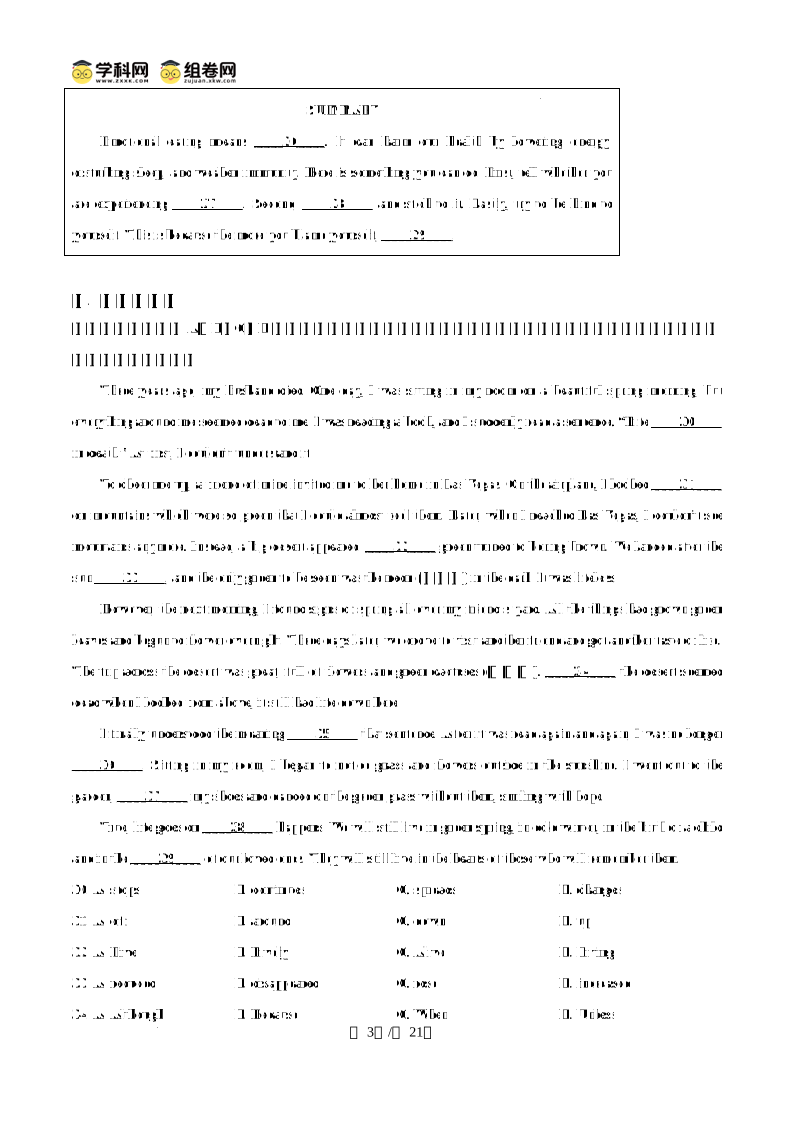
3
相关资源
由于学科网是一个信息分享及获取的平台,不确保部分用户上传资料的 来源及知识产权归属。如您发现相关资料侵犯您的合法权益,请联系学科网,我们核实后将及时进行处理。