UNIT 2 ICONIC ATTRACTIONS 教材助读(课件PPT)-【学霸笔记·同步精讲】2025-2026学年高中英语选择性必修第四册(人教版)
2026-04-10
|
50页
|
49人阅读
|
0人下载
教辅

资源信息
| 学段 | 高中 |
|---|---|
| 学科 | 英语 |
| 教材版本 | 高中英语人教版选择性必修第四册 |
| 年级 | 高二 |
| 章节 | Unit 2 Iconic Attractions |
| 类型 | 课件 |
| 知识点 | - |
| 使用场景 | 同步教学-新授课 |
| 学年 | 2026-2027 |
| 地区(省份) | 全国 |
| 地区(市) | - |
| 地区(区县) | - |
| 文件格式 | PPTX |
| 文件大小 | 2.32 MB |
| 发布时间 | 2026-04-10 |
| 更新时间 | 2026-04-10 |
| 作者 | 高智传媒科技中心 |
| 品牌系列 | 学霸笔记·高中同步精讲 |
| 审核时间 | 2026-04-10 |
| 下载链接 | https://m.zxxk.com/soft/57167575.html |
| 价格 | 4.00储值(1储值=1元) |
| 来源 | 学科网 |
摘要:
该高中英语课件围绕“澳大利亚标志性景点与文化”展开,涵盖澳大利亚地理、饮食、土著文化及特有动物等核心内容,通过学生博客日记记录澳大利亚之行,从前期研究到文化体验、土著音乐再到多元文化交融,构建连贯学习支架,帮助学生逐步深入主题。
其亮点在于以语言能力培养为核心,词汇积累结合语境解析词义及拓展(如“locate”的动词、名词形式),语法注释融入语篇实例(如what引导的宾语从句),提升语言理解与表达能力。文化意识方面,通过饮食文化、土著音乐及动物保护法律,引导学生理解多元文化与生态保护,增强跨文化认知。思维品质上,动物介绍采用问答式,分析袋鼠象征意义等,培养分析推断能力。此资料助力学生提升语言与跨文化能力,为教师提供丰富教学资源,提高教学效率。
内容正文:
UNIT 2 ICONIC ATTRACTIONS
1
教材原文助读3
1
教材原文助读4
2
内
容
索
引
教材原文助读3
PART
01
第一部分
3
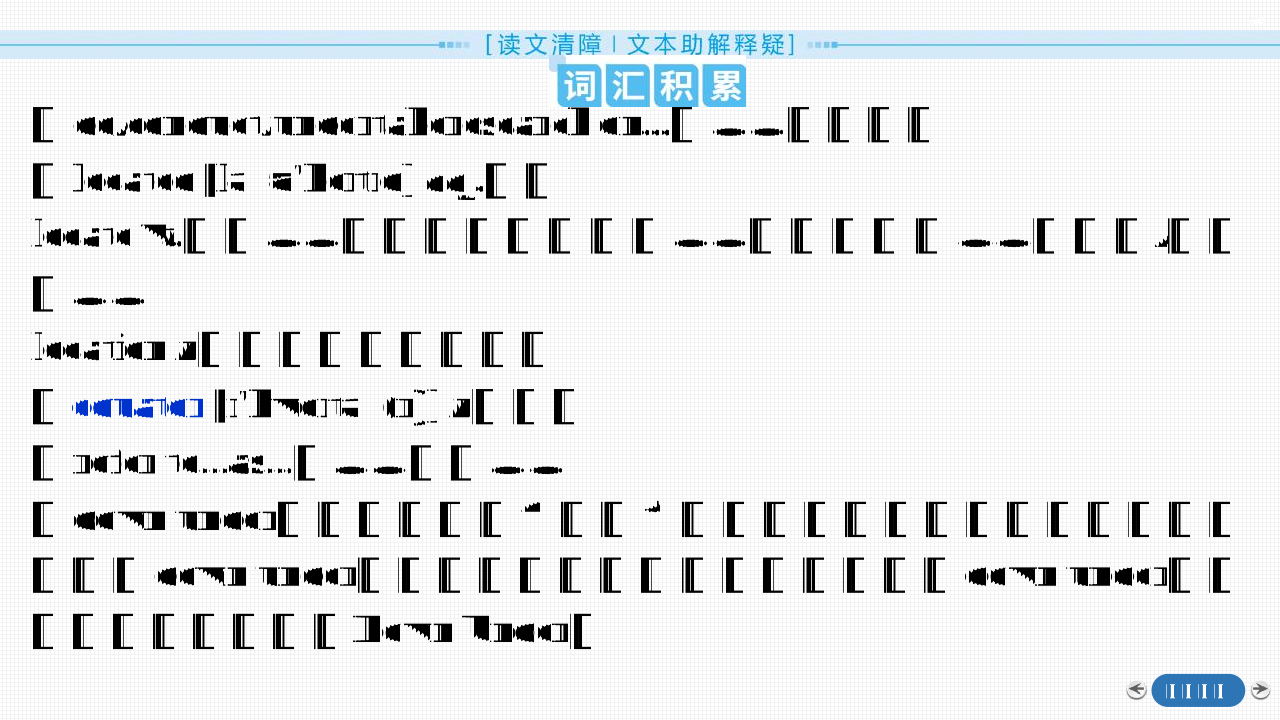
①do/conduct/undertakeresearch on...对……进行研究
②located [ləʊ'keɪtɪd] adj.位于
locate vt.找出……的准确位置;确定……的地点;把……安置在/建造于……
location n.地方;地点;位置
③equator [ɪ'kweɪtə(r)] n.赤道
④refer to...as...把……称作……
⑤down under的字面意思是“底下”,这是澳大利亚的一个非正式的别称。down under还可以指新西兰。在实际使用中,down under还可以首字母大写,即Down Under。
返回导航
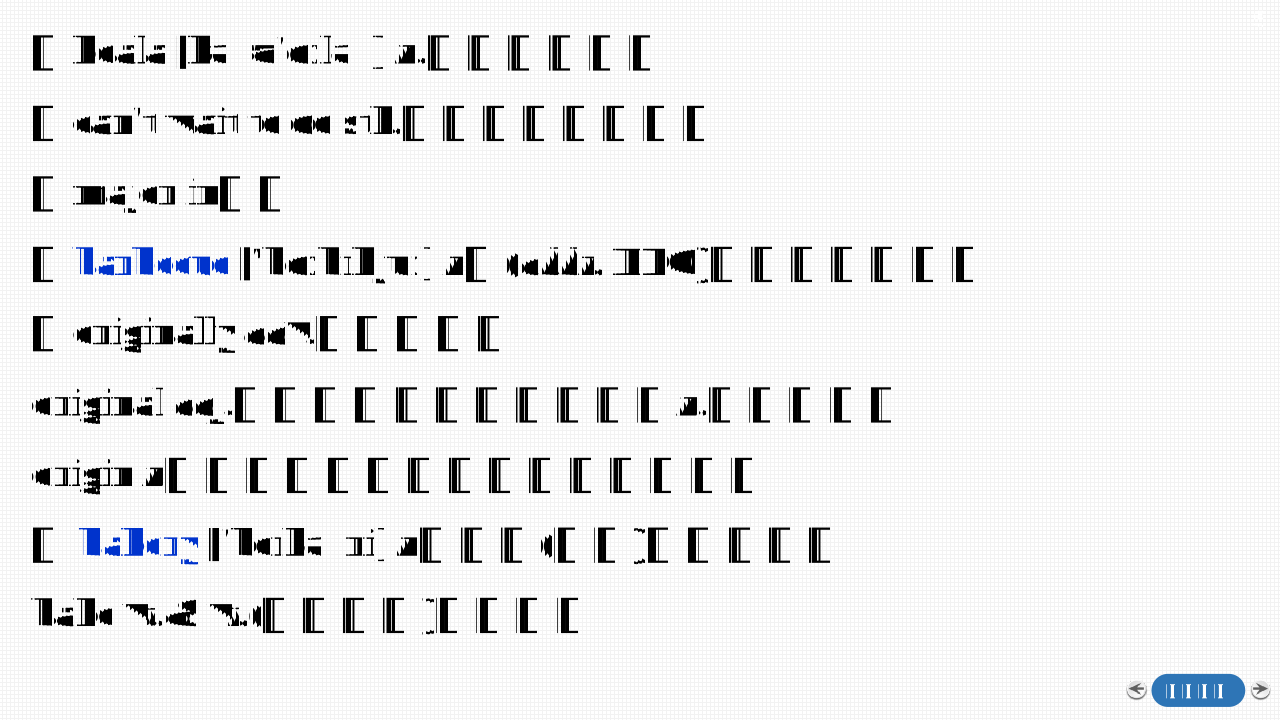
⑥koala [kəʊ'ɑːlə] n.考拉;树袋熊
⑦can't wait to do sth.迫不及待地做某事
⑧major in主修
⑨barbecue ['bɑːbɪkjuː] n.(abbr. BBQ)户外烧烤;烤架
⑩originally adv.原来;起初
original adj.原来的;独创的;原作的n.原件;原作
origin n.起源;源头;起因;身世;出身
⑪bakery ['beɪkəri] n.面包(糕饼)店;面包厂
bake vt.& vi.(在烤炉里)烘烤;焙
返回导航
⑫joint [dʒɔɪnt] n.公共场所(尤指价格低廉的饮食和娱乐场所);关节 adj.联合的;共同的
fast -food joints快餐店
⑬butcher ['bʊtʃə(r)] n.肉贩;屠夫;刽子手
⑭premier ['premiə(r);NAmE
prɪ'mɪr] adj.最著名的;第一的;首要的 n.总理;首相
⑮on the other hand另一方面,常与on (the) one hand构成搭配,意为“一方面……,另一方面……”,用于引出对立的思想、观点等。
⑯lead to导致;造成;引起;促使
返回导航
⑰herb [hɜːb] n.药草;香草;草木
⑱along with与……一起
⑲dim sim [ˌdɪm'sɪm](特指澳大利亚的)点心
⑳be native to...原产于……
㉑visible adj.明显的;能注意到的;看得见的;可见的
[反义词] invisible adj.看不见的;隐形的
㉒survive vi.生存;存活;继续存在
survive from...从……中留存下来
survival n.生存;存活;幸存;残存物;幸存物
返回导航
㉓in contact with...与……有联系/接触
㉔hollow ['hɒləʊ] adj.中空的;空心的
㉕vibrate [vaɪ'breɪt] vt.& vi.(使)振动
㉖horn [hɔːn] n.(乐器)号
㉗pitch [pɪtʃ] n.音高
㉘breathe in吸气
breathe out呼气
㉙be convinced that...确信……
convinced adj.坚信的;深信的;确信的
convincing adj.令人信服的;有说服力的
convince vt.使确信;使信服;说服
返回导航
㉚complicated adj.复杂的;难懂的
㉛people在此意为“民族、种族”,为可数名词。
㉜make up构成;组成
㉝minority n.少数民族;少数;少数派;少数人
[反义词] majority n.大部分;大多数
be in a/the minority/majority占少数/多数;成为少数派/多数派
㉞play a part in...在……中起作用;参与……
返回导航
㉟shape vt.塑造;使成为……形状/样子;决定……的形成;影响……的发展
n.状况;形状;外形in shape状况良好
out of shape变形的;走样的;身体状况不佳
in the shape of...以……的形式;呈……的形状
㊱contribute v.捐赠,捐助;为……做贡献;投稿
contribute to有助于;促成;捐献;导致
contribution n.贡献;捐赠;捐助
make great contributions to对……做出重大贡献
返回导航
㊲personally speaking就个人而言
㊳straightforward [ˌstreɪt'fɔːwəd]
adj.坦率的;简单的
㊴free -and -easy adj.无拘无束的;不拘礼节的
㊵feel at home感觉舒适自在
㊶slogan ['sləʊɡən] n.标语;口号
返回导航
25 Sep
Next week I'm travelling to Australia to visit a friend there over the school holidays. I plan to keep this blog to record my experiences and [1]what I learn. I have already done some research on① the country. Located② to the south of the equator③, below many other countries on the globe, it's often informally referred to as④ “down under⑤”.
[1]此处为what引导的宾语从句,作record的宾语,what在从句中作learn的宾语。
返回导航
I have also read about some iconic sites, such as the Sydney Opera House and the Great Ocean Road, and animals like the cute koalas⑥ and kangaroos.I can't wait to⑦ see all of them! [2]However, as I major in⑧ social studies, I'm more interested in meeting people in Australia and experiencing their culture, food, and way of life.
[2]本句中as引导原因状语从句;句中第一个and连接两个动名词短语,作interested后介词in的宾语。
返回导航
1 Oct
I'm here in Sydney! Since I arrived, my friend has brought me to my first open -air barbecue⑨ and has also shared many different but yummy meals with me, so my first impressions of Australia have been all about food! A lot of typical Australian food, such as the Sunday roast, is originally⑩ British. Bakeries⑪, fast -food joints⑫, butcher⑬ shops, cafes, and restaurants everywhere provide some of the premier⑭ food experiences in the world. The influence of Asian cultures, on the other hand⑮, led to⑯ the introduction of bean curd and Asian herbs⑰, along with⑱ Australian versions of foods like the Chinese -inspired dim sim⑲.
返回导航
3 Oct
My friend and I have arrived in Katherine, a town in Australia's Northern Territory. [3]We're here to learn about the life and customs of the Aborigines, who are native to⑳ Australia. The Aboriginal population might be small, but its influence is still visible㉑. For example, “Bondi” in “Bondi Beach” is an Aboriginal word [4]meaning “water breaking over rocks”.
[3]本句中“to learn...”为动词不定式作目的状语;who引导非限制性定语从句,修饰先行词Aborigines。
[4]此处为现在分词短语作后置定语。
返回导航
[5]To survive㉒ in this vast land on the ocean, the Aborigines had to be in close contact with㉓ nature. This shows in their music, too, [6]which celebrates the natural world and the spiritual world around them. Most of their musical instruments are really just sticks found on the ground, among which there is an amazing instrument called the didgeridoo.
[5]此处“To survive...”为动词不定式作目的状语。
[6]此处为which引导的非限制性定语从句。
返回导航
The didgeridoo is made from a tree branch [7]which is hollow㉔. To play the didgeridoo, you put your mouth on one end and blow while vibrating㉕ your lips. Unlike a horn㉖, there are no finger holes. The didgeridoo player has to change the shape of his mouth in order to change pitch㉗. A skilled player can play for a long time without stopping to breathe. He does this by continually breathing in㉘ through his nose [8]while breathing out through his mouth and into the didgeridoo. [9] I tried to learn how to play it, but after trying for hours, I was convinced that㉙ I could never make a musical sound with this instrument!
[7]此处为which引导的定语从句,修饰先行词a tree branch。
[8]此处为状语从句的省略形式。
[9]本句中but连接表示转折关系的句子;第二个分句中that引导宾语从句。
返回导航
6 Oct
It's almost time for me to say goodbye to Australia. I've enjoyed my time here very much. After being here for a while, my biggest impression is the complicated㉚ mix of peoples㉛ and cultures that make up㉜ the nation.Although the main cultural influence since 1788 has been Western culture, minority㉝ cultures have also played a part in㉞ shaping㉟ the unique Australian culture, with many of the new cultural influences contributed㊱ by immigrants. It is said that now nearly half of all Australian citizens were either born overseas or have parents who were born overseas.
返回导航
Personally speaking㊲, what I like most about Australia is the people themselves. They have a straightforward㊳ and free -and -easy㊴ attitude towards life, and their friendliness and warmth made me feel at home㊵[10]wherever I went.
[10]此处为wherever引导的让步状语从句。
返回导航
After experiencing Australia, I have to say that I agree with the tourism slogan㊶:“There's nothing like Australia.”
返回导航
9月25日
趁学校放假,下周我将去澳大利亚看望一位朋友。我计划用这个博客来记录我的经历和我所学到的东西。我已经对这个国家做了一些研究。它位于赤道以南,在地球上很多其他国家的下方,常被非正式地称为“down under”。
返回导航
我也看了一些标志性景点(的介绍),比如悉尼歌剧院和大洋路,还有像可爱的考拉和袋鼠这样的动物(的资料)。我迫不及待地想见到所有的这一切!不过,因为我主修社会研究,所以我对结识澳大利亚人并体验他们的文化、饮食和生活方式更感兴趣。
返回导航
10月1日
我在悉尼啦!自从我来到这里,朋友就带着我去吃了我的第一次露天烧烤,还与我分享了许多风格各异但很美味的佳肴,所以我对澳大利亚的第一印象都是关于食物的!很多澳大利亚的特色美食都源自英国,比如星期日烤肉。随处可见的面包店、快餐店、肉店、咖啡馆和餐馆提供了世界上顶级的美食体验。另一方面,受亚洲文化的影响,除了灵感源自中国的点心等澳大利亚版的食物以外,还引入了豆腐和亚洲药草。
返回导航
10月3日
我和朋友已经到达了位于澳大利亚北部地区的小镇凯瑟琳。我们此行的目的是了解土著人的生活和习俗,他们是澳大利亚的原住民。土著人的人口可能很少,但其影响依旧可见。例如,“邦迪海滩”中的“邦迪”就是一个意为“拍打着岩石的海浪”的土著词汇。
为了在海洋中的这片辽阔的土地上生存,土著人必须和大自然保持密切的联系。这也体现在他们的音乐中,这些音乐歌颂着他们周围的自然世界和精神世界。他们的大多数乐器其实就是在地上找到的树枝,其中就有一种叫作迪吉里杜管的、令人惊叹的乐器。
返回导航
迪吉里杜管由一根空心的树枝制成。吹奏迪吉里杜管时,你要把嘴靠在它的末端,一边吹一边振动你的嘴唇。与号不同,迪吉里杜管没有指孔。(所以)吹奏迪吉里杜管的演奏者必须靠改变嘴形才能改变音高。一名娴熟的演奏者可以长时间吹奏,不用停下来换气。为了达到这种程度,演奏者不停地通过鼻子吸气,同时通过他的嘴向迪吉里杜管呼气。我尝试着学习如何吹奏它,但经过几个小时的努力,我只能确信我永远都无法用这个乐器发出乐声!
返回导航
10月6日
差不多是我跟澳大利亚说再见的时候了。在这里我过得十分愉快。在这里住了一段时间之后,给我留下最深刻印象的是不同种族和文化的复杂交融组成了这个国家。尽管自1788年以来,主要的文化影响来自西方文化,但少数族裔文化在塑造独特的澳大利亚文化方面也发挥了作用,还有许多随着移民而来的新文化的影响。据说现在将近一半的澳大利亚公民要么出生在海外,要么其父母出生在海外。
返回导航
就我个人而言,我最喜欢的是澳大利亚人本身。他们对待生活的态度坦率且无拘无束,他们的友善和热情让我无论走到哪里都有宾至如归的感觉。
在游历了澳大利亚之后,我不得不说我赞同他们的旅游口号:“澳大利亚,无与伦比。”
返回导航
教材原文助读4
PART
02
第二部分
28
①(be) unique to (某地或某人)独具的;特有的
②symbol n.象征
③distribution [ˌdɪstrɪ'bjuːʃn]
n.分布;分配;分发
distribute vt.分配;分发
④tough adj.坚强的;健壮的;能吃苦耐劳的;坚韧不拔的
⑤resolve n.[熟词生义]
决心;坚定的信念
返回导航
⑥individual n.个人;个体
⑦at birth出生时
⑧pouch [paʊtʃ] n.育儿袋;小袋子;荷包
⑨temporary ['temprəri] adj.暂时的;短暂的;临时的
[反义词]permanent adj.永久的;永恒的
⑩phase [feɪz] n.阶段;时期
during the first/next/last phase在第一阶段/下一阶段/最后阶段
⑪encounter with...与……的邂逅/相遇
encounter n.(意外、突然或暴力的)遭遇;邂逅;相遇;冲突 vt.遭遇;偶然遇到
返回导航
⑫clarify vt.使更清晰易懂;阐明;澄清
⑬panic vi.& vt.恐慌,
(使)惊慌失措 n.惊恐;恐慌
in panic惊慌地
⑭trunk [trʌk] n.树干
⑮interaction with.../
between...与……的互动/……之间的互动
interact vi.交流;沟通;合作;相互影响;相互作用
interact with...与……交流/沟通
返回导航
⑯make laws against (doing) sth.制定法律禁止(做)某事
⑰in the interest(s) of 为了/符合……的利益
⑱pick up捡起;举起;提起;偶然获得;学会;(开车)接
⑲licensed ['laɪsnst] adj.得到正式许可的
license ['laɪsns] vt.批准;许可n.(=licence)许可证;执照
⑳session ['seʃn] n.一场;一段时间;会议
㉑in a(n)...state处于……的状态
㉒handle vt.(用手)触,拿;搬动;应付;处理
返回导航
㉓limited adj.有限的
limit n.& vt.限制
㉔frequency ['friːkwənsi]
n.发生率;重复率;(声波或电磁波振动的)频率
frequent adj.频繁的;经常发生的
frequently adv.频繁地
㉕come across (偶然)遇见;碰见;发现
㉖the dead意为“死者”。
“the+形容词”表示一类人,为复数意义;作主语时,谓语动词要用复数形式。
返回导航
㉗mostly adv.主要地;一般地;通常
㉘violent ['vaɪələnt] adj.暴力的;猛烈的
violently adv.暴力地;猛烈地
violence ['vaɪələns] n.暴力;暴行
㉙nest [nest] n.巢穴;鸟窝;秘密窝点
㉚primitive adj.原始的;人类或动物发展早期的;远古的
㉛mammal ['mæml] n.哺乳动物
㉜biology [baɪ'ɒlədʒi] n.生理;生物学
返回导航
㉝hatch [hætʃ] vi.孵出;破壳 vt.使孵出;策划;(尤指)密谋
㉞nurse vi.[熟词生义] 吃奶;喂奶
㉟bill n.[熟词生义] 鸟嘴;喙
㊱capacity [kə'pæsəti] n.能力;容量
capacity for (doing) sth./to do sth.做某事的能力
㊲a handful of少数人(或物);一把(的量)
返回导航
THE AMAZING ANIMALS OF AUSTRALIA
Our topic today is “Creatures Unique to① Australia”, [1]with questions answered by wildlife expert, Dr Jim Smith.
[1]此处为with复合结构,在句中作状语;answer与questions之间为逻辑上的动宾关系,应用过去分词形式作宾语补足语。Dr Jim Smith作wildlife expert的同位语。
返回导航
Australia has lots of unique animals, but which animal is a symbol② of the country?
It has to be the kangaroo, as it has a wide distribution③ throughout the country. It's a tough④ animal that has to survive in a difficult environment. Also, it cannot walk backwards, so it is always moving forwards. This expresses the strength and resolve⑤ of the Australians as individuals⑥ and as a nation. Baby kangaroos weigh only two grammes at birth⑦. They then find their way into their mother's pouch⑧ —a kind of pocket—to stay safe and warm.
返回导航
They sleep and drink milk in that temporary⑨, protected environment [2]until they are about seven or eight months old. After this phase⑩, they go out to try their legs. After they learn to jump, they gradually spend less time with their mother and learn to be independent. [3]Kangaroos may look cute, but encounters with⑪ them don't always end so well. Kangaroos can hit and kick very hard, so please folks, if you see some kangaroos, remember they're not for petting!
[2]此处为until引导的时间状语从句。
[3]本句为but连接的并列句,but后的分句中包含部分否定。
返回导航
Koalas are cute, and we see so many pictures of people holding them. But in many places in Australia, it is against the law to even touch them. Can you clarify⑫ that?
返回导航
[4]They are really quite cute, but the truth is, koalas are very sensitive creatures who can easily panic⑬ because of even small changes in their environment. They spend quite a lot of time eating, sleeping, and hanging onto tree trunks⑭,so interaction with⑮ humans can cause them a lot of stress. Because of this, the government began to make laws against⑯ touching koalas, in the interest of⑰ animal protection, as well as public safety.
[4]本句为but连接的并列句。the truth is后接表语从句;who引导定语从句,修饰先行词creatures。
返回导航
So, if you see one in the wild, you shouldn't approach it to pick it up⑱ or even touch it. If you want to hold a koala, you have to go to certain licensed⑲ zoos [5]where animal experts make sure that the koalas selected for each session⑳ are in a good state㉑ for human contact and that they are handled㉒ for only a limited㉓ time and on a limited frequency㉔ of occasions.
[5]此处为where引导的定语从句,修饰先行词zoos;两个that均引导宾语从句,作make sure的宾语;selected for each session为过去分词短语作后置定语,修饰the koalas。
返回导航
So, we've talked about some cute animals. What about animals which aren't so cute?
My favourite is a little creature called the Tasmanian devil. If you are out camping in Tasmania and come across㉕ one, the experience might scare you! [6]Tasmanian devils hunt at night, so you won't usually see them, but you may hear their loud cries when they are fighting or eating.
[6]本句为并列句。so和but均为并列连词;when引导时间状语从句。
返回导航
The noise [7]they make could wake the dead㉖. Frightening! They are about the size of small dogs and look like rather large black rats. They also have a terrible smell! Their diet is mostly㉗ dead animals. Fortunately, despite their name, they are generally not violent㉘ towards people.
[7]此处“they make”为省略关系词的定语从句,修饰先行词The noise;wake the dead运用了夸张的修辞手法。
返回导航
Australia also has some animals that many people have never heard of, for example, the duck -billed platypus. Is that some kind of bird?
Not at all. [8]While it may lay eggs in a nest㉙ like a bird, it's really a primitive㉚ mammal㉛, with a unique biology㉜. Its eggs hatch㉝ after about ten days, and then the baby platypus nurses㉞ from its mother like all other mammals. Its nose looks like a duck's bill㉟, and it has feet like a duck's so it can dive under the water, but it's covered in hair. Do you know what's really strange about a platypus?
[8]此处为While引导的让步状语从句。
返回导航
The platypus doesn't use its senses of sight or smell to find food. It has a capacity㊱ to find food in the water by using electrical sensors in its bill. There are only a small handful of㊲ animals in the world [9]that can do that!
[9]此处为that引导的定语从句,修饰先行词animals。
返回导航
澳大利亚神奇的动物
我们今天的话题是“澳大利亚特有的生物”,由野生动物专家吉姆·史密斯博士回答问题。
澳大利亚拥有众多独特的动物,但哪种动物才是这个国家的象征呢?
返回导航
那必须是袋鼠,因为这种动物广泛分布于全国。袋鼠是一种强壮的动物,生存于恶劣的环境中。此外,它不会倒退行走,所以它总是勇往直前。这表达了澳大利亚人作为个体和民族的力量与决心。袋鼠宝宝出生时只有两克重。然后,它们会钻进它们母亲的育儿袋——一种口袋——以保持安全和温暖。它们在这个临时性、受保护的环境中睡觉和吃奶,直到七八个月大。在这个阶段之后,它们会出去试试自己的腿力。学会跳跃之后,它们与母亲相处的时间就会逐渐减少,并学会独立。袋鼠可能看起来十分可爱,但与它们邂逅的结局并不总是那么美好。袋鼠的踢打相当有力,所以大家要注意,如果你们看到袋鼠,要记住它们不是用来抚摸的!
返回导航
考拉非常可爱,我们可以看到很多人抱着它们的照片。但是在澳大利亚的许多地方,即便触摸一下它们都是违法的。你能说明一下这点吗?
考拉确实十分可爱,但事实是,考拉是非常敏感的动物,因为即便只是环境中的微小变化都会让它们惊慌失措。它们大部分时间都在吃东西、睡觉和挂在树干上,所以与人类互动会给它们带来极大的压力。因此,政府开始立法禁止触摸考拉,这也是出于对动物保护和公共安全的考虑。所以,如果你在野外看到一只考拉,你不应该靠近它去把它抱起来,甚至不应该去触摸它。如果你想要抱一抱考拉,你必须去那些获得正式许可的动物园,在那里动物专家会确保为每场互动而选出的考拉状态良好,可以与人接触,而且只在有限的时间内,以有限的次数与人互动。
返回导航
我们已经讨论了一些可爱的动物。那么,不太可爱的动物有哪些呢?
我最喜欢的是一种被称为塔斯马尼亚恶魔的小动物。如果你在塔斯马尼亚野外露营时遇到一只,那经历可能会吓到你!塔斯马尼亚恶魔在夜间捕食,所以你通常不会看到它们,然而当它们打架或者吃东西时,你会听到它们震耳的嚎叫声。它们发出来的噪声能把死人叫醒。太可怕了!它们的个头跟小狗差不多,看起来像大黑鼠。它们身上还有一股难闻的气味!它们的食物主要是动物的尸体。幸运的是,尽管它们名为“恶魔”,但是它们基本上对人类没有攻击性。
返回导航
澳大利亚还有一些许多人从未听说过的动物,例如鸭嘴兽。那是某种鸟吗?
完全不是。虽然它可以像鸟一样在巢中产卵,但它实际上是一种原始的哺乳动物,具有罕见的生物特性。它的蛋大约十天后孵化出来,然后新生鸭嘴兽像其他所有哺乳动物一样由母亲哺乳。它的鼻子看起来像鸭嘴,脚也与鸭子的一样,所以它可以潜到水下,但它浑身都是毛。你知道鸭嘴兽真正奇怪的地方是什么吗?鸭嘴兽并非用视觉或嗅觉来觅食。它拥有一种通过用嘴里的电传感器在水中找到食物的能力。世界上具备这一能力的动物屈指可数!
返回导航
$
资源预览图

1
2

3
4
5

6

相关资源
由于学科网是一个信息分享及获取的平台,不确保部分用户上传资料的 来源及知识产权归属。如您发现相关资料侵犯您的合法权益,请联系学科网,我们核实后将及时进行处理。