Unit 5 3 Period 3 Discovering Useful Structures(Word教参)-【学霸笔记·同步精讲】2025-2026学年高中英语必修第三册(人教版)
2026-05-01
|
7页
|
74人阅读
|
5人下载
教辅

摘要:
本讲义聚焦高中英语情态动词和过去将来时核心语法点,系统梳理情态动词的特点(词义、形式、用法)、基本用法(can/could等7类情态动词功能)、情态动词+have done结构,以及过去将来时的五种表示方法,构建从基础到复杂的递进式学习支架。
该资料以教材例句为情境依托,通过对比分析不同情态动词用法培养思维品质,设计单句语法填空与语法写作题提升语言能力。课中助力教师清晰授课,课后学生可通过练习巩固知识,弥补语法盲点,有效提升学习效率与语言运用能力。
内容正文:
Period 3 Discovering Useful Structures
情态动词和过去将来时
一、情态动词的特点
情态动词本身有一定的词义,通常与动词原形一起构成谓语,表示说话人对某一动作或状态的态度或主观设想。
1.在意义上,情态动词有一定的词义,但不能单独作谓语,需和实义动词或系动词一起作谓语;
2.在形式上,情态动词一般没有人称和数的变化(be able to、have to除外);
3.在用法上,情态动词与助动词一样,其后需接动词原形,构成谓语动词。
二、情态动词的基本用法
(1)(教材P52)Oliver believes that with a millionpound bank note a man could live a month in London. 奥利弗认为一张面值百万英镑的钞票能让一个人在伦敦生活一个月。
(2)(教材P52)May we ask what you're doing in this country and what your plans are?
能告诉我们你来这个国家干什么吗?你有什么计划吗?
(3)You must finish your homework this afternoon.
你必须在今天下午完成你的作业。
(4)I promise I will do my best to provide the best service for the Asian Games.
我保证我会尽我所能为亚运会提供最好的服务。
(5)He needn't have gone to hospital, but he went just to reassure himself.
他本不必去医院的,去了只是想让自己放心。
(6)I dare not hand this project over to anyone else.
我不敢将这个项目交给其他任何人负责。
(7)She can't have been to your house; she doesn't know your address.
她不可能去过你家,她不知道你的地址。
1.can/could
(1)表示能力,指有能力做某事。could为can的过去式;
(2)表示请求或允许。could比can语气更加委婉,当表示给予允许或同意时通常不用could;
(3)表示推测,意为“可能”,常用于否定句和疑问句中,can't/couldn't意为“不可能”;
(4)表示一时的可能性,意为“有时会”,常用于肯定句中。
2.may/might
(1)表示请求、允许或许可。might在语气上比may更加委婉。以may/might开头的问句在否定回答中要用mustn't;
(2)表示把握不大的推测,意为“可能、也许”,用于肯定句或否定句中,might语气更加不确定;
(3)用于祈使句,表示祝愿;
(4)“may/might as well+动词原形”是固定结构,意为“不妨……”。
3.shall/should
(1)shall
①用于第一、三人称的疑问句中时,表示征求意见;
②用于第二、三人称的陈述句中时,表示允诺、命令、警告和强制,或表示说话人的决心等;
③在法律、条约、协定等文件中,表示义务、规定等。
(2)should
①表示责任和义务,意为“应该”;
②表示推测,指有一定根据的推测,意为“按道理应该”;
③表示惊讶,意为“竟会、居然”。
4.must
表示现在或将来必须要做某事,多是出于义务、责任或强制命令,指说话人的主观意志。其否定形式为mustn't,意为“一定不要、不准、禁止”。
(1)回答must引导的问句时,如果是否定的回答,要用needn't或don't have to;
(2)must表示“偏要、硬要”,指不愉快的事;
(3)must表示推测,其推测的可能性比较大,意为“一定、必定”,常用于肯定句中。
5.will/would
(1)will表示意愿、意志,would表示过去时间的意愿、意志。
(2)表示征求意见或提出请求,主要用于第二人称疑问句中,will和would均可使用,would此时不表示过去,而是表示委婉语气。
(3)will表示某种倾向或习惯性动作,意为“总会、老是”;would表示过去反复发生的动作或过去的一种倾向。
6.need和dare
(1)need表示必要性,意为“需要”;dare表示敢于。need和dare作情态动词时常用于否定句、疑问句或条件句中,无人称和数的变化,疑问句和否定句中不加助动词;
(2)need和dare用作实义动词时,有词形变化;在否定句、疑问句中要加助动词。
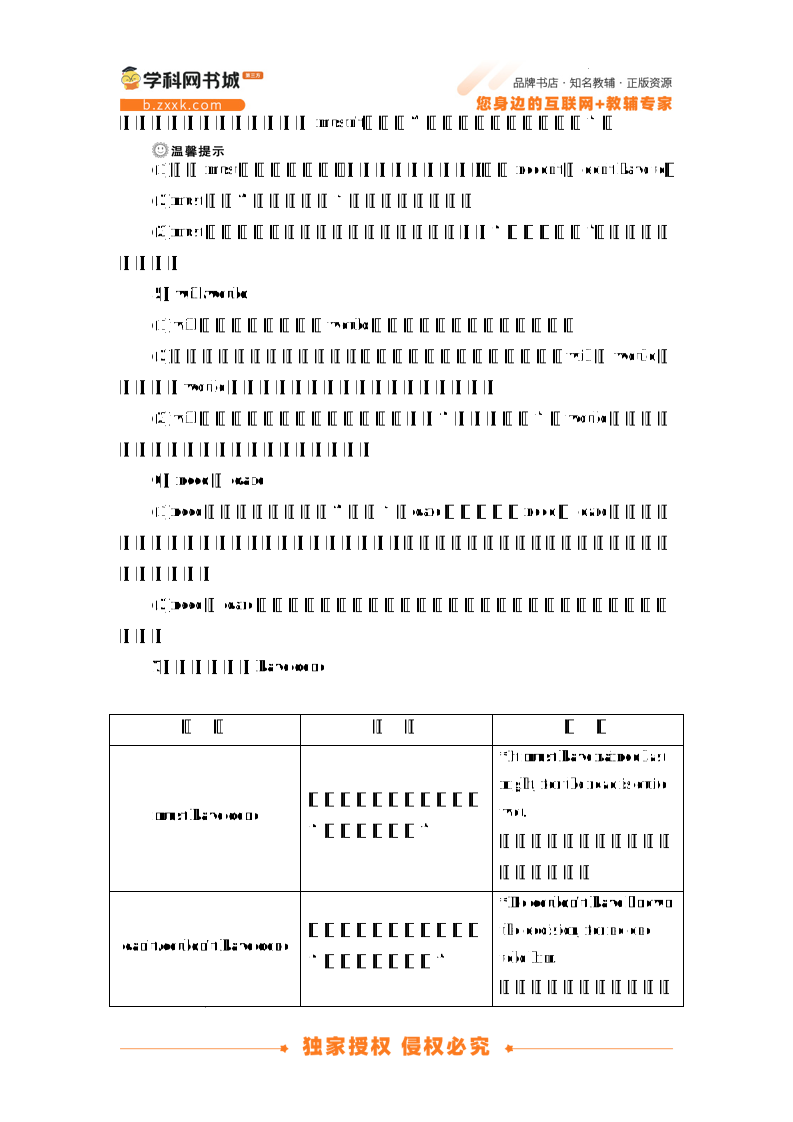
7.情态动词+have done
形 式
用 法
例 句
must have done
对过去的肯定推测,意为“过去肯定做了”
*It must have rained last night, for the road is quite wet.
昨晚肯定下雨了,因为路面十分潮湿。
can't/couldn't have done
对过去的否定推测,意为“过去不可能做了”
*He couldn't have known the decision, for no one told him.
他一定不知道这个决定,因为没人告诉他。
could have done
意为“本来能够做而没做”
*You could have made greater progress, but you didn't try your best.
你本能够取得更大的进步,但是你并没有尽全力。
may/might (not) have done
意为“可能(没有)做过”
*You may have dropped it when you were shopping in the market.
你或许是在市场买东西的时候把它掉了。
ought to/should have done
意为“本来该做而没做”
*You should have come to school if you were really serious about your study.
要是你真的认真对待学习的话,你本应该来上学的。
ought not to/should not have
done
意为“本来不该做而做了”
*I should not have eaten so much cake at the party.
我本不应该在派对上吃那么多蛋糕的。
needn't have done
意为“本来不必做却做了”
*You needn't have telephoned him, for he had known the result.
你本不必打电话给他,因为他已经知道结果了。
三、过去将来时
(1)(教材P52)Young man, would you step inside a moment, please?
小伙子,请进来一下,好吗?
(2)(教材P52)Yes, I was about to go get the letter.
好的,我正要去拿信。
(3)She told her mother that she was leaving for a ball with Mike.
她告诉母亲,她要和迈克一起去参加一个舞会。
过去将来时的表示方法:
1.would/should do:表示从过去某一时间来看将要发生的动作或存在的状态。
2.was/were going to do:表示过去将要发生或很有可能发生的动作,常用于口语中,表示意图或者打算等。
3.was/were about to do:常用来表示即将发生的动作,表示“刚要/正要做……”。注意该结构不与任何时间状语连用。
4.was/were to do:表示“曾计划做某事”,也可以表示“命中注定要发生的事”;如果表示“本来计划做某事,动作没实现”,则需用“was/were to have done”。
5.was/were doing:常用动词有start、go、come、leave、see、meet等,表示就过去某一时刻而言即将发生的动作。
Ⅰ.单句语法填空
1.He would go to the river nearby to fish on weekends when he was young.
2.The report is written after careful investigation. So it should be reliable.
3.When he was young, he would climb the small hill every morning.
4.Could you please be kind enough to tell me something about that?
5.I have reached a point in my career where I need to decide which way to go.
6.If you can pass the driving test, you shall get a new car.
7.She may/might have been caught in the heavy traffic. If so, she won't arrive here by five o'clock.
8.One of our rules is that every student shall wear school uniforms while at school.
9.You may/might as well walk outside with your friends or take some exercise.
10.It is not a problem whether we can win the battle; it's just a matter of time.
11.He said that if it didn't rain he would_go(go) to the park.
12.It is usually warm in winter in the south, but it can be cold and even have snow sometimes.
13.Despite all our efforts to persuade him, he still would not change his mind to quit his job.
14.I'm not a trained musician, but I've learnt to read music so I can help Maria in her performance.
Ⅱ.语法与写作
1.我想不起来了——我当时一定是失去了知觉。
I can't remember any more—I must_have_lost consciousness.
2.我刚穿上外套要去看望我的一个朋友。
I had just put on my overcoat and was_leaving_to_visit a friend of mine.
3.你本来能早点通过考试,但你如此粗心,以至于犯这么多错误。
You could_have_passed_the_exam_early,_but you were so careless as to make so many mistakes.
4.看看你都做了什么!你本应该更仔细地做这个实验。
Look what you've done! You ought_to/should_have_done the experiment more carefully.
5.周五我们的老师告诉我们,他打算带我们去观看一场辩论赛。
On Friday our teacher told us that he_was_going_to_take_us_to_watch a debate competition.
6.那个测试很容易,他本来应该通过的,但却没有。
It was an easy test and he should_have_passed,_but he didn't.
7.她可能买了那本词典,但我不确定。
She may_have_bought the dictionary, but I'm not sure.
8.你本没必要订票的,因为这几天动物园免费向公众开放。
You needn't_have_booked the ticket, for the zoo is open to the public free of charge these days.
学科网(北京)股份有限公司
$
资源预览图

1

2
3

相关资源
示范课
由于学科网是一个信息分享及获取的平台,不确保部分用户上传资料的 来源及知识产权归属。如您发现相关资料侵犯您的合法权益,请联系学科网,我们核实后将及时进行处理。