Unit 5 Learning from Nature-Presenting ideas 教案-2025-2026学年高中英语外研版选择性必修第三册
2026-04-02
|
5页
|
174人阅读
|
0人下载
普通
资源信息
| 学段 | 高中 |
|---|---|
| 学科 | 英语 |
| 教材版本 | 高中英语外研版选择性必修第三册 |
| 年级 | 高二 |
| 章节 | Presenting ideas |
| 类型 | 教案 |
| 知识点 | - |
| 使用场景 | 同步教学-新授课 |
| 学年 | 2026-2027 |
| 地区(省份) | 全国 |
| 地区(市) | - |
| 地区(区县) | - |
| 文件格式 | DOCX |
| 文件大小 | 96 KB |
| 发布时间 | 2026-04-02 |
| 更新时间 | 2026-04-02 |
| 作者 | 匿名 |
| 品牌系列 | - |
| 审核时间 | 2026-04-02 |
| 下载链接 | https://m.zxxk.com/soft/57147544.html |
| 价格 | 1.00储值(1储值=1元) |
| 来源 | 学科网 |
内容正文:
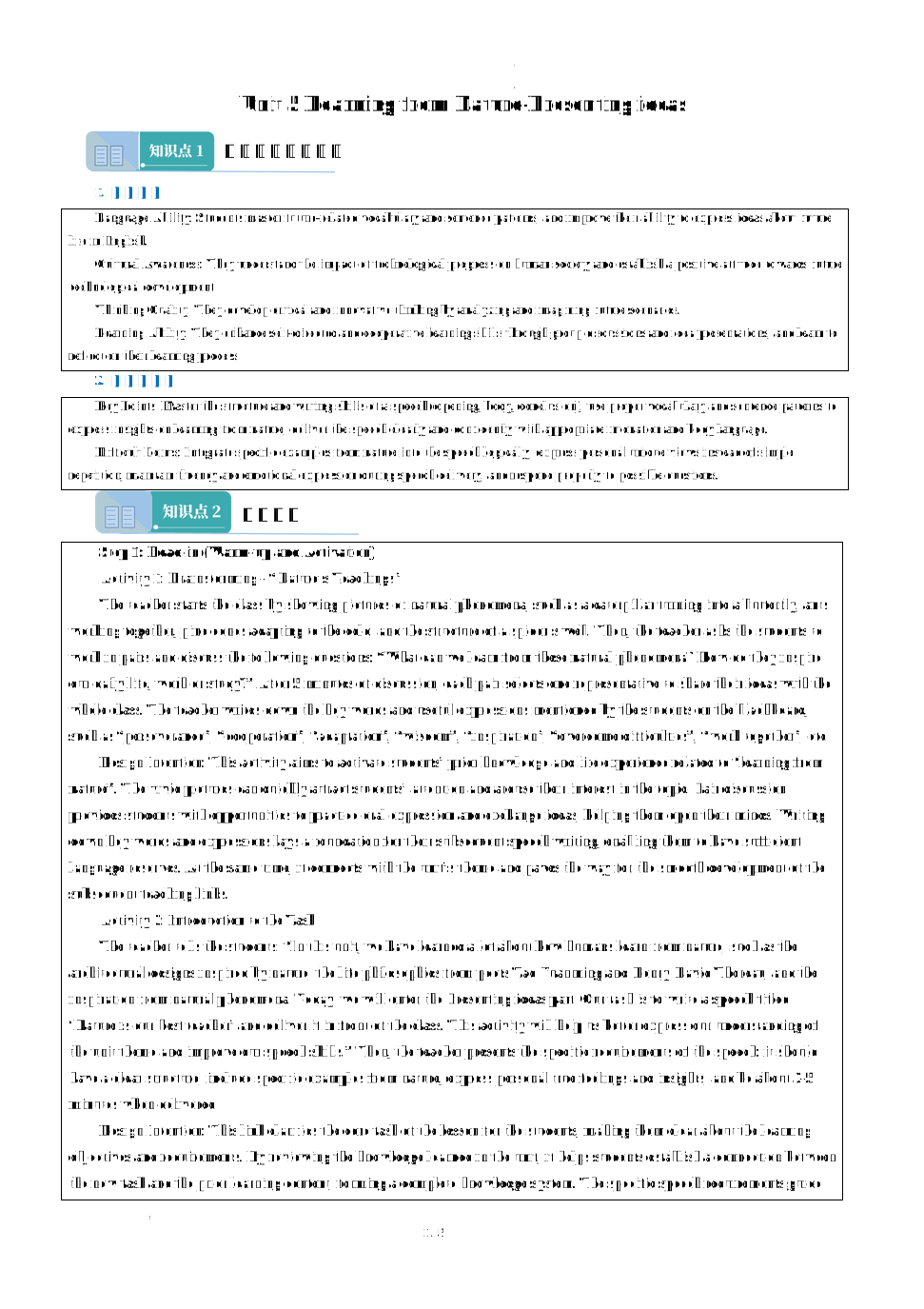
Unit 5 Learning from Nature-Presenting ideas
教学目标和重难点
1. 教学目标
Language Ability: Students master future-related vocabulary and sentence patterns, and improve their ability to express ideas about future life in English.
Cultural Awareness: They understand the impact of technological progress on human society and establish a positive attitude towards future technological development.
Thinking Quality: They develop critical and innovative thinking by analyzing and imagining future scenarios.
Learning Ability: They enhance self-directed and cooperative learning skills through group discussions and idea presentations, and learn to reflect on their learning process.
2. 教学重难点
Key Points: Master the structure and writing skills of a speech (opening, body, conclusion); use proper vocabulary and sentence patterns to express insights on learning from nature; deliver the speech clearly and confidently with appropriate intonation and body language.
Difficult Points: Integrate specific examples from nature into the speech logically; express personal unique views instead of simple repetition; maintain fluency and emotional expression during speech delivery, and respond properly to possible questions.
教学过程
Step 1: Lead-in (Warm-up and Activation)
Activity 1: Brainstorming - “Nature’s Teachings”
The teacher starts the class by showing pictures of natural phenomena, such as a caterpillar turning into a butterfly, ants working together, pine cones adapting to the cold, and the structure of a spider’s web. Then, the teacher asks the students to work in pairs and discuss the following questions: “What can we learn from these natural phenomena? How do they inspire our daily life, work or study?” After 5 minutes of discussion, each pair selects one representative to share their ideas with the whole class. The teacher writes down the key words and useful expressions mentioned by the students on the blackboard, such as “perseverance”, “cooperation”, “adaptation”, “wisdom”, “inspiration”, “overcome difficulties”, “work together”, etc.
Design Intention: This activity aims to activate students’ prior knowledge and life experience related to “learning from nature”. The vivid pictures can quickly attract students’ attention and arouse their interest in the topic. Pair discussion provides students with opportunities to practice oral expression and exchange ideas, helping them open their minds. Writing down key words and expressions lays a foundation for their subsequent speech writing, enabling them to have sufficient language reserves. At the same time, it connects with the unit’s theme and paves the way for the smooth development of the subsequent teaching links.
Activity 2: Introduction to the Task
The teacher tells the students: “In this unit, we have learned a lot about how humans learn from nature, such as the architectural designs inspired by nature, the life philosophies from poets Tao Yuanming and Henry David Thoreau, and the inspiration from natural phenomena. Today, we will enter the Presenting ideas part. Our task is to write a speech titled ‘Nature is our best teacher’ and deliver it in front of the class. This activity will help us better express our understanding of the unit theme and improve our speech skills.” Then, the teacher presents the specific requirements of the speech: it should have a clear structure, include specific examples from nature, express personal true feelings and insights, and be about 3-5 minutes when delivered.
Design Intention: This link clarifies the core task of the lesson for the students, making them clear about the learning objectives and requirements. By reviewing the knowledge learned in the unit, it helps students establish a connection between the new task and the prior learning content, forming a complete knowledge system. The specific speech requirements guide students to focus on the key points in the subsequent writing and delivery process, avoiding blindness in their learning.
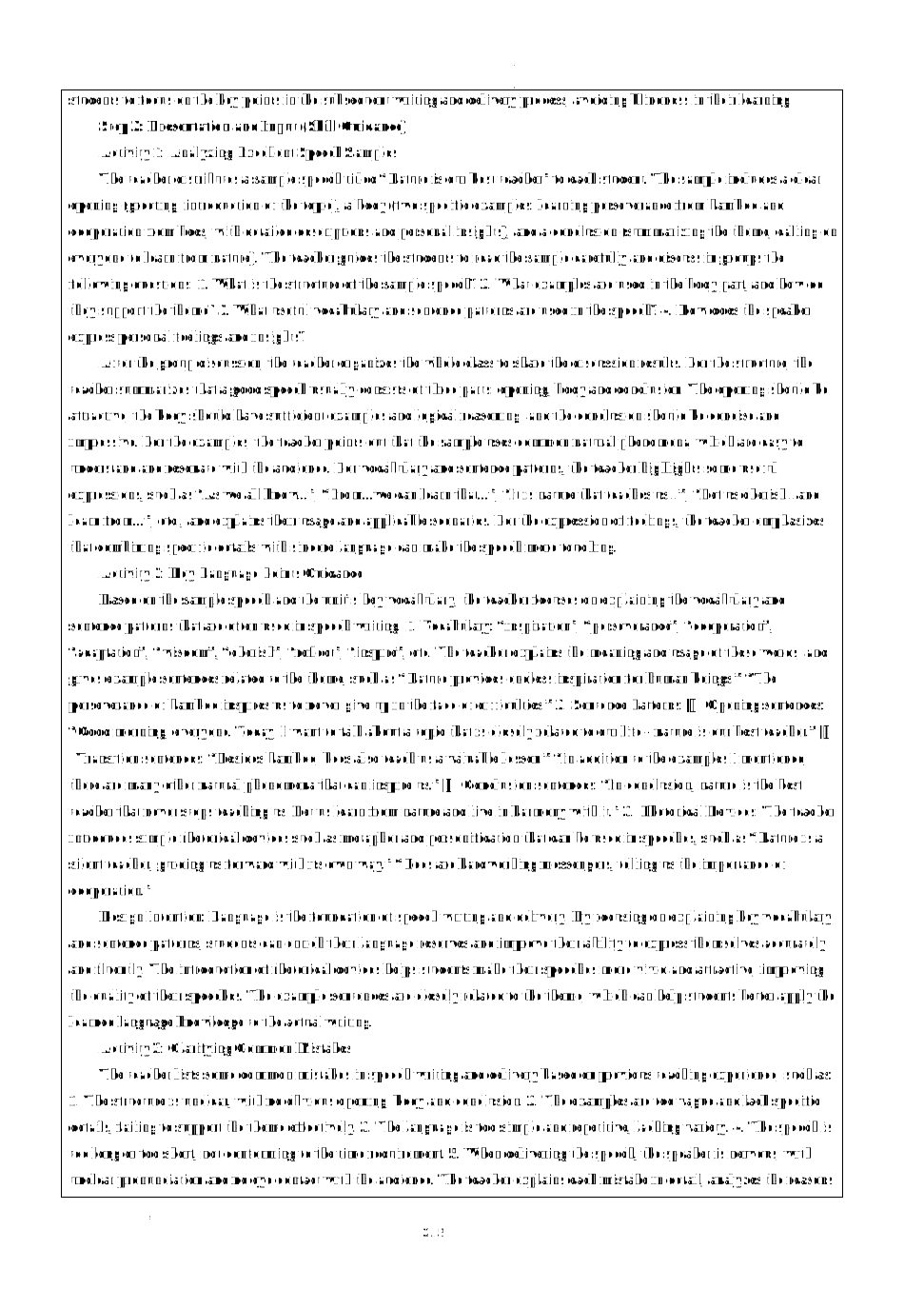
Step 2: Presentation and Input (Skill Guidance)
Activity 1: Analyzing Excellent Speech Samples
The teacher distributes a sample speech titled “Nature is our best teacher” to each student. The sample includes a clear opening (greeting, introduction of the topic), a body (two specific examples: learning perseverance from bamboo and cooperation from bees, with detailed descriptions and personal insights), and a conclusion (summarizing the theme, calling on everyone to learn from nature). The teacher guides the students to read the sample carefully and discuss in groups the following questions: 1. What is the structure of the sample speech? 2. What examples are used in the body part, and how do they support the theme? 3. What useful vocabulary and sentence patterns are used in the speech? 4. How does the speaker express personal feelings and insights?
After the group discussion, the teacher organizes the whole class to share the discussion results. For the structure, the teacher summarizes that a good speech usually consists of three parts: opening, body and conclusion. The opening should be attractive, the body should have sufficient examples and logical reasoning, and the conclusion should be concise and impressive. For the examples, the teacher points out that the sample uses common natural phenomena, which are easy to understand and resonate with the audience. For vocabulary and sentence patterns, the teacher highlights some useful expressions, such as “As we all know...”, “From...we can learn that...”, “It is nature that teaches us...”, “Let us cherish...and learn from...”, etc., and explains their usage and applicable scenarios. For the expression of feelings, the teacher emphasizes that combining specific details with sincere language can make the speech more touching.
Activity 2: Key Language Points Guidance
Based on the sample speech and the unit’s key vocabulary, the teacher focuses on explaining the vocabulary and sentence patterns that are often used in speech writing. 1. Vocabulary: “inspiration”, “perseverance”, “cooperation”, “adaptation”, “wisdom”, “cherish”, “reflect”, “inspire”, etc. The teacher explains the meaning and usage of these words, and gives example sentences related to the theme, such as “Nature provides endless inspiration for human beings.” “The perseverance of bamboo inspires us to never give up in the face of difficulties.” 2. Sentence Patterns: ① Opening sentences: “Good morning, everyone. Today, I want to talk about a topic that is closely related to our life - nature is our best teacher.” ② Transition sentences: “Besides bamboo, bees also teach us a valuable lesson.” “In addition to the examples I mentioned, there are many other natural phenomena that can inspire us.” ③ Conclusion sentences: “In conclusion, nature is the best teacher that never stops teaching us. Let us learn from nature and live in harmony with it.” 3. Rhetorical Devices: The teacher introduces simple rhetorical devices such as metaphor and personification that can be used in speeches, such as “Nature is a silent teacher, guiding us forward with its own way.” “Bees are hardworking messengers, telling us the importance of cooperation.”
Design Intention: Language is the foundation of speech writing and delivery. By focusing on explaining key vocabulary and sentence patterns, students can enrich their language reserves and improve their ability to express themselves accurately and fluently. The introduction of rhetorical devices helps students make their speeches more vivid and attractive, improving the quality of their speeches. The example sentences are closely related to the theme, which can help students better apply the learned language knowledge to the actual writing.
Activity 3: Clarifying Common Mistakes
The teacher lists some common mistakes in speech writing and delivery based on previous teaching experience, such as: 1. The structure is unclear, with no obvious opening, body and conclusion. 2. The examples are too vague and lack specific details, failing to support the theme effectively. 3. The language is too simple and repetitive, lacking variety. 4. The speech is too long or too short, not conforming to the time requirement. 5. When delivering the speech, the speaker is nervous, with unclear pronunciation and no eye contact with the audience. The teacher explains each mistake in detail, analyzes the reasons and puts forward corresponding improvement methods. For example, for the problem of vague examples, the teacher suggests that students should describe the natural phenomenon in detail and explain how it inspires them, instead of simply saying “We can learn perseverance from bamboo.”
Design Intention: By pointing out common mistakes and providing improvement methods, students can avoid making the same mistakes in their own speech writing and delivery. This link helps students establish a correct understanding of speech writing and delivery, and improves their ability to find and correct mistakes, which is conducive to the improvement of their speech quality.
Step 3: Practice and Production (Speech Writing)
Activity 1: Outlining the Speech
The teacher asks the students to work independently to outline their speeches. The outline should include the following parts: 1. Opening: Greeting, introduction of the topic, and a brief preview of the main content. 2. Body: 2-3 specific examples from nature, including detailed descriptions of the natural phenomena and personal insights (how they inspire life, study or work). 3. Conclusion: Summarizing the theme, expressing personal feelings, and calling on everyone to learn from nature. The teacher walks around the classroom, observes the students’ outlining situation, and provides timely guidance to students who have difficulties. For example, some students may not be able to think of appropriate examples, and the teacher can remind them of the natural phenomena mentioned in the unit, such as the structure of termite mounds inspiring architectural design, the echo-location of bats inspiring the invention of radar, or the lotus growing in muddy water inspiring people to keep pure.
Design Intention: Outlining is an important link in speech writing, which helps students sort out their ideas and ensure the logicality and completeness of the speech. Independent outlining cultivates students’ independent thinking ability and ability to organize ideas. The teacher’s timely guidance helps solve the difficulties encountered by students in the outlining process, ensuring that all students can complete the outline smoothly and lay a foundation for the subsequent writing of the full text.
Activity 2: Writing the Full Text of the Speech
Based on the outline, the students write the full text of the speech independently. The teacher reminds the students to pay attention to the following points: 1. Use the vocabulary and sentence patterns learned in the lesson to ensure the accuracy and fluency of the language. 2. The examples should be specific and detailed, with clear logical connections between paragraphs. 3. Express personal true feelings and unique insights, avoiding simple repetition of the sample. 4. Control the length of the speech to ensure that it takes 3-5 minutes to deliver. During the writing process, the teacher continues to walk around the classroom, answers the students’ questions, and checks the students’ writing situation. For students with poor writing ability, the teacher can give targeted guidance, such as helping them organize sentences or select appropriate examples. For students with good writing ability, the teacher can encourage them to use more rhetorical devices to enrich the language of the speech.
Design Intention: Independent writing is the key link to improve students’ writing ability. By writing the full text of the speech, students can apply the learned vocabulary, sentence patterns and writing skills to practice, consolidating the knowledge they have learned. The teacher’s targeted guidance ensures that students at different levels can get help and improvement, reflecting the principle of differentiated teaching. At the same time, requiring students to express unique insights helps cultivate their critical thinking and innovation ability.
Activity 3: Peer Review and Revision
After the students finish writing the speech, the teacher organizes them to carry out peer review in groups of four. Each student reads his or her own speech aloud to the group members, and the other members put forward revision suggestions according to the following evaluation criteria: 1. Is the structure clear (opening, body, conclusion)? 2. Are the examples specific and supportive of the theme? 3. Is the language accurate, fluent and rich? 4. Are the personal insights unique and sincere? 5. Is the length of the speech appropriate? The group members discuss together and put forward specific revision suggestions, such as adding more details to the examples, modifying inappropriate sentences, or using more appropriate vocabulary. Then, the students revise their own speeches according to the peer suggestions and their own thinking.
Design Intention: Peer review not only allows students to learn from each other’s strengths and make up for their own weaknesses, but also improves their ability to evaluate and modify articles. By reading their own speeches aloud, students can find the problems in pronunciation, intonation and fluency in advance, which lays a foundation for the subsequent speech delivery. The evaluation criteria provide a clear direction for students’ peer review, making the review more targeted and effective. Revision after review helps students improve the quality of their speeches and deepen their understanding of speech writing.
Step 4: Presentation and Evaluation (Speech Delivery)
Activity 1: Group Speech Competition
Each group selects 1-2 representatives to deliver their speeches in front of the whole class. The teacher sets up a simple evaluation team, including the teacher and 4 student representatives (selected by the whole class in advance). The evaluation team evaluates the speeches according to the following criteria: 1. Content: Clear theme, specific examples, unique insights, logical structure (30 points). 2. Language: Accurate and fluent pronunciation, appropriate intonation, rich vocabulary and sentence patterns (30 points). 3. Delivery: Confident posture, natural expression, eye contact with the audience, appropriate body language (30 points). 4. Time Control: Conforming to the 3-5 minute requirement (10 points). The total score is 100 points. After each representative finishes delivering the speech, the evaluation team gives a brief comment, pointing out the advantages and areas for improvement. The other students can also ask questions to the speaker, such as “Why did you choose this natural phenomenon?” “What other inspirations can you get from it?” The speaker answers the questions politely and clearly.
Design Intention: The speech competition creates a positive and active learning atmosphere, stimulating students’ enthusiasm for speech delivery. Selecting student representatives to join the evaluation team not only improves their ability to evaluate others, but also enhances their sense of participation. The detailed evaluation criteria make the evaluation more fair and objective, helping students clearly understand their strengths and weaknesses. The question-and-answer link after the speech not only enriches the form of the activity, but also deepens the students’ understanding of the theme, and improves their ability to respond to questions.
Activity 2: Self-Evaluation and Reflection
After all the speeches are delivered, the teacher asks the students to carry out self-evaluation and reflection. The students fill in a self-evaluation form, which includes the following questions: 1. What are the advantages of my speech? 2. What are the problems in my speech writing and delivery? 3. What have I learned from this activity? 4. What improvements will I make in future speech writing and delivery? Then, the teacher invites several students to share their self-evaluation and reflection results with the whole class. The teacher makes a summary comment, affirming the efforts and progress of all students, praising the excellent speeches, and putting forward suggestions for improvement for the common problems.
Design Intention: Self-evaluation and reflection help students form a good learning habit of self-examination and self-improvement. By filling in the self-evaluation form, students can clearly understand their own problems and learning gains, and clarify the direction of future efforts. Sharing the reflection results allows students to learn from each other’s experiences and lessons, promoting common progress. The teacher’s summary comment not only affirms the students’ achievements, but also provides targeted guidance for their future learning, enhancing their confidence in learning.
Step 5: Consolidation and Extension
Activity 1: Perfecting the Speech
The teacher asks the students to revise their speeches again according to the peer review suggestions, the evaluation of the speech competition and their own reflection. After revising, the students submit their final version of the speech to the teacher. The teacher checks the speeches carefully, writes comments on each speech, points out the advantages and areas for improvement, and returns them to the students. The students read the teacher’s comments and further improve their speeches, forming their own excellent speech works.
Design Intention: Further revision helps students continuously improve the quality of their speeches, consolidating the writing skills they have learned. The teacher’s careful review and comments provide targeted guidance for students, helping them solve the problems they cannot find by themselves. Submitting the final version of the speech allows the teacher to understand the students’ learning effect and make a summary and reflection on the teaching.
Activity 2: Theme Extension - “Nature and Our Life”
The teacher organizes the students to carry out a group discussion on the topic “How can we learn from nature in our daily life?” The students discuss from the aspects of study, work, environmental protection, etc., and put forward specific suggestions. For example, in study, we can learn the perseverance of bamboo and never give up when encountering difficulties; in environmental protection, we can learn from the balance of nature and protect the environment consciously. After the discussion, each group shares their suggestions with the whole class. The teacher summarizes the students’ suggestions, emphasizing that we should always keep an eye on nature, learn from nature, and live in harmony with nature.
Design Intention: This activity extends the unit theme, connects the speech writing with real life, and helps students apply the learned knowledge and insights to daily life. Group discussion promotes students’ cooperation and communication ability, and enriches their understanding of “learning from nature”. The teacher’s summary strengthens the students’ awareness of living in harmony with nature, realizing the educational value of the unit theme.
Activity 3: Homework Arrangement
1. Recite your own speech and deliver it to your family or friends, and ask for their feedback. 2. Collect more examples of humans learning from nature, and write a short passage (about 100 words) to introduce one of them. 3. Watch excellent English speeches online, learn from their delivery skills, and take notes of useful expressions.
Design Intention: Homework is an extension of classroom teaching, helping students consolidate the knowledge and skills learned in class. Reciting and delivering the speech to family or friends can improve students’ oral expression ability and confidence. Collecting examples and writing short passages enriches students’ knowledge reserve related to the theme. Watching excellent English speeches helps students learn advanced delivery skills and improve their overall speech level.
Step 6: Teaching Summary
In this lesson, we focus on the task of speech writing and delivery around the theme “Nature is our best teacher”. Through brainstorming, sample analysis, language guidance, independent writing, peer review, speech delivery and other links, students have mastered the structure and writing skills of a speech, improved their oral and written expression abilities, and deepened their understanding of the unit theme. At the same time, students have developed their thinking quality, cultural awareness and learning ability through group cooperation, self-evaluation and reflection. It is hoped that students can apply the knowledge and skills learned in this lesson to their daily life, keep learning from nature, and live in harmony with nature.
1 / 1
学科网(北京)股份有限公司
学科网(北京)股份有限公司
学科网(北京)股份有限公司
$
资源预览图
1
2
相关资源
由于学科网是一个信息分享及获取的平台,不确保部分用户上传资料的 来源及知识产权归属。如您发现相关资料侵犯您的合法权益,请联系学科网,我们核实后将及时进行处理。