Unit 3 Food matters 核心单词,词性转换,短语,语法,句型精练-2025-2026学年七年级英语下册单元练习(外研版)
2026-03-27
|
2份
|
17页
|
943人阅读
|
22人下载

内容正文:
班级 姓名 学号 分数
Unit 3 Food matters
单元重点单词变形短语语法句型精练
(时间:60分钟,满分:100分)
一、词性转换
试卷第1页,共3页
试卷第1页,共3页
学科网(北京)股份有限公司
1. certain adj. 某个;某些 → adv. certainly(肯定地;当然)
2. sweet adj. 甜的 → n. sweet(糖果;甜点)
3. simple adj. 简单的 → adj. plain(朴素的;单纯的)
4. medical adj. 医学的 → n. medicine(药;药物)
5. connect v. 连接 → n. connection(联系;关联)
6. prove v. 证明 → n. proof(证明;证据)
7. similar adj. 相似的 → n. similarity(相似性;类似点)
8. special adj. 特殊的 → n. specialty(特色菜;特产)
9. order n. 顺序 → v. order(命令;点餐)
10. delicious adj. 美味的 → n. deliciousness(美味;佳肴)
11. mix v. 混合 → n. mixture(混合液;混合料)
12. stir v. 搅拌 → n. stir(搅动;搅拌)
13. gold n. 金子 → adj. golden(金色的;金黄色的)
14. firm adj. 结实的 → adv. firmly(坚定地;坚决地)
15. recipe n. 食谱 → v. recipate(烹饪;调制)
16. diet n. 节食 → v. diet(节食;按规定饮食)
17. west n. 西方 → adj. Western(西方的;欧美的)
18. actual adj. 实际的 → adv. actually(实际上;事实上)
19. modern adj. 现代的 → n. modernity(现代;近代)
20. courage n. 勇气 → v. encourage(鼓励;激励)
21. emperor n. 皇帝 → n. empire(帝国)
22. suffer v. 受苦 → n. suffering(痛苦;苦难)
23. stomach n. 胃 → adj. stomachic(胃的;腹部的)
24. total adj. 全部的 → adv. totally(完全地;彻底地)
25. symbol n. 代表 → v. symbolize(象征;代表)
26. America n. 美国 → adj. American(美国的;美国人的)
二、单词默写
1. certain adj. 某个;某些
2. mine pron. 我的(东西)
3. beef n. 牛肉
4. carrot n. 胡萝卜
5. mutton n. 羊肉
6. fat adj. 肥胖的
7. hen n. 母鸡
8. pot n. (通常为金属制成的圆而深的)锅
9. onion n. 洋葱(头)
10. pancake n. 薄煎(烤,烙)饼
11. porridge n. 粥
12. sweet adj. 甜的
13. plain adj. 无装饰的,简单的,朴素的,单纯的
14. menu n. (尤指餐馆的)菜单
15. medicine n. 药,药物(尤指口服的药水)
16. than prep. 比
17. pill n. 药丸;药片
18. remain v. 继续,依然(保持某种状态)
19. another det. 另一个,别的
20. connection n. (两个事实、观点、事件等之间的)联系,关联
21. prove v. 证明,证实
22. similar adj. 相似的,近似的,类似的
23. special adj. 特殊的,特别的
24. order n. 顺序,次序
25. pie n. 水果馅饼,派
26. delicious adj. 美味的,可口的
27. sandwich n. 三明治,夹心面包
28. scramble v. 炒(蛋)
29. circle v. 圈出
30. slice n. 片,薄片,切片
31. beat v. 搅拌,搅打
32. salt n. 盐,食盐
33. pepper n. 胡椒粉
34. oil n. (尤用于烹调或生产美容用品的)植物油,动物油
35. pan n. (长柄有盖的)锅,平底锅
36. add v. 添加,增加
37. mixture n. (尤指烹饪中的)混合液,混合料
38. stir v. 搅,搅拌,搅动
39. until prep. 直到……为止
40. golden adj. 金色的,金黄色的
41. plate n. 盘,碟
42. loud adj. 大声的,喧闹的
43. heat n. (烹饪或加热时的)温度
44. firm adj. 结实的,坚实的
45. recipe n. 烹饪法;食谱
46. ingredient n. (烹调用的)成分,食材
47. step n. 步骤
48. diet n. 节食;规定饮食
49. restaurant n. 饭店,餐馆
50. salad n. (生吃的)蔬菜沙拉
51. hamburger n. 汉堡包
52. snack n. (正餐以外的)小吃,点心
53. border n. 边界;边境
54. Western adj. (观念或方式)西方的,欧美的
55. dessert n. (饭后的)甜点,甜食,甜品
56. actually adv. 实际上,事实上
57. dynasty n. 朝代
58. store v. 贮藏,贮存,积蓄
59. mean v. 意思是
60. modern adj. 现代的,近代的
61. folk adj. 民间的,民俗的
62. tale n. 故事
63. emperor n. 皇帝
64. suffer v. (身体或精神上)受苦,遭受(痛苦)
65. stomach n. 胃
66. totally adv. 完全地,彻底地
67. Iranian n. 伊朗人
68. flat adj. 平的,平坦的
69. stone n. 石块,石子
70. symbol n. (某一特性或思想的)代表,代表性人物(事物)
71. American adj. 美国的;美国人的
72. twin adj. 双胞胎之一的
73. bridge n. (事物之间的)桥梁,纽带
74. happen v. 发生
单元知识点习题训练
1、 用括号内所给单词的适当形式填空(本大题共20小题,每小题1分,共20分)
1.The soup ________ (smell) delicious.
【答案】smells
【详解】句意:这汤闻起来很香。根据句意描述现在闻到的气味,应用一般现在时。主语为The soup,谓语动词应用第三人称单数形式。smell的第三人称单数形式是smells。
2.The weather ________ (become) warmer and warmer.
【答案】is becoming
【详解】句意:天气正变得越来越暖和。句中“warmer and warmer”表示一个逐渐变化的过程,提示动作正在进行,应用现在进行时。现在进行时的结构为“be+现在分词”,主语“The weather”是单数,be动词用is,become的现在分词需去掉e再加-ing,故填is becoming。
3.The girl ________ (remain) quiet all the time and she didn’t even say a word.
【答案】remained
【详解】句意:这个女孩一直保持安静,她甚至一句话都没说。根据“she didn’t even say”为一般过去时,and连接并列句,时态应保持一致,应用一般过去时。remain的过去式是remained。
4.We are no longer children and we can look after ________ (our).
【答案】ourselves
【详解】句意:我们不再是孩子了,我们可以照顾自己。固定搭配look after oneself意为“照顾自己”,此处需要使用反身代词;our“我们的”是形容词性物主代词,对应的反身代词是ourselves“我们自己”。故填ourselves。
5.Are you able ________ (solve) the problem by yourself?
【答案】to solve
【详解】句意:你能自己解决这个问题吗?固定搭配be able to do sth. 意为“能够做某事”。此处应填不定式。故填to solve。
6.You need a spoon to beat the ________ (mix).
【答案】mixture
【详解】句意:你需要一个勺子来搅拌混合物。根据句子结构可知,空处作宾语,需用名词形式;mix为动词,其名词形式为mixture,表示“混合物”。此处指的是一次做饭或一次搅拌所得到的整体混合物,是单一概念,因此用单数形式mixture,而不是复数。故填mixture。
7.It was a lot ________ (like) modern ice cream.
【答案】like
【详解】句意:它很像现代的冰淇淋。a lot like是固定搭配,意为“很像;非常像”,在这里like是介词,意为“像;类似”。故填like。
8.The history of foods ________ (be) never simple.
【答案】is
【详解】句意:食物的历史从来都不简单。句子的主语是“The history of foods”,其中“history”是核心名词,为单数形式,句子描述一般事实,时态用一般现在时,所以be动词用is。故填is。
9.We need fat and salt for our bodies ________ (work) well.
【答案】to work
【详解】句意:我们需要脂肪和盐来让我们的身体良好地工作。题干考查“for+名词+to do”结构,在句中作目的状语。故填to work。
10.Too much fat and salt ________ (be) bad.
【答案】is
【详解】句意:过多的脂肪和盐是有害的。描述事实用一般现在时。空处位于不可数名词主语“Too much fat and salt”后,be动词用is。故填is。
11.________ (speak) do not always agree.
【答案】Speakers
【详解】句意:发言者们并不总是意见一致。根据“... do not always agree.”及所给词可知,此处需要名词作主语,speak的名词形式是speaker,意为“发言者”;由谓语动词do可知,主语应为复数形式speakers,且句首首字母需大写。故填Speakers。
12.You need more than that ________ (be) healthy.
【答案】to be
【详解】句意:你需要的比这更多才能健康。分析句子可知“…healthy”是“You need more than that”的目的,动词不定式可以作目的状语,to be healthy为了健康,才能健康,符合语境,故填to be。
13.The girl and the boy ________ (agree) about what makes a healthy meal.
【答案】agree/disagree
【详解】句意:女孩和男孩同意/不同意什么是一顿健康的膳食。根据“what makes a healthy meal”可知,此句时态为一般现在时。空处位于主语“The girl and the boy”后,填动词原形作谓语。此处没有过多语境提示,即可以表示女孩和男孩们同意,也可以表示女孩和男孩们不同意。agree“同意”,动词;disagree“不同意”,动词。故填agree/disagree。
14.In modern times, the first dietary guidelines ________ (come) out in 1968 by the Swedish government.
【答案】came
【详解】句意:在现代,首部膳食指南于1968年由瑞典政府发布。根据时间状语“in 1968”可知,时态为一般过去时,谓语动词要变过去式。故填came。
15.Do you think there’s a strong ________ (connect) between the writer and his/her mother?
【答案】connection
【详解】句意:你认为作者和他/她的母亲之间有紧密的联系吗?根据“Do you think there’s a strong ... (connect) between the writer and his/her mother?”以及语法规则和语境可知,此处需要一个名词作宾语。connect是动词,意为“连接”,其名词形式是connection,表示“联系”,且由a可知,此处用单数形式。故填connection。
16.I always ________ (grow) hungry thinking of them!
【答案】grow
【详解】句意:一想到它们,我总是会变得很饿!grow变得,系动词;根据“always”可知,这句话是一般现在时,主语是“I”,所以谓语动词用原形。故填grow。
17.What are ________ (health) eating habits?
【答案】healthy
【详解】句意:什么是健康的饮食习惯?根据横线后为“饮食习惯”,其为名词短语,故此处为形容词,health的形容词形式为healthy。故填healthy。
18.How does food make ________ (we) feel?
【答案】us
【详解】句意:食物给我们的感觉如何?make是动词,后接人称代词的宾格,we的宾格是us。故填us。
19.The weather ________ (get) warmer and warmer in spring.
【答案】gets
【详解】句意:春天天气变得越来越暖和。根据主语“The weather”是第三人称单数,且描述的是客观事实,时态用一般现在时,谓语动词要用第三人称单数形式,get的第三人称单数是gets。故填gets。
20.However, this sweet treat________ (actual) came from China!
【答案】actually
【详解】句意:然而,这种甜食实际上来自中国!空处修饰动词,应用“actual”的副词形式actually“实际上”,作状语。故填actually。
21.Do remember that a healthy ________ (规定饮食) can help you keep healthy.
【答案】diet
【详解】句意:务必记住,健康的饮食能帮助你保持健康。根据“a healthy”提示,此处应填可数名词单数形式作主语。“规定饮食”为名词diet。
22.You should stay in the classroom ________ (直到……为止) everyone is here.
【答案】until
【详解】句意:你应该待在教室里,直到所有人都到齐。根据汉语提示“直到……为止”,此处应填连词until,引导时间状语从句。
23.Mum cooks ________ (美味) food for us every day.
【答案】delicious
【详解】句意:妈妈每天为我们做美味的食物。根据汉语提示“美味”可知,此处应用形容词delicious修饰名词food,在句中作定语。
24.How did people in old times build the Great Wall without m________ (现代的) machines (机器)?
【答案】modern/odern
【详解】句意:在古代,人们是如何在没有现代机器的情况下建造长城的?根据“without...machines”以及汉语提示可知,此处需要形容词修饰名词machines,modern“现代的”,形容词。故填modern。
25.You can learn to cook from the ________ (食谱).
【答案】recipe
【详解】句意:你可以从这本食谱中学习烹饪。根据中文提示可知,其英文表达为recipe,此处定冠词the特指“某本食谱”,因此recipe用单数形式。故填recipe。
26.Tom likes ice-cream for ________ (甜点).
【答案】dessert
【详解】句意:汤姆喜欢把冰淇淋当作甜点。根据汉语提示可知,“甜点”应译为dessert,为可数名词或不可数名词,此处泛指甜点类别,用单数形式即可。for dessert为常用搭配,表示“作为甜点”。故填dessert。
27.He dressed up as a character from a classic fairy ________ (故事).
【答案】tale
【详解】根据汉语提示可知,此处缺少“故事”。“fairy tale”是固定搭配,意为“童话故事”,符合“他装扮成一个经典童话故事里的角色”的句意。故填tale。
28.I suggest we wait a while before we make any ________ (坚定的) decisions.
【答案】firm
【详解】句意:我建议我们先等一会儿,再做任何坚定的决定。firm“坚定的”,形容词,作定语,修饰名词“decisions”。故填firm。
29.Please ________ (温度) the mixture until the butter is melted(融化).
【答案】heat
【详解】句意:请加热混合物直到黄油融化。根据提示可知,“温度” 在此处为动词含义“加热”,对应的英文是heat,“please”后接动词原形。故填heat。
30.When autumn comes, my backyard becomes a ________ (金色的) world.
【答案】golden
【详解】句意:当秋天来临时,我的后院变成了一个金色的世界。根据汉语提示可知,golden“金色的”,形容词作定语修饰名词world。故填golden。
二、完成句子
31.均衡的饮食使我们健康。
_______ _______ _______ makes us healthy.
【答案】 A balanced diet
【详解】balanced“均衡的”,形容词,修饰名词diet“饮食”。a balanced diet“均衡的饮食”,在句中作主语。
32.总之,健康的饮食对于一个健康的身体和头脑都是重要的。
In a word, ________ _______ is important for a healthy body and mind.
【答案】 healthy eating
【详解】原句中“健康的饮食”是关键词,“健康的饮食”可表达为healthy eating,在句中作主语。
33.正如谚语所言,“人如其食”。
________ _______ _______ _______, “You are what you eat.”
【答案】 As the saying goes
【详解】原句中“正如谚语所言”是关键词,表示“正如谚语所言”的句型是As the saying goes,此处为固定句型As the saying goes,表示“正如谚语所言”,后面接谚语。
34.它有悠久的历史,并且是食品文化的重要部分。
It has ________ _______ _______ and is an important part of ________ _______.
【答案】 a long history food culture
【详解】原句中“悠久的历史”“食品文化”是关键词,“悠久的历史”a long history,“食品文化”food culture。
35.食物承载着我们的快乐回忆。
Food _______ our happy ________.
【答案】 carries memories
【详解】原句中“承载”“回忆”是关键词,“承载”的英文是carry,主语Food为不可数名词,句子用一般现在时,故动词用第三人称单数形式carries;“回忆”的英文是memory,此处表示复数含义,用memories。
36.当食物跨越国界时,美好的事情就会发生。
When food ________ ________, sweet things can happen.
【答案】 crosses borders
【详解】时间状语从句中,主语“food”为不可数名词,一般现在时中表达“跨越国界”用crosses borders,动词cross变为第三人称单数形式crosses,故填crosses;borders。
37.有时,完全不同的文化有相似的食物。
Sometimes, ________ ________ ________ have similar dishes.
【答案】 totally different cultures
【详解】原句中“完全不同的文化”是关键词,表示“完全不同的”是totally different,“文化”是culture,可数名词,因为前面有different,所以culture要用复数cultures。故填totally;different;cultures.
38.食物是文化之间的桥梁。
Food is a ________ ________ cultures.
【答案】 bridge between
【详解】原句中“桥梁”是关键词,表示“桥梁”的名词是bridge。原句中“文化之间”是关键词,表示“在……之间”的介词是between,bridge between...意为“……之间的桥梁”。
39.过去的日子在我心中仍然感觉如此甜蜜。
The old days still feel so sweet ________ ________ ________.
【答案】 in my heart
【详解】原句中“在我心中”是关键词,表示“在我心中”的英文为in my heart,介词短语作状语。
40.人们经常将肉夹馍和美国的代表食物汉堡包做类比。
People often ________ roujiamo ________ hamburgers, ________ ________ ________ American food.
【答案】 compare to a symbol of
【详解】原句中“将……和……做类比”以及“……的代表”是关键词,compare…to…“将……和……做类比”,是固定搭配,often表明时态为一般现在时,主语为People ,用动词原形;a symbol of…“……的象征/代表”。
三、短文填空
阅读下面短文,在空白处填入适当的单词或括号内单词的正确形式(每空不多于3个单词)。
Tom is 41 16-year-old boy from Australia. He is very healthy now. 42 , he used to have some bad habits. He often 43 (play) computer games on the Internet at night. In the morning, he got up late and didn’t eat breakfast. For lunch and dinner, he ate a lot of junk food. His parents asked him to do sports, but he never listened 44 them.
Last year, Tom often felt tired. His parents were worried about his health, so they 45 (quick) took him to the hospital. The doctor told Tom that he was in poor health and must 46 (change) his bad habits. Then Tom decided 47 (do) something. Now, he tries to spend less time on the computer and eat healthy 48 (balance) meals. He gets up early in the morning and exercises at least three times a week. He also takes part in many after-school 49 (activity). At weekends, he hardly ever plays computer games. He enjoys 50 (read) some English magazines in his free time. These good habits make him healthy and give him more energy.
【答案】
41.a 42.However 43.played 44.to 45.quickly 46.change 47.to do 48.balanced 49.activities 50.reading
【导语】本文主要讲述了澳大利亚男孩Tom从过去不健康的生活习惯转变为现在健康生活方式的过程。
41.句意:Tom是一个来自澳大利亚的16岁男孩。根据“boy”是单数名词可知,此处需用不定冠词,且空后“16”发音以辅音音素开头,所以用a。故填a。
42.句意:然而,他过去有一些坏习惯。分析句子可知,前后句是转折关系(现在健康vs过去有坏习惯),空后接逗号,所以however表示转折,首字母大写,故填However。
43.句意:他经常在晚上上网玩电脑游戏。根据“he used to have some bad habits”和“often”可知,这里是描述过去的坏习惯,需用一般过去时,空处用动词的过去式。故填played。
44.句意:他的父母让他做运动,但他从不听他们的话。listen to sb“听某人的话”,固定搭配,故填to。
45.句意:他的父母担心他的健康,所以很快带他去了医院。空处修饰动词“took”需用副词,quick的副词是quickly。故填quickly。
46.句意:医生告诉Tom他身体不好,必须改变他的坏习惯。情态动词“must”后接动词原形,故填change。
47.句意:然后Tom决定做点什么。decide to do sth.“决定做某事”,所以空处用动词不定式。故填to do。
48.句意:现在,他尽量少花时间在电脑上,吃健康均衡的食物。空处修饰名词“meals”需用形容词,balance的形容词是balanced“平衡的”。故填balanced。
49.句意:他还参加许多课外活动。“many”后接可数名词复数,activity的复数是activities。故填activities。
50.句意:他在空闲时间喜欢读一些英文杂志。enjoy doing sth.“喜欢做某事”,空处用动名词作宾语。故填reading。
阅读短文,在空白处填入一个适当的单词或用括号内所给词的正确形式填空,使短文通顺、连贯。
I love all kinds of Chinese dishes, but one dish is my favourite —fotiaoqiang, also known as Buddha Jumps Over the Wall.
There are different 51 (story) about this invention (发明). One story 52 (go) like this: a long time ago in China, many people were very poor and had little to eat. One day, some homeless people picked up leftover food (剩饭) which was thrown into a river. They got together in 53 empty garden, put the food into an old pot with water, and cooked it. 54 (surprising), it smelled wonderful! The smell was so nice that a monk (和尚) walking by even wanted to jump over the garden wall 55 (have) a taste. That’s how the famous dish fotiaoqiang got 56 (it) name.
Besides this old story, the dish also has a special 57 (mean) for me. When I was a little kid, my grandparents came to Chengdu to take care of me. They cooked fotiaoqiang 58 me quite often. As I grew up, they went back to my hometown. Every summer holiday, I would go to visit them. The warm smell of fotiaoqiang would fill my nose when I stepped into their house.
Now, I don’t go back very often. 59 whenever I think about the smell of that dish, I feel like a homesick (想家的) little monk. I just want to “jump over the wall” to go back to those happy old days.
That’s my story with fotiaoqiang. Actually, every Chinese dish has two stories. One is about how it was invented, and the other 60 (be) about the warm memories it brings us. Why not find out the stories behind your favorite dishes?
【答案】
51.stories 52.goes 53.an 54.Surprisingly 55.to have 56.its 57.meaning 58.for 59.But 60.is
【导语】本文通过讲述“佛跳墙”这道菜的起源故事,以及作者与这道菜之间的温暖记忆,说明每一道中国菜肴背后都有两个故事:一个是关于它的发明,另一个是关于它带给人们的美好回忆。
51.句意:关于这道发明有不同的故事。由空前的“different”可知,此处需用名词复数stories,表示“不同的故事”。
52.句意:有一个故事是这样说的。描述一般情况,用一般现在时,主语One story为第三人称单数,谓语动词用goes。
53.句意:他们聚集在一个空花园里。此处泛指“一个”空花园,且empty以元音音素开头,故用不定冠词an。
54.句意:令人惊讶的是,它闻起来很香!此处修饰整个句子,需用副词形式,且位于句首首字母大写,故填Surprisingly。
55.句意:香味如此美妙,以至于路过的一位和尚甚至想跳过花园墙尝一尝。此处表示目的,需用动词不定式to have作目的状语。
56.句意:这就是著名的佛跳墙如何得名的。修饰名词name,需用形容词性物主代词its。
57.句意:除了这个古老的故事,这道菜对我来说还有一个特殊的意义。a special后接可数名词单数形式,mean的名词为meaning。
58.句意:他们经常为我做佛跳墙。“为某人做某事”用介词for。
59.句意:但现在,我不经常回去了。前文提到过去常回去,后文说现在不常回去,前后为转折关系,故填But。
60.句意:一个是关于它是如何被发明的,另一个是关于它带给我们的温暖回忆。主语the other为单数概念,描述客观事实用一般现在时,故填is。
$
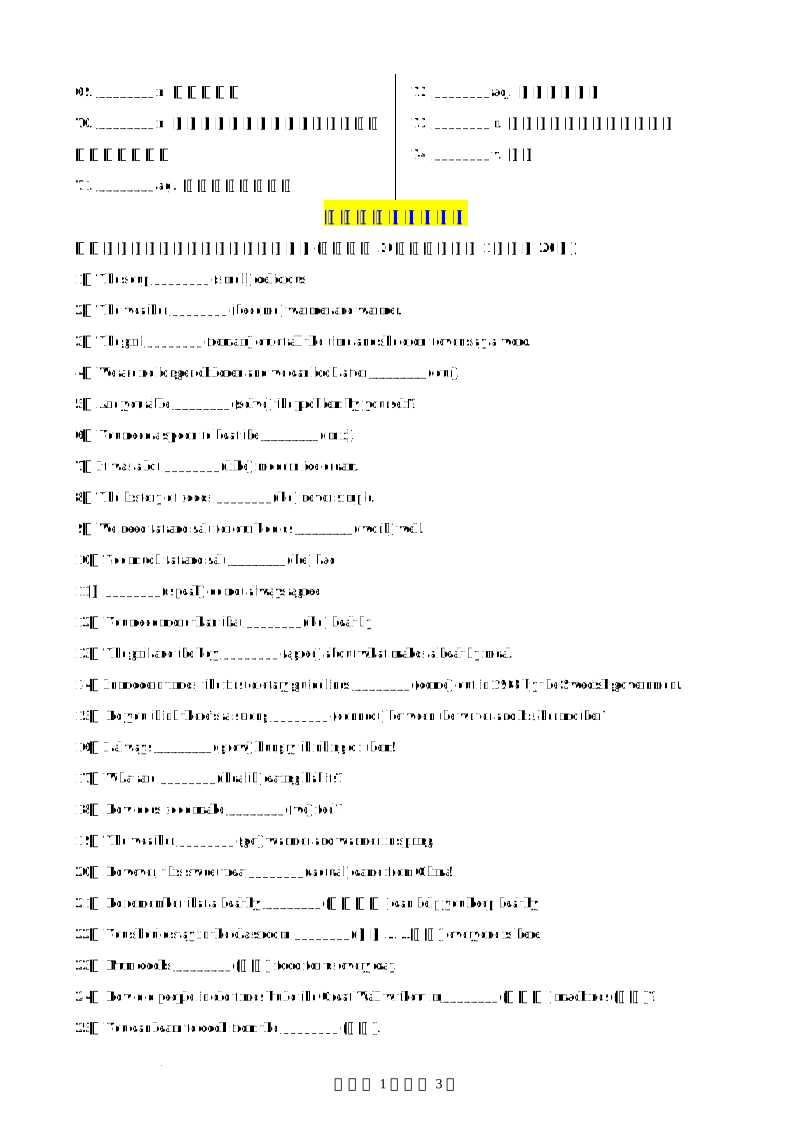
班级 姓名 学号 分数
Unit 3 Food matters
单元重点单词变形短语语法句型精练
(时间:60分钟,满分:100分)
一、词性转换
试卷第1页,共3页
试卷第1页,共3页
学科网(北京)股份有限公司
1. certain adj. 某个;某些 → adv. ________(肯定地;当然)
2. sweet adj. 甜的 → n. ________(糖果;甜点)
3. simple adj. 简单的 → adj. ________(朴素的;单纯的)
4. medical adj. 医学的 → n. ________(药;药物)
5. connect v. 连接 → n. ________(联系;关联)
6. prove v. 证明 → n. ________(证明;证据)
7. similar adj. 相似的 → n. ________(相似性;类似点)
8. special adj. 特殊的 → n. ________(特色菜;特产)
9. order n. 顺序 → v. ________(命令;点餐)
10. delicious adj. 美味的 → n. ________(美味;佳肴)
11. mix v. 混合 → n. ________(混合液;混合料)
12. stir v. 搅拌 → n. ________(搅动;搅拌)
13. gold n. 金子 → adj. ________(金色的;金黄色的)
14. firm adj. 结实的 → adv. ________(坚定地;坚决地)
15. recipe n. 食谱 → v. ________(烹饪;调制)
16. diet n. 节食 → v. ________(节食;按规定饮食)
17. west n. 西方 → adj. ________(西方的;欧美的)
18. actual adj. 实际的 → adv. ________(实际上;事实上)
19. modern adj. 现代的 → n. ________(现代;近代)
20. courage n. 勇气 → v. ________(鼓励;激励)
21. emperor n. 皇帝 → n. ________(帝国)
22. suffer v. 受苦 → n. ________(痛苦;苦难)
23. stomach n. 胃 → adj. ________(胃的;腹部的)
24. total adj. 全部的 → adv. ________(完全地;彻底地)
25. symbol n. 代表 → v. ________(象征;代表)
26. America n. 美国 → adj. ________(美国的;美国人的)
二、单词默写
1. ________ adj. 某个;某些
2. ________ pron. 我的(东西)
3. ________ n. 牛肉
4. ________ n. 胡萝卜
5. ________ n. 羊肉
6. ________ adj. 肥胖的
7. ________ n. 母鸡
8. ________ n. (通常为金属制成的圆而深的)锅
9. ________ n. 洋葱(头)
10. ________ n. 薄煎(烤,烙)饼
11. ________ n. 粥
12. ________ adj. 甜的
13. ________ adj. 无装饰的,简单的,朴素的,单纯的
14. ________ n. (尤指餐馆的)菜单
15. ________ n. 药,药物(尤指口服的药水)
16. ________ prep. 比
17. ________ n. 药丸;药片
18. ________ v. 继续,依然(保持某种状态)
19. ________ det. 另一个,别的
20. ________ n. (两个事实、观点、事件等之间的)联系,关联
21. ________ v. 证明,证实
22. ________ adj. 相似的,近似的,类似的
23. ________ adj. 特殊的,特别的
24. ________ n. 顺序,次序
25. ________ n. 水果馅饼,派
26. ________ adj. 美味的,可口的
27. ________ n. 三明治,夹心面包
28. ________ v. 炒(蛋)
29. ________ v. 圈出
30. ________ n. 片,薄片,切片
31. ________ v. 搅拌,搅打
32. ________ n. 盐,食盐
33. ________ n. 胡椒粉
34. ________ n. (尤用于烹调或生产美容用品的)植物油,动物油
35. ________ n. (长柄有盖的)锅,平底锅
36. ________ v. 添加,增加
37. ________ n. (尤指烹饪中的)混合液,混合料
38. ________ v. 搅,搅拌,搅动
39. ________ prep. 直到……为止
40. ________ adj. 金色的,金黄色的
41. ________ n. 盘,碟
42. ________ adj. 大声的,喧闹的
43. ________ n. (烹饪或加热时的)温度
44. ________ adj. 结实的,坚实的
45. ________ n. 烹饪法;食谱
46. ________ n. (烹调用的)成分,食材
47. ________ n. 步骤
48. ________ n. 节食;规定饮食
49. ________ n. 饭店,餐馆
50. ________ n. (生吃的)蔬菜沙拉
51. ________ n. 汉堡包
52. ________ n. (正餐以外的)小吃,点心
53. ________ n. 边界;边境
54. ________ adj. (观念或方式)西方的,欧美的
55. ________ n. (饭后的)甜点,甜食,甜品
56. ________ adv. 实际上,事实上
57. ________ n. 朝代
58. ________ v. 贮藏,贮存,积蓄
59. ________ v. 意思是
60. ________ adj. 现代的,近代的
61. ________ adj. 民间的,民俗的
62. ________ n. 故事
63. ________ n. 皇帝
64. ________ v. (身体或精神上)受苦,遭受(痛苦)
65. ________ n. 胃
66. ________ adv. 完全地,彻底地
67. ________ n. 伊朗人
68. ________ adj. 平的,平坦的
69. ________ n. 石块,石子
70. ________ n. (某一特性或思想的)代表,代表性人物(事物)
71. ________ adj. 美国的;美国人的
72. ________ adj. 双胞胎之一的
73. ________ n. (事物之间的)桥梁,纽带
74. ________ v. 发生
单元知识点习题训练
1、 用括号内所给单词的适当形式填空(本大题共20小题,每小题1分,共20分)
1.The soup ________ (smell) delicious.
2.The weather ________ (become) warmer and warmer.
3.The girl ________ (remain) quiet all the time and she didn’t even say a word.
4.We are no longer children and we can look after ________ (our).
5.Are you able ________ (solve) the problem by yourself?
6.You need a spoon to beat the ________ (mix).
7.It was a lot ________ (like) modern ice cream.
8.The history of foods ________ (be) never simple.
9.We need fat and salt for our bodies ________ (work) well.
10.Too much fat and salt ________ (be) bad.
11.________ (speak) do not always agree.
12.You need more than that ________ (be) healthy.
13.The girl and the boy ________ (agree) about what makes a healthy meal.
14.In modern times, the first dietary guidelines ________ (come) out in 1968 by the Swedish government.
15.Do you think there’s a strong ________ (connect) between the writer and his/her mother?
16.I always ________ (grow) hungry thinking of them!
17.What are ________ (health) eating habits?
18.How does food make ________ (we) feel?
19.The weather ________ (get) warmer and warmer in spring.
20.However, this sweet treat________ (actual) came from China!
21.Do remember that a healthy ________ (规定饮食) can help you keep healthy.
22.You should stay in the classroom ________ (直到……为止) everyone is here.
23.Mum cooks ________ (美味) food for us every day.
24.How did people in old times build the Great Wall without m________ (现代的) machines (机器)?
25.You can learn to cook from the ________ (食谱).
26.Tom likes ice-cream for ________ (甜点).
27.He dressed up as a character from a classic fairy ________ (故事).
28.I suggest we wait a while before we make any ________ (坚定的) decisions.
29.Please ________ (温度) the mixture until the butter is melted(融化).
30.When autumn comes, my backyard becomes a ________ (金色的) world.
二、完成句子
31.均衡的饮食使我们健康。
_______ _______ _______ makes us healthy.
32.总之,健康的饮食对于一个健康的身体和头脑都是重要的。
In a word, ________ _______ is important for a healthy body and mind.
33.正如谚语所言,“人如其食”。
________ _______ _______ _______, “You are what you eat.”
34.它有悠久的历史,并且是食品文化的重要部分。
It has ________ _______ _______ and is an important part of ________ _______.
35.食物承载着我们的快乐回忆。
Food _______ our happy ________.
36.当食物跨越国界时,美好的事情就会发生。
When food ________ ________, sweet things can happen.
37.有时,完全不同的文化有相似的食物。
Sometimes, ________ ________ ________ have similar dishes.
38.食物是文化之间的桥梁。
Food is a ________ ________ cultures.
39.过去的日子在我心中仍然感觉如此甜蜜。
The old days still feel so sweet ________ ________ ________.
40.人们经常将肉夹馍和美国的代表食物汉堡包做类比。
People often ________ roujiamo ________ hamburgers, ________ ________ ________ American food.
三、短文填空
阅读下面短文,在空白处填入适当的单词或括号内单词的正确形式(每空不多于3个单词)。
Tom is 41 16-year-old boy from Australia. He is very healthy now. 42 , he used to have some bad habits. He often 43 (play) computer games on the Internet at night. In the morning, he got up late and didn’t eat breakfast. For lunch and dinner, he ate a lot of junk food. His parents asked him to do sports, but he never listened 44 them.
Last year, Tom often felt tired. His parents were worried about his health, so they 45 (quick) took him to the hospital. The doctor told Tom that he was in poor health and must 46 (change) his bad habits. Then Tom decided 47 (do) something. Now, he tries to spend less time on the computer and eat healthy 48 (balance) meals. He gets up early in the morning and exercises at least three times a week. He also takes part in many after-school 49 (activity). At weekends, he hardly ever plays computer games. He enjoys 50 (read) some English magazines in his free time. These good habits make him healthy and give him more energy.
阅读短文,在空白处填入一个适当的单词或用括号内所给词的正确形式填空,使短文通顺、连贯。
I love all kinds of Chinese dishes, but one dish is my favourite —fotiaoqiang, also known as Buddha Jumps Over the Wall.
There are different 51 (story) about this invention (发明). One story 52 (go) like this: a long time ago in China, many people were very poor and had little to eat. One day, some homeless people picked up leftover food (剩饭) which was thrown into a river. They got together in 53 empty garden, put the food into an old pot with water, and cooked it. 54 (surprising), it smelled wonderful! The smell was so nice that a monk (和尚) walking by even wanted to jump over the garden wall 55 (have) a taste. That’s how the famous dish fotiaoqiang got 56 (it) name.
Besides this old story, the dish also has a special 57 (mean) for me. When I was a little kid, my grandparents came to Chengdu to take care of me. They cooked fotiaoqiang 58 me quite often. As I grew up, they went back to my hometown. Every summer holiday, I would go to visit them. The warm smell of fotiaoqiang would fill my nose when I stepped into their house.
Now, I don’t go back very often. 59 whenever I think about the smell of that dish, I feel like a homesick (想家的) little monk. I just want to “jump over the wall” to go back to those happy old days.
That’s my story with fotiaoqiang. Actually, every Chinese dish has two stories. One is about how it was invented, and the other 60 (be) about the warm memories it brings us. Why not find out the stories behind your favorite dishes?
$
资源预览图

1

2
3

相关资源
示范课
由于学科网是一个信息分享及获取的平台,不确保部分用户上传资料的 来源及知识产权归属。如您发现相关资料侵犯您的合法权益,请联系学科网,我们核实后将及时进行处理。