Unit 3 A helping hand 单元话题(志愿服务)语法选择进阶练12篇-2025-2026学年七年级英语下册重难点讲练全攻略沪教版五四制)
2026-03-27
|
2份
|
34页
|
179人阅读
|
2人下载

资源信息
| 学段 | 初中 |
|---|---|
| 学科 | 英语 |
| 教材版本 | 初中英语沪教版(五四学制)七年级下册 |
| 年级 | 七年级 |
| 章节 | Unit 3 A helping hand |
| 类型 | 题集-专项训练 |
| 知识点 | - |
| 使用场景 | 同步教学-单元练习 |
| 学年 | 2026-2027 |
| 地区(省份) | 全国 |
| 地区(市) | - |
| 地区(区县) | - |
| 文件格式 | ZIP |
| 文件大小 | 130 KB |
| 发布时间 | 2026-03-27 |
| 更新时间 | 2026-03-27 |
| 作者 | 初高中原创精品库 |
| 品牌系列 | - |
| 审核时间 | 2026-03-27 |
| 下载链接 | https://m.zxxk.com/soft/57032906.html |
| 价格 | 3.00储值(1储值=1元) |
| 来源 | 学科网 |
内容正文:
2025-2026学年一线教师制作新教材英语同步精品系列资料,名师遴选!
2025-2026学年一线教师制作新教材英语同步精品系列资料,名师遴选!
学校:___________姓名:___________班级:___________考号:___________
Unit 3 A helping hand
单元话题(志愿服务)语法选择进阶练12篇
说明:此专题分三个难度层次,基础入门训练<进阶拓展训练< 能力综合实践,老师根据学生实际情况进行针对性难度训练。
基础入门训练4篇
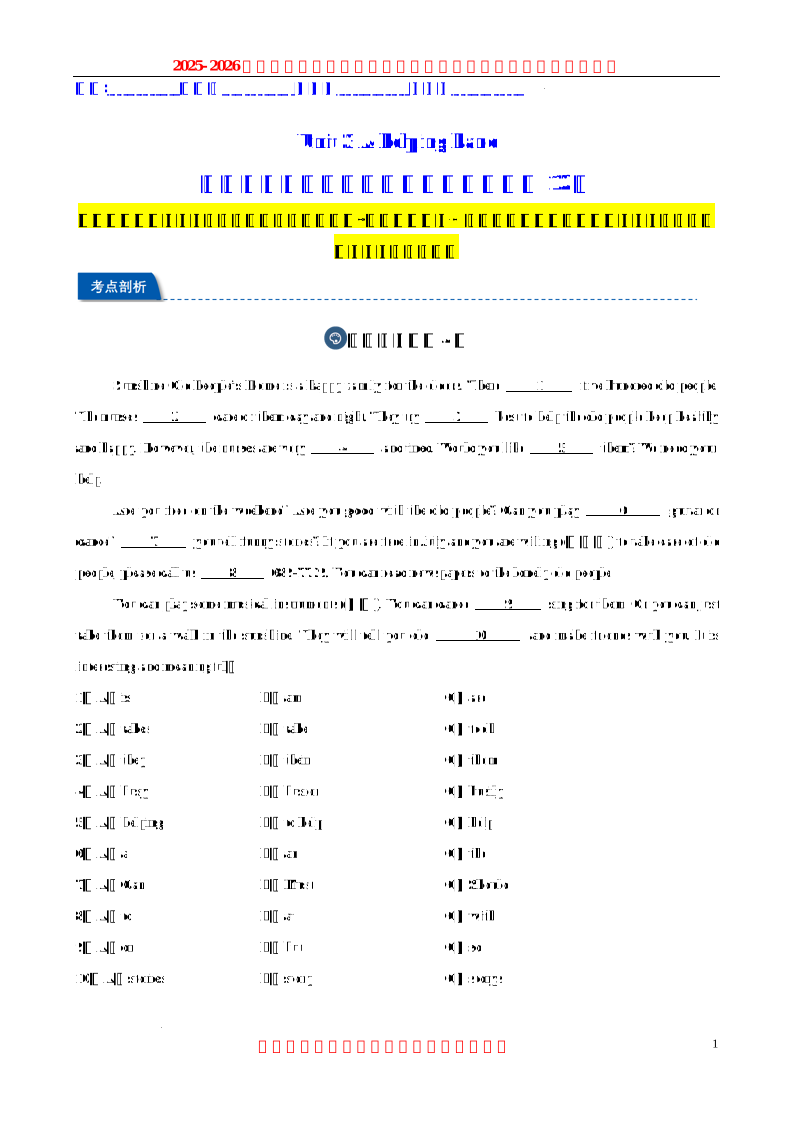
Sunshine Old People’s Home is a happy family for the elders. There 1 five hundred old people. The nurses 2 care of them day and night. They try 3 best to help the old people keep healthy and happy. However, the nurses are very 4 and tired. Would you like 5 them? We need your help.
Are you free on the weekend? Are you good with the old people? Can you play 6 guitar or dance? 7 you tell funny stories? If you are free in July and you are willing (乐意的) to take care of old people, please call us 8 689-7729. You can read newspapers to the lonely old people.
You can play some musical instruments (乐器). You can dance 9 sing for them. Or you can just take them for a walk in the sunshine. They will tell you old 10 and make friends with you. It is interesting and meaningful!
1.A.is B.am C.are
2.A.takes B.take C.took
3.A.they B.their C.them
4.A.busy B.busier C.busily
5.A.helping B.to help C.help
6.A.a B.an C.the
7.A.Can B.Must C.Should
8.A.to B.at C.with
9.A.or B.but C.so
10.A.stories B.story C.storys
Volunteering is a great way to help others. For example, you can help your classmates with their homework or you can talk with 1 elderly person. Helping others can actually help yourself, too.
2 a girl called Jane. She worked as a volunteer 3 the Hillside Soup Kitchen when she was 16 years old. She 4 there for three years. The soup kitchen serves different kinds of food, drinks and snacks to hungry families. “I like helping other people. And I think I can learn a lot from it, too. Volunteering gives me a chance to meet many people 5 helps me communicate with people. For example, I have made many good 6 there,” says Jane.
Every Saturday, Jane wakes up early and goes to the soup kitchen after having breakfast. The soup kitchen is not far away from 7 home. It takes Jane fifteen minutes 8 there. “The families are very friendly,” she says. “I always say hello 9 before I give them food, and they always say thank you to me.” When Jane sees the smiles on their faces, she feels much 10 . She will help more people in the future.
1.A.a B.an C.the
2.A.It is B.There is C.They are
3.A.at B.by C.with
4.A.works B.is working C.has worked
5.A.so B.or C.and
6.A.friend B.friends C.friends’
7.A.her B.she C.hers
8.A.get B.got C.to get
9.A.kind B.kindly C.kindness
10.A.happy B.happier C.the happiest
Colleen Wall is an artist (艺术家) from the USA.She is trying hard 1 the patients up at a cancer center through her “window view” art.
Colleen got 2 idea from her own experience. Years ago, she suffered 3 cancer, too. Luckily, she fought hard 4 made it through. She knew how boring it was to stay in a hospital room. After she got well, she considered 5 her love for art to change the situation.
6 did she do to help the patients? Well, she started a project called A View for a Room. She started painting window views with beautiful 7 , like forests, flowers and trees. These paintings 8 carry positive messages. They give the patients courage to face their illness and make 9 feel more hopeful.
Last year, she created ten “window view” paintings for the cancer center. And she has no plans to stop. “In the future, I 10 using my art to lift the spirits of those cancer patients,” Colleen said.
1.A.cheer B.cheers C.to cheer
2.A.a B.an C.the
3.A.in B.from C.on
4.A.and B.but C.or
5.A.use B.to use C.using
6.A.What B.Who C.Why
7.A.thing B.thing’s C.things
8.A.all B.both C.either
9.A.they B.them C.their
10.A.continue B.continued C.will continue
通读下面短文,掌握其大意,根据语法和上下文连贯的要求,从每题所给的三个选项中选出一个最佳答案,并将答题卡上对应题目所选的选项涂黑。
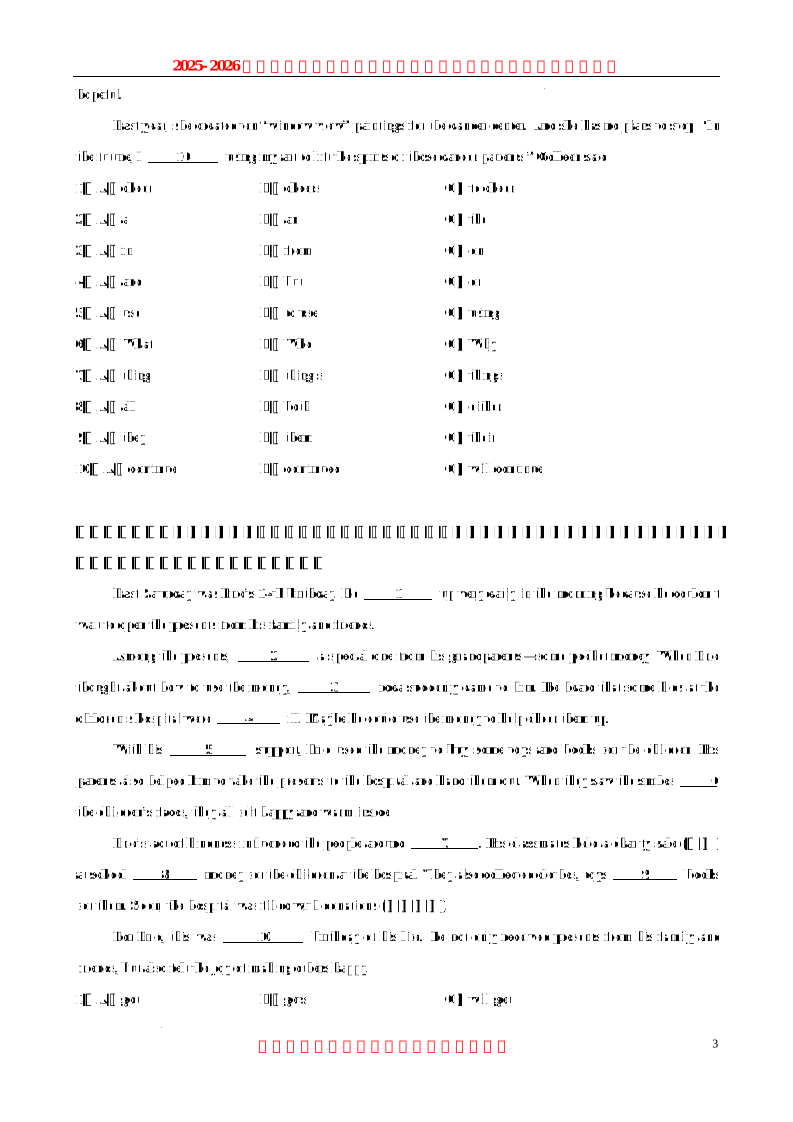
Last Saturday was Eric’s 14th birthday. He 1 up very early in the morning because he couldn’t wait to open the presents from his family and friends.
Among the presents, 2 a special one from his grandparents—some pocket money. When Eric thought about how to use the money, 3 idea suddenly came to him. He heard that some kids at the children’s hospital were 4 ill. Maybe he could use the money to help cheer them up.
With his 5 support, Eric used the money to buy some toys and books for the children. His parents also helped him to take the presents to the hospital and hand them out. When they saw the smiles 6 the children’s faces, they all felt happy and warm inside.
Eric’s act of kindness influenced the people around 7 . His classmates held a charity sale (义卖) at school 8 money for the children at the hospital. They also collected clothes, toys 9 books for them. Soon, the hospital was filled with donations (捐赠物品).
For Eric, this was 10 birthday of his life. He not only received presents from his family and friends, but also felt the joy of making others happy.
1.A.got B.gets C.will get
2.A.it was B.this was C.there was
3.A.a B.an C.the
4.A.serious B.seriously C.seriousness
5.A.parent B.parents C.parents’
6.A.on B.in C.at
7.A.his B.him C.himself
8.A.raise B.to raise C.raising
9.A.and B.or C.but
10.A.good B.better C.the best
进阶拓展训练4篇
Do you like to work as a volunteer? It 1 important to respect the old and care for the young in our daily life. Last Saturday afternoon, I went to the old people’s home in our community with some young volunteers. We 2 the old people to do some cleaning. We also told interesting stories to 3 the old people happy.
Mrs. Li, an old lady, was an English teacher. We told her about our school life. She was happy 4 be with us. Grandpa Li told us about his childhood (童年). He said his childhood was different from 5 . It was very hard. His parents couldn’t pay for the children’s education (教育). To help their parents 6 the family, he and his brothers couldn’t go to school. They 7 work. They worked hard and never had enough food 8 . We felt so sorry 9 his story.
By volunteering at the old people’s home, I found that the 10 need love and care and I learned a lot from it.
1.A.is B.does C.was
2.A.help B.helps C.helped
3.A.make B.making C.made
4.A.at B.to C.about
5.A.our B.ours C.ourselves
6.A.support B.supports C.supported
7.A.have to B.has to C.had to
8.A.eating B.to eat C.ate
9.A.with B.in C.for
10.A.elder B.elders C.older
Good Deeds Day falls on a Sunday in April every year. In 2024, it was 1 14 April. It’s a day for people to help 2 community. You can also join and spread kindness! Here 3 some easy ways to help:
·Give books: Go through your books, 4 pick the ones you don’t need anymore. You can give them to a library near your home. 5 there isn’t one, you can make a small library with your family. You will need a waterproof (防水的) box, books, and a way to let people 6 about it.
·Visit 7 elderly: Visiting old people in nursing homes is a nice way to help. You can make cards or bring homemade treats for them. Spend some time 8 with them. If you like music, you can sing or play an instrument for them.
·Organize a toy drive: You 9 collect gently used toys and give them to a children’s hospital. This can make sick kids feel happy. You can also collect items 10 blankets or clothes for children in need.
Every little act of kindness can make a big difference!
1.A.in B.on C.at D.during
2.A.they B.them C.their D.theirs
3.A.is B.am C.are D.were
4.A.but B.so C.or D.and
5.A.If B.As C.Although D.Because
6.A.know B.knowing C.to know D.knew
7.A.a B.an C.the D./
8.A.talk B.talking C.to talk D.to talking
9.A.can B.must C.need D.ought
10.A.with B.for C.among D.like
请通读下面短文,掌握其大意,根据语法和上下文连贯的要求,从每小题所给的三个选项中选出一个最佳答案,并在答题卡上将对应选项涂黑。
Volunteer (志愿者) service has become a symbol of social progress in China. Today, more than 240,000,000 volunteers have completed over twelve 1 projects. The idea of “helping others when free, looking for help from volunteers when needed” is now very popular.
Wang Yizhi is 2 great example. She joined the program “Go West” after university. Since then she 3 Chinese at a small school in Xinjiang as a volunteer teacher. 4 she faces challenges and doubts, she never gives up. With 5 help, the children have made great progress both in study and life. Small acts of kindness can create very 6 changes.
Volunteer stories like Wang Yizhi’s have touched the whole nation. President Xi speaks highly of volunteer work. He always 7 everyone to be kind and helpful. 8 December 2013 and July 2014, he replied to volunteer groups three times. During his visits across China, he took time 9 volunteers and cheer them on.
The call for volunteering is not just for adults. As teenagers, we can make a 10 too. Let’s join hands to spread kindness and build a better China
1.A.millions B.million C.millions of
2.A.an B.a C.the
3.A.has taught B.taught C.was teaching
4.A.But B.Because C.Although
5.A.she B.her C.hers
6.A.big B.bigger C.biggest
7.A.encourages B.encouraged C.was encouraging
8.A.Among B.From C.Between
9.A.meet B.meeting C.to meet
10.A.different B.difference C.differently
It’s five o’clock in the afternoon. School finishes and the students from Class 3 can go to Grandma Liang’s house. Grandma Liang is 70 years old and she has no sons 1 daughters. So the children often go to help 2 do some things.
Now the children are at Grandma Liang’s home. Grandma Liang is very 3 to see them. She thinks these children are very nice. Look! Lily 4 with Grandma Liang in the living room.
She knows that Grandma Liang always feels lonely because she doesn’t have anyone to talk to. Betty is cleaning the windows. Grandma Liang is too old 5 it. Jane is washing clothes. 6 is Ann? Oh, she is in the kitchen. She is making dinner 7 Grandma Liang.
She knows Grandma Liang’s favorite food is 8 , What is Jim doing? He is in 9 kitchen, too. He is helping Ann. 10 good children they are!
1.A.but B.and C.or
2.A.she B.her C.hers
3.A.happy B.happily C.happiness
4.A.talks B.is talking C.talk
5.A.do B.doing C.to do
6.A.Why B.Where C.What
7.A.for B.with C.about
8.A.tomato B.tomato’s C.tomatoes
9.A.a B.an C.the
10.A.What B.What a C.How
能力综合实践4篇
Last summer holiday, I went to South Africa to do some volunteer activities. I worked as a volunteer at 1 children’s hospital in Cape Town. My role was to help cheer the kids up 2 they were staying in the hospital alone. 3 interesting and meaningful it sounded!
In the world, many people need help. Look at the children in the hospital where I worked. Some of them were disabled and the others were blind, so when they were facing all the difficulties by 4 , they felt scared and lonely. Therefore, why not try to help as many people as possible? And why not work together and come 5 with more ways to offer help?
Volunteering in Africa and helping people there let me see other parts of the world. And volunteering at the hospital 6 me a side of the world I didn’t know about before. I met people from all over the world. They had different 7 , experiences and dreams. We shared so much with each other 8 while we were working together at that time.
I felt close to these people. We shared amazing memories and grew together. I decided 9 back to my country with new experiences so that I could help more people and create a 10 future than before for everyone. It was really important and has brought more love to others.
1.A.a B.an C.the
2.A.if B.while C.so
3.A.How B.What C.What an
4.A.them B.their C.themselves
5.A.in B.up C.on
6.A.shows B.showed C.will show
7.A.ideas B.idea C.ideas’
8.A.happiness B.happy C.happily
9.A.go B.went C.to go
10.A.good B.better C.best
Doing voluntary work (义务性工作) is an easy way to help others, and it’s also a great way to help 1 . Helping others in your community (社区) is a great way to bring joy to others and get the most out of life. You’ll feel good for 2 your time. It’s also possible for you to make 3 with people around you.
Doing voluntary work is good for your health, too. 4 new study has found that people who do voluntary work 5 at least 200 hours a year are healthier than those who never do. It’s very good for people who work in office, because they usually 6 too long every day. However, doing voluntary work helps to stop sitting too long and makes you do more exercise.
You can choose to become a volunteer, too. Also, you can donate (捐献) your unused clothes or books. You 7 a sense of happiness.
Sometimes voluntary work is boring, 8 it can help you a lot. It 9 help you keep healthy, improve (提高) your skills and make you become a confident (自信的) person. Now more and more people are offering 10 some voluntary work. Please join us and work together for a shared future.
1.A.you B.your C.yourself
2.A.give B.gives C.giving
3.A.friend B.friends C.friend’s
4.A.An B.A C./
5.A.in B.of C.for
6.A.sit B.sits C.sitting
7.A.got B.gets C.will get
8.A.so B.but C.and
9.A.can B.must C.might
10.A.do B.doing C.to do
For the past week, Ken and his father have been visiting parks and school grounds and busy with picking up rubbish (垃圾).
It all started after they visited a beach. The beach was very dirty and there 1 rubbish everywhere. Then the 2 father encouraged (鼓励) him to help save the beach. The next day, they woke up early and went back to the beach. Ken collected (收集) rubbish and put up a sign by 3 . It says, “Please keep our beach clean!” They spent the whole day on 4 beach and didn’t go home till dark.
“What shall we do tomorrow?” Ken asked his father 5 their way home.
“Can we 6 the park near our house?” His father smiled happily.
The following week, Ken cleaned the parks, schools and public space in the neighborhood. Even when they 7 in the afternoon, Ken picked up any rubbish he saw. Ken kept this work over the summer. Many neighbors also started 8 him.
9 Ken just does something as simple as picking up rubbish, his parents are proud (自豪) of him. It’s true that even small actions can help make our world cleaner and 10 .
1.A.had B.has C.was D.is
2.A.boys B.boy C.boys’ D.boy’s
3.A.he B.himself C.his D.him
4.A.the B.a C.an D./
5.A.with B.above C.on D.at
6.A.cleaned B.to clean C.cleaning D.clean
7.A.hang out B.hung out C.are hanging out D.will hang out
8.A.to carry B.carry C.to join D.join
9.A.Although B.But C.If D.Before
10.A.good B.better C.best D.the best
One Friday night, a poor young man stood at the gate of the railway station, 1 his violin. Many people put some money into the hat lying in front of him.
The next day, the young man came to the gate of the railway station again, and put his hat on the ground. But different 2 what he always did in the past days, he took out a large piece of paper and laid it on the ground. It said, “Last night, a gentleman 3 George Miller put an important thing into my hat by mistake. Please come soon, Mr. Miller.”
About half 4 hour later, a middle-aged man ran to the young man in a hurry and said, “It’s you! You do come. I know you are an honest man and will certainly come here.” The young man asked, “Are you Mr. Miller? Did you lose 5 ?” “A lottery ticket.” answered the middle-aged man. The young man then 6 it to the man.
Yesterday when the man knew the fact that his lottery ticket was worth $500,000, he was so 7 that he threw the ticket together with the money into the young man’s hat!
Someone asked the young man, “You 8 the violin every day to make a living. Why didn’t you keep the ticket and take the prize for yourself?” The young man said, “ 9 I don’t have much money, I live happily. But if I lose 10 , I won’t be happy forever.”
1.A.play B.played C.playing
2.A.with B.from C.to
3.A.had B.named C.showed
4.A.a B.an C.the
5.A.nothing B.everything C.anything
6.A.returned B.gave back C.got back
7.A.excited B.sad C.angry
8.A.play B.are playing C.have played
9.A.So B.But C.Even if
10.A.fairness B.independence C.honesty
4
同步新教材,周周有练习,月月有重点!
9
同步新教材,周周有练习,月月有重点!
学科网(北京)股份有限公司
$
2025-2026学年一线教师制作新教材英语同步精品系列资料,名师遴选!
2025-2026学年一线教师制作新教材英语同步精品系列资料,名师遴选!
学校:___________姓名:___________班级:___________考号:___________
Unit 3 A helping hand
单元话题(志愿服务)语法选择进阶练12篇
说明:此专题分三个难度层次,基础入门训练<进阶拓展训练< 能力综合实践,老师根据学生实际情况进行针对性难度训练。
基础入门训练4篇
Sunshine Old People’s Home is a happy family for the elders. There 1 five hundred old people. The nurses 2 care of them day and night. They try 3 best to help the old people keep healthy and happy. However, the nurses are very 4 and tired. Would you like 5 them? We need your help.
Are you free on the weekend? Are you good with the old people? Can you play 6 guitar or dance? 7 you tell funny stories? If you are free in July and you are willing (乐意的) to take care of old people, please call us 8 689-7729. You can read newspapers to the lonely old people.
You can play some musical instruments (乐器). You can dance 9 sing for them. Or you can just take them for a walk in the sunshine. They will tell you old 10 and make friends with you. It is interesting and meaningful!
1.A.is B.am C.are
2.A.takes B.take C.took
3.A.they B.their C.them
4.A.busy B.busier C.busily
5.A.helping B.to help C.help
6.A.a B.an C.the
7.A.Can B.Must C.Should
8.A.to B.at C.with
9.A.or B.but C.so
10.A.stories B.story C.storys
【答案】
1.C 2.B 3.B 4.A 5.B 6.C 7.A 8.B 9.A 10.A
【导语】本文主要介绍了阳光敬老院需要帮助,介绍了一些要求。
1.句意:有五百位老人。
is是,be动词的单三;am是,主语是I;are是,be动词复数。主语是five hundred old people,be动词用are。故选C。
2.句意:护士们日夜照顾他们。
takes带走,动词单三;take动词原形;took动词过去式。本文时态为一般现在时,主语是名词复数,谓语动词用原形。故选B。
3.句意:他们尽力帮助老人保持健康和快乐。
they他们,主格;their他们的,形容词性物主代词;them他们,宾格。try one’s best“尽某人最大的努力”,用形容词性物主代词。故选B。
4.句意:然而,护士们又忙又累。
busy忙的,形容词原级;busier更忙的,形容词比较级;busily忙地,副词。作be动词的表语用形容词,very修饰原级。故选A。
5.句意:你愿意帮助他们吗?
helping帮助,动名词;to help动词不定式;help动词原形。would like to do“想要做某事”。故选B。
6.句意:你会弹吉他还是跳舞?
a不定冠词,修饰以辅音音素开头的单词;an不定冠词,修饰以元音音素开头的单词;the定冠词。play the guitar“弹吉他”。故选C。
7.句意:你会讲有趣的故事吗?
can能;must必须;should应该。根据“you tell funny stories”可知此处表示会不会讲故事,表示能力用can。故选A。
8.句意:请致电689-7729。
to到;at在;with和。call sb. at“给某人打电话”。故选B。
9.句意:你可以为他们跳舞或唱歌。
or或者;but但是;so所以。根据“dance...sing”可知是唱歌或者跳舞。故选A。
10.句意:他们会给你讲老故事,和你交朋友。
stories故事,名词复数;story名词单数;storys错误形式。此处表示泛指,用名词复数。故选A。
Volunteering is a great way to help others. For example, you can help your classmates with their homework or you can talk with 1 elderly person. Helping others can actually help yourself, too.
2 a girl called Jane. She worked as a volunteer 3 the Hillside Soup Kitchen when she was 16 years old. She 4 there for three years. The soup kitchen serves different kinds of food, drinks and snacks to hungry families. “I like helping other people. And I think I can learn a lot from it, too. Volunteering gives me a chance to meet many people 5 helps me communicate with people. For example, I have made many good 6 there,” says Jane.
Every Saturday, Jane wakes up early and goes to the soup kitchen after having breakfast. The soup kitchen is not far away from 7 home. It takes Jane fifteen minutes 8 there. “The families are very friendly,” she says. “I always say hello 9 before I give them food, and they always say thank you to me.” When Jane sees the smiles on their faces, she feels much 10 . She will help more people in the future.
1.A.a B.an C.the
2.A.It is B.There is C.They are
3.A.at B.by C.with
4.A.works B.is working C.has worked
5.A.so B.or C.and
6.A.friend B.friends C.friends’
7.A.her B.she C.hers
8.A.get B.got C.to get
9.A.kind B.kindly C.kindness
10.A.happy B.happier C.the happiest
【答案】
1.B 2.B 3.A 4.C 5.C 6.B 7.A 8.C 9.B 10.B
【导语】本文是一篇记叙文,主要讲述了志愿者Jane在Hillside Soup Kitchen帮助他人的经历及其感悟。
1.句意:你可以和一位老人聊天。
a一个(泛指);an一个(元音音素开头);the这个(特指)。空格后“elderly person”以元音音素/e/开头,需用不定冠词an表泛指。故选B。
2.句意:有一个叫Jane的女孩。
It is它是;There is有(存在句);They are他们是。存在句结构“There is+单数名词”描述客观存在。故选B。
3.句意:她16岁时在Hillside Soup Kitchen做志愿者。
at在(后接小地点);by通过;with和。固定搭配“work at+小地点”,表示“在……工作”。“the Hillside Soup Kitchen” 是小地点,用 “at”。故选A。
4.句意:她已在那里工作了三年。
works一般现在时;is working现在进行时;has worked现在完成时。时间状语“for three years”强调持续动作,需用现在完成时。故选C。
5.句意:志愿活动让我有机会结识许多人,并帮助我与他人沟通。
so因此;or或者;and并且。“meet people”与“helps me communicate”是并列关系,需用连词and连接。故选C。
6.句意:例如,我在那里交到了许多好朋友。
friend朋友(单数);friends朋友(复数);friends’朋友的(所有格)。 “many”修饰可数名词复数。故选B。
7.句意:Soup Kitchen离她家不远。
her她的(形容词性物主代词);she她(主格);hers她的(名词性物主代词)。空格后“home”需形容词性物主代词修饰。故选A。
8.句意:Jane到那里需要15分钟。
get动词原形;got过去式;to get不定式。此处是固定句型“It takes sb. time to do sth.”需用不定式。故选C。
9.句意:我在给他们食物前总是亲切地打招呼,他们总是对我说谢谢。
kind善良的(形容词);kindly友好地(副词);kindness善良(名词)。空格修饰动词“say hello”需用副词。故选B。
10.句意:当她看到他们脸上的笑容时,她感到更开心了。
happy高兴的(原级);happier更高兴的(比较级);the happiest最高兴的(最高级)。“much”修饰比较级,表示程度加深。故选B。
Colleen Wall is an artist (艺术家) from the USA.She is trying hard 1 the patients up at a cancer center through her “window view” art.
Colleen got 2 idea from her own experience. Years ago, she suffered 3 cancer, too. Luckily, she fought hard 4 made it through. She knew how boring it was to stay in a hospital room. After she got well, she considered 5 her love for art to change the situation.
6 did she do to help the patients? Well, she started a project called A View for a Room. She started painting window views with beautiful 7 , like forests, flowers and trees. These paintings 8 carry positive messages. They give the patients courage to face their illness and make 9 feel more hopeful.
Last year, she created ten “window view” paintings for the cancer center. And she has no plans to stop. “In the future, I 10 using my art to lift the spirits of those cancer patients,” Colleen said.
1.A.cheer B.cheers C.to cheer
2.A.a B.an C.the
3.A.in B.from C.on
4.A.and B.but C.or
5.A.use B.to use C.using
6.A.What B.Who C.Why
7.A.thing B.thing’s C.things
8.A.all B.both C.either
9.A.they B.them C.their
10.A.continue B.continued C.will continue
【答案】
1.C 2.C 3.B 4.A 5.C 6.A 7.C 8.A 9.B 10.C
【导语】本文讲述美国艺术家科琳通过“窗景”艺术鼓励癌症患者的故事。她因亲身经历萌生创意,用绘画传递希望。
1.句意:她正在努力通过她的“窗口”艺术让癌症中心的病人们振作起来。
cheer鼓舞,动词原形;cheers鼓舞,三单形式;to cheer鼓舞,不定式。try hard to do sth.“努力做某事”,是固定搭配。故选C。
2.句意:科琳从自己的经历中得到了这个想法。
a不定冠词,表泛指,用于以辅音音素开头的单词前;an不定冠词,表泛指,用于以元音音素开头的单词前;the定冠词,表特指。此处特指通过她的“窗口”艺术让癌症中心的病人们振作起来这一想法,用定冠词the。故选C。
3.句意:几年前,她也患了癌症。
in在……里;from来自;on在……上。suffer from“患有”,是固定搭配。故选B。
4.句意:幸运的是,她努力抗争,渡过难关。
and和;but但是;or或者。根据“Luckily, she fought hard…made it through”的语境可知,此处表示并列关系。故选A。
5.句意:康复后,她考虑用对艺术的热爱来改变这种情况。
use使用,动词原形;to use使用,不定式;using使用,动名词。consider doing sth.“考虑做某事”,是固定搭配。故选C。
6.句意:她做了什么来帮助病人?
What什么;Who谁;Why为什么。此处询问具体行为,what符合。故选A。
7.句意:她开始用美丽的东西来描绘窗外的景色,比如森林、花和树。
thing东西,单数形式;thing’s,所有格形式;things东西,复数形式。根据“like forests, flowers and trees”可知,此处表示复数概念。故选C。
8.句意:这些画都传达了积极的信息。
all全部,指三者及以上;both两者;either(两者中的)任何一个。前文未限定数量,“all”概括全部。故选A。
9.句意:他们给了病人面对疾病的勇气,让他们感到更有希望。
they他们;them他们;their他们的。此处应用人称代词宾格,作宾语。故选B。
10.句意:在未来,我将继续用我的艺术来振奋那些癌症患者的精神。
continue继续,动词原形;continued继续,过去式;will continue将继续,一般将来时。根据“In the future”可知,句子时态为一般将来时。故选C。
通读下面短文,掌握其大意,根据语法和上下文连贯的要求,从每题所给的三个选项中选出一个最佳答案,并将答题卡上对应题目所选的选项涂黑。
Last Saturday was Eric’s 14th birthday. He 1 up very early in the morning because he couldn’t wait to open the presents from his family and friends.
Among the presents, 2 a special one from his grandparents—some pocket money. When Eric thought about how to use the money, 3 idea suddenly came to him. He heard that some kids at the children’s hospital were 4 ill. Maybe he could use the money to help cheer them up.
With his 5 support, Eric used the money to buy some toys and books for the children. His parents also helped him to take the presents to the hospital and hand them out. When they saw the smiles 6 the children’s faces, they all felt happy and warm inside.
Eric’s act of kindness influenced the people around 7 . His classmates held a charity sale (义卖) at school 8 money for the children at the hospital. They also collected clothes, toys 9 books for them. Soon, the hospital was filled with donations (捐赠物品).
For Eric, this was 10 birthday of his life. He not only received presents from his family and friends, but also felt the joy of making others happy.
1.A.got B.gets C.will get
2.A.it was B.this was C.there was
3.A.a B.an C.the
4.A.serious B.seriously C.seriousness
5.A.parent B.parents C.parents’
6.A.on B.in C.at
7.A.his B.him C.himself
8.A.raise B.to raise C.raising
9.A.and B.or C.but
10.A.good B.better C.the best
【答案】
1.A 2.C 3.B 4.B 5.C 6.A 7.B 8.B 9.A 10.C
【导语】本文讲述了Eric在14岁生日时用祖父母给的零花钱帮助医院儿童,并带动同学参与慈善活动的故事,体现了分享与善意的快乐。
1.句意:他一大早就起床了,因为他迫不及待地想打开家人和朋友送来的礼物。
got得到,过去式;gets得到,动词三单;will get将得到。此处指过去的事情,A项符合。故选A。
2.句意:礼物中有一个来自祖父母的特殊礼物——一些零花钱。
it was它是;this was这个是;there was有。此处表示客观存在的事物,there be句型符合。故选C。
3.句意:当Eric思考如何使用这笔钱时,他突然想到了一个想法。
a不定冠词,表泛指,用于以辅音音素开头的单词前;an不定冠词,表泛指,用于以元音音素开头的单词前;the定冠词,表特指。此处表示泛指的含义,idea以元音音素开头,an符合。故选B。
4.句意:他听说儿童医院的一些孩子病得很重。
serious严重的;seriously严重地;seriousness严重。修饰形容词“ill”需用副词。故选B。
5.句意:在父母的支持下,Eric用这笔钱为孩子们买了一些玩具和书籍。
parent父亲/母亲;parents父母;parents’父母的。根据空后的名词“support”可知,此处表示所属关系。故选C。
6.句意:当他们看到孩子们脸上的笑容时,他们内心都感到快乐和温暖。
on在……上面;in在……里面;at在。on the face“在脸上”,是固定搭配。故选A。
7.句意:Eric的善举影响了他周围的人。
his他的;him他;himself他自己。此处应用人称代词宾格him,作宾语。故选B。
8.句意:他的同学们在学校举行了义卖 ,为医院的孩子们筹集资金。
raise筹,动词原形;to raise筹,不定式;raising筹,现在分词。此处表示目的,用不定式结构。故选B。
9.句意:他们还为他们收集衣服、玩具和书籍。
and和;or或者;but但是。根据“They also collected clothes, toys… books for them.”的语境可知,此处表示并列关系。故选A。
10.句意:对Eric来说,这是他一生中最美好的生日。
good好的;better更好的;the best最好的。根据比较范围“of his life”可知,此处含有最高级的含义,用最高级形式。故选C。
进阶拓展训练4篇
Do you like to work as a volunteer? It 1 important to respect the old and care for the young in our daily life. Last Saturday afternoon, I went to the old people’s home in our community with some young volunteers. We 2 the old people to do some cleaning. We also told interesting stories to 3 the old people happy.
Mrs. Li, an old lady, was an English teacher. We told her about our school life. She was happy 4 be with us. Grandpa Li told us about his childhood (童年). He said his childhood was different from 5 . It was very hard. His parents couldn’t pay for the children’s education (教育). To help their parents 6 the family, he and his brothers couldn’t go to school. They 7 work. They worked hard and never had enough food 8 . We felt so sorry 9 his story.
By volunteering at the old people’s home, I found that the 10 need love and care and I learned a lot from it.
1.A.is B.does C.was
2.A.help B.helps C.helped
3.A.make B.making C.made
4.A.at B.to C.about
5.A.our B.ours C.ourselves
6.A.support B.supports C.supported
7.A.have to B.has to C.had to
8.A.eating B.to eat C.ate
9.A.with B.in C.for
10.A.elder B.elders C.older
【答案】
1.A 2.C 3.A 4.B 5.B 6.A 7.C 8.B 9.C 10.B
【导语】本文是一篇记叙文,讲述了作者和志愿者们在敬老院帮助老人的经历,以及从中学到的道理。
1.句意:在我们的日常生活中,尊重老人和关爱年轻人很重要。
is是;does做;was是(过去式)。根据“It…important to respect the old”可知,此处是固定句型“It is + adj. + to do”,表示客观事实用一般现在时。故选A。
2.句意:我们帮助老人打扫卫生。
help帮助(原形);helps帮助(三单);helped帮助(过去式)。根据“Last Saturday afternoon”可知句子是一般过去时。故选C。
3.句意:我们还讲有趣的故事让老人们开心。
make使(原形);making使(现在分词);made使(过去式)。空前是不定式符号to,后用原形。故选A。
4.句意:她很高兴和我们在一起。
at在;to到;about关于。be happy to do是固定搭配,表示“高兴做某事”。故选B。
5.句意:他说他的童年和我们的不同。
our我们的(形容词性物主代词);ours我们的(名词性物主代词);ourselves我们自己。根据“different from…”可知需名词性物主代词指代“our childhood”。故选B。
6.句意:为了帮助父母支撑家庭,他和兄弟们不得不辍学。
support支撑(原形);supports支撑(三单);supported支撑(过去式)。help sb do sth“帮助某人做某事”,故选A。
7.句意:他们不得不工作。
have to必须(原形);has to必须(三单);had to必须(过去式)。根据上下文时态可知是一般过去时。故选C。
8.句意:他们努力工作却从未有足够的食物吃。
eating吃(现在分词);to eat吃(不定式);ate吃(过去式)。根据“enough food…”可知此处需用不定式作后置定语。故选B。
9.句意:我们对他的故事感到难过。
with和;in在……里;for为。feel sorry for是固定搭配,表示“为……感到遗憾”。故选C。
10.句意:通过志愿服务,我发现老人们需要关爱。
elder年长的(形容词);elders老人(复数名词);older更老的(比较级)。根据“the…need love”可知需复数名词指代“老人们”。故选B。
Good Deeds Day falls on a Sunday in April every year. In 2024, it was 1 14 April. It’s a day for people to help 2 community. You can also join and spread kindness! Here 3 some easy ways to help:
·Give books: Go through your books, 4 pick the ones you don’t need anymore. You can give them to a library near your home. 5 there isn’t one, you can make a small library with your family. You will need a waterproof (防水的) box, books, and a way to let people 6 about it.
·Visit 7 elderly: Visiting old people in nursing homes is a nice way to help. You can make cards or bring homemade treats for them. Spend some time 8 with them. If you like music, you can sing or play an instrument for them.
·Organize a toy drive: You 9 collect gently used toys and give them to a children’s hospital. This can make sick kids feel happy. You can also collect items 10 blankets or clothes for children in need.
Every little act of kindness can make a big difference!
1.A.in B.on C.at D.during
2.A.they B.them C.their D.theirs
3.A.is B.am C.are D.were
4.A.but B.so C.or D.and
5.A.If B.As C.Although D.Because
6.A.know B.knowing C.to know D.knew
7.A.a B.an C.the D./
8.A.talk B.talking C.to talk D.to talking
9.A.can B.must C.need D.ought
10.A.with B.for C.among D.like
【答案】
1.B 2.C 3.C 4.D 5.A 6.A 7.C 8.B 9.A 10.D
【导语】本文介绍了“国际行善日”的活动内容和参与方式。这个节日每年4月的星期日举行,2024年是4月14日。文章建议人们通过捐赠书籍、探望养老院老人、组织玩具募捐等方式帮助社区,并详细说明了每种善举的具体做法,强调每一份善意都能带来改变。
1.句意:在2024年,它(国际行善日)是在4月14日。
in在……里面;on在……上面;at在;during在……期间。根据“In 2024, it was...14 April.”可知,这里是4月14日这个具体的日期,是表示在具体的某一天,要用介词“on”。故选B。
2.句意:这是人们帮助他们的社区的一天。
they他们,主格;them他们,宾格;their他们的,形容词性物主代词;theirs他们的,名词性物主代词。根据“It’s a day for people to help...community.”可知,这里需要一个形容词性物主代词来修饰名词“community”,“their”表示“他们的”,符合语境。故选C。
3.句意:这里有一些简单的帮助方式:
is是,单数;am是,第一人称;are是,复数;were是,过去式。根据“Here...some easy ways to help:”可知,句中“here be”句型中,“be”动词的单复数形式由后面的名词决定,“ways”是复数形式,所以“be”动词用“are”。故选C。
4.句意:浏览你的书,并且挑选出你不再需要的那些。
but但是;so所以;or或者;and和。根据“Go through your books...pick the ones you don’t need anymore.”可知,句中“go through your books”和“pick the ones you don’t need anymore”是两个并列的动作,用“and”连接,表示并列关系。故选D。
5.句意:如果没有(图书馆),你可以和你的家人一起制作一个小图书馆。
If如果;As由于;Although尽管;Because因为。根据“...there isn’t one, you can make a small library with your family.”可知,这里是说在没有图书馆的“条件下”可以做的事,此处使用“If”意为“如果”符合语境,引导条件状语从句。故选A。
6.句意:你将需要一个防水的盒子、书,以及一种让人们知道这件事的方法。
know知道,原形;knowing知道,现在分词;to know知道,不定式;knew知道,过去式。根据“You will need a waterproof box, books, and da a way to let people...about it.”可知,句中“let sb. do sth.”是固定用法,意思是“让某人做某事”,所以这里用动词原形“know”。“let people know”表示“让人们知道”。故选A。
7.句意:看望老年人:探望疗养院的老人是一种很好的帮助方式。
a一个,用在辅音音素开头的单词前;an一个,用在元音音素开头的单词前;the特指;/不填。根据“Visit...elderly: Visiting old people in nursing homes is a nice way to help.”可知,句中“the+形容词”表示一类人,“the elderly”表示“老年人”。故选C。
8.句意:花一些时间和他们交谈。
talk交谈,动词原形;talking交谈,现在分词;to talk交谈,动词不定式;to talking交谈,介词+动名词。根据“Spend some time...with them.”可知,句中“spend time (in) doing sth.”是固定搭配,意思是“花费时间做某事”,所以此处使用“talking”意为“交谈”符合语境。故选B。
9.句意:你可以收集一些稍微用过的玩具并把它们送给一家儿童医院。
can可以;must必须;need需要;ought应该。根据“You...collect gently used toys and give them to a children’s hospital.”可知,句中表述你“可以”收集用过的玩具送给儿童医院。此处表达一种能力和许可。此处使用“can”意为“可以、能够”符合语境。故选A。
10.句意:你也可以为有需要的孩子们收集像毯子或衣服这样的物品。
with和……一起;for为了;among在……之中;like像。根据“You can also collect items...blankets or clothes for children in need.”可知,句中表述可以收集“像”毯子或衣服这样的物品,此处是举例说明收集的物品,“like”在这里表示“像”,用于举例,符合语境。故选D。
请通读下面短文,掌握其大意,根据语法和上下文连贯的要求,从每小题所给的三个选项中选出一个最佳答案,并在答题卡上将对应选项涂黑。
Volunteer (志愿者) service has become a symbol of social progress in China. Today, more than 240,000,000 volunteers have completed over twelve 1 projects. The idea of “helping others when free, looking for help from volunteers when needed” is now very popular.
Wang Yizhi is 2 great example. She joined the program “Go West” after university. Since then she 3 Chinese at a small school in Xinjiang as a volunteer teacher. 4 she faces challenges and doubts, she never gives up. With 5 help, the children have made great progress both in study and life. Small acts of kindness can create very 6 changes.
Volunteer stories like Wang Yizhi’s have touched the whole nation. President Xi speaks highly of volunteer work. He always 7 everyone to be kind and helpful. 8 December 2013 and July 2014, he replied to volunteer groups three times. During his visits across China, he took time 9 volunteers and cheer them on.
The call for volunteering is not just for adults. As teenagers, we can make a 10 too. Let’s join hands to spread kindness and build a better China
1.A.millions B.million C.millions of
2.A.an B.a C.the
3.A.has taught B.taught C.was teaching
4.A.But B.Because C.Although
5.A.she B.her C.hers
6.A.big B.bigger C.biggest
7.A.encourages B.encouraged C.was encouraging
8.A.Among B.From C.Between
9.A.meet B.meeting C.to meet
10.A.different B.difference C.differently
【答案】
1.B 2.B 3.A 4.C 5.B 6.A 7.A 8.C 9.C 10.B
【导语】本文讲述中国志愿服务成为社会进步象征,以王艺芝赴疆支教为例展现志愿精神,还提及习近平总书记对志愿工作的肯定,呼吁青少年参与志愿活动共建美好中国。
1.句意:如今,超过2.4亿志愿者已完成超过1200万个项目。
millions百万,复数;million百万;millions of数百万的。根据“twelve”可知,此处是具体数字,million用单数形式,不加s,也不接of。故选B。
2.句意:王艺芝就是一个很好的例子。
an一个(元音音素开头);a一个(辅音音素开头);the这个/那个(表特指)。此处表泛指“一个例子”,great以辅音音素开头,用不定冠词a。故选B。
3.句意:从那以后,她一直在新疆一所小学担任志愿教师教汉语。
has taught教,现在完成时;taught教,过去式;was teaching教,过去进行时。根据“since”可知,此处用现在完成时,主语“she”是第三人称单数,助动词用has,teach的过去分词是taught。故选A。
4.句意:尽管她面临挑战和质疑,但她从不放弃。
But但是;Because因为;Although尽管。根据“she faces challenges and doubts”和“she never gives up”可知,前后句形成转折,用Although引导让步状语从句。故选C。
5.句意:在她的帮助下,孩子们在学习和生活上都取得了很大进步。
she她,主格;her她的,形容词性物主代词;hers她的,名词性物主代词。“with one’s help”是固定短语,意为“在某人的帮助下”,此处需用形容词性物主代词“her”。故选B。
6.句意:小小的善举能带来巨大的改变。
big大的;bigger更大的;biggest最大的。根据“very”可知,此处用形容词原级。故选A。
7.句意:他总是鼓励每个人要善良、乐于助人。
encourages鼓励,一般现在时,第三人称单数;encouraged鼓励,过去式;was encouraging鼓励,过去进行时。根据“always”可知,此处用一般现在时,主语“He”是第三人称单数,谓语动词用第三人称单数形式encourages。故选A。
8.句意:2013年12月至2014年7月期间,他三次回复志愿团体。
Among在……之中(三者及以上);From从;Between在……之间(两者)。“between...and...”是固定用法,意为“在……和……之间”,此处指两个时间点之间。故选C。
9.句意:在全国考察期间,他抽出时间去见志愿者并为他们加油。
meet遇见,原形;meeting遇见,动名词;to meet遇见,不定式。“take time to do sth.”是固定用法,意为“花时间做某事”,不定式作目的状语。故选C。
10.句意:作为青少年,我们也可以有所作为。
different不同的,形容词;difference差异/影响,名词;differently不同地,副词。“make a difference”是固定短语,意为“有影响,起作用”,不定冠词“a”后接名词单数“difference”。故选B。
It’s five o’clock in the afternoon. School finishes and the students from Class 3 can go to Grandma Liang’s house. Grandma Liang is 70 years old and she has no sons 1 daughters. So the children often go to help 2 do some things.
Now the children are at Grandma Liang’s home. Grandma Liang is very 3 to see them. She thinks these children are very nice. Look! Lily 4 with Grandma Liang in the living room.
She knows that Grandma Liang always feels lonely because she doesn’t have anyone to talk to. Betty is cleaning the windows. Grandma Liang is too old 5 it. Jane is washing clothes. 6 is Ann? Oh, she is in the kitchen. She is making dinner 7 Grandma Liang.
She knows Grandma Liang’s favorite food is 8 , What is Jim doing? He is in 9 kitchen, too. He is helping Ann. 10 good children they are!
1.A.but B.and C.or
2.A.she B.her C.hers
3.A.happy B.happily C.happiness
4.A.talks B.is talking C.talk
5.A.do B.doing C.to do
6.A.Why B.Where C.What
7.A.for B.with C.about
8.A.tomato B.tomato’s C.tomatoes
9.A.a B.an C.the
10.A.What B.What a C.How
【答案】
1.C 2.B 3.A 4.B 5.C 6.B 7.A 8.C 9.C 10.A
【导语】本文讲述了下午放学后,3班的学生们去帮助70岁的梁奶奶做家务、陪她聊天,让她不再孤单的故事。孩子们分别打扫、洗衣、做饭,展现了他们的善良和乐于助人。
1.句意:梁奶奶70岁了,她没有儿子或女儿。
but但是;and和;or或者。根据“Grandma Liang is 70 years old and she has no sons...daughters.”可知,句中表示没有儿子或女儿,否定句中连接“sons”和“daughters”表并列,需用“or”。故选C。
2.句意:所以孩子们经常去帮她做些事。
she她,主格;her她,宾格或形容词性物主代词;hers她的,名词性物主代词。根据“So the children often go to help...do some things.”可知,句中“help”为动词,后接宾格代词,“her’指代梁奶奶。故选B。
3.句意:梁奶奶见到他们很开心。
happy开心的,形容词;happily开心地,副词;happiness幸福,名词。根据“Grandma Liang is very...to see them.”可知,句中“is’为系动词,后接形容词作表语,“happy”符合语境。故选A。
4.句意:看!莉莉正在客厅和梁奶奶说话。
talks谈话,第三人称单数;is talking正在谈话,现在进行时;talk谈话,动词原形。根据“Look! Lily...with Grandma Liang in the living room.”可知,“look’为现在进行时的标志词,结构为“be+动词现在分词”,主语Lily为第三人称单数,“be’动词用“is”,“is talking”符合语境。故选B。
5.句意:梁奶奶太老了,做不了这个。
do做,动词原形;doing做,动名词或现在分词;to do做,不定式。根据“Grandma Liang is too old...it.”可知,“too...to...”为固定结构,意为“太……而不能……”,后接不定式“to do”。故选C。
6.句意:安在哪里?哦,她在厨房。
Why为什么;Where哪里;What什么。根据“...is Ann? Oh, she is in the kitchen.”可知,答句回答的是地点,应该用“Where”提问。故选B。
7.句意:她正在为梁奶奶做晚饭。
for为了;with和……一起;about关于。根据“She is making dinner...Grandma Liang.”可知,句中“make dinner for sb.”为固定搭配,意为“为某人做晚饭”,“for”符合语境。故选A。
8.句意:她知道梁奶奶最喜欢的食物是西红柿。
tomato西红柿,单数;tomato’s西红柿的,所有格;tomatoes西红柿,复数。根据“She knows Grandma Liang’s favorite food is...”可知,此处表示最喜欢的食物是西红柿,用复数形式表示类别,“tomatoes”符合语境。故选C。
9.句意:他也在厨房里。
a一个,不定冠词,用于辅音音素开头的单数名词前;an一个,不定冠词,用于元音音素开头的单数名词前;the这个、那个,定冠词,表特指。根据“He is in...kitchen, too.”可知,此处特指上文提到的厨房,用定冠词“the”。故选C。
10.句意:他们是多好的孩子啊!
What多么,修饰名词;What a多么一个,修饰单数名词;How多么,修饰形容词或副词。根据“...good children they are!”可知,此句为感叹句,结构为“What+形容词+可数名词复数+主语+谓语”,“good children”为形容词+复数名词,应该用“What”引导。故选A。
能力综合实践4篇
Last summer holiday, I went to South Africa to do some volunteer activities. I worked as a volunteer at 1 children’s hospital in Cape Town. My role was to help cheer the kids up 2 they were staying in the hospital alone. 3 interesting and meaningful it sounded!
In the world, many people need help. Look at the children in the hospital where I worked. Some of them were disabled and the others were blind, so when they were facing all the difficulties by 4 , they felt scared and lonely. Therefore, why not try to help as many people as possible? And why not work together and come 5 with more ways to offer help?
Volunteering in Africa and helping people there let me see other parts of the world. And volunteering at the hospital 6 me a side of the world I didn’t know about before. I met people from all over the world. They had different 7 , experiences and dreams. We shared so much with each other 8 while we were working together at that time.
I felt close to these people. We shared amazing memories and grew together. I decided 9 back to my country with new experiences so that I could help more people and create a 10 future than before for everyone. It was really important and has brought more love to others.
1.A.a B.an C.the
2.A.if B.while C.so
3.A.How B.What C.What an
4.A.them B.their C.themselves
5.A.in B.up C.on
6.A.shows B.showed C.will show
7.A.ideas B.idea C.ideas’
8.A.happiness B.happy C.happily
9.A.go B.went C.to go
10.A.good B.better C.best
【答案】
1.A 2.B 3.A 4.C 5.B 6.B 7.A 8.C 9.C 10.B
【导语】本文主要介绍了作者去南非做志愿者的经历。
1.句意:我在开普敦的一家儿童医院做志愿者。
a不定冠词,用在辅音音素开头的单词前;an不定冠词,用在元音音素开头的单词前;the定冠词。分析句子结构和选项可知,此处应用不定冠词,泛指一家儿童医院,children以辅音音素开头。故选A。
2.句意:我的角色是帮助孩子们独自在医院期间感到快乐。
if如果;while在……期间;so因此。根据“My role was to help cheer the kids up”和“they were staying in the hospital alone”和选项可知,此处应该用while引导时间状语从句故选B。
3.句意:听起来多有趣而有意义啊!
How引导感叹句,对形容词或副词感叹;What引导感叹句,对复数名词或不可数名词感叹;What an引导感叹句,对单数可数名词感叹。根据“interesting and meaningful it sounded!”和选项可知,应选How,引导感叹句。具体结构为“how+形容词+主语+谓语”。故选A。
4.句意:他们中的一些人是残疾人,另一些人是盲人,所以当他们独自面对所有的困难时,他们感到害怕和孤独。
them他们;their他们的;themselves他们自己。根据“Some of them were disabled and the others were blind”和选项可知,此处表示当他们独自面对所有的困难时。by oneself“独自”。故选C。
5.句意:为什么不一起努力,想出更多的方法提供帮助呢?
in进、入;up向上;on向前。come up with“想出”。故选B。
6.句意:在医院做志愿者给我展示了另一个我以前不知道的世界的一面。
shows展示;第三人称单数形式;showed展示,过去式或过去分词;will show展示,一般将来时。本句时态为一般过去时,陈述过去的事实,用动词过去式。故选B。
7.句意:他们有不同的想法,经历和梦想。
ideas想法,复数形式;idea想法,单数形式;ideas’想法的,所有格形式。根据前面的“different”可知,此处应该用复数。故选A。
8.句意:当时我们一起工作时,我们愉快地分享了很多。
happiness愉快,名词;happy愉快的,形容词;happily愉快地,副词。分析句子结构和选项可知,应选副词happily,作状语,修饰动词shared。故选C。
9.句意:我决定带着新的经历回到我的国家,这样我就可以帮助更多的人,为每个人创造一个比以前更好的未来。
go去,原形;went去,过去式;to go去,动词不定式。decide to do sth“决定做某事”。故选C。
10.句意:我决定带着新的经历回到我的国家,这样我就可以帮助更多的人,为每个人创造一个比以前更好的未来。
good好的;better更好的;best最好的。根据“than before”可知,应用比较级。故选B。
Doing voluntary work (义务性工作) is an easy way to help others, and it’s also a great way to help 1 . Helping others in your community (社区) is a great way to bring joy to others and get the most out of life. You’ll feel good for 2 your time. It’s also possible for you to make 3 with people around you.
Doing voluntary work is good for your health, too. 4 new study has found that people who do voluntary work 5 at least 200 hours a year are healthier than those who never do. It’s very good for people who work in office, because they usually 6 too long every day. However, doing voluntary work helps to stop sitting too long and makes you do more exercise.
You can choose to become a volunteer, too. Also, you can donate (捐献) your unused clothes or books. You 7 a sense of happiness.
Sometimes voluntary work is boring, 8 it can help you a lot. It 9 help you keep healthy, improve (提高) your skills and make you become a confident (自信的) person. Now more and more people are offering 10 some voluntary work. Please join us and work together for a shared future.
1.A.you B.your C.yourself
2.A.give B.gives C.giving
3.A.friend B.friends C.friend’s
4.A.An B.A C./
5.A.in B.of C.for
6.A.sit B.sits C.sitting
7.A.got B.gets C.will get
8.A.so B.but C.and
9.A.can B.must C.might
10.A.do B.doing C.to do
【答案】
1.C 2.C 3.B 4.B 5.C 6.A 7.C 8.B 9.A 10.C
【导语】本文是一篇说明文。文章主要介绍了做义务性工作对自身的好处。
1.句意:做义务性工作是帮助别人的简单方法,也是帮助自己的好方法。
you你,你们,人称代词主格或宾格;your你的,你们的,形容词性物主代词;yourself你自己,反身代词。根据下文“You’ll feel good ....”和“Doing voluntary work is good for your health, too.”及下文可知,义务性工作帮助了别人,也对自己有好处,所以此处是指也帮助了自己,应用反身代词。故选C。
2.句意:你会因为花费时间而感到高兴。
give给,动词原形;gives动词三单形式;giving动名词或现在分词。空前有介词“for”,这里应用动名词。故选C。
3.句意:你也有可能和周围的人交朋友。
friend朋友,名词单数形式;friends朋友,名词复数形式;friend’s朋友的,名词所有格。根据“with people around you”'可知,此处是指与周围的人交朋友;考查make friends with sb.“与某人交朋友”,动词短语,所以这里应用名词复数形式friends。故选B。
4.句意:一项新的研究发现,每年至少做200小时义务性工作的人比从不做义务性工作的人更健康。
An一个,不定冠词,用于以元音音素开头的单词前;A一个,不定冠词,用于以辅音音素开头的单词前;/表示不填,零冠词。根据空后“new study”'可知,此处是泛指一项新的研究,应用不定冠词,且“new”是以辅音音素开头的单词,应用a修饰,位于句首,首字母要大写。故选B。
5.句意:一项新的研究发现,每年至少做200小时义务性工作的人比从不做义务性工作的人更健康。
in在……里面;of……的;for为了。根据“people who do voluntary work”可知,此处是每年做义务性工作的时间,应用介词for表示持续一段时间。故选C。
6.句意:这对在办公室工作的人来说非常好,因为他们通常每天都坐得太久。
sit坐,动词原形;sits动词三单形式;sitting动名词或现在分词。根据下文“sitting too long”可知,此处是指坐的时间长;分析句子结构可知,句子时态为一般现在时,且主语“they”为第三人称复数,谓语动词sit应用原形。故选A。
7.句意:你会有一种幸福感。
got得到,动词过去式;gets动词三单形式;will get一般将来时。分析句子结构可知,主语为“You”,谓语动词不可能用动词三单形式,排除B;根据上文“Also, you can donate your unused clothes or books.”可知,捐赠不用的衣服或书籍之后,你将会获得幸福感,指将来发生的动作,句子时态应用一般将来时。故选C。
8.句意:有时候义务性工作是无聊的,但是它能帮助你很多。
so所以;but但是;and和。分析句子结构可知,“Sometimes voluntary work is boring”与“it can help you a lot”之间存在转折关系,应用but连接句子。故选B。
9.句意:它可以帮助你保持健康,提高你的技能,让你成为一个自信的人。
can能,会;must必须;might可能。根据上文“it can help you a lot”可知,此处是指做义务性工作能帮助你保持健康,应用情态动词can表示“能够”。故选A。
10.句意:现在越来越多的人主动提出做一些义务性工作。
do做,动词原形;doing动名词或现在分词;to do动词不定式。根据空前“are offering”可知,此处考查offer to do sth.“主动提议做某事”,固定搭配,因此这里应用动词不定式to do作宾语。故选C。
For the past week, Ken and his father have been visiting parks and school grounds and busy with picking up rubbish (垃圾).
It all started after they visited a beach. The beach was very dirty and there 1 rubbish everywhere. Then the 2 father encouraged (鼓励) him to help save the beach. The next day, they woke up early and went back to the beach. Ken collected (收集) rubbish and put up a sign by 3 . It says, “Please keep our beach clean!” They spent the whole day on 4 beach and didn’t go home till dark.
“What shall we do tomorrow?” Ken asked his father 5 their way home.
“Can we 6 the park near our house?” His father smiled happily.
The following week, Ken cleaned the parks, schools and public space in the neighborhood. Even when they 7 in the afternoon, Ken picked up any rubbish he saw. Ken kept this work over the summer. Many neighbors also started 8 him.
9 Ken just does something as simple as picking up rubbish, his parents are proud (自豪) of him. It’s true that even small actions can help make our world cleaner and 10 .
1.A.had B.has C.was D.is
2.A.boys B.boy C.boys’ D.boy’s
3.A.he B.himself C.his D.him
4.A.the B.a C.an D./
5.A.with B.above C.on D.at
6.A.cleaned B.to clean C.cleaning D.clean
7.A.hang out B.hung out C.are hanging out D.will hang out
8.A.to carry B.carry C.to join D.join
9.A.Although B.But C.If D.Before
10.A.good B.better C.best D.the best
【答案】
1.C 2.D 3.B 4.A 5.C 6.D 7.B 8.C 9.A 10.B
【导语】本文主要讲述肯和他的父亲上周一直在公园和学校场地捡垃圾。肯清理了社区的公园、学校和公共空间,整个夏天都在坚持,邻居们也开始加入。虽然肯做的只是捡垃圾这样的小事,但他的父母为他骄傲,因为哪怕是小小的行动也能让世界更干净美好。
1.句意:海滩非常脏,到处都是垃圾。
had动词过去式;has动词第三人称单数形式;was系动词过去式;is系动词单数形式。there be句型表示“有”,描述过去的状态,rubbish是不可数名词,故选C。
2.句意:然后男孩的父亲鼓励他帮忙拯救海滩。
boys名词复数;boy名词单数;boys’名词复数所有格;boy’s名词单数所有格。这里表示“男孩的”,用名词所有格,boy 的所有格是boy’s,故选D。
3.句意:肯收集垃圾并独自立了一个牌子。
he主格代词;himself反身代词;his物主代词;him宾格代词。by oneself表示“独自”,这里表示肯自己,需用himself,故选B。
4.句意:他们花了一整天在那个海滩上,直到天黑才回家。
the定冠词;a不定冠词;an不定冠词。这里特指他们去的那个海滩,需用定冠词,故选A。
5.句意:“我们明天能做什么?”肯在他们回家的路上问他的父亲。
with表伴随;above在……上方;on在……上面;at在某地。on one’s way home是固定短语,表示“在某人回家的路上”。故选C。
6.句意:“我们能清理家附近的公园吗?”
cleaned动词过去式;to clean动词不定式;cleaning动词现在分词;clean动词原形。can为情态动词,后接动词原形,故选D。
7.句意:即使他们下午出去玩的时候,肯也会捡起他看到的任何垃圾。
hang out动词原形;hung out动词过去式;are hanging out动词现在进行时;will hang out动词将来时。文章整体是过去时态,这里描述过去的动作,用hang的过去式hung,故选B。
8.句意:许多邻居也开始加入他。
to carry动词不定式;carry动词原形;to join动词不定式;join动词原形。start to do sth.表示“开始做某事”,carry意思是“携带”;join意思是“加入”,这里表示邻居加入到肯的行为中,故选C。
9.句意:虽然肯只是做了像捡垃圾这样简单的事情,但他的父母为他感到骄傲。
Although虽然;But但是;If如果;Before之前。这里表示转折让步关系,although可引导让步状语从句。故选A。
10.句意:确实,即使是小行动也能帮助让我们的世界更干净、更美好。
good形容词原级;better形容词比较级;best形容词最高级;the best定冠词+形容词最高级用法。and连接两个并列的比较级,cleaner是比较级,故选B。
One Friday night, a poor young man stood at the gate of the railway station, 1 his violin. Many people put some money into the hat lying in front of him.
The next day, the young man came to the gate of the railway station again, and put his hat on the ground. But different 2 what he always did in the past days, he took out a large piece of paper and laid it on the ground. It said, “Last night, a gentleman 3 George Miller put an important thing into my hat by mistake. Please come soon, Mr. Miller.”
About half 4 hour later, a middle-aged man ran to the young man in a hurry and said, “It’s you! You do come. I know you are an honest man and will certainly come here.” The young man asked, “Are you Mr. Miller? Did you lose 5 ?” “A lottery ticket.” answered the middle-aged man. The young man then 6 it to the man.
Yesterday when the man knew the fact that his lottery ticket was worth $500,000, he was so 7 that he threw the ticket together with the money into the young man’s hat!
Someone asked the young man, “You 8 the violin every day to make a living. Why didn’t you keep the ticket and take the prize for yourself?” The young man said, “ 9 I don’t have much money, I live happily. But if I lose 10 , I won’t be happy forever.”
1.A.play B.played C.playing
2.A.with B.from C.to
3.A.had B.named C.showed
4.A.a B.an C.the
5.A.nothing B.everything C.anything
6.A.returned B.gave back C.got back
7.A.excited B.sad C.angry
8.A.play B.are playing C.have played
9.A.So B.But C.Even if
10.A.fairness B.independence C.honesty
【答案】
1.C 2.B 3.B 4.B 5.C 6.A 7.A 8.A 9.C 10.C
【导语】本文讲述了一个贫穷的年轻人在火车站门口拉小提琴,收到了许多人的捐款。第二天,他放置了一张纸条,上面写着有人误将重要物品放入了他的帽子里,并邀请失主前来认领。不久后,失主回来并拿到了重要物品的故事。
1.句意:一个星期五的晚上,一个可怜的年轻人站在火车站门口拉小提琴。
play动词原形;played过去式;playing动名词。根据文中“a poor young man stood at the gate of the railway station,…his violin.”可知,此处用现在分词作伴随状语。故选C。
2.句意:但是不同于过去几天他总是做的,他拿出一大张纸放在地上。
with具有;from从;to至。根据“But different…what he always did in the past days, he took out a large piece of paper and laid it on the ground.”可知,different from“不同于”,固定短语。故选B。
3.句意:昨晚,一位名为George Miller 的先生错把一件重要的东西放进了我的帽子里。
had有;named名为;showed显示。根据文中“George Miller”可知,此处指一位名叫George Miller 的先生,用过去分词作定语。故选B。
4.句意:大约半个小时后,一个中年人急匆匆的跑过来对小伙子说:“是你啊!你真的来了。我知道你是个诚实的人一定会来这里的。”
a不定冠词,用于以辅音音素开头的单词前;an不定冠词,用于以元音音素开头的单词前;the特指。根据文中“About half…hour later, a middle-aged man ran to the young man in a hurry”可知,此处表示泛指,且hour是以元音音素开头的单词,所以用不定冠词an。故选B。
5.句意:你丢东西了吗?
nothing没什么;everything一切;anything任何事物。根据文中“Did you lose…?”可知,该句为疑问句,anything用于疑问句或否定句中。故选C。
6.句意:然后年轻人把它还给了那个人。
returned归还;gave back归还;got back回来。根据文中“it to the man.”可知,此处指把东西归还给那个人,return sth. to sb.“把某物还给某人”;give sth. back to sb.“把某物还给某人”,不符合搭配。故选A。
7.句意:昨天当这个人知道他的彩票价值50万美元的事实时,他激动得把彩票和钱一起扔进了这个年轻人的帽子里。
excited激动的;sad难过的;angry生气的。根据文中“that his lottery ticket was worth $500,000,”可知,此处是他激动得把彩票和钱一起扔进了这个年轻人的帽子里。故选A。
8.句意:你每天拉小提琴是为了谋生。
play演奏,动词原形;are playing演奏,现在进行时态;have played演奏,现在完成时态。根据文中“You…the violin every day to make a living.”可知,该句为一般现在时态,主语是You,所以动词用原形。故选A。
9.句意:即使我没有多少钱,我也活得很快乐。
So因此;But但是;Even if即使。根据“I don’t have much money, I live happily.”可知,前后句是让步关系,所以应填Even if。故选C。
10.句意:但如果我失去了诚实,我将永远不会快乐。
fairness公平;independence独立性;honesty诚实。根据文中“I won’t be happy forever.”可知,此处是指如果我失去了诚实,我将永远不会快乐。故选C。
2
同步新教材,周周有练习,月月有重点!
1
同步新教材,周周有练习,月月有重点!
学科网(北京)股份有限公司
$
资源预览图
1

2
3

相关资源
由于学科网是一个信息分享及获取的平台,不确保部分用户上传资料的 来源及知识产权归属。如您发现相关资料侵犯您的合法权益,请联系学科网,我们核实后将及时进行处理。