Unit 5 课时3 Section A(Grammar Focus)(分层作业)英语新教材人教版八年级下册
2026-03-20
|
3份
|
15页
|
1052人阅读
|
14人下载
资源信息
| 学段 | 初中 |
|---|---|
| 学科 | 英语 |
| 教材版本 | 初中英语人教版八年级下册 |
| 年级 | 八年级 |
| 章节 | Grammar Focus |
| 类型 | 作业-同步练 |
| 知识点 | - |
| 使用场景 | 同步教学-新授课 |
| 学年 | 2026-2027 |
| 地区(省份) | 全国 |
| 地区(市) | - |
| 地区(区县) | - |
| 文件格式 | ZIP |
| 文件大小 | 728 KB |
| 发布时间 | 2026-03-20 |
| 更新时间 | 2026-03-20 |
| 作者 | Jenica166 |
| 品牌系列 | 上好课·上好课 |
| 审核时间 | 2026-03-20 |
| 下载链接 | https://m.zxxk.com/soft/56929006.html |
| 价格 | 2.00储值(1储值=1元) |
| 来源 | 学科网 |
内容正文:
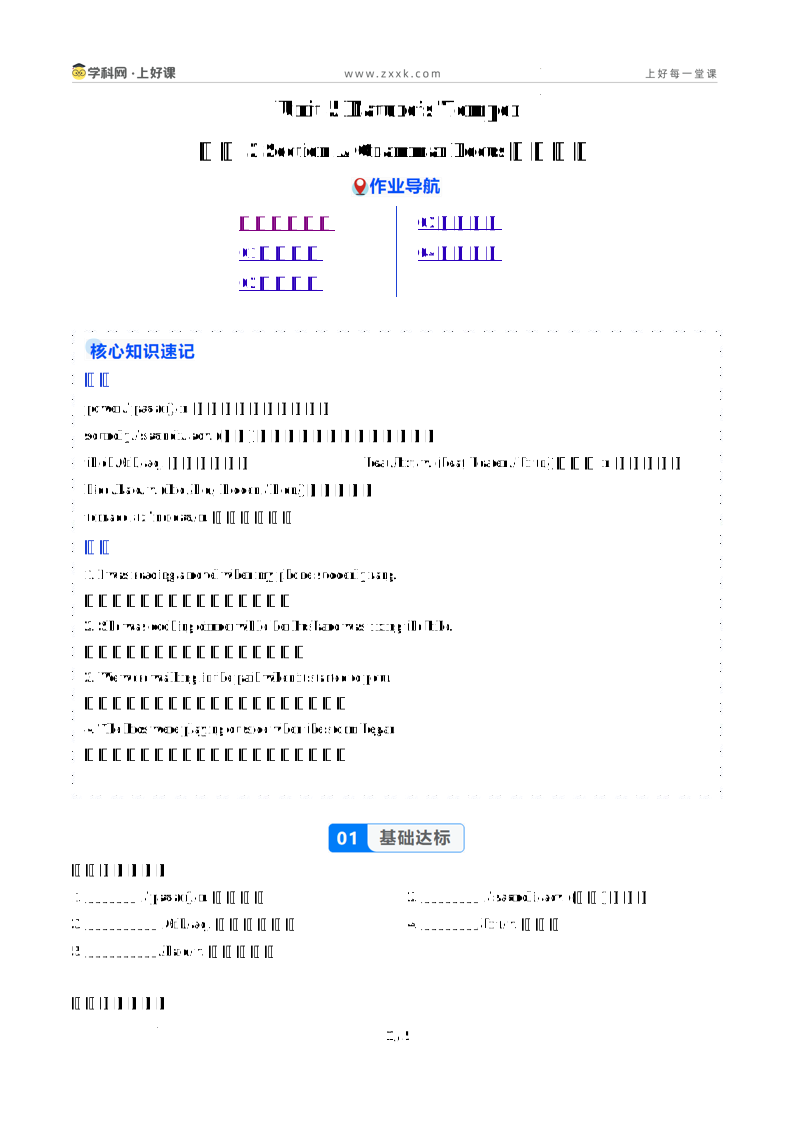
Unit 5 Nature’s Temper
课时3 Section A Grammar Focus 分层作业
核心知识速记
03拓展培优
01基础达标
04思维进阶
02能力提升
(
词汇
power /ˈpaʊə(r)/ n.
电力供应;能量;力量
soundly /ˈsaʊndli/ adv. (
睡觉
)
酣畅地;可靠地;完全彻底地
thick /θɪk/ adj.
厚的;浓密的
beat /biːt/ v. (beat, beaten /ˈbiːtn/)
敲;打
n.
敲击;跳动
hide /haɪd/ v. (hid /hɪd/, hidden /ˈhɪdn/)
躲藏;隐蔽
tornado /tɔːˈneɪdəʊ/ n.
龙卷风;旋风
句型
1.
I was reading a novel when my phone suddenly rang.
我正在看小说时,手机突然响了。
2.
She was cooking dinner while her husband was fixing the bike.
她在做晚饭,而她丈夫在修自行车。
3.
We were walking in the park when it started to pour.
我们在公园散步时,突然下起了倾盆大雨。
4.
The kids were playing outside when the storm began.
孩子们正在外面玩耍,这时暴风雨开始了。
)
一、单词默写。
1. _______ /ˈpaʊə(r)/ n. 电力供应 2. ________ /ˈsaʊndli/ adv. (睡觉) 酣畅地
3. __________ /θɪk/ adj. 厚的;浓密的 4. ________/biːt/ v. 敲;打
5. __________ /haɪd/ v. 躲藏;隐蔽
【答案】power; soundly; thick; beat; hide
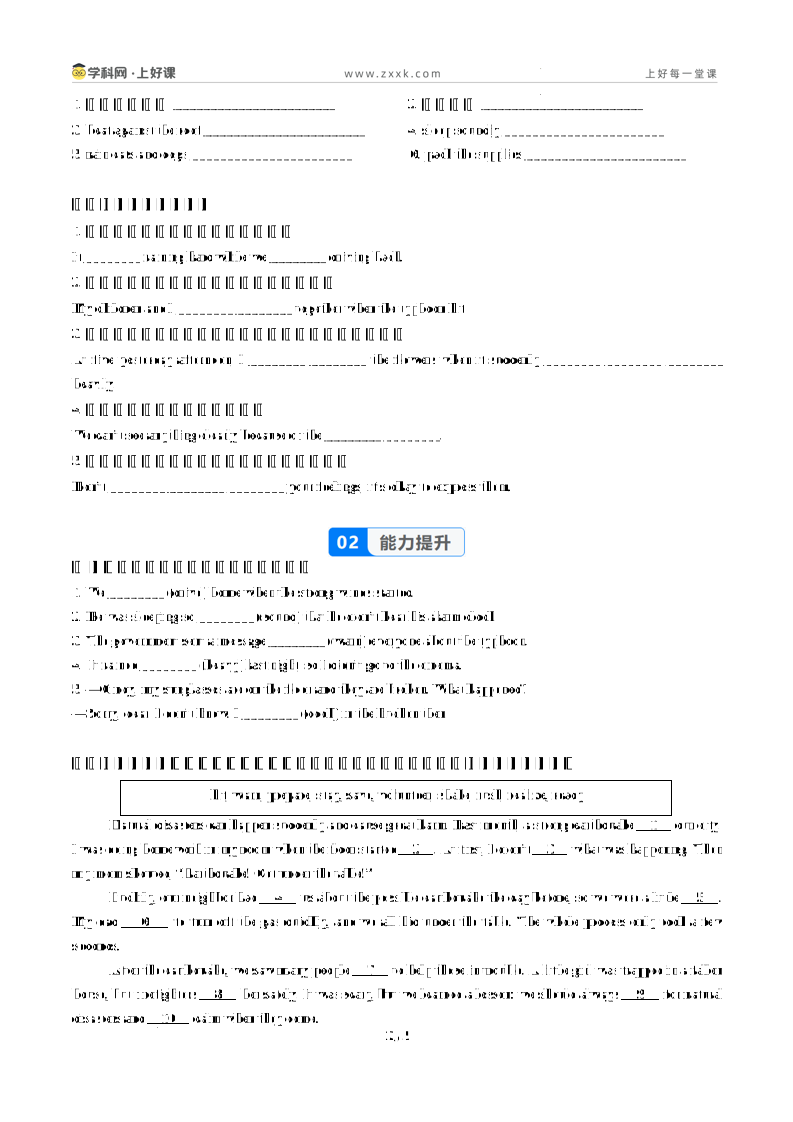
二、词组默写。
1. 警告某人某事 _______________________ 2. 登陆海岸 _______________________
3. beat against the roof _______________________ 4. sleep soundly _______________________
5. rain cats and dogs _______________________ 6. pack the supplies _______________________
【答案】1. warn sb of sth 2. land on the coast 3. 敲打着屋顶 4. 睡得很沉 5. 倾盆大雨 6. 打包物资
三、根据要求完成句子
1. 当我们开车回来时,正下着大雨。
It ________ raining hard while we ________ driving back.
2. 台风来袭时,我和孩子们正在一起看书。
My children and I ________ ________ together when the typhoon hit.
3. 昨天下午五点,我正在给花浇水,突然下起了大雨。
At five yesterday afternoon, I ________ ________ the flowers when it suddenly ________ ________ ________ heavily.
4. 因为浓雾我们什么也看不清。
We can’t see anything clearly because of the ________ ________.
5. 不要隐藏你的感受;表达它们是没关系的。
Don’t ________ ________ ________ your feelings; it’s okay to express them.
【答案】1. was; were 2. were reading 3. was watering; began to rain 4. thick / heavy fog 5. hide your feelings
四 、用括号内所给词的适当形式填空。
1. We ________ (drive) home when the strong winds started.
2. He was sleeping so ________ (sound) that he didn’t hear his alarm clock.
3. The government sent a message ________ (warn) everyone about the typhoon.
4. It rained ________ (heavy) last night, so I didn’t go to the cinema.
5. —Cindy, my sunglasses are on the floor and they are broken. What happened?
—Sorry, dear. I don’t know. I ________ (cook) in the kitchen then.
【答案】1. were driving 2. soundly 3. to warn 4. heavily 5. was cooking
五、阅读短文,从方框中选择适当的词并用其正确的形式填空(每词限用一次)。
hit, warn, prepare, stay, save, volunteer, shake, rush, realize, ready
Natural disasters can happen suddenly and cause great harm. Last month, a strong earthquake 1 our city. I was doing homework in my room when the floor started 2 . At first, I didn’t 3 what was happening. Then my mom shouted, “Earthquake! Get under the table!”
Luckily, our neighbor had 4 us about the possible earthquake the day before, so we were a little 5 . My dad 6 to turn off the gas quickly, and we all hid under the table. The whole process only took a few seconds.
After the earthquake, we saw many people 7 to help those in trouble. A little girl was trapped in a fallen house, but firefighters 8 her safely. It was scary, but we learned a lesson: we should always 9 for natural disasters and 10 calm when they come.
【答案】1.hit 2.shaking 3.realize 4.warned 5.ready 6.rushed 7.volunteer/volunteering 8.saved 9.prepare 10.stay
【导语】本文是一篇记叙文,通过作者亲身经历地震的回忆,叙述了从震感发生、家人应急避险到震后救援的过程,强调了邻居提前预警和家庭应急准备的重要性。
1.句意:上个月,一场强烈的地震袭击了我们的城市。根据“Last month, a strong earthquake…our city”并结合备选词可知,此处表示“地震袭击某地”,动词hit符合语境;这句话描述过去发生的事件,用一般过去时,hit的过去式与原形一致,故填hit。
2.句意:我正在房间里做作业,这时地板开始摇晃。根据“I was doing homework in my room when the floor started…”并结合备选词可知,此处表示“地板开始摇晃”,start doing sth表示“开始做某事”,start后接动名词作宾语,动词shake的动名词形式shaking符合语境,故填shaking。
3.句意:起初,我没有意识到发生了什么。根据“At first, I didn’t…what was happening”并结合备选词可知,此处表示“没意识到发生的事”,didn’t后接动词原形,动词realize符合语境,故填realize。
4.句意:幸运的是,我们的邻居前一天已经警告过我们可能发生地震。根据“Luckily, our neighbor had…us about the possible earthquake the day before”并结合备选词可知,此处表示“邻居提前警告我们”,“had+过去分词”构成过去完成时,动词warn的过去分词warned符合语境,故填warned。
5.句意:所以我们有一些准备。根据“so we were a little…”并结合备选词可知,此处表示“有准备的状态”,be动词后接形容词作表语,形容词ready符合语境,故填ready。
6.句意:我爸爸迅速跑去关掉煤气,我们都躲到了桌子底下。根据“My dad…to turn off the gas quickly”并结合备选词可知,此处表示“爸爸急忙关煤气”,这句话描述过去发生的动作,用一般过去时,动词rush的过去式rushed符合语境,故填rushed。
7.句意:地震后,我们看到很多人主动去帮助/正在主动帮助有困难的人。根据“After the earthquake, we saw many people…to help those in trouble”并结合备选词可知,此处表示“人们自愿去帮助他人”,“volunteer to do sth.”表示“自愿做某事”,符合语境;“see sb. do/doing sth.”是固定结构,意为“看到某人做/正在做某事”,都符合语境,故填volunteer/volunteering。
8.句意:一个小女孩被困在倒塌的房子里,但消防员安全地救了她。根据“A little girl was trapped in a fallen house, but firefighters…her safely”并结合备选词可知,此处表示“消防员救了小女孩”,这句话描述过去发生的救援动作,用一般过去时,动词save的过去式saved符合语境,故填saved。
9.句意:这很可怕,但我们吸取了一个教训:我们应该时刻为自然灾害做准备,并在自然灾害来临时保持冷静。根据“we should always…for natural disasters”并结合备选词可知,此处表示“为自然灾害做准备”,should后接动词原形,动词prepare与for构成固定短语“prepare for”,意为“为……做准备”,符合语境,故填prepare。
10.句意:这很可怕,但我们吸取了一个教训:我们应该时刻为自然灾害做准备,并在自然灾害来临时保持冷静。根据“and…calm when they come”并结合备选词可知,此处表示“保持冷静”,should后接动词原形,动词stay与calm构成固定短语“stay calm”,意为“保持冷静”,符合语境,故填stay。
六、完形填空。
I looked at my watch. It was ten to six. There were just ten minutes left 1 we could leave for home. Suddenly the earth began to shake. In no time the shake became very 2 . “Earthquake!” someone shouted. I 3 the others to the door but we couldn’t get out. I stayed under a desk, covering my head and neck with my 4 . “Will someone 5 me if the building falls down? Is this the end for me?” I kept thinking about that.
Several minutes later the shake 6 . Two of my workmates tried to open the door again, and they made it! We ran 7 to the street. It was such a(n) 8 that we couldn’t believe our eyes—the street was full of debris and broken wood. More and more people came out and many were 9 . Lots of them did nothing but look up into the sky 10 .
We walked a long way home not 11 much. Some were praying and some were crying. Communication in such a situation was 12 . Our phones didn’t work because of the earthquake. So it was 13 to find out if our friends were okay. I had no way of letting my family in China 14 that I was still alive. I just hoped that they wouldn’t 15 the earthquake until tomorrow.
1.A.while B.until C.since D.before
2.A.close B.strange C.strong D.dangerous
3.A.helped B.followed C.allowed D.waited
4.A.feet B.legs C.eyes D.arms
5.A.save B.push C.call D.notice
6.A.changed B.fell C.broke D.stopped
7.A.carefully B.quickly C.easily D.loudly
8.A.mess B.accident C.problem D.mistake
9.A.unlucky B.angry C.sad D.hurt
10.A.in shock B.in person C.in place D.in danger
11.A.eating B.saying C.playing D.working
12.A.proper B.crazy C.difficult D.personal
13.A.normal B.impossible C.necessary D.important
14.A.feel B.remember C.imagine D.know
15.A.worry about B.think about C.hear about D.argue about
【答案】1.D 2.C 3.B 4.D 5.A 6.D 7.B 8.A 9.D 10.A 11.B 12.C 13.B 14.D 15.C
【导语】本文主要介绍了作者在下班前遭遇地震时的惊恐经历、逃生过程以及灾后通讯中断、与家人失联的无助感。
1.句意:我们本可以再有十分钟就动身回家了。
while当……时候;until直到;since自从;before在……之前。根据“There were just ten minutes left ... we could leave for home.”可知,此处要表达的是在“我们”能回家之前只剩下10分钟时间了。故选D。
2.句意:没过多久,震动就变得非常剧烈。
close关闭的;strange奇怪的;strong强壮的;dangerous危险的。根据“In no time the shake became very ...”和常识可知,地震应是由弱变强。此处指很快这种晃动变得非常强烈。故选C。
3.句意:跟随其他人来到门口,但我们出不去。
helped帮助;followed遵循;allowed允许;waited等候。根据“I ... the others to the door but we couldn’t get out.”可知,此处要表达的是“我”跟在其他人后面来到房门处,但是“我们”已经无法出去了。故选B。
4.句意:我躲到桌子底下,用我的胳膊护住头和脖子。
feet脚;legs腿;eyes眼睛;arms胳膊。根据“I stayed under a desk, covering my head and neck with my ...”和常识可知,能用来遮住头部和颈部的应该是手臂。故选D。
5.句意:如果大楼倒塌了,会有人来救我吗?
save拯救;push推;call打电话;notice注意到。根据“Will someone ... me if the building falls down? ”可知,如果房子倒塌,那就是死路一条,自己已经逃不出去,只能期待有人能救自己了。故选A。
6.句意:几分钟后,震动停止了。我的两个同事再次尝试打开门,这次成功了!
changed改变;fell摔倒;broke打破;stopped停止。根据“Several minutes later the shake ... Two of my workmates tried to open the door again, and they made it!”可判断这时地震应该是停止了。故选D。
7.句意:我们快速地跑到了街上。
carefully小心地;quickly快速地;easily简单地;loudly大声地。根据“We ran ...to the street.”可知,此处指快速地跑到街上。故选B。
8.句意:眼前的情景太令人难以置信了——街道上满是瓦砾和破碎的木头。
mess脏乱;accident事故;problem问题;mistake错误。根据后文“It was such a(n) ... that we couldn’t believe our eyes—the street was full of debris and broken wood.”可知,大街上是一片狼藉。故选A。
9.句意:越来越多的人走了出来,很多人受伤了。
unlucky不幸的;angry生气地;sad伤心的;hurt受伤的。根据“More and more people came out and many were ...”和常识再结合语境可知地震发生使得有人受伤了。故选D。
10.句意:他们中的许多人只是什么也不做,只是仰望着天空。
in shock震惊地;in person亲自;in place正确地;in danger处于危险中。根据“Lots of them did nothing but look up into the sky ...”可知,突然发生了强烈的地震,很多人被困在室内。当他们好不容易逃出来了,却看到了一片狼藉,他们一定是惊恐万分的。故选A。
11.句意:我们走了很长一段路才到家,一路上没怎么说话。
eating吃;saying说话;playing玩耍;working工作。根据“We walked a long way home not ... much.”可知,此处是描述人们地震后悲伤的状态。故选B。
12.句意:在这种情况下,沟通变得很困难。
proper恰当的;crazy疯狂的;difficult困难的;personal个人的。根据“Communication in such a situation was ...”和常识可知,在发生地震时,通信是困难的。故选C。
13.句意:所以不可能知道朋友们是否安好。
normal正常的;impossible不可能的;necessary必需的;important重要的。根据“Our phones didn’t work because of the earthquake.”可知,查明“我们”的朋友是否平安无事是不可能的。故选B。
14.句意: 我没有办法让在中国的家人知道我还活着。
feel感觉; remember记住; imagine想象; know知道。根据“I had no way of letting my family in China ... that I was still alive.”可知,由于手机没有信号,“我”没有办法让在中国的家人知道“我”还活着。故选D。
15.句意:我只是希望他们能等到明天再发现地震的事。
worry about担心;think about思考;hear about听说;argue about争论。根据“I just hoped that they wouldn’t ... the earthquake until tomorrow.”可知,此处要表达的是“我”只希望家人在明天之前不要获悉地震的消息。故选C。
七、阅读还原。
There are lots of natural disasters every year. 1 Typhoons are some of the worst storms, usually around the Pacific Ocean and the South China Sea. Most of them happen in July, August and September.
How does a typhoon happen? When lots of sea water gets hot in summer, it evaporates (蒸发) into the air. 2 When the air gets warm enough, it starts to move high up into the sky.
Then cooler air around it rushes in. It fills the space that is left. After the air gets warmer, it starts to move quickly, making wind. 3 The warmer the air gets, the faster the wind moves. And when the wind moves faster than 30 metres a second, a typhoon begins. A typhoon has two parts. One is called the “eye”. It’s the centre of the typhoon. In the eye, the wind does not move so fast. The other part is the wall of clouds around the eye.
Typhoons are very dangerous. In November last year, Super Typhoon Haiyan killed more than 6,000 people in Philippines. 4
What should we do when a typhoon happens?
·Stay inside. 5
·Try to bring all of your things inside. Strong winds could even blow away your cars!
·Listen to the radio, watch TV or search on the Internet for important information.
·If you’re told to go to a safer place, do it right now.
A.Have a picnic outside.
B.This makes the air hotter.
C.Typhoons are among them.
D.We should try to stop disasters like typhoons.
E.Close all the windows and stay away from them.
F.More people were hurt and some missed.
G.The wind goes in circles and it keeps moving higher in the sky.
【答案】1.C 2.B 3.G 4.F 5.E
【导语】本文是一篇说明文,主要介绍了台风的形成原理、结构特点、危害以及应对台风的安全措施。
1.根据“There are lots of natural disasters every year ... Typhoons are some of the worst storms”可知,此处应起到承上启下的作用,选项C“台风是其中一种。”符合语境。故选C。
2.根据“When lots of sea water ... into the air”可知,这会导致空气温度变化,选项B“这让空气变得更热。”符合语境。故选B。
3.根据“The warmer the air gets, the faster the wind moves”可知,此处指风在台风的形成中的作用,选项G“风形成圆圈状并在天空中持续升高。”符合语境。故选G。
4.根据“In November last year, Super Typhoon Haiyan killed more than 6,000 people in Philippines.”可知,此处指台风带来的灾难,选项F“更多的人受伤和一些人失踪了。”符合语境。故选F。
5.根据“What should we do when a typhoon happens?”及“stay inside.”可知,此处指应对台风的方法,选项E“关闭所有的窗户并远离它们。”符合语境。故选E。
八、任务型阅读。
Safety Measures in Natural Disasters
Natural disasters are unexpected, but proper safety measures can help us stay unharmed. Here are some tips for different disasters.
For earthquakes: When the ground starts shaking, if you’re indoors, take cover under a sturdy table or desk. Hold on to it and wait until the shaking stops. Do not use the elevator. If you’re outdoors, go to an open area, such as a park, and stay away from buildings, trees and power lines.
For storms: Stay inside your house and close all windows and curtains. Unplug electrical appliances to avoid damage from lightning. Do not go out to pick up things blown away by the wind, as strong winds may cause danger.
For floods: If you live in a low-lying area, move to higher ground as soon as you get a flood warning. Do not walk through moving water, as even 30 centimeters of fast-moving water can knock you down. Do not drive through flooded roads either.
1.Proper safety measures help us (仅填2词) when natural disasters happen。
2.Fill in the blanks according to the passage.
Disaster Type
Safety Measures
Earthquakes (indoors)
Take cover under a sturdy table or desk
Do not use the elevator
Earthquakes (outdoors)
(不超过5词)
Stay away from buildings, trees and power lines
Storms
Stay inside the house
(不超过5词)
Unplug electrical appliances
Do not go out to pick up things blown away by the wind
Floods
Move to higher ground
Do not walk through moving water
(不超过5词)
3.What do you think is the most important thing to remember when facing natural disasters? And why?
(不超过20词)
【答案】1.stay unharmed 2. Go to an open area Close all windows and curtains Don’t drive through flooded roads 3.Keep calm. Because it helps us make right decisions quickly.
【导语】本文主要介绍了面对自然灾害时应采取的安全措施,包括地震、风暴和洪水等不同灾害的应对方法,旨在帮助人们在自然灾害发生时保护自己不受伤害。
1.根据“Natural disasters are unexpected, but proper safety measures can help us stay unharmed.”可知,适当的安全措施可以帮助我们在自然灾害发生时不受伤害,故填stay unharmed。
2.①根据“If you’re outdoors, go to an open area, such as a park, and stay away from buildings, trees and power lines.”可知,地震时如果身处户外,应前往开阔地带,如公园,并远离建筑物、树木和电线,故填Go to an open area。
②根据“Stay inside your house and close all windows and curtains.”可知,风暴来临时应待在室内并关闭所有窗户和窗帘,故填Close all windows and curtains。
③根据“Do not drive through flooded roads either.”可知,洪水来临时不要开车穿过被淹的道路,故填Don’t drive through flooded roads。
3.本题为开放性问题,答案不唯一,结合自身观点和理由,如保持冷静能帮助快速做出正确决定等合理作答即可。故填Keep calm. Because it helps us make right decisions quickly.
(
1
/
7
)
学科网(北京)股份有限公司
$
Unit 5 Nature’s Temper
课时3 Section A Grammar Focus 分层作业
一、单词默写。
power; soundly; thick; beat; hide
二、词组默写。
1. warn sb of sth 2. land on the coast 3. 敲打着屋顶 4. 睡得很沉 5. 倾盆大雨 6. 打包物资
三、根据要求完成句子
1. was; were 2. were reading 3. was watering; began to rain 4. thick / heavy fog 5. hide your feelings
四 、用括号内所给词的适当形式填空。
1. were driving 2. soundly 3. to warn 4. heavily 5. was cooking
五、阅读短文,从方框中选择适当的词并用其正确的形式填空(每词限用一次)。
1.hit 2.shaking 3.realize 4.warned 5.ready 6.rushed 7.volunteer/volunteering 8.saved 9.prepare 10.stay
六、完形填空。
1.D 2.C 3.B 4.D 5.A 6.D 7.B 8.A 9.D 10.A 11.B 12.C 13.B 14.D 15.C
七、阅读还原。
1.C 2.B 3.G 4.F 5.E
八、任务型阅读。
1.stay unharmed 2. Go to an open area Close all windows and curtains Don’t drive through flooded roads 3.Keep calm. Because it helps us make right decisions quickly.
(
1
/
7
)
学科网(北京)股份有限公司
$
Unit 5 Nature’s Temper
课时3 Section A Grammar Focus 分层作业
核心知识速记
03拓展培优
01基础达标
04思维进阶
02能力提升
(
词汇
power /ˈ
paʊə
(r)/ n.
电力供应;能量;力量
soundly /ˈ
saʊndli
/ adv. (
睡觉
)
酣畅地;可靠地;完全彻底地
thick /
θɪk
/ adj.
厚的;浓密的
beat /
biːt
/ v. (beat, beaten /ˈ
biːtn
/)
敲;打
n.
敲击;跳动
hide /
haɪd
/ v. (hid /
hɪd
/, hidden /ˈ
hɪdn
/)
躲藏;隐蔽
tornado /
tɔ
ːˈ
neɪdəʊ
/ n.
龙卷风;旋风
句型
1.
I was reading a novel when my phone suddenly rang.
我正在看小说时,手机突然响了。
2.
She was cooking dinner while her husband was fixing the bike.
她在做晚饭,而她丈夫在修自行车。
3.
We were walking in the park when it started to pour.
我们在公园散步时,突然下起了倾盆大雨。
4.
The kids were playing outside when the storm began.
孩子们正在外面玩耍,这时暴风雨开始了。
)
一、单词默写。
1. _______ /ˈpaʊə(r)/ n. 电力供应 2. ________ /ˈsaʊndli/ adv. (睡觉) 酣畅地
3. __________ /θɪk/ adj. 厚的;浓密的 4. ________/biːt/ v. 敲;打
5. __________ /haɪd/ v. 躲藏;隐蔽
二、词组默写。
1. 警告某人某事 _______________________ 2. 登陆海岸 _______________________
3. beat against the roof _______________________ 4. sleep soundly _______________________
5. rain cats and dogs _______________________ 6. pack the supplies _______________________
三、根据要求完成句子
1. 当我们开车回来时,正下着大雨。
It ________ raining hard while we ________ driving back.
2. 台风来袭时,我和孩子们正在一起看书。
My children and I ________ ________ together when the typhoon hit.
3. 昨天下午五点,我正在给花浇水,突然下起了大雨。
At five yesterday afternoon, I ________ ________ the flowers when it suddenly ________ ________ ________ heavily.
4. 因为浓雾我们什么也看不清。
We can’t see anything clearly because of the ________ ________.
5. 不要隐藏你的感受;表达它们是没关系的。
Don’t ________ ________ ________ your feelings; it’s okay to express them.
四 、用括号内所给词的适当形式填空。
1. We ________ (drive) home when the strong winds started.
2. He was sleeping so ________ (sound) that he didn’t hear his alarm clock.
3. The government sent a message ________ (warn) everyone about the typhoon.
4. It rained ________ (heavy) last night, so I didn’t go to the cinema.
5. —Cindy, my sunglasses are on the floor and they are broken. What happened?
—Sorry, dear. I don’t know. I ________ (cook) in the kitchen then.
五、阅读短文,从方框中选择适当的词并用其正确的形式填空(每词限用一次)。
hit, warn, prepare, stay, save, volunteer, shake, rush, realize, ready
Natural disasters can happen suddenly and cause great harm. Last month, a strong earthquake 1 our city. I was doing homework in my room when the floor started 2 . At first, I didn’t 3 what was happening. Then my mom shouted, “Earthquake! Get under the table!”
Luckily, our neighbor had 4 us about the possible earthquake the day before, so we were a little 5 . My dad 6 to turn off the gas quickly, and we all hid under the table. The whole process only took a few seconds.
After the earthquake, we saw many people 7 to help those in trouble. A little girl was trapped in a fallen house, but firefighters 8 her safely. It was scary, but we learned a lesson: we should always 9 for natural disasters and 10 calm when they come.
六、完形填空。
I looked at my watch. It was ten to six. There were just ten minutes left 1 we could leave for home. Suddenly the earth began to shake. In no time the shake became very 2 . “Earthquake!” someone shouted. I 3 the others to the door but we couldn’t get out. I stayed under a desk, covering my head and neck with my 4 . “Will someone 5 me if the building falls down? Is this the end for me?” I kept thinking about that.
Several minutes later the shake 6 . Two of my workmates tried to open the door again, and they made it! We ran 7 to the street. It was such a(n) 8 that we couldn’t believe our eyes—the street was full of debris and broken wood. More and more people came out and many were 9 . Lots of them did nothing but look up into the sky 10 .
We walked a long way home not 11 much. Some were praying and some were crying. Communication in such a situation was 12 . Our phones didn’t work because of the earthquake. So it was 13 to find out if our friends were okay. I had no way of letting my family in China 14 that I was still alive. I just hoped that they wouldn’t 15 the earthquake until tomorrow.
1.A.while B.until C.since D.before
2.A.close B.strange C.strong D.dangerous
3.A.helped B.followed C.allowed D.waited
4.A.feet B.legs C.eyes D.arms
5.A.save B.push C.call D.notice
6.A.changed B.fell C.broke D.stopped
7.A.carefully B.quickly C.easily D.loudly
8.A.mess B.accident C.problem D.mistake
9.A.unlucky B.angry C.sad D.hurt
10.A.in shock B.in person C.in place D.in danger
11.A.eating B.saying C.playing D.working
12.A.proper B.crazy C.difficult D.personal
13.A.normal B.impossible C.necessary D.important
14.A.feel B.remember C.imagine D.know
15.A.worry about B.think about C.hear about D.argue about
七、阅读还原。
There are lots of natural disasters every year. 1 Typhoons are some of the worst storms, usually around the Pacific Ocean and the South China Sea. Most of them happen in July, August and September.
How does a typhoon happen? When lots of sea water gets hot in summer, it evaporates (蒸发) into the air. 2 When the air gets warm enough, it starts to move high up into the sky.
Then cooler air around it rushes in. It fills the space that is left. After the air gets warmer, it starts to move quickly, making wind. 3 The warmer the air gets, the faster the wind moves. And when the wind moves faster than 30 metres a second, a typhoon begins. A typhoon has two parts. One is called the “eye”. It’s the centre of the typhoon. In the eye, the wind does not move so fast. The other part is the wall of clouds around the eye.
Typhoons are very dangerous. In November last year, Super Typhoon Haiyan killed more than 6,000 people in Philippines. 4
What should we do when a typhoon happens?
·Stay inside. 5
·Try to bring all of your things inside. Strong winds could even blow away your cars!
·Listen to the radio, watch TV or search on the Internet for important information.
·If you’re told to go to a safer place, do it right now.
A.Have a picnic outside.
B.This makes the air hotter.
C.Typhoons are among them.
D.We should try to stop disasters like typhoons.
E.Close all the windows and stay away from them.
F.More people were hurt and some missed.
G.The wind goes in circles and it keeps moving higher in the sky.
八、任务型阅读。
Safety Measures in Natural Disasters
Natural disasters are unexpected, but proper safety measures can help us stay unharmed. Here are some tips for different disasters.
For earthquakes: When the ground starts shaking, if you’re indoors, take cover under a sturdy table or desk. Hold on to it and wait until the shaking stops. Do not use the elevator. If you’re outdoors, go to an open area, such as a park, and stay away from buildings, trees and power lines.
For storms: Stay inside your house and close all windows and curtains. Unplug electrical appliances to avoid damage from lightning. Do not go out to pick up things blown away by the wind, as strong winds may cause danger.
For floods: If you live in a low-lying area, move to higher ground as soon as you get a flood warning. Do not walk through moving water, as even 30 centimeters of fast-moving water can knock you down. Do not drive through flooded roads either.
1.Proper safety measures help us (仅填2词) when natural disasters happen。
2.Fill in the blanks according to the passage.
Disaster Type
Safety Measures
Earthquakes (indoors)
Take cover under a sturdy table or desk
Do not use the elevator
Earthquakes (outdoors)
(不超过5词)
Stay away from buildings, trees and power lines
Storms
Stay inside the house
(不超过5词)
Unplug electrical appliances
Do not go out to pick up things blown away by the wind
Floods
Move to higher ground
Do not walk through moving water
(不超过5词)
3.What do you think is the most important thing to remember when facing natural disasters? And why?
(不超过20词)
(
1
/
7
)
学科网(北京)股份有限公司
$
资源预览图
1
2

相关资源
由于学科网是一个信息分享及获取的平台,不确保部分用户上传资料的 来源及知识产权归属。如您发现相关资料侵犯您的合法权益,请联系学科网,我们核实后将及时进行处理。