Unit 5 单元测试卷 2025-2026学年沪教版(五四学制)英语八年级下册
2026-03-14
|
2份
|
13页
|
672人阅读
|
35人下载
内容正文:
上海英语新教材8(下)Unit 5 单元测试卷
Part 1 Vocabulary and Grammar
(第一部分 词汇和语法)
I. Choose the best answer(选择最恰当的答案)10%★
Natural disasters 1 more frequent and severe in recent years around the world. Scientists believe that climate change 2 a major role in this worrying trend. Many countries now 3 better warning systems including advanced weather monitoring technology to protect people from potential dangers.
When a disaster suddenly 4 , it is important to stay calm and avoid panic. People should immediately follow instructions 5 by local authorities through official channels. In some high-risk areas, schools regularly practise earthquake and fire drills so that students 6 exactly what to do when real emergencies occur, such as where to find safe shelter.
We cannot prevent natural disasters from 7 completely, but we can definitely reduce their impact through adequate preparation. Making an emergency kit with essential supplies is much 8 than waiting until the last minute when stores may be closed. Remember, being prepared today 9 your life tomorrow and protects your loved ones. Let's all learn 10 ready for unexpected events by creating family emergency plans and staying informed about local risks.
1. A. have become B.became C.are becoming
2. A.plays B.played C.playing
3. A.develop B.developed C.are developing
4. A.strikes B.struck C.will strike
5. A.give B.gave C.given
6. A.know B.knew C.will know
7. A.happen B.happening C.happened
8. A.good B.better C.best
9. A.saves B.save C.could save
10. A.be B.to be C.being
II. Fill in the blanks with the given words in their proper forms(用括号中所给单词的适当 形式完成下列句子,每空格限填一词)8%
11. The small village was destroyed by the powerful earthquake that happened last week. (terrible)
12. Fortunately, no one suffered a serious during the sudden flood in the town centre. (injure)
13. The tragic of many wild animals was caused by the forest fire. (die)
14. It's very important to prepare flashlights and extra for emergencies when a typhoon comes. (battery)
15. After the earthquake,the local community organised to collect donations to help the victims. (rapid)
16. People were advised to turn off all devices to prevent accidents during the severe thunderstorm.
(electron)
17. The government issued an warning for residents to evacuate immediately due to the approaching
wildfire. (urge)
18. Having an emergency plan is an way to protect your family when a natural disaster strikes. (effect)
III. Rewrite the following sentences as required(根据所给要求改写句子)12%
19. The government has sent help to the flood area. (改为一般疑问句)
20. Many people were sleeping when the earthquake started. (改为否定句)
21. We should move to a safe place during a typhoon. (对画线部分提问)
22. It was a terrible disaster. (改为反意疑问句)
23. It is important for us to learn how to survive in an earthquake. (保持句意基本不变)
24. during, stay, a, we, calm, must, disaster, natural (.) (连词成句)
IV. Complete the following passage with the words or phrase in the box.Each can be used only once(将下列单词或词组填入空格。每个单词或词组限填一次)4%
A.powerful B.prepare for C.damage D.suddenly E.However
Typhoons are among the most 25 weather systems in the world. These huge storms form over warm ocean waters and can span hundreds of kilometres. The strong winds and heavy rainfall they bring often cause serious 26 to coastal areas, including flooding, landslides, and destruction of buildings.
Weather conditions can change 27 when a typhoon approaches. The sky may darken quickly, winds grow stronger minute by minute, and rain begins to pour heavily. This is why it's crucial to monitor weather updates during typhoon season.
28 , with proper knowledge and preparation, we can significantly reduce the risks. Before typhoon season begins, families should discuss emergency plans and assemble disaster supply kits. During a typhoon, it's safest to stay indoors, away from windows, and if authorities recommend evacuation, we should follow their advice promptly.
25. 26. 27. 28.
Part 2 Reading and Writing (第二部分 读写)
V. Reading comprehension(阅读理解)21%
A.Choose the proper sentences and complete the passage(选择合适的句子完成短文)4%
A. It has a torch, some food, and a radio.
B. Knowing what to do can really help us stay calm and safe.
C. Is everything okay with your family?
D. We should make a family emergency plan too.
E. Natural disasters make me feel a little unsafe.
F. I think the heavy rain and lightning are exciting.
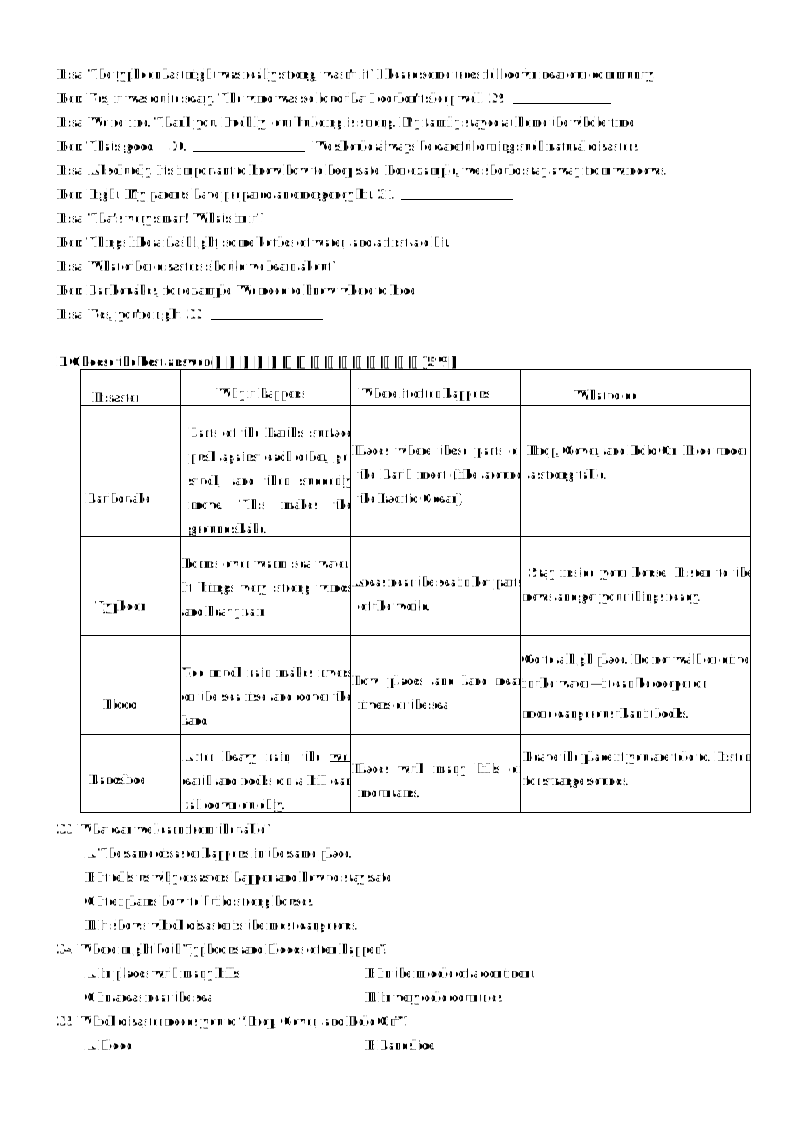
Lisa: The typhoon last night was really strong, wasn't it? I heard some trees fell down near our community.
Ben: Yes, it was quite scary. The wind was so loud that I couldn't sleep well. 29.
Lisa: We’re fine. Thank you. Luckily, our building is strong. My family stayed at home the whole time.
Ben: That's good. 30. We should always be careful during such natural disasters.
Lisa: Absolutely. It's important to know how to keep safe. For example, we should stay away from windows.
Ben: Right. My parents have prepared an emergency kit. 31.
Lisa: That's very smart! What's in it?
Ben: Things like a flashlight, some bottles of water, and a first-aid kit.
Lisa: What other disasters should we learn about?
Ben: Earthquakes, for example. We need to know where to hide.
Lisa: Yes, you're right. 32.
B.Choose the best answer(根据以下内容,选择最恰当的答案)5%★
Disaster
Why it happens
Where it often happens
What to do
Earthquake
Parts of the Earth's surface push against each other, get stuck, and then suddenly move. This makes the ground shake.
Places where these parts of the Earth meet (like around the Pacific Ocean).
Drop, Cover, and Hold On. Hide under a strong table.
Typhoon
Forms over warm sea water. It brings very strong winds and heavy rain.
Areas near the sea in hot parts of the world.
Stay inside your house. Listen to the news and get your things ready.
Flood
Too much rain makes rivers or the sea rise and cover the land.
Low places and land near rivers or the sea.
Go to a high place. Do not walk or drive in the water—it can be deeper or
more dangerous than it looks.
Landslide
After heavy rain, the wet earth and rocks on a hill can fall down quickly.
Places with many hills or mountains.
Leave the place if you are told to. Listen for strange sounds.
33. What can we learn from the table?
A.The same disaster happens in the same place.
B.It tells us why disasters happen and how to stay safe.
C.It explains how to build strong houses.
D.It shows which disaster is the most dangerous.
34. Where might both Typhoons and Floods often happen?
A.In places with many hills. B.In the middle of a continent.
C.In areas near the sea. D.In very cold countries.
35. Which disaster needs you to “Drop, Cover, and Hold On”?
A.Flood. B.Landslide.
C.Typhoon. D.Earthquake.
36. The word “wet” in the Landslide row means the earth is .
A.full of water B.very dry
C.too hard D.hot
37. What can cause both Floods and Landslides?
A.Strong wind. B.Warm sea water.
C.Heavy rain. D.The ground shaking.
C.Choose the best answer and complete the passage(选择最恰当的选项完成短文)6%★
We live on a beautiful planet, but it is also powerful and sometimes wild. To live safely and happily, we need to have a respect for nature and the 38 that shape our world.
Think about a volcano. For many years, it can be quiet and peaceful. People might even build villages on its slopes because of the rich soil. But deep under the surface, great heat and pressure are building up. When the force becomes too strong, the mountain can 39 , throwing out hot rocks and ash. This shows us that nature has its own timetable, which doesn't always match ours.
Similarly, when heavy rains pour for days, rivers can rise and 40 their banks. The water can cover roads, farms, and even houses. It seems that nature is reminding us who is really in charge. We cannot stop the rain from falling, but we can learn to understand its patterns and prepare for its power. Building stronger flood walls and not building homes in low-lying areas are wise 41 .
Sometimes, the best thing we can do is simply to stand in awe of nature's beauty and power. Watching the endless ocean waves, listening to the wind in the mountains, or looking up at the stars on a clear night can make us feel 42 . These feelings help us remember that we are a part of this amazing world, not its masters.
Having respect for nature doesn't mean we are weak. It means we are wise enough to know our limits and smart enough to live in harmony with our planet. By learning, preparing, and admiring, we can build a safer and 43 future for everyone.
38. A.forces B.gardens C.stories D.rules
39. A.disappear B.explode C.arrive D.sleep
40. A.clean B.cross C.follow D.leave
41. A.games B.choices C.dreams D.prizes
42. A.bored and tired B.happy and excited
C.small but connected D.strong and powerful
43. A.quieter B.slower C.brighter D.easier
D.Read the passage and answer the questions(阅读短文,回答问题。48题2分)6%
Natural disasters are powerful, but humans are not completely helpless. By working together and using technology, we can reduce the damage they cause and protect ourselves. Here is how we fight back.
First, we use technology to get early warnings. Scientists use special tools to watch the earth and sky closely. They can often tell us when a big storm, flood, or earthquake might be coming. For example, before a typhoon hits the coast, weather stations send out warnings. This gives people time to prepare, such as moving to a safer place or storing food and water.
Second, we build stronger and smarter structures. Engineers design buildings that can stand against the power of nature. In places with many earthquakes, buildings are made to sway a little instead of breaking. In coastal areas, strong walls can help to keep the ocean waves away. For instance, Japan has built high sea walls to protect its towns from tsunamis.
Third, community cooperation is the key. When everyone work together, we become stronger. People practise evacuation drills regularly so they know what to do when a disaster really happens. Neighbours check on each other, especially the elderly and children. After a disaster, rescue teams and volunteers from the community and beyond work day and night to help those in need.
Some people think we cannot win against nature's power, and it is true that we cannot stop disasters from happening. However, by preparing well and helping each other, we can greatly reduce the harm they cause. Our best “weapon” is knowledge, preparation, and unity.
In short, with early warnings, strong engineering, and community spirit, we can build a safer world even in the face of natural disasters.
Task 1:
44. How many main ways to fight against natural disasters does the passage mention?
45. What is the purpose of early warnings before a typhoon?
46. How are buildings in earthquake zones designed to protect people?
47. Why is community cooperation so important according to the passage?
Task 2:
48. Imagine you are the leader of your school's Safety Club. Your town has just received an early warning for a coming typhoon. Based on the passage, write a short speech to tell your schoolmates what they should do to prepare for it. (Use your own words at least 30 words.)
VI. Writing (写作)20%
A.Translate the following sentences into English, using the words given in the brackets (根据所给提示中译英)10%
49. 昨晚的新闻报道了一场发生在那里的自然灾害。 (disaster)
50. 地震后的场景非常可怕,许多人失去了家园。 (terrible)
51. 洪水毁坏了许多房屋和道路。 (destroy)
52. 由于暴雨,我们不得不取消我们的足球赛。 (cancel)
53. 科学家说这样的坏天气可能还会持续一周以上。(last)
B.Guided writing(作文)10%
54. 某英文报举办“自然灾害与人类”主题征文活动。请你根据下面的提示,以 “Natural disasters and us” 为题,写一篇不少于60词的短文。
过去
1.对自然灾害了解甚少
2.灾害造成大量人员伤亡和财产损失
3.灾后恢复重建很困难
现在
1.监测:建立先进的预警系统
2.预防:学校开展防灾演练,教学生如何保护自己
3.救援:救援队伍能更快到达灾区
将来
请你展望未来的灾害应对
keys:
I. 1.A 2.A 3.C 4.A 5.C 6.A 7.B 8.B 9.A 10.B
II. 11.terribly 12.injury 13.death 14.batteries 15.rapidly
16.electronic 17.urgent 18.effective
III. 19. Has the government sent help to the flood area?
20. Many people were not sleeping when the earthquake started.
21.W here should we move to during a typhoon?
22.It was a terrible disaster, wasn't it?
23. Learning how to survive in an earthquake is important for us.
24. We must stay calm during a natural disaster.
IV. 25.A 26.C 27. D 28.E
V. A: 29.C 30.E 31.D 32.B
B: 33.B 34.C 35.D 36.A 37.C
C: 38.A 39.B 40.D 41.B 42.C 43. C
D: 44. Three main ways.
45. To give people time to prepare, such as moving to a safer place or storing food and water.
46. They are made to sway a little instead of breaking.
47. Because when everyone works together, people become stronger. They can practise evacuation drills, check on each other, and help those in need after disasters.
48. Hello, everyone! A typhoon is coming. First, please stay calm. We should help our families prepare an emergency kit with food, water, and a flashlight. Also, remember to stay indoors when the typhoon comes. Let's check our classrooms to make sure all windows are closed. Finally, listen to the latest news. Let's work together to stay safe! (Any reasonable answer is OK.)
VI. A: 49. Last night's news reported a natural disaster that occurred there.
50. The scene after the earthquake was terrible, and many people lost their homes.
51. The flood destroyed many houses and roads.
52. Due to the heavy rain, we had to cancel our football match.
53. Scientists say such bad weather may last for more than a week.
B: 54. One possible version:
Natural disasters and us
In the past, people knew little about natural disasters. This often led to a great loss of life and property. Recovery was slow and difficult.
Now, we have advanced warning systems to monitor disasters. Schools hold safety drills to teach students how to protect themselves. Rescue teams can reach affected areas much faster.
In the future, I believe technology will help us even more. We might use AI to predict disasters more accurately and drones to deliver supplies quickly. With better preparation, we can reduce damage and save more lives.
学科网(北京)股份有限公司
$
上海英语新教材8(下)Unit 5 单元测试卷
Part 1 Vocabulary and Grammar
(第一部分 词汇和语法)
I. Choose the best answer(选择最恰当的答案)10%★
Natural disasters 1 more frequent and severe in recent years around the world. Scientists believe that climate change 2 a major role in this worrying trend. Many countries now 3 better warning systems including advanced weather monitoring technology to protect people from potential dangers.
When a disaster suddenly 4 , it is important to stay calm and avoid panic. People should immediately follow instructions 5 by local authorities through official channels. In some high-risk areas, schools regularly practise earthquake and fire drills so that students 6 exactly what to do when real emergencies occur, such as where to find safe shelter.
We cannot prevent natural disasters from 7 completely, but we can definitely reduce their impact through adequate preparation. Making an emergency kit with essential supplies is much 8 than waiting until the last minute when stores may be closed. Remember, being prepared today 9 your life tomorrow and protects your loved ones. Let's all learn 10 ready for unexpected events by creating family emergency plans and staying informed about local risks.
1. A. have become B.became C.are becoming
2. A.plays B.played C.playing
3. A.develop B.developed C.are developing
4. A.strikes B.struck C.will strike
5. A.give B.gave C.given
6. A.know B.knew C.will know
7. A.happen B.happening C.happened
8. A.good B.better C.best
9. A.saves B.save C.could save
10. A.be B.to be C.being
II. Fill in the blanks with the given words in their proper forms(用括号中所给单词的适当 形式完成下列句子,每空格限填一词)8%
11. The small village was destroyed by the powerful earthquake that happened last week. (terrible)
12. Fortunately, no one suffered a serious during the sudden flood in the town centre. (injure)
13. The tragic of many wild animals was caused by the forest fire. (die)
14. It's very important to prepare flashlights and extra for emergencies when a typhoon comes. (battery)
15. After the earthquake,the local community organised to collect donations to help the victims. (rapid)
16. People were advised to turn off all devices to prevent accidents during the severe thunderstorm.
(electron)
17. The government issued an warning for residents to evacuate immediately due to the approaching
wildfire. (urge)
18. Having an emergency plan is an way to protect your family when a natural disaster strikes. (effect)
III. Rewrite the following sentences as required(根据所给要求改写句子)12%
19. The government has sent help to the flood area. (改为一般疑问句)
20. Many people were sleeping when the earthquake started. (改为否定句)
21. We should move to a safe place during a typhoon. (对画线部分提问)
22. It was a terrible disaster. (改为反意疑问句)
23. It is important for us to learn how to survive in an earthquake. (保持句意基本不变)
24. during, stay, a, we, calm, must, disaster, natural (.) (连词成句)
IV. Complete the following passage with the words or phrase in the box.Each can be used only once(将下列单词或词组填入空格。每个单词或词组限填一次)4%
A.powerful B.prepare for C.damage D.suddenly E.However
Typhoons are among the most 25 weather systems in the world. These huge storms form over warm ocean waters and can span hundreds of kilometres. The strong winds and heavy rainfall they bring often cause serious 26 to coastal areas, including flooding, landslides, and destruction of buildings.
Weather conditions can change 27 when a typhoon approaches. The sky may darken quickly, winds grow stronger minute by minute, and rain begins to pour heavily. This is why it's crucial to monitor weather updates during typhoon season.
28 , with proper knowledge and preparation, we can significantly reduce the risks. Before typhoon season begins, families should discuss emergency plans and assemble disaster supply kits. During a typhoon, it's safest to stay indoors, away from windows, and if authorities recommend evacuation, we should follow their advice promptly.
25. 26. 27. 28.
Part 2 Reading and Writing (第二部分 读写)
V. Reading comprehension(阅读理解)21%
A.Choose the proper sentences and complete the passage(选择合适的句子完成短文)4%
A. It has a torch, some food, and a radio.
B. Knowing what to do can really help us stay calm and safe.
C. Is everything okay with your family?
D. We should make a family emergency plan too.
E. Natural disasters make me feel a little unsafe.
F. I think the heavy rain and lightning are exciting.
Lisa: The typhoon last night was really strong, wasn't it? I heard some trees fell down near our community.
Ben: Yes, it was quite scary. The wind was so loud that I couldn't sleep well. 29.
Lisa: We’re fine. Thank you. Luckily, our building is strong. My family stayed at home the whole time.
Ben: That's good. 30. We should always be careful during such natural disasters.
Lisa: Absolutely. It's important to know how to keep safe. For example, we should stay away from windows.
Ben: Right. My parents have prepared an emergency kit. 31.
Lisa: That's very smart! What's in it?
Ben: Things like a flashlight, some bottles of water, and a first-aid kit.
Lisa: What other disasters should we learn about?
Ben: Earthquakes, for example. We need to know where to hide.
Lisa: Yes, you're right. 32.
B.Choose the best answer(根据以下内容,选择最恰当的答案)5%★
Disaster
Why it happens
Where it often happens
What to do
Earthquake
Parts of the Earth's surface push against each other, get stuck, and then suddenly move. This makes the ground shake.
Places where these parts of the Earth meet (like around the Pacific Ocean).
Drop, Cover, and Hold On. Hide under a strong table.
Typhoon
Forms over warm sea water. It brings very strong winds and heavy rain.
Areas near the sea in hot parts of the world.
Stay inside your house. Listen to the news and get your things ready.
Flood
Too much rain makes rivers or the sea rise and cover the land.
Low places and land near rivers or the sea.
Go to a high place. Do not walk or drive in the water—it can be deeper or
more dangerous than it looks.
Landslide
After heavy rain, the wet earth and rocks on a hill can fall down quickly.
Places with many hills or mountains.
Leave the place if you are told to. Listen for strange sounds.
33. What can we learn from the table?
A.The same disaster happens in the same place.
B.It tells us why disasters happen and how to stay safe.
C.It explains how to build strong houses.
D.It shows which disaster is the most dangerous.
34. Where might both Typhoons and Floods often happen?
A.In places with many hills. B.In the middle of a continent.
C.In areas near the sea. D.In very cold countries.
35. Which disaster needs you to “Drop, Cover, and Hold On”?
A.Flood. B.Landslide.
C.Typhoon. D.Earthquake.
36. The word “wet” in the Landslide row means the earth is .
A.full of water B.very dry
C.too hard D.hot
37. What can cause both Floods and Landslides?
A.Strong wind. B.Warm sea water.
C.Heavy rain. D.The ground shaking.
C.Choose the best answer and complete the passage(选择最恰当的选项完成短文)6%★
We live on a beautiful planet, but it is also powerful and sometimes wild. To live safely and happily, we need to have a respect for nature and the 38 that shape our world.
Think about a volcano. For many years, it can be quiet and peaceful. People might even build villages on its slopes because of the rich soil. But deep under the surface, great heat and pressure are building up. When the force becomes too strong, the mountain can 39 , throwing out hot rocks and ash. This shows us that nature has its own timetable, which doesn't always match ours.
Similarly, when heavy rains pour for days, rivers can rise and 40 their banks. The water can cover roads, farms, and even houses. It seems that nature is reminding us who is really in charge. We cannot stop the rain from falling, but we can learn to understand its patterns and prepare for its power. Building stronger flood walls and not building homes in low-lying areas are wise 41 .
Sometimes, the best thing we can do is simply to stand in awe of nature's beauty and power. Watching the endless ocean waves, listening to the wind in the mountains, or looking up at the stars on a clear night can make us feel 42 . These feelings help us remember that we are a part of this amazing world, not its masters.
Having respect for nature doesn't mean we are weak. It means we are wise enough to know our limits and smart enough to live in harmony with our planet. By learning, preparing, and admiring, we can build a safer and 43 future for everyone.
38. A.forces B.gardens C.stories D.rules
39. A.disappear B.explode C.arrive D.sleep
40. A.clean B.cross C.follow D.leave
41. A.games B.choices C.dreams D.prizes
42. A.bored and tired B.happy and excited
C.small but connected D.strong and powerful
43. A.quieter B.slower C.brighter D.easier
D.Read the passage and answer the questions(阅读短文,回答问题。48题2分)6%
Natural disasters are powerful, but humans are not completely helpless. By working together and using technology, we can reduce the damage they cause and protect ourselves. Here is how we fight back.
First, we use technology to get early warnings. Scientists use special tools to watch the earth and sky closely. They can often tell us when a big storm, flood, or earthquake might be coming. For example, before a typhoon hits the coast, weather stations send out warnings. This gives people time to prepare, such as moving to a safer place or storing food and water.
Second, we build stronger and smarter structures. Engineers design buildings that can stand against the power of nature. In places with many earthquakes, buildings are made to sway a little instead of breaking. In coastal areas, strong walls can help to keep the ocean waves away. For instance, Japan has built high sea walls to protect its towns from tsunamis.
Third, community cooperation is the key. When everyone work together, we become stronger. People practise evacuation drills regularly so they know what to do when a disaster really happens. Neighbours check on each other, especially the elderly and children. After a disaster, rescue teams and volunteers from the community and beyond work day and night to help those in need.
Some people think we cannot win against nature's power, and it is true that we cannot stop disasters from happening. However, by preparing well and helping each other, we can greatly reduce the harm they cause. Our best “weapon” is knowledge, preparation, and unity.
In short, with early warnings, strong engineering, and community spirit, we can build a safer world even in the face of natural disasters.
Task 1:
44. How many main ways to fight against natural disasters does the passage mention?
45. What is the purpose of early warnings before a typhoon?
46. How are buildings in earthquake zones designed to protect people?
47. Why is community cooperation so important according to the passage?
Task 2:
48. Imagine you are the leader of your school's Safety Club. Your town has just received an early warning for a coming typhoon. Based on the passage, write a short speech to tell your schoolmates what they should do to prepare for it. (Use your own words at least 30 words.)
VI. Writing (写作)20%
A.Translate the following sentences into English, using the words given in the brackets (根据所给提示中译英)10%
49. 昨晚的新闻报道了一场发生在那里的自然灾害。 (disaster)
50. 地震后的场景非常可怕,许多人失去了家园。 (terrible)
51. 洪水毁坏了许多房屋和道路。 (destroy)
52. 由于暴雨,我们不得不取消我们的足球赛。 (cancel)
53. 科学家说这样的坏天气可能还会持续一周以上。(last)
B.Guided writing(作文)10%
54. 某英文报举办“自然灾害与人类”主题征文活动。请你根据下面的提示,以 “Natural disasters and us” 为题,写一篇不少于60词的短文。
过去
1.对自然灾害了解甚少
2.灾害造成大量人员伤亡和财产损失
3.灾后恢复重建很困难
现在
1.监测:建立先进的预警系统
2.预防:学校开展防灾演练,教学生如何保护自己
3.救援:救援队伍能更快到达灾区
将来
请你展望未来的灾害应对
学科网(北京)股份有限公司
$
资源预览图

1

2
3
相关资源
示范课
由于学科网是一个信息分享及获取的平台,不确保部分用户上传资料的 来源及知识产权归属。如您发现相关资料侵犯您的合法权益,请联系学科网,我们核实后将及时进行处理。