Unit 9 课时5 Grammar in Use(分层作业)英语新教材仁爱科普版八年级下册
2026-03-09
|
3份
|
17页
|
701人阅读
|
7人下载
内容正文:
Unit 9 Forces of Nature
课时5 Grammar in Use 分层作业
核心知识速记
01基础达标
02能力提升
03拓展培优
04思维进阶
词汇
storm n. 暴风雨 thunder n. 雷; 雷声 lightning n. 闪电
quake n. 地震; 震动; 颤动 prevention n. 预防; 防止 perform v. 工作, 运转(好/不好); 演出; 表演
November n. 十一月 superstorm n. 超级风暴 hillside n. 小山坡
roof n. 屋顶; 顶部 painful adj. 令人疼痛的
短语
strong winds 强风 thunder and lightning 雷电 the surface of the earth 地球表面
dark road 黑暗的道路 cooked food 熟食 clean water 洁净水
traffic accidents 交通事故 human health 人类健康 take action 采取行动
fight against 与……作斗争 put out the fire 灭火 keep away from 远离
reach into 延伸到
句型
1. A snowstorm is a storm with strong winds and a lot of snow.
暴风雪是一种伴有强风和大雪的风暴。
2. You'd better bring a flashlight if you need to walk on a dark road.
如果你需要在黑暗的道路上行走,最好带上手电筒。
3. People living in the desert know how to keep themselves safe when a sandstorm comes.
生活在沙漠中的人知道沙尘暴来临时如何保护自己。
4. A strong aftershock of the earthquake happened about 40 minutes later, and it caused more harm to the area.
大约40分钟后发生了强烈的余震,对该地区造成了更大的破坏。
5. Sandstorms can cover farmlands, cause traffic accidents, and harm human health.
沙尘暴可以覆盖农田、引发交通事故并危害人类健康。
6. We must arrive earlier than usual. 我们必须比平时到得更早。
7. We can perform best in sports shoes. 穿运动鞋我们能表现得最好。
8. The floodwater reached farthest into the eastern part of the city after the heavy rain.
大雨过后,洪水最远延伸到了城市的东部。
语法重点:
1. 复合词
复合词是由两个或更多单词组合而成的新词,常用于描述特定事物或现象。本课中出现的复合词包括:
· snow + storm → snowstorm(暴风雪) · thunder + storm → thunderstorm(雷雨)
· earth + quake → earthquake(地震) · sand + storm → sandstorm(沙尘暴)
· after + shock → aftershock(余震) · flash + light → flashlight(手电筒)
· super + market → supermarket(超市)
2. 副词比较级和最高级的用法
副词比较级用于两者之间的比较,常与 than 连用;副词最高级用于三者或三者以上的比较,常与 the 连用,也可省略 the。
(1)规则变化:
· fast → faster → (the) fastest
· carefully → more carefully → (the) most carefully
(2)不规则变化:
· far → farther/further → (the) farthest/furthest
· badly → worse → (the) worst
· terribly → more terribly → (the) most terribly
一、单项选择题。
( )1. A snowstorm is a storm with strong winds and a lot of ________.
A. rain B. snow C. thunder D. lightning
( )2. The fire spread ________ than we thought. We should have been more careful.
A. fast B. faster C. fastest D. more fast
( )3. Of all the firefighters, Tom ran ________ to save the people.
A. fast B. faster C. fastest D. most fast
( )4. You'd better bring a ________ if you walk on a dark road at night.
A. sandstorm B. flashlight C. supermarket D. aftershock
( )5. The wind blew ________ yesterday than today. It was really scary.
A. badly B. worse C. worst D. more badly
二、用所给词的适当形式填空。
1. The thunderstorm came ________ (sudden) than we expected.
2. Among all the natural disasters, which one happens ________ (frequent) in your hometown?
3. He drove ________ (careful) than his brother, so he arrived safely.
4. The floodwater reached ________ (far) into the village than last year.
5. She felt ________ (terrible) about the earthquake than anyone else.
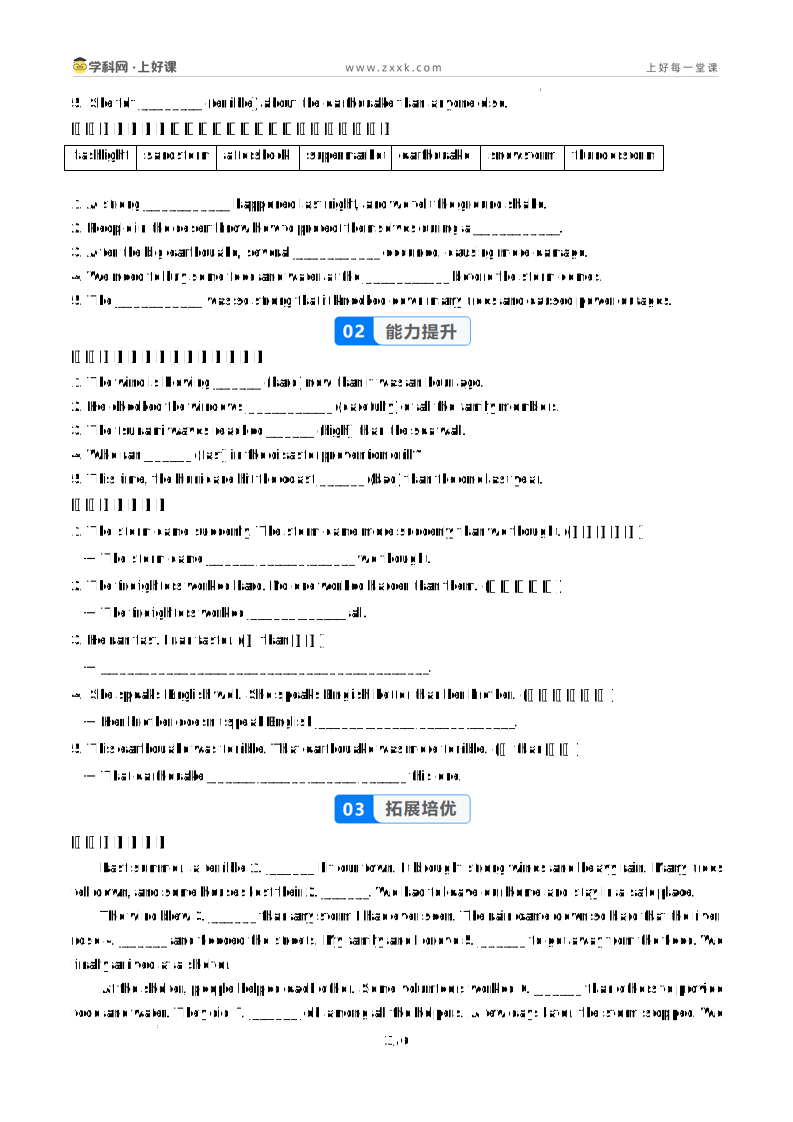
三、选词填空(从方框中选择合适的复合词填空)。
flashlight
sandstorm
aftershock
supermarket
earthquake
snowstorm
thunderstorm
1. A strong ___________ happened last night, and we felt the ground shake.
2. People in the desert know how to protect themselves during a ___________.
3. After the big earthquake, several ___________ occurred, causing more damage.
4. We need to buy some food and water at the ___________ before the storm comes.
5. The ___________ was so strong that it knocked down many trees and caused power outages.
四、用所给词的适当形式填空。
1. The wind is blowing ______ (hard) now than it was an hour ago.
2. He checked the windows ___________ (carefully) of all the family members.
3. The tsunami waves reached ______ (high) than the sea wall.
4. Who ran ______ (fast) in the disaster prevention drill?
5. This time, the hurricane hit the coast ______ (bad) than the one last year.
五、句型转换。
1. The storm came suddenly. The storm came more suddenly than we thought. (合并为一句)
→ The storm came ______ ______ ______ we thought.
2. The firefighters worked hard. No one worked harder than them. (改为最高级)
→ The firefighters worked ______ ______ all.
3. He ran fast. I ran faster. (用 than 合并)
→ __________________________________________.
4. She speaks English well. She speaks English better than her brother. (改为原级比较)
→ Her brother doesn't speak English ______ ______ ______ ______.
5. This earthquake was terrible. That earthquake was more terrible. (用 than 合并)
→ That earthquake ______ ______ ______ ______ this one.
六、完形填空。
Last summer, a terrible 1. ______ hit our town. It brought strong winds and heavy rain. Many trees fell down, and some houses lost their 2. ______. We had to leave our home and stay in a safe place.
The wind blew 3. ______ than any storm I had ever seen. The rain came down so hard that the river rose 4. ______ and flooded the streets. My family and I drove 5. ______ to get away from the flood. We finally arrived at a shelter.
At the shelter, people helped each other. Some volunteers worked 6. ______ than others to provide food and water. They did 7. ______ job among all the helpers. A few days later, the storm stopped. We returned home and found our house was still there, but it needed repair.
This experience taught me that we should always be prepared for natural disasters. We need to keep a 8. ______ with batteries, enough food, and water at home. Also, we should listen to weather reports 9. ______ than before. I hope such a storm will never come again, but if it does, we will be ready 10. ______.
( )1. A. earthquake B. sandstorm C. hurricane D. thunderstorm
( )2. A. roofs B. doors C. windows D. walls
( )3. A. hard B. harder C. hardest D. more hard
( )4. A. high B. higher C. highest D. more high
( )5. A. fast B. faster C. fastest D. more fast
( )6. A. hard B. harder C. hardest D. more hard
( )7. A. good B. better C. best D. the best
( )8. A. flashlight B. sandstorm C. aftershock D. supermarket
( )9. A. careful B. more careful C. carefully D. more carefully
( )10.A. good B. well C. better D. best
七、阅读理解。
In many parts of the world, natural disasters happen every year. Some of them are very powerful and cause great damage. Knowing how to stay safe during a disaster is important.
For example, during an earthquake, you should drop, cover, and hold on. Find a strong table or desk and stay under it until the shaking stops. If you are in bed, stay there and cover your head with a pillow. Stay away from windows, bookshelves, and heavy furniture that might fall.
During a thunderstorm, it’s best to stay indoors. Avoid using electrical devices or taking a shower because lightning can travel through wires and pipes. If you are outside, never stand under a tall tree. Crouch down low and keep away from metal objects.
In a sandstorm, protect your eyes and mouth. Wear goggles and a mask if you have them. If you are driving, pull over and stay in the car until the storm passes. Sandstorms can reduce visibility greatly, so driving is dangerous.
People who live in areas with hurricanes should prepare early. Board up windows, bring in outdoor furniture, and store enough food and water. When the hurricane comes, stay in a small, windowless room on the lowest floor.
( )1. What should you do during an earthquake according to the text?
A. Run outside quickly. B. Stand near a window.
C. Stay under a strong table. D. Use the elevator.
( )2. Why shouldn’t you take a shower during a thunderstorm?
A. Because water is dirty. B. Because lightning may come through pipes.
C. Because the shower might break. D. Because it’s cold.
( )3. What does “visibility” probably mean in the third paragraph?
A. The ability to see clearly. B. The speed of wind.
C. The amount of sand. D. The temperature.
( )4. Which of the following is TRUE about hurricanes?
A. You should stay near windows. B. You should board up windows before it comes.
C. You should go outside to watch. D. You should stay on the top floor.
( )5. What is the main idea of the passage?
A. Different types of natural disasters. B. How to prepare for a hurricane.
C. Safety tips during natural disasters. D. The causes of natural disasters.
八、多任务混合阅读: 阅读短文,完成任务。
Last month, a powerful earthquake struck a small town. It was the strongest earthquake in the area's history. The ground shook violently, and many buildings fell down. People ran out of their houses as fast as they could. The government sent rescue workers immediately. They worked harder than anyone to save people. Some survivors said they felt several aftershocks after the main quake. One of them said, "The first earthquake was terrible, but the aftershocks were even scarier because we didn't know when they would stop." Now, people are rebuilding their homes. They are building them stronger than before to prepare for future earthquakes.
Task 1: 回答问题。
1. What happened in the small town last month?
_________________________________________________
2. How did the ground shake during the earthquake?
_________________________________________________
3. What did the rescue workers do?
_________________________________________________
Task 2: 用括号内所给词的适当形式填空。
1. The earthquake was the ___________ (strong) in the area's history.
2. People ran out ___________ (fast) than they could imagine.
3. The aftershocks were even ___________ (scary) than the first earthquake.
4. They are building houses ___________ (strong) than before.
5. The rescue workers worked ___________ (hard) than anyone.
Task 3: 写作训练。
根据短文内容及你的了解,写一段关于"如何应对地震"的短文。要求:
1. 不少于6句话;
2. 至少运用2个复合词(如 earthquake, aftershock, flashlight 等)和2个副词比较级或最高级;
3. 运用本课时所学语法和句型。
_______________________________________________________________________________
_______________________________________________________________________________
_______________________________________________________________________________
_______________________________________________________________________________
_______________________________________________________________________________
_______________________________________________________________________________
1 / 6
学科网(北京)股份有限公司
学科网(北京)股份有限公司
$
Unit 9 Forces of Nature
课时5 Grammar in Use 分层作业
参考答案
一、单项选择题。
1.B 2.B 3.C 4.B 5.B
二、用所给词的适当形式填空。
1.more suddenly
2.most frequently
3.more carefully
4.farther / further
5.more terribly
三、选词填空(从方框中选择合适的复合词填空)。
1.earthquake 2.sandstorm 3.aftershocks 4.supermarket 5.snowstorm
四、用所给词的适当形式填空。
1.harder 2.most carefully 3.higher 4.fastest 5.worse
五、句型转换。
1.more suddenly than
2.(the) hardest of
3.I ran faster than him. / I ran faster than he did.
4.as well as her
5.was more terrible than
六、完形填空。
1. C 2. A 3. B 4. B 5. B 6. B 7. C 8. A 9. D 10. C
七、阅读理解。
【答案】1. C 2. B 3. A 4. B 5. C
八、多任务混合阅读: 阅读短文,完成任务。
Task 1: 回答问题。
1.A powerful earthquake struck the small town.
2.The ground shook violently.
3.They worked hard to save people.
Task 2: 用括号内所给词的适当形式填空。
1.strongest 2.faster 3.scarier 4.stronger 5.harder
Task 3: 写作训练(示例)。
Earthquakes are one of the most terrible natural disasters. When an earthquake happens, we should stay calm and act quickly. First, we must hide under a strong table or desk. We should protect our head with our hands. After the main shock, be careful of aftershocks because they can be even more dangerous. It is also important to prepare a flashlight and some food at home. We can keep them in a bag so that we can find them faster. In the rescue, people who act more bravely can help others better. Learning how to stay safe is the best way to face an earthquake.
1 / 6
学科网(北京)股份有限公司
学科网(北京)股份有限公司
$
Unit 9 Forces of Nature
课时5 Grammar in Use 分层作业
核心知识速记
01基础达标
02能力提升
03拓展培优
04思维进阶
词汇
storm n. 暴风雨 thunder n. 雷; 雷声 lightning n. 闪电
quake n. 地震; 震动; 颤动 prevention n. 预防; 防止 perform v. 工作, 运转(好/不好); 演出; 表演
November n. 十一月 superstorm n. 超级风暴 hillside n. 小山坡
roof n. 屋顶; 顶部 painful adj. 令人疼痛的
短语
strong winds 强风 thunder and lightning 雷电 the surface of the earth 地球表面
dark road 黑暗的道路 cooked food 熟食 clean water 洁净水
traffic accidents 交通事故 human health 人类健康 take action 采取行动
fight against 与……作斗争 put out the fire 灭火 keep away from 远离
reach into 延伸到
句型
1. A snowstorm is a storm with strong winds and a lot of snow.
暴风雪是一种伴有强风和大雪的风暴。
2. You'd better bring a flashlight if you need to walk on a dark road.
如果你需要在黑暗的道路上行走,最好带上手电筒。
3. People living in the desert know how to keep themselves safe when a sandstorm comes.
生活在沙漠中的人知道沙尘暴来临时如何保护自己。
4. A strong aftershock of the earthquake happened about 40 minutes later, and it caused more harm to the area.
大约40分钟后发生了强烈的余震,对该地区造成了更大的破坏。
5. Sandstorms can cover farmlands, cause traffic accidents, and harm human health.
沙尘暴可以覆盖农田、引发交通事故并危害人类健康。
6. We must arrive earlier than usual. 我们必须比平时到得更早。
7. We can perform best in sports shoes. 穿运动鞋我们能表现得最好。
8. The floodwater reached farthest into the eastern part of the city after the heavy rain.
大雨过后,洪水最远延伸到了城市的东部。
语法重点:
1. 复合词
复合词是由两个或更多单词组合而成的新词,常用于描述特定事物或现象。本课中出现的复合词包括:
· snow + storm → snowstorm(暴风雪) · thunder + storm → thunderstorm(雷雨)
· earth + quake → earthquake(地震) · sand + storm → sandstorm(沙尘暴)
· after + shock → aftershock(余震) · flash + light → flashlight(手电筒)
· super + market → supermarket(超市)
2. 副词比较级和最高级的用法
副词比较级用于两者之间的比较,常与 than 连用;副词最高级用于三者或三者以上的比较,常与 the 连用,也可省略 the。
(1)规则变化:
· fast → faster → (the) fastest
· carefully → more carefully → (the) most carefully
(2)不规则变化:
· far → farther/further → (the) farthest/furthest
· badly → worse → (the) worst
· terribly → more terribly → (the) most terribly
一、单项选择题。
( )1. A snowstorm is a storm with strong winds and a lot of ________.
A. rain B. snow C. thunder D. lightning
【答案】B
【解析】本题考查复合词的理解。snowstorm 是由 snow(雪)和 storm(风暴)组成的复合词,意为"暴风雪",因此空格处应填 snow,表示"大量的雪"。选项 A rain(雨)是降雨,与 snowstorm 不符;选项 C thunder(雷)和 D lightning(闪电)是雷雨的组成部分,与暴风雪无关。故选 B。
( )2. The fire spread ________ than we thought. We should have been more careful.
A. fast B. faster C. fastest D. more fast
【答案】B
【解析】本题考查副词的比较级。句中有 than,表示两者之间的比较,因此要用比较级形式。fast 是单音节副词,其比较级直接在词尾加 -er,即 faster。选项 A fast 是原级,不能用于比较结构;选项 C fastest 是最高级,用于三者或三者以上的比较;选项 D more fast 是错误形式,fast 不能加 more 构成比较级。故选 B。
( )3. Of all the firefighters, Tom ran ________ to save the people.
A. fast B. faster C. fastest D. most fast
【答案】C
【解析】本题考查副词的最高级。句中有范围状语"Of all the firefighters"(在所有消防员中),表示三者或三者以上的比较,因此要用最高级形式。fast 的最高级是 fastest,前面可以加 the 也可以省略。选项 A fast 是原级,不能用于最高级结构;选项 B faster 是比较级,用于两者比较;选项 D most fast 是错误形式,fast 不能加 most 构成最高级。故选 C。
( )4. You'd better bring a ________ if you walk on a dark road at night.
A. sandstorm B. flashlight C. supermarket D. aftershock
【答案】B
【解析】本题考查复合词的含义。根据句意"如果你在夜晚黑暗的路上行走,最好带上________",需要的是一个照明工具。flashlight 是由 flash(闪光)和 light(光)组成的复合词,意为"手电筒",符合语境。选项 A sandstorm 是沙尘暴;选项 C supermarket 是超市;选项 D aftershock 是余震,均不符合句意。故选 B。
( )5. The wind blew ________ yesterday than today. It was really scary.
A. badly B. worse C. worst D. more badly
【答案】B
【解析】本题考查不规则副词的比较级。句中有 than,表示两者之间的比较,因此要用比较级形式。badly 是不规则副词,其比较级是 worse,意为"更糟糕地"。选项 A badly 是原级;选项 C worst 是最高级;选项 D more badly 是错误形式,badly 不能加 more 构成比较级。故选 B。
二、用所给词的适当形式填空。
1. The thunderstorm came ________ (sudden) than we expected.
【答案】more suddenly
【解析】本题考查副词的比较级。句中有 than,表示比较,因此要用比较级形式。suddenly 是以 -ly 结尾的多音节副词,其比较级在前面加 more,即 more suddenly。句意:雷雨比我们预期的来得更突然。
2. Among all the natural disasters, which one happens ________ (frequent) in your hometown?
【答案】most frequently
【解析】本题考查副词的最高级。句首有"Among all..."(在所有……中),表示三者或三者以上的比较范围,因此要用最高级形式。frequently 是多音节副词,其最高级在前面加 most,即 most frequently。句意:在所有自然灾害中,哪一种在你家乡发生得最频繁?
3. He drove ________ (careful) than his brother, so he arrived safely.
【答案】more carefully
【解析】本题考查副词的比较级。句中有 than,表示比较,因此要用比较级形式。carefully 是多音节副词,其比较级在前面加 more,即 more carefully。句意:他开车比他哥哥更小心,所以他安全到达了。
4. The floodwater reached ________ (far) into the village than last year.
【答案】farther/further
【解析】本题考查不规则副词的比较级。句中有 than,表示比较,因此要用比较级形式。far 有两个比较级形式:farther 和 further,前者多指距离上"更远",后者可指程度或距离上"更进一步",此处两者均可。句意:洪水比去年更深地蔓延到村庄里。
5. She felt ________ (terrible) about the earthquake than anyone else.
【答案】more terribly
【解析】本题考查副词的比较级。句中有 than,表示比较,因此要用比较级形式。terribly 是多音节副词,其比较级在前面加 more,即 more terribly。注意:此处修饰动词 felt,应用副词形式。句意:她对这次地震的感受比任何人都更糟糕。
三、选词填空(从方框中选择合适的复合词填空)。
flashlight
sandstorm
aftershock
supermarket
earthquake
snowstorm
thunderstorm
1. A strong ___________ happened last night, and we felt the ground shake.
【答案】earthquake
【解析】本题考查复合词的理解。根据后半句"we felt the ground shake"(我们感觉到地面摇晃),可知是地震。earthquake 是由 earth(地球)和 quake(震动)组成的复合词,意为"地震"。句意:昨晚发生了一次强烈的地震,我们感觉到了地面晃动。
2. People in the desert know how to protect themselves during a ___________.
【答案】sandstorm
【解析】本题考查复合词的理解。根据"in the desert"(在沙漠中),可知沙漠地区常见的自然灾害是沙尘暴。sandstorm 是由 sand(沙子)和 storm(风暴)组成的复合词,意为"沙尘暴"。句意:生活在沙漠中的人知道在沙尘暴来临时如何保护自己。
3. After the big earthquake, several ___________ occurred, causing more damage.
【答案】aftershocks
【解析】本题考查复合词的理解。根据"After the big earthquake"(大地震之后),可知之后发生的较小地震是余震。aftershock 是由 after(之后)和 shock(震动)组成的复合词,意为"余震"。句意:大地震之后发生了几次余震,造成了更多的破坏。
4. We need to buy some food and water at the ___________ before the storm comes.
【答案】supermarket
【解析】本题考查复合词的理解。根据"buy some food and water"(买一些食物和水),可知购买这些物品的地方是超市。supermarket 是由 super(超级)和 market(市场)组成的复合词,意为"超市"。句意:我们需要在暴风雨来临前去超市买些食物和水。
5. The ___________ was so strong that it knocked down many trees and caused power outages.
【答案】snowstorm
【解析】本题考查复合词的理解。根据"knocked down many trees"(吹倒了许多树)和"caused power outages"(导致停电),可知是强烈的暴风雪造成的。snowstorm 是由 snow(雪)和 storm(风暴)组成的复合词,意为"暴风雪"。句意:暴风雪如此强烈,以至于吹倒了许多树并导致停电。
四、用所给词的适当形式填空。
1. The wind is blowing ______ (hard) now than it was an hour ago.
【答案】harder
【解析】本题考查副词的比较级。句中有 than,表示现在和一小时前的比较,因此要用比较级形式。hard 既是形容词也是副词,此处修饰动词 blowing,是副词用法,其比较级为 harder。句意:现在风比一小时前刮得更大了。
2. He checked the windows ___________ (carefully) of all the family members.
【答案】most carefully
【解析】本题考查副词的最高级。句中有范围状语"of all the family members"(在所有家庭成员中),表示三者或三者以上的比较,因此要用最高级形式。carefully 是多音节副词,其最高级为 most carefully。句意:在所有家庭成员中,他检查窗户最仔细。
3. The tsunami waves reached ______ (high) than the sea wall.
【答案】higher
【解析】本题考查副词的比较级。句中有 than,表示海啸波和海墙的高度比较,因此要用比较级形式。high 既是形容词也是副词,此处修饰动词 reached,是副词用法,其比较级为 higher。句意:海啸波比海墙到达得更高。
4. Who ran ______ (fast) in the disaster prevention drill?
【答案】fastest
【解析】本题考查副词的最高级。这是一个特殊疑问句,询问在演练中谁跑得最快,虽然没有明确的范围状语,但隐含了"在所有参与演练的人中"的意思,因此用最高级形式。fast 是单音节副词,其最高级为 fastest。句意:在防灾演练中谁跑得最快?
5. This time, the hurricane hit the coast ______ (bad) than the one last year.
【答案】worse
【解析】本题考查不规则副词的比较级。句中有 than,表示这次飓风和去年飓风的比较,因此要用比较级形式。badly 是不规则副词,其比较级是 worse。句意:这一次,飓风对海岸的袭击比去年的那一次更严重。
五、句型转换。
1. The storm came suddenly. The storm came more suddenly than we thought. (合并为一句)
→ The storm came ______ ______ ______ we thought.
【答案】more suddenly than
【解析】本题考查比较级的句型转换。原句意为"风暴来得比我们想象的更突然",合并后直接用比较级结构 more suddenly than,than 后面接比较对象 we thought。句意:风暴来得比我们想象的更突然。
2. The firefighters worked hard. No one worked harder than them. (改为最高级)
→ The firefighters worked ______ ______ all.
【答案】(the) hardest of
【解析】本题考查比较级转最高级。"没有人比他们更努力"即他们是最努力的,用最高级结构 (the) hardest of all。of all 表示比较范围。句意:所有消防员中,他们工作最努力。
3. He ran fast. I ran faster. (用 than 合并)
→ __________________________________________.
【答案】I ran faster than him. / I ran faster than he did.
【解析】本题考查用 than 合并两个比较级的句子。合并后形成比较级句子,than 后面可以跟宾格 him,也可以跟主格 he + 助动词 did。两种表达均可。句意:我跑得比他快。
4. She speaks English well. She speaks English better than her brother. (改为原级比较)
→ Her brother doesn't speak English ______ ______ ______ ______.
【答案】as well as her
【解析】本题考查原级比较的句型转换。原级比较用 as + 原级 + as 结构,否定形式为 not as/so + 原级 + as。原句意为"她英语说得比她哥哥好",转换为原级比较即"她哥哥英语说得不如她好",用 as well as her。句意:她哥哥英语说得不如她好。
5. This earthquake was terrible. That earthquake was more terrible. (用 than 合并)
→ That earthquake ______ ______ ______ ______ this one.
【答案】was more terrible than
【解析】本题考查用 than 合并两个比较级的句子。原句意为"这次地震很可怕,那次地震更可怕",合并后形成比较级句子,主语是 That earthquake,谓语用 was,比较级为 more terrible,后面接 than this one。句意:那次地震比这次更可怕。
六、完形填空。
Last summer, a terrible 1. ______ hit our town. It brought strong winds and heavy rain. Many trees fell down, and some houses lost their 2. ______. We had to leave our home and stay in a safe place.
The wind blew 3. ______ than any storm I had ever seen. The rain came down so hard that the river rose 4. ______ and flooded the streets. My family and I drove 5. ______ to get away from the flood. We finally arrived at a shelter.
At the shelter, people helped each other. Some volunteers worked 6. ______ than others to provide food and water. They did 7. ______ job among all the helpers. A few days later, the storm stopped. We returned home and found our house was still there, but it needed repair.
This experience taught me that we should always be prepared for natural disasters. We need to keep a 8. ______ with batteries, enough food, and water at home. Also, we should listen to weather reports 9. ______ than before. I hope such a storm will never come again, but if it does, we will be ready 10. ______.
( )1. A. earthquake B. sandstorm C. hurricane D. thunderstorm
( )2. A. roofs B. doors C. windows D. walls
( )3. A. hard B. harder C. hardest D. more hard
( )4. A. high B. higher C. highest D. more high
( )5. A. fast B. faster C. fastest D. more fast
( )6. A. hard B. harder C. hardest D. more hard
( )7. A. good B. better C. best D. the best
( )8. A. flashlight B. sandstorm C. aftershock D. supermarket
( )9. A. careful B. more careful C. carefully D. more carefully
( )10.A. good B. well C. better D. best
【答案】1. C 2. A 3. B 4. B 5. B 6. B 7. C 8. A 9. D 10. C
【解析】
1. C。本题考查自然灾害名词辨析。根据后文"strong winds and heavy rain"(强风和暴雨)可知,这是一种带来强风暴雨的灾害。A earthquake(地震)不会带来风和雨;B sandstorm(沙尘暴)主要特征是风沙,无暴雨;C hurricane(飓风)符合特征;D thunderstorm(雷暴)虽可能有强风和雨,但破坏力通常不如飓风大,且后文提到房屋受损、洪水等,飓风更符合语境。
2. A。本题考查名词词义及常识。飓风中房屋最易受损的部分是屋顶。B doors(门)、C windows(窗户)、D walls(墙)也可能受损,但根据常识和常见表达,飓风掀翻屋顶是最典型的破坏场景,且前文提到"some houses lost their...",roofs 最符合语境。
3. B。本题考查副词比较级。句中"than any storm I had ever seen"(比我所见过的任何风暴都……)明确提示用比较级。hard 作为副词,比较级是 harder,故选B。A hard 是原级,C hardest 是最高级,D more hard 形式错误。
4. B。本题考查副词比较级。河水上涨与之前的水位比较,隐含比较意义,应用比较级 higher。A high 是原级,C highest 是最高级,D more high 形式错误(high 的比较级是 higher)。
5. B。本题考查副词比较级。为了逃离洪水,开车比平时更快,与平时比较用比较级 faster。A fast 是原级,C fastest 是最高级,D more fast 形式错误。
6. B。本题考查副词比较级。"than others"(比其他人)明确提示用比较级,修饰动词 worked,用副词 harder。A hard 是原级,C hardest 是最高级,D more hard 形式错误。
7. C。本题考查形容词最高级。"among all the helpers"(在所有助手中)提示用最高级。good 的最高级是 best,修饰名词 job,C 选项 best 符合。D the best 也可作最高级,但选项中 C 为 best,且 best 可直接作定语。
8. A。本题考查合成词词义。后文"with batteries"(带电池)提示这是一种需要电池的物品,且是应急准备用品。flashlight(手电筒)符合。B sandstorm(沙尘暴)、C aftershock(余震)是灾害名称,D supermarket(超市)是地点,均不符合。
9. D。本题考查副词比较级。"than before"(比以前)提示用比较级,修饰动词短语"listen to",应用副词 carefully 的比较级 more carefully。A careful 是形容词,B more careful 是形容词比较级,C carefully 是副词原级,均不符合。
10. C。本题考查副词比较级。"if it does, we will be ready "(如果它真的来了,我们会准备得),隐含与以前准备不足相比,应用比较级 better。A good 是形容词,B well 是副词原级,D best 是最高级,均不符合语境。
七、阅读理解。
In many parts of the world, natural disasters happen every year. Some of them are very powerful and cause great damage. Knowing how to stay safe during a disaster is important.
For example, during an earthquake, you should drop, cover, and hold on. Find a strong table or desk and stay under it until the shaking stops. If you are in bed, stay there and cover your head with a pillow. Stay away from windows, bookshelves, and heavy furniture that might fall.
During a thunderstorm, it’s best to stay indoors. Avoid using electrical devices or taking a shower because lightning can travel through wires and pipes. If you are outside, never stand under a tall tree. Crouch down low and keep away from metal objects.
In a sandstorm, protect your eyes and mouth. Wear goggles and a mask if you have them. If you are driving, pull over and stay in the car until the storm passes. Sandstorms can reduce visibility greatly, so driving is dangerous.
People who live in areas with hurricanes should prepare early. Board up windows, bring in outdoor furniture, and store enough food and water. When the hurricane comes, stay in a small, windowless room on the lowest floor.
( )1. What should you do during an earthquake according to the text?
A. Run outside quickly. B. Stand near a window.
C. Stay under a strong table. D. Use the elevator.
( )2. Why shouldn’t you take a shower during a thunderstorm?
A. Because water is dirty. B. Because lightning may come through pipes.
C. Because the shower might break. D. Because it’s cold.
( )3. What does “visibility” probably mean in the third paragraph?
A. The ability to see clearly. B. The speed of wind.
C. The amount of sand. D. The temperature.
( )4. Which of the following is TRUE about hurricanes?
A. You should stay near windows. B. You should board up windows before it comes.
C. You should go outside to watch. D. You should stay on the top floor.
( )5. What is the main idea of the passage?
A. Different types of natural disasters. B. How to prepare for a hurricane.
C. Safety tips during natural disasters. D. The causes of natural disasters.
【答案】1. C 2. B 3. A 4. B 5. C
【解析】
1. C。根据第二段"Find a strong table or desk and stay under it"可知,地震时应躲在结实的桌子下。
2. B。根据第三段"because lightning can travel through wires and pipes"可知,闪电可能通过管道传导。
3. A。根据上下文,沙尘暴降低visibility导致开车危险,可推断visibility意为"能见度"。
4. B。根据最后一段"Board up windows"可知,飓风来临前应用木板封住窗户。
5. C。全文分别讲述了地震、雷暴、沙尘暴、飓风中的安全做法,主旨是自然灾害中的安全提示。
八、多任务混合阅读: 阅读短文,完成任务。
Last month, a powerful earthquake struck a small town. It was the strongest earthquake in the area's history. The ground shook violently, and many buildings fell down. People ran out of their houses as fast as they could. The government sent rescue workers immediately. They worked harder than anyone to save people. Some survivors said they felt several aftershocks after the main quake. One of them said, "The first earthquake was terrible, but the aftershocks were even scarier because we didn't know when they would stop." Now, people are rebuilding their homes. They are building them stronger than before to prepare for future earthquakes.
Task 1: 回答问题。
1. What happened in the small town last month?
_________________________________________________
【答案】A powerful earthquake struck the small town.
【解析】本题考查细节理解。根据文章第一句"Last month, a powerful earthquake struck a small town"可知,上个月一场强烈的地震袭击了这个小镇。回答时可直接提取原文信息。
2. How did the ground shake during the earthquake?
_________________________________________________
【答案】The ground shook violently.
【解析】本题考查细节理解。根据文章"The ground shook violently"可知,地面剧烈摇晃。回答时直接用原文原句。
3. What did the rescue workers do?
_________________________________________________
【答案】They worked hard to save people.
【解析】本题考查细节理解。根据文章"They worked harder than anyone to save people"可知,救援人员努力救人。回答时可用自己的话概括,注意时态一致。
Task 2: 用括号内所给词的适当形式填空。
1. The earthquake was the ______ (strong) in the area's history.
【答案】strongest
【解析】本题考查形容词的最高级。句中有范围状语"in the area's history"(在该地区的历史上),表示三者或三者以上的比较,因此要用最高级形式。strong 是单音节形容词,其最高级为 strongest。句意:这次地震是该地区历史上最强烈的。
2. People ran out ______ (fast) than they could imagine.
【答案】faster
【解析】本题考查副词的比较级。句中有 than,表示比较,因此要用比较级形式。fast 是单音节副词,修饰 ran out,其比较级为 faster。句意:人们跑出去的速度比他们能想象的更快。
3. The aftershocks were even ______ (scary) than the first earthquake.
【答案】scarier
【解析】本题考查形容词的比较级。句中有 than,表示余震和第一次地震的比较,因此要用比较级形式。scary 是双音节形容词,其比较级为 scarier(变 y 为 i 加 er)。句意:余震甚至比第一次地震更可怕。
4. They are building houses ______ (strong) than before.
【答案】stronger
【解析】本题考查形容词的比较级。句中有 than,表示现在建的房子和以前建的房子比较,因此要用比较级形式。strong 是形容词,修饰 houses,其比较级为 stronger。句意:他们正在建造比以前更坚固的房子。
5. The rescue workers worked ______ (hard) than anyone.
【答案】harder
【解析】本题考查副词的比较级。句中有 than,表示救援人员和其他人的比较,因此要用比较级形式。hard 是副词,修饰 worked,其比较级为 harder。句意:救援人员比任何人都更努力地工作。
Task 3: 写作训练。
根据短文内容及你的了解,写一段关于"如何应对地震"的短文。要求:
1. 不少于6句话;
2. 至少运用2个复合词(如 earthquake, aftershock, flashlight 等)和2个副词比较级或最高级;
3. 运用本课时所学语法和句型。
_______________________________________________________________________________
_______________________________________________________________________________
_______________________________________________________________________________
_______________________________________________________________________________
_______________________________________________________________________________
_______________________________________________________________________________
【参考范文】
Earthquakes are one of the most terrible natural disasters. When an earthquake happens, we should stay calm and act quickly. First, we must hide under a strong table or desk. We should protect our head with our hands. After the main shock, be careful of aftershocks because they can be even more dangerous. It is also important to prepare a flashlight and some food at home. We can keep them in a bag so that we can find them faster. In the rescue, people who act more bravely can help others better. Learning how to stay safe is the best way to face an earthquake.
【解析】
本题考查综合语言运用能力,要求写一段关于"如何应对地震"的短文。范文共8句话,满足不少于6句话的要求。范文内容紧扣"如何应对地震"的主题,从地震发生时的应对措施、地震后的注意事项、日常准备等方面展开,逻辑清晰,语言规范,符合题目要求。
1 / 6
学科网(北京)股份有限公司
学科网(北京)股份有限公司
$
资源预览图

1

2
3

相关资源
示范课
由于学科网是一个信息分享及获取的平台,不确保部分用户上传资料的 来源及知识产权归属。如您发现相关资料侵犯您的合法权益,请联系学科网,我们核实后将及时进行处理。