专题01 Units 1~2(语法综合练)英语新教材沪教版八年级下册
2026-03-06
|
2份
|
16页
|
2105人阅读
|
53人下载
资源信息
| 学段 | 初中 |
|---|---|
| 学科 | 英语 |
| 教材版本 | 初中英语沪教版八年级下册 |
| 年级 | 八年级 |
| 章节 | Unit 1 Helping those in need,Unit 2 Body language |
| 类型 | 题集-综合训练 |
| 知识点 | - |
| 使用场景 | 同步教学-单元练习 |
| 学年 | 2026-2027 |
| 地区(省份) | 全国 |
| 地区(市) | - |
| 地区(区县) | - |
| 文件格式 | ZIP |
| 文件大小 | 865 KB |
| 发布时间 | 2026-03-06 |
| 更新时间 | 2026-03-06 |
| 作者 | 创新初高英语精品馆 |
| 品牌系列 | 上好课·上好课 |
| 审核时间 | 2026-03-06 |
| 下载链接 | https://m.zxxk.com/soft/56679778.html |
| 价格 | 3.00储值(1储值=1元) |
| 来源 | 学科网 |
内容正文:
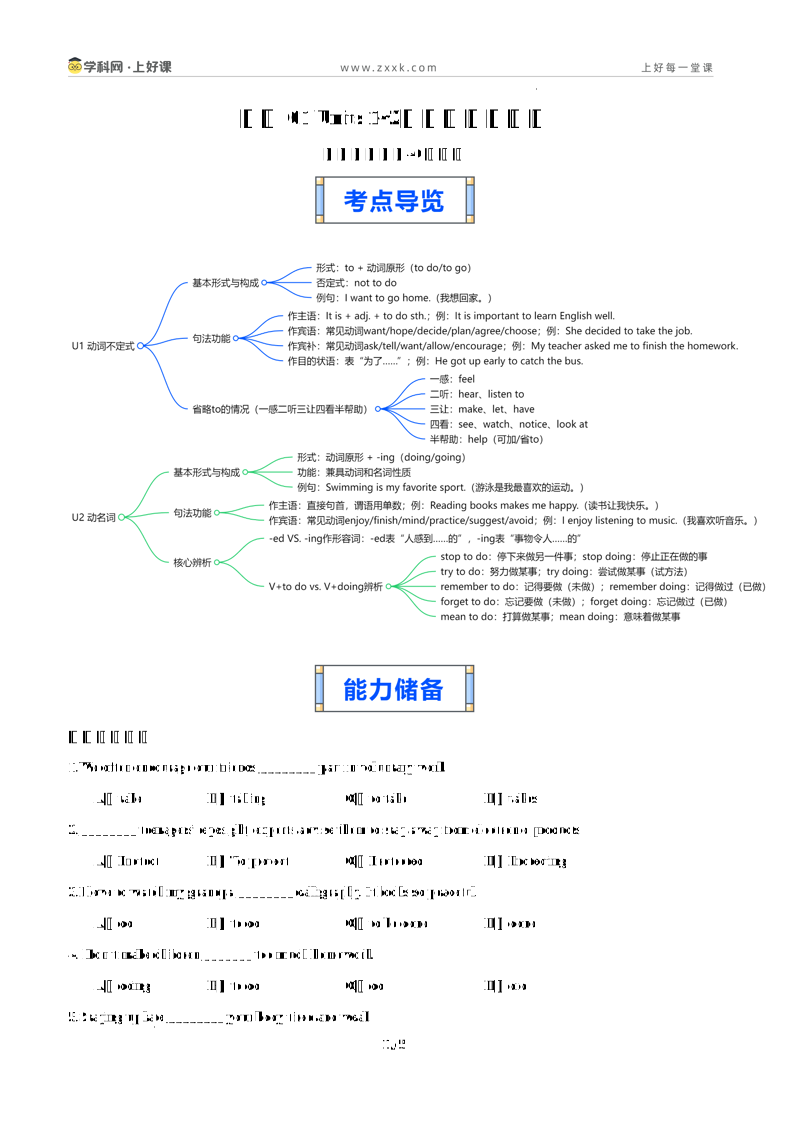
专题01 Units 1~2(语法综合练)
(建议用时:40分钟)
一、单项选择
1.We often encourage our friends ________ part in voluntary work.
A.take B.taking C.to take D.takes
【答案】C
【详解】句意:我们经常鼓励我们的朋友们参加志愿工作。
考查动词搭配。encourage sb. to do sth.意为“鼓励某人做某事”,不定式作宾语补足语,因此,空格处应填动词不定式to take,take part in意为“参加”。故选C。
2.________ teenagers’ eyesight, experts advise them to stay away from electronic products.
A.Protect B.To protect C.Protected D.Protecting
【答案】B
【详解】句意:为了保护青少年的视力,专家建议他们远离电子产品。
考查非谓语动词。Protect保护,动词原形;To protect动词不定式;Protected过去分词或过去式;Protecting现在分词或动名词。根据“...teenagers’ eyesight, experts advise them to stay away from electronic products.”可知,此处需用动词不定式表目的。故选B。
3.I love to watch my grandpa ________ calligraphy. It looks so peaceful.
A.do B.to do C.to be done D.done
【答案】A
【详解】句意:我喜欢看我的爷爷写书法。那看起来非常宁静。
考查非谓语动词。watch sb. doing sth.“看见某人正在做某事”,强调动作正在进行;watch sb. do sth.“看见某人做某事”,强调动作的全过程。根据“It looks so peaceful.”可知,此处指看爷爷写书法的整个过程,所以用省略to的不定式作宾语补足语。故选A。
4. Don’t make children _______ too much homework.
A.doing B.to do C.do D.did
【答案】C
【详解】句意:不要让孩子们做太多作业。
考查使役动词make的用法。doing正在做,进行时;to do去做,加动词不定式;do做,原形;did做过,过去式。根据“Don’t make children...too much homework”可知,make sb. do sth. 表示“让某人做某事”,后接省略to的动词原形。根据使役动词make的固定搭配,此处应使用动词原形do。故选C。
5.Staying up late ________ your body tired and weak.
A.makes B.make C.made D.making
【答案】A
【详解】句意:熬夜会使你的身体感到疲惫和虚弱。
考查时态和主谓一致。根据“Staying up late...your body tired and weak.”可知,句子陈述一般事实,用一般现在时,动名词短语“Staying up late”作主语,谓语动词用第三人称单数形式。故选A。
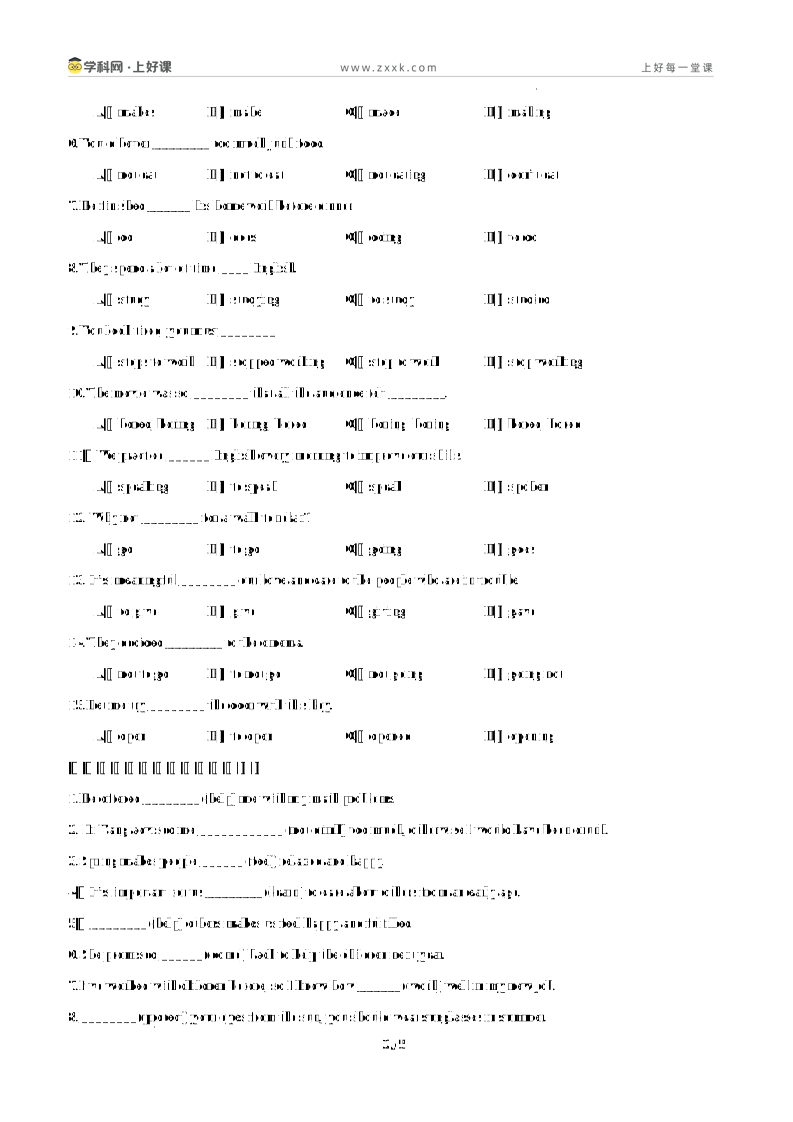
6.You’d better ________ too much junk food.
A.not eat B.not to eat C.not eating D.don’t eat
【答案】A
【详解】句意:你最好不要吃太多垃圾食品。
考查“had better”的固定用法。“had better”后接动词原形,表示“最好做某事”,其否定形式是在动词原形前加“not”,即“had better not do sth.”表示“最好不要做某事”。故选A。
7.He finished ______ his homework before dinner.
A.do B.does C.doing D.to do
【答案】C
【详解】句意:他在晚饭前完成了他的作业。
考查非谓语动词。根据“He finished...his homework before dinner.”可知,finish后接动词时,需用动名词doing形式,构成finish doing sth.“完成做某事”的固定搭配。故选C。
8.They spend a lot of time ____ English.
A.study B.studying C.to study D.studied
【答案】B
【详解】句意:他们花很多时间学习英语。
考查非谓语动词。根据“spend a lot of time”可知,此处是“spend+时间+doing sth.”结构,意为“花费时间做某事”,所以空处用动名词形式,故选B。
9.You look tired, you must________.
A.stops to work B.stopped working C.stop to work D.stop working
【答案】D
【详解】句意:你看起来很累,你必须停止工作。
考查动词短语辨析。stops to work停下来去工作;stopped working停止工作;stop to work停下来去工作;stop working停止工作。根据“You look tired”可知,因为累了,所以应该停止工作休息,而不是停下来去做另一件事。must后接动词原形。故选 D。
10.The movie was so ________ that all the audience felt ________.
A.bored; boring B.boring; bored C.boring; boring D.bored; bored
【答案】B
【详解】句意:这部电影如此无聊,以至于所有观众都感到无聊。
考查形容词辨析。bored感到无聊的,修饰人;boring令人无聊的,修饰物。第一空主语是“电影”(物),应用boring;第二空主语是“观众”(人),应用bored。故选B。
11.We practice ______ English every morning to improve our skills.
A.speaking B.to speak C.speak D.spoken
【答案】A
【详解】句意:我们每天早晨练习说英语来提高我们的技能。
考查动词短语。speaking说,动名词形式;to speak说,动词不定式形式;speak说,动词原形;spoken说,过去分词形式。根据practice doing sth.是固定搭配,意为“练习做某事”。故选A。
12. Why not ________ for a walk to relax?
A.go B.to go C.going D.goes
【答案】A
【详解】句意:为什么不去散散步放松一下呢?
考查Why not用法。由“Why not”可知,Why not后接动词原形,用来提出建议,表示“为什么不做某事”。故选A。
13. It’s meaningful ________ our love and care to the people who are in trouble.
A.to give B.give C.giving D.gave
【答案】A
【详解】句意:向那些处于困境中的人们奉献我们的爱心和关怀是有意义的。
考查非谓语动词。“It’s +形容词+to do sth.”是固定句式,含义是“做某事是……的”,A项符合。故选A。
14.They decided ________ to the cinema.
A.not to go B.to not go C.not going D.going not
【答案】A
【详解】句意:他们决定不去电影院。
考查动词不定式的否定形式。动词decide后接动词不定式作宾语,即“decide to do”,其否定形式是在不定式前加not,即“decide not to do”。故选A。
15.Let me try ________ the door with this key.
A.open B.to open C.opened D.opening
【答案】D
【详解】句意:让我试试用这把钥匙开门。
考查动词固定搭配。根据动词try的用法,try to do sth.表示“努力/试图做某事”,try doing sth.表示“尝试做某事(试验某种方法)”。本句意为“让我试试用这把钥匙开门”,强调尝试用钥匙开门这一方法,属于“尝试做某事”,应用try doing结构。故选D。
二、用所给单词的适当形式填空
1.He offered ________ (help) me with my math problems.
【答案】to help
【详解】句意:他主动帮我解答数学难题。help“帮助”,动词,offer to do sth.“主动提出做某事”,故填to help。
2. Li Yang advised me ____________ (not drink) too much, otherwise I would have been drunk.
【答案】not to drink
【详解】句意:李阳劝我不要喝太多,否则我就醉了。advise sb (not) to do sth“建议某人(不)要做某事”,根据“I would have been drunk”可知,建议不要喝太多,故填not to drink。
3.Spring makes people ______ (feel) relaxed and happy.
【答案】feel
【详解】句意:春天让人们感到放松和快乐。根据句子结构,“makes”是使役动词,常见用法有“make sb do sth”,意思是“使某人做某事”,在这个结构中,后面要接动词原形作宾语补足语。在本句中,“people”是“makes”的宾语,“feel relaxed and happy”是对“people”状态的补充说明,所以“feel”要用动词原形。故填feel。
4.It’s important for us ________ (learn) to care about others from an early age.
【答案】to learn
【详解】句意:从小学会关心别人对我们来说很重要。It’s + 形容词 + for sb. + to do sth. 是固定句型,意为“对某人来说做某事是……的”,故填to learn。
5.________ (help) others makes us feel happy and fulfilled.
【答案】Helping
【详解】句意:帮助他人让我们感到快乐和满足。根据“…others makes us feel happy and fulfilled.”的句子结构可知,空格处需填入动词的非谓语形式作主语;动名词作主语可表示抽象的、泛指的动作,符合本句表达的普遍道理,且位于句首,首字母需要大写。故填Helping。
6.She promised ______ (come) back to help the children next year.
【答案】to come
【详解】句意:她承诺明年回来帮助这些孩子。根据语境可知,promise to do sth表示“承诺做某事”,后面需要跟动词不定式(to + 动词原形)。故填to come。
7.I’ve worked with children before, so I know how ______ (work) well in my new job.
【答案】to work
【详解】句意:我以前和孩子们一起工作过,所以我知道如何在新工作中做好工作。分析句子可知,此处为how引导的宾语从句,how后面应跟to do不定式。故填to work。
8.________ (protect) your eyes from the sun, you should wear sunglasses in summer.
【答案】To protect
【详解】句意:为了保护你的眼睛免受阳光的伤害,夏天你应该戴太阳镜。protect“保护”,是动词,根据“...your eyes from the sun, you should wear sunglasses in summer.”可知,此处表示目的,用动词不定式作目的状语,用To protect。故填To protect。
9.Don’t spend too much time _______ (watch) such short videos. It’s a waste of time.
【答案】watching
【详解】句意:不要花太多时间看这类短视频。这是浪费时间。watch“观看”,spend time (in) doing sth.“花费时间做某事”,因此填动名词。故填watching。
10. Lisa suggested __________ (try) the Chinese food in this restaurant.
【答案】trying
【详解】句意:丽莎建议试试这家餐厅的中餐。根据句子结构,动词“suggest”建议后接动词作宾语时,需要使用动名词形式,这是固定用法:suggest doing sth.建议做某事。 动词“try”的动名词形式是“trying”。故填trying。
三、完成句子
1.为了传承传统文化,有些人学习非遗技艺,例如英歌舞。
Some people learn intangible cultural heritage skills ________ ________ ________ pass down traditional culture, such as Yingge Dance.
【答案】 in order to
【详解】根据中英文对照可知,此处缺少短语in order to,意为“为了,目的是”。故填in;order;to。
2. 去年夏天,我决定在当地图书馆做志愿者工作来帮助孩子们阅读。
Last summer, I decided ________ ________ ________ ________ at the local library to help kids with their reading.
【答案】 to do voluntary work
【详解】根据中英文对照可知,decide to do sth.“决定做某事”,动词短语;do voluntary work“做志愿者工作”。故填to;do;voluntary;work。
3.他主动提出教那些孩子画画来使他们振作起来。
He ________ ________ teach the children to draw to ________ ________ ________.
【答案】 offered to raise their spirits
【详解】对照中英文,offer to do“主动提出做某事”,结合句意可知,该句是一般过去时,动词填过去式offered,raise one’s spirits“振奋某人的精神”,设空处前是不定式符号to,接动词原形,此处指的是孩子们,their“他们的”符合题意。故填offered;to;raise;their;spirits。
4. 有时候,我在做某些任务时会有困难,但看到孩子们的笑脸,就觉得一切都值得了。
Sometimes, I ________ ________ ________ certain tasks, but ________ the kids’ smiling faces made everything worth it.
【答案】 had difficulty/trouble/problems doing seeing
【详解】做某事有困难:have difficulty/trouble/problems doing sth.;根据“made”可知句子用一般过去时,动词用过去式;做:do;看到:see,此处用动名词作主语。故填had;difficulty/trouble/problems;doing;seeing。
5.我们在课堂上必须注意听老师讲课。
We must ________ ________ ________ to our teachers in class.
【答案】pay attention to listening
【详解】固定短语pay attention to意为 “注意”,其中to为介词,后接动名词形式;listen to表示 “听……”,此处需将listen变为listening。故填pay; attention; to; listening。
四、语法选择
On Sunday night, I arrived in Myanmar (缅甸). The rescue team met up and we traveled all night 1 the city in suffering. The trip was long and difficult. It usually takes seven hours, 2 we needed fourteen because many roads 3 . In addition, we were stopped and checked by soldiers many times on the way. As we got closer, I saw many people lost their homes and had to sleep outside. Some stayed on the streets, and 4 slept in open fields.
When we arrived, the team started working immediately. 5 man who lost his four-floor house turned to us. He asked 6 we could help find some important papers under the remains. The team leader agreed. 7 noon, it was 42°C, but the team kept 8 . We tried our best and we made it. People in the city are very kind. Some shop owners gave us free water and said “Hello” or “China” with a thumbs (大拇指)-up.
This is my first time joining a rescue team in another country. We 9 together for a week till now. I’m 10 touched by my teammates’ kindness and hard work. In a disaster, I hope everyone stays safe, no matter who they are.
1.A.reach B.to reach C.reaching D.reached
2.A.and B.or C.but D.so
3.A.closing B.closed C.was closing D.were closed
4.A.other B.others C.the other D.another
5.A.A B.An C.The D./
6.A.when B.how C.if D.unless
7.A.In B.At C.On D.From
8.A.work B.working C.to work D.worked
9.A.worked B.were working C.have worked D.had worked
10.A.deeper B.deeply C.depth D.deep
【答案】
1.B 2.C 3.D 4.B 5.A 6.C 7.B 8.B 9.C 10.B
【导语】本文讲述了作者加入救援队前往遭遇困境的缅甸某城市参与救援的经历。
1.句意:救援队集合后,我们连夜赶路去抵达那座陷入困境的城市。
reach到达,动词原形;to reach动词不定式;reaching动名词/现在分词;reached过去式/过去分词。根据前文“we traveled all night”可知,“连夜赶路”的目的是“抵达那座城市”,动词不定式可表目的,故选B。
2.句意:这段路程通常需要7个小时,但我们却花了14个小时,因为很多道路被封锁了。
and和,表并列;or或者,表选择;but但是,表转折;so所以,表因果。根据原文“It usually takes seven hours”与“we needed fourteen”可知,通常所需时间和实际花费时间存在明显差异,二者为转折关系,需用表转折的连词,故选C。
3.句意:这段路程通常需要7个小时,但我们却花了14个小时,因为很多道路被封锁了。
closing现在分词;closed过去式/过去分词/形容词;was closing过去进行时,主语为单数;were closed一般过去时的被动语态,主语为复数。根据原文“many roads”与“close”的关系可知,道路是“被封锁”的,需用被动语态,且文章整体时态为一般过去时,主语“many roads”为复数,对应的被动语态结构为“were+过去分词”,故选D。
4.句意:一些人待在街道上,另一些人睡在空旷的田野里。
other其他的,后接名词复数;others其他人/事物,相当于“other+名词复数”;the other两者中的另一个;another三者及以上中的另一个。根据原文“Some stayed on the streets”可知,此处为“some...others...”的固定搭配,意为“一些……另一些……”,空格后无名词,需用others指代“其他的人”,故选B。
5.句意:一个失去了四层楼房的男人向我们求助。
A不定冠词,用于辅音音素开头的单词前;An不定冠词,用于元音音素开头的单词前;The定冠词,表特指;/零冠词。根据原文“man who lost his four-floor house”可知,此处泛指“一个失去房子的男人”,并非特指某一个已知的男人,且“man”是以辅音音素开头的单词,需用不定冠词A,故选A。
6.句意:他问我们是否能帮忙在废墟下找到一些重要文件。
when什么时候;how怎样;if是否;unless除非。根据原文“He asked”以及“we could help find some important papers under the remains”可知,男人是在询问“是否”能提供帮助,此处if引导宾语从句,表“是否”的含义,符合语境,故选C。
7.句意:中午时分,气温达到了42摄氏度,但救援队仍在继续工作。
In用于年、月、季节、上午/下午/晚上前;At用于具体时刻前;On用于具体日期、星期几前;From从……,常与to搭配。根据原文“noon”可知,“noon”,中午是具体时刻,需用介词At,“at noon”为固定搭配,意为“在中午”,故选B。
8.句意:中午时分,气温达到了42摄氏度,但救援队仍在继续工作。
work动词原形;working动名词/现在分词;to work动词不定式;worked过去式/过去分词。根据原文“kept”可知,“keep doing sth”为固定搭配,意为“继续做某事”,此处需用动名词working,故选B。
9.句意:到目前为止,我们已经一起工作了一周了。
worked工作,一般过去时;were working过去进行时;have worked现在完成时;had worked过去完成时。根据原文“till now”,到目前为止可知,该短语是现在完成时的标志词,现在完成时表示从过去某一时间开始,持续到现在的动作或状态,其结构为“have/has+过去分词”,主语“we”为复数,需用have worked,故选C。
10.句意:我被队友们的善良和努力工作深深打动了。
deeper更深的,形容词比较级;deeply深深地,副词,修饰情感、抽象动作;depth深度,名词;deep深的,形容词/深深地,副词,修饰具体动作。根据原文“touched”,被打动的可知,此处需用副词修饰形容词“touched”,且“touched”表达的是情感,需用deeply修饰,强调程度,故选B。
五、语法填空
A(广州新中考题型)
Eye contact means looking into other people’s eyes. This is a very important part of body language. It can be the key to communication. Eye contact can show 1 (feel) such as friendliness, interest and understanding.
In Western countries, using eye contact in conversations 2 (be) very important. If you do not use eye contact, Westerners may think that you are not listening. And if you look away, they may also think that you are lying. 3 in many Asian countries, looking down when talking with an older person, like a teacher or a parent, is polite. These differences can cause problems. For example, an Asian person might look down while listening to a Western speaker. The Western speaker might think this person is not 4 (interest) in what he or she is saying.
Not using eye contact can cause problems, but using too much is not polite either. In many countries, 5 (watch) other people, especially strangers, for a long time is impolite. This may make them feel nervous.
【答案】1.feelings 2.is 3.But 4.interested 5.watching
【导语】本文是一篇说明文,介绍了眼神交流在沟通中的重要性,并对比了中西方在眼神交流使用上的文化差异。
1.句意:眼神交流可以表达诸如友好、兴趣和理解等情感。根据“such as friendliness, interest and understanding”可知,此处列举的是各种情感,应用名词复数形式。feel是动词,其名词形式为feeling,此处用复数feelings表示多种情感。故填feelings。
2.句意:在西方国家,在谈话中使用眼神交流非常重要。句子描述客观事实,时态为一般现在时,主语“using eye contact in conversations”是动名词短语,视为单数,be动词用is。故填is。
3.句意:但在许多亚洲国家,与年长者(如老师或父母)交谈时低头是礼貌的。根据上文“在西方国家,眼神交流很重要”以及下文“在亚洲国家,低头是礼貌的”可知,前后是转折关系,应用But连接。故填But。
4.句意:西方演讲者可能会认为这个人对她/他所说的话不感兴趣。根据“in what he or she is saying”和所给词“interest”可知,此处是固定搭配be interested in,意为“对……感兴趣”,此处用形容词interested作表语。故填interested。
5.句意:在许多国家,长时间注视他人,尤其是陌生人,是不礼貌的。根据“In many countries…other people, especially strangers, for a long time is impolite.”可知,句中应是动名词短语作主语,watch的动名词为watching。故填watching。
B(深圳中考题型)
阅读下面短文,在空白处填入一个适当的单词或括号内单词的正确形式。
In China, the peony (牡丹) is called “the flower of riches and honours” or “the king of flowers”. The city of Heze in 1 (east) China’s Shandong Province is known 2 the “peony capital” of the country. Recently, peonies in Heze entered blooming season, which lasts for seven to ten days. But over the years, some local craftspeople 3 (keep) the beauty of the flowers in a special way. Using their hands, they make crochet (钩针编织) artworks of peony flowers.
A 68-year-old woman from Shandong Province now teaches crocheting online and offline. She has made crochet artworks 4 about 50 years.
“It often takes me one week 5 (finish) a crochet artwork, but I never feel tired of it,” the old woman said.
There are different 6 (kind) of colourful products in the old woman’s workshop. As you can see, some of them are traditional and some of them are fashionable. They can be used as decorations (装饰品) for homes or as toys for children.
The old woman is warm-hearted. In 7 (she) free time, she teaches women villagers to make crochet artworks. She helps them to make 8 (much) money than before.
The old woman has 9 factory of her own. Now she 10 (do) her best to develop some new products.
【答案】
1.eastern 2.as 3.have kept 4.for 5.to finish 6.kinds 7.her 8.more 9.a 10.is doing
【导语】本文主要介绍了山东菏泽一位68岁的老妇人通过钩针编织牡丹艺术品,并帮助村民增加收入的故事。
1.句意:中国东部山东省的菏泽市被称为该国的“牡丹之都”。设空处修饰“China’s Shandong Province”,需用形容词形式。east的形容词形式为eastern,表示“东部的”。故填eastern。
2.句意:中国东部山东省的菏泽市被称为该国的“牡丹之都”。be known as“被称为”,固定短语。故填as。
3.句意:但多年来,一些当地手工艺人以独特的方式保留了这些花朵的美丽。根据“over the years”可知,时态用现在完成时have/has done,主语是复数,助动词用have。故填have kept。
4.句意:她制作钩针艺术品已有约50年。根据“about 50 years.”可知,是“for+一段时间”,表示动作持续的时间。故填for。
5.句意:完成一件钩针艺术品通常需要一周时间。It takes sb time to do sth“做某事花某人多少时间”。故填to finish。
6.句意:在老妇人的工作坊里有不同种类的彩色产品。different后跟名词复数形式。故填kinds。
7.句意:闲暇时,她教村里的女性村民制作钩织艺术品。空处修饰名词短语free time,用形容词性物主代词。故填her。
8.句意:她帮助她们赚取比以往更多的钱。根据“than before”可知,需用比较级,much的比较级是more。故填more。
9.句意:这位老妇人拥有自己的工厂。“factory”为单数可数名词,且首次提到,用不定冠词a。故填a。
10.句意:现在她正尽力开发一些新产品。根据“Now”可知,时态用现在进行时am/is/are doing,主语是she,用is doing。故填is doing。
阅读短文,在空白处填入一个适当的单词或用括号内所给词的正确形式填空,使短文通顺、连贯。
1 / 5
学科网(北京)股份有限公司
$
专题01 Units 1~2(语法综合练)
(建议用时:40分钟)
一、单项选择
1.We often encourage our friends ________ part in voluntary work.
A.take B.taking C.to take D.takes
2.________ teenagers’ eyesight, experts advise them to stay away from electronic products.
A.Protect B.To protect C.Protected D.Protecting
3.I love to watch my grandpa ________ calligraphy. It looks so peaceful.
A.do B.to do C.to be done D.done
4. Don’t make children _______ too much homework.
A.doing B.to do C.do D.did
5.Staying up late ________ your body tired and weak.
A.makes B.make C.made D.making
6.You’d better ________ too much junk food.
A.not eat B.not to eat C.not eating D.don’t eat
7.He finished ______ his homework before dinner.
A.do B.does C.doing D.to do
8.They spend a lot of time ____ English.
A.study B.studying C.to study D.studied
9.You look tired, you must________.
A.stops to work B.stopped working C.stop to work D.stop working
10.The movie was so ________ that all the audience felt ________.
A.bored; boring B.boring; bored C.boring; boring D.bored; bored
11.We practice ______ English every morning to improve our skills.
A.speaking B.to speak C.speak D.spoken
12. Why not ________ for a walk to relax?
A.go B.to go C.going D.goes
13. It’s meaningful ________ our love and care to the people who are in trouble.
A.to give B.give C.giving D.gave
14.They decided ________ to the cinema.
A.not to go B.to not go C.not going D.going not
15.Let me try ________ the door with this key.
A.open B.to open C.opened D.opening
二、用所给单词的适当形式填空
1.He offered ________ (help) me with my math problems.
2. Li Yang advised me ____________ (not drink) too much, otherwise I would have been drunk.
3.Spring makes people ______ (feel) relaxed and happy.
4.It’s important for us ________ (learn) to care about others from an early age.
5.________ (help) others makes us feel happy and fulfilled.
6.She promised ______ (come) back to help the children next year.
7.I’ve worked with children before, so I know how ______ (work) well in my new job.
8.________ (protect) your eyes from the sun, you should wear sunglasses in summer.
9.Don’t spend too much time _______ (watch) such short videos. It’s a waste of time.
10. Lisa suggested __________ (try) the Chinese food in this restaurant.
三、完成句子
1.为了传承传统文化,有些人学习非遗技艺,例如英歌舞。
Some people learn intangible cultural heritage skills ________ ________ ________ pass down traditional culture, such as Yingge Dance.
2. 去年夏天,我决定在当地图书馆做志愿者工作来帮助孩子们阅读。
Last summer, I decided ________ ________ ______ ________ at the local library to help kids with their reading.
3.他主动提出教那些孩子画画来使他们振作起来。
He ________ ________ teach the children to draw to ________ ________ ________.
4. 有时候,我在做某些任务时会有困难,但看到孩子们的笑脸,就觉得一切都值得了。
Sometimes, I ________ _____ ______ certain tasks, but ______ the kids’ smiling faces made everything worth it.
5.我们在课堂上必须注意听老师讲课。
We must ________ ________ ________ to our teachers in class.
四、语法选择
On Sunday night, I arrived in Myanmar (缅甸). The rescue team met up and we traveled all night 1 the city in suffering. The trip was long and difficult. It usually takes seven hours, 2 we needed fourteen because many roads 3 . In addition, we were stopped and checked by soldiers many times on the way. As we got closer, I saw many people lost their homes and had to sleep outside. Some stayed on the streets, and 4 slept in open fields.
When we arrived, the team started working immediately. 5 man who lost his four-floor house turned to us. He asked 6 we could help find some important papers under the remains. The team leader agreed. 7 noon, it was 42°C, but the team kept 8 . We tried our best and we made it. People in the city are very kind. Some shop owners gave us free water and said “Hello” or “China” with a thumbs (大拇指)-up.
This is my first time joining a rescue team in another country. We 9 together for a week till now. I’m 10 touched by my teammates’ kindness and hard work. In a disaster, I hope everyone stays safe, no matter who they are.
1.A.reach B.to reach C.reaching D.reached
2.A.and B.or C.but D.so
3.A.closing B.closed C.was closing D.were closed
4.A.other B.others C.the other D.another
5.A.A B.An C.The D./
6.A.when B.how C.if D.unless
7.A.In B.At C.On D.From
8.A.work B.working C.to work D.worked
9.A.worked B.were working C.have worked D.had worked
10.A.deeper B.deeply C.depth D.deep
五、语法填空
A(广州新中考题型)
Eye contact means looking into other people’s eyes. This is a very important part of body language. It can be the key to communication. Eye contact can show 1 (feel) such as friendliness, interest and understanding.
In Western countries, using eye contact in conversations 2 (be) very important. If you do not use eye contact, Westerners may think that you are not listening. And if you look away, they may also think that you are lying. 3 in many Asian countries, looking down when talking with an older person, like a teacher or a parent, is polite. These differences can cause problems. For example, an Asian person might look down while listening to a Western speaker. The Western speaker might think this person is not 4 (interest) in what he or she is saying.
Not using eye contact can cause problems, but using too much is not polite either. In many countries, 5 (watch) other people, especially strangers, for a long time is impolite. This may make them feel nervous.
B(深圳中考题型)
阅读下面短文,在空白处填入一个适当的单词或括号内单词的正确形式。
In China, the peony (牡丹) is called “the flower of riches and honours” or “the king of flowers”. The city of Heze in 1 (east) China’s Shandong Province is known 2 the “peony capital” of the country. Recently, peonies in Heze entered blooming season, which lasts for seven to ten days. But over the years, some local craftspeople 3 (keep) the beauty of the flowers in a special way. Using their hands, they make crochet (钩针编织) artworks of peony flowers.
A 68-year-old woman from Shandong Province now teaches crocheting online and offline. She has made crochet artworks 4 about 50 years.
“It often takes me one week 5 (finish) a crochet artwork, but I never feel tired of it,” the old woman said.
There are different 6 (kind) of colourful products in the old woman’s workshop. As you can see, some of them are traditional and some of them are fashionable. They can be used as decorations (装饰品) for homes or as toys for children.
The old woman is warm-hearted. In 7 (she) free time, she teaches women villagers to make crochet artworks. She helps them to make 8 (much) money than before.
The old woman has 9 factory of her own. Now she 10 (do) her best to develop some new products.
1 / 5
学科网(北京)股份有限公司
$
资源预览图
1
2
所属专辑


相关资源
由于学科网是一个信息分享及获取的平台,不确保部分用户上传资料的 来源及知识产权归属。如您发现相关资料侵犯您的合法权益,请联系学科网,我们核实后将及时进行处理。