Unit 2 Stay Healthy Section A (3a-3d) 教学设计 2025-2026学年人教版八年级英语下册
2026-03-04
|
6页
|
1518人阅读
|
34人下载
普通
摘要:
该初中英语教学设计聚焦“描述流感症状及就医建议”核心知识点,通过歌曲与TPR活动激活身体部位、感觉词汇,结合预测Helen病情任务建立新旧知识联系,用表格整理症状与建议作为学习支架,衔接阅读输入与语言表达。
特色在于融合核心素养,文化意识通过戴口罩讨论渗透社会责任,思维品质体现在分析健康建议与恢复的因果关系,学习能力通过分层作业和合作角色扮演提升。病症卡任务与健康承诺活动让语言学习贴近生活,助力学生提升语言应用能力与健康意识,为教师提供结构化教学流程与分层支持。
内容正文:
课题
Unit 2 Stay Healthy
Section A (3a-3d)
学段
初中
年级
八
课型
阅读&听说课
课时
2
学科
English
单元
主题分析
本单元属于“人与自我”范畴,涉及“身心健康,抗挫能力,珍爱生命的意识”子主题内容,围绕身体健康管理与自我关怀展开,具有极强的现实意义与教育价值。单元内容从识别健康问题、给予合理建议,到探讨健康生活方式,形成了一个从认识到行动的完整逻辑链条。此外,该主题自然融入了情感关怀与责任意识,体现了学科育人的理念。
文本解读
What:本课时是人教版新版八年级下册第二单元Stay Healthy的第二课时,本课时围绕Helen与医生的对话展开,主要描述Helen因出现流鼻涕、发烧、喉咙痛等症状前去看病的过程。医生通过检查与对话诊断她患有流感,并给出相应的治疗建议与健康指导。
Why:该文本旨在帮助学生学习如何用英语描述常见病症,并理解在就医场景中如何询问病情、给予健康建议。通过对话形式,引导学生关注健康意识,学会在流感季节采取自我保护措施,同时传递“健康掌握在自己手中”的积极理念。
How:文本采用医患对话的体裁,语言口语化、情境真实,通过重复使用“I have.../My...hurts”等结构强化症状描述,配合“should/ shouldn’t”等情态动词给出建议,便于学生模仿与记忆。课后练习以表格归纳、角色扮演等形式,鼓励学生从输入到输出,在模拟交际中整合运用所学表达,提升语言综合应用能力。
学情分析
1.已有知识经验
学生在日常生活与以往英语学习中已接触过部分身体部位词汇及基础疾病相关表达,对“should/shouldn’t”表示建议的句型有一定了解。他们熟悉简单对话的基本结构,能够进行基础的日常问答,并具备初步从听力或阅读文本中提取关键信息的能力。
2.潜在学习难点
描述症状时容易混淆“have a+名词”与“my+身体部位+hurts”两种结构,也可能在搭配使用runny nose、sore throat等固定短语时出现错误。
3.教学支持建议
利用表格、思维导图等工具帮助学生分类整理“症状描述”与“医生建议”的常用句型,并通过句型替换练习强化固定搭配。
教学目标
语言
能力
Students will be able to describe common flu symptoms and understand and use simple medical advice in a doctor-patient role-play.
文化意识
Students will recognize and appreciate the common practice of wearing masks during flu season as a socially responsible act to prevent spreading illness to others.
思维品质
Students will practice critical thinking by analyzing the cause-and-effect relationship between health advice and recovery, and by discussing the rationale behind preventative measures like mask-wearing.
学习能力
Students will enhance their ability to learn autonomously by using structured tables to organize key language from the dialogue and develop cooperative learning skills through pair and group work during role-play activities.
教学
重难点
教学重点
Students will extract specific information from the conversation to complete a notes table.
教学难点
Students will learn to connect textbook language with real-life health situations, fostering transferable learning strategies.
教学过程设计
教学环节
教师活动
学生活动
设计意图
Step 1
Lead-in
1.Teacher plays a short and catchy song about feelings and body parts.Teacher sings along and performs gestures for happy,sad,tired,cold, headache.
2.After the song, teacher mimes having a runny nose and sore throat, asking the class,"How do I feel? Do I look good?" Elicits responses like "No, you are sick."
1.Students watch, listen, and are encouraged to sing and mimic the gestures.
2.Students try to guess teacher's mimed illness and respond to the questions.
利用歌曲和肢体语言激活课堂,营造轻松氛围。通过TPR(全身反应法)复习或引入与感觉、身体部位相关的词汇,为新课做铺垫。教师的表演自然引出“生病”的主题,激发学生的学习兴趣和已有经验。
Step 2
Pre-reading
1.Teacher shows picture flashcards of key symptoms from the dialogue (runny nose, fever, sore throat, feel cold, no energy). Says the words/phrases clearly and has students repeat.
2.Teacher writes the lesson's main question on the board: "What's the matter with Helen?" Asks students to look at the picture of Helen and guess her problems using the new vocabulary. Teacher writes plausible guesses on the board.
3.T:"Now, let's read the conversation between Helen and her doctor. Check your predictions!"
1.Students repeat the vocabulary chorally and individually, associating them with the pictures.
2.In pairs, students look at the picture and discuss their predictions about Helen's illness. 3.Students prepare to read with a clear purpose.
此环节旨在扫除阅读中的词汇障碍,通过图片和预测活动,将学生置于主动学习的位置。预测活动不仅激活思维,还创造了“信息差”,让学生带着验证的目的去阅读,提高阅读的专注度和目的性。
Step 3
While-reading
Work on 3a
Fast reading
1.Teacher has students read the conversation in 3a. Asks the gist question: "Was your prediction correct? What's the matter with Helen?" 2.Teacher leads students to check answers.
Work on 3b
Careful reading
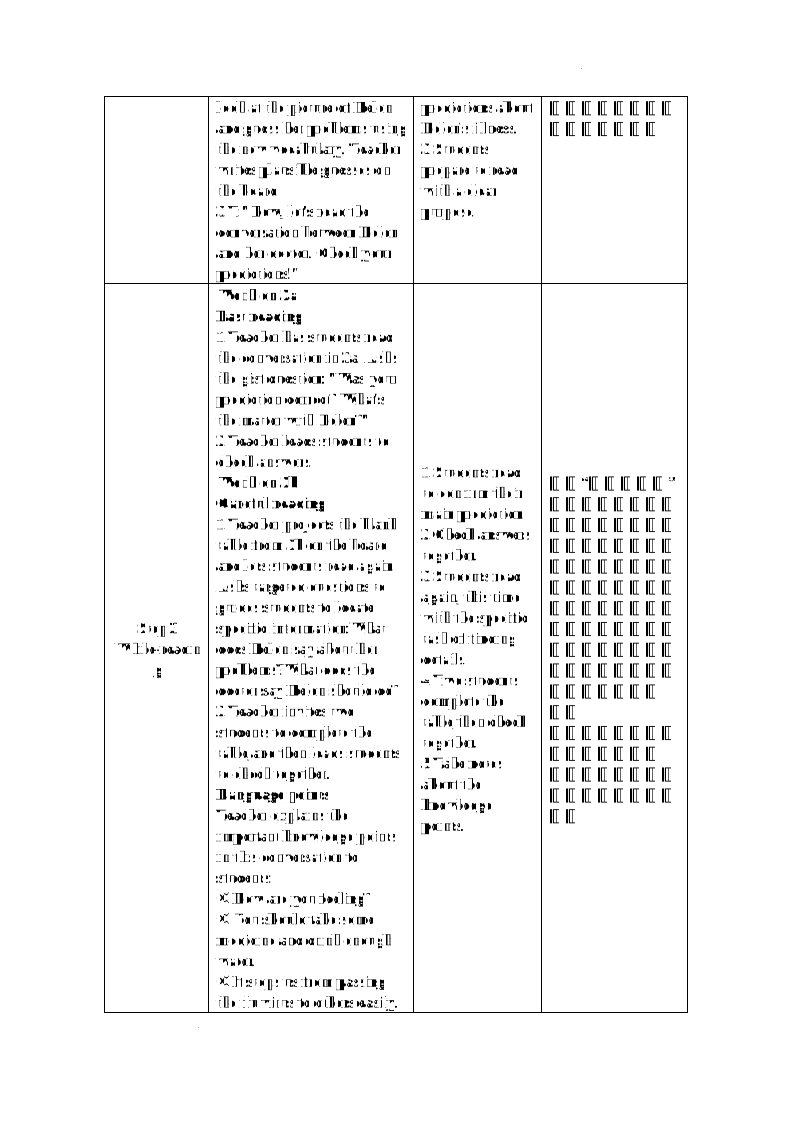
1.Teacher projects the blank table from 3b on the board and lets students read again. Asks targeted questions to guides students to locate specific information:What does Helen say about her problems?What does the doctor say Helen should do?
2.Teacher invites two students to complete the table,and then leads students to check together.
Language points
Teacher explains the important knowledge points in this conversation to students:
①How are you feeling?
②You should take some medicine and drink enough water.
③It stops us from passing the flu virus to others easily.
1.Students read to confirm their main prediction.
2.Check answers together.
3.Students read again, this time with the specific task of finding details.
4.Two students complete the table,then check together.
5.Take notes about the knowledge points.
遵循“整体到细节”的阅读教学原则,第一遍抓主旨,验证预测,建立整体理解;第二遍通过完成表格的任务驱动,引导学生进行细节查找和筛选信息,培养其信息处理能力,并为后续语言输出搭建支架。
教师通过向学生讲解对话里的知识点,增加学生的语法储备,为做题铺路。
Step 4
Post-reading
Work on 3c
1.Teacher plays the recording of 3a, asks students to follow the reading, paying attention to the intonation and tone.
2.Teacher highlights key functional sentences. Models the intonation for showing concern ("How are you feeling?") and giving strong advice ("You should rest at home."). Uses back-chaining drilling for longer sentences.
3.Teacher invites several pairs of students to role-play.
1.Listen and repeat, pay attention to the intonation and tone.
2.Students unscramble the sentences, reinforcing sentence structure for giving advice.
3.Students role play like a caring doctor and a sick patient.
语音语调训练是角色扮演成功的关键,通过教师示范和同伴练习,帮助学生掌握交际中的语言韵律,使后续的输出更真实、自然。
Step 5
Production
Work on 3d
1.Teacher sets up different "stations" in the classroom with different "illness cards" (eg,a card with a picture of a cough and stomachache; another with a headache and fever).
2.Teacher provides the language framework from 3d on the screen, but encourages expansion.Models a new conversation with a student assistant,using a different illness card.
3.T:"Now, it's your turn! In pairs, one is the doctor, one is the patient. Choose an illness card. Use our language to have a conversation. Doctors, be kind! Patients, act your symptoms!"
1.Students choose an illness card which gives the patient a specific set of symptoms.
2.Students practice their role-play based on the model and the language framework. 3.Several volunteer pairs perform their role-play in front of the class.
这是本节课语言综合运用的产出环节,设置不同的“病症卡”增加了任务的多样性和趣味性,避免了所有对话雷同。情境的真实性和道具(卡片)能极大激发学生的参与度和创造力。在支架下进行,确保语言使用的准确性,同时鼓励能力强的学生进行适当拓展。
Step 6
Summary
1.Teacher draws a big heart on the board with the phrase "Our Health is in Our Hands!" inside and asks reflective questions:"What did we learn today? What should you do if you have the flu? Why is wearing a mask important?" Summarizes key language and the cultural message about responsibility.
2.Teacher asks each student to say one "health promise" (eg,I promise to wash my hands./I promise to drink more water.).Teacher writes a few on the heart poster.
1.Students answer the reflection questions, consolidating lesson content.
2.Students think of a simple, personal health promise and share it with the class.
总结环节超越语言知识,提炼本课的健康主题和文化意识(社会责任)。通过制作“健康承诺”海报的集体活动,将课堂所学与学生的个人生活联系起来,实现情感态度价值观的教育目标。
Step 7
Homework
Level A:Create 5 flashcards.On one side, draw a picture of a health problem.On the back, write a piece of doctor's advice. Use your flashcards to practice saying the sentences aloud to yourself or a family member.
Level B:Imagine you were not feeling well yesterday. Write a short diary entry (6-8 sentences) describing your "illness."
Include:At least 3 symptoms using "I have..." or "My... hurts.";2 pieces of advice you would follow.
Level C:It's flu season! Your task is to write a short script (8-12 lines) for a video PSA (Public Service Announcement) to remind students at your school how to stay healthy and what to do if they get sick.
本作业设计遵循分层理念,满足不同水平学生的需求,强化核心词汇与句型记忆;模拟真实情境中的结构化输出;鼓励学生综合运用所学进行创造性表达,并融入健康意识与社会责任感。各层任务指向明确,兼具趣味性与实践性。
板书设计
Unit 2 Stay Healthy
Section A (3a-3d)
教学反思
1、 成功之处:
1.思维支架搭建牢固:教学遵循了“预测-验证-提取-归纳-应用”的认知路径。特别是利用表格引导学生从对话中分类整理症状与建议,为学生自主产出提供了清晰的语言和逻辑框架,降低了表达焦虑。
2.核心素养有机融合:在语言学习之外,通过讨论为何戴口罩,自然渗透了公共卫生意识与社会责任感的培养。角色扮演后的健康承诺环节,巧妙地将语言知识转化为个人行动反思,体现了学科的育人价值。
二、存在问题:
1.语言产出的深度与广度不足:多数学生在角色扮演中能熟练运用课本句型,但对话内容略显单一,拓展性表达不足,这表明对中高层次学生的语言“拉伸”和支持还不够。
2.评价方式较为单一:课堂评价主要集中在教师口头反馈和最终的角色扮演展示上,缺乏更系统、多维的形成性评价。
三、改进措施:
1.实施更具差异化的过程支持:准备不同难度的“角色支持卡”。对基础较弱的学生,提供带有句首提示或关键词的卡片;对能力较强的学生,提供“挑战卡”,要求他们解决更复杂的情境(如病人很担心、病人不想请假等)。
2.构建多元的形成性评价体系:在总结环节,不仅展示优秀表演,也设立“最佳合作奖”、“最有创意建议奖”等,从多角度肯定学生的努力和闪光点,让评价成为促进学习的工具。
学科网(北京)股份有限公司
$
资源预览图

1

2
3

相关资源
示范课
由于学科网是一个信息分享及获取的平台,不确保部分用户上传资料的 来源及知识产权归属。如您发现相关资料侵犯您的合法权益,请联系学科网,我们核实后将及时进行处理。