Unit 7 Lesson 4 Needs or wants-【绿卡初中创新题】2025-2026学年八年级下册英语习题课件(冀教版·新教材)河北专版
2026-04-06
|
16页
|
61人阅读
|
0人下载
教辅
资源信息
| 学段 | 初中 |
|---|---|
| 学科 | 英语 |
| 教材版本 | 初中英语冀教版八年级下册 |
| 年级 | 八年级 |
| 章节 | Lesson 4 Needs or wants? |
| 类型 | 课件 |
| 知识点 | - |
| 使用场景 | 同步教学-新授课 |
| 学年 | 2026-2027 |
| 地区(省份) | 河北省 |
| 地区(市) | - |
| 地区(区县) | - |
| 文件格式 | PPTX |
| 文件大小 | 2.33 MB |
| 发布时间 | 2026-04-06 |
| 更新时间 | 2026-04-06 |
| 作者 | 山东绿卡教育科技有限公司 |
| 品牌系列 | 绿卡创新题·初中系列 |
| 审核时间 | 2026-02-27 |
| 下载链接 | https://m.zxxk.com/soft/56582488.html |
| 价格 | 2.00储值(1储值=1元) |
| 来源 | 学科网 |
摘要:
该初中英语课件围绕Unit 7 The value of money中“需求与欲望”主题,通过词汇变形、语法填空、句子翻译等基础练习,过渡到完形填空和阅读理解的语篇应用,搭建从语言知识到综合运用的学习支架,帮助学生系统掌握相关内容。
其亮点在于融合文化意识与思维品质,如地域特色“长信宫灯”句子翻译、俗语“no smoke without fire”运用,培养文化理解;通过购物情境完形填空分析needs与wants,阅读理解“有意识消费”引导价值判断,提升思维层次。练习设计分层明确,助力学生语言能力与学习能力发展,教师可直接用于教学,提高效率。
内容正文:
Unit 7 The value of money
Lesson 4: Needs or wants?
2
练基础
目 录
练提升
3
练基础
一、用括号内所给单词的适当形式填空
1. After seeing the movie, all of us felt ____________ (disappoint) about the ending.
2. We need to understand ourselves better so that we can make a better ________
(decide).
3. After years of hard work, he finally got the job he ________(desire).
4. In the new clothing store, there are many nice ________(blouse) for girls.
5. Could you wait ________(patient) for a few minutes? I’ll finish this work soon.
disappointed
decision
desired
blouses
patiently
目 录 导 航
二
三
一
四
五
六
4
6. She thought ________ a moment before she gave me her answer.
7. What do you mean ________ that strange word?
8. I finished all the homework ________ was very difficult.
9. [俗语运用]As the saying goes, “There is no smoke ________ fire.”
10. He likes eating sweet food, but ________ the other hand, he also knows it’s not good for health.
二、在空白处填入一个适当的单词
for
by
that
without
on
目 录 导 航
二
三
一
四
五
六
5
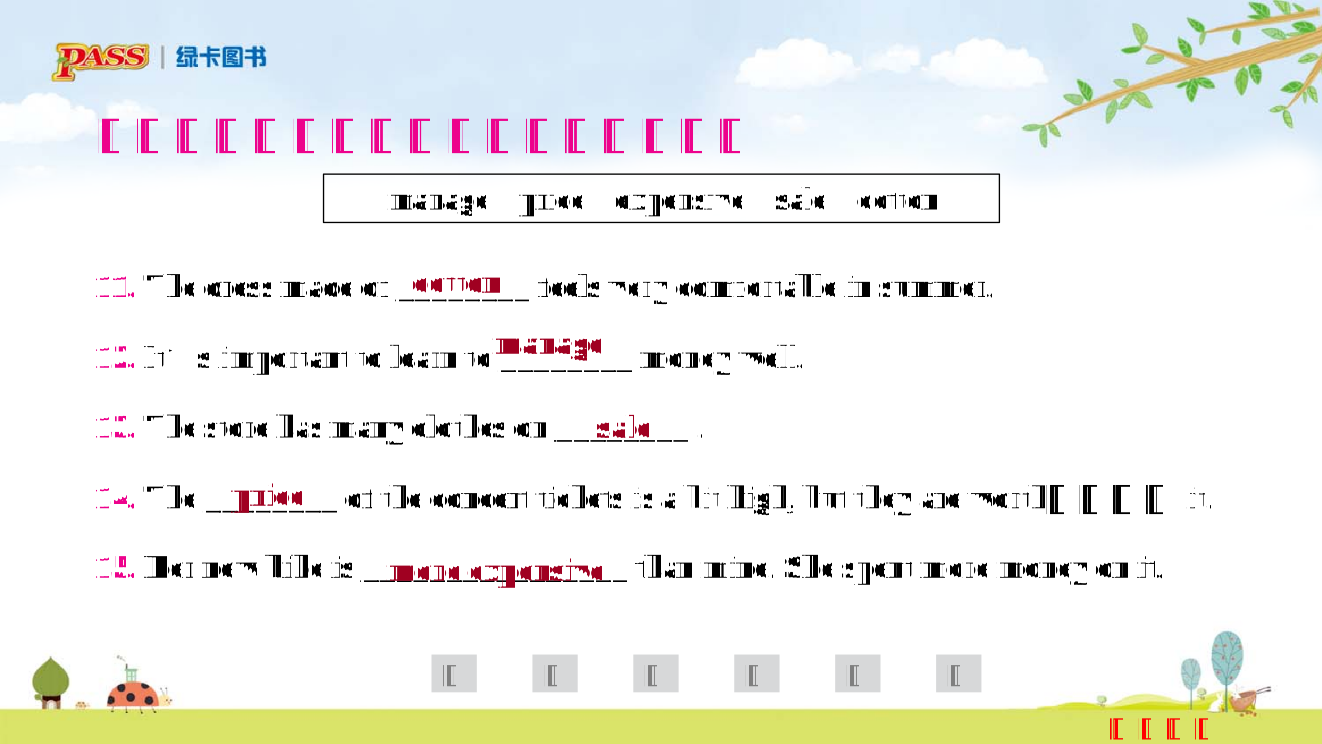
11. The dress made of ________ feels very comfortable in summer.
12. It’s important to learn to ________ money well.
13. The store has many clothes on ________ .
14. The ________ of the concert tickets is a bit high, but they are worth(值得) it.
15. Her new bike is ________________ than mine. She spent more money on it.
三、用方框内所给单词的适当形式填空
manage price expensive sale cotton
cotton
manage
sale
price
more expensive
目 录 导 航
二
三
一
四
五
六
6
16. 露西很想知道河北省图书馆的历史。
Lucy is ________ ________ ________ the history of Hebei Library.
17. 老人坐在他的椅子上,沉默且孤独。
The old man sat in his chair, ________ ________ ___________.
18. [地域特色]长信宫灯提醒我们,一些古老的东西至今仍能给人们带来惊喜。
The Changxin Palace Lamp ________ ________ ________ some ancient things can still surprise people today.
四、根据汉语意思完成句子或仿写句子
curious to know
silent and alone/lonely
reminds us that
目 录 导 航
二
三
一
四
五
六
7
19. 你可以通过输入你的密码打开大门。
You can open the gate ________ ________ ________ ________.
20. Before buying something, we should consider our needs and wants.(根据教材原句仿写)
仿写 在去超市前,我们可以做一个清单。
___________________________________________________________________
by entering your code
Before going to the supermarket, we could/can make a list.
目 录 导 航
二
三
一
四
五
六
8
五、完形填空
(教材精研题)One sunny Saturday morning, Emma was super excited. She heard there was a big 21 at a store near her home. “Let’s go 22 ! All the prices are so low!” she said to her mum, Mrs Carson.
They walked to the store 23 . Inside, Emma’s eyes were busy. She saw a pretty cotton dress, a nice blouse, and some cool shoes. But Mrs Carson 24 her, “Honey, do we really need these? Let’s think first.”
Emma was a bit 25 . “But they look so good!” she said. Then Mrs Carson smiled and asked, “Is this a need or a want? Needs are things we must have, like
练提升
目 录 导 航
二
三
一
四
五
六
food and 26 . Wants are things we 27 but can live without.”
Emma thought for a 28 . The dress and blouse were pretty, but she already had many like them. The shoes? Her old ones still worked. She remembered her friend Lily 29 a new notebook. So she bought a notebook for Lily and a pencil box for herself.
Mrs Carson hugged her, “You’re 30 , my girl. You know how to manage money better. You can make good decisions about money now.”
目 录 导 航
二
三
一
四
五
六
21. A. band B. block C. sale D. mess
22. A. shopping B. boating C. swimming D. skating
23. A. sadly B. angrily C. thankfully D. happily
24. A. called B. reminded C. avoided D. encouraged
25. A. disappointed B. tired C. scared D. bored
26. A. trading B. cycling C. clothing D. acting
27. A. desire B. hate C. remember D. trust
28. A. second B. start C. reason D. goal
29. A. needed B. invented C. refused D. sold
30. A. coming back B. growing up C. falling down D. waking up
C
A
D
B
A
C
A
A
A
B
目 录 导 航
二
三
一
四
五
六
六、阅读理解
Have you ever heard of “conscious(有意识的) spending”?According to Ramit Sethi, conscious spending is all about spending money on the things you truly value and cutting costs as much as possible on the things you don’t need. It’s about knowing what you really want and then spending your money on the things you need.
The term “conscious spending” suggests that people experience unconscious spending nowadays. It’s almost like unconscious eating. We don’t make a plan, and we’re not really paying much attention, especially when using credit cards.
The most important way to deal with unconscious spending is asking yourself some questions. Where has my money been going? What do I love spending
目 录 导 航
二
三
一
四
五
六
money on and why? How much do I need for the things I must have, such as food and bills? How much do I want to save and why? How much do I want to keep for unimportant buys, such as coffee with a friend or a movie ticket?
▲ Your answers to these questions agree with what Sethi calls “rich life”— the life that is special to you and not influenced by what anyone else thinks you should do.
When you’ve already thought about what you really want, you will no longer have to feel worried or unsure about how you spend your money.
目 录 导 航
二
三
一
四
五
六
31. What is conscious spending according to Ramit Sethi?
A. Spending money as much as possible.
B. Buying things with credit cards.
C. Spending money on things properly.
D. Buying a lot of things you really like.
32. What do the underlined words “deal with” in paragraph 3 probably mean?
A. Find. B. Share. C. Waste. D. Manage.
C
D
目 录 导 航
二
三
一
四
五
六
33. [句子还原]Which of the following can be the best to fill in “ ▲ ” in paragraph 4?
A. Answering these questions can benefit you a lot.
B. You will never find answers to these questions.
C. Don’t care so much about your money.
D. Conscious spending is useful to you.
34. Where is the text most probably from?
A. A travel guide. B. A life magazine.
C. Sports news. D. A story book.
A
B
目 录 导 航
二
三
一
四
五
六
16
$
资源预览图

1

2

3

4

5
6
相关资源
由于学科网是一个信息分享及获取的平台,不确保部分用户上传资料的 来源及知识产权归属。如您发现相关资料侵犯您的合法权益,请联系学科网,我们核实后将及时进行处理。