Unit 3 单元语法专练 2025-2026学年北师大版英语八年级下册
2026-02-22
|
6页
|
151人阅读
|
2人下载
内容正文:
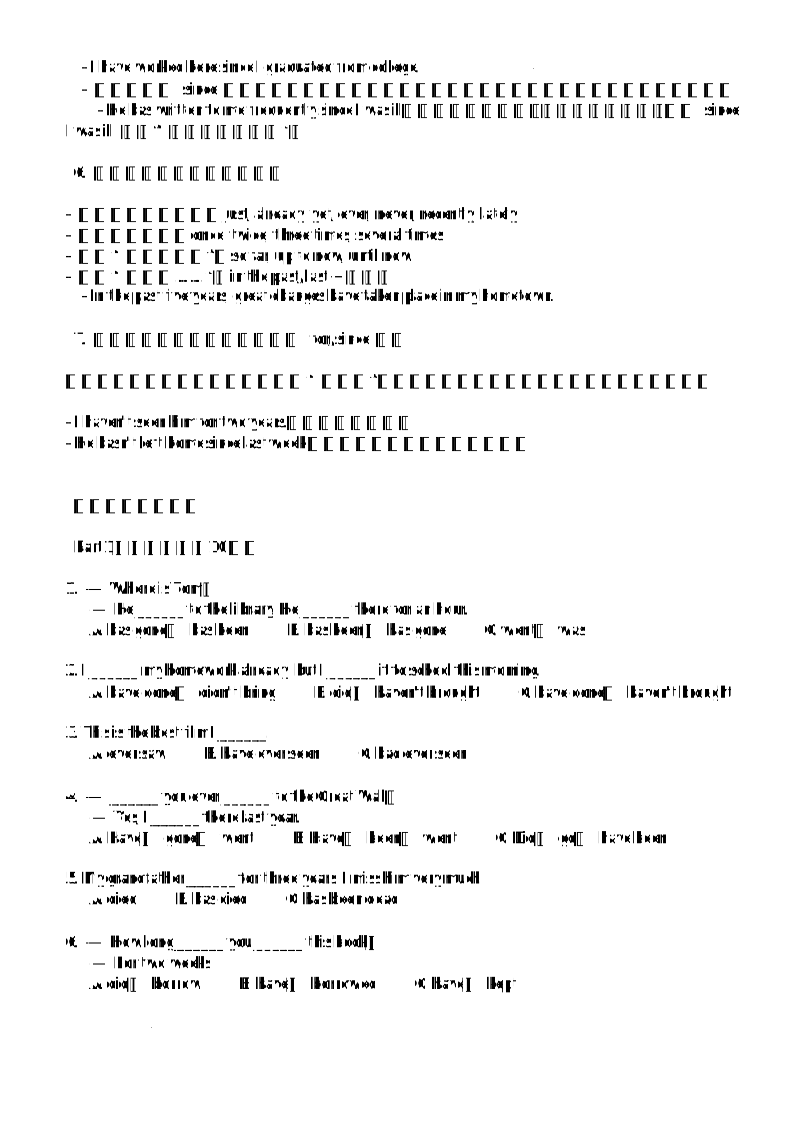
北师大版8下第三单元语法专练 现在完成时 一、现在完成时的核心 1. 四种主要用法 用法 含义 典型时间状语 例句 已完成 动作在过去完成,但对现在有影响或结果 just, already, yet, recently, lately I've just finished my homework.(作业刚做完,现在可以休息) 经历/经验 过去发生过,强调曾经有过这样的经历 ever, never, before, once, twice, three times She has never been to Japan.(她从未去过日本) 持续性 动作或状态从过去开始,一直持续到现在,还可能继续 for + 时间段, since + 时间点/从句 They have lived here since 2000.(从2000年一直住到现在) 重复性 到目前为止,动作重复发生多次 several times, often, always He has called me three times this morning.(今天早上已经打了三次) 注意:当使用持续性用法时,谓语动词必须是延续性动词。 2. 现在完成时与一般过去时的区别 比较点 现在完成时 一般过去时 关注点 强调过去动作与现在的联系(结果、影响、持续) 只陈述过去的事实,与现在无关 时间状语 不能与具体的过去时间连用(如yesterday, last week, in 2010) 常与具体的过去时间连用 例句对比 I have lost my key.(现在还没找到,进不了门) I lost my key yesterday.(昨天丢了,可能已找到) 句型标志 ever, never, just, already, yet, for, since, so far, recently ago, last..., yesterday, in 1990, just now 判断技巧:问句中如果有具体的过去时间,用一般过去时;如果没有具体时间,且强调影响,用现在完成时。 3. 短暂动词与延续性动词的转换 短暂动词(也叫终止性动词、瞬间动词)表示的动作不能持续,因此不能与for + 时间段或since连用。若要表达“动作持续了多久”,必须改为相应的延续性动词或状态。 常见转换表: 短暂动词 延续性动词/短语 buy have borrow keep become be begin/start be on stop be over leave be away (from) arrive/get to/reach be in/at die be dead join be in / be a member of open be open close be closed marry be married catch a cold have a cold 例句: - 错误:He has bought the car for two years. - 正确:He has had the car for two years. - 错误:I have borrowed the book since last week. - 正确:I have kept the book since last week. 4. have been to / have gone to / have been in 结构 含义 例句 have been to + 地点 去过某地(人已回来) She has been to Beijing twice.(她现在不在北京) have gone to + 地点 去了某地(人还没回来) He has gone to Beijing.(他现在在北京或在路上) have been in + 地点 在某地待了多久(强调停留的持续时间) They have been in Beijing for three years.(他们现在还在北京) 注意:have been in 后接地点名词时,通常与 for/since 连用。 5. 现在完成时的特殊句型 - It/This is the first/second/... time (that) + 现在完成时 - It is the first time I have seen such a beautiful view. - This is the third time he has been late this month. - It/This is the + 最高级 + 名词 + (that) + 现在完成时 - This is the most interesting book I have ever read. - since 从句的时态:since 引导的时间状语从句通常用一般过去时,主句用现在完成时。 - I have worked here since I graduated from college. - 注意:如果 since 从句的动词是延续性动词的一般过去时,则从句表示动作或状态的结束。 - He has written to me frequently since I was ill.(自从我病愈以来,他经常给我写信。这里 since I was ill 表示“生病状态的结束”) 6. 现在完成时的常用时间状语 - 不确定的时间副词:just, already, yet, ever, never, recently, lately - 表示频率的词:once, twice, three times, several times - 表示“到目前为止”:so far, up to now, until now - 表示“在最近……”:in the past/last + 时间段 - In the past five years, great changes have taken place in my hometown. 7. 非延续性动词的否定式可以与 for/since 连用 非延续性动词的否定形式表示动作“未发生”,可以看作一种状态,因此可以与时间段连用。 - I haven't seen him for two years.(两年没见他了) - He hasn't left home since last week.(从上星期起他就没离开过家) 二、进阶习题练习 Part 1:单项选择(10题) 1. — Where is Tom? — He _ to the library. He _ there for an hour. A. has gone; has been B. has been; has gone C. went; was 2. I _ my homework already, but I _ it to school this morning. A. have done; didn't bring B. did; haven't brought C. have done; haven't brought 3. This is the best film I _. A. ever saw B. have ever seen C. had ever seen 4. — _ you ever _ to the Great Wall? — Yes, I _ there last year. A. Have; gone; went B. Have; been; went C. Did; go; have been 5. My grandfather _ for three years. I miss him very much. A. died B. has died C. has been dead 6. — How long _ you _ this book? — For two weeks. A. did; borrow B. have; borrowed C. have; kept 7. I _ him since he _ a boy of ten. A. knew; was B. have known; was C. have known; is 8. She _ her home town for nearly ten years. A. has left B. left C. has been away from 9. It's the second time that I _ Shanghai. A. visit B. visited C. have visited 10. — I'm sorry to have kept you waiting. — Oh, not at all. I _ here for only a few minutes. A. have been B. had been C. was Part 2:用所给词的适当形式填空(10题) 1. I _ (not see) you for a long time. Where _ you _ (be)? 2. — _ you _ (finish) your work yet? — Yes, I _ (finish) it an hour ago. 3. He _ (live) in this city since he _ (move) here in 2010. 4. My brother _ (join) the army last year. He _ (be) a soldier for one year. 5. Up to now, we _ (learn) more than 2000 English words. 6. She _ (read) the book twice. She thinks it's very interesting. 7. I _ (lose) my key. I can't get into the house. 8. How many times _ you _ (be) to the Summer Palace? 9. His father _ (die) for five years. But he still feels sad. 10. The train _ (leave) already. You're too late. Part 3:句型转换(5题) 1. He bought the computer three years ago. (改为现在完成时) He _ _ the computer for three years. 2. They have been married for ten years. (改为同义句) They _ _ ten years ago. 3. She has never been to Japan. (改为反义疑问句) She has never been to Japan, _ _? 4. I have already finished the work. (改为否定句) I _ finished the work _. 5. Tom joined the club two months ago. (改为同义句) Tom _ _ _ the club for two months. Part 4:改错题(5题) 1. I have borrowed this book for two weeks. 2. He has gone to Beijing twice. 3. She has got married since 2010. 4. It is the first time that I visited the Great Wall. 5. They have left Shanghai for five years. Part 5:翻译句子(5题) 1. 到目前为止,我们已经学了十个单元。 2. 他从未见过这么漂亮的女孩。 3. 这部电影已经开始十分钟了。 4. 你曾经吃过北京烤鸭吗? 5. 我爸爸去上海了,他不在家。 三、参考答案与解析 Part 1:单项选择 1. A —— 第一空“去了图书馆(未回)”用 has gone to;第二空“在那儿待了一小时”用 has been there,表示状态的持续。 2. A —— 第一空“已经做完作业”用现在完成时,强调结果;第二空“今天早上没带”是过去的一个动作,用一般过去时。 3. B —— 最高级后的定语从句用现在完成时,表示“我曾经看过的最好的电影”。 4. B —— 第一空“去过某地”用 Have you ever been to;第二空“去年去了”用一般过去时 went。 5. C —— “去世三年”用 be dead 的现在完成时,因为 die 是短暂动词。 6. C —— 根据 for two weeks 用现在完成时,borrow 是短暂动词,改为 keep。 7. B —— since 从句用一般过去时,主句用现在完成时。 8. C —— “离开家乡”是短暂动作,用 be away from 表示状态。 9. C —— It‘s the second time that 后跟现在完成时。 10. A —— “只在这儿待了几分钟”强调到现在为止的状态,用现在完成时。 Part 2:用词填空 1. haven‘t seen; have; been 2. Have; finished; finished (后半句有具体时间 an hour ago,用一般过去时) 3. has lived; moved 4. joined; has been (last year 用一般过去时;for one year 用现在完成时) 5. have learned (up to now 是完成时标志) 6. has read (twice 表示经历) 7. have lost (强调影响) 8. have; been (问次数,用现在完成时) 9. has been dead (die 不能与 for 连用) 10. has been away (already 用现在完成时+延续性动词) Part 3:句型转换 1. has had (buy have) 2. got married (be married for ten years = got married ten years ago) 3. has she (前句 never 表示否定,反意疑问句用肯定) 4. haven’t; yet (already 在否定句中改为 yet) 5. has been in (join be in) Part 4:改错 1. borrowed kept (borrow 是短暂动词) 2. gone been (去了两次说明已回来) 3. has got has been (got married 是短暂动作) 4. visited have visited (It is the first time that 后用现在完成时) 5. have left have been away from (leave 是短暂动词) Part 5:翻译 1. So far, we have learned ten units. 2. He has never seen such a beautiful girl. 3. The film has been on for ten minutes. (begin 改为 be on) 4. Have you ever eaten Beijing Roast Duck? 5. My father has gone to Shanghai. He is not at home. 学科网(北京)股份有限公司 $
资源预览图

1

2
3
相关资源
示范课
由于学科网是一个信息分享及获取的平台,不确保部分用户上传资料的 来源及知识产权归属。如您发现相关资料侵犯您的合法权益,请联系学科网,我们核实后将及时进行处理。