寒假语法作文Unit 2讲义 2025-2026学年沪教版八年级英语下册
2026-02-14
|
8页
|
576人阅读
|
27人下载
普通
资源信息
| 学段 | 初中 |
|---|---|
| 学科 | 英语 |
| 教材版本 | 初中英语沪教版八年级下册 |
| 年级 | 八年级 |
| 章节 | Section 2 Exploring and applying rules (Grammar),Writing |
| 类型 | 教案-讲义 |
| 知识点 | - |
| 使用场景 | 寒暑假-寒假 |
| 学年 | 2026-2027 |
| 地区(省份) | 广东省 |
| 地区(市) | 广州市 |
| 地区(区县) | - |
| 文件格式 | DOCX |
| 文件大小 | 52 KB |
| 发布时间 | 2026-02-14 |
| 更新时间 | 2026-02-14 |
| 作者 | 小樱花儿Sakura |
| 品牌系列 | - |
| 审核时间 | 2026-02-14 |
| 下载链接 | https://m.zxxk.com/soft/56463996.html |
| 价格 | 0.50储值(1储值=1元) |
| 来源 | 学科网 |
内容正文:
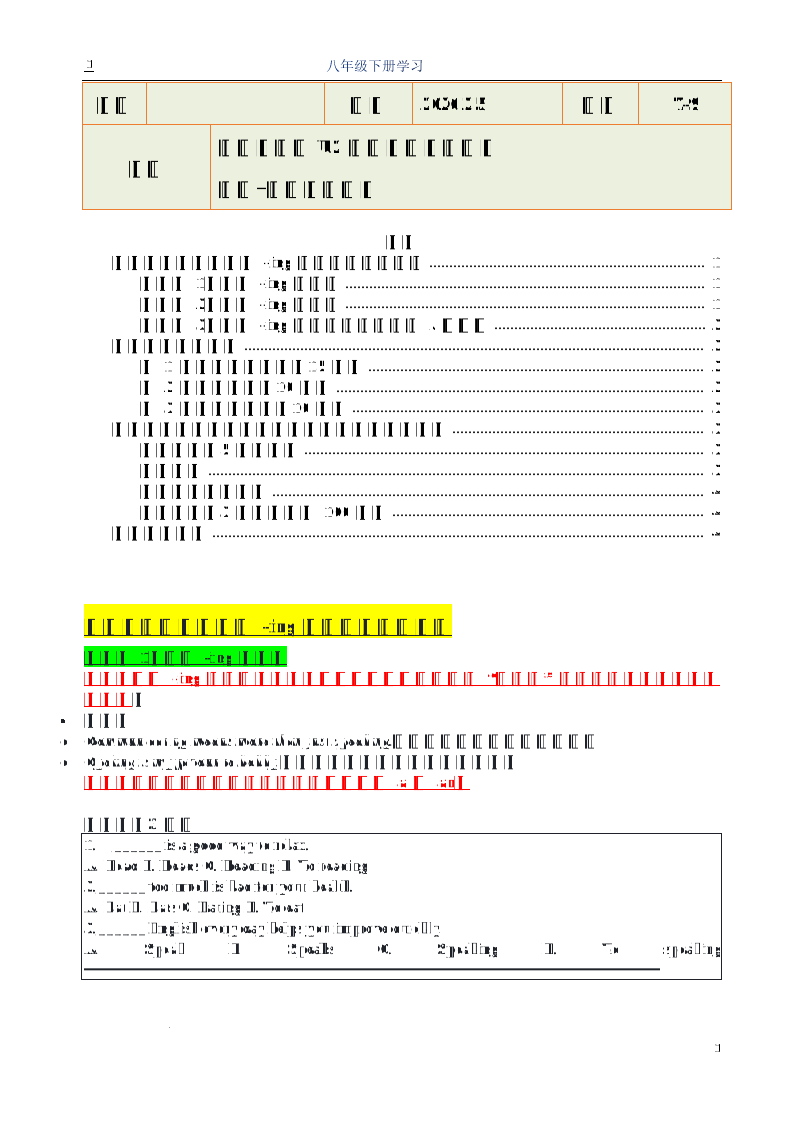
八年级下册学习1
学生
日期
2026.2.5
时间
7-9
课题
八年级下册U2 学习(沪教新版)
语法+作文专项练习
目录
一、重点语法:动词 -ing 形式作主语和宾语 1
知识点 1:动词 -ing 作主语 1
知识点 2:动词 -ing 作宾语 1
知识点 3:动词 -ing 作宾语(特殊动词 / 短语) 2
二、语法综合练习 2
第 1 题:单项选择题(15 题) 2
第 2 题:填空题(10 题) 2
第 3 题:句子改写(10 题) 3
三、作文指导:写一篇介绍一种肢体语言的文章 3
写作思路(5 步模板) 3
好词好句 3
提升作文的小技巧 4
优秀范文(3 篇,每篇约 100 词) 4
四、课后作业 4
一、重点语法:动词 -ing 形式作主语和宾语
知识点 1:动词 -ing 作主语
规则:动词 -ing 形式(动名词)可在句中作主语,表示 “做某事” 这件事,此时谓语动词用单数。
· 例句:
· Communicating means more than just speaking.(沟通不仅仅意味着说话。)
· Cycling is my favourite hobby.(骑自行车是我最喜欢的爱好。)
注意:动名词通常是不可数名词,前面不加 a 或 an。
选择题(3 题)
1. ______ is a good way to relax.
A. Read B. Reads C. Reading D. To reading
2.______ too much is bad for your health.
A. Eat B. Eats C. Eating D. To eat
3.______ English every day helps you improve quickly.
A. Speak B. Speaks C. Speaking D. To speaking
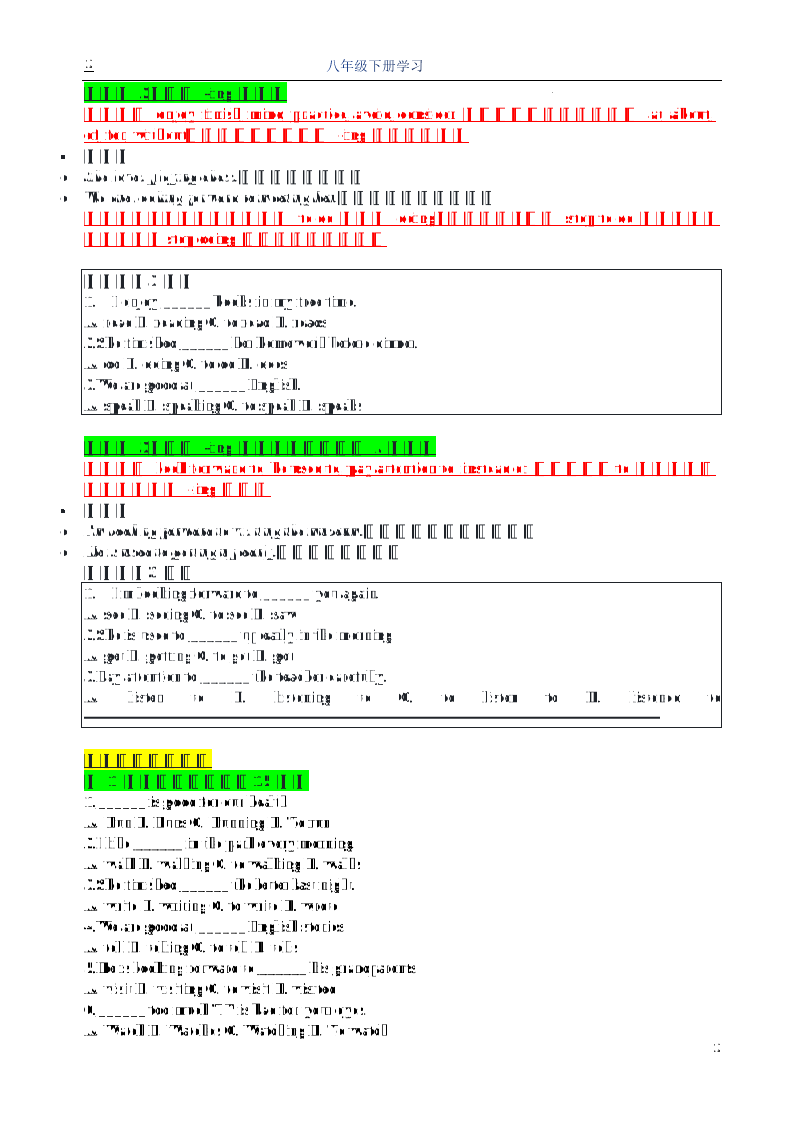
知识点 2:动词 -ing 作宾语
规则:在 enjoy, finish, mind, practice, avoid, consider 等动词后,以及介词(如 at, about, of, for, without)后,必须使用动词 -ing 形式作宾语。
· 例句:
1. She loves playing chess.(她喜欢下棋。)
1. We are looking forward to meeting her.(我们期待见到她。)
关键区分:有些动词后既可接 to do 也可接 doing,但含义不同(如 stop to do 停下来去做另一件事;stop doing 停止正在做的事)。
选择题(3 题)
1. I enjoy ______ books in my free time.
A. read B. reading C. to read D. reads
2.She finished ______ her homework before dinner.
A. do B. doing C. to do D. does
3.We are good at ______ English.
A. speak B. speaking C. to speak D. speaks
知识点 3:动词 -ing 作宾语(特殊动词 / 短语)
规则:在 look forward to, be used to, pay attention to, instead of 等短语后,to 是介词,后面必须接动词 -ing 形式。
· 例句:
1. I'm looking forward to visiting the museum.(我期待参观博物馆。)
1. He is used to getting up early.(他习惯早起。)
选择题(3 题)
1. I'm looking forward to ______ you again.
A. see B. seeing C. to see D. saw
2.She is used to ______ up early in the morning.
A. get B. getting C. to get D. got
3.Pay attention to ______ the teacher carefully.
A. listen to B. listening to C. to listen to D. listened to
二、语法综合练习
第 1 题:单项选择题(15 题)
1.______ is good for our health.
A. Run B. Runs C. Running D. To run
2.I like ______ in the park every morning.
A. walk B. walking C. to walking D. walks
3.She finished ______ the letter last night.
A. write B. writing C. to write D. wrote
4.We are good at ______ English stories.
A. tell B. telling C. to tell D. tells
5.He is looking forward to ______ his grandparents.
A. visit B. visiting C. to visit D. visited
6.______ too much TV is bad for your eyes.
A. Watch B. Watches C. Watching D. To watch
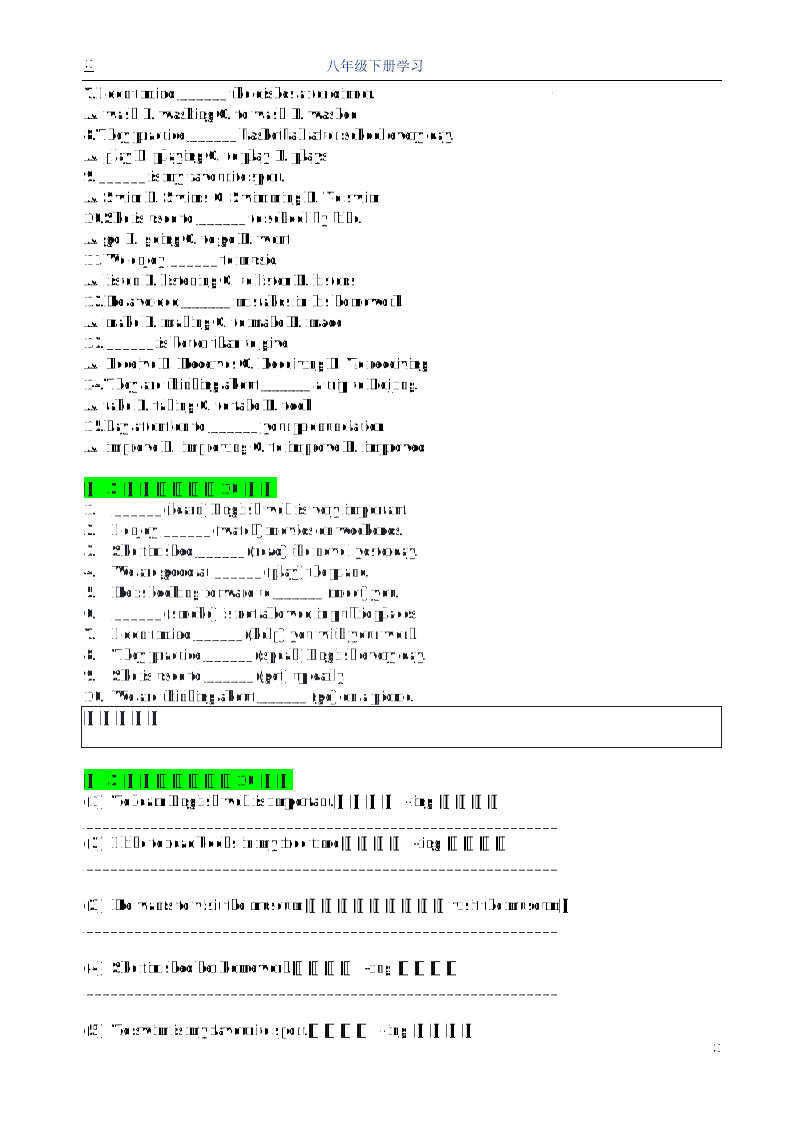
7.I don't mind ______ the dishes after dinner.
A. wash B. washing C. to wash D. washed
8.They practice ______ basketball after school every day.
A. play B. playing C. to play D. plays
9.______ is my favourite sport.
A. Swim B. Swims C. Swimming D. To swim
10.She is used to ______ to school by bike.
A. go B. going C. to go D. went
11.We enjoy ______ to music.
A. listen B. listening C. to listen D. listens
12.He avoided ______ mistakes in his homework.
A. make B. making C. to make D. made
13.______ is better than to give.
A. Receive B. Receives C. Receiving D. To receiving
14.They are thinking about ______ a trip to Beijing.
A. take B. taking C. to take D. took
15.Pay attention to ______ your pronunciation.
A. improve B. improving C. to improve D. improved
第 2 题:填空题(10 题)
1. ______ (learn) English well is very important.
2. I enjoy ______ (watch) movies on weekends.
3. She finished ______ (read) the novel yesterday.
4. We are good at ______ (play) the piano.
5. He is looking forward to ______ (meet) you.
6. ______ (smoke) is not allowed in public places.
7. I don't mind ______ (help) you with your work.
8. They practice ______ (speak) English every day.
9. She is used to ______ (get) up early.
10. We are thinking about ______ (go) on a picnic.
学生错题:
第 3 题:句子改写(10 题)
(1) To learn English well is important.(改为用 -ing 作主语)
___________________________________________________________
(2) I like to read books in my free time.(改为用 -ing 作宾语)
___________________________________________________________
(3) He wants to visit the museum.(对划线部分提问:visit the museum)
___________________________________________________________
(4) She finished her homework.(改为用 -ing 作宾语)
___________________________________________________________
(5) To swim is my favourite sport.(改为用 -ing 作主语)
___________________________________________________________
(6) They plan to go on a trip.(改为用 -ing 形式改写)
___________________________________________________________
(7) I don't like to get up early.(改为用 -ing 作宾语)
___________________________________________________________
(8) He is used to go to bed late.(改正句子)
___________________________________________________________
(9) We look forward to see you again.(改正句子)
___________________________________________________________
(10) Pay attention to listen to the teacher.(改正句子)
___________________________________________________________
三、作文指导:写一篇介绍一种肢体语言的文章
写作思路(5 步模板)
表格
步骤
关键内容
例句
① 引入话题
点明要介绍的肢体语言
Nodding is a simple but useful gesture.
② 定义与形式
描述动作本身
When you nod, you move your head up and down.
③ 主要含义 1
说明最常见的含义(如同意)
To begin with, a nod often shows agreement.
④ 其他含义
补充说明其他含义(如倾听、鼓励)
However, a nod can also mean you are listening.
⑤ 总结意义
强调其沟通作用
Understanding this gesture can help us communicate better.
好词好句
· 引入类:Body language is an important part of communication. / One common gesture we use every day is...
· 定义类:When you..., you... / This gesture involves...
· 含义类:It can mean... / It is often used to show... / In some cultures, it also means...
· 连接词:To begin with... / However... / Besides... / In conclusion...
· 高分句型:Understanding the different meanings of a simple gesture like... can help us improve our communication. / It is a silent way to express our thoughts without words.
提升作文的小技巧
1. 结合文化差异:可以提到同一种肢体语言在不同文化中的含义,增加文章深度。
2. 加入个人经历:用自己的亲身经历举例,让文章更生动。
3. 使用对比:对比不同肢体语言的含义,突出其特点。
4. 检查语法:重点检查动词 -ing 形式的使用,确保作主语和宾语时的正确性。
优秀范文(3 篇,每篇约 100 词)
范文 1:
Nodding
Nodding is a simple but useful gesture. When you nod, you move your head up and down. To begin with, it often shows agreement. For example, if someone asks you a question, you can nod to say "yes". However, it can also mean you are listening and paying attention. In some cultures, nodding can have different meanings, so it's important to understand the context. Understanding this gesture can help us communicate more effectively.
范文 2:
Smiling
Smiling is one of the most powerful forms of body language. A smile can show happiness, friendliness, or even agreement. When you smile at someone, it makes them feel welcome and comfortable. In many cultures, smiling is a universal way to connect with others. However, a smile can also be used to hide nervousness or embarrassment. By understanding the different meanings of a smile, we can better understand the people around us.
范文 3:
Eye Contact
Eye contact is an important part of communication. When you make eye contact with someone, it shows that you are interested and paying attention. In Western cultures, good eye contact is seen as a sign of confidence and honesty. However, in some Asian cultures, too much eye contact can be considered rude. It's important to be aware of these cultural differences. Using eye contact appropriately can help us build better relationships with others.
学生课堂练笔:
__________________________________________________________________
__________________________________________________________________
__________________________________________________________________
__________________________________________________________________
__________________________________________________________________
__________________________________________________________________
__________________________________________________________________
__________________________________________________________________
四、课后作业
一.语法填空。
Body language is a powerful tool for ①______ (communicate). It ②______ (include) gestures, facial expressions, and posture. When we talk to others, our body language often ③______ (send) messages that are even more important than our words.
For example, ④______ (cross) your arms can show that you are closed off or defensive. ⑤______ (smile) can make people feel welcome. ⑥______ (make) eye contact shows that you are interested.
Different cultures have different rules about body language. In some countries, ⑦______ (nod) your head means "no", while in others it means "yes". It's important ⑧______ (learn) about these differences when you travel.
二.语法选择。
Body language is an important part of communication. It can ①______ our feelings and thoughts without us saying a word. For example, a smile can show happiness, while a frown can show sadness. ②______ your arms can make you look closed off, while open arms can make you look friendly.
Different cultures have different ③______ about body language. In some countries, eye contact is a sign of respect, while in others it can be considered rude. It's important to be ④______ of these differences when you are communicating with people from other cultures.
Good body language can help you ⑤______ a good impression on others. When you meet someone new, ⑥______ up straight and make eye contact. This shows that you are confident and interested. Smiling can also make people feel ⑦______ around you.
By understanding and using body language effectively, you can ⑧______ your communication skills and build better relationships with others. It's a ⑨______ skill that can help you in both your personal and professional life. So next time you are talking to someone, pay attention to ⑩______ your body is saying.
1. A. express B. expressing C. to express D. expressed
2. A. Cross B. Crossing C. To cross D. Crossed
3. A. rule B. rules C. ruler D. rulers
4. A. aware B. unaware C. awareness D. unawareness
5. A. make B. making C. to make D. made
6. A. stand B. standing C. to stand D. stood
7. A. comfortable B. uncomfortable C. comfort D. discomfort
8. A. improve B. improving C. to improve D. improved
9. A. value B. valuable C. valueless D. invaluable
10. A. what B. how C. when D. where
三.阅读理解。
阅读 1:The Silent Language of Business
In the world of business, body language is just as important as the words we use. A firm handshake, good eye contact, and an open posture can make a powerful first impression. These non-verbal cues signal confidence, trustworthiness, and professionalism.
However, the rules of body language are not universal. In Western cultures, direct eye contact is seen as a sign of honesty and engagement. In many Asian cultures, however, prolonged eye contact can be considered disrespectful, especially when interacting with someone of higher status.
Another important gesture is the handshake. In the United States and Europe, a firm handshake is expected. In some Middle Eastern countries, a lighter, longer handshake is more common. Understanding these differences is crucial for successful international business.
By being aware of these cultural nuances, we can avoid misunderstandings and build stronger business relationships. Remember, in business, your body speaks louder than your words.
1.What is the main idea of the passage?
A. Handshakes are the most important part of business.
B. Body language is crucial in business and varies by culture.
C. Western business culture is superior to others.
D. Eye contact is always disrespectful in Asia.
2.In Western cultures, what does direct eye contact signal?
A. Disrespect
B. Honesty and engagement
C. Nervousness
D. Superiority
3.In some Asian cultures, what is prolonged eye contact considered?
A. A sign of respect
B. Disrespectful
C. Professional
D. Friendly
4.What kind of handshake is expected in the US?
A. Light and long
B. Firm
C. Gentle
D. No handshake at all
5.Why is understanding cultural body language important?
A. To avoid misunderstandings
B. To show superiority
C. To follow fashion
D. To learn new languages
阅读 2:The Power of a Smile
A smile is one of the most universal forms of body language. It transcends language and culture, conveying happiness, friendliness, and approachability. From a young age, we learn to recognize and respond to smiles, making it a fundamental part of human connection.
However, not all smiles are the same. A genuine "Duchenne smile" involves the muscles around the eyes, creating crinkles at the corners. This type of smile is a true expression of joy. A "social smile", on the other hand, only uses the muscles around the mouth and is often used to be polite, even when we are not happy.
Smiling can also have a positive effect on our own well-being. Studies have shown that the act of smiling, even if forced, can reduce stress and improve our mood. This is known as the "facial feedback hypothesis".
In social and professional settings, a smile can be a powerful tool. It can defuse tense situations, make others feel at ease, and open doors to new opportunities. So, the next time you meet someone, remember the power of a simple smile.
1.What is the main topic of the passage?
A. The history of smiling
B. The different types and power of smiles
C. How to fake a smile
D. The science of facial expressions
2.What is a Duchenne smile?
A. A polite smile
B. A genuine smile involving the eyes
C. A forced smile
D. A smile used in business
3.What is a social smile often used for?
A. To express joy
B. To be polite
C. To reduce stress
D. To show anger
4.What is the "facial feedback hypothesis"?
A. Smiling can improve our mood.
B. Smiling is only for happy people.
C. Smiling is a learned behavior.
D. Smiling is universal.
5.What can a smile do in social settings?
A. Create tension
B. Make others feel uncomfortable
C. Open doors to new opportunities
D. Close down conversations
五、参考答案。
一、重点语法选择题答案
· 知识点 1:1.C 2.C 3.C
· 知识点 2:1.B 2.B 3.B
· 知识点 3:1.B 2.B 3.B
二、语法综合练习答案
· 第 1 题:1.C 2.B 3.B 4.B 5.B 6.C 7.B 8.B 9.C 10.B 11.B 12.B 13.C 14.B 15.B
· 第 2 题:1.Learning 2.watching 3.reading 4.playing 5.meeting 6.Smoking 7.helping 8.speaking 9.getting 10.going
· 第 3 题:1.Learning English well is important. 2.I like reading books in my free time. 3.What does he want to do? 4.She finished doing her homework. 5.Swimming is my favourite sport. 6.They are planning going on a trip. 7.I don't like getting up early. 8.He is used to going to bed late. 9.We look forward to seeing you again. 10.Pay attention to listening to the teacher.
四、课后作业答案
· 作业 1:1.B 2.B 3.B 4.B 5.B 6.B 7.B 8.C 9.C 10.B 11.A 12.A 13.C 14.C 15.A
· 作业 2:1.A 2.B 3.B 4.A 5.A 6.A 7.A 8.A 9.B 10.A
· 作业 3:阅读 1:1.B 2.B 3.B 4.B 5.A;阅读 2:1.B 2.B 3.B 4.A 5.C
1
学科网(北京)股份有限公司
$
资源预览图
1
2
3
相关资源
由于学科网是一个信息分享及获取的平台,不确保部分用户上传资料的 来源及知识产权归属。如您发现相关资料侵犯您的合法权益,请联系学科网,我们核实后将及时进行处理。