Unit 6 Nature in words 外刊撷英-【优学精讲】2024-2025学年高中英语选择性必修第三册教用课件(外研版)
2026-02-07
|
16页
|
46人阅读
|
0人下载
教辅

资源信息
| 学段 | 高中 |
|---|---|
| 学科 | 英语 |
| 教材版本 | 高中英语外研版选择性必修第三册 |
| 年级 | 高二 |
| 章节 | Unit 6 Nature in Words |
| 类型 | 课件 |
| 知识点 | - |
| 使用场景 | 同步教学-单元练习 |
| 学年 | 2025-2026 |
| 地区(省份) | 全国 |
| 地区(市) | - |
| 地区(区县) | - |
| 文件格式 | PPTX |
| 文件大小 | 119.76 MB |
| 发布时间 | 2026-02-07 |
| 更新时间 | 2026-02-07 |
| 作者 | 拾光树文化 |
| 品牌系列 | 优学精讲·高中同步 |
| 审核时间 | 2026-02-07 |
| 下载链接 | https://m.zxxk.com/soft/56352367.html |
| 价格 | 2.00储值(1储值=1元) |
| 来源 | 学科网 |
内容正文:
外刊撷英
外刊撷英
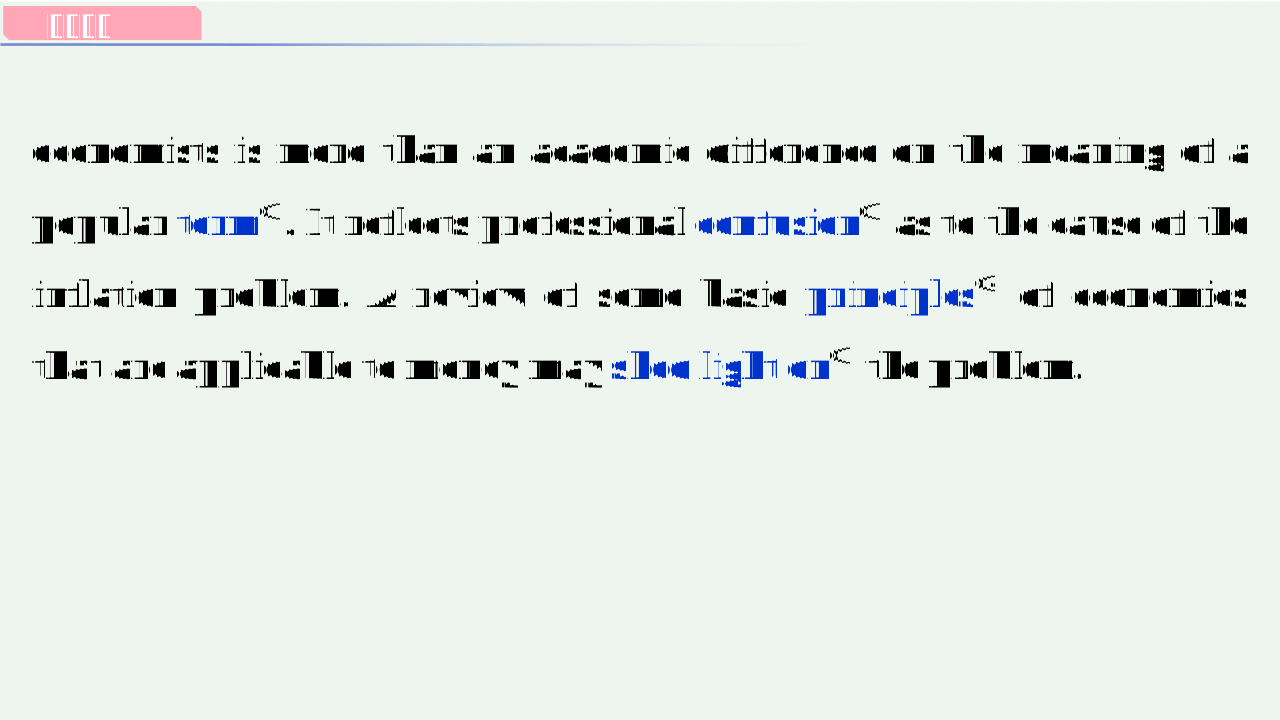
economists is more than an academic difference on the meaning of a popular term②. It reflects professional confusion③ as to the cause of the inflation problem. A review of some basic principles④ of economics that are applicable to money may shed light on⑤ the problem.
外刊撷英
外刊撷英
外刊撷英
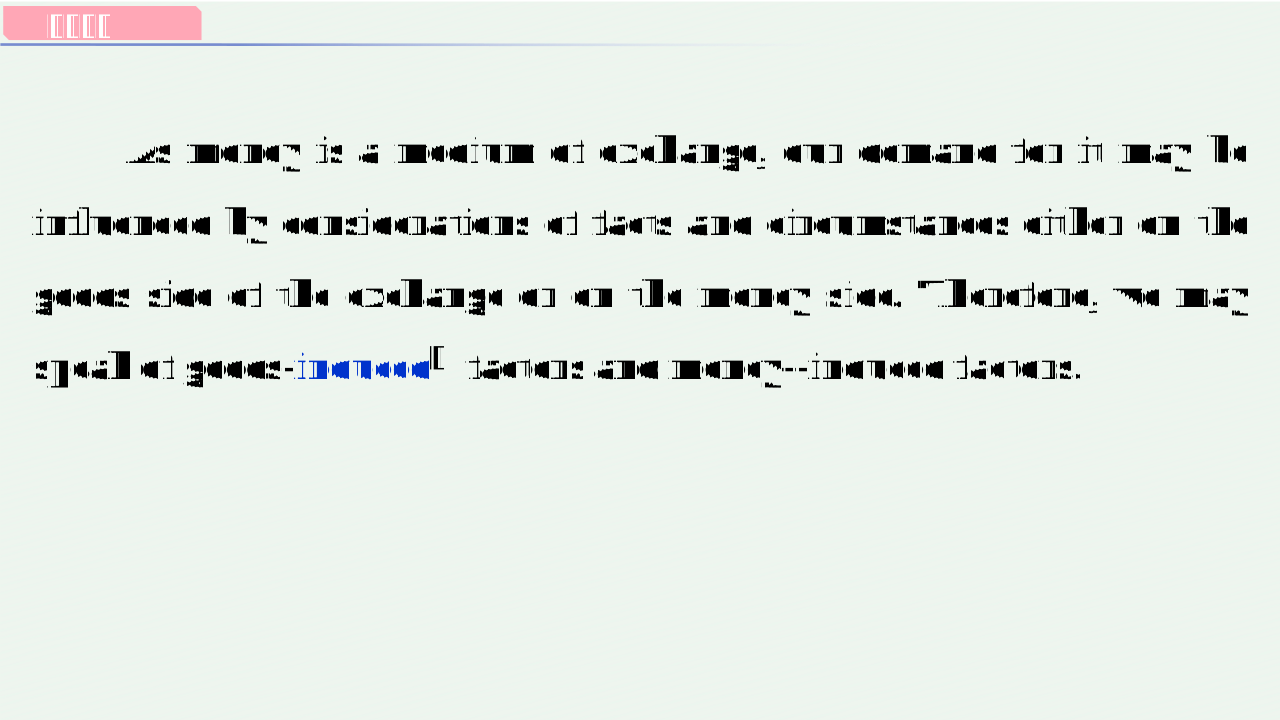
As money is a medium of exchange, our demand for it may be influenced by considerations of facts and circumstances either on the goods side of the exchange or on the money side. Therefore, we may speak of goodsinduced⑪ factors and money-induced factors.
外刊撷英
There also are a number of factors that affect the demand for money. A growing population, for instance, with millions of maturing⑫ individuals eager to establish cash holdings⑬, generates new demand, which in turn⑭ tends to raise the purchasing power of money and to reduce goods prices. On the other hand, a declining population would generate the opposite effect.
外刊撷英
The most important determinant⑮ of purchasing power of money under this heading of “money-induced factors” is the very attitude of the people toward money and their possession of certain cash holdings. They may decide for one reason or another to increase or reduce their holdings. An increase of cash holdings by many individuals tends to raise the exchange value of money, and reduction of cash holdings tends to lower it.
外刊撷英
In conclusion, as to the value of money, it may happen that the government may temporarily halt⑯ its inflation. Yet the thinking of people also plays a role.
外刊撷英
①inflation n.通货膨胀
②term n.术语
③confusion n.困惑
④principle n.原则
⑤shed light on 使……更容易理解
⑥facilitate v.促进
⑦goods n.商品
外刊撷英
⑧barter n.易货贸易
⑨primitive adj.原始的
⑩chieftain n.酋长
⑪induce v.诱使;引起
⑫mature v.成熟
⑬holding n.持股
⑭in turn反过来
⑮determinant n.决定因素
⑯halt v.暂停;中止
外刊撷英
has been
principles
that/which
as
where
called
外刊撷英
growing
determinant
reduction
temporarily
外刊撷英
1.economist n. A.to affect sb./sth. very strongly
2.engulf v. B.a person who studies or writes
about economics
3.marketable adj. C.to make sth. happen in a particular way
4.emerge v. D.to start to exist; to appear or
become known
外刊撷英
5.medium n. E.easy to sell; attractive to customers or
employers
6.determine v. F.something that is used for a
particular purpose
答案:1~5.BAEDF 6.C
外刊撷英
What do you think of money?
One possible version:
Money is necessary but not the aim of our life. If used properly, money is a blessing. We can never put money above all things. And money can not only be spent on oneself. Instead, money is to be spent for the welfare of all human beings.
外刊撷英
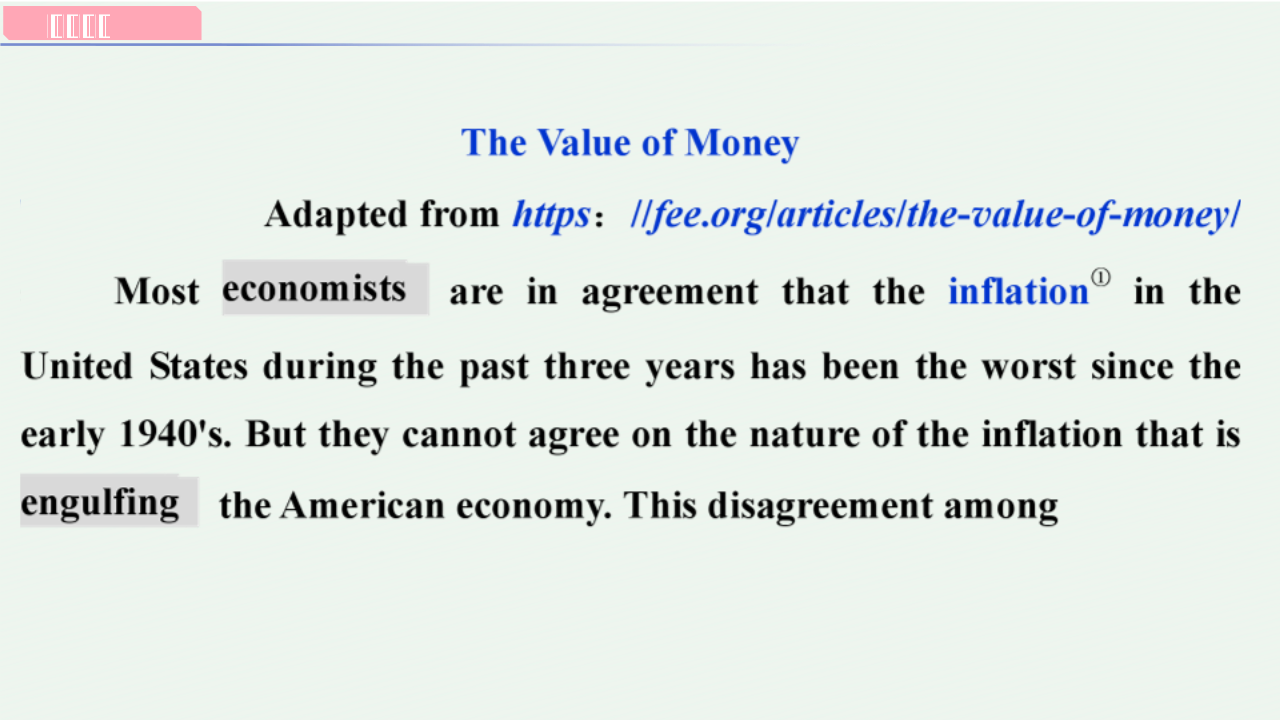
The Value of Money
Adapted from https://fee.org/articles/thevalueofmoney/
Most eq \a\vs4\al(economists) are in agreement that the inflation① in the United States during the past three years has been the worst since the early 1940's. But they cannot agree on the nature of the inflation that is eq \a\vs4\al(engulfing) the American economy. This disagreement among
Money is a medium of exchange that facilitates⑥ trade in goods⑦ and services. Wherever people progressed beyond simple barter⑧, they began to use their most eq \a\vs4\al(marketable) goods as media of exchange. In primitive⑨ societies they used cattle, or measures of grain, salt, or fish. In early civilizations where the division of labor extended to larger areas, gold or silver eq \a\vs4\al(emerged) as the most marketable good and finally as the only eq \a\vs4\al(medium) of exchange, called money. It is obvious that the chieftains⑩, kings, and heads of state did not invent the use of money.
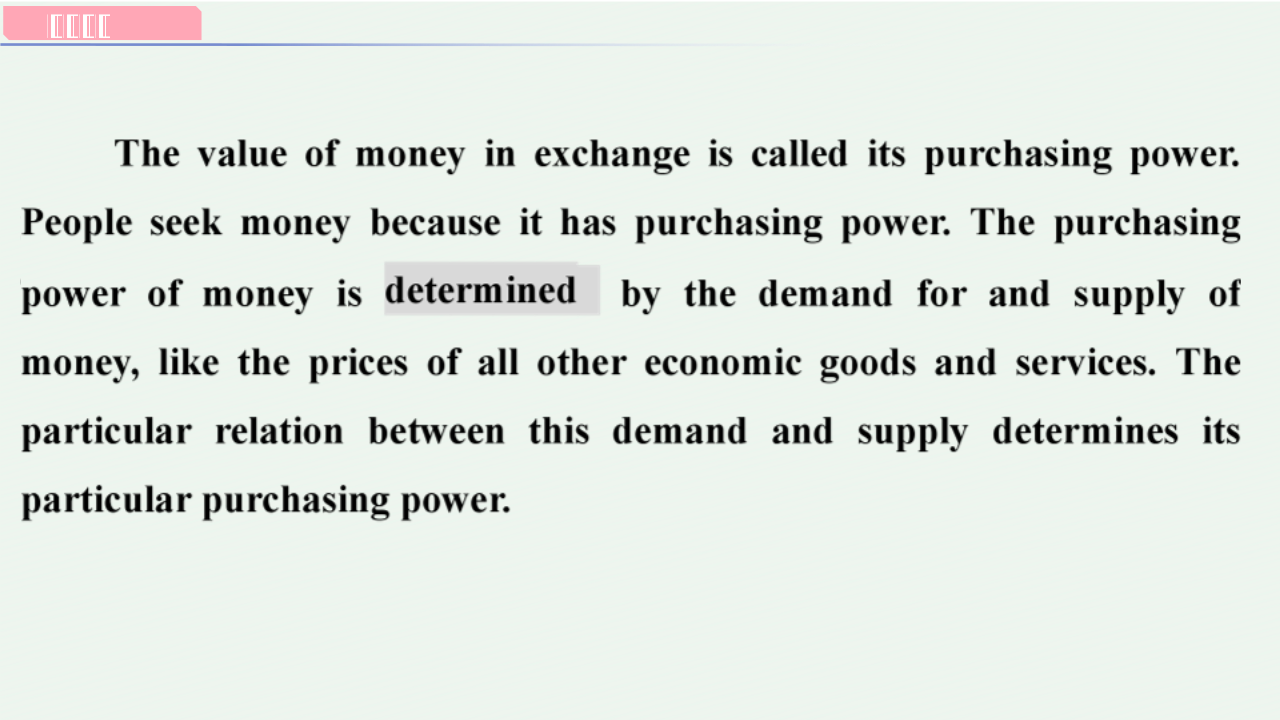
The value of money in exchange is called its purchasing power. People seek money because it has purchasing power. The purchasing power of money is eq \a\vs4\al(determined) by the demand for and supply of money, like the prices of all other economic goods and services. The particular relation between this demand and supply determines its particular purchasing power.
$
资源预览图

1
2
3

4
5
6

相关资源
由于学科网是一个信息分享及获取的平台,不确保部分用户上传资料的 来源及知识产权归属。如您发现相关资料侵犯您的合法权益,请联系学科网,我们核实后将及时进行处理。