Unit 1 Past and present 现在完成时 (语法讲解+分层精练)-2025-2026学年译林版英语八年级下册
2026-02-05
|
2份
|
14页
|
2219人阅读
|
38人下载
普通

内容正文:
Unit 1 Past and present
(现在完成时)
(语法讲解+分层练习)
目 录
一、语法讲解 1
(一) 三大核心用法 1
用法一(未完成/持续) 1
用法二(已完成/影响) 1
用法三(经历) 2
(二)基本结构 2
肯定句 2
否定句 2
一般疑问句 2
(三)与一般过去时的核心区别 2
(四)过去分词的构成 2
二、 中考核心考点与易错题精练(30题) 3
(一)用法判断与时间状语 3
(二)延续性动词与瞬间动词 5
(三)综合辨析与提升 6
一、语法讲解
(一) 三大核心用法
用法一(未完成/持续):表示过去开始并持续到现在的动作或状态(常与 for、since 等引导的时间段连用)。
例句:We have lived in Nanjing for ten years. (我们已经在南京住了十年了。)
用法二(已完成/影响):表示过去发生的动作对现在造成的影响或结果(常与 already, just, yet 等连用)。
例句:I have already finished my homework. (我已经做完作业了。→ 对现在的影响是“我现在有空了”。)
用法三(经历):表示过去某一时间到现在的经历,强调“有没有做过”,常与 ever(曾经)、never(从不)、...times(次数)连用。
例句:She has visited the Great Wall three times. (她去过长城三次。)
(二)基本结构
肯定句:主语 + have/has + 过去分词 (p.p.) + 其他。
例句:They have seen the movie.
否定句:主语 + have/has + not + 过去分词 (p.p.) + 其他。
例句:He has not (hasn't) finished his work.
一般疑问句:Have/Has + 主语 + 过去分词 (p.p.) + 其他?
例句:Have you eaten breakfast?
(三)与一般过去时的核心区别
对比维度
现在完成时
一般过去时
时间焦点
现在(强调动作与现在的关联)
过去(只说明过去某时发生了某事)
与现在联系
有直接联系(影响、结果、持续、经历)
无直接联系,是独立的过去事件
时间状语
for..., since..., already, yet, ever, never, just, so far(到目前为止), recently(最近)等
yesterday, last week, ...ago, in 1990, just now(刚才)等明确的过去时间点
例句对比
I have lost my key. (我丢了钥匙。→ 现在我进不了门。)
I lost my key yesterday. (我昨天丢了钥匙。→ 只陈述过去事实,不涉及现在情况。)
(四)过去分词的构成
构成规则
动词原形
过去式
过去分词
说明
规则变化
绝大多数动词
1. 直接加 -ed
work
worked
worked
2. 以 e 结尾,加 -d
live
lived
lived
3. 以 辅音字母+y 结尾,变 y 为 i 再加 -ed
study
studied
studied
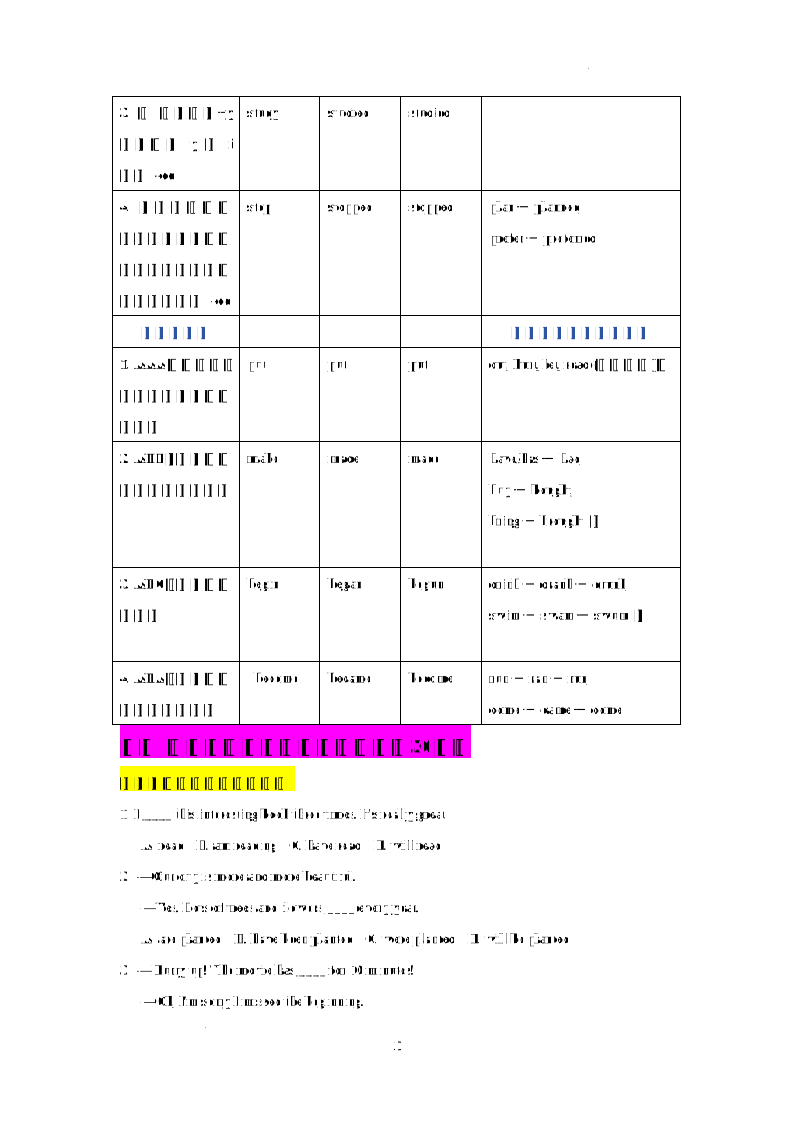
4. 以重读闭音节结尾,且末尾只有一个辅音字母,双写该字母再加 -ed
stop
stopped
stopped
plan → planned,
prefer → preferred
不规则变化
需特别记忆的常用动词
1. AAA型(原形、过去式、过去分词同形)
put
put
put
cut, hurt, let, read (读音变化)等
2. ABB型(过去式与过去分词同形)
make
made
made
have/has → had;
buy → bought;
bring → brought 等
3. ABC型(三者均不同)
begin
began
begun
drink → drank → drunk;
swim → swam → swum 等
4. ABA型(原形与过去分词同形)
become
became
become
run → ran → run;
come → came → come
二、 中考核心考点与易错题精练(30题)
(一)用法判断与时间状语
1. I ____ this interesting book three times. It's really great.
A. read B. am reading C. have read D. will read
答案与解析:C 句中有 three times(三次),表示从过去到现在的经历,应用现在完成时。
2. —Our city is more and more beautiful.
—Yes. Lots of trees and flowers ____ every year.
A. are planted B. have been planted C. were planted D. will be planted
答案与解析:B 上下文暗示“城市变美”是过去植树持续到现在的结果,强调对现在的影响,用现在完成时的被动语态。每年植树是常规动作,但这里强调的是迄今为止的成果。
3. —Hurry up! The movie has ____ for 10 minutes!
—Oh, I'm sorry I missed the beginning.
A. started B. begun C. been on D. been begun
答案与解析:C for 10 minutes 表示时间段,要求谓语动词有持续性。start 和 begin 都是非延续性动词,不能与 for+时间段 连用,需转换为延续性的 be on(上映)。
4. I ____ my hometown for ten years. I miss it very much.
A. left B. have been away from C. have left D. left from
答案与解析:B for ten years 是时间段。leave(离开)是非延续性动词,不能直接与时间段连用,需转换为可延续的 be away from。
5. —Is Peter here?
—Not yet, but he ____ be here soon. He is always on time.
A. need B. shall C. should D. can
答案与解析:C 本题虽非直接考完成时,但常混于对话中。根据“还没到”和“他总是准时”,推断他“应该”快到了。should 表示推测或预期。
6. —May I speak to Mr. Smith?
—Sorry, he ____ Australia. He will be back in two days.
A. has been to B. has gone to C. goes to D. went to
答案与解析:B has gone to 表示“已经去了某地(现在不在这里)”,符合“他不在,无法接电话”的语境。has been to 表示“去过某地(现已回来)”。
7. So far, the AI program ChatGPT ____ a lot of attention all over the world.
A. is attracting B. attracts C. has attracted D. will attract
答案与解析:C So far(迄今为止)是现在完成时的典型标志词,表示动作从过去持续到现在并产生结果。
8. —____ you ____ your homework yet?
—Yes. I ____ it a moment ago.
A. Did; finish; finished B. Have; finished; have finished C. Have; finished; finished D. Will; finish; finished
答案与解析:C 问句中有 yet,需用现在完成时。答句中 a moment ago(刚才)是明确的过去时间点,需用一般过去时。
9. My grandma ____ in this small town since she was born.
A. lived B. has lived C. lives D. will live
答案与解析:B since she was born(自从她出生以来)引导的时间状语从句,主句通常用现在完成时,表示从过去持续到现在的状态。
10. They ____ each other since they were children.
A. know B. have known C. knew D. will know
答案与解析:B since 引导从句,主句用现在完成时。know 是状态动词,可以直接用于完成时表示状态的延续。
(二)延续性动词与瞬间动词
1. The famous writer ____ one new book in the past two years.
A. is writing B. was writing C. has written D. wrote
答案与解析:C。in the past two years(在过去的两年里)是现在完成时的标志性时间状语。
2. —How long may I ____ this book?
—For two weeks.
A. keep B. borrow C. lend D. return
答案与解析:A。How long 提问时间段,谓语动词需有延续性。borrow(借入)、lend(借出)、return(归还)都是瞬间动词,只有 keep(保存,借)可以延续。
3. His uncle ____ the Party for more than twenty years.
A. joined B. has joined C. was D. has been in
答案与解析:D。for more than twenty years 是时间段。join(加入)是瞬间动词,不能与时间段连用,需转换为 be in 或 be a member of 等延续状态。
4. The meeting ____ for about ten minutes. Why are you so late?
A. has begun B. has on C. has been on D. began
答案与解析:C。for about ten minutes 是时间段。begin 是瞬间动词,需转换为延续状态 be on(进行中)。
5. —When ____ your brother ____ back from work?
—About half an hour ago.
A. did; come B. had; come C. has; come D. will; come
答案与解析:A。答句 About half an hour ago(大约半小时前)是明确的过去时间点,因此问句应用一般过去时,询问动作发生的具体过去时间。
6. The supermarket is far from Mary's house, so she ____ there only once.
A. has been B. has gone C. goes D. went
答案与解析:A。only once(仅一次)表示经历,应用现在完成时。has been there 表示“去过那里(现已回来)”,符合语境。
7. —I'm sorry to have kept you waiting long.
—Never mind. I ____ here for only a few minutes.
A. have come B. have been C. came D. will come
答案与解析:B。for only a few minutes 是时间段。come 是瞬间动词,不能与时间段连用。需用 have been 表示“来到并待了”的持续状态。
8. I first met Lisa three years ago when we ____ at a radio station.
A. have worked B. were working C. are working D. work
答案与解析:B。主句 met 是一般过去时,when 引导的时间状语从句描述过去正在进行的动作,应用过去进行时。
9. —What a nice camera! Is it new?
—No, I ____ it for a year.
A. buy B. bought C. have had D. have bought
答案与解析:C。for a year 是时间段。buy 是瞬间动词,不能与时间段连用,需转换为表示“拥有”状态的延续性动词 have。
10. My parents ____ Shandong for ten years.
A. have been in B. have been to C. have gone to D. went to
答案与解析:A。for ten years 是时间段。has been in 表示“在山东待了十年”,是延续状态。has been to 表示“去过”,has gone to 表示“去了”,均不表示持续状态。
(三)综合辨析与提升
1. —Is that Mr. Green speaking?
—Sorry, he ____ Beijing. Can I take a message?
A. has been to B. has gone to C. went to D. will go to
答案与解析:B。根据“抱歉”和“要留言”可知,格林先生不在此地,has gone to 表示“已去某地(未归)”。
2. We ____ in this school since we moved here in 2018.
A. study B. studied C. have studied D. will study
答案与解析:C。since 引导时间状语(从句用一般过去时 moved),主句用现在完成时,表示从201年持续到现在的学习状态。
3. —I'm going to the museum this afternoon. Would you like to go with me?
—Sorry, I ____ there twice. I want to go somewhere else.
A. go B. went C. have been D. have gone
答案与解析:C。twice(两次)表示经历,用现在完成时。have been there 表示“去过那里(有相关经历)”。
4. —How long ____ your parents ____ married?
—For twenty years.
A. did; get B. were; getting C. have; been D. do; get
答案与解析:C。How long 提问时间段,用现在完成时。get married 是瞬间动作,提问延续的状态需用 be married。
5. —Where is your father?
—He ____ the post office. He will be back soon.
A. has been to B. has gone to C. went to D. goes to
答案与解析:B。根据“他很快就会回来”可知,父亲是暂时离开去了邮局,has gone to 表示动作完成并对现在造成影响(人不在此)。
6. —Tom, you look tired today. What's wrong?
—I ____ late last night to watch the football match.
A. stayed up B. have stayed up C. will stay up D. am staying up
答案与解析:A。last night 是明确的过去时间状语,应用一般过去时。描述过去发生的具体事件。
7. His brother ____ the army for three years.
A. has joined B. has been in C. joined D. was joining
答案与解析:B。for three years 是时间段。join 是瞬间动词,需转换为延续性的 be in(在…中服役)。
8. The plane from Shanghai to Beijing ____. Let's get ready to board.
A. is arriving B. has already arrived C. arrives D. arrived
答案与解析:B。根据“让我们准备登机”可知,飞机抵达的动作已经完成,并对现在(可以登机)造成了直接影响,用现在完成时最贴切。虽然 arrived 语法上也通,但不如完成时强调与现在的联系。
9. —Do you know the girl in red?
—Yes. She's my classmate and we ____ friends since primary school.
A. have been B. were C. are D. had been
答案与解析:A。since primary school(自从小学)是现在完成时的标志,表示从小学持续到现在的友谊状态。
10. —I'm sorry, Mr. Li. I ____ my homework at home.
—That's all right. Don’t forget to bring it tomorrow.
A. left B. forget C. have lost D. have left
答案与解析:A。对话中“忘在家里”是一个过去发生的具体动作,且没有强调对现在造成何种持续性影响(只是陈述事实),用一般过去时即可。D选项 have left 虽然语法正确,但更强调“遗忘”这个动作的完成状态及其对现在的遗留影响,在此语境下不如A自然。
1
学科网(北京)股份有限公司
$
Unit 1 Past and present
(现在完成时)
(语法讲解+分层练习)
目 录
一、语法讲解 1
(一) 三大核心用法 1
用法一(未完成/持续) 1
用法二(已完成/影响) 1
用法三(经历) 2
(二)基本结构 2
肯定句 2
否定句 2
一般疑问句 2
(三)与一般过去时的核心区别 2
(四)过去分词的构成 2
二、 中考核心考点与易错题精练(30题) 3
(一)用法判断与时间状语 3
(二)延续性动词与瞬间动词 4
(三)综合辨析与提升 5
一、语法讲解
(一) 三大核心用法
用法一(未完成/持续):表示过去开始并持续到现在的动作或状态(常与 for、since 等引导的时间段连用)。
例句:We have lived in Nanjing for ten years. (我们已经在南京住了十年了。)
用法二(已完成/影响):表示过去发生的动作对现在造成的影响或结果(常与 already, just, yet 等连用)。
例句:I have already finished my homework. (我已经做完作业了。→ 对现在的影响是“我现在有空了”。)
用法三(经历):表示过去某一时间到现在的经历,强调“有没有做过”,常与 ever(曾经)、never(从不)、...times(次数)连用。
例句:She has visited the Great Wall three times. (她去过长城三次。)
(二)基本结构
肯定句:主语 + have/has + 过去分词 (p.p.) + 其他。
例句:They have seen the movie.
否定句:主语 + have/has + not + 过去分词 (p.p.) + 其他。
例句:He has not (hasn't) finished his work.
一般疑问句:Have/Has + 主语 + 过去分词 (p.p.) + 其他?
例句:Have you eaten breakfast?
(三)与一般过去时的核心区别
对比维度
现在完成时
一般过去时
时间焦点
现在(强调动作与现在的关联)
过去(只说明过去某时发生了某事)
与现在联系
有直接联系(影响、结果、持续、经历)
无直接联系,是独立的过去事件
时间状语
for..., since..., already, yet, ever, never, just, so far(到目前为止), recently(最近)等
yesterday, last week, ...ago, in 1990, just now(刚才)等明确的过去时间点
例句对比
I have lost my key. (我丢了钥匙。→ 现在我进不了门。)
I lost my key yesterday. (我昨天丢了钥匙。→ 只陈述过去事实,不涉及现在情况。)
(四)过去分词的构成
构成规则
动词原形
过去式
过去分词
说明
规则变化
绝大多数动词
1. 直接加 -ed
work
worked
worked
2. 以 e 结尾,加 -d
live
lived
lived
3. 以 辅音字母+y 结尾,变 y 为 i 再加 -ed
study
studied
studied
4. 以重读闭音节结尾,且末尾只有一个辅音字母,双写该字母再加 -ed
stop
stopped
stopped
plan → planned,
prefer → preferred
不规则变化
需特别记忆的常用动词
1. AAA型(原形、过去式、过去分词同形)
put
put
put
cut, hurt, let, read (读音变化)等
2. ABB型(过去式与过去分词同形)
make
made
made
have/has → had;
buy → bought;
bring → brought 等
3. ABC型(三者均不同)
begin
began
begun
drink → drank → drunk;
swim → swam → swum 等
4. ABA型(原形与过去分词同形)
become
became
become
run → ran → run;
come → came → come
二、 中考核心考点与易错题精练(30题)
(一)用法判断与时间状语
1. I ____ this interesting book three times. It's really great.
A. read B. am reading C. have read D. will read
2. —Our city is more and more beautiful.
—Yes. Lots of trees and flowers ____ every year.
A. are planted B. have been planted C. were planted D. will be planted
3. —Hurry up! The movie has ____ for 10 minutes!
—Oh, I'm sorry I missed the beginning.
A. started B. begun C. been on D. been begun
4. I ____ my hometown for ten years. I miss it very much.
A. left B. have been away from C. have left D. left from
5. —Is Peter here?
—Not yet, but he ____ be here soon. He is always on time.
A. need B. shall C. should D. can
6. —May I speak to Mr. Smith?
—Sorry, he ____ Australia. He will be back in two days.
A. has been to B. has gone to C. goes to D. went to
7. So far, the AI program ChatGPT ____ a lot of attention all over the world.
A. is attracting B. attracts C. has attracted D. will attract
8. —____ you ____ your homework yet?
—Yes. I ____ it a moment ago.
A. Did; finish; finished B. Have; finished; have finished C. Have; finished; finished D. Will; finish; finished
9. My grandma ____ in this small town since she was born.
A. lived B. has lived C. lives D. will live
10. They ____ each other since they were children.
A. know B. have known C. knew D. will know
(二)延续性动词与瞬间动词
1. The famous writer ____ one new book in the past two years.
A. is writing B. was writing C. has written D. wrote
2. —How long may I ____ this book?
—For two weeks.
A. keep B. borrow C. lend D. return
3. His uncle ____ the Party for more than twenty years.
A. joined B. has joined C. was D. has been in
4. The meeting ____ for about ten minutes. Why are you so late?
A. has begun B. has on C. has been on D. began
5. —When ____ your brother ____ back from work?
—About half an hour ago.
A. did; come B. had; come C. has; come D. will; come
6. The supermarket is far from Mary's house, so she ____ there only once.
A. has been B. has gone C. goes D. went
7. —I'm sorry to have kept you waiting long.
—Never mind. I ____ here for only a few minutes.
A. have come B. have been C. came D. will come
8. I first met Lisa three years ago when we ____ at a radio station.
A. have worked B. were working C. are working D. work
9. —What a nice camera! Is it new?
—No, I ____ it for a year.
A. buy B. bought C. have had D. have bought
10. My parents ____ Shandong for ten years.
A. have been in B. have been to C. have gone to D. went to
(三)综合辨析与提升
1. —Is that Mr. Green speaking?
—Sorry, he ____ Beijing. Can I take a message?
A. has been to B. has gone to C. went to D. will go to
2. We ____ in this school since we moved here in 2018.
A. study B. studied C. have studied D. will study
3. —I'm going to the museum this afternoon. Would you like to go with me?
—Sorry, I ____ there twice. I want to go somewhere else.
A. go B. went C. have been D. have gone
4. —How long ____ your parents ____ married?
—For twenty years.
A. did; get B. were; getting C. have; been D. do; get
5. —Where is your father?
—He ____ the post office. He will be back soon.
A. has been to B. has gone to C. went to D. goes to
6. —Tom, you look tired today. What's wrong?
—I ____ late last night to watch the football match.
A. stayed up B. have stayed up C. will stay up D. am staying up
7. His brother ____ the army for three years.
A. has joined B. has been in C. joined D. was joining
8. The plane from Shanghai to Beijing ____. Let's get ready to board.
A. is arriving B. has already arrived C. arrives D. arrived
9. —Do you know the girl in red?
—Yes. She's my classmate and we ____ friends since primary school.
A. have been B. were C. are D. had been
10. —I'm sorry, Mr. Li. I ____ my homework at home.
—That's all right. Don’t forget to bring it tomorrow.
A. left B. forget C. have lost D. have left
1
学科网(北京)股份有限公司
$
资源预览图

1

2
3

相关资源
示范课
由于学科网是一个信息分享及获取的平台,不确保部分用户上传资料的 来源及知识产权归属。如您发现相关资料侵犯您的合法权益,请联系学科网,我们核实后将及时进行处理。