Unit 6 Crossing Cultures 单元测试卷-2025-2026学年人教版英语八年级下册
2026-01-30
|
2份
|
15页
|
256人阅读
|
8人下载
资源信息
| 学段 | 初中 |
|---|---|
| 学科 | 英语 |
| 教材版本 | 初中英语人教版八年级下册 |
| 年级 | 八年级 |
| 章节 | Unit 6 Crossing Cultures |
| 类型 | 作业-单元卷 |
| 知识点 | - |
| 使用场景 | 同步教学-单元练习 |
| 学年 | 2026-2027 |
| 地区(省份) | 陕西省 |
| 地区(市) | - |
| 地区(区县) | - |
| 文件格式 | ZIP |
| 文件大小 | 73 KB |
| 发布时间 | 2026-01-30 |
| 更新时间 | 2026-01-30 |
| 作者 | xkw_059406787 |
| 品牌系列 | - |
| 审核时间 | 2026-01-30 |
| 下载链接 | https://m.zxxk.com/soft/56241993.html |
| 价格 | 0.50储值(1储值=1元) |
| 来源 | 学科网 |
内容正文:
参考答案与解析
一、单项选择
1. B
解析: custom 指社会或文化中长期形成的“习俗、风俗”。春节吃饺子是中国的一种文化习俗,而非个人习惯 (habit)。
2. B
解析: 本题考查宾语从句的引导词和语序。从句中缺少方式状语,询问“如何庆祝”,因此用 how。同时,宾语从句需用陈述句语序,you usually celebrate 已是正确语序。
3. D
解析: 根据常识,在日本,鞠躬 (bow) 是常见的问候方式。
4. C
解析: 拜访英国家庭时带一份小礼物 (a small gift) 是礼貌的表现。tip 指“小费”,通常在餐厅等服务场所给予。
5. A
解析: 固定句型 find it + adj. + that 从句,其中 it 作形式宾语,真正的宾语是后面的 that 从句。
6. B
解析: study abroad 是固定搭配,意为“出国留学”。abroad 是副词,前面不加介词。
7. A
解析: mustn't 表示“禁止、不允许”,语气强烈。根据后半句“这被认为是不礼貌的”,可知在德国迟到是被禁止的。
8. A
解析: be used to (doing) sth. 是固定搭配,意为“习惯于(做)某事”,to 是介词。used 是形容词。
9. C
解析: learn from each other 意为“互相学习”,是固定搭配。each other 指两者或多者之间“互相”。
10. A
解析: 本题考查宾语从句的语序。主句 Do you know 后接宾语从句,从句需用陈述句语序,即“疑问词+主语+谓语”。what time the meeting starts 是正确的陈述句语序。其他选项均为疑问句语序。
11. C
解析: nervous 意为“紧张的”,符合“一开始听不懂当地语言”时的常见感受。
12. A
解析: It's + adj. + to do sth. 是固定句型,to say 是不定式作真正主语。
13. B
解析: be surprised to do sth. 意为“对做某事感到惊讶”。脱鞋进门对于某些文化背景的人来说可能是新奇的。
14. C
解析: table manners 是固定搭配,意为“餐桌礼仪”。
15. C
解析: respect 意为“尊重”,是跨文化交流的核心态度,即使面对不同的传统也应予以尊重。
二、完形填空
16. B host
解析: host family 是固定搭配,意为“寄宿家庭”。
17. A abroad
解析: go abroad 意为“出国”。
18. A greet
解析: 根据下文“how to bow”(如何鞠躬),可知是在教如何“问候” (greet)。
19. B strange
解析: 对于习惯握手或拥抱的人来说,鞠躬起初会感觉“奇怪” (strange)。
20. A chopsticks
解析: 在日本,用餐通常使用“筷子” (chopsticks)。
21. A how
解析: teach sb. how to do sth. 意为“教某人如何做某事”。
22. A take off
解析: take off shoes 意为“脱鞋”,是进入日本家庭的基本礼仪。
23. C explained
解析: explain 意为“解释”,寄宿家庭向作者解释这是一个常见错误。
24. B punctual
解析: punctual 意为“准时的”,与后文“always try to be on time”同义。
25. D culture
解析: 整个经历是理解一种不同的“文化” (culture)。
三、阅读理解
A 篇
26. C
解析: 第二段第一句明确指出 “we usually eat dinner very late, around 9 or 10 p.m.”。
27. B
解析: 第二段对“siesta”的解释是“people go home to rest for a short time”。
28. C
解析: 第三段明确指出 “we often give two kisses on the cheek”。
29. B
解析: 第四段提到 “tapas (small dishes)”,并用“share”描述,可知是分享的小份菜肴。
30. B
解析: 最后一段直接表达 “I think our customs are warm and friendly.”
B 篇
31. C
解析: 第一句明确说明 “went to study in the United States”。
32. B
解析: 第二段第一句提到 “experienced culture shock”,并通过后面的例子(分餐、问候方式)说明这是一种因文化差异而产生的困惑感。
33. C
解析: 第二段明确指出 “everyone had their own plate of food”,并与中国的共餐习惯对比。
34. C
解析: 第四段明确说明 “He taught them how to use chopsticks, and they taught him how to make pizza.”
35. C
解析: 全文讲述了陈华经历文化冲击、逐渐适应并学习尊重的过程。最后一段点明主旨:文化差异没有好坏,关键在于保持开放心态和相互尊重。
C 篇
36. C
解析: 第三段明确指出要避免刻板印象 (stereotypes),因此持有刻板印象不是有效跨文化沟通的一部分。
37. B
解析: 第三段对“stereotype”的定义是 “a fixed, often oversimplified idea about a group of people”。
38. C
解析: 第四段说明,意识到自己的文化偏见有助于我们接受其他方式也可能是合理的 (valid)。
39. C
解析: 最后一段提到犯错误时,“a polite apology and a willingness to learn are the best responses”。
40. C
解析: 全文旨在提供如何进行有效且尊重他人的跨文化沟通的建议,如理解非语言 cues、避免刻板印象、保持开放心态、犯错后妥善处理等。
四、任务型阅读
41. greeting
解析: 原文第一句指出这些问句是 “friendly greetings”。
42. detailed
解析: 原文第一段最后一句 “People don't usually expect a detailed answer.”
43. formality
解析: 原文第二段指出 “It is also a polite formality”。
44. fine
解析: 原文第二段给出预期回答是 “I'm fine, thank you.”
45. misunderstandings
解析: 原文最后一句 “Understanding... can help avoid misunderstandings.”
五、补全对话(参考答案)
46. What's the most interesting custom he shared? / Can you tell me a French custom?
解析: 根据下句B的回答(关于法国贴面礼),此处应询问法国习俗。
47. That's different from our custom. / It's different here in China.
解析: 对B提到的差异表示认同,并简要对比中国的情况。
48. But I think it's important to understand and respect different customs.
解析: 表达对文化差异应有的态度,即理解和尊重。
49. what other customs are important in France? / about another French custom?
解析: 对话继续深入,询问另一个法国的重要习俗,引出B关于守时的回答。
50. Thanks for telling me. / That's good to know.
解析: 对B分享的信息表示感谢或认可,并自然结束这个建议的分享。
六、书面表达(范文参考)
Dear Mike,
I'm so excited to hear that you're coming to China! I understand you're a little worried about customs, but don't worry. Here are a few tips.
First, when you greet people, a smile and a nod are fine. A handshake is also common. Second, at meals, we usually share dishes from the center of the table. It's polite to try a little of everything. Also, if you visit a Chinese home, remember to take off your shoes at the door.
Just relax and be yourself. Chinese people are very friendly. We're all looking forward to meeting you and sharing our culture.
Best wishes,
Li Hua
写作要点:
1. 开头表示欢迎和理解对方的担心。
2. 提出2-3条具体、实用的中国习俗建议(如问候、就餐礼仪、做客礼仪)。
3. 结尾给予鼓励,表达友好和期待。
4. 使用本单元所学词汇(custom, polite, greet, share dishes, take off shoes)和句型(It's polite to...)。
5. 注意电子邮件格式,语气友好,字数符合要求。
1
学科网(北京)股份有限公司
$
八年级下册Unit 6 Crossing Cultures 单元测试卷
班级:__________ 姓名:__________ 分数:__________
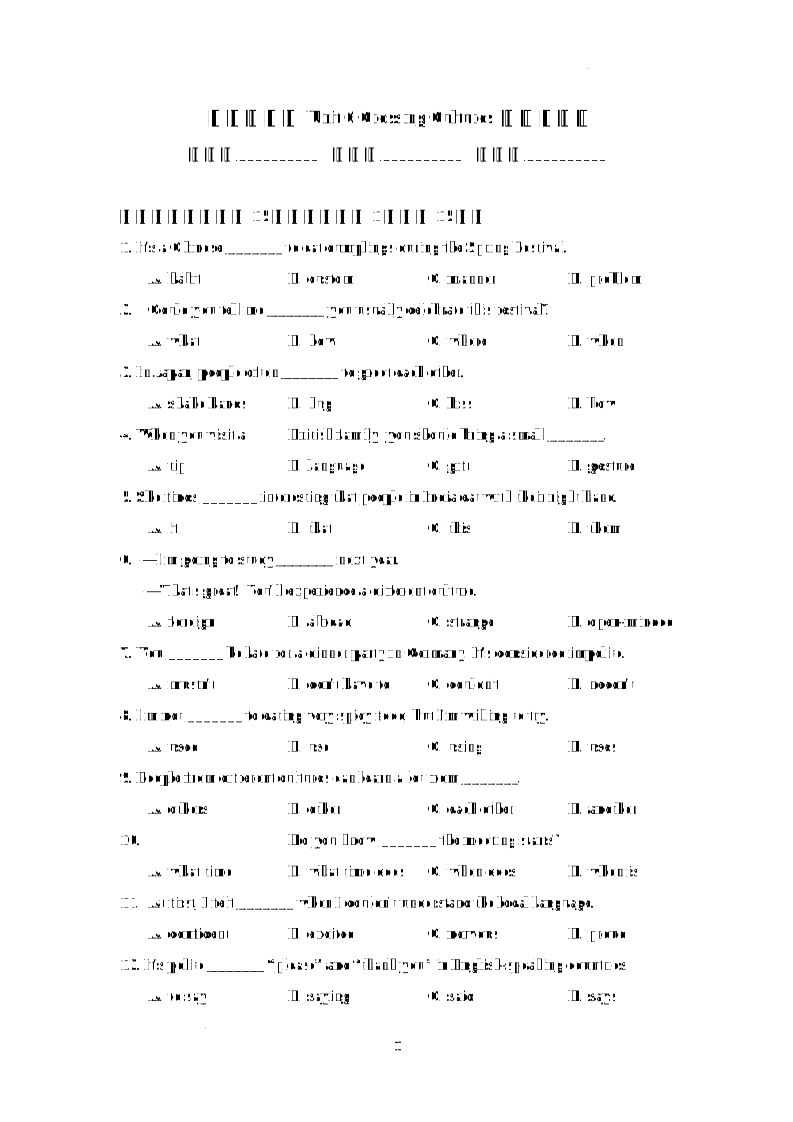
一、单项选择(共15小题,每小题1分,共15分)
1. It's a Chinese _______ to eat dumplings during the Spring Festival.
A. habit B. custom C. manner D. problem
2. Could you tell me _______ you usually celebrate this festival?
A. what B. how C. where D. when
3. In Japan, people often _______ to greet each other.
A. shake hands B. hug C. kiss D. bow
4. When you visit a British family, you should bring a small _______.
A. tip B. language C. gift D. gesture
5. She finds _______ interesting that people in India eat with their right hand.
A. it B. that C. this D. them
6. —I'm going to study _______ next year.
—That's great! You'll experience a different culture.
A. foreign B. abroad C. strange D. open-minded
7. You _______ be late for a dinner party in Germany. It's considered impolite.
A. mustn't B. don't have to C. couldn't D. needn't
8. I'm not _______ to eating very spicy food, but I'm willing to try.
A. used B. use C. using D. uses
9. People from different cultures can learn a lot from _______.
A. others B. other C. each other D. another
10. Do you know _______ the meeting starts?
A. what time B. what time does C. when does D. when is
11. At first, I felt _______ when I couldn't understand the local language.
A. confident B. excited C. nervous D. proud
12. It's polite _______ “please” and “thank you” in English-speaking countries.
A. to say B. saying C. said D. says
13. I was _______ to see people taking off their shoes before entering the house.
A. interesting B. surprised C. comfortable D. similar
14. Table _______ in China are different from those in the West.
A. tips B. fashions C. manners D. presents
15. We should _______ people's traditions even if they are different from ours.
A. refuse B. explain C. respect D. introduce
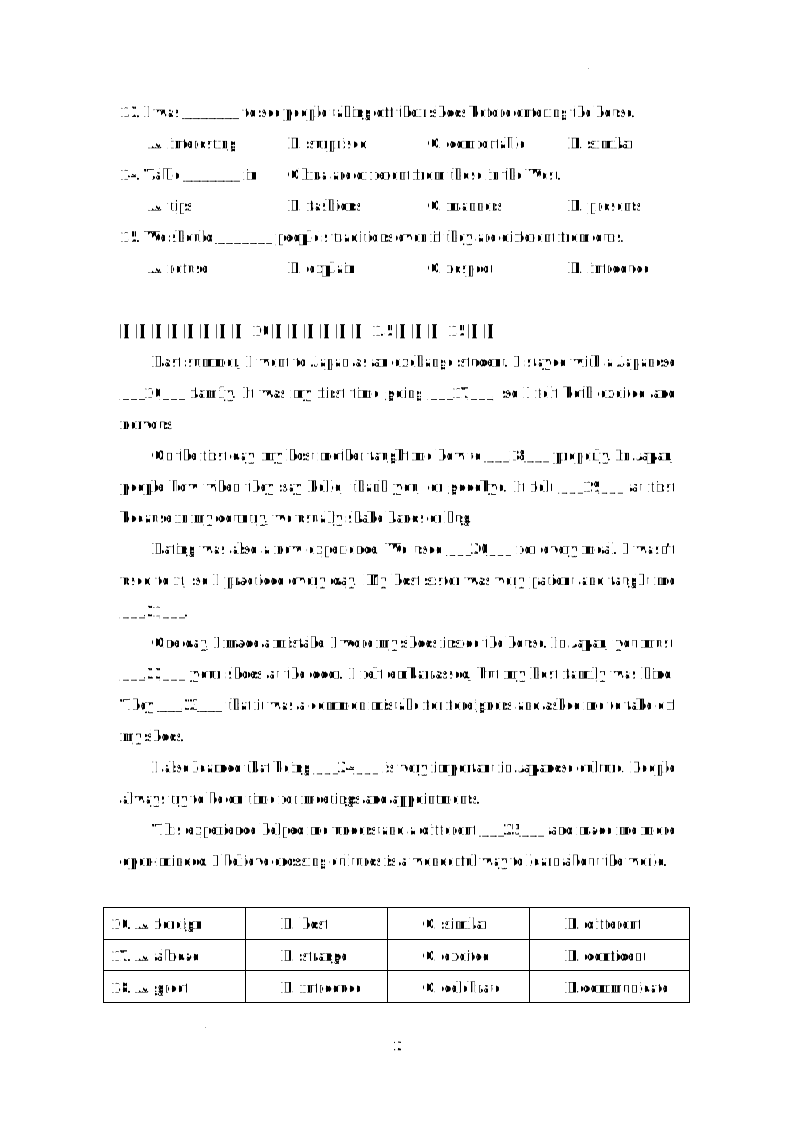
二、完形填空(共10小题,每小题1.5分,共15分)
Last summer, I went to Japan as an exchange student. I stayed with a Japanese ___16___ family. It was my first time going ___17___, so I felt both excited and nervous.
On the first day, my host mother taught me how to ___18___ properly. In Japan, people bow when they say hello, thank you, or goodbye. It felt ___19___ at first because in my country, we usually shake hands or hug.
Eating was also a new experience. We used ___20___ for every meal. I wasn't used to it, so I practiced every day. My host sister was very patient and taught me ___21___.
One day, I made a mistake. I wore my shoes inside the house. In Japan, you must ___22___ your shoes at the door. I felt embarrassed, but my host family was kind. They ___23___ that it was a common mistake for foreigners and asked me to take off my shoes.
I also learned that being ___24___ is very important in Japanese culture. People always try to be on time for meetings and appointments.
This experience helped me understand a different ___25___ and made me more open-minded. I believe crossing cultures is a wonderful way to learn about the world.
16. A. foreign
B. host
C. similar
D. different
17. A. abroad
B. strange
C. excited
D. confident
18. A. greet
B. introduce
C. celebrate
D.communicate
19. A. polite
B. strange
C. comfortable
D. interesting
20. A. chopsticks
B. forks
C. knives
D. spoons
21. A. how
B. what
C. which
D. why
22. A. take off
B. put on
C. shake off
D. give away
23. A. refused
B. accepted
C. explained
D. expressed
24. A. nervous
B. punctual
C. confident
D. surprised
25. A. language
B. fashion
C. manner
D. culture
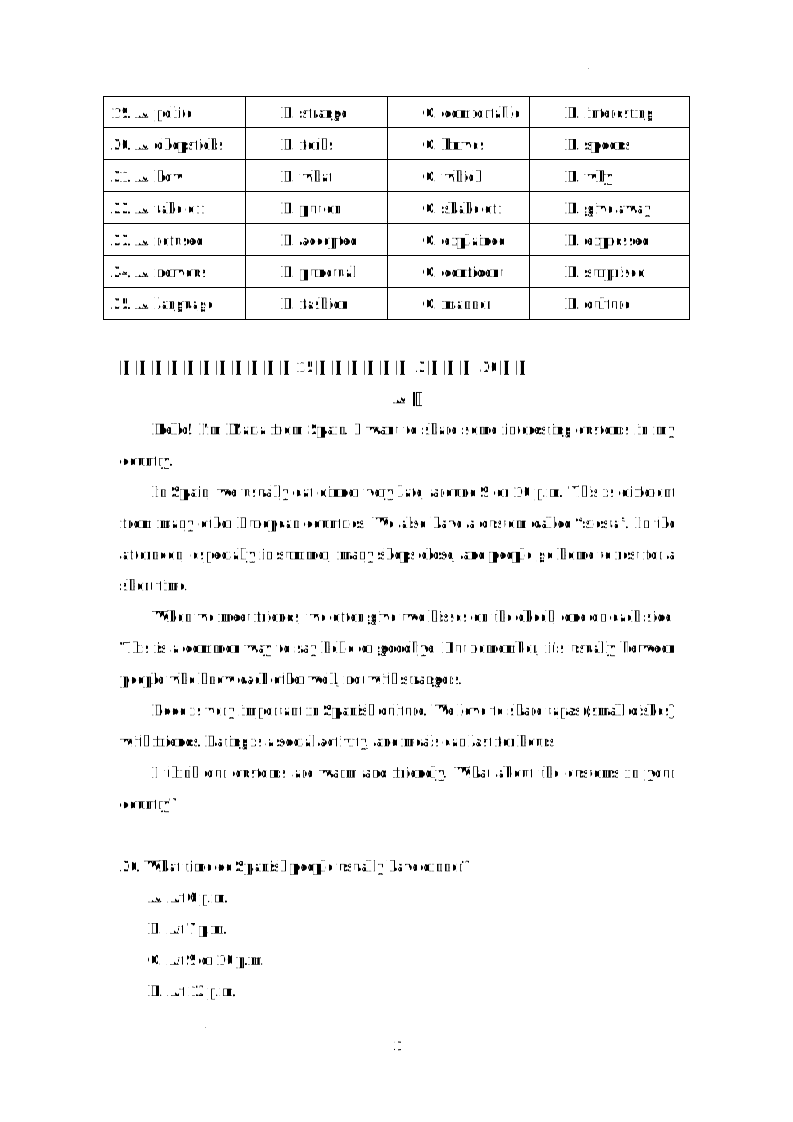
三、阅读理解(共三篇,15小题,每小题2分,共30分)
A 篇
Hello! I'm Maria from Spain. I want to share some interesting customs in my country.
In Spain, we usually eat dinner very late, around 9 or 10 p.m. This is different from many other European countries. We also have a custom called “siesta”. In the afternoon, especially in summer, many shops close, and people go home to rest for a short time.
When we meet friends, we often give two kisses on the cheek, one on each side. This is a common way to say hello or goodbye. But remember, it's usually between people who know each other well, not with strangers.
Food is very important in Spanish culture. We love to share tapas (small dishes) with friends. Eating is a social activity, and meals can last for hours.
I think our customs are warm and friendly. What about the customs in your country?
26. What time do Spanish people usually have dinner?
A. At 6 p.m.
B. At 7 p.m.
C. At 9 or 10 p.m.
D. At 12 p.m.
27. What is a “siesta”?
A. A type of food.
B. A short afternoon rest.
C. A way of greeting.
D. A festival.
28. How do Spanish people often greet close friends?
A. By shaking hands.
B. By bowing.
C. By giving two kisses on the cheek.
D. By hugging.
29. What are “tapas”?
A. Big meals.
B. Small dishes to share.
C. A kind of drink.
D. A type of clothing.
30. How does Maria feel about Spanish customs?
A. She thinks they are strange.
B. She thinks they are warm and friendly.
C. She doesn't like them.
D. She feels nervous about them.
B 篇
Chen Hua, a Chinese student, went to study in the United States for a year. He lived with an American host family.
At first, Chen Hua experienced culture shock. For example, in his host family, everyone had their own plate of food. In China, his family always shared dishes. Also, Americans often said “How are you?” as a greeting, but they didn't always wait for a detailed answer. Chen Hua found this a bit confusing.
Another difference was personal space. Americans seemed to stand farther apart when talking. Chen Hua was used to standing closer to friends in China.
With time, Chen Hua learned to adapt. He tried to understand American customs and explained Chinese customs to his host family. He taught them how to use chopsticks, and they taught him how to make pizza.
By the end of the year, Chen Hua felt much more comfortable. He made many American friends and his English improved a lot. He learned that cultural differences are not good or bad, just different. The key is to keep an open mind and respect each other's ways.
31. Where did Chen Hua go to study?
A. Japan.
B. The United Kingdom.
C. The United States.
D. Australia.
32. What is “culture shock”?
A. A feeling of excitement about a new culture.
B. A feeling of confusion when experiencing a different culture.
C. A type of food in America.
D. A way of greeting.
33. What was one difference Chen Hua noticed about meals?
A. Americans eat much later.
B. Americans share all dishes.
C. Americans have their own plates.
D. Americans don't use forks.
34. How did Chen Hua and his host family learn from each other?
A. They argued about customs.
B. They avoided talking about differences.
C. He taught them to use chopsticks, and they taught him to make pizza.
D. They only followed American customs.
35. What is the main idea of the passage?
A. American culture is better than Chinese culture.
B. It's impossible to adapt to a new culture.
C. Cultural differences can be challenging, but understanding and respect are important.
D. Chen Hua didn't enjoy his time in the US.
C 篇
In today's globalized world, cross-cultural communication is becoming increasingly common and important. It's not just about traveling abroad; we meet people from different cultures online, at work, and in our own cities.
Effective cross-cultural communication requires more than just knowing a foreign language. It involves understanding non-verbal cues like gestures, eye contact, and personal space, which can vary greatly between cultures. For example, a thumbs-up gesture means “good” in many countries, but it can be offensive in others.
Another key is to avoid stereotypes. A stereotype is a fixed, often oversimplified idea about a group of people. Thinking “all British people drink tea all the time” or “all Americans are loud” is not helpful and can lead to misunderstandings. We should see people as individuals.
It's also important to be aware of our own cultural biases. We often think our way is the “normal” or “correct” way. Being open-minded means accepting that other ways can also be valid.
Mistakes will happen. We might use the wrong gesture or say something unintentionally rude. When this happens, a polite apology and a willingness to learn are the best responses. Good cross-cultural communicators are good listeners and lifelong learners.
36. According to the passage, what is NOT a part of effective cross-cultural communication?
A. Knowing a foreign language.
B. Understanding non-verbal cues.
C. Having stereotypes about other cultures.
D. Being open-minded.
37. What is a “stereotype”?
A. A useful tool for understanding cultures.
B. A fixed, oversimplified idea about a group.
C. A type of non-verbal cue.
D. A way to apologize.
38. Why is it important to be aware of our own cultural biases?
A. Because our way is always the best.
B. Because it helps us avoid thinking other ways are also valid.
C. Because it allows us to accept that other ways can also be valid.
D. Because it makes communication simpler.
39. What should you do if you make a cultural mistake?
A. Get angry.
B. Ignore it.
C. Apologize politely and be willing to learn.
D. Blame the other person.
40. What is the author's main purpose in writing this passage?
A. To list all cultural differences in the world.
B. To argue that one culture is superior.
C. To provide tips for effective and respectful cross-cultural communication.
D. To discourage people from communicating with foreigners.
四、任务型阅读(共5小题,每小题2分,共10分)
阅读下面关于中美问候方式差异的短文,根据文章内容完成句子,每空一词。
In China, when people meet, they often ask “Have you eaten?” or “Where are you going?”. These are not real questions but friendly greetings. The common response is just “Yes” or “Just out for a walk”, even if it's not true. People don't usually expect a detailed answer.
In the United States, a common greeting is “How are you?”. The expected answer is “I'm fine, thank you. And you?”. It is also a polite formality, and people often do not give a real answer about their feelings unless they are talking to a close friend.
These differences can sometimes cause confusion. A Chinese person might give a detailed answer to “How are you?” in the US, and an American might try to answer “Have you eaten?” literally in China. Understanding that these are just cultural greeting habits can help avoid misunderstandings.
41. In China, “Have you eaten?” is often used as a friendly _______.
42. People usually don't expect a _______ answer to these greetings.
43. In the US, “How are you?” is a polite _______.
44. The expected answer in the US is “I'm _______”.
45. Understanding these differences can help avoid _______.
五、补全对话(共5小题,每小题2分,共10分)
根据上下文,在横线上写出适当的句子,使对话完整、通顺。
A: Hi, Li Ming. I heard you have a new friend from France.
B: Yes, his name is Pierre. He's here as an exchange student.
A: That's cool. 46________________________________________?
B: Well, he told me that in France, people often kiss on the cheek when greeting friends, even between men.
A: Really? 47________________________________________. We usually just say hello or shake hands.
B: I know. At first, I was surprised too. 48______________________________.
A: You're right. Could you tell me 49_____________________________________?
B: He said it's important to be on time in France, maybe even a few minutes early for a dinner invitation.
A: I see. 50________________________________________.
B: Me too. It's interesting to learn about different cultures.
六、书面表达(共20分)
假设你的英国笔友Mike即将来中国进行为期两周的文化交流。他对中国文化很感兴趣,但也有些担心因为不了解中国习俗而犯错。请你给他写一封电子邮件,给他一些建议。
内容包括:
1. 欢迎他来中国,并理解他的担心;
2. 给他两到三条关于中国基本礼仪或习俗的建议(例如:问候、就餐、做客等);
3. 鼓励他放松心态,享受这次文化交流。
字数要求:80词左右。
1
学科网(北京)股份有限公司
$
资源预览图
1
2
3

相关资源
由于学科网是一个信息分享及获取的平台,不确保部分用户上传资料的 来源及知识产权归属。如您发现相关资料侵犯您的合法权益,请联系学科网,我们核实后将及时进行处理。