Unit 3 Growing Up 单元测试卷-2025-2026学年人教版英语八年级下册
2026-01-30
|
2份
|
12页
|
381人阅读
|
12人下载
资源信息
| 学段 | 初中 |
|---|---|
| 学科 | 英语 |
| 教材版本 | 初中英语人教版八年级下册 |
| 年级 | 八年级 |
| 章节 | Unit 3 Growing Up |
| 类型 | 作业-单元卷 |
| 知识点 | - |
| 使用场景 | 同步教学-单元练习 |
| 学年 | 2026-2027 |
| 地区(省份) | 陕西省 |
| 地区(市) | - |
| 地区(区县) | - |
| 文件格式 | ZIP |
| 文件大小 | 70 KB |
| 发布时间 | 2026-01-30 |
| 更新时间 | 2026-01-30 |
| 作者 | xkw_059406787 |
| 品牌系列 | - |
| 审核时间 | 2026-01-30 |
| 下载链接 | https://m.zxxk.com/soft/56239883.html |
| 价格 | 0.50储值(1储值=1元) |
| 来源 | 学科网 |
内容正文:
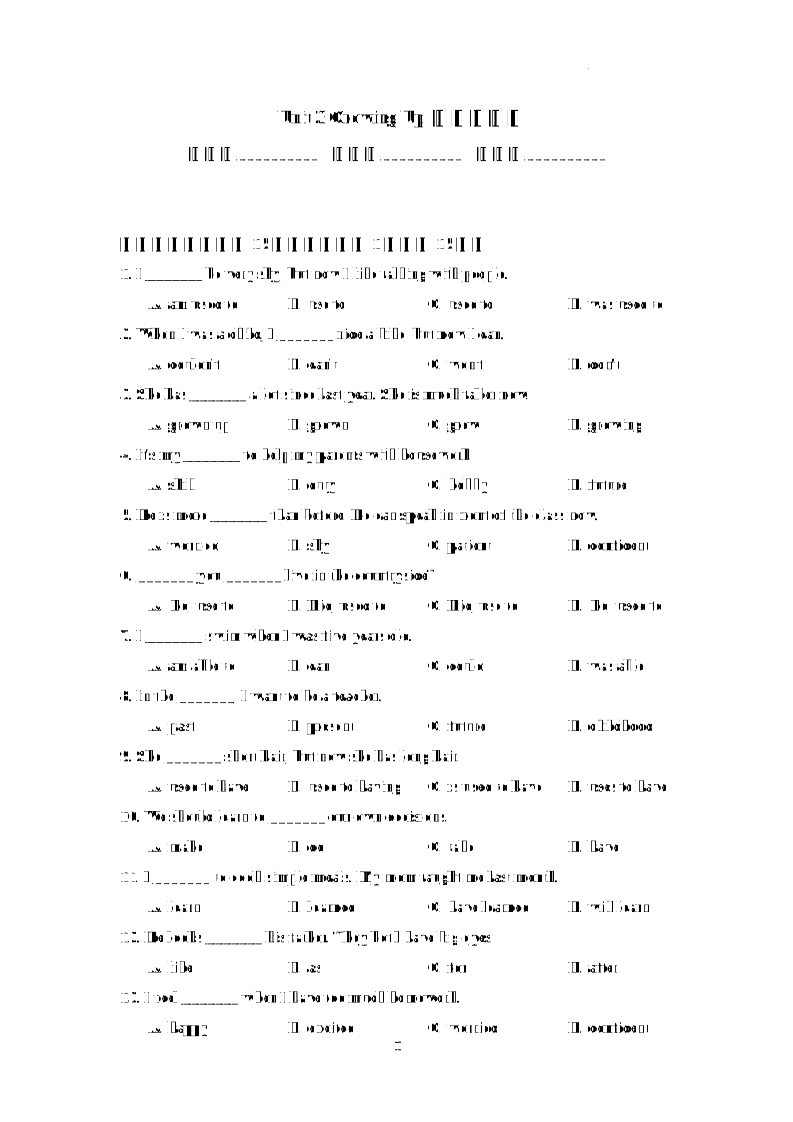
Unit 3 Growing Up 单元测试卷
班级:__________ 姓名:__________ 分数:__________
一、单项选择(共15小题,每小题1分,共15分)
1. I _______ be very shy, but now I like talking with people.
A. am used to B. use to C. used to D. was used to
2. When I was a child, I _______ ride a bike, but now I can.
A. couldn't B. can't C. won't D. don't
3. She has _______ a lot since last year. She is much taller now.
A. grown up B. grown C. grew D. growing
4. It's my _______ to help my parents with housework.
A. skill B. duty C. hobby D. future
5. He is more _______ than before. He can speak in front of the class now.
A. worried B. shy C. patient D. confident
6. _______ you _______ live in the countryside?
A. Do; use to B. Did; used to C. Did; use to D. Do; used to
7. I _______ swim when I was five years old.
A. am able to B. can C. could D. was able
8. In the _______, I want to be a teacher.
A. past B. present C. future D. childhood
9. She _______ short hair, but now she has long hair.
A. used to have B. used to having C. is used to have D. uses to have
10. We should learn to _______ our own decisions.
A. make B. do C. take D. have
11. I _______ to cook simple meals. My mom taught me last month.
A. learn B. learned C. have learned D. will learn
12. He looks _______ his father. They both have big eyes.
A. like B. as C. for D. after
13. I feel _______ when I have too much homework.
A. happy B. excited C. worried D. confident
14. She is _______ independent now. She can live alone.
A. more B. much C. many D. most
15. In my _______, I played with toys every day.
A. teenager B. adult C. childhood D. future
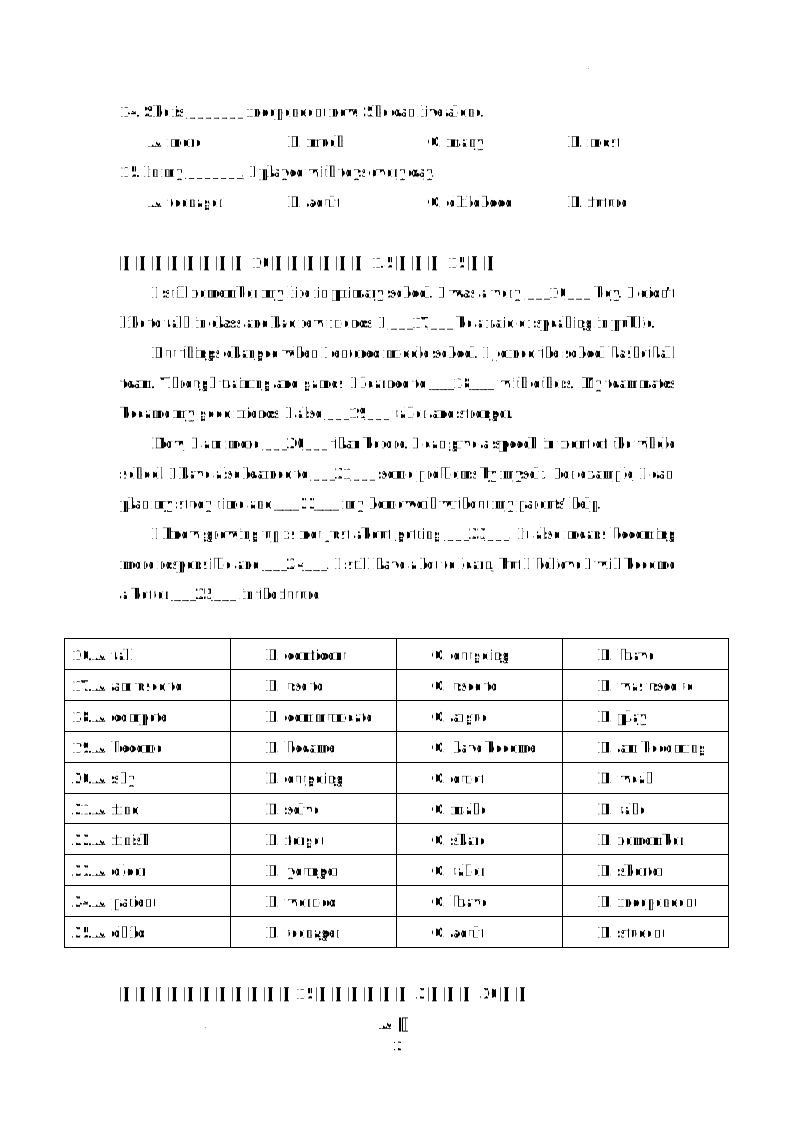
二、完形填空(共10小题,每小题1.5分,共15分)
I still remember my life in primary school. I was a very ___16___ boy. I didn't like to talk in class and had few friends. I ___17___ be afraid of speaking in public.
But things changed when I entered middle school. I joined the school basketball team. Through training and games, I learned to ___18___ with others. My teammates became my good friends. I also ___19___ taller and stronger.
Now, I am more ___20___ than before. I can give a speech in front of the whole school. I have also learned to ___21___ some problems by myself. For example, I can plan my study time and ___22___ my homework without my parents' help.
I know growing up is not just about getting ___23___. It also means becoming more responsible and ___24___. I still have a lot to learn, but I believe I will become a better ___25___ in the future.
16.A. tall
B. confident
C. outgoing
D. brave
17.A. am used to
B. use to
C. used to
D. was used to
18.A. compete
B. communicate
C. argue
D. play
19.A. become
B. became
C. have become
D. am becoming
20.A. shy
B. outgoing
C. quiet
D. weak
21.A. find
B. solve
C. make
D. take
22.A. finish
B. forget
C. share
D. remember
23.A. older
B. younger
C. taller
D. shorter
24.A. patient
B. worried
C. brave
D. independent
25.A. child
B. teenager
C. adult
D. student
三、阅读理解(共三篇,15小题,每小题2分,共30分)
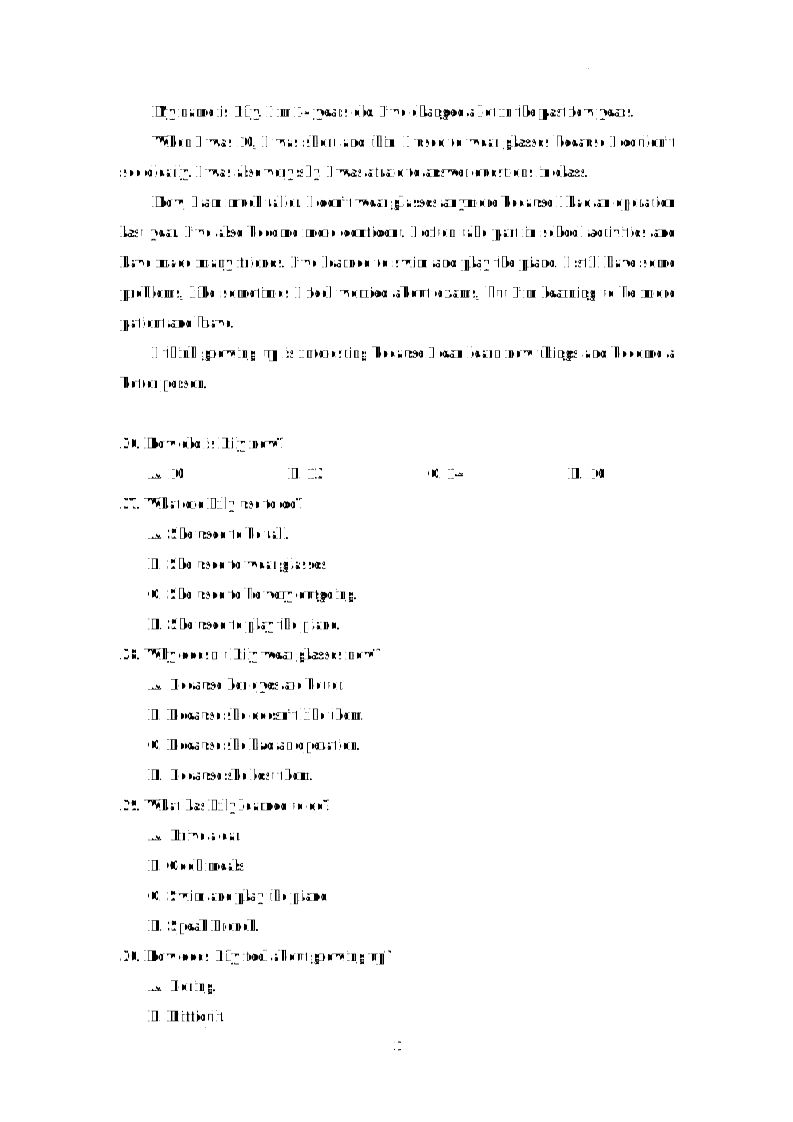
A 篇
My name is Lily. I’m 14 years old. I’ve changed a lot in the past few years.
When I was 10, I was short and thin. I used to wear glasses because I couldn’t see clearly. I was also very shy. I was afraid to answer questions in class.
Now, I am much taller. I don’t wear glasses anymore because I had an operation last year. I’ve also become more confident. I often take part in school activities and have made many friends. I’ve learned to swim and play the piano. I still have some problems, like sometimes I feel worried about exams, but I’m learning to be more patient and brave.
I think growing up is interesting because I can learn new things and become a better person.
26. How old is Lily now?
A. 10 B. 12 C. 14 D. 16
27. What did Lily use to do?
A. She used to be tall.
B. She used to wear glasses.
C. She used to be very outgoing.
D. She used to play the piano.
28. Why doesn’t Lily wear glasses now?
A. Because her eyes are better.
B. Because she doesn’t like them.
C. Because she had an operation.
D. Because she lost them.
29. What has Lily learned to do?
A. Drive a car.
B. Cook meals.
C. Swim and play the piano.
D. Speak French.
30. How does Lily feel about growing up?
A. Boring.
B. Difficult.
C. Interesting.
D. Sad.
B 篇
As teenagers grow up, they not only change physically but also take on more responsibilities.
In many families, teenagers are expected to help with chores, such as cleaning their rooms, washing dishes, or taking care of younger siblings. These tasks help them learn to be responsible and independent.
School also gives teenagers more responsibilities. They have more homework and need to manage their time well. Some students join clubs or become class leaders, which teaches them how to work with others and make decisions.
However, some teenagers feel stressed because they have too much to do. It’s important for parents and teachers to guide them and help them balance their duties and free time.
Learning to be responsible is a key part of growing up. It prepares teenagers for their future as adults.
31. What is the main idea of the second paragraph?
A. Teenagers like doing chores.
B. Chores help teenagers become responsible.
C. Parents should do all the chores.
D. Chores are boring.
32. What does the word “manage” mean in Paragraph 3?
A. Forget.
B. Control or organize.
C. Find.
D. Remember.
33. What might be a responsibility at school?
A. Cooking dinner.
B. Washing clothes.
C. Being a class leader.
D. Taking care of a pet.
34. Why do some teenagers feel stressed?
A. Because they have no friends.
B. Because they have too much to do.
C. Because they don’t go to school.
D. Because they are too tall.
35. What does the writer think about being responsible?
A. It is not important.
B. It is only for adults.
C. It prepares teenagers for the future.
D. It makes teenagers unhappy.
C 篇
Growing up involves both physical changes and psychological development. One important psychological change is the development of a sense of self.
During childhood, children often depend on their parents for decisions and direction. As they enter adolescence, they start to form their own opinions and values. They ask questions like “Who am I?” and “What do I want to be?” This process is called identity formation.
Teenagers may try different hobbies, styles, or friends to find out what fits them best. Sometimes they face confusion or pressure from peers and society. Support from family and friends is crucial during this time.
Another key change is the development of empathy—the ability to understand and share the feelings of others. Young children are often self-centered, but as they grow, they learn to consider other people’s perspectives.
Growing up is not always easy, but these challenges help teenagers become mature and well-rounded adults.
36. What does “psychological development” refer to?
A. Changes in height and weight.
B. Changes in thinking and feelings.
C. Learning new skills.
D. Doing chores.
37. What is “identity formation”?
A. Forgetting who you are.
B. Forming your own opinions and values.
C. Always following parents’ decisions.
D. Looking like your parents.
38. Why might teenagers try different hobbies or styles?
A. To waste time.
B. To find out what fits them best.
C. To make their parents angry.
D. To avoid schoolwork.
39. What is empathy?
A. Being selfish.
B. Understanding others’ feelings.
C. Making decisions quickly.
D. Growing taller.
40. What is the main idea of the passage?
A. Physical growth is the most important.
B. Teenagers should not have responsibilities.
C. Growing up includes psychological changes and challenges.
D. Childhood is better than adolescence.
四、任务型阅读(共5小题,每小题2分,共10分)
阅读下面关于Tom成长变化的短文,根据内容完成句子,每空一词。
Tom is 15 years old. He used to be a quiet boy and spent most of his time reading alone. He didn’t like sports and couldn’t swim. But after entering middle school, he joined the school swimming club. Now, he swims very well and has made many friends there. He has also become more confident. He says, “Growing up means learning new things and becoming braver.”
41. Tom used to be a _______ boy.
42. He didn’t like _______ in the past.
43. He joined the school _______ club.
44. Now he can swim very _______.
45. He thinks growing up means becoming _______.
五、补全对话(共5小题,每小题2分,共10分)
根据上下文,在横线上写出适当的句子,使对话完整、通顺。
A: Hi, Lucy. Long time no see. You look different!
B: Really? 46________________________________________?
A: You’re taller than before. And you used to have long hair.
B: Yes, I cut it short last month. 47________________________________________.
A: It suits you. You also seem more confident.
B: Thank you. 48________________________________________. I joined the debate team last term.
A: That’s great! 49________________________________________?
B: I used to be afraid of speaking in public, but now I enjoy it.
A: Wow, you’ve changed a lot.
B: Yes, 50________________________________________.
六、书面表达(共20分)
成长意味着变化。请以“How I Have Changed”为题,写一篇短文,介绍你在过去几年中的变化。
内容包括:
1. 过去的外貌、性格或能力(例如:身高、性格、会不会做某事);
2. 现在的变化;
3. 你对这些变化的感受或看法。
字数要求:80词左右。
1
学科网(北京)股份有限公司
$
参考答案与解析
一、单项选择
1. C
解析: used to do 表示“过去常常/曾经是”,这里指“我曾经很害羞”,符合“but now”的对比语境。
2. A
解析: could 的否定形式 couldn’t 表示过去不具备的能力,与后文“现在我会了”形成对比。
3. B
解析: 现在完成时 has grown 表示“已经长高”,强调变化的结果。grown up 指“长大成人”,与 taller 搭配不当。
4. B
解析: duty 意为“责任”,与 help my parents 构成合理搭配。
5. D
解析: confident 意为“自信的”,与“能在全班面前发言”的语境一致。
6. C
解析: used to 的疑问句形式为 Did + 主语 + use to do?,use 用原形。
7. C
解析: could 表示过去具备的能力,与 when I was five 时间状语匹配。
8. C
解析: in the future 意为“将来”,与 want to be a teacher 的意愿一致。
9. A
解析: used to have 表示“过去曾经有”,与 but now 构成对比。
10. A
解析: make decisions 是固定搭配,意为“做决定”。
11. C
解析: 现在完成时 have learned 表示“已经学会”,与 last month 这个过去时间点的影响相符。
12. A
解析: look like 意为“看起来像”,是固定搭配。
13. C
解析: feel worried 意为“感到担忧”,与 too much homework 的压力情境一致。
14. A
解析: more independent 构成比较级,表示“更加独立”,符合语境。
15. C
解析: in my childhood 意为“在我的童年时期”,与 played with toys 内容一致。
二、完形填空
16. C outgoing
解析: 后文提到 didn't like to talk 和 had few friends,说明他过去并不外向(outgoing),而是 quiet 的反义词。
17. C used to
解析: used to be afraid 表示“过去常常害怕”,描述过去的状态。
18. B communicate
解析: communicate with others 意为“与他人交流”,与 join the basketball team 带来的变化一致。
19. B became
解析: 全文以一般过去时叙述,became 符合时态。
20. B outgoing
解析: 与开头 quiet 形成对比,且后文提到 give a speech,说明变得外向了。
21. B solve
解析: solve problems 是固定搭配,意为“解决问题”。
22. A finish
解析: finish homework 意为“完成作业”,与 without parents' help 呼应。
23. C taller
解析: 前文提到 grew taller,此处 not just about getting taller 强调成长不仅是身体变化。
24. D independent
解析: independent 意为“独立的”,与 responsible 并列,是成长的重要方面。
25. C adult
解析: become a better adult 意为“成为更好的成年人”,符合成长主题。
三、阅读理解
A 篇
26. C
解析: 文章第一句明确说明 “I’m 14 years old.”
27. B
解析: 第二段第二句 “I used to wear glasses” 明确指出。
28. C
解析: 第三段第二句 “I don’t wear glasses anymore because I had an operation last year.”
29. C
解析: 第三段第四句 “I’ve learned to swim and play the piano.”
30. C
解析: 最后一句 “I think growing up is interesting...” 明确表达。
B 篇
31. B
解析: 第二段主要讲做家务如何帮助青少年变得有责任感。
32. B
解析: manage their time 意为“管理/安排他们的时间”。
33. C
解析: 第三段提到 “become class leaders” 是学校的责任之一。
34. B
解析: 第四段第一句明确指出 “some teenagers feel stressed because they have too much to do.”
35. C
解析: 文章最后一句 “It prepares teenagers for their future as adults.” 点明作者观点。
C 篇
36. B
解析: psychological development 指心理发展,即思维和情感方面的变化。
37. B
解析: 第二段说明 identity formation 是形成自己的观点和价值观的过程。
38. B
解析: 第三段提到 “try different hobbies, styles... to find out what fits them best.”
39. B
解析: 第四段对 empathy 的定义是 “the ability to understand and share the feelings of others.”
40. C
解析: 全文围绕成长过程中的心理变化和挑战展开,首句和尾句均体现这一主旨。
四、任务型阅读
41. quiet
解析: 原文 “He used to be a quiet boy”。
42. sports
解析: 原文 “He didn’t like sports”。
43. swimming
解析: 原文 “he joined the school swimming club”。
44. well
解析: 原文 “Now, he swims very well”。
45. braver
解析: 原文直接引语 “Growing up means... becoming braver”。
五、补全对话(参考答案)
46. How have I changed? / What's different?
解析: 回应对方 “You look different” 的观察,询问具体变化。
47. I like short hair better now. / It's easier to take care of.
解析: 解释为什么剪短发,需符合语境。
48. I have become more confident since then. / Joining the team helped me.
解析: 承接“更自信”的夸奖,说明原因。
49. Did you use to be afraid of speaking? / How did you change?
解析: 针对对方提到辩论队,可询问过去与现在的对比。
50. growing up is full of changes. / I'm still learning and changing.
解析: 总结对话,回应“变化很大”,可表达对成长的看法。
六、书面表达(范文参考)
How I Have Changed
In the past few years, I have changed a lot. When I was in primary school, I used to be short and quiet. I couldn't swim or cook, and I was always shy in front of strangers.
Now, I am much taller and more confident. I have learned to swim and even cook simple meals. I also help my parents with chores, which makes me feel more responsible.
I think growing up is a wonderful journey. Although sometimes I feel worried about the future, I am excited to learn new things and become a better person.
1
学科网(北京)股份有限公司
$
资源预览图
1
2
3

相关资源
由于学科网是一个信息分享及获取的平台,不确保部分用户上传资料的 来源及知识产权归属。如您发现相关资料侵犯您的合法权益,请联系学科网,我们核实后将及时进行处理。