Unit 2 Looking into the Future Reading and Thinking 教学设计 -2025-2026学年高中英语人教版选择性必修第一册
2026-01-27
|
5页
|
278人阅读
|
1人下载
普通
资源信息
| 学段 | 高中 |
|---|---|
| 学科 | 英语 |
| 教材版本 | 高中英语人教版选择性必修第一册 |
| 年级 | 高二 |
| 章节 | Reading and Thinking |
| 类型 | 教案-教学设计 |
| 知识点 | - |
| 使用场景 | 同步教学-新授课 |
| 学年 | 2025-2026 |
| 地区(省份) | 全国 |
| 地区(市) | - |
| 地区(区县) | - |
| 文件格式 | DOCX |
| 文件大小 | 2.11 MB |
| 发布时间 | 2026-01-27 |
| 更新时间 | 2026-01-27 |
| 作者 | 厚德载物888 |
| 品牌系列 | - |
| 审核时间 | 2026-01-27 |
| 下载链接 | https://m.zxxk.com/soft/56170832.html |
| 价格 | 1.00储值(1储值=1元) |
| 来源 | 学科网 |
内容正文:
Unit2 Looking into the Future Reading and Thinking 教学设计
教学目标
1.学生能够准确认读、理解并运用本单元与智能家居相关的重点词汇,如 “innovation(创新)”“automatic(自动的)” 等,以及掌握重点句式及将来进行时态的应用,例如 “Many of these new innovations are already available and being used in some homes.(许多这类新发明已投入使用并在一些家庭中被应用)” 。
2.学生能够读懂关于智能家居的科普类英语文章,理解文章中关于智能家居功能、影响等方面的阐述,把握文章的主要内容和结构。学生能够运用所学语言知识,较为流畅地描述智能家居的特点和优势,就相关话题进行简单的英语交流。
3.通过 PWP 阅读教学法,学生逐步提升英语阅读技巧,如略读和精读等,提高分析和理解文本的能力。在小组讨论、合作探究活动中,学生增强团队协作意识,锻炼用英语进行思维和表达的能力,培养批判性思维和解决问题的能力。借助对智能家居相关问题的思考与讨论,学生学会运用英语进行信息收集、整理和分析,提升自主学习能力。
4.学生对智能家居等未来科技产生浓厚兴趣,激发对科技探索的好奇心和求知欲。学生树立正确看待科技发展的态度,既能认识到科技对生活的积极推动作用,也能理性思考科技带来的潜在问题,增强社会责任感。
Learning Objectives
Through the study of this class, students should:
1.Read and understand articles of the popular science exposition to obtain factual information
2. Read the detailed content of the article, organize the information logically and complete the reading task
3. Be able to maintain curiosity about the development on science and technology
教学重难点
教学重点:
1.掌握与智能家居相关的重点词汇、短语和句式,理解其在文本中的含义和用法。
2.读懂文章内容,梳理文章结构,准确获取关于智能家居功能、优势及面临问题等关键信息。
3.能够运用所学知识,围绕智能家居话题进行英语口头表达和简单的书面描述。
教学难点:
1.理解科普类文章中一些较为专业的科技表达和复杂句式,并能准确运用到自己的语言输出中。
2.培养批判性思维,引导学生从不同角度全面、深入地分析智能家居的利弊,并能用英语清晰、有条理地阐述自己的观点。
3.引导学生将所学知识与实际生活相联系,思考如何利用智能家居改善生活,以及应对可能出现的问题,提升解决实际问题的能力。
教学活动设计
教学环节
教学过程
设计意图
Step 1
Lead in
1.向学生展示两幅图片 mobile phone 和 smart phone,通过一句“yes,you are smart.”理解 smart 一词的含义并联系所学的单词 intelligent
2.提问 What smart technology do you know?
继续展示常见的智能家具图片,并通过将其组合一起构成smart home,以此引出主题。
3.观看智能家视频,直观感受智能家使生活便利的特点。
1.利用移动手机和智能手机导入smart 的理解。
2.由 smart 一词熟知更多智能装置并通过视频,直观了解文章标题的涵义。
Step 2
Pre-reading
1.学生浏览语篇标题和文中的 3 个小标题,判断语篇出处、写作目的和目标读者,提示学生可根据课本中的阅读提示判断
(1)What is the type of this text?
A. A narration
B. A popular science exposition
C. An argumentation
D. A science novel
(2)What is the purpose of the passage?
A. To tell people the disadvantages of smart homes.
B.To change the old houses into a smart home.
C.To decorate home with smart technology.
D.To give a brief introduction about smart homes
(3)Who is the intended reader of the text?
People who are ______in ____homes.
Answers interested smart
Reading tips : The types of phrases used in a passage help identify its purpose.
For example, the phrase in my opinion tells us that the passage is likely meant to persuade. And a text that uses imperatives is likely meant to instruct. A passage’s content helps identify its audience. For example, a passage that gives tips on looking after pets would have pet owners as its audience.
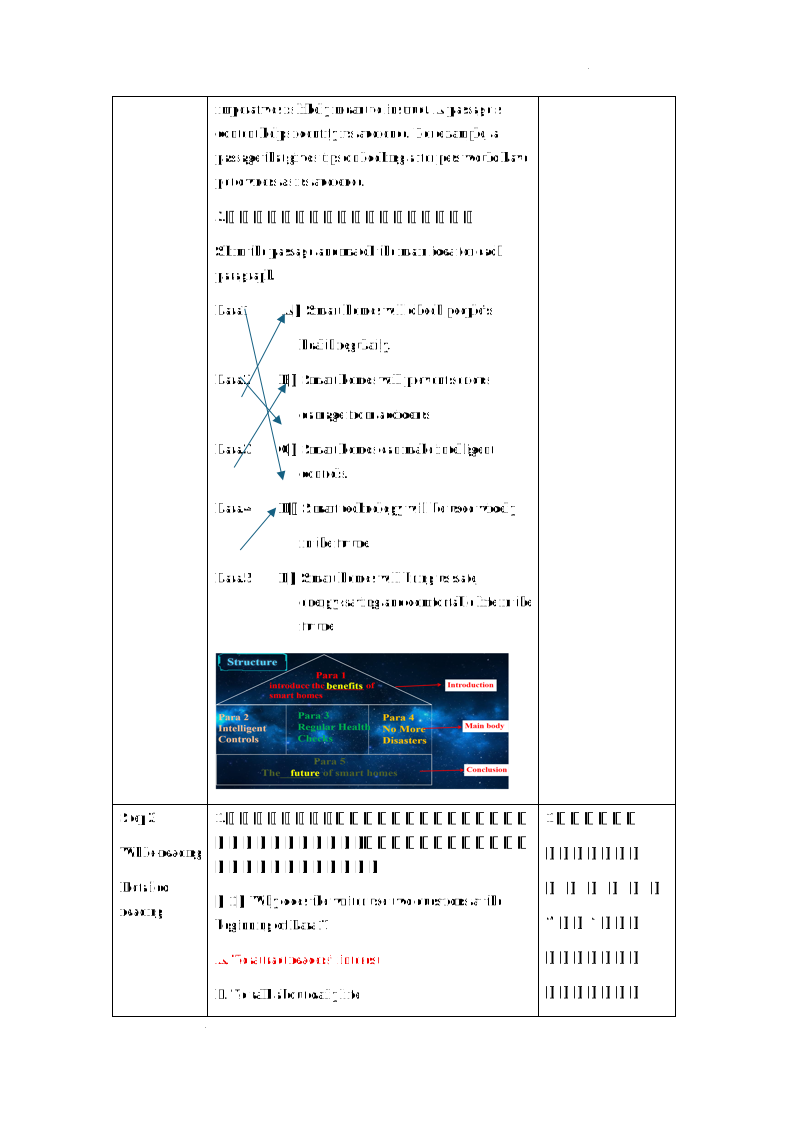
2.略读文章,连线每段大意并划分文章结构
Skim the passage and match the main idea for each paragraph.
Para1 A.Smart homes will check people’s
health regularly.
Para.2 B.Smart homes will prevent serious
damage from accidents.
Para.3 C.Smart homes can make intelligent controls.
Para.4 D.Smart technology will be used widely
in the future.
Para.5 E.Smart homes will bring us safe, energy-saving and comfortable life in the future
1.浏览文章标题及小标题,判断
文章体裁,写作
意图及目标读者,学习本文的阅读技巧 identify purpose
and audience。
2.略读文章,了解每段大意并划分篇章结构,以小房子的形状呈现文章结构,与智能“家”的概念契合。
Step 3
While-reading
Detailed reading
1.学生阅读第一段,厘清文章开始的两个问句的作用及作者对智能家的态度,在回答态度问题时需先引导学生找出智能家居的优点。
(1)Why does the writer use two questions at the beginning of Para1?
A. To attract readers’ interest
B. To talk about daily life
C. To introduce the topic
(2)What is the author’s attitude towards smart homes?
positive, hopeful, supportive…
2.学生阅读第二段 intelligent controls,完成现在与将来的四方面的对比,并让学生找出智能家居控制的基础是基于 advanced technology
3.学生阅读第三段 regular health checks,以智能床和智能马桶列举的两个智能装置为例,完成语块填空,直观感受智能家具作为健康卫士的作用
4.学生阅读第四段 no more disasters,找出主旨句,把握智能家具的作用,完成语块填空
5.由主体三段的语句,总结主体三段的发展特点
How does the author develop these three paragraphs?
How to develop
Clues
Para 2
By comparison
Para 3
By examples
Para 4
By examples
6.总结智能家的特点,由 6 句文章的句子及 6 个描述性词语相匹配,其首字母组成 EARSIER,并呼应文章标题,easier 且智能家使得生活也 colorful
Energy-efficient
Automatic
Secure
Intelligent
Effectively-monitored
Reliable
7.学生阅读第五段,通过回答以下问题,进一步探究语篇的主题意义,通过最后一个问题,让学生辩证看待智能家。
(1)Why does the author say“the home of tomorrow is already the home of today?”
(2)What’s the author’s attitude to smart homes?
A. positive B. negative C. doubtful
(3)Why will it “take some years”?
1.①分析段首的
问句,引导学生
理 解 作 者 运 用
“设问”手法的
写作意图,强化
对英语文章结构
逻辑的认知
②学生通过优点
归纳分析作者态
度,促使其建立
“内容-态度”的
关联思维。
2. ① 通过对比“现在”与“将来”在日常四方面的差异,将抽象文本转化为可视化信息,帮助学生掌握“定位关键信息- 提取
对比点 -归纳总
结”的阅读方法。
②明确要求学生
要求找出“in the
future, we will be
using advanced
technology
everyday for
automatic
control…”,促使
其从现象(应用
场景)深入到本
质(科技)分析
3.以智能床、智
能马桶为实例,
将 “health checks”的抽象
概念转化为可感
知的功能场景,
强化语块提取与
语境运用能力。
4.引导学生从段
落中精确抓取主
旨句。
5.总结主体三段
的发展特点,理
解作者如何通过
不同论证手法展
开论述(如对比
凸显差异,举例
增强说服力),为
写作实践提供参
考。
6.①将文章句子
匹 配 描 述 性 词
语,能够加深学
生对文章内容的
理解,促使学生
灵活筛选词汇;
②以特定字母组
合为目标进行词
语匹配,具有一
定的创造性和趣
味性,鼓励学生
打破常规思维,
建立句子、词语、
标题间的逻辑联
系。
7.①问题(1)引
导学生理解智能
家居技术的“现
实落地性”,打破
“未来科技”的
距离感,强化“科
技与生活融合”
的主题认知。
②问题(3)要求
学生跳出文本优
势论述,思考技
术普及的现实障
碍,引导学生以
辩证视角看待智
能家的“现状与
未来”,避免绝对
化思维
Step 4
Post-reading
1. 观看视频,发现智能家的不足之处
2. 小组讨论智能家的弊端,并给出四种情况。
(1)If there is a problem with your voice, ……
(2)If the system breaks down, ……
(3)If hackers hack into your system, ……
(4)For older people, ……
3.Evaluate
1. 通过观看视频,强化学生观察和信息捕捉能力,让学生学会从视频中提取有效信息。
2.①小组围绕四
种特定情况,从
不同角度思考技
术可能带来的不
便,培养学生的
批判性思维。
②通过探讨智能
家的弊端培养学
生构建现实关联
与社会责任感,
促使学生思考如
何更好地利用和
改进技术,激发
创新思维。
3. 以教学为纽带,实现评价与目标的双向呼应,形成 “教学—评价—反馈” 的良性循环
Step 5
Assignment
Writing
“What’s your attitude towards the smart home?”
opinion
supporting details
学以致用,为下
一课时议论文写
作奠定基础
Step6
Closing
Let everyone in the world enjoy a better life
through innovative technology.
——Lei Jun
Made in China 中国制造
Smartly Made in China 中国智造
1.引用小米创始人雷军在论坛的发言,总结本课,培养爱国情怀与国际视野 2.“中国智造”照应课堂导入环节的
smart 一词,激励
学生积极探索创
新,助力中国迈
向智造强国。
学科网(北京)股份有限公司
$
资源预览图
1

2
3
相关资源
由于学科网是一个信息分享及获取的平台,不确保部分用户上传资料的 来源及知识产权归属。如您发现相关资料侵犯您的合法权益,请联系学科网,我们核实后将及时进行处理。