第25讲 九年级下册 Modules7-8 外研版2026年中考英语一轮复习教材梳理学案
2026-01-25
|
31页
|
120人阅读
|
0人下载
普通
资源信息
| 学段 | 初中 |
|---|---|
| 学科 | 英语 |
| 教材版本 | - |
| 年级 | 九年级 |
| 章节 | - |
| 类型 | 学案-知识清单 |
| 知识点 | - |
| 使用场景 | 中考复习-一轮复习 |
| 学年 | 2026-2027 |
| 地区(省份) | 全国 |
| 地区(市) | - |
| 地区(区县) | - |
| 文件格式 | DOCX |
| 文件大小 | 98 KB |
| 发布时间 | 2026-01-25 |
| 更新时间 | 2026-03-23 |
| 作者 | xkw_076089644 |
| 品牌系列 | - |
| 审核时间 | 2026-01-25 |
| 下载链接 | https://m.zxxk.com/soft/56138911.html |
| 价格 | 1.00储值(1储值=1元) |
| 来源 | 学科网 |
摘要:
该初中英语中考复习知识清单系统梳理了九年级下Modules 7--8的核心内容,涵盖重点单词与词汇拓展、短语、句型三大知识范畴,同时整合考点透析与语法点解析,为学生搭建从基础词汇到语法应用再到考点突破的递进式复习架构。
清单采用分类梳理与考点关联的方式呈现知识体系,如重点单词标注词性转换及固定搭配(如“overcome”拓展名词“overcoming”及短语“overcome difficulties”),培养学生语言能力。语法点部分通过“精题巧练”结合中考真题,对比易混知识点(如have been to/have gone to/have been in的辨析),提升思维品质。特别设计“考点透析”模块,标注重难点并提供应用提示,助力学生自主梳理知识,也为教师教学提供清晰的复习脉络。
内容正文:
第25讲 九年级下 Modules 7--8
知识清单
重
点
单
词
与
词
汇
拓
展
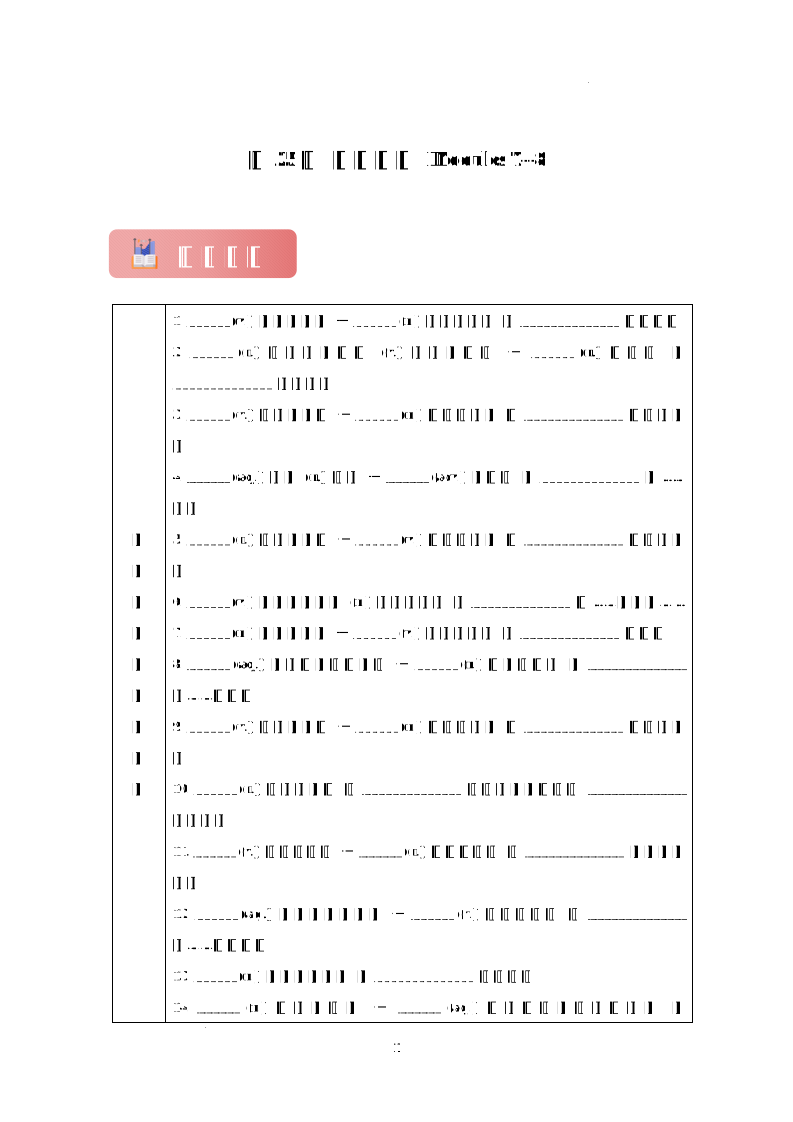
1. ______ (v.) 克服;战胜 → ______ (n.) 克服;战胜 ★ ______________ 克服困难
2. ______ (n.) 主人;东道主 (v.) 主持;主办 → ______ (n.) 女主人 ★ ______________ 举办派对
3. ______ (v.) 考虑;认为 → ______ (n.) 考虑;深思 ★ ______________ 考虑做某事
4. ______ (adj.) 深的 (n.) 深处 → ______ (adv.) 深深地 ★ ______________ 在……深处
5. ______ (n.) 要求;需求 → ______ (v.) 需要;要求 ★ ______________ 需要做某事
6. ______ (v.) 使成形;塑造 (n.) 形状;外形 ★ ______________ 把……塑造成……
7. ______ (n.) 演讲;发言 → ______ (v.) 讲话;发言 ★ ______________ 做演讲
8. ______ (adj.) 有信心的;自信的 → ______ (n.) 信心;信任 ★ ______________ 对……有信心
9. ______ (v.) 建议;提议 → ______ (n.) 建议;提议 ★ ______________ 建议做某事
10. ______ (n.) 机会;时机 ★ ______________ 给某人一个机会; ______________ 抓住机会
11. ______ (v.) 祝贺;恭喜 → ______ (n.) 祝贺;恭喜 ★ ______________ 祝贺某人某事
12. ______ (adj.) 感谢的;感激的 → ______ (v.) 感谢;感激 ★ ______________ 因……感谢某人
13. ______ (n.) 展览;展览会 ★ ______________ 举办展览
14. ______ (n.) 文化;文明 → ______ (adj.) 文化的;与文化有关的 ★ ______________ 文化遗产
15. ______ (n.) 生意;商业 → ______ (n.) 商人 ★ ______________ 做生意
16. ______ (n.) 客人;宾客 → ______ (v.) 招待;请客 ★ ______________ 接待客人
17. ______ (adj.) 国际的;世界的 → ______ (n.) 国家;民族 ★ ______________ 国际贸易
18. ______ (v.) 错过;未得到 ★ ______________ 错过做某事
19. ______ (adj.) 活着的;在世的 → ______ (v.) 生活;居住 ★ ______________ 充满……
20. ______ (n.) 底部;最下部 ★ ______________ 在……底部
21. ______ (v.) 选择;挑选 → ______ (n.) 选择;抉择 ★ ______________ 选择做某事
22. ______ (n.) 表演;演出 → ______ (v.) 表演;演出 ★ ______________ 演出
23. ______ (adj.) 精彩的;绝妙的 → ______ (adv.) 精彩地;绝妙地
24. ______ (n.) 奖;奖品 → ______ (v.) 奖励;授予 ★ ______________ 获奖
重
点
短
语
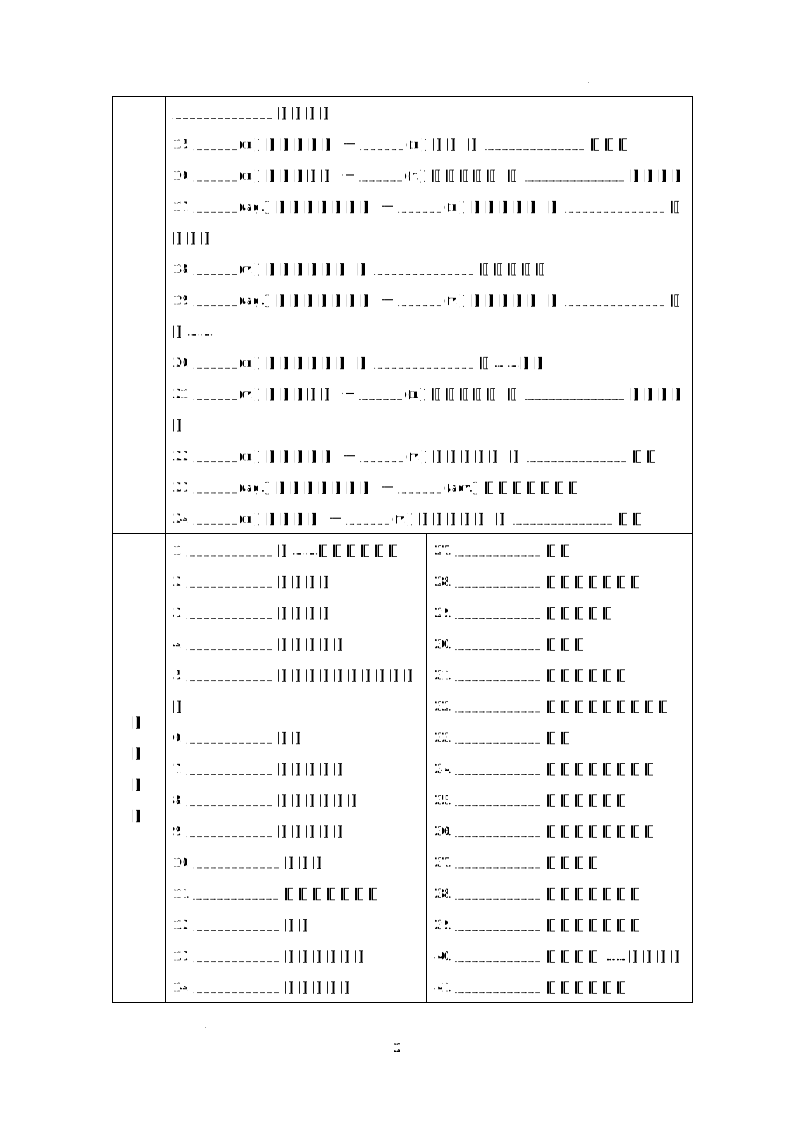
1. ____________ 在……方面取得进步
2. ____________ 书面英语
3. ____________ 英语口语
4. ____________ 喜欢学英语
5. ____________ 需要非常努力地去做某事
6. ____________ 起初
7. ____________ 保持做某事
8. ____________ 发现许多乐趣
9. ____________ 继续做某事
10. ____________ 做得好
11. ____________ 练习他们的英语
12. ____________ 同时
13. ____________ 帮助我学汉语
14. ____________ 越来越流行
15. ____________ 南非
16. ____________ 4亿人
17. ____________ 被用作工作语言
18. ____________ 在……和……之间
19. ____________ 许多其他的国家
20. ____________ 长大
21. ____________ 一门通用语言
22. ____________ 相互交流
23. ____________ 世界人口的四分之一
24. ____________ 世界贸易
25. ____________ 信息技术
26. ____________ 一些欧洲语言
27. ____________ 即使
28. ____________ 一所国际俱乐部
29. ____________ 计划做某事
30. ____________ 擅长于
31. ____________ 感到有点难过
32. ____________ 把各国国旗挂在墙上
33. ____________ 即使
34. ____________ 完成我的高中学业
35. ____________ 回到我的家乡
36. ____________ 成为一名英语老师
37. ____________ 在菜单上
38. ____________ 举起我们的杯子
39. ____________ 选择某人做某事
40. ____________ 嘲笑;对……一笑置之
41. ____________ 教某人做某事
42. ____________ 邀请某人做某事
43. ____________ 在800米赛跑中
44. ____________ 放弃(努力)
45. ____________ 和某人一起跑
46. ____________ 学习做某事
47. ____________ 不但……而且……
48. ____________ 在……方面努力学习
49. ____________ 在我生日那天早上
50. ____________ 醒来
51. ____________ 确信
52. ____________ 尽某人最大的努力
重
点
句
型
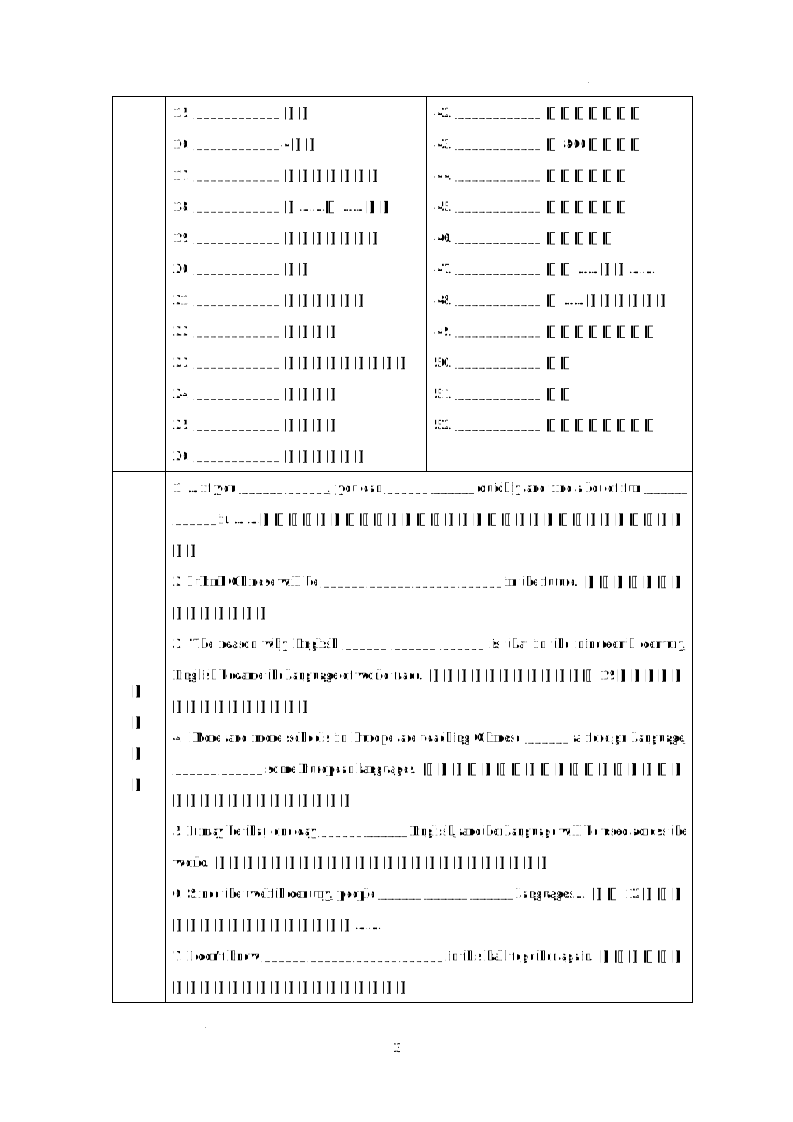
1. …if you ______ ______, you can ______ ______ quickly and find a lot of fun ______ ______ it. ……如果你坚持不懈地尝试,你就能快速取得进步并发现学习它的许多乐趣。
2. I think Chinese will be ______ ______ ______ ______ in the future. 我认为将来汉语会越来越流行。
3. The reason why English ______ ______ ______ is that in the nineteenth century, English became the language of world trade. 各地都说英语的原因是,在19世纪,英语成为了世界贸易用语。
4. More and more schools in Europe are teaching Chinese ______ a foreign language, ______ ______ some European languages. 越来越多的欧洲学校在教一些欧洲语言的同时,也教授中文这门外语。
5. It may be that, one day ______ ______ English, another language will be used across the world. 可能某一天,另一种语言将取代英语,在全世界使用。
6. Since the twelfth century, people ______ ______ ______ languages… 自从12世纪以来,人们一直不断地发明语言……
7. I don't know ______ ______ ______ ______ in this hall together again. 我不知道我们会在什么时候再次一起回到这个大厅。
8. Do you ______ ______ ______ in China for long, Tony? 托尼,你打算在中国待很长时间吗?
9. These roses ______ ______ ______ three groups of people for the three most important things ______ I have learnt. 这些玫瑰用来表达对三组人的谢意,因为我从他们(那里)学到了最重要的三件事。
10. I give the white rose to my teachers, ______ have taught me that there is no success ______ ______. 我将白玫瑰献给我的老师们,他们教我(明白了)不努力就不会成功(的道理)。
11. I still can't run fast enough, but I've learnt to ______ ______ ______ ______, not only with running but with ______ ______ I do. 我仍然跑得不够快,但是我已经学会了尽最大努力去做,不仅仅是对跑步而言,还包括其他我做的任何事情。
12. ______ ______ ______ you all have your own memories about the happiness of the last three years, and the people whom you want to thank for it… 我相信在过去的三年里,你们都有自己幸福的回忆,也都有为此而想要感谢的人……
13. He believes that he has a bright future ______ ______ him. 他相信他会拥有一个光明的未来。
考点透析
知识点
考点一 have been to, have gone to 与 have been in
教材原句He has been to classes.(教材第56页)
◆ 辨析
have been to:表示“去过某地”,强调过去的经历,现在已经返回。
have gone to:表示“去了某地”,强调说话时人不在现场,仍在目的地或途中。
have been in:表示“待在某地”,常与表示一段时间的状语连用,说明持续的状态。
例句
1. I have been to Beijing twice.(我去过北京两次。)
2. My father has gone to the library and he hasn’t come back yet.(我爸爸去了图书馆,还没回来。)
3. They have been in London for three years.(他们在伦敦住了三年了。)
◆精题巧练
1. —Where is your father? —He ______ Shanghai on business. He will be back in a week.(2024 山东临沂)
A. has been to B. has gone to C. has been in D. went to
2. My parents ______ the Great Wall twice. They think it’s worth visiting.(2024 河北石家庄)
A. have gone to B. have been in C. have been to D. went to
3. Mr. Brown ______ Beijing since 2020. He likes living in China.(2023 广东广州)
A. has been to B. has gone to C. has been in D. will go to
4. —Have you ever ______ Xi’an? —Yes, I ______ there last year. It’s an ancient city.(2023 江苏苏州)
A. been to; went B. gone to; went C. been in; go D. gone to; go
5. Lucy isn’t here. She ______ the library to borrow some books.(2022 浙江杭州)
A. has been to B. has gone to C. has been in D. was going to
考点二 how much 与 how many
教材原句How much progress do you think you’ve made in English this year, Lingling?(教材第56页)
◆ 辨析
how much:后接不可数名词,可询问数量或价格;也可用于感叹句表示程度。
how many:后接可数名词复数,仅用于询问数量。
例句
1. How much milk do you need for the cake?(做蛋糕需要多少牛奶?)
2. How much is this new watch?(这块新手表多少钱?)
3. How many students are there in your class?(你们班有多少学生?)
◆精题巧练
1. —______ apples do we need to make the fruit salad? —Let me think. We need two kilos.(2024 四川成都)
A. How much B. How many C. How long D. How often
2. —______ honey do you want to buy? —One bottle is enough.(2024 湖南长沙)
A. How many B. How much C. How far D. How soon
3. ______ people are there in your family? Three. My parents, my sister and I.(2023 河南郑州)
A. How much B. How long C. How many D. How often
4. —______ is the new schoolbag? —It’s fifty yuan.(2023 湖北武汉)
A. How many B. How much C. How old D. How heavy
5. ______ water should we drink every day to keep healthy? At least eight glasses.(2022 安徽合肥)
A. How much B. How many C. How far D. How fast
考点三 between 与 among
教材原句In Ghana, India and Singapore, English is used as a working language, for example, between bosses and secretaries.(教材第58页)
◆ 辨析
between:主要用于“两者之间”,也可指众多事物的“两两之间”,常与 between...and... 搭配。
among:用于“三者或三者以上的人/物之间”,强调在群体中。
例句
1. There is a bag between the desk and the chair.(桌子和椅子之间有一个包。)
2. The children are playing among the trees.(孩子们在树林里玩耍。)
3. We have a break between classes.(我们课间有休息。)
◆精题巧练
1. The small river runs ______ the two villages. It’s a good place to go fishing in summer.(2024 辽宁沈阳)
A. among B. between C. across D. through
2. I found my lost pen ______ a pile of books on the desk.(2024 福建福州)
A. between B. among C. in D. on
3. There is a bridge ______ the river, and many birds fly ______ the mountains nearby.(2023 陕西西安)
A. between; among B. among; between C. over; among D. among; over
4. The competition is ______ Class 1 and Class 2. Both teams are ready for it.(2023 山西太原)
A. among B. between C. during D. across
5. A true friend can share happiness and sadness ______ you.(2022 江西南昌)
A. between B. among C. with D. for
考点四 one, it 与 that
教材原句I have three roses here: a red one, a yellow one and a white one.(教材第66页)
◆ 辨析
one:泛指上文提到的同类事物中的“一个”,复数形式为 ones 。
it:特指上文提到的“同一事物”,复数形式为 they/them 。
that:常用于比较结构中,代替前面提到的名词以避免重复。
例句
1. I need a new pen. Can you give me one?(我需要一支新笔,能给我拿一支吗?)
2. This is my book. I bought it yesterday.(这是我的书,我昨天买的它。)
3. The weather in Beijing is colder than that in Nanjing.(北京的天气比南京的冷。)
◆精题巧练
1. —I want to buy a new camera. —Why not buy ______? The old one is still working well.(2024 重庆A卷)
A. it B. one C. that D. this
2. The population of China is larger than ______ of any other country in the world.(2024 天津)
A. it B. one C. that D. this
3. —Look! There is a book on the floor. Is it yours? —Yes, it’s mine. I’m looking for ______ everywhere.(2023 云南昆明)
A. it B. one C. that D. ones
4. This T-shirt is too small for me. Please show me a bigger ______.(2023 贵州贵阳)
A. it B. one C. that D. this
5. The weather in Harbin is colder than ______ in Guangzhou in winter.(2022 吉林长春)
A. it B. one C. that D. those
考点五 join, join in 与 take part in
教材原句They taught me to say many things in Chinese and kindly invited me to join them.(教材第66页)
◆ 辨析
join:指加入某个团体、组织或参军;也可接 sb. (in doing sth.) 表示“与某人一起(做某事)”。
join in:指参与其他人一起进行的活动,常接具体的活动名词或 (in doing) sth. 。
take part in:指参加某项活动、会议或运动会,强调参与者在其中发挥一定作用。
例句
1. He joined the army last year.(他去年参军了。)
2. Come and join in our game.(来加入我们的游戏吧。)
3. She took part in the school sports meeting and won a prize.(她参加了学校运动会并获奖。)
◆精题巧练
1. My brother ______ the army when he was 18 years old. He loves his job very much.(2024 甘肃兰州)
A. joined B. joined in C. took part in D. attended
2. Would you like to ______ our English corner? We practice speaking English every Friday.(2024 广西南宁)
A. join B. join in C. take part in D. enter
3. All the students in our class ______ the school sports meeting last week.(2023 海南海口)
A. joined B. joined in C. took part in D. entered for
4. Tom, come here and ______ us in playing basketball. We need one more player.(2023 内蒙古呼和浩特)
A. join B. join in C. take part in D. attend
5. A lot of young people ______ the environmental protection activity last month.(2022 宁夏银川)
A. joined B. joined in C. took part in D. took place
考点六 disappointed 与 disappointing
教材原句I was disappointed.(教材第66页)
◆ 辨析
disappointed:修饰人,表示“感到失望的;沮丧的”,描述人的主观感受。
disappointing:修饰事物,表示“令人失望的”,描述事物的客观特征。
例句
1. I felt disappointed because I failed the exam.(我因为考试不及格感到失望。)
2. The movie was so disappointing that we left early.(这部电影太令人失望了,我们提前离场了。)
◆精题巧练
1. We felt ______ because the result of the match was so ______.(2024 浙江宁波)
A. disappointed; disappointing B. disappointing; disappointed
C. disappointed; disappointed D. disappointing; disappointing
2. —How do you feel about the movie? —It’s ______. I almost fell asleep when watching it.(2024 江苏无锡)
A. disappointed B. disappointing C. exciting D. excited
3. My parents were ______ with my exam result. I failed two subjects.(2023 湖南株洲)
A. disappointing B. disappointed C. excited D. exciting
4. The trip was ______ because it rained heavily all the time. No one enjoyed it.(2023 山东潍坊)
A. disappointed B. disappointing C. interested D. interesting
5. She looked ______ when she heard the ______ news.(2022 四川绵阳)
A. disappointed; disappointing B. disappointing; disappointed
C. disappointed; disappointed D. disappointing; disappointing
考点七 be good at, be good for, be good to 与 be good with
教材原句We are good at studying.(教材第69页)
◆ 辨析
be good at:意为“擅长……”,后接名词、代词或动名词。
be good for:意为“对……有好处”,后接名词或代词。
be good to:意为“对……好”,后接表示人的名词或代词。
be good with:意为“善于应付……的;和……相处得好”,后接名词或代词。
例句
1. She is good at drawing.(她擅长画画。)
2. Doing exercise is good for our health.(锻炼对我们的健康有好处。)
3. The teacher is good to her students.(这位老师对学生很好。)
4. He is good with children.(他善于和孩子相处。)
◆精题巧练
1. My sister ______ playing the piano. She won the first prize in the competition.(2024 山东青岛)
A. is good at B. is good for C. is good to D. is good with
2. Eating more vegetables and fruit ______ our health.(2024 四川南充)
A. is good at B. is good for C. is good to D. is good with
3. The teacher is always ______ her students. Everyone in the class likes her.(2023 湖南岳阳)
A. good at B. good for C. good to D. good with
4. My aunt ______ kids. She can make them happy in a short time.(2023 安徽芜湖)
A. is good at B. is good for C. is good to D. is good with
5. —What is your brother ______? —He is ______ playing basketball.(2022 福建厦门)
A. good at; good for B. good for; good at
C. good at; good at D. good for; good for
语法点
一、状语从句
使用状语从句需重点关注两点:连词的选用和条件状语从句的时态规则。
1. 连词的选用
状语从句的连词由句子表达的逻辑意义决定,常见类型及用法如下:
时间状语从句:常用 when, while, as, before, after, until, as soon as ,用于说明动作发生的时间。
例:My father took the photos when we lived in Hong Kong.(我们住在香港时,爸爸拍了这些照片)
You’re not going out until you’ve finished this.(做完这件事你才能出门)
地点状语从句:常用 where ,用于说明动作发生的地点。
例:We must camp where we can get water.(我们必须在能找到水的地方宿营)
条件状语从句:常用 if ,用于说明动作发生的条件。
例:If he leaves the vegetables with the goat, the goat will eat them.(如果他把蔬菜留给山羊,山羊就会吃掉它们)
比较状语从句:常用 than, as ,用于表达比较关系。
例:The cost of the repairs was a lot cheaper than I thought.(修理费比我预想的低很多)
目的状语从句:常用 so that, in order that ,用于说明动作的目的。
例:I’ve brought some photos so that you can see what Britain looks like.(我带了一些照片,这样你就能看到英国的样子)
原因状语从句:常用 because, since, as ,用于说明动作的原因。
例:Mark could not come because he had to work.(马克来不了,因为他要工作)
结果状语从句:常用 so…that… ,用于说明动作的结果。
例:He got up so late that he missed the first train.(他起得太晚,错过了第一班火车)
让步状语从句:常用 although, though ,用于表达让步关系。
例:Although the car is old, it still runs well.(这辆车虽然旧了,但开起来还不错)
2. 条件状语从句的时态规则
在条件状语从句中,如果主句为一般将来时,从句需用一般现在时(即“主将从现”)。
例:If it rains tomorrow, we will play inside.(如果明天下雨,我们就在室内玩)
二、动词不定式
动词不定式有三类核心用法:
1. 作动词宾语
常用于 want to do sth. agree to do sth. decide to do sth. 等固定结构,不定式放在谓语动词后作宾语。
例:I decided to join some student clubs and take part in as many activities as I could.(我决定加入一些学生俱乐部,尽可能多参加活动)
Norman Bethune wanted to help the Chinese people, so he came to China.(诺尔曼·白求恩想帮助中国人民,所以来到了中国)
2. 作宾语补足语
常见结构为“动词 + 名词/代词 + (to) do sth.”,否定形式只需在不定式前加 not ;需注意,使役动词(如 make )和感官动词后,不定式需省略 to 。
例:I told them to stop, but they wouldn’t.(我让他们停下,但他们不听)
Miss Smith made the boys stay in after school.(放学后史密斯小姐让男孩子们留校)
3. 作目的状语
不定式作目的状语时,可置于句末或句首,用于说明动作的目的。
例:He got up at five o’clock to catch the early bus.(他五点起床去赶早班车)
To watch baseball, you need to go to the Yankee Stadium.(想看棒球比赛,你得去扬基体育场)
三、宾语从句
根据引导词不同,宾语从句分为三类: that 引导的宾语从句、 whether/if 引导的宾语从句、疑问词引导的宾语从句,使用时需注意三点:
1. 引导词的选择
that 引导: that 仅起连接作用,在从句中不作成分、无实际意义,口语中常省略。
例:I hear (that) he has passed the exam.(我听说他通过了考试)
whether/if 引导: whether 和 if 表“是否”,从句表达疑问含义。
例:I wonder whether/if he has passed the exam.(我想知道他是否通过了考试)
疑问词引导:疑问词(如 when, how, why )在从句中充当成分(如状语、宾语),需根据句子语义选择。
例:I asked when he passed the exam.(我问他何时通过了考试)
2. 时态规则
若主句谓语动词为现在时/将来时,从句时态可根据句意灵活选择。
若主句谓语动词为过去时,从句需用相应的过去时态(如一般过去时、过去将来时)。
若从句表述真理/客观事实,即使主句为过去时,从句仍用一般现在时。
例:In the past, people didn’t know that the earth moves around the sun.(过去人们不知道地球绕太阳转)
3. 语序规则
无论整个句子是肯定还是疑问,宾语从句都必须使用陈述语序(主语在前,谓语在后)。
例:Can you tell me where I can get my car repaired?(你能告诉我到哪里修车吗)
四、定语从句
定语从句又称形容词性从句,用于修饰名词或代词,需注意两点:
1. 引导词的选择
which :仅用于先行词为“物”的情况。
who/whom :仅用于先行词为“人”的情况; whom 在从句中作宾语,口语中可用 who 代替。
that :既可用于先行词为“人”,也可用于先行词为“物”的情况。
例:Everyone that/who goes to Shenzhen says it is a modern city.(每个去深圳的人都说它是一座现代化城市)
This is the song which/that has been extremely popular for the last few months.(这就是近几个月很流行的那首歌)
2. 引导词的省略规则
当引导词在定语从句中充当宾语成分时,引导词可以省略。
例:What are the subjects (that) they are studying this term?(他们这学期学哪些科目)
She is the woman (who/whom) I met yesterday.(她就是我昨天遇到的那个女人)
· 精题巧练
1. —______ I was walking to school, I met my old friend. —Wow, that’s nice!(2024 山东济南)
A. While B. When C. As D. Until
2. If it ______ tomorrow, we ______ a picnic in the park.(2024 江苏南京)
A. rains; won’t have B. will rain; don’t have C. rains; have D. will rain; have
3. The teacher made us ______ the text twice yesterday.(2023 广东深圳)
A. to read B. read C. reading D. reads
4.He got up early ______ the first bus.(2023 四川成都)
A. catch B. catching C. to catch D. caught
5. —Do you know ______ the meeting will start? —At 9:00 a.m.(2024 浙江杭州)
A. that B. when C. if D. where
6.She asked me if I ______ to the party the next day.(2023 河南郑州)
A. will go B. went C. would go D. go
7. —Could you tell me ______? —Sure. Go along this street and turn left.(2024 湖北武汉)
A. where is the bank B. where the bank is C. how can I get to the bank D. how I can get to the bank
8. The book ______ I bought yesterday is very interesting.(2023 山东青岛)
A. who B. which C. whose D. whom
9.This is the girl ______ I met at the school gate yesterday.(2022 江苏苏州)
A. who B. which C. whose D. /
第25讲 九年级下 Modules 7--8
知识清单
重
点
单
词
与
词
汇
拓
展
1. overcome (v.) 克服;战胜 → overcoming (n.) 克服;战胜 ★ overcome difficulties 克服困难
2. host (n.) 主人;东道主 (v.) 主持;主办 → hostess (n.) 女主人 ★ host a party 举办派对
3. consider (v.) 考虑;认为 → consideration (n.) 考虑;深思 ★ consider doing sth. 考虑做某事
4. deep (adj.) 深的 (n.) 深处 → deeply (adv.) 深深地 ★ in the deep of... 在……深处
5. requirement (n.) 要求;需求 → require (v.) 需要;要求 ★ require to do sth. 需要做某事
6. shape (v.) 使成形;塑造 (n.) 形状;外形 ★ shape...into... 把……塑造成……
7. speech (n.) 演讲;发言 → speak (v.) 讲话;发言 ★ give a speech 做演讲
8. confident (adj.) 有信心的;自信的 → confidence (n.) 信心;信任 ★ be confident in... 对……有信心
9. suggest (v.) 建议;提议 → suggestion (n.) 建议;提议 ★ suggest doing sth. 建议做某事
10. chance (n.) 机会;时机 ★ give sb. a chance 给某人一个机会;take a chance 抓住机会
11. congratulate (v.) 祝贺;恭喜 → congratulation (n.) 祝贺;恭喜 ★ congratulate sb. on sth. 祝贺某人某事
12. thankful (adj.) 感谢的;感激的 → thank (v.) 感谢;感激 ★ be thankful for... 因……感谢某人
13. exhibition (n.) 展览;展览会 ★ hold an exhibition 举办展览
14. culture (n.) 文化;文明 → cultural (adj.) 文化的;与文化有关的 ★ cultural heritage 文化遗产
15. business (n.) 生意;商业 → businessman/businesswoman (n.) 商人 ★ do business 做生意
16. guest (n.) 客人;宾客 → host (v.) 招待;请客 ★ receive guests 接待客人
17. international (adj.) 国际的;世界的 → nation (n.) 国家;民族 ★ international trade 国际贸易
18. miss (v.) 错过;未得到 ★ miss doing sth. 错过做某事
19. alive (adj.) 活着的;在世的 → live (v.) 生活;居住 ★ be alive with... 充满……
20. bottom (n.) 底部;最下部 ★ at the bottom of... 在……底部
21. choose (v.) 选择;挑选 → choice (n.) 选择;抉择 ★ choose to do sth. 选择做某事
22. performance (n.) 表演;演出 → perform (v.) 表演;演出 ★ put on a performance 演出
23. wonderful (adj.) 精彩的;绝妙的 → wonderfully (adv.) 精彩地;绝妙地
24. prize (n.) 奖;奖品 → prize (v.) 奖励;授予 ★ win a prize 获奖
重
点
短
语
1. make progress in… 在……方面取得进步
2. written English 书面英语
3. spoken English 英语口语
4. enjoy learning English 喜欢学英语
5. require too much effort to do sth. 需要非常努力地去做某事
6. at the beginning 起初
7. keep doing sth. 保持做某事
8. find a lot of fun 发现许多乐趣
9. continue to do sth. 继续做某事
10. do well 做得好
11. practise their English 练习他们的英语
12. at the same time 同时
13. help me with my Chinese 帮助我学汉语
14. more and more popular 越来越流行
15. South Africa 南非
16. 400 million people 4亿人
17. be used as a working language 被用作工作语言
18. between … and … 在……和……之间
19. many other countries 许多其他的国家
20. grow up 长大
21. a common language 一门通用语言
22. communicate with each other 相互交流
23. a quarter of the world's population 世界人口的四分之一
24. world trade 世界贸易
25. information technology 信息技术
26. some European languages 一些欧洲语言
27. even though 即使
28. an international club 一所国际俱乐部
29. intend to do sth. 计划做某事
30. be good at… 擅长于
31. feel a bit sad 感到有点难过
32. hang international flags on the walls 把各国国旗挂在墙上
33. even if 即使
34. finish my high school education 完成我的高中学业
35. go back to my home town 回到我的家乡
36. become an English teacher 成为一名英语老师
37. on the menu 在菜单上
38. raise our glasses 举起我们的杯子
39. choose sb. to do sth. 选择某人做某事
40. laugh at 嘲笑;对……一笑置之
41. teach sb. to do sth. 教某人做某事
42. invite sb. to do sth. 邀请某人做某事
43. in the 800 metres 在800米赛跑中
44. give up 放弃(努力)
45. run along with sb. 和某人一起跑
46. learn to do sth. 学习做某事
47. not only… but also… 不但……而且……
48. work hard at… 在……方面努力学习
49. on the morning of my birthday 在我生日那天早上
50. wake up 醒来
51. be sure 确信
52. try one's best 尽某人最大的努力
重
点
句
型
1. …if you keep trying, you can make progress quickly and find a lot of fun in learning it.
……如果你坚持不懈地尝试,你就能快速取得进步并发现学习它的许多乐趣。
2. I think Chinese will be more and more popular in the future.
我认为将来汉语会越来越流行。
3. The reason why English is spoken everywhere is that in the nineteenth century, English became the language of world trade.
各地都说英语的原因是,在19世纪,英语成为了世界贸易用语。
4. More and more schools in Europe are teaching Chinese as a foreign language, together with some European languages.
越来越多的欧洲学校在教一些欧洲语言的同时,也教授中文这门外语。
5. It may be that, one day instead of English, another language will be used across the world.
可能某一天,另一种语言将取代英语,在全世界使用。
6. Since the twelfth century, people have been inventing languages…
自从12世纪以来,人们一直不断地发明语言……
7. I don't know when we'll be back in this hall together again.
我不知道我们会在什么时候再次一起回到这个大厅。
8. Do you intend to stay in China for long, Tony?
托尼,你打算在中国待很长时间吗?
9. These roses are to thank three groups of people for the three most important things that I have learnt.
这些玫瑰用来表达对三组人的谢意,因为我从他们(那里)学到了最重要的三件事。
10. I give the white rose to my teachers, who have taught me that there is no success without effort.
我将白玫瑰献给我的老师们,他们教我(明白了)不努力就不会成功(的道理)。
11. I still can't run fast enough, but I've learnt to try my best, not only with running but with whatever else I do.
我仍然跑得不够快,但是我已经学会了尽最大努力去做,不仅仅是对跑步而言,还包括其他我做的任何事情。
12. I'm sure that you all have your own memories about the happiness of the last three years, and the people whom you want to thank for it…
我相信在过去的三年里,你们都有自己幸福的回忆,也都有为此而想要感谢的人……
13. He believes that he has a bright future ahead of him.
他相信他会拥有一个光明的未来。
考点透析
知识点
考点一 have been to, have gone to 与 have been in
教材原句He has been to classes.(教材第56页)
◆ 辨析
have been to:表示“去过某地”,强调过去的经历,现在已经返回。
have gone to:表示“去了某地”,强调说话时人不在现场,仍在目的地或途中。
have been in:表示“待在某地”,常与表示一段时间的状语连用,说明持续的状态。
例句
1. I have been to Beijing twice.(我去过北京两次。)
2. My father has gone to the library and he hasn’t come back yet.(我爸爸去了图书馆,还没回来。)
3. They have been in London for three years.(他们在伦敦住了三年了。)
◆ 精题巧练
1. —Where is your father? —He ______ Shanghai on business. He will be back in a week.(2024 山东临沂)
A. has been to B. has gone to C. has been in D. went to
答案:B
解析:爸爸去上海出差且一周后才返回,说明“去了某地(人不在现场)”,符合have gone to的用法;have been to表示“去过已回”,have been in表示“待在某地(持续一段时间)”,went to是一般过去时,均不符合语境。
2. My parents ______ the Great Wall twice. They think it’s worth visiting.(2024 河北石家庄)
A. have gone to B. have been in C. have been to D. went to
答案:C
解析:父母“去过长城两次”,强调过去的经历且现在已返回,符合have been to的用法;have gone to表示“去了未回”,have been in表示“待在某地”,went to仅描述过去动作,均不符合。
3. Mr. Brown ______ Beijing since 2020. He likes living in China.(2023 广东广州)
A. has been to B. has gone to C. has been in D. will go to
答案:C
解析:since 2020是“从2020年至今”的持续时间,说明“待在北京”的状态,符合have been in与一段时间连用的用法;have been to和have gone to均不与持续时间搭配,will go to是将来时,不符合语境。
4. —Have you ever ______ Xi’an? —Yes, I ______ there last year. It’s an ancient city.(2023 江苏苏州)
A. been to; went B. gone to; went C. been in; go D. gone to; go
答案:A
解析:第一空“你去过西安吗?”强调过去的经历,用have been to;第二空“last year”是一般过去时标志,用went。have gone to表示“去了未回”,go是一般现在时,均不符合。
5. Lucy isn’t here. She ______ the library to borrow some books.(2022 浙江杭州)
A. has been to B. has gone to C. has been in D. was going to
答案:B
解析:Lucy不在现场,说明“去了图书馆(未返回)”,符合have gone to的用法;have been to表示“去过已回”,have been in表示“待在某地”,was going to是过去将来时,均不符合。
考点二 how much 与 how many
教材原句How much progress do you think you’ve made in English this year, Lingling?(教材第56页)
◆ 辨析
how much:后接不可数名词,可询问数量或价格;也可用于感叹句表示程度。
how many:后接可数名词复数,仅用于询问数量。
例句
1. How much milk do you need for the cake?(做蛋糕需要多少牛奶?)
2. How much is this new watch?(这块新手表多少钱?)
3. How many students are there in your class?(你们班有多少学生?)
◆ 精题巧练
1. —______ apples do we need to make the fruit salad? —Let me think. We need two kilos.(2024 四川成都)
A. How much B. How many C. How long D. How often
答案:B
解析:apples是可数名词复数,询问数量用how many;how much后接不可数名词,how long询问时间/长度,how often询问频率,均不符合。
2. —______ honey do you want to buy? —One bottle is enough.(2024 湖南长沙)
A. How many B. How much C. How far D. How soon
答案:B
解析:honey是不可数名词,询问数量用how much;how many后接可数复数,how far询问距离,how soon询问“多久以后”,均不符合。
3. ______ people are there in your family? Three. My parents, my sister and I.(2023 河南郑州)
A. How much B. How long C. How many D. How often
答案:C
解析:people是可数名词复数(单复数同形),询问数量用how many;how much后接不可数名词,how long询问时间,how often询问频率,均不符合。
4. —______ is the new schoolbag? —It’s fifty yuan.(2023 湖北武汉)
A. How many B. How much C. How old D. How heavy
答案:B
解析:询问书包的价格用how much;how many询问数量,how old询问年龄,how heavy询问重量,均不符合。
5. ______ water should we drink every day to keep healthy? At least eight glasses.(2022 安徽合肥)
A. How much B. How many C. How far D. How fast
答案:A
解析:water是不可数名词,询问数量用how much;how many后接可数复数,how far询问距离,how fast询问速度,均不符合。
考点三 between 与 among
教材原句In Ghana, India and Singapore, English is used as a working language, for example, between bosses and secretaries.(教材第58页)
◆ 辨析
between:主要用于“两者之间”,也可指众多事物的“两两之间”,常与 between...and... 搭配。
among:用于“三者或三者以上的人/物之间”,强调在群体中。
例句
1. There is a bag between the desk and the chair.(桌子和椅子之间有一个包。)
2. The children are playing among the trees.(孩子们在树林里玩耍。)
3. We have a break between classes.(我们课间有休息。)
◆ 精题巧练
1. The small river runs ______ the two villages. It’s a good place to go fishing in summer.(2024 辽宁沈阳)
A. among B. between C. across D. through
答案:B
解析:“两个村庄之间”是两者之间,符合between的用法;among用于三者以上,across表示“横穿”,through表示“穿过(内部)”,均不符合。
2. I found my lost pen ______ a pile of books on the desk.(2024 福建福州)
A. between B. among C. in D. on
答案:B
解析:“一堆书(三者以上)中找到钢笔”,强调在群体中,符合among的用法;between用于两者之间,in表示“在……里面”,on表示“在……上面”,均不符合。
3. There is a bridge ______ the river, and many birds fly ______ the mountains nearby.(2023 陕西西安)
A. between; among B. among; between C. over; among D. among; over
答案:C
解析:桥在河的正上方用over;鸟在“群山(多座山)之间”飞,强调在群体中用among。between用于两者之间,不符合“群山”的语境。
4. The competition is ______ Class 1 and Class 2. Both teams are ready for it.(2023 山西太原)
A. among B. between C. during D. across
答案:B
解析:“一班和二班之间的比赛”是两者之间,用between...and...固定搭配;among用于三者以上,during表示“在……期间”,across表示“横穿”,均不符合。
5. A true friend can share happiness and sadness ______ you.(2022 江西南昌)
A. between B. among C. with D. for
答案:C
解析:share sth. with sb.是固定搭配,意为“和某人分享某物”;between和among均表示“在……之间”,不符合搭配。
考点四 one, it 与 that
教材原句I have three roses here: a red one, a yellow one and a white one.(教材第66页)
◆ 辨析
one:泛指上文提到的同类事物中的“一个”,复数形式为 ones。
it:特指上文提到的“同一事物”,复数形式为 they/them。
that:常用于比较结构中,代替前面提到的名词以避免重复。
例句
1. I need a new pen. Can you give me one?(我需要一支新笔,能给我拿一支吗?)
2. This is my book. I bought it yesterday.(这是我的书,我昨天买的它。)
3. The weather in Beijing is colder than that in Nanjing.(北京的天气比南京的冷。)
◆ 精题巧练
1. —I want to buy a new camera. —Why not buy ______? The old one is still working well.(2024 重庆A卷)
A. it B. one C. that D. this
答案:B
解析:泛指“一个新相机”(同类不同物),符合one的用法;it特指同一事物,that用于比较结构,this表示“这个”,均不符合。
2. The population of China is larger than ______ of any other country in the world.(2024 天津)
A. it B. one C. that D. this
答案:C
解析:比较结构中,用that代替前面提到的单数名词population以避免重复;it特指同一事物,one泛指同类,this表示“这个”,均不符合。
3. —Look! There is a book on the floor. Is it yours? —Yes, it’s mine. I’m looking for ______ everywhere.(2023 云南昆明)
A. it B. one C. that D. ones
答案:A
解析:特指地上的那本书(同一事物),符合it的用法;one泛指同类,that用于比较结构,ones是复数泛指,均不符合。
4. This T-shirt is too small for me. Please show me a bigger ______.(2023 贵州贵阳)
A. it B. one C. that D. this
答案:B
解析:泛指“一件更大的T恤”(同类不同物),符合one的用法;it特指同一事物,that用于比较结构,this表示“这个”,均不符合。
5. The weather in Harbin is colder than ______ in Guangzhou in winter.(2022 吉林长春)
A. it B. one C. that D. those
答案:C
解析:比较结构中,用that代替前面提到的不可数名词weather以避免重复;it特指同一事物,one泛指同类,those代替复数名词,均不符合。
考点五 join, join in 与 take part in
教材原句They taught me to say many things in Chinese and kindly invited me to join them.(教材第66页)
◆ 辨析
join:指加入某个团体、组织或参军;也可接 sb. (in doing sth.) 表示“与某人一起(做某事)”。
join in:指参与其他人一起进行的活动,常接具体的活动名词或 (in doing) sth.。
take part in:指参加某项活动、会议或运动会,强调参与者在其中发挥一定作用。
例句
1. He joined the army last year.(他去年参军了。)
2. Come and join in our game.(来加入我们的游戏吧。)
3. She took part in the school sports meeting and won a prize.(她参加了学校运动会并获奖。)
◆ 精题巧练
1. My brother ______ the army when he was 18 years old. He loves his job very much.(2024 甘肃兰州)
A. joined B. joined in C. took part in D. attended
答案:A
解析:“参军”是加入组织,符合join的用法;join in指参与活动,take part in强调参与活动的作用,attend指“出席(会议/课程)”,均不符合。
2. Would you like to ______ our English corner? We practice speaking English every Friday.(2024 广西南宁)
A. join B. join in C. take part in D. enter
答案:B
解析:“加入英语角(活动)”,强调参与其他人的活动,符合join in的用法;join指加入组织,take part in强调活动中的作用,enter表示“进入”,均不符合。
3. All the students in our class ______ the school sports meeting last week.(2023 海南海口)
A. joined B. joined in C. took part in D. entered for
答案:C
解析:“参加运动会”并强调参与者在其中发挥作用,符合take part in的用法;join指加入组织,join in指参与小型活动,entered for表示“报名参加”,均不符合。
4. Tom, come here and ______ us in playing basketball. We need one more player.(2023 内蒙古呼和浩特)
A. join B. join in C. take part in D. attend
答案:A
解析:join sb. in doing sth.是固定结构,意为“和某人一起做某事”;join in后接活动,take part in强调作用,attend指“出席”,均不符合。
5. A lot of young people ______ the environmental protection activity last month.(2022 宁夏银川)
A. joined B. joined in C. took part in D. took place
答案:C
解析:“参加环保活动”并强调参与者在其中发挥作用,符合take part in的用法;join指加入组织,join in指参与小型活动,took place表示“发生”,均不符合。
考点六 disappointed 与 disappointing
教材原句I was disappointed.(教材第66页)
◆ 辨析
disappointed:修饰人,表示“感到失望的;沮丧的”,描述人的主观感受。
disappointing:修饰事物,表示“令人失望的”,描述事物的客观特征。
例
1. I felt disappointed because I failed the exam.(我因为考试不及格感到失望。)
2. The movie was so disappointing that we left early.(这部电影太令人失望了,我们提前离场了。)
◆ 精题巧练
1. We felt ______ because the result of the match was so ______.(2024 浙江宁波)
A. disappointed; disappointing B. disappointing; disappointed
C. disappointed; disappointed D. disappointing; disappointing
答案:A
解析:第一空修饰“我们”(人),表示“感到失望的”用disappointed;第二空修饰“比赛结果”(事物),表示“令人失望的”用disappointing。
2. —How do you feel about the movie? —It’s ______. I almost fell asleep when watching it.(2024 江苏无锡)
A. disappointed B. disappointing C. exciting D. excited
答案:B
解析:修饰“电影”(事物),表示“令人失望的”用disappointing;disappointed修饰人,exciting表示“令人兴奋的”,excited修饰人,均不符合。
3. My parents were ______ with my exam result. I failed two subjects.(2023 湖南株洲)
A. disappointing B. disappointed C. excited D. exciting
答案:B
解析:修饰“父母”(人),表示“感到失望的”用disappointed;disappointing修饰事物,excited表示“感到兴奋的”,exciting修饰事物,均不符合。
4. The trip was ______ because it rained heavily all the time. No one enjoyed it.(2023 山东潍坊)
A. disappointed B. disappointing C. interested D. interesting
答案:B
解析:修饰“旅行”(事物),表示“令人失望的”用disappointing;disappointed修饰人,interested表示“感兴趣的”,interesting表示“有趣的”,均不符合。
5. She looked ______ when she heard the ______ news.(2022 四川绵阳)
A. disappointed; disappointing B. disappointing; disappointed
C. disappointed; disappointed D. disappointing; disappointing
答案:A
解析:第一空修饰“她”(人),表示“感到失望的”用disappointed;第二空修饰“消息”(事物),表示“令人失望的”用disappointing。
考点七 be good at, be good for, be good to 与 be good with
教材原句We are good at studying.(教材第69页)
◆ 辨析
be good at:意为“擅长……”,后接名词、代词或动名词。
be good for:意为“对……有好处”,后接名词或代词。
be good to:意为“对……好”,后接表示人的名词或代词。
be good with:意为“善于应付……的;和……相处得好”,后接名词或代词。
例句
1. She is good at drawing.(她擅长画画。)
2. Doing exercise is good for our health.(锻炼对我们的健康有好处。)
3. The teacher is good to her students.(这位老师对学生很好。)
4. He is good with children.(他善于和孩子相处。)
◆ 精题巧练
1. My sister ______ playing the piano. She won the first prize in the competition.(2024 山东青岛)
A. is good at B. is good for C. is good to D. is good with
答案:A
解析:“擅长弹钢琴”,后接动名词playing,符合be good at的用法;be good for表示“对……有好处”,be good to表示“对……好”,be good with表示“善于和……相处”,均不符合。
2. Eating more vegetables and fruit ______ our health.(2024 四川南充)
A. is good at B. is good for C. is good to D. is good with
答案:B
解析:“多吃蔬菜水果对健康有好处”,符合be good for的用法;be good at表示“擅长”,be good to表示“对……好”,be good with表示“善于和……相处”,均不符合。
3. The teacher is always ______ her students. Everyone in the class likes her.(2023 湖南岳阳)
A. good at B. good for C. good to D. good with
答案:C
解析:“老师对学生很好”,符合be good to的用法;be good at表示“擅长”,be good for表示“对……有好处”,be good with表示“善于和……相处”,均不符合。
4. My aunt ______ kids. She can make them happy in a short time.(2023 安徽芜湖)
A. is good at B. is good for C. is good to D. is good with
答案:D
解析:“阿姨善于和孩子相处”,符合be good with的用法;be good at表示“擅长”,be good for表示“对……有好处”,be good to表示“对……好”,均不符合。
5. —What is your brother ______? —He is ______ playing basketball.(2022 福建厦门)
A. good at; good for B. good for; good at
C. good at; good at D. good for; good for
答案:C
解析:两个空均表示“擅长打篮球”,后接动名词playing,符合be good at的用法;be good for表示“对……有好处”,不符合语境。
语法点
一、状语从句
使用状语从句需重点关注两点:连词的选用和条件状语从句的时态规则。
1. 连词的选用
状语从句的连词由句子表达的逻辑意义决定,常见类型及用法如下:
时间状语从句:常用 when, while, as, before, after, until, as soon as ,用于说明动作发生的时间。
例:My father took the photos when we lived in Hong Kong.(我们住在香港时,爸爸拍了这些照片)
You’re not going out until you’ve finished this.(做完这件事你才能出门)
地点状语从句:常用 where ,用于说明动作发生的地点。
例:We must camp where we can get water.(我们必须在能找到水的地方宿营)
条件状语从句:常用 if ,用于说明动作发生的条件。
例:If he leaves the vegetables with the goat, the goat will eat them.(如果他把蔬菜留给山羊,山羊就会吃掉它们)
比较状语从句:常用 than, as ,用于表达比较关系。
例:The cost of the repairs was a lot cheaper than I thought.(修理费比我预想的低很多)
目的状语从句:常用 so that, in order that ,用于说明动作的目的。
例:I’ve brought some photos so that you can see what Britain looks like.(我带了一些照片,这样你就能看到英国的样子)
原因状语从句:常用 because, since, as ,用于说明动作的原因。
例:Mark could not come because he had to work.(马克来不了,因为他要工作)
结果状语从句:常用 so…that… ,用于说明动作的结果。
例:He got up so late that he missed the first train.(他起得太晚,错过了第一班火车)
让步状语从句:常用 although, though ,用于表达让步关系。
例:Although the car is old, it still runs well.(这辆车虽然旧了,但开起来还不错)
2. 条件状语从句的时态规则
在条件状语从句中,如果主句为一般将来时,从句需用一般现在时(即“主将从现”)。
例:If it rains tomorrow, we will play inside.(如果明天下雨,我们就在室内玩)
二、动词不定式
动词不定式有三类核心用法:
1. 作动词宾语
常用于 want to do sth. agree to do sth. decide to do sth. 等固定结构,不定式放在谓语动词后作宾语。
例:I decided to join some student clubs and take part in as many activities as I could.(我决定加入一些学生俱乐部,尽可能多参加活动)
Norman Bethune wanted to help the Chinese people, so he came to China.(诺尔曼·白求恩想帮助中国人民,所以来到了中国)
2. 作宾语补足语
常见结构为“动词 + 名词/代词 + (to) do sth.”,否定形式只需在不定式前加 not ;需注意,使役动词(如 make )和感官动词后,不定式需省略 to 。
例:I told them to stop, but they wouldn’t.(我让他们停下,但他们不听)
Miss Smith made the boys stay in after school.(放学后史密斯小姐让男孩子们留校)
3. 作目的状语
不定式作目的状语时,可置于句末或句首,用于说明动作的目的。
例:He got up at five o’clock to catch the early bus.(他五点起床去赶早班车)
To watch baseball, you need to go to the Yankee Stadium.(想看棒球比赛,你得去扬基体育场)
三、宾语从句
根据引导词不同,宾语从句分为三类: that 引导的宾语从句、 whether/if 引导的宾语从句、疑问词引导的宾语从句,使用时需注意三点:
1. 引导词的选择
that 引导: that 仅起连接作用,在从句中不作成分、无实际意义,口语中常省略。
例:I hear (that) he has passed the exam.(我听说他通过了考试)
whether/if 引导: whether 和 if 表“是否”,从句表达疑问含义。
例:I wonder whether/if he has passed the exam.(我想知道他是否通过了考试)
疑问词引导:疑问词(如 when, how, why )在从句中充当成分(如状语、宾语),需根据句子语义选择。
例:I asked when he passed the exam.(我问他何时通过了考试)
2. 时态规则
若主句谓语动词为现在时/将来时,从句时态可根据句意灵活选择。
若主句谓语动词为过去时,从句需用相应的过去时态(如一般过去时、过去将来时)。
若从句表述真理/客观事实,即使主句为过去时,从句仍用一般现在时。
例:In the past, people didn’t know that the earth moves around the sun.(过去人们不知道地球绕太阳转)
3. 语序规则
无论整个句子是肯定还是疑问,宾语从句都必须使用陈述语序(主语在前,谓语在后)。
例:Can you tell me where I can get my car repaired?(你能告诉我到哪里修车吗)
四、定语从句
定语从句又称形容词性从句,用于修饰名词或代词,需注意两点:
1. 引导词的选择
which :仅用于先行词为“物”的情况。
who/whom :仅用于先行词为“人”的情况; whom 在从句中作宾语,口语中可用 who 代替。
that :既可用于先行词为“人”,也可用于先行词为“物”的情况。
例:Everyone that/who goes to Shenzhen says it is a modern city.(每个去深圳的人都说它是一座现代化城市)
This is the song which/that has been extremely popular for the last few months.(这就是近几个月很流行的那首歌)
2. 引导词的省略规则
当引导词在定语从句中充当宾语成分时,引导词可以省略。
例:What are the subjects (that) they are studying this term?(他们这学期学哪些科目)
She is the woman (who/whom) I met yesterday.(她就是我昨天遇到的那个女人)
精题巧练
1. —______ I was walking to school, I met my old friend. —Wow, that’s nice!(2024 山东济南)
A. While B. When C. As D. Until
答案:A
解析: while 引导时间状语从句时,常与延续性动词连用,强调动作同时进行; when 可接延续性或短暂性动词; as 强调“一边……一边”。此处“walking”是延续性动作,强调“走路时遇到朋友”的同时性,用 while 更合适。
2. If it ______ tomorrow, we ______ a picnic in the park.(2024 江苏南京)
A. rains; won’t have B. will rain; don’t have C. rains; have D. will rain; have
答案:A
解析:条件状语从句遵循“主将从现”规则,从句用一般现在时,主句用一般将来时,因此从句填 rains ,主句填 won’t have 。
3. The teacher made us ______ the text twice yesterday.(2023 广东深圳)
A. to read B. read C. reading D. reads
答案:B
解析:使役动词 make 后接宾语补足语时,不定式需省略 to ,固定结构为 make sb. do sth. ,因此填 read 。
4.He got up early ______ the first bus.(2023 四川成都)
A. catch B. catching C. to catch D. caught
答案:C
解析:此处用不定式 to catch 作目的状语,说明“早起”的目的是“赶第一班公交车”,符合不定式作目的状语的用法。
5. —Do you know ______ the meeting will start? —At 9:00 a.m.(2024 浙江杭州)
A. that B. when C. if D. where
答案:B
解析:答语“At 9:00 a.m.”表示时间,因此问句用疑问词 when 引导宾语从句,询问会议开始的时间。
6.She asked me if I ______ to the party the next day.(2023 河南郑州)
A. will go B. went C. would go D. go
答案:C
解析:主句谓语动词“asked”是一般过去时,宾语从句需用相应的过去时态;“the next day”表示过去的将来,因此用过去将来时 would go 。
7. —Could you tell me ______? —Sure. Go along this street and turn left.(2024 湖北武汉)
A. where is the bank B. where the bank is C. how can I get to the bank D. how I can get to the bank
答案:D
解析:宾语从句必须用陈述语序,排除A、C选项;答语是指路内容,说明问句询问的是“如何到达银行”,因此用 how 引导语序正确的宾语从句。
8. The book ______ I bought yesterday is very interesting.(2023 山东青岛)
A. who B. which C. whose D. whom
答案:B
解析:先行词“the book”是物,定语从句中引导词指代物且作宾语,因此用 which 引导。
9.This is the girl ______ I met at the school gate yesterday.(2022 江苏苏州)
A. who B. which C. whose D. /
答案:D
解析:先行词“the girl”是人,定语从句中引导词指代人且作宾语,此时引导词 who/whom 可以省略,因此选 / 。
1
学科网(北京)股份有限公司
$
资源预览图
1
2
3
相关资源
由于学科网是一个信息分享及获取的平台,不确保部分用户上传资料的 来源及知识产权归属。如您发现相关资料侵犯您的合法权益,请联系学科网,我们核实后将及时进行处理。