Unit 4重点知识讲解-2025-2026学年冀教版英语八年级上册
2026-01-23
|
10页
|
43人阅读
|
6人下载
普通
资源信息
| 学段 | 初中 |
|---|---|
| 学科 | 英语 |
| 教材版本 | 初中英语冀教版八年级上册 |
| 年级 | 八年级 |
| 章节 | - |
| 类型 | 教案-讲义 |
| 知识点 | - |
| 使用场景 | 同步教学-单元练习 |
| 学年 | 2025-2026 |
| 地区(省份) | 全国 |
| 地区(市) | - |
| 地区(区县) | - |
| 文件格式 | DOCX |
| 文件大小 | 41 KB |
| 发布时间 | 2026-01-23 |
| 更新时间 | 2026-01-23 |
| 作者 | 课堂干货铺(关注我,主页搜资料,初中英语各版本,不定时更新) |
| 品牌系列 | - |
| 审核时间 | 2026-01-23 |
| 下载链接 | https://m.zxxk.com/soft/56103724.html |
| 价格 | 0.00储值(1储值=1元) |
| 来源 | 学科网 |
内容正文:
冀教英语八上Unit 4重点知识讲解
Unit 4 Being a good learner
一、单词用法讲解
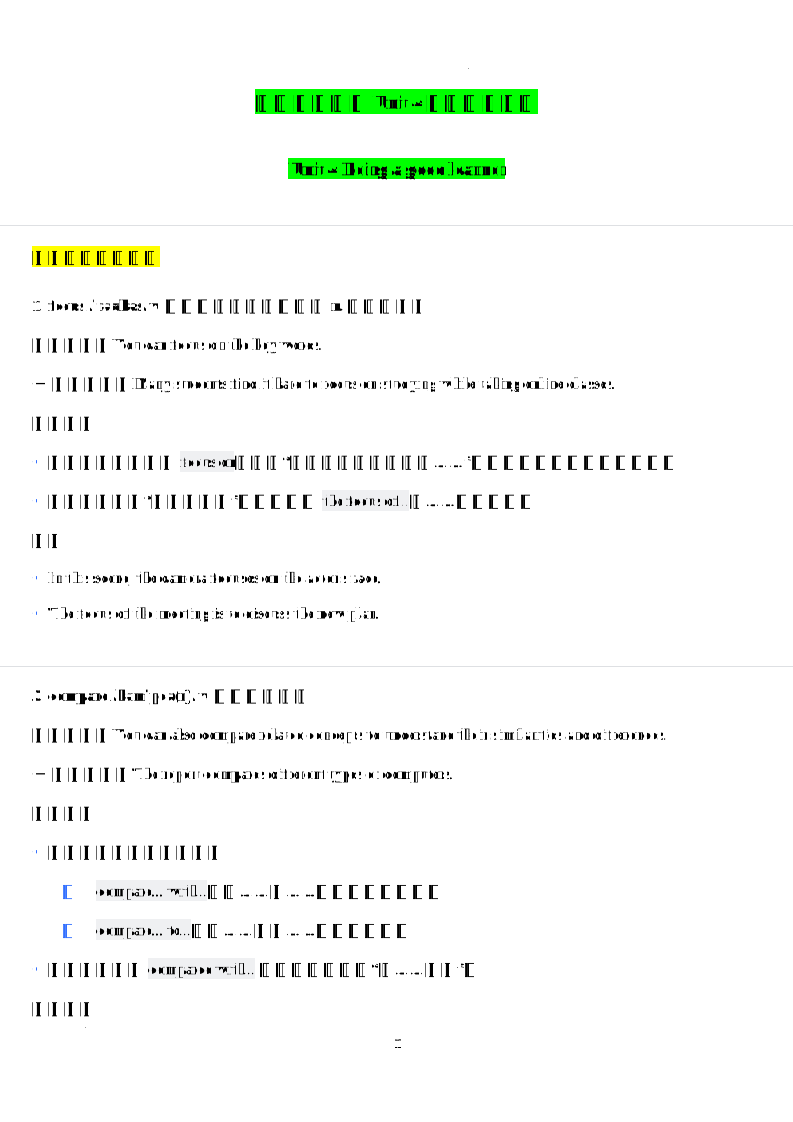
1. focus /ˈfəʊkəs/ v. 集中(注意力);聚焦 n. 焦点;中心
教材原句:You can focus on the key words.
→ 替换例句:Many students find it hard to focus on studying while taking online classes.
用法解析
· 作动词,常用搭配 focus on,意为“致力于;集中精力在……”,后接名词、代词或动名词。
· 作名词,意为“焦点;中心”,常用短语 the focus of...(……的焦点)。
例句
· In this scene, the camera focuses on the actor's face.
· The focus of the meeting is to discuss the new plan.
2. compare /kəmˈpeə(r)/ v. 比较;比作为
教材原句:You can also compare related concepts to understand their similarities and differences.
→ 替换例句:The report compares different types of computers.
用法解析
· 作及物动词,常见搭配:
· compare... with...:将……与……相比(同类比较)
· compare... to...:把……比作……(异类比喻)
· 过去分词短语 compared with... 可作状语,意为“与……相比”。
易混辨析
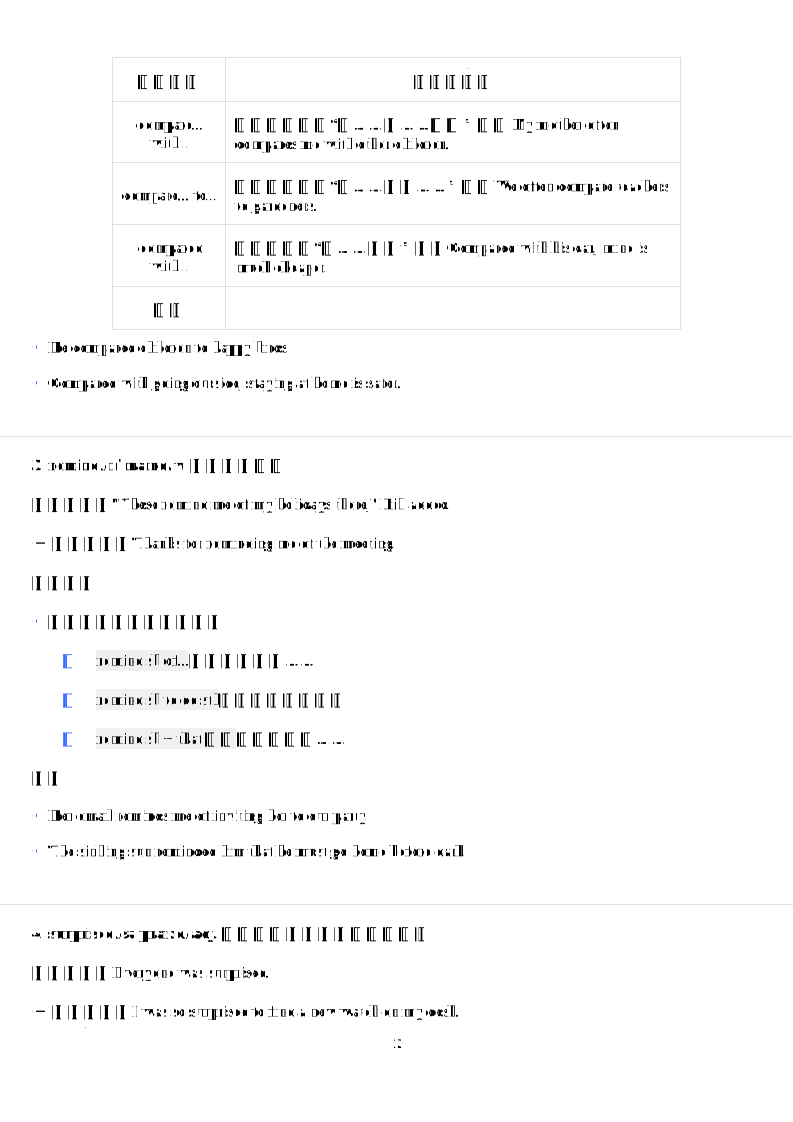
易混词组
用法及例句
compare... with...
同类比较,表“把……和……对比” 例:My mother often compares me with other children.
compare... to...
异类比喻,表“把……比作……” 例:We often compare teachers to gardeners.
compared with...
作状语,表“与……相比” 例:Compared with his car, mine is much cheaper.
例句
· He compared children to happy birds.
· Compared with going outside, staying at home is safer.
3. remind /rɪˈmaɪnd/ v. 使想起;提醒
教材原句:"These remind me of my holidays there," Bill added.
→ 替换例句:Thanks for reminding me of the meeting.
用法解析
· 作及物动词,常见搭配:
· remind sb of...:使某人想起……
· remind sb to do sth:提醒某人做某事
· remind sb + that 从句:提醒某人……
例句
· Her email reminds me of inviting her to our party.
· The sinking sun reminded him that he must go home before dark.
4. surprised /səˈpraɪzd/ adj. 惊奇的;惊讶的;感觉意外的
教材原句:Everyone was surprised.
→ 替换例句:I was so surprised to find a new watch on my desk.
用法解析
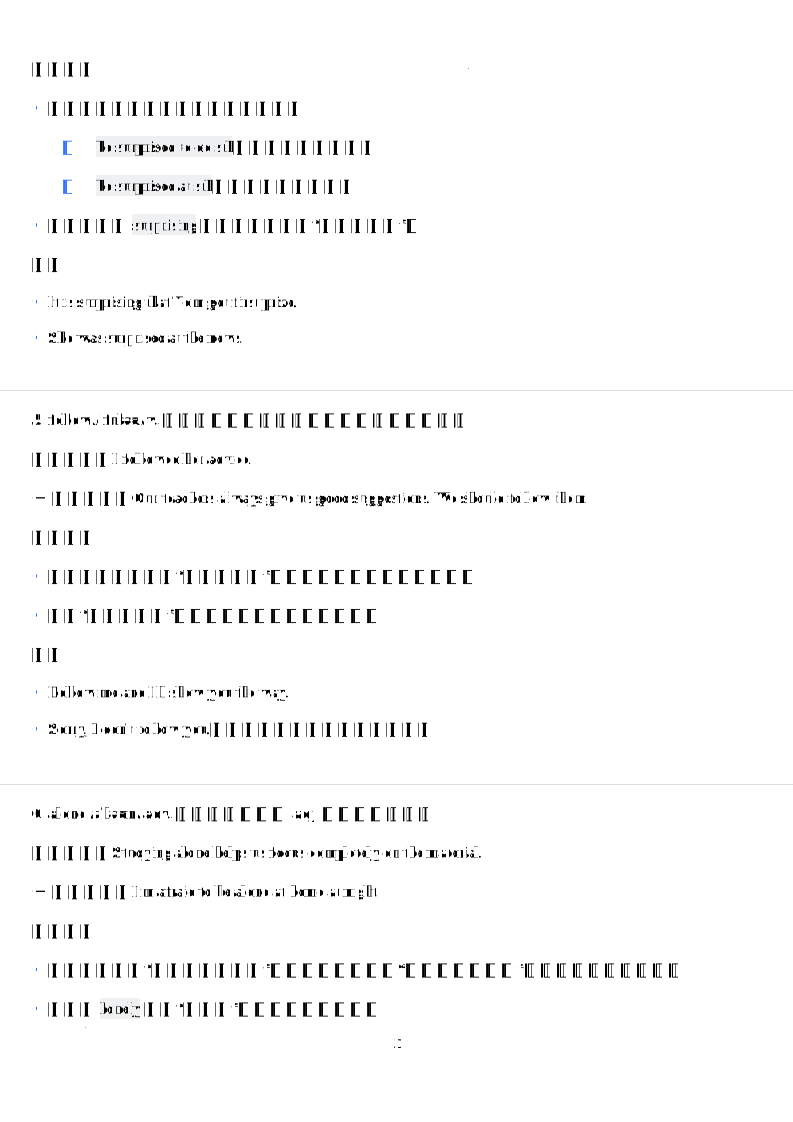
· 形容词,主语通常是人,常用短语:
· be surprised to do sth:做某事感到很惊讶
· be surprised at sth:对某事感到很惊讶
· 形容词形式 surprising 修饰事物,意为“令人惊讶的”。
例句
· It is surprising that Tom got first prize.
· She was surprised at the news.
5. follow /ˈfɒləʊ/ v. 接受;听从(忠告、指示等);跟随;沿着
教材原句:I followed her advice.
→ 替换例句:Our teachers always give us good suggestions. We should follow them.
用法解析
· 作及物动词,意为“跟随;沿着”时,后接名词或代词作宾语;
· 意为“遵循;听从”时,可接建议、规则等名词。
例句
· Follow me and I'll show you the way.
· Sorry, I don't follow you.(对不起,我不明白你的话。)
6. alone /əˈləʊn/ adv. 独自地;单独地 adj. 独自的;单独的
教材原句:Studying alone helps us focus completely on the material.
→ 替换例句:I'm afraid to be alone at home at night.
用法解析
· 作副词,意为“独自地;单独地”;作形容词,意为“独自的;单独的”,通常没有感情色彩。
· 易混词 lonely 意为“孤独的”,指内心感到孤独。
例句
· He had to live alone in a house.
· The story is about a lonely old man and his dog.
7. attention /əˈtenʃn/ n. 注意力;注意
教材原句:When you do self-study, you pay all your attention to learning.
→ 替换例句:He was waving his arms to draw their attention.
用法解析
· 作名词,常用短语:
· pay attention to:注意……(to为介词,后接名词/动名词)
· draw one's attention:引起……的注意
· draw one's attention to...:引起某人对……的注意
例句
· Please pay attention to your spelling.
· The teacher drew our attention to the new rule.
8. allow /əˈlaʊ/ v. 允许;认可
教材原句:Studying alone allows us to have full control over our learning environment.
→ 替换例句:My parents don't allow me to go out at night.
用法解析
· 作及物动词,常见搭配:
· allow sb (not) to do sth:(不)允许某人做某事
· be allowed to do sth:被允许做某事
· allow sb sth:允许某人某事
· allow sb in/out:允许某人进入/出去
· allow doing sth:允许做某事
例句
· This allows students to make plans online instead of face-to-face.
· We don't allow smoking in our house.
二、重点短语讲解
1. focus on 集中精力在……
教材原句:You can focus on the key words.
→ 替换例句:You should focus on your study instead of playing games.
用法解析
· 动词短语,focus 为动词,on 为介词,后接名词、代词或动名词。
例句
· The company will focus on developing new products.
· She focused her attention on the problem.
2. remind sb of... 使某人想起……
教材原句:"These remind me of my holidays there," Bill added.
→ 替换例句:These books remind me of my childhood.
用法解析
· remind 为及物动词,of 后接名词、代词或动名词,表示“使某人想起……”。
例句
· The song reminds me of my hometown.
· The old photo reminds her of her happy days.
3. pay attention to 注意……
教材原句:When you do self-study, you pay all your attention to learning.
→ 替换例句:Please pay attention to the traffic rules when crossing the street.
用法解析
· attention 为名词,to 为介词,后接名词、代词或动名词。
例句
· The teacher asked us to pay attention to the new words.
· He paid no attention to what I said.
4. allow sb to do sth 允许某人做某事
教材原句:Studying alone allows us to have full control over our learning environment.
→ 替换例句:The teacher allowed us to leave early.
用法解析
· allow 为及物动词,后接复合宾语,sb 为宾语,to do sth 为宾语补足语。
例句
· They don't allow people to smoke in the office.
· I was allowed to use the computer.
5. miss school 缺课
例句:He missed school because he had a flu.
用法解析
· miss 此处意为“错过;未出席”,school 指“上课;上学”。
例句
· She missed school for a week because of illness.
· Don't miss school without a good reason.
三、重点句式讲解
1. “疑问词(短语)+动词不定式”结构
教材原句:How to learn physics.
→ 替换例句:At first, Katie didn't know what to say to Megan.
句式结构
· 该结构在句中可作宾语、主语、表语。
· 疑问词包括 what、how、when、where、which 等。
例句
· How to find it is still a problem.(作主语)
· The question is where to make a living.(作表语)
2. “What about...?” 句型
教材原句:What about from 7:00 to 8:30 every Friday evening?
→ 替换例句:What about playing football with me?
句式结构
· 意为“……怎么样?”,相当于 How about...?,常用于引入新话题或提出建议,后接名词、代词或动名词。
例句
· What about free time with parents around?
· How about getting up to play swords?
3. “be sure+(that)从句”结构
教材原句:I'm not sure I would agree with that.
→ 替换例句:I'm sure that reading these books is good for your study.
句式结构
· 意为“肯定/确信……”,that 可省略;该结构可转换为 It is certain+that 从句。
联想拓展
· be sure to do sth:一定要做某事
· be sure of (doing) sth:对某事有把握
· make sure of (doing) sth:确保(做)某事
例句
· Finally, be sure to thank your audience when you finish speaking.
· I am so sure of my opinion.
四、语法讲解:情态动词
教材原句
① Why can we stand on the ground?
② We should build confidence in our learning.
③ I'm not sure I would agree with that.
1. 概念
情态动词本身有词义,表示特定的语气,但不能独立作谓语,只能和动词原形一起构成谓语。情态动词用在动词原形前,表示说话人对这一动作或状态的看法或主观设想。
2. 常见情态动词的用法
情态动词
用法
例句
can
①可以;能够(表能力)
②可能(表猜测)
③可以(表请求或允许)
We can speak English now, but we couldn't two years ago.
could
①可以;能够(can的过去式)
②可能(表猜测,可能性比can小) ③可以(表请求,比can委婉)
Could you help me carry the box?
may
①可以(表请求或允许)
②也许;可能(表猜测)
May I ask you a question?
might
①可以(表请求或允许,比may客气) ②也许;可能(表猜测,可能性比may小)
This hat might belong to Helen.
will
①将(表将来)
②愿(表意愿、决心)
③总是;惯于(表经常性动作)
④请……好吗(表请求)
He said he would come to my birthday party.
would
①将(will的过去式)
②过去常常(表过去习惯性动作)
③可以(表请求,语气比will委婉)
Would you like some tea?
shall
①将(用于第一人称)
②表示提议(用于第一人称)
Shall we go to the park tomorrow?
should
①应该(表义务、建议、劝告)
②应(表推测)
You should help your mum do housework.
must
①必须(表责任、义务)
②一定(表猜测)
③mustn't 意为“禁止;不准;不允许”
He must obey the school rules.
(
1
)
学科网(北京)股份有限公司
$
资源预览图
1
2
3
相关资源
由于学科网是一个信息分享及获取的平台,不确保部分用户上传资料的 来源及知识产权归属。如您发现相关资料侵犯您的合法权益,请联系学科网,我们核实后将及时进行处理。