2026届浙江省1月首考英语:语法填空 深度解析与短语句型积累(讲义)
2026-01-22
|
5页
|
2959人阅读
|
44人下载
普通
资源信息
| 学段 | 高中 |
|---|---|
| 学科 | 英语 |
| 教材版本 | - |
| 年级 | 高三 |
| 章节 | - |
| 类型 | 教案-讲义 |
| 知识点 | - |
| 使用场景 | 高考复习-一轮复习 |
| 学年 | 2026-2027 |
| 地区(省份) | 浙江省 |
| 地区(市) | - |
| 地区(区县) | - |
| 文件格式 | DOCX |
| 文件大小 | 36 KB |
| 发布时间 | 2026-01-22 |
| 更新时间 | 2026-01-22 |
| 作者 | 匿名 |
| 品牌系列 | - |
| 审核时间 | 2026-01-22 |
| 下载链接 | https://m.zxxk.com/soft/56071636.html |
| 价格 | 0.50储值(1储值=1元) |
| 来源 | 学科网 |
摘要:
该高中英语高考复习讲义聚焦语法填空核心题型,覆盖非谓语动词、定语从句、冠词用法等高考高频考点,按语篇分析、题目解析、语言积累逻辑架构知识体系。通过体裁主题梳理、核心语法点精讲、高考真题演练等教学环节,帮助学生构建语法知识网络,突破语境中语言运用难点。
资料突出语篇引领与素养融合特色,如通过独立主格结构解析培养学生逻辑思维品质,结合“turn...into...”句型仿写提升语言表达能力。短语句型按高考读写用途分类,设置“find joy in...”等情感描写短语训练,确保复习高效。为学生提升语法填空准确率和读写综合能力提供支撑,也为教师精准把控复习节奏提供系统教学框架。
内容正文:
2026届浙江省1月首考
语法填空深度解析与短语句型积累
【题目】
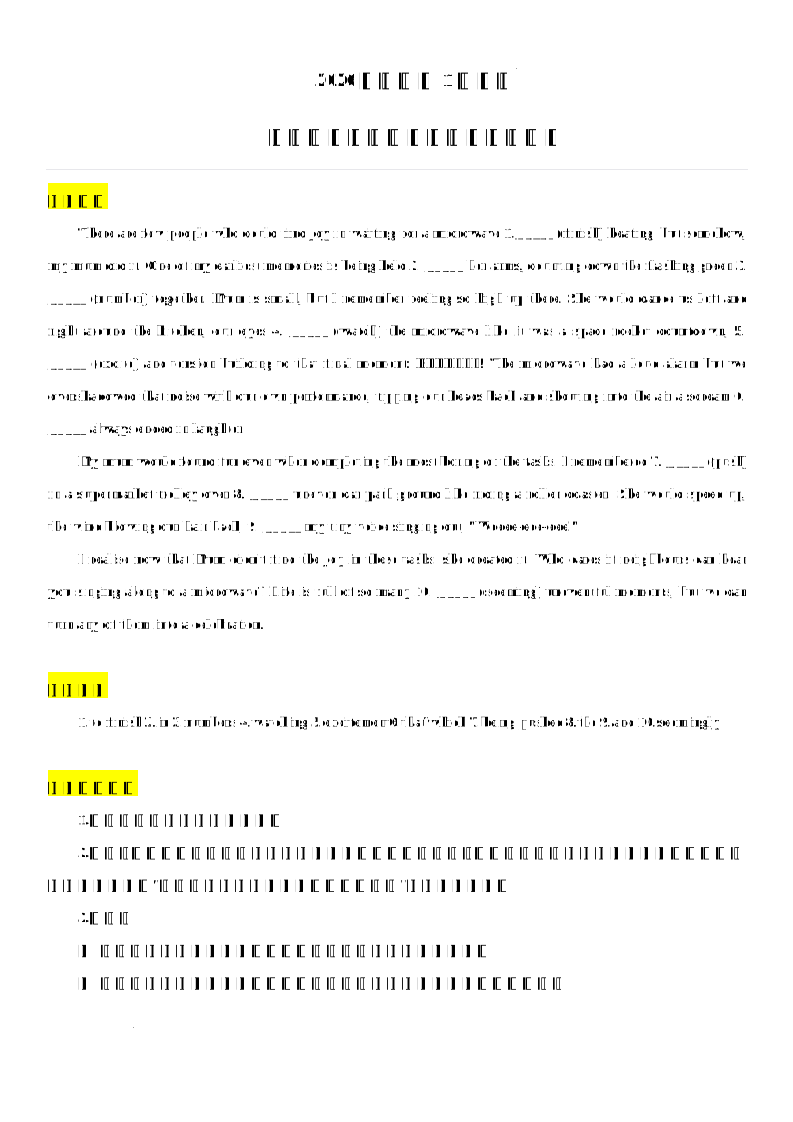
There are few people who could find joy in waiting for a microwave 1._____ (finish) heating, but somehow, my mum did it. One of my earliest memories is being held 2. _____ her arms, counting down the flashing green 3. _____ (number) together. Mum is small, but I remember feeling so high up there. She would dance us left and right around the kitchen, our eyes 4. _____ (watch) the microwave like it was a space rocket countdown, 5. _____ (excite) and tension building to that final moment: BEEEEEP! The microwave had a loud alarm but we overshadowed that noise with our own performance, tipping our heads back and shouting into the air a scream 6. _____ always ended in laughter.
My mum would found fun even when completing the most boring of the tasks. I remembered 7. _____ (push) in a supermarket trolley over 8. _____ uneven car park ground like riding a roller coaster. She would speed up, the wind blowing our hair back, 9. _____ my tiny voice singing out, "Weeee-eee-eee!"
I realise now that Mum didn't find the joy in these tasks: she created it. Who cares if neighbours can hear you singing along to a microwave? Life is full of so many 10. _____ (seeming) uneventful moments, but we can turn any of them into a celebration.
【答案】
1.to finish 2.in 3.numbers 4.watching 5.excitement6.that\which 7.being pushed 8.the 9.and 10.seemingly
【语篇分析】
1.体裁:记叙文(个人回忆类)
2.主题:作者回忆童年时母亲在平凡小事中创造快乐的经历,通过等待微波炉加热和超市购物车游戏两个场景,表达了"快乐不是寻找来的,而是创造出来的"这一生活哲理。
3.结构:
① 开篇点题:母亲能在等待微波炉加热这种平凡小事中找到快
② 具体回忆:母亲抱着作者一起倒数微波炉计时,把厨房变成欢乐舞台;
③ 延伸回忆:母亲推着购物车在停车场制造过山车般的快乐体验;④ 主题升华:揭示母亲不是"找到"快乐而是"创造"快乐,鼓励读者把平凡时刻变为庆祝。
4.情感线索:从作者儿时的兴奋快乐 → 成年后的理解感悟 → 对读者的启示鼓励
【题目分析】
1....waiting for a microwave to finish heating...
核心语法点:动词不定式作后置定语修饰名词
解析:此处"a microwave to finish heating"中,不定式"to finish"作定语修饰"microwave",表示"用来完成加热的微波炉"。这种结构常用于表示"要去做某事的人/物",即"the + 名词 + to do"。
类似结构:I need a pen to write with.(我需要一支笔来写字。)
2....being held in her arms...
核心语法点:固定短语"in one's arms"(在某人的怀抱中)
解析:介词"in"在此表示"在...里面/之中","in her arms"意为"在她的怀抱中",这是描述被抱着的固定表达。
类似结构:hold a baby in one's arms(抱着婴儿);cry in one's mother's arms(在母亲怀中哭泣)
3....the flashing green numbers together.
核心语法点:可数名词复数形式
解析:微波炉上的计时显示通常有多个数字(如"00:30"),所以"number"需要用复数形式"numbers"。此外,前文"counting down"(倒数)也暗示了不止一个数字。
类似结构:flashing lights(闪烁的灯光);changing numbers(变化的数字)
4....our eyes watching the microwave...
核心语法点:独立主格结构作伴随状语
解析:"our eyes watching the microwave"是独立主格结构,由"名词/代词+现在分词"构成,表示eyes和watch之间是主动关系,且这个动作与主句动作同时发生。这里描述的是"我们跳舞时眼睛看着微波炉"。
类似结构:He stood there, his hands trembling.(他站在那里,双手颤抖。)
5....excitement and tension building to that final moment...
核心语法点:动词变名词,与并列结构保持一致
解析:"excite"是动词,需要变为名词"excitement"才能与后面的名词"tension"并列,共同作"building"的主语。这是由"and"连接的并列结构要求前后词性一致。
类似结构:happiness and sorrow(快乐与悲伤);success and failure(成功与失败)
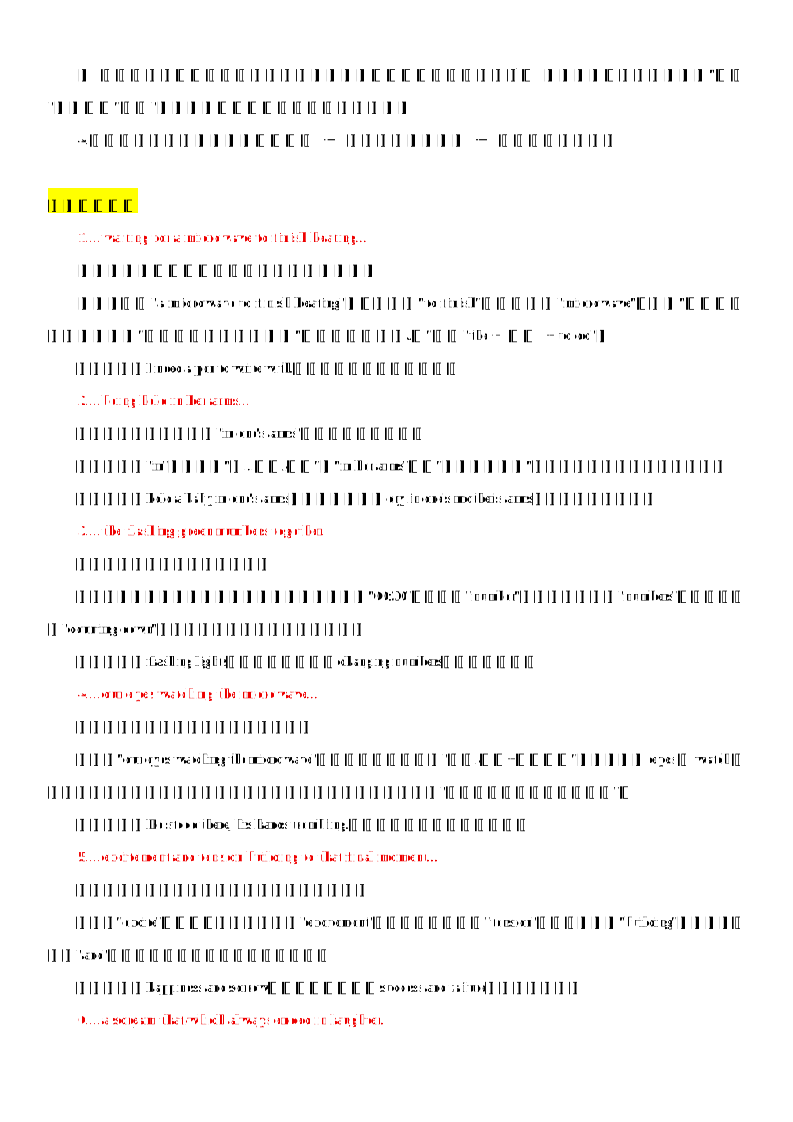
6....a scream that/which always ended in laughter.
核心语法点:定语从句关系代词
解析:此处"a scream that/which always ended in laughter"中,关系代词"that"或"which"引导定语从句修饰先行词"scream",并在从句中作主语。由于先行词是物,所以可以用that或which。
类似结构:The book that/which I borrowed is interesting.(我借的那本书很有趣。)
7.I remembered being pushed in a supermarket trolley...
核心语法点:动名词的被动形式作宾语
解析:动词"remember"后接动名词表示"记得做过某事"。根据句意"我记得被推在购物车里","I"和"push"之间是被动关系(我被推),所以用动名词的被动形式"being pushed"。
类似结构:I remembered being taken to the zoo as a child.(我记得小时候被带去动物园。)
8....over the uneven car park ground...
核心语法点:定冠词"the"表示特指
解析:此处"the uneven car park ground"特指那个不平坦的停车场地面,而不是泛指任何一个停车场地面。定冠词"the"用于特指前面提到过或双方都知道的事物。
类似结构:the tall building(那座高楼);the red car(那辆红车)
9....the wind blowing our hair back, and my tiny voice singing out...
核心语法点:并列连词"and"连接两个独立主格结构
解析:此处"the wind blowing our hair back"和"my tiny voice singing out"是两个并列的独立主格结构,都作为主句"She would speed up"的伴随状语。需要用并列连词"and"连接这两个结构,表示同时发生的两个伴随动作。
类似结构:He sat quietly, his eyes closed and his hands folded.(他安静地坐着,闭着眼睛,双手交叉。)
注意:这里不能用"with",因为"with"引导的是复合结构,而此处是两个并列的独立主格结构,需要用"and"连接。
10....so many seemingly uneventful moments...
核心语法点:形容词变副词修饰形容词
解析:"seeming"是形容词,需要变为副词"seemingly"才能修饰后面的形容词"uneventful"。副词可以修饰形容词,表示程度或方式。
类似结构:extremely difficult(极其困难);surprisingly easy(惊人地容易)
【短语积累】
1. find joy in... 在...中找到快乐
高考用途:读后续写/语法填空
情感描写,如"Few people can find joy in doing repetitive tasks"
2. count down
高考用途:读后续写
动作描写,如"We counted down together: 3, 2, 1, Happy New Year!"
3. overshadow something with... 用...使某物黯然失色/盖过某物
高考用途:读后续写
对比描写,如"Her beautiful voice overshadowed the piano music with its charm"
4. end in 以...结束
高考用途:读后续写
结局描写,如"The argument ended in laughter and hugs"
5. find fun in... 在...中找到乐趣
高考用途:读后续写
心理描写,如"Children often find fun in the simplest things"
6. speed up 加速
高考用途:读后续写
动作描写,如"He sped up when he saw the finish line"
7. sing out 大声唱出
高考用途:读后续写
动作描写,如"The children sang out the chorus with enthusiasm"
8. turn...into... 把...变成...
高考用途:读后续写/语法填空
主题升华,如"We can turn challenges into opportunities"
【句型积累】
句型一:There are few people who could...(很少有人能够...)
原句:There are few people who could find joy in waiting for a microwave to finish heating.
用于"强调某行为或品质的稀有性",结构为"There are few people who could + 动词原形 + ...",通过否定绝大多数人来突出主语的特殊性。适用于读后续写中突出人物特点的开头。)
仿写(高考读后续写):很少有人能在失败后立刻重新站起来。
There are few people who could stand up immediately after failure.
仿写(高考读后续写):很少有人能在巨大压力下保持冷静。
There are few people who could stay calm under great pressure.
句型二:...would + 动词原形..., ...ing...(过去常常..., ...着...)
原句:She would dance us left and right around the kitchen, our eyes watching the microwave like it was a space rocket countdown.
用于"描述过去习惯性动作及其伴随状态",结构为"主语 + would + 动词原形 + ..., 名词 + 现在分词 + ...",前半句用"would"表示过去的习惯,后半句用独立主格结构表示伴随状况。适用于读后续写中对过去经历的生动描写。
仿写(高考读后续写):爷爷常常坐在摇椅上,眼睛望着远方的山。
My grandfather would sit in the rocking chair, his eyes looking at the distant mountains.
仿写(高考读后续写):老师会在教室里走来走去,手里总是拿着一本红笔。
The teacher would walk around the classroom, a red pen always in his hand.
句型三:Life is full of..., but we can turn...into...(生活充满了..., 但我们可以把...变成...)
原句:Life is full of so many seemingly uneventful moments, but we can turn any of them into a celebration.
用于"表达生活感悟和积极态度",结构为"Life is full of + 名词, but we can turn + 名词 + into + 名词",通过转折突出人的主观能动性,强调积极转变的可能性。适用于读后续写结尾部分的主题升华。
仿写(高考读后续写):生活充满了挑战,但我们可以把它们变成成长的机会。
Life is full of challenges, but we can turn them into opportunities for growth.
仿写(高考读后续写):生活充满了不确定性,但我们可以把它变成冒险的旅程。
Life is full of uncertainties, but we can turn them into adventures.
学科网(北京)股份有限公司
$
资源预览图
1
2
相关资源
由于学科网是一个信息分享及获取的平台,不确保部分用户上传资料的 来源及知识产权归属。如您发现相关资料侵犯您的合法权益,请联系学科网,我们核实后将及时进行处理。