Unit 2 单词详解表 -2025-2026学年外研版英语八年级上册
2026-01-05
|
10页
|
176人阅读
|
91人下载
普通
资源信息
| 学段 | 初中 |
|---|---|
| 学科 | 英语 |
| 教材版本 | 初中英语外研版八年级上册 |
| 年级 | 八年级 |
| 章节 | Unit 2 Getting along |
| 类型 | 学案-知识清单 |
| 知识点 | - |
| 使用场景 | 同步教学-单元练习 |
| 学年 | 2025-2026 |
| 地区(省份) | 全国 |
| 地区(市) | - |
| 地区(区县) | - |
| 文件格式 | DOCX |
| 文件大小 | 37 KB |
| 发布时间 | 2026-01-05 |
| 更新时间 | 2026-01-05 |
| 作者 | 课堂干货铺(关注我,主页搜资料,初中英语各版本,不定时更新) |
| 品牌系列 | - |
| 审核时间 | 2026-01-05 |
| 下载链接 | https://m.zxxk.com/soft/55799865.html |
| 价格 | 0.00储值(1储值=1元) |
| 来源 | 学科网 |
摘要:
该初中英语单元单词详解表系统梳理了外研版八年级上册Unit 2的核心词汇,涵盖词义、常见搭配、考点提示及经典例句等维度,构建了从基础词义理解到搭配运用再到考点突破的渐进式学习支架。
清单采用“考点分层标注”和“易混词对比”设计,如区分“shout at(贬义)与shout to(为让听见而喊)”“message(可数具体信息)与information(不可数抽象信息)”等考点,标注since引导从句需用现在完成时、neither...nor...遵循就近原则等语法重点,培养学生的语言能力和思维品质。搭配“经典例句”直观展示语境用法,助力不同水平学生高效掌握词汇运用规则,教师可据此精准定位教学重难点,学生能自主梳理知识体系,提升学习效率。
内容正文:
外研版八年级上册Unit 2 单词详解表
单词
常见搭配
考点提示
经典例句
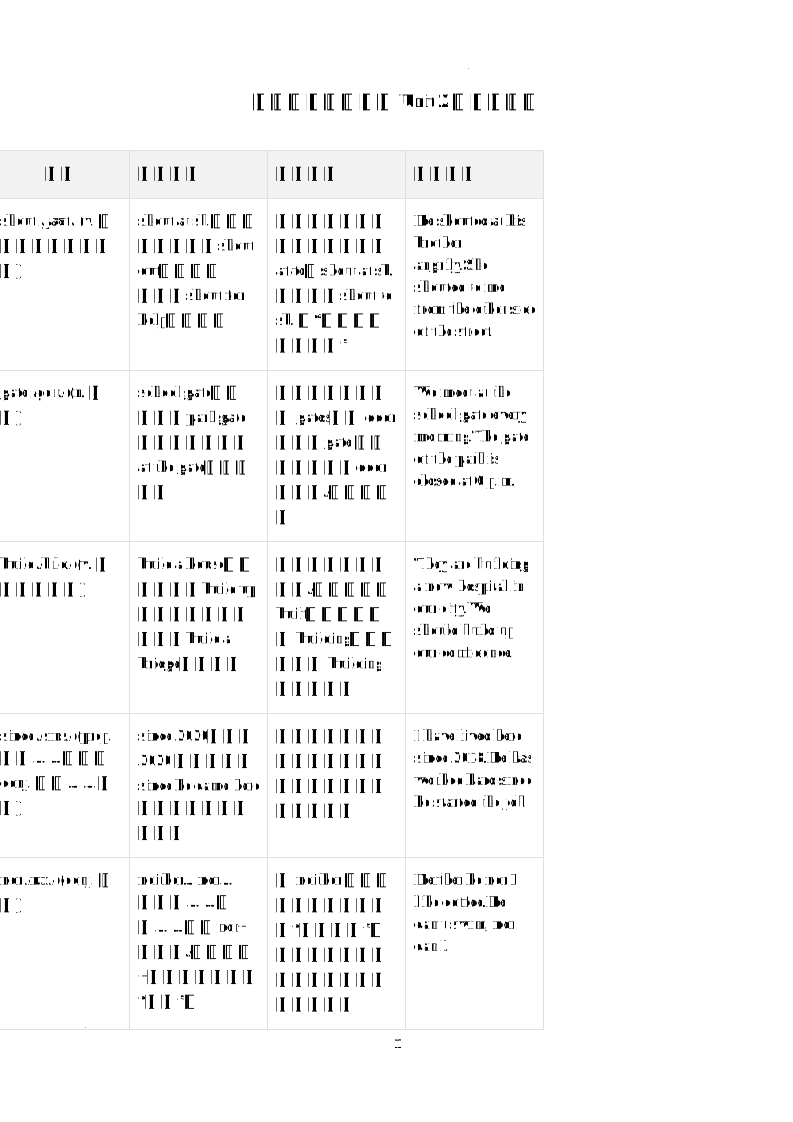
shout /ʃaʊt/ (v. 大声说,喊叫,呼喊)
shout at sb.(对某人大喊);shout out(大喊出声);shout for help(呼救)
不及物动词,后接宾语需加介词at/to;shout at sb. 含贬义,shout to sb. 表“为让某人听见而喊”
He shouted at his brother angrily.She shouted to me from the other side of the street.
gate /ɡeɪt/ (n. 大门)
school gate(校门);park gate(公园大门);at the gate(在门口)
可数名词,复数为gates;与door区分,gate指大门、闸门,door指房间/建筑物的门
We meet at the school gate every morning.The gate of the park is closed at 6 p.m.
build /bɪld/ (v. 建造,盖;造)
build a house(建房子);build up(逐步建立;增强);build a bridge(建桥)
不规则动词,过去式/过去分词为built;现在分词为building;名词形式为building(建筑物)
They are building a new hospital in our city.We should build up our confidence.
since /sɪns/ (prep. 自从……以来;conj. 自从……之后)
since 2020(自从2020年以来);since he came here(自从他来这儿之后)
作介词后接时间点,作连词后接从句;主句常用现在完成时
I have lived here since 2018.He has worked hard since he started the job.
nor /nɔː/ (conj. 也不)
neither…nor…(既不……也不……);nor+助动词/情态动词+主语(倒装,表“也不”)
与neither连用构成并列结构,遵循“就近原则”;倒装句需将助动词(情态动词)提至主语前
Neither he nor I like coffee.He can’t swim, nor can I.
hole /həʊl/ (n. 洞,孔)
a hole in the wall(墙上的洞);dig a hole(挖洞);a mouse hole(老鼠洞)
可数名词,复数为holes;短语in the hole表“负债;亏空”
There is a big hole in my sock.The dog dug a hole to hide the bone.
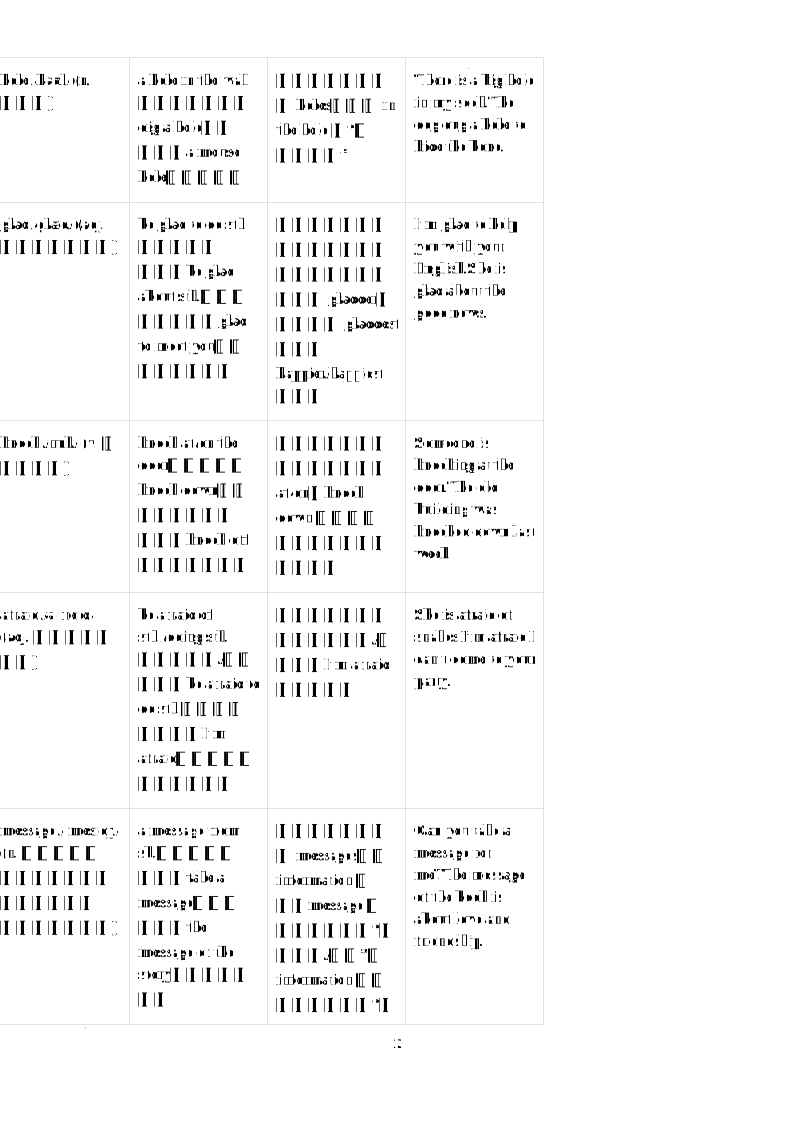
glad /ɡlæd/ (adj. 高兴的,开心的)
be glad to do sth.(乐意做某事);be glad about sth.(为某事高兴);glad to meet you(很高兴见到你)
形容词,常作表语,不用于修饰名词作定语;比较级为gladder,最高级为gladdest(常用happier/happiest替代)
I’m glad to help you with your English.She is glad about the good news.
knock /nɒk/ (v. 敲门(窗))
knock at/on the door(敲门);knock down(摧毁,拆毁;撞倒);knock off(敲掉;下班)
不及物动词,后接宾语需加介词at/on;knock down为动副短语,宾语为代词时放中间
Someone is knocking at the door.The old building was knocked down last week.
afraid /əˈfreɪd/ (adj. 害怕的,恐惧的)
be afraid of sth./doing sth.(害怕某物/做某事);be afraid to do sth.(不敢做某事);I’m afraid(恐怕,用于委婉表达)
形容词,仅作表语,无比较级/最高级;I’m afraid后可接从句
She is afraid of snakes.I’m afraid I can’t come to your party.
message /ˈmesɪdʒ/ (n. (电影、书籍、讲话等的)要旨,主题思想,寓意;信息)
a message from sb.(某人的留言);take a message(捎口信);the message of the story(故事的寓意)
可数名词,复数为messages;与information区分,message为可数名词,表“具体信息/留言”,information为不可数名词,表“抽象信息”
Can you take a message for me?The message of the book is about love and friendship.
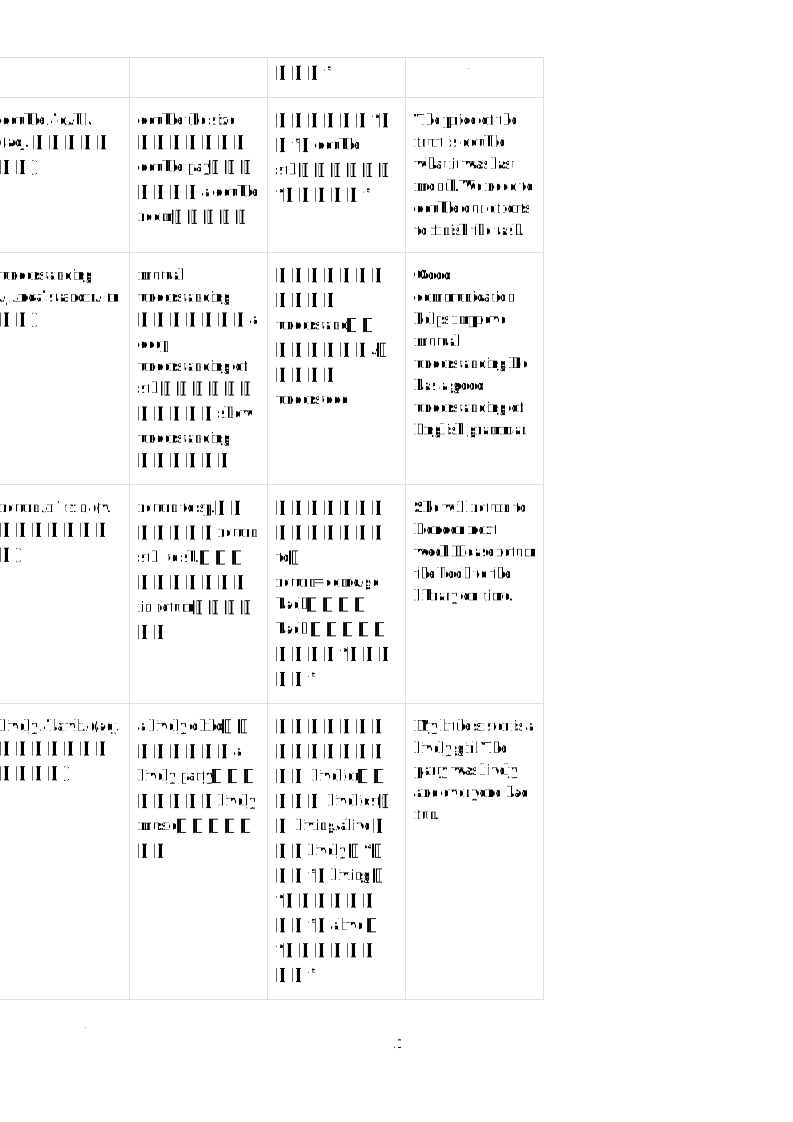
double /ˈdʌbl/ (adj. 双倍的,两倍的)
double the size(两倍大小);double pay(双倍工资);a double room(双人间)
也可作动词表“加倍”(double sth.),作名词表“两倍;双打”
The price of the fruit is double what it was last month.We need to double our efforts to finish the task.
understanding /ˌʌndəˈstændɪŋ/ (n. 理解)
mutual understanding(相互理解);a deep understanding of sth.(对某事的深刻理解);show understanding(表示理解)
不可数名词;动词形式为understand(理解),过去式/过去分词为understood
Good communication helps improve mutual understanding.He has a good understanding of English grammar.
return /rɪˈtɜːn/ (v. 返回,回来,回去)
return to sp.(返回某地);return sth. to sb.(把某物还给某人);in return(作为回报)
不及物动词,后接地点需加介词to;return=come/go back,不可与back连用;也可作名词表“返回;归还”
She will return to London next week.Please return the book to the library on time.
lively /ˈlaɪvli/ (adj. 充满活力的,生气勃勃的)
a lively child(活泼的孩子);a lively party(热闹的派对);lively music(欢快的音乐)
形容词,可作表语或定语;比较级为livelier,最高级为liveliest;与living/alive区分,lively表“活泼的”,living表“活着的(作定语)”,alive表“活着的(作表语)”
My little sister is a lively girl.The party was lively and everyone had fun.
theirs /ðeəz/ (pron. 他们的,她们的)
a friend of theirs(他们的一个朋友);This book is theirs.(这本书是他们的)
名词性物主代词,相当于“their+名词”,后面不接名词;形容词性物主代词为their
Their house is big, and theirs has a big garden too.These bags are ours, and those are theirs.
grade /ɡreɪd/ (n. 年级)
in Grade 8(在八年级);get good grades(取得好成绩);grade level(年级水平)
可数名词,复数为grades;表示“年级”时首字母需大写;也可表“成绩;等级”
He is in Grade 9 in a middle school.She got good grades in the final exam.
article /ˈɑːtɪkl/ (n. (报刊的)文章)
a newspaper article(报纸文章);write an article(写文章);an article about sports(一篇关于体育的文章)
可数名词,复数为articles;也可表“物品;冠词”(a/an/the)
I read an interesting article in the magazine.She is writing an article for the school newspaper.
priceless /ˈpraɪsləs/ (adj. 极其贵重的;无价的)
a priceless painting(无价的画作);priceless treasure(无价之宝)
形容词,无比较级/最高级;反义词为cheap/valueless;与invaluable同义,均表“无价的”
The ancient vase is priceless.Her smile is a priceless gift for me.
offer /ˈɒfə/ (v. 提供,给予)
offer sb. sth.(给某人提供某物);offer to do sth.(主动提出做某事);offer help(提供帮助)
也可作名词表“提议;出价”(an offer of help);offer sb. sth.=offer sth. to sb.
He offered me a cup of tea.She offered to take me to the airport.
plan /plæn/ (v. 计划)
plan to do sth.(计划做某事);make a plan(制定计划);plan for the future(为未来做计划)
也可作名词表“计划”(可数名词,复数为plans);现在分词为planning(双写n)
We plan to go to the beach this weekend.Have you made a plan for your holiday?
quite /kwaɪt/ (adv. 很;较为)
quite a lot(很多);quite good(相当好);quite + 形容词/副词
程度副词,修饰形容词/副词时放其前;quite a/an+可数名词单数表“相当一个……”
The film is quite interesting.It’s quite a cold day today.
stressed /strest/ (adj. 焦虑的,紧张的,无法放松的)
be stressed out(极度焦虑的);feel stressed(感到紧张);stressed about exams(因考试而焦虑)
形容词,常作表语;动词形式为stress(强调;使紧张),名词形式为stress(压力)
She feels stressed before exams.Too much work makes him stressed out.
recently /ˈriːsntli/ (adv. 最近,近来,不久前)
recently(用于现在完成时/一般过去时);quite recently(最近)
副词,常置于句首、句中或句末;形容词形式为recent(最近的)
I have seen him recently.She recently moved to a new house.
online /ˌɒnˈlaɪn/ (adv. 从网上,在网上)
shop online(网购);chat online(网上聊天);study online(在线学习)
也可作形容词表“在线的;联网的”(an online course)
Many people like to shop online now.We have an online English class every day.
allow /əˈlaʊ/ (v. 使有可能;允许,容许,准许)
allow sb. to do sth.(允许某人做某事);allow doing sth.(允许做某事);be allowed to do sth.(被允许做某事)
及物动词,后接动词不定式作宾补,不接动名词作宾补;被动结构为be allowed to do sth.
My parents don’t allow me to stay out late.The school allows smoking in the designated area.
ticket /ˈtɪkɪt/ (n. 票,入场券)
a train ticket(火车票);a concert ticket(音乐会门票);book a ticket(订票)
可数名词,复数为tickets;短语a ticket to…表“……的票”
I bought two tickets for the movie.Do you have a ticket to the football match?
true /truː/ (adj. 真正的)
be true(真实的);come true(实现);true friend(真正的朋友)
形容词,可作表语或定语;比较级为truer,最高级为truest;副词形式为truly(真实地)
The story is true.His dream of becoming a doctor came true.
respect /rɪˈspekt/ (v. 尊重,顾及)
respect sb.(尊重某人);respect one’s opinion(尊重某人的意见);show respect for sb.(向某人表示尊重)
也可作名词表“尊重;敬意”(不可数名词);形容词形式为respectful(恭敬的)/respective(各自的)
We should respect our teachers and parents.He has a lot of respect for his grandfather.
narrow /ˈnærəʊ/ (adj. 狭窄的)
a narrow road(狭窄的路);narrow mind(狭隘的思想);narrow escape(九死一生)
形容词,可作表语或定语;比较级为narrower,最高级为narrowest;动词形式为narrow(变窄;缩小)
The street is too narrow for cars to pass.Her view on the matter is very narrow.
lane /leɪn/ (n. ……巷(常用于路名中))
a street lane(小巷);Park Lane(公园巷);a bus lane(公交专用道)
可数名词,复数为lanes;也可表“车道;跑道”
We live in a small lane near the park.The bus lane is only for buses.
unit /ˈjuːnɪt/ (n. (计量用的)单位)
a unit of length(长度单位);a family unit(家庭单位);Unit 2(第二单元)
可数名词,复数为units;也可表“单元;装置”
The meter is a unit of length.This lesson is in Unit 3 of the textbook.
perhaps /pəˈhæps/ (adv. 可能,大概,也许)
perhaps(置于句首/句中/句末);perhaps not(也许不)
程度副词,与maybe/probably同义,probably的可能性最大
Perhaps he will come tomorrow.It’s perhaps the best choice for you.
argue /ˈɑːɡjuː/ (v. 争论,争吵)
argue with sb.(与某人争吵);argue about sth.(为某事争论);argue for/against sth.(支持/反对某事)
不及物动词,后接宾语需加介词with/about;名词形式为argument(争论)
They often argue with each other about small things.He argued for the new plan in the meeting.
divide /dɪˈvaɪd/ (v. (把……)分开)
divide…into…(把……分成……);divide sth. between sb.(在两人之间分配某物);dividing line(分界线,界限)
及物动词;名词形式为division(划分;部门);与separate区分,divide表“把整体分成部分”,separate表“把分开的事物隔开”
The teacher divided the class into four groups.The river divides the city into two parts.
reach /riːtʃ/ (v. 实现,达成)
reach an agreement(达成协议);reach a goal(实现目标);reach sb.(联系到某人)
及物动词,也可表“到达(某地)”,后接地点时不加介词(reach sp.=get to sp.=arrive at/in sp.)
We hope to reach an agreement by the end of the week.She finally reached her dream of becoming a singer.
agreement /əˈɡriːmənt/ (n. (意见的)一致,相合)
reach an agreement(达成协议);in agreement with sb.(与某人意见一致);sign an agreement(签署协议)
可数/不可数名词,表“协议”时可数,表“一致”时不可数;动词形式为agree(同意)
We are in agreement with your suggestion.They signed an agreement to cooperate with each other.
relative /ˈrelətɪv/ (n. 家人;亲戚)
a close relative(近亲);visit relatives(拜访亲戚);live with relatives(和亲戚住在一起)
可数名词,复数为relatives;形容词形式为relative(相对的;相关的)
I have many relatives in the countryside.She visited her relatives during the Spring Festival.
government /ˈɡʌvəmənt/ (n. 政府)
the local government(当地政府);central government(中央政府);government policy(政府政策)
可数名词,复数为governments;常与the连用;动词形式为govern(统治;管理)
The government is trying to improve people’s life.The local government built a new hospital last year.
poem /ˈpəʊɪm/ (n. 诗;韵文)
write a poem(写诗);a love poem(爱情诗);read a poem aloud(大声读诗)
可数名词,复数为poems;与poetry区分,poem为“具体的诗”,poetry为“诗歌(总称)”
He wrote a beautiful poem for his mother.She likes reading poems by Li Bai.
inside /ˌɪnˈsaɪd/ (adv. 在(容器或其他封闭的空间)里面)
inside the box(在盒子里);go inside(进去);inside out(里外颠倒)
也可作介词(inside the house)、名词(the inside of the car)、形容词(inside pocket)
Please put the book inside the bag.He turned his coat inside out by mistake.
neighbour /ˈneɪbə/ (n. 邻居,邻人)
a good neighbour(好邻居);next-door neighbour(隔壁邻居);get on with neighbours(与邻居相处)
可数名词,复数为neighbours;美式拼写为neighbor;动词形式为neighbour(与……为邻)
Our new neighbour is a teacher.We get on well with our neighbours.
act /ækt/ (n. 行为,行动,动作,举动)
an act of kindness(善举);take action(采取行动);an act of bravery(勇敢的行为)
可数名词,复数为acts;也可作动词表“行动;表演”(act quickly;act in a play);名词形式还有action(行动)、actor/actress(演员)
His act of helping the old man was praised by everyone.We must act quickly to solve the problem.
pass /pɑːs/ (v. 过去,流逝)
Time passes quickly.(时光飞逝);pass by(经过;路过);pass the time(打发时间)
不及物动词,表“过去”时常用Time passes…;也可作及物动词表“传递;通过(考试)”(pass sb. sth.;pass the exam)
Years passed quickly, and he grew up.We passed by a park on our way home.
whenever /wenˈevə/ (conj. 每当)
whenever you need help(每当你需要帮助时);whenever I see her(每当我见到她时)
引导时间状语从句,相当于no matter when;从句用一般现在时表将来
Whenever I am in trouble, she always helps me.You can ask me for help whenever you need it.
(
1
)
学科网(北京)股份有限公司
$
资源预览图
1
2
3

相关资源
由于学科网是一个信息分享及获取的平台,不确保部分用户上传资料的 来源及知识产权归属。如您发现相关资料侵犯您的合法权益,请联系学科网,我们核实后将及时进行处理。