寒假作业05 现在进行时(巩固培优)七年级英语新教材外研版
2026-01-04
|
2份
|
17页
|
642人阅读
|
25人下载
资源信息
| 学段 | 初中 |
|---|---|
| 学科 | 英语 |
| 教材版本 | 初中英语外研版七年级上册 |
| 年级 | 七年级 |
| 章节 | - |
| 类型 | 题集-专项训练 |
| 知识点 | 过去进行时 |
| 使用场景 | 寒暑假-寒假 |
| 学年 | 2026-2027 |
| 地区(省份) | 全国 |
| 地区(市) | - |
| 地区(区县) | - |
| 文件格式 | ZIP |
| 文件大小 | 213 KB |
| 发布时间 | 2026-01-04 |
| 更新时间 | 2026-01-04 |
| 作者 | Luciabc |
| 品牌系列 | 上好课·寒假轻松学 |
| 审核时间 | 2026-01-04 |
| 下载链接 | https://m.zxxk.com/soft/55774758.html |
| 价格 | 3.00储值(1储值=1元) |
| 来源 | 学科网 |
内容正文:
限时练习:40min 完成时间: 月 日 天气:
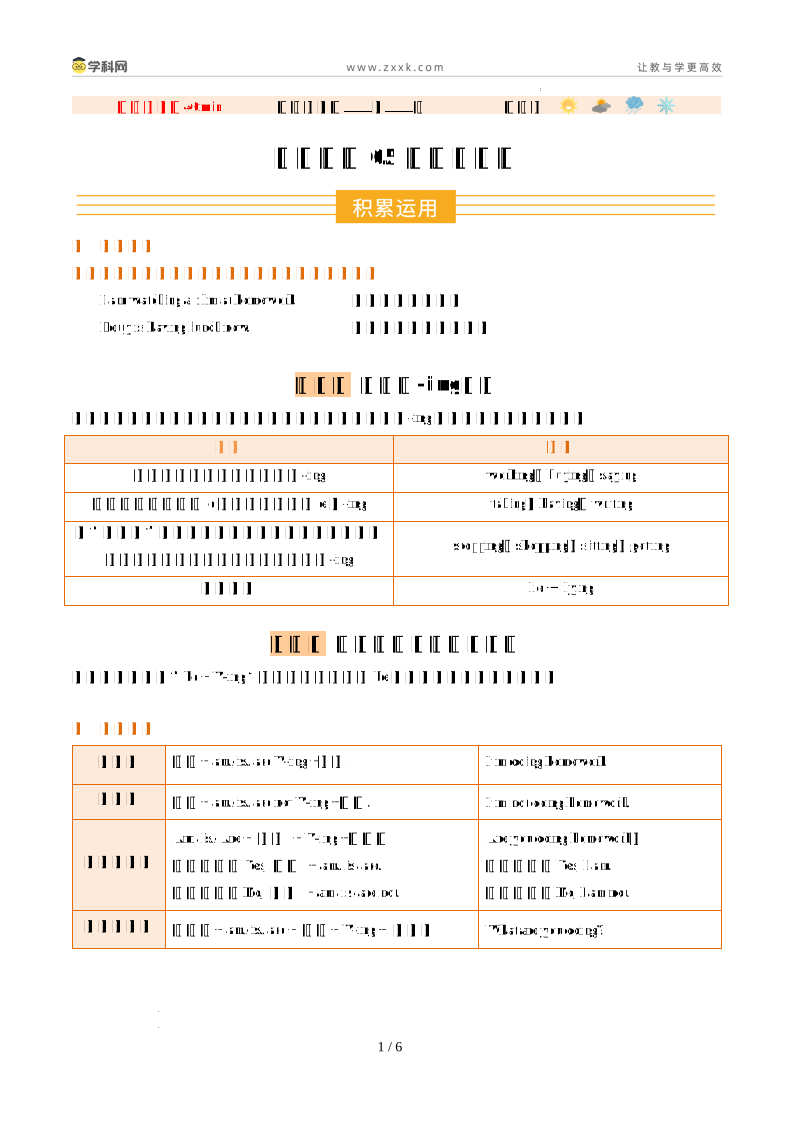
寒假作业05 现在进行时
· 时态概述
现在进行时用于表达此时此刻正在做的事,例如:
I am watching a film at homework. 我正在家看电影。
Betty is having lunch now. 贝蒂现在正在吃午饭。
考点一 动词的-ing形式
通过上述例句可以看出,现在进行时的表达要用到动词-ing的形式,变化规律如下:
规则
示例
一般情况下,动词后直接加-ing
working,buying,saying
一般情况下以字母e结尾的单词,去e加-ing
taking,having,writing
以“辅元辅”音重读闭音节结尾的单词,如果末尾只有一个辅音字母,双写辅音字母加-ing
stopping,shopping,sitting,getting
特殊变化
lie → lying
考点二 现在进行时的句型结构
现在进行时采用“be + V-ing”的形式表达,其中be动词的形式随人称而变化。
· 基本句型
肯定句
主语+ am/ is/ are V-ing +其他.
I’m doing homework.
否定句
主语+ am/ is/ are not V-ing +其他.
I’m not doing homework.
一般疑问句
Am/ Is/ Are + 主语 + V-ing +其他?
肯定回答:Yes, 主语 + am/ is/ are.
否定回答:No, 主语 + am/ is/ are not.
Are you doing homework?
肯定回答:Yes, I am.
否定回答:No, I am not.
特殊疑问句
疑问词+ am/ is/ are + 主语+ V-ing + 其他?
What are you doing?
三层必刷:巩固提升+能力培优+创新题型
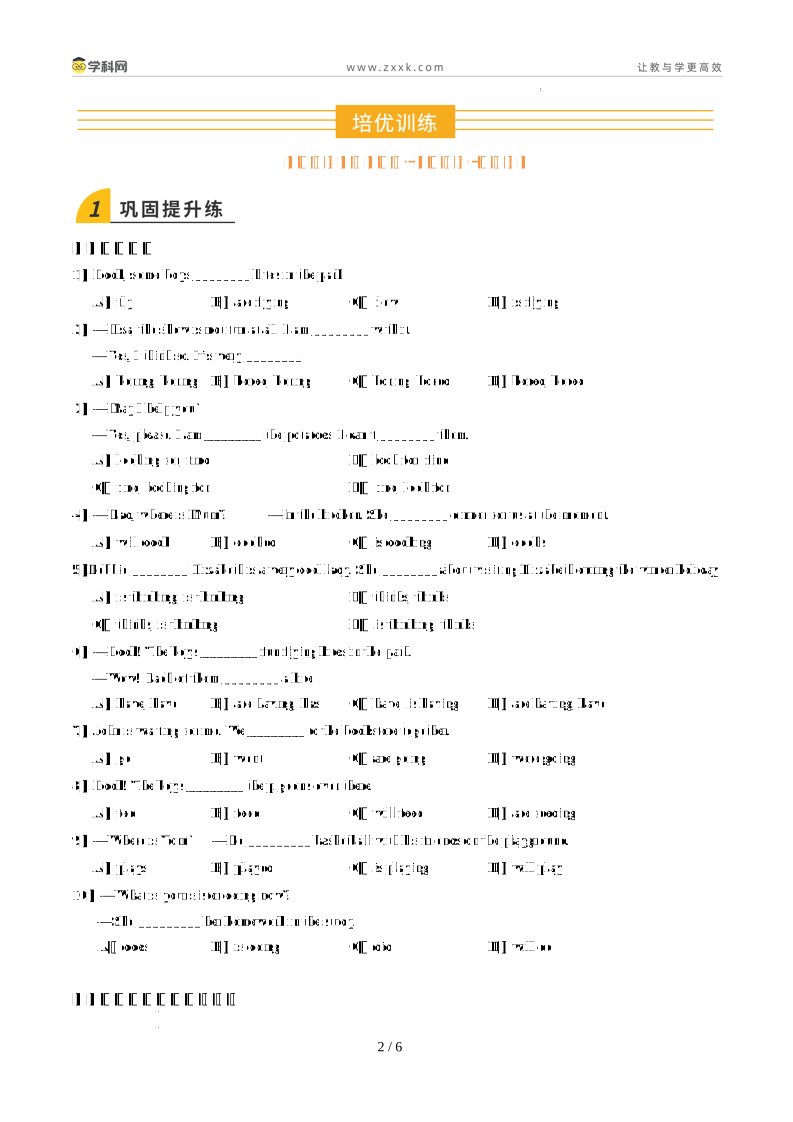
一、单项选择
1.Look, some boys ________ kites in the park.
A.fly B.are flying C.flew D.is flying
2.—Elsa, the show is not fun at all. I am ________ with it.
—Yes, I think so. It’s very ________.
A.boring; boring B.bored; boring C.boring; bored D.bored; bored
3.—May I help you?
—Yes, please. I am ________ the potatoes. I can’t ________ them.
A.looking for; find B.look for; find
C.find; looking for D.find; look for
4.—Dad, where is Mum? —In the kitchen. She ________ dinner for us at the moment.
A.will cook B.cooked C.is cooking D.cooks
5.Debbie ________ Elizabeth is a very cool lady. She ________ about visiting Elizabeth during the winter holiday.
A.is thinking; is thinking B.thinks; thinks
C.thinks; is thinking D.is thinking; thinks
6.—Look! The boys ________ fun flying kites in the park.
—Wow! Each of them ________ a kite.
A.have; have B.are having; has C.have; is having D.are having; have
7.John is waiting for me. We ________ to the bookstore together.
A.go B.went C.are going D.were going
8.Look! The boys ________ the pigeons over there.
A.fed B.feed C.will feed D.are feeding
9.—Where is Tom? —He _________ basketball with his friends on the playground.
A.plays B.played C.is playing D.will play
10.—What is your sister doing now?
—She _________ her homework in the study.
A.does B.is doing C.did D.will do
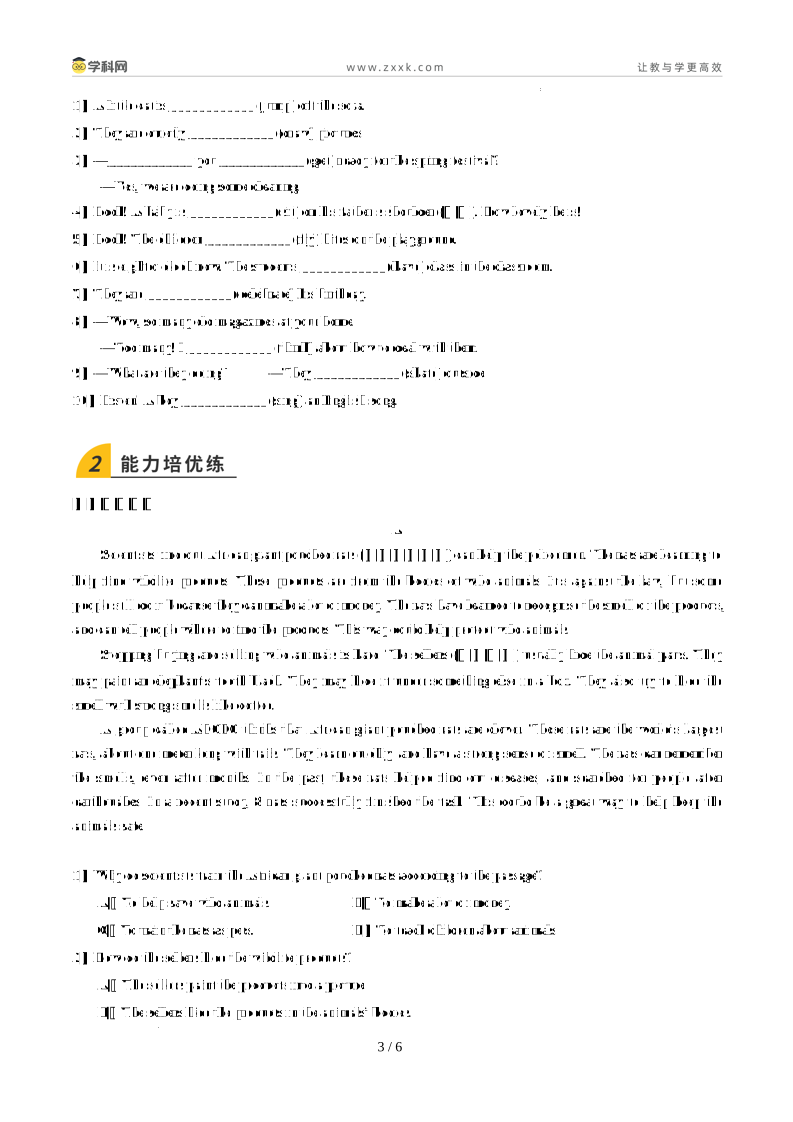
二、用所给词适当形式填空
1.A little cat is ____________ (jump) off the sofa.
2.They are quietly ____________ (draw) pictures.
3.—____________ you ____________ (get) ready for the spring festival?
—Yes, we are doing some cleaning.
4.Look! A baby is ____________ (sit) on his father’s shoulder (肩膀). How lovely he is!
5.Look! The children ____________ (fly) kites on the playground.
6.It is eight o’clock now. The students ____________ (have) class in the classroom.
7.They are ____________ (celebrate) his birthday.
8.—Wow, so many old magazines at your home.
—Too many! I ____________ (think) about how to deal with them.
9.—What are they doing? —They ____________ (skate) outside.
10.Listen! A boy ____________ (sing) an English song.
一、阅读理解
A
Scientists find out African giant pouched rats (非洲巨颊囊鼠) can help the policemen. The rats are learning to help find wildlife products. These products are from the bodies of wild animals. It’s against the law, but some people still do it because they can make a lot of money. The rats have learned to recognise the smell of the products, and can tell people where to find the products. This way could help protect wild animals.
Stopping buying and selling wild animals is hard. The sellers (销售者们) usually hide the animal parts. They may paint an elephant’s tooth black. They may hide it under something else in a box. They also try to hide the smell with strong smells like coffee.
A group called APOPO thinks that African giant pouched rats are clever. These rats are the world’s largest rats, about one meter long with tails. They learn quickly, and have a strong sense of smell. The rats can remember the smells, even after months. In the past, these rats helped find out diseases, and searched for people after earthquakes. In a recent study, 8 rats successfully finished the task. This could be a great way to help keep the animals safe.
1.Why do scientists train the African giant pouched rats according to the passage?
A.To help save wild animals. B.To make a lot of money.
C.To train the rats as pets. D.To teach children about animals.
2.How do the sellers hide the wildlife products?
A.The sellers paint the products into a picture.
B.The sellers hide the products in the animals’ bodies.
C.The sellers make the products have other strong smells.
D.The sellers put the products under the box.
3.Why do scientists use the African giant pouched rats?
①They are clever. ②They have long tails. ③They learn quickly.
④They are good at finding things with nose. ⑤They are the largest rats in the world.
A.①②④ B.②③⑤ C.①③④ D.①③⑤
4.What is the best title of the passage?
A.Help save rats in Africa B.Train rats to rescue the wildlife
C.Hide the animal parts D.Stop the wildlife products
B
Do you like playing little jokes (玩笑) on your friends and family? A new study found we’re not the only ones like doing this. Big apes (猿) have great fun doing this too. A group of scientists spent a lot of time studying the apes from San Diego Zoo in the US and Leipzig Zoo in Germany. They were surprised to find out apes love to monkey around in many ways.
Some apes would give their friends something only to take it back quickly, or even tickle (挠痒痒) each other happily. They liked to catch their friends’ hair and some even walked into their friends and fell over for fun. Often, if one ape didn’t play back, the other ape would keep doing the same funny things again and again. The young apes, around three to five years old, enjoyed doing this the most, just like little kids do. Dr. Isabelle Laumer, one scientist in this group, told the newspaper, “When little kids play jokes on their mother, they like to watch how she feels carefully. We see that in these great apes, too.” What’s more, the study found that these young apes make special sounds when playing jokes, different from the sounds they often make. It’s their way to show their happiness for monkeying around.
Next, scientists need to spend more time finding out why the apes love playing jokes on each other. They think knowing this can help us learn more about how apes and people show their feelings.
1.What fun things would apes do to joke with each other?
①They give food to their friends. ②They walk into each other.
③They tickle each other. ④They make special sounds.
A.②③④ B.①②④ C.①③④ D.①②③
2.Here are meanings of “monkey” in the dictionary. Which is the meaning of the underlined word “monkey” in Paragraph 1?
A.an animal with a long tail and likes
B.have fun studying apes
C.do things in a funny way
D.a child who is active and likes doing special things
3.What can we know from the text?
A.People can learn a lot about apes. B.People are smarter than some apes.
C.People and apes do things differently. D.People and apes have fun in the same way.
4.What does the passage mainly talk about?
A.Apes Eat a Lot. B.Apes and People.
C.Apes Love Playing Jokes. D.Apes Around the World.
二、完形填空
Lucy and Max love writing stories. One day, they decide to write a story about magic 1 . Lucy takes out a book and turns to a new 2 .
“Let’s start with a rabbit,” Lucy says. Max 3 and picks up his pen. Lucy wants a flying rabbit, but Max thinks a talking rabbit is better. They 4 it for some time. However, they find it is 5 to decide. At last, Lucy says, “Our rabbit can fly and talk!” Max likes this idea. Then they share more thoughts about the magic animals 6 each other.
An hour later, Lucy and Max finish the story. They show it to their classmates and everyone says it is very interesting. Lucy and Max are 7 to hear that. They hope to turn their story into a real 8 one day.
Through this experience (经历), Lucy and Max learn that working together is not always 9 . It needs a lot of practice. The journey of writing this story not only brings them joy, but also teaches them to listen to each other. 10 now they can’t wait to write their next story together.
1.A.subjects B.hobbies C.animals D.instruments
2.A.page B.picture C.lesson D.word
3.A.jumps B.appears C.dances D.nods
4.A.look for B.talk about C.wait for D.listen to
5.A.interesting B.early C.difficult D.right
6.A.in B.at C.with D.for
7.A.excited B.sorry C.interested D.sad
8.A.photo B.book C.activity D.game
9.A.helpful B.fun C.great D.easy
10.A.And B.But C.Because D.So
语篇填空
Can dolphins talk? Maybe they can’t talk with words, but they can talk with sounds. They show their 1 (feel) with sounds. Dolphins swim in a group. We call 2 group of fish a “school (群)”. They do not study, but they swim together. Dolphins are mammals (哺乳动物), not fish. 3 they swim together like fish in a school. Dolphins talk to the other dolphins in the school. They give information to others. They talk when they are happy, sad or afraid. They say “welcome” when a dolphin 4 (come) back to the school. They talk when they play. They make some sounds above water. They make much more sounds under water. People can’t hear these sounds 5 they are very, very high. Scientists make tapes of the sounds and 6 (study) them.
Sometimes people catch dolphins for a large aquarium (水族馆). People can watch dolphins in a show. Dolphins do not like to be away from 7 (they) school in an aquarium. They 8 (be) sad and lonely.
There are many 9 (story) about dolphins. They help people. Sometimes they save 10 (people) life.
7 / 10
学科网(北京)股份有限公司
$
限时练习:40min 完成时间: 月 日 天气:
寒假作业05 现在进行时
· 时态概述
现在进行时用于表达此时此刻正在做的事,例如:
I am watching a film at homework. 我正在家看电影。
Betty is having lunch now. 贝蒂现在正在吃午饭。
考点一 动词的-ing形式
通过上述例句可以看出,现在进行时的表达要用到动词-ing的形式,变化规律如下:
规则
示例
一般情况下,动词后直接加-ing
working,buying,saying
一般情况下以字母e结尾的单词,去e加-ing
taking,having,writing
以“辅元辅”音重读闭音节结尾的单词,如果末尾只有一个辅音字母,双写辅音字母加-ing
stopping,shopping,sitting,getting
特殊变化
lie → lying
考点二 现在进行时的句型结构
现在进行时采用“be + V-ing”的形式表达,其中be动词的形式随人称而变化。
· 基本句型
肯定句
主语+ am/ is/ are V-ing +其他.
I’m doing homework.
否定句
主语+ am/ is/ are not V-ing +其他.
I’m not doing homework.
一般疑问句
Am/ Is/ Are + 主语 + V-ing +其他?
肯定回答:Yes, 主语 + am/ is/ are.
否定回答:No, 主语 + am/ is/ are not.
Are you doing homework?
肯定回答:Yes, I am.
否定回答:No, I am not.
特殊疑问句
疑问词+ am/ is/ are + 主语+ V-ing + 其他?
What are you doing?
三层必刷:巩固提升+能力培优+创新题型
一、单项选择
1.Look, some boys ________ kites in the park.
A.fly B.are flying C.flew D.is flying
【答案】B
【解析】句意:看,一些男孩正在公园里放风筝。
考查现在进行时态。句首的Look表示动作正在进行,因此应使用现在进行时。主语some boys是复数,谓语动词需用复数形式are flying。故选B。
2.—Elsa, the show is not fun at all. I am ________ with it.
—Yes, I think so. It’s very ________.
A.boring; boring B.bored; boring C.boring; bored D.bored; bored
【答案】B
【解析】句意:——Elsa,这个节目一点也不有趣。我对它感到无聊。——是的,我也这么认为。它非常无聊。
考查形容词辨析。boring令人无聊的,用于描述事物;bored感到无聊的,用于描述人。根据“I am…with it.”可知,第一空主语是“I”,表示人的感受,用bored;根据“It’s very….”可知,第二空主语是“It”(指前文提到的the show),表示事物性质,用boring。故选B。
3.—May I help you?
—Yes, please. I am ________ the potatoes. I can’t ________ them.
A.looking for; find B.look for; find
C.find; looking for D.find; look for
【答案】A
【解析】句意:——需要帮忙吗?——是的,请。我正在寻找土豆。我找不到它们。
考查动词辨析和时态。look for寻找;find找到。第一个空“am”后需接现在分词表示进行时,用“looking for”强调寻找过程;第二个空“can’t”后需接动词原形,用“find”强调找到的结果。故选A。
4.—Dad, where is Mum? —In the kitchen. She ________ dinner for us at the moment.
A.will cook B.cooked C.is cooking D.cooks
【答案】C
【解析】句意:——爸爸,妈妈在哪里?——在厨房。她此刻正在为我们做晚饭。
考查现在进行时。will cook将会做饭,一般将来时态;cooked做饭,动词过去式;is cooking正在做饭,现在进行时态;cooks做饭,动词第三人称单数形式。根据“at the moment”可知句子是现在进行时态,选项C的“is cooking”符合题意。故选C。
5.Debbie ________ Elizabeth is a very cool lady. She ________ about visiting Elizabeth during the winter holiday.
A.is thinking; is thinking B.thinks; thinks
C.thinks; is thinking D.is thinking; thinks
【答案】C
【解析】句意:Debbie认为Elizabeth是一位很酷的女士。她正在考虑在寒假期间拜访Elizabeth。
考查动词时态。第一空结合语境可知是发表自己的看法,此处应用一般现在时,主语Debbie是第三人称单数,因此谓语动词也要用第三人称单数形式thinks;第二空表示当前正在进行的思考或计划,用现在进行时is thinking。故选C。
6.—Look! The boys ________ fun flying kites in the park.
—Wow! Each of them ________ a kite.
A.have; have B.are having; has C.have; is having D.are having; have
【答案】B
【解析】句意:——看!男孩们正在公园里开心地放风筝。——哇!他们每个人都有一个风筝。
考查时态和主谓一致。第一空,根据“Look!”可知,句子时态是现在进行时,其结构为“be动词+动词现在分词”,主语“The boys”是复数,be动词用are,have的现在分词是having;第二空,根据“Each of them”可知,主语是单数,谓语动词用第三人称单数形式,have的第三人称单数形式是has。故选B。
7.John is waiting for me. We ________ to the bookstore together.
A.go B.went C.are going D.were going
【答案】C
【解析】句意:约翰正在等我。我们要一起去书店。
考查动词时态。根据“John is waiting for me”表示现在动作,后句描述计划中的将来事件,英语中现在进行时:am/is/are + doing,可表示已安排好的将来动作。故选C。
8.Look! The boys ________ the pigeons over there.
A.fed B.feed C.will feed D.are feeding
【答案】D
【解析】句意:看!那些男孩正在那边喂鸽子。
考查时态辨析。根据“Look!”可知,常用于引起注意当前正在发生的动作,故句子需用现在进行时表示“正在喂”。故选D。
9.—Where is Tom? —He _________ basketball with his friends on the playground.
A.plays B.played C.is playing D.will play
【答案】C
【解析】句意:——Tom在哪里?——他正在操场上和朋友们打篮球。
考查动词的时态。plays玩,一般现在时态;played玩,一般过去时态;is playing正在玩,现在进行时态;will play将会玩,一般将来时态;根据问句“Where is Tom?”询问当前位置,答句需描述正在发生的动作,因此用现在进行时表示动作正在进行。故选C。
10.—What is your sister doing now?
—She _________ her homework in the study.
A.does B.is doing C.did D.will do
【答案】B
【解析】句意:——现在你姐姐在做什么?——她正在书房做作业。
考查现在进行时。does做,三单形式,一般现在时;is doing正在做,现在进行时;did做了,过去式,一般过去时;will do将做,一般将来时。根据问句“What is your sister doing now?”可知,动作是现在正在发生的,因此回答需用现在进行时,结构为:be + doing。故选B。
二、用所给词适当形式填空
1.A little cat is ____________ (jump) off the sofa.
【答案】jumping
【解析】句意:一只小猫正从沙发上跳下来。jump“跳”,动词,根据“A little cat is...off the sofa.”可知,此处为现在进行时态,动词应用现在分词,jump的现在分词为jumping。故填jumping。
2.They are quietly ____________ (draw) pictures.
【答案】drawing
【解析】句意:他们正在安静地画画。根据“are”和语境可知,此句是现在进行时,结构为“be+现在分词”,“draw”的现在分词形式是“drawing”。故填drawing。
3.—____________ you ____________ (get) ready for the spring festival?
—Yes, we are doing some cleaning.
【答案】 Are getting
【解析】句意:——你正在为春节做准备吗?——是的,我们正在打扫卫生。现在进行时的一般疑问句的结构是“be动词+主语+现在分词+其他?”。主语是you,所以be动词用are,位于句首,首字母大写;get的现在分词是getting。故填Are;getting。
4.Look! A baby is ____________ (sit) on his father’s shoulder (肩膀). How lovely he is!
【答案】sitting
【解析】句意:看!一个婴儿正坐在他父亲的肩膀上。他多么可爱啊!sit“坐”是动词。由“Look!”可知,句子应用现在进行时,结构为“be + 现在分词”。故填sitting。
5.Look! The children ____________ (fly) kites on the playground.
【答案】are flying
【解析】句意:看!孩子们正在操场上放风筝。根据“Look!”可知,此处表示正在进行的动作,应用现在进行时,结构为“be + 现在分词”;主语“The children”是复数,be动词用“are”,“fly”的现在分词是“flying”。故填are flying。
6.It is eight o’clock now. The students ____________ (have) class in the classroom.
【答案】are having
【解析】句意:现在是八点钟。学生们正在教室里上课。根据“It is eight o’clock now.”可知,此处表示正在进行的动作,时态为现在进行时,主语“The students”是复数,be动词用are,have的现在分词形式为having。故填are having。
7.They are ____________ (celebrate) his birthday.
【答案】celebrating
【解析】句意:他们正在为他庆祝生日。根据“are”可知,此处是现在进行时“are doing”,空处应是现在分词celebrating。故填celebrating。
8.—Wow, so many old magazines at your home.
—Too many! I ____________ (think) about how to deal with them.
【答案】am thinking
【解析】句意:——哇,你家有这么多旧杂志。——太多了!我正在想怎么处理它们。根据“Wow, so many old magazines at your home.”“Too many! I…about how to deal with them.”可知,对话正在进行,“思考如何处理旧杂志”是当前正在发生的动作,应用现在进行时,其结构为“am/is/are+动词现在分词”,主语是I,be动词用am,think的现在分词是thinking,am thinking符合语境,体现当下正在进行的思考动作。故填am thinking。
9.—What are they doing? —They ____________ (skate) outside.
【答案】are skating
【解析】句意:——他们在做什么?——他们正在外面滑冰。根据“What are they doing?”可知,此处介绍正在从事的活动,句子时态为现在进行时,主语为“They”,用are skating。故填are skating。
10.Listen! A boy ____________ (sing) an English song.
【答案】is singing
【解析】句意:听!一个男孩正在唱一首英文歌。“Listen!”是现在进行时的标志词,谓语结构是“be doing”,主语是第三人称单数,be动词用is,sing的现在分词是singing。故填is singing。
一、阅读理解
A
Scientists find out African giant pouched rats (非洲巨颊囊鼠) can help the policemen. The rats are learning to help find wildlife products. These products are from the bodies of wild animals. It’s against the law, but some people still do it because they can make a lot of money. The rats have learned to recognise the smell of the products, and can tell people where to find the products. This way could help protect wild animals.
Stopping buying and selling wild animals is hard. The sellers (销售者们) usually hide the animal parts. They may paint an elephant’s tooth black. They may hide it under something else in a box. They also try to hide the smell with strong smells like coffee.
A group called APOPO thinks that African giant pouched rats are clever. These rats are the world’s largest rats, about one meter long with tails. They learn quickly, and have a strong sense of smell. The rats can remember the smells, even after months. In the past, these rats helped find out diseases, and searched for people after earthquakes. In a recent study, 8 rats successfully finished the task. This could be a great way to help keep the animals safe.
1.Why do scientists train the African giant pouched rats according to the passage?
A.To help save wild animals. B.To make a lot of money.
C.To train the rats as pets. D.To teach children about animals.
2.How do the sellers hide the wildlife products?
A.The sellers paint the products into a picture.
B.The sellers hide the products in the animals’ bodies.
C.The sellers make the products have other strong smells.
D.The sellers put the products under the box.
3.Why do scientists use the African giant pouched rats?
①They are clever. ②They have long tails. ③They learn quickly.
④They are good at finding things with nose. ⑤They are the largest rats in the world.
A.①②④ B.②③⑤ C.①③④ D.①③⑤
4.What is the best title of the passage?
A.Help save rats in Africa B.Train rats to rescue the wildlife
C.Hide the animal parts D.Stop the wildlife products
【答案】1.A 2.C 3.C 4.B
【解析】本文主要讲述了科学家训练非洲巨颊囊鼠识别野生动物制品的气味,协助警方查找非法野生动物制品,以此保护野生动物的相关情况,同时介绍了卖家隐藏制品的方式及囊鼠的优势。
1.细节理解题。根据第一段“Scientists find out African giant pouched rats can help the policemen.The rats are learning to help find wildlife products...This way could help protect wild animals.”可知,科学家训练非洲巨颊囊鼠是为了帮助保护(拯救)野生动物。故选A。
2.细节理解题。根据第二段“They also try to hide the smell with strong smells like coffee.”可知,卖家会用浓烈的气味(如咖啡味)掩盖野生动物制品的气味,即让制品带有其他浓烈气味。故选C。
3.细节理解题。根据第三段“A group called APOPO thinks that African giant pouched rats are clever...They learn quickly,and have a strong sense of smell.”可知,科学家选择囊鼠的原因包括:①它们很聪明、③它们学得快、④它们擅长用鼻子找东西;而“长尾巴”“是世界最大的鼠”并非训练它们的原因,因此①③④符合。故选C。
4.最佳标题题。全文围绕“科学家训练非洲巨颊囊鼠,帮助查找非法野生动物制品以保护野生动物”展开,选项B“训练老鼠拯救野生动物”契合文章核心主旨。故选B。
B
Do you like playing little jokes (玩笑) on your friends and family? A new study found we’re not the only ones like doing this. Big apes (猿) have great fun doing this too. A group of scientists spent a lot of time studying the apes from San Diego Zoo in the US and Leipzig Zoo in Germany. They were surprised to find out apes love to monkey around in many ways.
Some apes would give their friends something only to take it back quickly, or even tickle (挠痒痒) each other happily. They liked to catch their friends’ hair and some even walked into their friends and fell over for fun. Often, if one ape didn’t play back, the other ape would keep doing the same funny things again and again. The young apes, around three to five years old, enjoyed doing this the most, just like little kids do. Dr. Isabelle Laumer, one scientist in this group, told the newspaper, “When little kids play jokes on their mother, they like to watch how she feels carefully. We see that in these great apes, too.” What’s more, the study found that these young apes make special sounds when playing jokes, different from the sounds they often make. It’s their way to show their happiness for monkeying around.
Next, scientists need to spend more time finding out why the apes love playing jokes on each other. They think knowing this can help us learn more about how apes and people show their feelings.
1.What fun things would apes do to joke with each other?
①They give food to their friends. ②They walk into each other.
③They tickle each other. ④They make special sounds.
A.②③④ B.①②④ C.①③④ D.①②③
2.Here are meanings of “monkey” in the dictionary. Which is the meaning of the underlined word “monkey” in Paragraph 1?
A.an animal with a long tail and likes
B.have fun studying apes
C.do things in a funny way
D.a child who is active and likes doing special things
3.What can we know from the text?
A.People can learn a lot about apes. B.People are smarter than some apes.
C.People and apes do things differently. D.People and apes have fun in the same way.
4.What does the passage mainly talk about?
A.Apes Eat a Lot. B.Apes and People.
C.Apes Love Playing Jokes. D.Apes Around the World.
【答案】1.D 2.C 3.A 4.C
【解析】本文介绍了研究发现猿类也喜欢跟人类一样和自己的朋友及家人开玩笑。
1.细节理解题。根据“Some apes would give their friends something only to take it back quickly...some even walked into their friends and fell over for fun.”可知,一些猿类会给它们的朋友一些东西,只是为了迅速收回;甚至开心地互相挠痒痒,它们喜欢抓朋友的头发,有些人甚至撞到朋友身上,摔倒在地取乐;再根据“When little kids play jokes on their mother, they like to watch how she feels carefully. We see that in these great apes, too.”可知,当小孩子和妈妈开玩笑时,他们喜欢仔细观察妈妈的感受,科学家在猿类身上也看到了这一点,这就是说猿类开妈妈的玩笑时,是想观察妈妈的感受,而不是来互相开玩笑;因此猿类会和别人一起吃东西、互相碰撞以及互相挠痒痒来相互开玩笑。故选D。
3.词句猜测题。根据“Do you like playing little jokes (玩笑) on your friends and family...Big apes (猿) have great fun doing this too.”和“They were surprised to find out apes love to monkey around in many ways.”可知,猿类也喜欢对朋友和家人开些小玩笑;据此可以推断,划线单词“monkey”意为“ 胡闹,捣蛋”,是动词,与“do things in a playful way”同义。故选C。
4.细节理解题。根据“Next, scientists need to spend more time finding out...learn more about how apes and people show their feelings.”可知,科学家们正在深入研究猿类为什么喜欢互相开玩笑,并认为这一发现可以帮助我们更深入地了解猿类和人类如何表达情感,所以说猿类的行为和情感表达方式对人类有重要的学习价值。故选A。
4.主旨大意题。综合全文可知,本文主要介绍了科学家们研究发现猿类之间也喜欢开玩笑。故选C。
二、完形填空
Lucy and Max love writing stories. One day, they decide to write a story about magic 1 . Lucy takes out a book and turns to a new 2 .
“Let’s start with a rabbit,” Lucy says. Max 3 and picks up his pen. Lucy wants a flying rabbit, but Max thinks a talking rabbit is better. They 4 it for some time. However, they find it is 5 to decide. At last, Lucy says, “Our rabbit can fly and talk!” Max likes this idea. Then they share more thoughts about the magic animals 6 each other.
An hour later, Lucy and Max finish the story. They show it to their classmates and everyone says it is very interesting. Lucy and Max are 7 to hear that. They hope to turn their story into a real 8 one day.
Through this experience (经历), Lucy and Max learn that working together is not always 9 . It needs a lot of practice. The journey of writing this story not only brings them joy, but also teaches them to listen to each other. 10 now they can’t wait to write their next story together.
1.A.subjects B.hobbies C.animals D.instruments
2.A.page B.picture C.lesson D.word
3.A.jumps B.appears C.dances D.nods
4.A.look for B.talk about C.wait for D.listen to
5.A.interesting B.early C.difficult D.right
6.A.in B.at C.with D.for
7.A.excited B.sorry C.interested D.sad
8.A.photo B.book C.activity D.game
9.A.helpful B.fun C.great D.easy
10.A.And B.But C.Because D.So
【答案】
1.C 2.A 3.D 4.B 5.C 6.C 7.A 8.B 9.D 10.A
【解析】本文主要讲述了露西和马克斯两个热爱写故事的孩子,合作创作一篇关于魔法动物的故事的经历。
1.句意:有一天,他们决定写一个关于魔法动物的故事。subjects学科;hobbies爱好;animals动物;instruments乐器。根据“Let’s start with a rabbit”可知,是写一个与动物有关的故事。故选C。
2.句意:露西拿出一本书,翻到新的一页。page页码、一页纸;picture图片;lesson课程;word单词。根据“takes out a book”和“turn to”的搭配可知,是翻到书的新页面。故选A。
3.句意:马克斯点点头,拿起了笔。jumps跳;appears出现;dances跳舞;nods点头。根据“picks up his pen”可知,马克斯同意了露西的提议,点头是符合语境的动作。故选D。
4.句意:他们就这个(兔子的设定)讨论了一段时间。look for寻找;talk about讨论;wait for等待;listen to听。根据前一句“Lucy wants a flying rabbit, but Max thinks a talking rabbit is better”可知,两人在针对兔子的设定交换想法。故选B。
5.句意:然而,他们发现很难做出决定。interesting有趣的;early早的;difficult困难的;right正确的。根据前一句“They talk about it for some time”和“However”表转折可知,做出决定这件事并不容易。故选C。
6.句意:然后他们互相分享了更多关于魔法动物的想法。in在……里面;at在;with和……一起;for为了。由“share more thoughts about the magic animals”可知,share sth. with sb.意为“和某人分享某物”,固定搭配。故选C。
7.句意:听到同学们的夸赞,露西和马克斯非常兴奋。excited兴奋的;sorry抱歉的;interested感兴趣的;sad难过的。根据“everyone says it is very interesting”可知,两人听到好评的心情是兴奋的。故选A。
8.句意:他们希望有一天能把这个故事变成一本真正的书。photo照片;book书;activity活动;game游戏。根据“They hope to turn their story into a real…” 可知,两人的愿望是将故事变成实体书。故选B。
9.句意:通过这次经历,露西和马克斯明白了合作写作并不总是一件容易的事。helpful有帮助的;fun有趣的;great极好的;easy容易的。根据后一句“It needs a lot of practice”可知,合作写作需要大量练习,说明这件事并不简单。故选D。
10.句意:写这个故事的过程不仅给他们带来了快乐,还教会了他们倾听彼此的想法,而且现在他们已经迫不及待要一起写下一个故事了。And并且(表顺承);But但是(表转折);Because因为(表原因);So所以(表结果)。根据“The journey of writing this story not only brings them joy, but also teaches them to listen to each other…now they can’t wait to write their next story together”可知,前半句讲创作带来的收获,后半句讲两人的新期待,两句是顺承关系。故选A。
语篇填空
Can dolphins talk? Maybe they can’t talk with words, but they can talk with sounds. They show their 1 (feel) with sounds. Dolphins swim in a group. We call 2 group of fish a “school (群)”. They do not study, but they swim together. Dolphins are mammals (哺乳动物), not fish. 3 they swim together like fish in a school. Dolphins talk to the other dolphins in the school. They give information to others. They talk when they are happy, sad or afraid. They say “welcome” when a dolphin 4 (come) back to the school. They talk when they play. They make some sounds above water. They make much more sounds under water. People can’t hear these sounds 5 they are very, very high. Scientists make tapes of the sounds and 6 (study) them.
Sometimes people catch dolphins for a large aquarium (水族馆). People can watch dolphins in a show. Dolphins do not like to be away from 7 (they) school in an aquarium. They 8 (be) sad and lonely.
There are many 9 (story) about dolphins. They help people. Sometimes they save 10 (people) life.
【答案】
1.feelings 2.a 3.But 4.comes 5.because 6.study 7.their 8.are 9.stories 10.people’s
【解析】本文讲述了海豚的交流方式、生活习性以及它们与人类的关系。
1.句意:他们用声音表达自己的感受。形容词性物主代词their后接名词feeling“感受”,复数表泛指。故填feelings。
2.句意:我们把一群鱼称为“一群”。a group of表示“一群”,故填a。
3.句意:但是它们像鱼群一样一起游。根据前后文语境可知,前后句存在转折关系,用but“但是”连接,故填But。
4.句意:当一只海豚回到鱼群时,它们会说“欢迎”。时态为一般现在时,主语a dolphin为第三人称单数,故谓语用第三人称单数形式。故填comes。
5.句意:人们听不到这些声音,因为它们非常高。前后句存在因果关系,故用because引导原因状语从句。故填because。
6.句意:科学家把这些声音录成磁带并研究它们。时态为一般现在时,主语scientists为复数,故谓语用原形。故填study。
7.句意:海豚不喜欢待在水族馆里,离开它们的群体。此处用形容词性物主代词their修饰空后的名词。故填their。
8.句意:它们会感到悲伤和孤独。时态为一般现在时,主语they为复数,be动词用are。故填are。
9.句意:有很多关于海豚的故事。many后接可数名词复数,story的复数形式为stories。故填stories。
10.句意:有时它们会拯救人们的生命。此处需用所有格修饰空后的名词,故填people’s。
7 / 10
学科网(北京)股份有限公司
$
资源预览图
1
2
3

相关资源
由于学科网是一个信息分享及获取的平台,不确保部分用户上传资料的 来源及知识产权归属。如您发现相关资料侵犯您的合法权益,请联系学科网,我们核实后将及时进行处理。