Unit 7 Section A(2a~2e)课件- 2025-2026学年鲁教版五四制英语七年级上册
2026-01-03
|
21页
|
53人阅读
|
0人下载
普通
资源信息
| 学段 | 初中 |
|---|---|
| 学科 | 英语 |
| 教材版本 | 初中英语鲁教版(五四学制)七年级上册 |
| 年级 | 七年级 |
| 章节 | Section A |
| 类型 | 课件 |
| 知识点 | - |
| 使用场景 | 同步教学-新授课 |
| 学年 | 2025-2026 |
| 地区(省份) | 全国 |
| 地区(市) | - |
| 地区(区县) | - |
| 文件格式 | PPTX |
| 文件大小 | 4.08 MB |
| 发布时间 | 2026-01-03 |
| 更新时间 | 2026-01-03 |
| 作者 | 匿名 |
| 品牌系列 | - |
| 审核时间 | 2026-01-03 |
| 下载链接 | https://m.zxxk.com/soft/55762484.html |
| 价格 | 2.00储值(1储值=1元) |
| 来源 | 学科网 |
摘要:
该初中英语课件围绕“居家安全”主题,核心知识点包括祈使句、情态动词运用及安全规则。通过“Look and find”让学生观察图片找出潜在危险,如燃烧的烟头、私拉乱接电线等,再结合“Look and guess”推测Peter与父母的对话主题,过渡到听力理解居家安全对话,进而学习祈使句和“make sure to+动词原形”等语法点,为演讲任务搭建支架。
其亮点在于融合语言能力与思维品质培养,通过图片观察分析危险隐患(如抽油烟机油脂过多、易燃物靠近炉灶),引导学生用祈使句和情态动词描述安全规则,最终完成“保持居家安全”演讲,体现任务型教学从输入到输出的递进。采用“Summary”梳理对话要点并附评分表格,学生提升语言运用与安全意识,教师可依托结构化任务链高效教学。
内容正文:
Unit 7
Avoid Danger,
Keep Safe
(2a~2e)
英语鲁教版五四制七年级上册
Learning objectives
通过本课时的学习,学生能够:
1. 听懂与居家安全相关的对话;
2. 运用祈使句和情态动词描述安全规则并且围绕“保持居家安全”做一个简短的英语演讲;
3. 增强安全意识,自觉远离危险,学会自我保护。
重点
重点
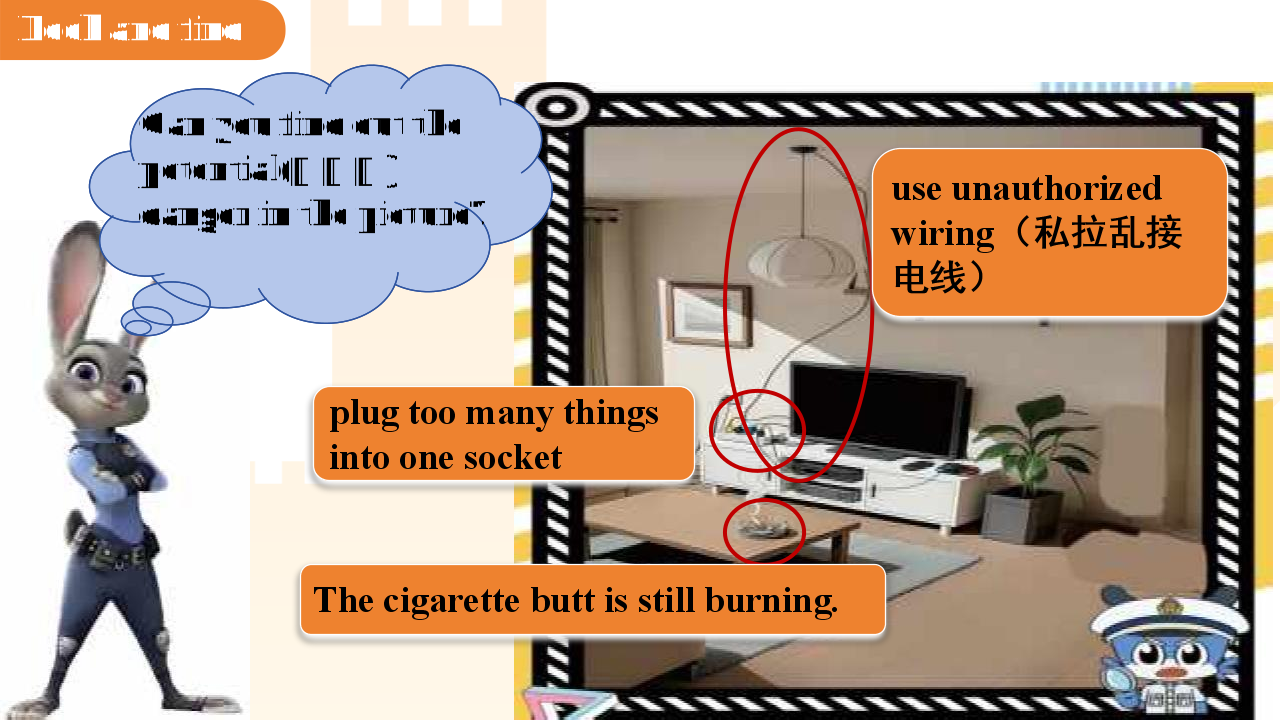
Look and find
Can you find out the potential(潜在的) danger in the picture?
The cigarette butt is still burning.
use unauthorized wiring(私拉乱接电线)
plug too many things into one socket
Look and find
too much grease(油脂) on the range hood(抽油烟机)
forgot to turn off the gas
put flammable things(易燃物) next to the stove
use the old or damaged electrical wire
forget to unplug(拔掉) the charger(充电器) from the outlet(电源插座) when it is not in use
dry clothes on the heater
Look and talk
Don’t .../
Remember to.../
We should...
Look at the pictures and talk about safety rules.
• use unauthorized wiring(私拉乱接电线)
• plug too many things into one socket
• The cigarette butt is still burning.
• too much grease on the range hood
• forgot to turn off the gas
• put flammable things(易燃物) next to the stove
• use the old or damaged electrical wire
• forget to unplug(拔掉) the charger(充电器) from the outlet(电源插座) when it is not in use
• dry clothes on the heater
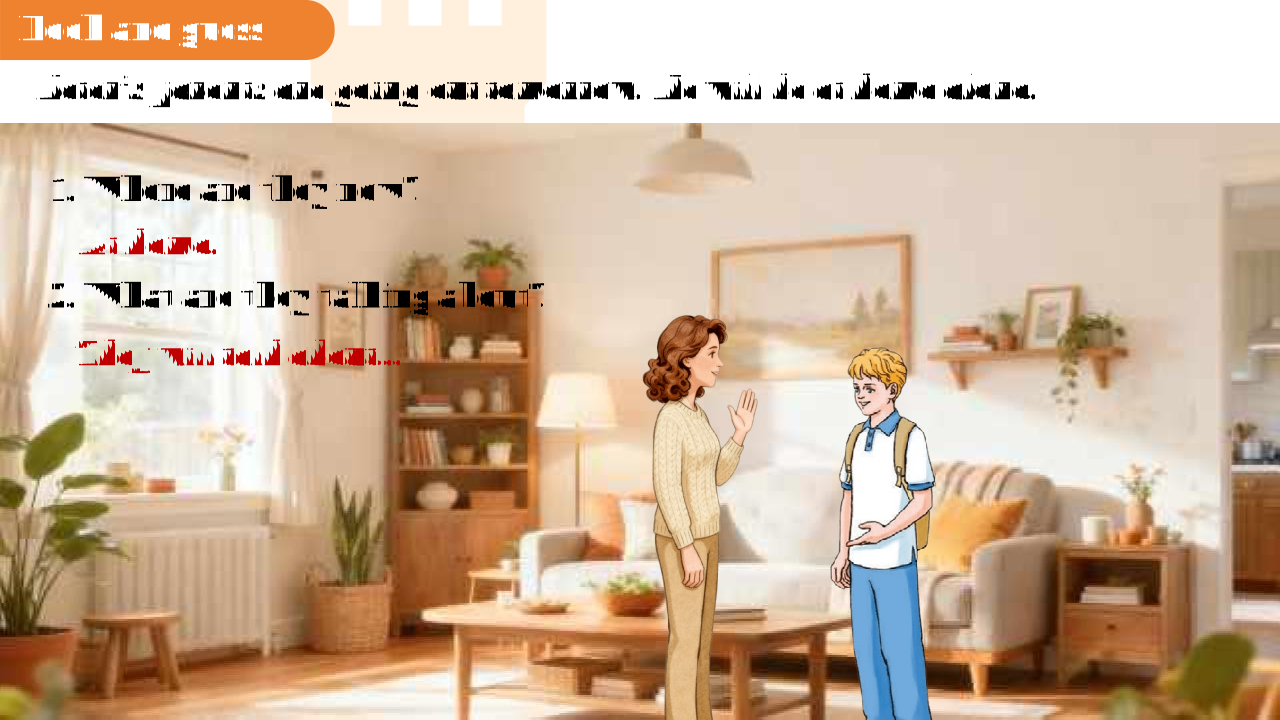
Look and guess
1. Where are they now?
2. What are they talking about?
At home.
They will talk about...
Peter’s parents are going out tomorrow. He will be at home alone.
Listen and check
What are they talking about?
They are talking about how to keep safe at home.
Listen and fill
Mum: Hi, Peter. I’m going out with your dad tomorrow. When you’re at home alone,
make sure to keep yourself safe.
Peter: What should I do, Mum?
Mum: Well, first, never play with matches or lighters. Fire is very___________.
Peter: I know, Mum. I won’t play with them.
Mum: Good. Also, make sure you stay away from electrical outlets. Don’t stick anything
into them, or you could get shocked.
Peter: That’s _______.
Mum: Yes. Be careful about things like the ________ and the iron. Don’t touch them
when they are hot.
Peter: I’ll be very careful, Mum.
Mum: When you finish _________, make sure to turn off the gas.
Peter: OK, I will. Thanks for telling me how to keep safe. I love you, Mum. Now I’ll ride
to school.
Mum: I love you too. Remember to __________ your helmet.
Peter: I will, Mum. Bye.
dangerous
scary
stove
cooking
wear
n. 头盔
shock v. 使震惊;使受电击
get shocked 遭受电击
electrical adj. 电的;发电的
outlet n. (电源)插座
v. 刺;戳
n. 棍;手杖
Read and choose
2b
Read the conversation. Decide whether the statements are true (T), false (F), or not given(NG).
1. Peter’s mum tells him to play with the matches or lighters. T F NG
2. Peter is afraid of getting shocked by electrical outlets. T F NG
3. Peter’s mum tells him never to open the door for a stranger. T F NG
4. When Peter finishes cooking, he will turn off the gas. T F NG
5. Peter will go to school by bus. T F NG
2b
Read and complete
Read the conversation again and complete Peter’s notes about what to do and what not to do.
Notes
Dos 1. Stay away from electrical outlets.
2.
3.
Don’ts 1. Never play with matches or lighters.
2.
3.
Make sure to turn off the gas when you finish cooking.
Remember to wear the helmet.
Don’t touch the things like the stove and the iron when they are hot.
What kind of sentences are they?
They are imperative sentences.
Don’t stick anything into electrical outlets.
Read and find
Mum: Hi, Peter. I’m going out with your dad tomorrow. When you’re at home alone, make
sure to keep yourself safe.
Peter: What should I do, Mum?
Mum: Well, first, never play with matches or lighters. Fire is very dangerous.
Peter: I know, Mum. I won’t play with them.
Mum: Good. Also, make sure you stay away from electrical outlets. Don’t stick anything into
them, or you could get shocked.
Peter: That’s scary.
Mum: Yes. Be careful about things like the stove and the iron. Don’t touch them when they are hot.
Peter: I’ll be very careful, Mum.
Mum: When you finish cooking, make sure to turn off the gas.
Peter: OK, I will. Thanks for telling me how to keep safe. I love you, Mum. Now I’ll ride to school.
Mum: I love you too. Remember to wear your helmet.
Peter: I will, Mum. Bye.
Find more imperative sentences.
用于表达命令、请求、劝告、警告、禁止等的句子叫做祈使句。
1.肯定祈使句:
• 动词原形(+宾语)+其他成分
• Be动词+表语(形容词、名词或介词短语等)+其他成分
• Let+宾语+动词原形+其他成分
2.否定祈使句:
• Don’t/Never+动词原形(+宾语)+其他成分
• Don’t+let+宾语+动词原形+其他成分/Let+宾语+not+动词原形+其他成分
• No+n./V-ing
Read and find
Mum: Hi, Peter. I’m going out with your dad tomorrow. When you’re at home alone, make
sure to keep yourself safe.
Peter: What should I do, Mum?
Mum: Well, first, never play with matches or lighters. Fire is very dangerous.
Peter: I know, Mum. I won’t play with them.
Mum: Good. Also, make sure you stay away from electrical outlets. Don’t stick anything into
them, or you could get shocked.
Peter: That’s scary.
Mum: Yes. Be careful about things like the stove and the iron. Don’t touch them when they are hot.
Peter: I’ll be very careful, Mum.
Mum: When you finish cooking, make sure to turn off the gas.
Peter: OK, I will. Thanks for telling me how to keep safe. I love you, Mum. Now I’ll ride to school.
Mum: I love you too. Remember to wear your helmet.
Peter: I will, Mum. Bye.
How do you respond to these imperative sentences?
祈使句的回答:
回答祈使句时,我们通常会根据实际情况来回应,此外,祈使句的动作通常是表示将来发生的动作,所以回答祈使句时,一般用Yes, I will或No, I won’t。
Translate the sentences
1. 绝不要用湿手触碰电源插座。_____________________________________________________________.
2. 不要让小孩子在炉子旁边玩。_____________________________________________________________.
3. 走廊内禁止奔跑。(in the hallway)
_____________________________________________________________.
4. 过马路时要小心。
_____________________________________________________________.
5. 让我们把刀放在安全的地方。
_____________________________________________________________.
No running in the hallway./ Don’t/Never run in the hallway.
Don’t let little children play near the stove.
Never touch electrical outlets with wet hands.
Be careful when you cross the road.
Let’s keep knives in a safe place.
Read and learn
Mum: Hi, Peter. I’m going out with your dad tomorrow. When you’re at home alone, make
sure to keep yourself safe.
Peter: What should I do, Mum?
Mum: Well, first, never play with matches or lighters. Fire is very dangerous.
Peter: I know, Mum. I won’t play with them.
Mum: Good. Also, make sure you stay away from electrical outlets. Don’t stick anything into
them, or you could get shocked.
Peter: That’s scary.
Mum: Yes. Be careful about things like the stove and the iron. Don’t touch them when they are hot.
Peter: I’ll be very careful, Mum.
Mum: When you finish cooking, make sure to turn off the gas.
Peter: OK, I will. Thanks for telling me how to keep safe. I love you, Mum. Now I’ll ride to school.
Mum: I love you too. Remember to wear your helmet.
Peter: I will, Mum. Bye.
make sure to + 动词原形:表示“确保做某事”,强调重要性。
Thanks for doing...感谢某人做了某事。
finish doing sth 做完某事
Read and complete
Complete the summary of the conversation.
Peter’s parents are going out tomorrow. Peter will be _________ at home, so his mother tells him how to keep safe. She tells him never to play with matches or lighters because fire is very ___________. She reminds(提醒) him to _________________ electrical ________ and not to ____________ the stove or iron when they are hot. She also asks him to _____________ the gas after cooking. Before Peter _________ to school, Mum tells him to ________his helmet, and Peter promises to be very _________.
alone
dangerous
stay away from
outlets
touch
turn off
rides
wear
careful
Choose the correct answer
1. — Be careful not to touch the knife, ______ you will get hurt.
(a) but (b) or (c) and (d) so
2. — Make sure _______ the door before you leave.
(a) locks (b) to lock (c) locking (d) locked
3. — Thanks for______ to my party.
(a) coming (b) come (c) comes (d) came
4. — Can you finish _________ this book tomorrow?
(a) to read (b) to reading (c) read (d) reading
5. — If you use wet hands to touch the electrical outlets, you may get________.
(a) shocked (b) shock (c) shocking (d) to shock
Give a speech
Imagine you are Peter. Give a speech to your classmates about how to keep safe at home.
2b
2d
Hello, everyone. Do you think your home is a safe place? ...
The following expressions may help you.
Don’t ...
Remember (not) to ...
You could / can / should ...
You’d better ...
Give a speech
Hello, everyone. Do you think your home is a safe place?
I think it can be, if we are careful enough.
First, don’t play with matches or lighters. Fire is very dangerous.
You should stay away from electrical outlets and don’t stick anything into them.
When you finish cooking, you should turn off the gas.
If you stay at home alone, you’d better not open the door for a stranger.
If we follow these rules, we can keep ourselves safe at home.
Thank you for listening.
Excellent Great Good
Language
Pronunciation
Performance
Summary
memorize the new words.
use imperative sentences.
give a speech about how to keep safe at home.
Hello, everyone. Do you think your home is a safe place?
Don’t .../Remember (not) to ... /You could / can / should .../You’d better ...
If we follow these rules, we can keep ourselves safe at home.Thank you for listening.
1.肯定祈使句:
• 动词原形(+宾语)+其他成分
• Be动词+表语+其他成分
• Let+宾语+动词原形+其他成分
2.否定祈使句:
• Don’t/Never+动词原形(+宾语)+其他成分
• Don’t+let+宾语+动词原形+其他成分/Let+宾语+not+动词原形+其他成分
• No+n./V-ing
知识点1相交线
electrical, outlet, stick, shock, get shocked,
helmet
After learning this lesson,
I can
Homework
1. Read the conversations in 2a again.
2. Walk around your home and look for dangerous things. Write some safety rules for your family.
Bye-bye!
null
79516.68
$
资源预览图

1

2
3

4

5
6
相关资源
由于学科网是一个信息分享及获取的平台,不确保部分用户上传资料的 来源及知识产权归属。如您发现相关资料侵犯您的合法权益,请联系学科网,我们核实后将及时进行处理。