Unit 5 The Value of Money 单元词汇复习课教学设计-2024-2025学年高中英语人教版必修第三册
2025-12-27
|
8页
|
379人阅读
|
0人下载
普通
资源信息
| 学段 | 高中 |
|---|---|
| 学科 | 英语 |
| 教材版本 | 高中英语人教版必修第三册 |
| 年级 | 高一 |
| 章节 | Unit 5 The Value of Money |
| 类型 | 教案-教学设计 |
| 知识点 | - |
| 使用场景 | 同步教学-单元练习 |
| 学年 | 2025-2026 |
| 地区(省份) | 全国 |
| 地区(市) | - |
| 地区(区县) | - |
| 文件格式 | DOCX |
| 文件大小 | 35 KB |
| 发布时间 | 2025-12-27 |
| 更新时间 | 2025-12-27 |
| 作者 | 匿名 |
| 品牌系列 | - |
| 审核时间 | 2025-12-27 |
| 下载链接 | https://m.zxxk.com/soft/55662432.html |
| 价格 | 0.50储值(1储值=1元) |
| 来源 | 学科网 |
摘要:
该高中英语单元复习资料采用主题化整合设计,围绕“文化遗产”主题梳理apologize、judge等核心词汇及find+O+OC等重点句型,通过道歉信、邀请信等应用文情境和语篇写作练习,构建“词汇-句型-主题应用”的逻辑知识网络。
其亮点在于以文化遗产保护为情境主线,通过UNESCO引言讨论培育文化意识,结合单句翻译到短文写作的分层练习提升语言能力与思维品质,如短文写作融合历史学科知识。助力学生巩固并应用知识,教师教学更具针对性。
内容正文:
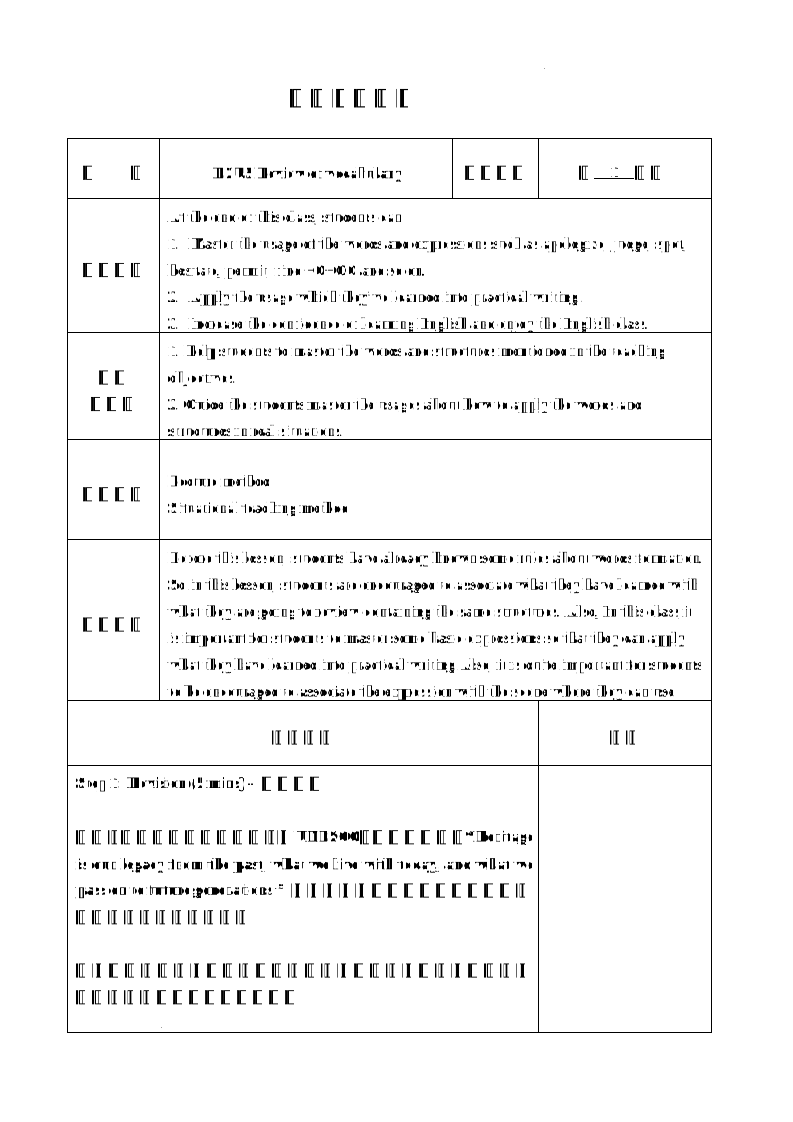
电子备课教案
课 题
B3U5 Review of vocabulary
教学课时
第 1 课时
教学目标
At the end of this class, students can
1. Master the usage of the words and expressions such as apologize, judge, spot, hesitate, permit, find +O+OC and so on.
2. Apply the usage which they’ve learned into practical writing..
3. Increase the confidence of learning English and enjoy the English class.
教学
重难点
1. Help students to master the words and structures mentioned in the teaching objectives.
2. Guide the students master the usages about how to apply the words and structures in real situations.
教学方法
Lecture method
Situational teaching method
学情分析
Before this lesson, students have already known some rules about words formation. So in this lesson, students are encouraged to associate what they have learned with what they are going to review containing the same structures. Also, In this class,it is important for students to master some basic expressions so that they can apply what they have learned into practical writing.Also, it is quite important for students to be encouraged to associate the expression with the scene where they can use.
教学过程
备注
Step 1: Revision (5 mins) - 全班讨论
活动:展示联合国教科文组织(UNESCO)的一句引言:“Heritage is our legacy from the past, what we live with today, and what we pass on to future generations.” 邀请学生分享对这句话的看法,探讨保护文化遗产的意义。
设计意图:通过权威机构引言,引导学生思考文化遗产的价值与传承责任,培养文化保护意识。
Step 2: Presentation (20 mins) - 教师讲解/师生互动
I. 关注以下关键词:
apologize vi. 道歉
(1) apologize to sb. for (doing) sth. 因(做)某事向某人道歉
apologize to sb. that… 向某人道歉……
(2) apology n. 道歉
make an apology to sb. for sth. 因某事向某人道歉
owe sb. an apology 应向某人道歉
应用(道歉信 - 参观博物馆时的不当行为):
开头:对于昨天参观时我不小心触摸了展品,我写信向您表达诚挚的歉意。
I _____________ (写信致歉) for accidentally touching the exhibit during yesterday's visit.
结尾:我保证未来会更加注意规定,并希望您能接受我的道歉。
I promise to be more mindful of the rules in the future and hope you can _____________ (接受我的道歉).
答案:am writing to apologize, accept my apology
judge vt. &vi. 评判;判断 n. 评委;法官
(1) judge… from/by… 从……来判断……
(2) judging by/from… 从……上看;根据……判断
应用(邀请信 - 文化遗产摄影比赛):
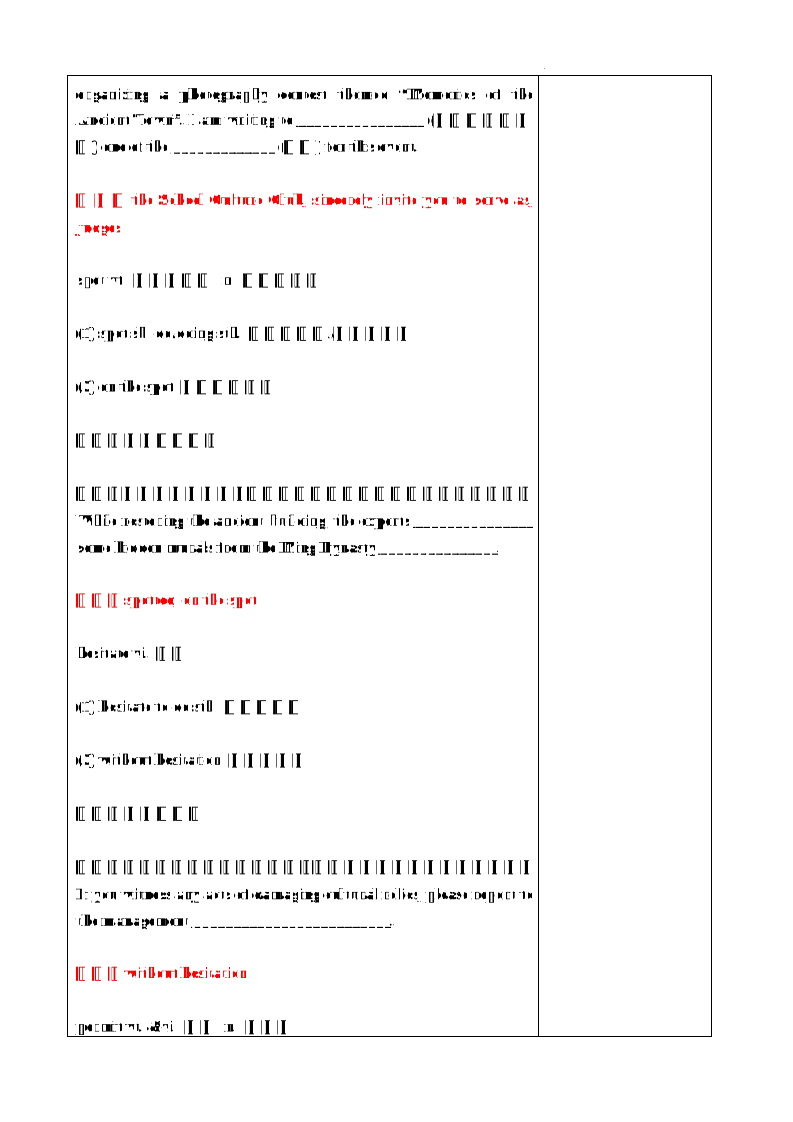
写作:我是学校文化社社长。我们正在组织一场以“古城记忆”为主题的摄影比赛。特此写信,诚挚邀请您担任本次比赛的评委。
I'm Li Hua, head of ________________ (学校文化社). We are organizing a photography contest themed “Memories of the Ancient Town”. I am writing to ________________ (诚挚邀请您担任) one of the _____________ (评委) for this event.
答案:the School Culture Club, sincerely invite you to serve as, judges
spot vt. 看见;发现 n. 地点;斑点
(1) spot sb. do/doing sth. 发现某人做/正在做某事
(2) on the spot 当场;在现场
应用(活动报道):
写作:在修复古建筑时,专家们当场发现了一些隐藏的明代壁画。
While restoring the ancient building, the experts _______________ some hidden murals from the Ming Dynasty _______________.
答案:spotted, on the spot
hesitate vi. 犹豫
(1) hesitate to do sth. 犹豫做某事
(2) without hesitation 毫不犹豫地
应用(倡议书):
如果你发现任何破坏文物的行为,请毫不犹豫地向管理部门报告。
If you witness any acts of damaging cultural relics, please report to the management _________________________.
答案:without hesitation
permit vt. &vi. 允许 n. 许可证
(1) permit doing sth. 允许做某事
permit sb. to do sth. 允许某人做某事
(2) permission n. 许可
应用(独立主格结构):
天气允许的话,文化节将在本周末于市中心广场举行。
_______________ (Weather permit), the cultural festival will be held at the central square this weekend.
答案:Weather permitting
II. 句型结构
This/That is why... 这/那就是为什么…… (表结果)
例句:许多传统手艺正在消失。这就是为什么政府和民间组织要紧急启动保护项目。
Many traditional crafts are disappearing. ________________ the government and NGOs are urgently launching preservation projects.
答案:That is why
对比:This is because... (表原因) / The reason why... is that...
It‘s the + 序数词 + time that + 从句 (常用完成时)
句型应用:这是第一次这种古老的祭祀仪式被允许向公众展示。
____________________________________ (It is the first time) that this ancient ritual ________________ (permit) to be displayed to the public.
答案:It is the first time, has been permitted
find + oneself + 宾语补足语
醒来时,他发现自己躺在古镇的一家传统客栈里。
When he woke up, he ____________________ (发现自己躺) in a traditional inn of the ancient town.
答案:found himself lying
在一次寻访中,她发现自己被一群对历史充满好奇的孩子包围着。
During a heritage tour, she found herself ________________ (包围) by a group of children curious about history.
答案:surrounded
设计意图:通过讲解围绕“文化遗产”主题的重点词汇考点,并搭配应用文和情境写作的例句进行练习,引导学生把握学习重点,并学会在具体语境中思考与应用。
Step 3: Practice (15 mins) - 个人/配对练习
Activity 1: 佳句回眸 (单句翻译填空)
正如一句老话所说,“保护遗产就是保护我们的根”。(saying)
______________________, “To protect heritage is to protect our roots.”
答案:Just as the old saying goes
成功的保护工作应建立在社区积极参与的基础上。(basis)
Successful preservation work should ______________________ active community participation.
答案:be built on the basis of
有些人只关注经济发展,而另一些人则致力于保护文化身份。(pursue)
Some people focus only on economic growth while others __________________ cultural identity preservation.
答案:are committed to pursuing
当你试图理解一种古老的传统时,通常是当地的长者能提供最深刻的见解。(强调句型)
When you try to understand an ancient tradition, ______________ the local elders ______________ can offer the deepest insights.
答案:it is, who/that
一个合格的守护者应该具备诸如耐心、细心、奉献和履行承诺等品质。(fulfill)
A qualified guardian ought to possess such qualities as patience, carefulness, dedication and always ______________________.
答案:fulfilling his/her commitments
Activity 2: 短文写作 (语篇整合)
根据汉语提示,运用本单元所复习的词汇与语法,完成短文。
保护文化遗产是我们共同的责任。正如老话所说,朽木不可雕,但遗产可续。有效的保护应建立在专业知识和公众意识的基础上。当你参观历史遗址时,当场发现任何损坏,都应毫不犹豫地报告。这就是为什么许多遗址需要许可才能进入——为了控制影响。有时,志愿者会发现自己被深深吸引投入到保护工作中。只有每个人都履行自己的义务,我们才能将宝贵的遗产传给后代。
(参考译文及要点应用)
Preserving cultural heritage is our shared responsibility. Just as the old saying goes, “You can’t carve rotten wood, but heritage can be continued.” Effective protection should be built on the basis of expertise and public awareness. When you visit a historical site and spot any damage on the spot, you should report it without hesitation. That is why many sites require a permit to enter — to control impact. Sometimes, volunteers find themselves deeply drawn into conservation work. Only when everyone fulfills his or her obligations can we pass on the precious heritage to future generations.
(设计意图中嵌入学科融合提示:此短文内容可联系历史学科中的文物保护知识,或社会学科中关于社区参与公共事务的讨论。)
设计意图:从单句填空翻译到语篇整合写作的递进式练习,注重重点词汇在主题语境下的复现,逐步增加难度,对本节所学进行多层次操练,旨在巩固知识并提升学生应用信心。
Step 4: Homework
1. 熟记本课复习的重点词汇与表达。
2. 完成配套教材(如《同步练习》册)第XX-XX页中与“文化与社会”主题相关的词汇练习。
板书设计
Book 3 Unit 5 The Value of Money
Language points
1. make an apology to sb. for sth. = apologize to sb. For sth.
2. hesitate to do sth. = be hesitant to do sth / about doing sth.
without hesitation
3. This / That is why + 结果.... This / That is because + 原因
The reason why .... is that ....
4. It is the + 序数词 + time that+sb. (常用完成时)
5. find oneself+adj. (做宾补)
作业设计
1.Recite the words and expressions in this class.
2.Complete the exercises on Page 180 in “步步高讲义”.
教学反思
学科网(北京)股份有限公司
$
资源预览图
1

2
3
相关资源
由于学科网是一个信息分享及获取的平台,不确保部分用户上传资料的 来源及知识产权归属。如您发现相关资料侵犯您的合法权益,请联系学科网,我们核实后将及时进行处理。