寒假作业01 人称代词,物主代词和名词所有格(巩固培优)七年级英语新教材外研版
2025-12-24
|
2份
|
21页
|
2492人阅读
|
61人下载
资源信息
| 学段 | 初中 |
|---|---|
| 学科 | 英语 |
| 教材版本 | 初中英语外研版七年级上册 |
| 年级 | 七年级 |
| 章节 | - |
| 类型 | 题集-专项训练 |
| 知识点 | 人称代词,物主代词,名词所有格 |
| 使用场景 | 寒暑假-寒假 |
| 学年 | 2026-2027 |
| 地区(省份) | 全国 |
| 地区(市) | - |
| 地区(区县) | - |
| 文件格式 | ZIP |
| 文件大小 | 621 KB |
| 发布时间 | 2025-12-24 |
| 更新时间 | 2025-12-27 |
| 作者 | Luciabc |
| 品牌系列 | 上好课·寒假轻松学 |
| 审核时间 | 2025-12-24 |
| 下载链接 | https://m.zxxk.com/soft/55603559.html |
| 价格 | 3.00储值(1储值=1元) |
| 来源 | 学科网 |
内容正文:
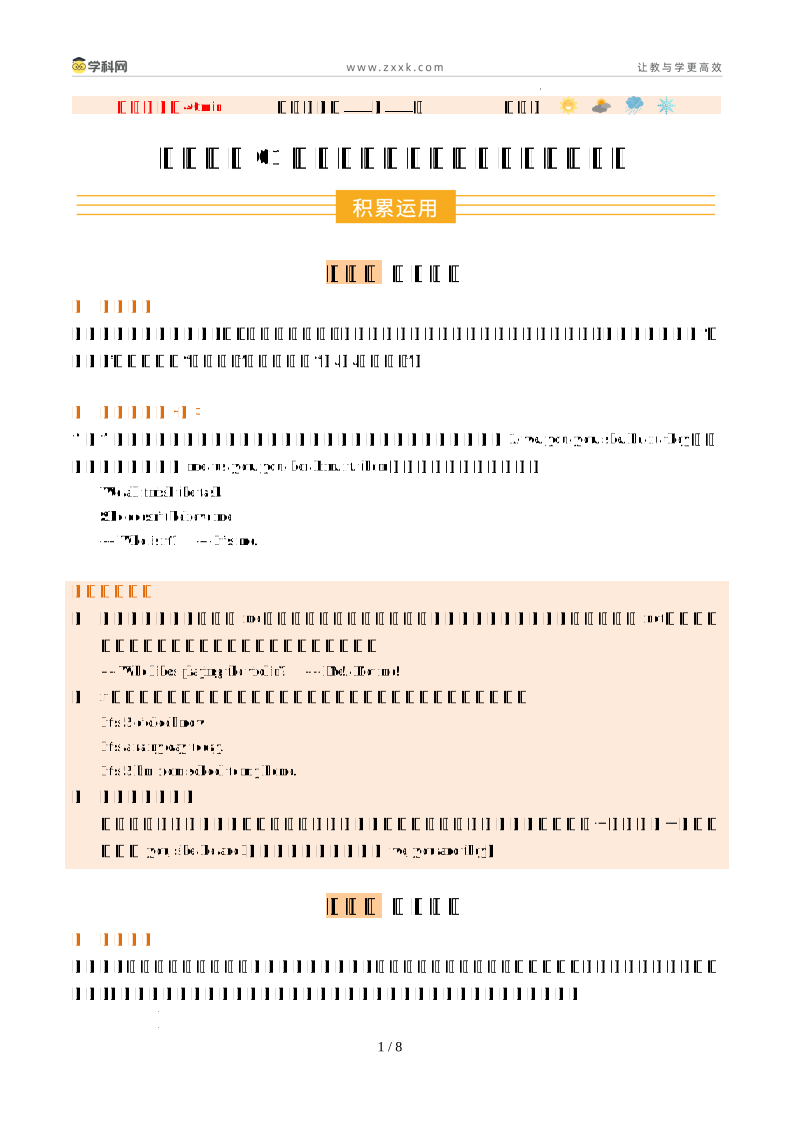
限时练习:40min 完成时间: 月 日 天气:
寒假作业01 人称代词,物主代词和名词所有格
考点一 人称代词
· 知识积累
人称代词是用来代替人、事、物的一类词汇。在我们的日常用语中人称代词有三种人称,为别为第一人称“我(们)”,第二人称“你(们)”,第三人称“她/他/它(们)”。
· 人称代词的<格>
“格”指的是代词通过形态变化来实现他们在句子里的语法功能,主格I/ we/ you/ you/ she/ he/ it/ they在句子里做主语,宾格me/ us/ you/ you/ her/ him/ it/ them在句子里做宾语,例如:
We all finish the task.
She doesn’t believe me.
--- Who is it? --- It’s me.
【易错提醒】
· 人称代词宾格,尤其是me在句子里也可以用作主语。主格一般不单独出现,也不用于带not的简短口头回答,这时候就要用到宾格做主语,例如:
--- Who likes playing the violin? --- Me!/ Not me!
· it可以用来指代人和事,也可以用来表示时间、天气、距离等等,例如
It’s 5 o’clock now.
It’s a rainy day today.
It’s 5 km from school to my home.
· 人称代词的顺序
当一个句子里出现多个人称代词并列使用时,单数时排列顺序通常为:第二人称→第三人称→第一人称,即you, she/ he and I。复数是排列顺序则为we, you and they。
考点二 物主代词
· 知识积累
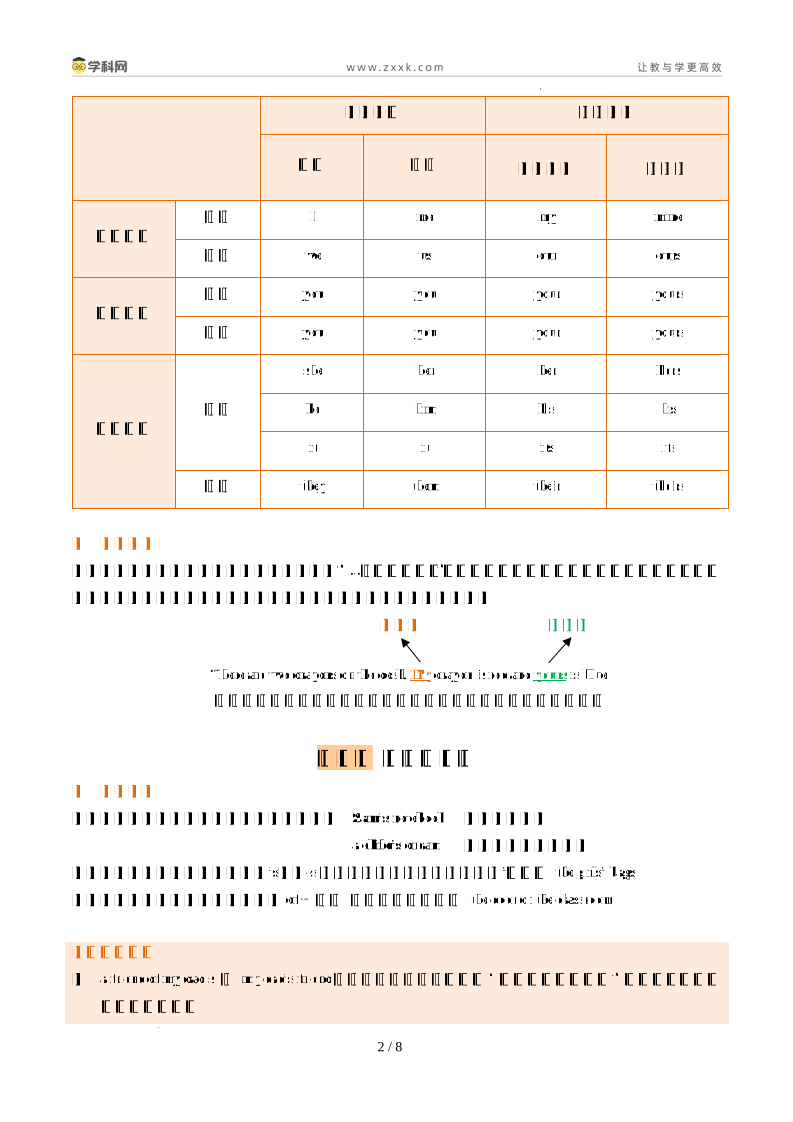
物主代词(人称代词所有格)用来表示所属关系。分为形容词性物主代词(形物代)和名词性物主代词(名物代),物主代词的形式也随人称、数量及第三人称单数性别变化,具体可归纳为:
人称代词
物主代词
主格
宾格
形容词性
名词性
第一人称
单数
I
me
my
mine
复数
we
us
our
ours
第二人称
单数
you
you
your
yours
复数
you
you
your
yours
第二人称
单数
she
her
her
hers
he
him
his
his
it
it
its
its
复数
they
them
their
theirs
· 用法归纳
形容词性物主代词一般用于名词之前,表示“...的(物品等)”;而名词性物主代词具有独立句法功能,在句子里承担名词能承担的句法功能,可充当主语、宾语及表语,例如:
形物代 名物代
There are two crayons on the desk. My crayon is red and yours is blue.
桌上有两根蜡笔,我的蜡笔是红色的,你的(蜡笔)是蓝色的。
考点三 名词所有格
· 知识积累
名词所有格同样用于表示所属关系,例如: Sam’s notebook 山姆的笔记本
a child’s dream 一个孩子的梦(想)
有生命的名词所有格在名词后加’s,以-s结尾的名词或名词复数直接加’,例如 the girls’ bags
如果是无生命的名词所有格,则用of + 名词 的结构表达,例如 the door of the classroom
【易错提醒】
· a friend of my dad’s 和 my dad’s friend表达的含义不同,前者有“我爸爸有多个朋友”的意思,后者则没有这一含义。
当我们用所有格表示两个或多个名词共同拥有某物时,我们只需在最后一个名词后加’s。当表示两个或多个名词分别拥有时,则在每个名词后加’s,例如,
Carol and Charles’ plane 表示卡罗尔和查尔斯两人共同的飞机
Carol’s and Charles’ planes 表示卡罗尔和查尔斯两人各自的飞机
三层必刷:巩固提升+能力培优+创新题型
一、单项选择
1.—Is this Mrs. Brown’s computer?
—Yes, it’s ________.
A.she B.he C.hers D.his
2.—What’s ________ name?
—________ is Helen.
A.your; She B.her; He C.her; She D.his; He
3.—Is this your fishing rod, Jack?
—No, ________ fishing rod is blue.
A.my B.his C.her D.your
4.Look! Here are ________ grapes on the table. Let’s eat ________ together.
A.some; them B.any; them C.some; they D.any; it
5.__________ school life is very busy. So it is important for __________ to make good use of time.
A.We; us B.Our; we C.We; our D.Our; us
6.My parents showed ________ some old pictures.
A.mine B.my C.me D.I
7.Lucky money carries the two ________ wishes for a Happy New Year.
A.child’s B.children C.children’s D.child
8.This is ________ room. It’s very big.
A.Tom and Tim B.Tom and Tim’s C.Tom’s and Tim D.Tom’s and Tim’s
9.—Mike, is the jacket on the sofa ___________?
—No, it’s my ___________.
A.your; cousin B.your; cousin’s
C.yours; cousin D.yours; cousin’s
10.—Is this your room?
—No, it isn’t. It’s my ________ room. My grandpa and grandma live in it.
A.grandpa B.grandparents C.grandparent’s D.grandparents’
二、用所给词的适当形式填空
1.Cindy, I can’t find my shoes. Do you see ____________? (they)
2.The girl is from the US. name is Ella. (she)
3.Ms Miller, I have some questions. Can you help (I)?
4.Ella and Peter love (they) beautiful school very much.
5.What are (their) doing?
6.Is that man in black (she) father?
7.The weather makes (we) feel comfortable.
8.I use colourful pencil to finish my art homework. (she)
9.Peter usually brushes teeth and takes a shower before breakfast. (he)
10.Li Lei has a pet dog. (it) name is Dahuang.
11.These seats are my (classmate). They will come back in a minute.
12.The pen is (Lucy).
13.—Whose fishing rods are those?
—They are my (father).
14.I think it is our (family) best photo.
15.—Peter, where’s the computer?
—I think it’s in your (parents) room.
16.Do you know all your family (member) full names?
17.Jim is my cousin. He is my (aunt) son.
18.Could you please tell (she) for the time of the show?
19.This is my dad, favourite food is hot pot. (he)
20.Come and meet the writers. You can ask them some questions about (they) books.
一、阅读理解
A
This term, Xiao Yang has a new subject—geography, but he doesn’t like it. “It’s not useful at all.” he thinks. So he always plays games in class.
Mr. Wang is his geography teacher. He is nice to the students in his class. One day, he finds Xiao Yang isn’t interested in his class. He comes to Xiao Yang’s desk and says, “Hi, Xiao Yang. Where are you from?”
“I’m from Sichuan, Mr. Wang.”
“Oh, that’s a nice place Can I ask you some questions?”
“Sure.”
“Why does Sichuan have mountains (山)? Where does the Jialing River start? And why is it so hot in Chengdu from July to September?”
“I’m sorry, Mr. Wang. I don’t know,” Xiao Yang says.
“Do you want to know?” Mr. Wang asks.
“Yes, Mr. Wang. But how?”
“Well, you see, your games can’t help you, but geography can. So now let’s start the lesson, OK?”
“OK.”
1.Mr. Wang is a ________.
A. B. C. D.
2.When is it very hot in Chengdu?
A.In March. B.In May. C.In July. D.In December.
3.Why does Mr. Wang ask Xiao Yang questions?
A.He is nice to his students. B.He wants to know Xiao Yang well.
C.He wants Xiao Yang to like geography. D.He wants Xiao Yang to visit Sichuan.
4.What may Xiao Yang think of geography after talking with Mr. Wang?
A.Useful. B.Interesting. C.Easy. D.Boring.
B
① Labor (劳动) classes at school can help students be active and happy in life. At the same time, students can learn the meaning (意义) of labor. So from this September, students in middle school have one labor class a week.
② There are many interesting labor classes now. Students from a school in Chongqing have a class about catching fish in the river and learning about their habits. In Shanxi Province, students make tofu and also cook it. The labor classes make them feel happy. Some students also keep small animals at home like chickens. This helps students learn how to care for (照顾) living things and also make them more interested in biology.
③ According to the new policy (政策), middle school students need to learn many skills (技能) in labor classes: clean their rooms and classrooms, pick proper (合适的) clothes for travel, cook three or four meals and take part in labor activities such as planting or fishing.
④ Doing labor work is good for students. The students can get more self-control (自控), do better in school, and feel happier from it. Labor classes not only teach them important skills but also are a great way to relax during a busy school day. So which kind of labor skill do you want to learn most?
1.What do Chongqing students do in labor classes?
A.Plant trees. B.Catch fish and study their habits.
C.Cook three meals daily. D.Clean classrooms.
2.Which paragraphs tell us what skills students learn in the labor class?
A.①② B.②③ C.③④ D.①④
3.What can we learn from the text?
A.Students may improve (提升) themselves by doing labor work.
B.Students will lose self-control if they don’t take labor classes.
C.Labor classes can only teach students some cooking skills.
D.Labor classes make the students’ school days much busier.
4.Why did the writer write this passage?
A.To say something bad about school work.
B.To introduce different kinds of labor classes.
C.To show labor classes are important and good for students.
D.To tell us labor classes are different from biology.
二、完形填空
Here is a photo of Helen’s family. There are 1 people in it.
In the middle of the photo are Helen’s grandparents, Susan and Bob. They 2 on a farm and some animals are on it, too. Of them, Helen likes 3 best. She thinks they’re 4 . There are also some trees on the farm. And some birds often like singing in them.
The tall man on the left of Helen’s grandparents is 5 father. His name is David. He works in a hospital (医院). The man in a brown cap next to David is Helen’s 6 . He is David’s brother. His name is Billy Smith. So Smith is his 7 name. Her mother is Linda and she is on the right of her grandparents. She is a teacher in Helen’s school, 8 they often go to school together.
Do you know the 9 next to Linda? Ha! Yes, she’s Helen. She is very 10 to her friends and classmates. She often helps them and they all like her. They often play games after school.
1.A.four B.five C.six D.seven
2.A.play B.live C.have D.come
3.A.apples B.black C.sheep D.stories
4.A.cute B.short C.small D.tidy
5.A.my B.your C.their D.her
6.A.brother B.uncle C.cousin D.friend
7.A.last B.first C.full D.big
8.A.because B.but C.or D.so
9.A.son B.man C.girl D.woman
10.A.funny B.tidy C.clean D.kind
Look around you. There’s wonderful nature full of life—birds singing in the trees, rabbits running on the grass and so on. They’re all so interesting.
Take an ant hill for example. It may look like a small hill of sand (沙子). But if you watch carefully, you may see a busy little world.
Ants are amazing insects (昆虫). They work all day and all night—can you believe it? Ants are hard-working. They keep moving, carrying (搬运) things, and taking care of their home.
Although ants are small, they’re smart and strong. An ant can lift (举起) things that are 50 times (倍) heavier than its own body. Most of the time, ants work together as a team.
What’s more, ants are helpful to humans. In gardens, they eat bugs (害虫) to keep our flowers and vegetables safe. When they make tunnels (隧道) underground, those tunnels let air and water reach plant roots (根), helping plants grow better.
So next time you see an ant, stop and watch it for a minute. You may feel surprised by how hard it works, how much it helps us, and how amazing nature really is.
1.Do ants work all day and all night?
_________________________________________________________________________
2.What does an ant hill look like?
_________________________________________________________________________
3.What amazing things can we learn about ants from the passage?
_________________________________________________________________________
4.What other amazing animals do you like? Why? (Please name ONE animal, about 20 words)
_________________________________________________________________________
_________________________________________________________________________
_________________________________________________________________________
7 / 10
学科网(北京)股份有限公司
$
限时练习:40min 完成时间: 月 日 天气:
寒假作业01 人称代词,物主代词和名词所有格
考点一 人称代词
· 知识积累
人称代词是用来代替人、事、物的一类词汇。在我们的日常用语中人称代词有三种人称,为别为第一人称“我(们)”,第二人称“你(们)”,第三人称“她/他/它(们)”。
· 人称代词的<格>
“格”指的是代词通过形态变化来实现他们在句子里的语法功能,主格I/ we/ you/ you/ she/ he/ it/ they在句子里做主语,宾格me/ us/ you/ you/ her/ him/ it/ them在句子里做宾语,例如:
We all finish the task.
She doesn’t believe me.
--- Who is it? --- It’s me.
【易错提醒】
· 人称代词宾格,尤其是me在句子里也可以用作主语。主格一般不单独出现,也不用于带not的简短口头回答,这时候就要用到宾格做主语,例如:
--- Who likes playing the violin? --- Me!/ Not me!
· it可以用来指代人和事,也可以用来表示时间、天气、距离等等,例如
It’s 5 o’clock now.
It’s a rainy day today.
It’s 5 km from school to my home.
· 人称代词的顺序
当一个句子里出现多个人称代词并列使用时,单数时排列顺序通常为:第二人称→第三人称→第一人称,即you, she/ he and I。复数是排列顺序则为we, you and they。
考点二 物主代词
· 知识积累
物主代词(人称代词所有格)用来表示所属关系。分为形容词性物主代词(形物代)和名词性物主代词(名物代),物主代词的形式也随人称、数量及第三人称单数性别变化,具体可归纳为:
人称代词
物主代词
主格
宾格
形容词性
名词性
第一人称
单数
I
me
my
mine
复数
we
us
our
ours
第二人称
单数
you
you
your
yours
复数
you
you
your
yours
第二人称
单数
she
her
her
hers
he
him
his
his
it
it
its
its
复数
they
them
their
theirs
· 用法归纳
形容词性物主代词一般用于名词之前,表示“...的(物品等)”;而名词性物主代词具有独立句法功能,在句子里承担名词能承担的句法功能,可充当主语、宾语及表语,例如:
形物代 名物代
There are two crayons on the desk. My crayon is red and yours is blue.
桌上有两根蜡笔,我的蜡笔是红色的,你的(蜡笔)是蓝色的。
考点三 名词所有格
· 知识积累
名词所有格同样用于表示所属关系,例如: Sam’s notebook 山姆的笔记本
a child’s dream 一个孩子的梦(想)
有生命的名词所有格在名词后加’s,以-s结尾的名词或名词复数直接加’,例如 the girls’ bags
如果是无生命的名词所有格,则用of + 名词 的结构表达,例如 the door of the classroom
【易错提醒】
· a friend of my dad’s 和 my dad’s friend表达的含义不同,前者有“我爸爸有多个朋友”的意思,后者则没有这一含义。
当我们用所有格表示两个或多个名词共同拥有某物时,我们只需在最后一个名词后加’s。当表示两个或多个名词分别拥有时,则在每个名词后加’s,例如,
Carol and Charles’ plane 表示卡罗尔和查尔斯两人共同的飞机
Carol’s and Charles’ planes 表示卡罗尔和查尔斯两人各自的飞机
三层必刷:巩固提升+能力培优+创新题型
一、单项选择
1.—Is this Mrs. Brown’s computer?
—Yes, it’s ________.
A.she B.he C.hers D.his
【答案】C
【解析】句意:—这是布朗夫人的电脑吗? —是的,它是她的。
考查代词辨析。she她(主格);he他(主格代词);hers她的(名词性物主代词);his他的(名词性物主代词)。根据问句中“Mrs. Brown’s computer”可知,Mrs. Brown是女性,答句需用名词性物主代词“hers”指代“her computer”。故选C。
2.—What’s ________ name?
—________ is Helen.
A.your; She B.her; He C.her; She D.his; He
【答案】C
【解析】句意:——她的名字是什么?——她是Helen。
考查代词辨析。your你的;her她的;his他的;She她;He他。根据答语“—What’s...name? —...is Helen.”可知,第一空,此处修饰名词name,表示“她的”名字,用形容词性物主代词her;第二空,Helen是女性名字,用表示女性的代词She指代。故选C。
3.—Is this your fishing rod, Jack?
—No, ________ fishing rod is blue.
A.my B.his C.her D.your
【答案】A
【解析】句意:——杰克,这是你的钓鱼竿吗?——不,我的钓鱼竿是蓝色的。
考查形容词性物主代词辨析。my我的;his他的;her她的;your你的。根据“Is this your fishing rod, Jack? No”可知,这里是杰克回应自己的钓鱼竿的情况,需要用第一人称对应的物主代词,my符合语境。故选A。
4.Look! Here are ________ grapes on the table. Let’s eat ________ together.
A.some; them B.any; them C.some; they D.any; it
【答案】A
【解析】句意:看!桌子上有一些葡萄。让我们一起吃它们。
考查不定代词和人称代词辨析。some一些,用于肯定句;any一些,用于疑问句或否定句;them他们,宾格;they他们,主格;it它。第一空为肯定句,故用some。第二空eat后需宾格代词作宾语,grapes为复数,故用them。故选A。
5.__________ school life is very busy. So it is important for __________ to make good use of time.
A.We; us B.Our; we C.We; our D.Our; us
【答案】D
【解析】句意:我们的学校生活非常忙碌。所以对我们来说,合理利用时间很重要。
考查代词用法。We我们,人称代词主格;us我们,人称代词宾格;our我们的,形容词性物主代词。第一空后是名词school life,应使用形容词性物主代词Our修饰;第二空作介词for的宾语,应使用宾格us。故选D。
6.My parents showed ________ some old pictures.
A.mine B.my C.me D.I
【答案】C
【解析】句意:我的父母给我展示了一些旧照片。
考查代词辨析。mine我的,名词性物主代词;my我的,形容词性物主代词;me我,宾格;I我,主格。动词“showed”表示“展示”,其后需接间接宾语(表示动作接受者)和直接宾语(“some old pictures”)。空白处需填入间接宾语,故用宾格代词“me”。故选C。
7.Lucky money carries the two ________ wishes for a Happy New Year.
A.child’s B.children C.children’s D.child
【答案】C
【解析】句意:压岁钱承载着两个孩子的新年祝福。
考查名词所有格。child’s一个孩子的,单数名词所有格;children孩子们,复数名词;children’s孩子们的,复数名词所有格;child孩子,单数名词。two修饰复数名词children,且用所有格形式修饰名词wishes,因此此处是复数名词所有格children’s。故选C。
8.This is ________ room. It’s very big.
A.Tom and Tim B.Tom and Tim’s C.Tom’s and Tim D.Tom’s and Tim’s
【答案】B
【解析】句意:这是汤姆和蒂姆的房间。它非常大。
考查名词所有格。Tom and Tim汤姆和蒂姆;Tom and Tim’s汤姆和蒂姆的(表示两人共同拥有某物);Tom’s and Tim错误表达;Tom’s and Tim’s汤姆的和蒂姆的(表示各自拥有,但需接名词复数)。根据“...room. It’s very big.”可知,此处是一个房间,所以应是表示两个人共同拥有,空后是名词room,空处应是“Tom and Tim’s”。故选B。
9.—Mike, is the jacket on the sofa ___________?
—No, it’s my ___________.
A.your; cousin B.your; cousin’s
C.yours; cousin D.yours; cousin’s
【答案】D
【解析】句意:——迈克,沙发上的夹克是你的吗?——不,它是我表哥的。
考查物主代词辨析和名词所有格。your你的,形容词性物主代词;yours你的,名词性物主代词。根据主语the jacket为名词,且第一空后没有名词可知,第一空应用名词性物主代词;而第二空的主语it代指the jacket,所以第二空,应填名词所有格,表所属,故选D。
10.—Is this your room?
—No, it isn’t. It’s my ________ room. My grandpa and grandma live in it.
A.grandpa B.grandparents C.grandparent’s D.grandparents’
【答案】D
【解析】句意:——这是你的房间吗?——不,它不是。它是我祖父母的房间。我的爷爷和奶奶住在里面。
考查名词所有格。根据“My grandpa and grandma live in it.”可知是爷爷和奶奶的房间,故此处需用名词复数的所有格形式grandparents’“祖父母的”。故选D。
二、用所给词的适当形式填空
1.Cindy, I can’t find my shoes. Do you see ____________? (they)
【答案】them
【解析】句意:Cindy,我找不到我的鞋子了。你看到它们了吗?动词see后跟宾格形式,they的宾格是them。故填them。
2.The girl is from the US. name is Ella. (she)
【答案】Her
【解析】句意:这个女孩来自美国。她的名字是Ella。空处修饰名词name,需用形容词性物主代词her“她的”,位于句首,首字母需大写。故填Her。
3.Ms Miller, I have some questions. Can you help (I)?
【答案】me
【解析】句意:米勒夫人,我有一些问题,你能帮我吗?“help”为及物动词,需接人称代词宾格作宾语。句中“help”的对象是我,所以使用I的宾格形式me。故填me。
4.Ella and Peter love (they) beautiful school very much.
【答案】their
【解析】句意:艾拉和彼得非常喜欢他们美丽的学校。根据“Ella and Peter love...beautiful school very much.”及汉语提示可知此处指“他们的”。提示词they意为“他们”,是人称代词主格;their意为“他们的”,形容词性物主代词,作定语,修饰名词school。故填their。
5.What are (their) doing?
【答案】they
【解析】句意:他们在做什么?their“他们的”,设空处缺主语,应该填人称代词主格they“他们”,故填they。
6.Is that man in black (she) father?
【答案】her
【解析】句意:那个穿黑衣服的男人是她的父亲吗?根据“Is that man in black...(she) father?”可知,此处修饰名词“father”,需用形容词性物主代词,“she”的形容词性物主代词是“her”,表示“她的”。故填her。
7.The weather makes (we) feel comfortable.
【答案】us
【解析】句意:这样的天气让我们感觉很舒服。根据“The weather makes...(we) feel comfortable.”可知,此处“makes”是使役动词,后接人称代词的宾格形式作宾语,“we”的宾格是“us”。故填us。
8.I use colourful pencil to finish my art homework. (she)
【答案】her
【解析】句意:我用她的彩色铅笔完成我的美术作业。she她,人称代词主格;根据“colourful pencil”可知,此处需用形容词性物主代词修饰名词“pencil”,表示“她的彩色铅笔”,应用形容词性物主代词her“她的”。故填her。
9.Peter usually brushes teeth and takes a shower before breakfast. (he)
【答案】his
【解析】句意:彼得通常在早餐前刷牙和洗澡。空后是名词teeth,空处应该填形容词性物主代词修饰名词,he的形容词性物主代词是his“他的”。故填his。
10.Li Lei has a pet dog. (it) name is Dahuang.
【答案】Its
【解析】句意:李雷有一只宠物狗,它的名字叫大黄。此处需用形容词性物主代词its“它的”,修饰名词name,句首首字母大写。故填Its。
11.These seats are my (classmate). They will come back in a minute.
【答案】classmates’
【解析】句意:这些座位是我同学的。他们一会儿就回来。根据“These seats”可知,座位是同学的,需要用名词所有格形式,结合“They”可知,需要用复数名词所有格形式。故填classmates’。
12.The pen is (Lucy).
【答案】Lucy’s
【解析】句意:这支钢笔是Lucy的。此处表示所属关系,应用Lucy的名词所有格形式Lucy’s。故填Lucy’s。
13.—Whose fishing rods are those?
—They are my (father).
【答案】father’s
【解析】句意:——那些是谁的鱼竿?——它们是我爸爸的。根据“Whose fishing rods are those?”可知,此处询问鱼竿是谁的,回答应是表示所属关系,应用名词所有格形式;father“爸爸”,名词,其所有格形式为father’s。故填father’s。
14.I think it is our (family) best photo.
【答案】family’s
【解析】句意:我认为这是我们家最好的照片。此处需要用名词所有格形式修饰“best photo”,表示“家庭的(照片)”,“family”的所有格是“family’s”。故填family’s。
15.—Peter, where’s the computer?
—I think it’s in your (parents) room.
【答案】parents’
【解析】句意:——彼得,电脑在哪里?——我想是在你父母的房间里。根据“I think it’s in your…room.”及提示词可知,此处表达电脑在父母的房间里,空处应用名词复数的所有格作定语,parents的所有格为parents’。故填parents’。
16.Do you know all your family (member) full names?
【答案】members’
【解析】句意:你知道你所有家人的全名吗?根据“all your family...full names”可知,应填member复数形式members的所有格形式members’,作定语,表示所有家人的全名。故填members’。
17.Jim is my cousin. He is my (aunt) son.
【答案】aunt’s
【解析】句意:吉姆是我的表弟。他是我姨妈的儿子。根据“my...(aunt) son.”可知,此处需要用名词所有格形式表示所属关系。aunt的所有格形式为aunt’s。故填aunt’s。
18.Could you please tell (she) for the time of the show?
【答案】her
【解析】句意:你能告诉她演出时间吗?she“她”,为人称代词主格。tell为动词,其后应接人称代词宾格her作宾语。故填her。
19.This is my dad, favourite food is hot pot. (he)
【答案】his
【解析】句意:这是我爸爸,他最喜欢的食物是火锅。空后是名词“favourite food”,空处应是he的形容词性物主代词his。故填his。
20.Come and meet the writers. You can ask them some questions about (they) books.
【答案】their
【解析】句意:来见见这些作家。你可以问他们一些关于他们书的问题。they“他们”,人称代词主格。空格后是名词“books”,此处需用形容词性物主代词their“他们的”作定语。故填their。
一、阅读理解
A
This term, Xiao Yang has a new subject—geography, but he doesn’t like it. “It’s not useful at all.” he thinks. So he always plays games in class.
Mr. Wang is his geography teacher. He is nice to the students in his class. One day, he finds Xiao Yang isn’t interested in his class. He comes to Xiao Yang’s desk and says, “Hi, Xiao Yang. Where are you from?”
“I’m from Sichuan, Mr. Wang.”
“Oh, that’s a nice place Can I ask you some questions?”
“Sure.”
“Why does Sichuan have mountains (山)? Where does the Jialing River start? And why is it so hot in Chengdu from July to September?”
“I’m sorry, Mr. Wang. I don’t know,” Xiao Yang says.
“Do you want to know?” Mr. Wang asks.
“Yes, Mr. Wang. But how?”
“Well, you see, your games can’t help you, but geography can. So now let’s start the lesson, OK?”
“OK.”
1.Mr. Wang is a ________.
A. B. C. D.
2.When is it very hot in Chengdu?
A.In March. B.In May. C.In July. D.In December.
3.Why does Mr. Wang ask Xiao Yang questions?
A.He is nice to his students. B.He wants to know Xiao Yang well.
C.He wants Xiao Yang to like geography. D.He wants Xiao Yang to visit Sichuan.
4.What may Xiao Yang think of geography after talking with Mr. Wang?
A.Useful. B.Interesting. C.Easy. D.Boring.
【答案】1.A 2.C 3.C 4.A
【解析】本文是一篇记叙文,主要讲了小杨原本觉得地理没用、上课玩游戏,地理老师王老师通过提问引导他认识到地理的用处,让他愿意开始听课。
1.细节理解题。根据“Mr. Wang is his geography teacher.”可知,王老师是一名地理老师。故选A。
2.细节理解题。根据“And why is it so hot in Chengdu from July to September?”可知,成都7月到9月很热,7月在其中。故选C。
3.细节理解题。根据“One day, he finds Xiao Yang isn’t interested in his class.”和“Well, you see, your games can’t help you, but geography can. So now let’s start the lesson, OK?”可知,王老师发现小杨对地理课不感兴趣,想让他明白地理的用处并喜欢上地理。故选C。
4.细节理解题。根据“It’s not useful at all.”以及“your games can’t help you, but geography can.”可知,小杨会改变对地理的看法,认为它是有用的。故选A。
B
① Labor (劳动) classes at school can help students be active and happy in life. At the same time, students can learn the meaning (意义) of labor. So from this September, students in middle school have one labor class a week.
② There are many interesting labor classes now. Students from a school in Chongqing have a class about catching fish in the river and learning about their habits. In Shanxi Province, students make tofu and also cook it. The labor classes make them feel happy. Some students also keep small animals at home like chickens. This helps students learn how to care for (照顾) living things and also make them more interested in biology.
③ According to the new policy (政策), middle school students need to learn many skills (技能) in labor classes: clean their rooms and classrooms, pick proper (合适的) clothes for travel, cook three or four meals and take part in labor activities such as planting or fishing.
④ Doing labor work is good for students. The students can get more self-control (自控), do better in school, and feel happier from it. Labor classes not only teach them important skills but also are a great way to relax during a busy school day. So which kind of labor skill do you want to learn most?
1.What do Chongqing students do in labor classes?
A.Plant trees. B.Catch fish and study their habits.
C.Cook three meals daily. D.Clean classrooms.
2.Which paragraphs tell us what skills students learn in the labor class?
A.①② B.②③ C.③④ D.①④
3.What can we learn from the text?
A.Students may improve (提升) themselves by doing labor work.
B.Students will lose self-control if they don’t take labor classes.
C.Labor classes can only teach students some cooking skills.
D.Labor classes make the students’ school days much busier.
4.Why did the writer write this passage?
A.To say something bad about school work.
B.To introduce different kinds of labor classes.
C.To show labor classes are important and good for students.
D.To tell us labor classes are different from biology.
【答案】1.B 2.B 3.A 4.C
【解析】本文主要讲述了学校开设劳动课的意义、有趣的劳动课内容、学生需学习的技能以及劳动课对学生的好处 。
1.细节理解题。根据“Students from a school in Chongqing have a class about catching fish in the river and learning about their habits.”可知,重庆的学生在劳动课上抓鱼并研究它们的习性。故选B。
2.细节理解题。根据“Students from a school in Chongqing have a class about catching fish in the river and learning about their habits…”以及“According to the new policy (政策), middle school students need to learn many skills (技能) in labor classes: clean their rooms and classrooms,…”可知,第二、三段讲述了学生在劳动课上需要学习的技能。故选B。
3.细节理解题。根据“Doing labor work is good for students. The students can get more self-control (自控), do better in school, and feel happier from it.”可知,学生可以通过做劳动工作提升自己。故选A。
4.主旨大意题。根据“Labor (劳动) classes at school can help students be active and happy in life. At the same time, students can learn the meaning (意义) of labor.”以及“Doing labor work is good for students. The students can get more self-control (自控), do better in school, and feel happier from it.”可知,作者写这篇文章是为了表明劳动课对学生很重要且有益。故选C。
二、完形填空
Here is a photo of Helen’s family. There are 1 people in it.
In the middle of the photo are Helen’s grandparents, Susan and Bob. They 2 on a farm and some animals are on it, too. Of them, Helen likes 3 best. She thinks they’re 4 . There are also some trees on the farm. And some birds often like singing in them.
The tall man on the left of Helen’s grandparents is 5 father. His name is David. He works in a hospital (医院). The man in a brown cap next to David is Helen’s 6 . He is David’s brother. His name is Billy Smith. So Smith is his 7 name. Her mother is Linda and she is on the right of her grandparents. She is a teacher in Helen’s school, 8 they often go to school together.
Do you know the 9 next to Linda? Ha! Yes, she’s Helen. She is very 10 to her friends and classmates. She often helps them and they all like her. They often play games after school.
1.A.four B.five C.six D.seven
2.A.play B.live C.have D.come
3.A.apples B.black C.sheep D.stories
4.A.cute B.short C.small D.tidy
5.A.my B.your C.their D.her
6.A.brother B.uncle C.cousin D.friend
7.A.last B.first C.full D.big
8.A.because B.but C.or D.so
9.A.son B.man C.girl D.woman
10.A.funny B.tidy C.clean D.kind
【答案】
1.C 2.B 3.C 4.A 5.D 6.B 7.A 8.D 9.C 10.D
【解析】本文主要描述了Helen家庭照片中的人物关系和场景。
1.句意:照片里有六个人。
four四;five五;six六;seven七。根据下文“In the middle of the photo are Helen’s grandparents, Susan and Bob.”、“The tall man on the left of Helen’s grandparents is…father. His name is David.”、“The man in a brown cap next to David is Helen’s…He is David’s brother.”、“Her mother is Linda and she is on the right of her grandparents.”以及“next to Linda? Ha! Yes, she’s Helen.”可知,照片里有海伦的祖父母、父亲、叔叔、母亲和海伦自己,一共六个人。故选C。
2.句意:他们住在农场,农场里也有一些动物。
play玩;live居住;have有;come来。根据“on a farm”可知,他们是住在农场。故选B。
3.句意:在他们之中,海伦最喜欢绵羊。
apples苹果;black黑色;sheep绵羊;stories故事。根据“some animals”可知,此处指动物,选项中只有“sheep”是动物。故选C。
4.句意:她认为它们很可爱。
cute可爱的;short短的;small小的;tidy整洁的。根据“Helen likes...best”可知,喜欢是因为它们可爱。故选A。
5.句意:海伦祖父母左边那个高个子男人是她的父亲。
my我的;your你的;their他们的;her她的。根据“Helen’s grandparents”可知,此处指海伦的,用her。故选D。
6.句意:戴棕色帽子的挨着David的那个男人是海伦的叔叔。
brother兄弟;uncle叔叔;cousin表亲;friend朋友。根据“He is David’s brother.”可知,他是海伦父亲的兄弟,即叔叔。故选B。
7.句意:所以史密斯是他的姓。
last最后的;first第一的;full满的;big大的。根据“His name is Billy Smith.”可知,Smith是姓,last name“姓”。故选A。
8.句意:她是海伦学校的老师,所以她们经常一起去上学。
because因为;but但是;or或者;so所以。前后两句是因果关系,前因后果,用so连接。故选D。
9.句意:你知道琳达旁边的那个女孩吗?
son儿子;man男人;girl女孩;woman女人。根据“she’s Helen”可知,此处是指那个女孩。故选C。
10.句意:她对她的朋友和同学非常友好。
funny有趣的;tidy整洁的;clean干净的;kind友好的。根据“She often helps them and they all like her.”可知,她很友好。故选D。
Look around you. There’s wonderful nature full of life—birds singing in the trees, rabbits running on the grass and so on. They’re all so interesting.
Take an ant hill for example. It may look like a small hill of sand (沙子). But if you watch carefully, you may see a busy little world.
Ants are amazing insects (昆虫). They work all day and all night—can you believe it? Ants are hard-working. They keep moving, carrying (搬运) things, and taking care of their home.
Although ants are small, they’re smart and strong. An ant can lift (举起) things that are 50 times (倍) heavier than its own body. Most of the time, ants work together as a team.
What’s more, ants are helpful to humans. In gardens, they eat bugs (害虫) to keep our flowers and vegetables safe. When they make tunnels (隧道) underground, those tunnels let air and water reach plant roots (根), helping plants grow better.
So next time you see an ant, stop and watch it for a minute. You may feel surprised by how hard it works, how much it helps us, and how amazing nature really is.
1.Do ants work all day and all night?
_________________________________________________________________________
2.What does an ant hill look like?
_________________________________________________________________________
3.What amazing things can we learn about ants from the passage?
_________________________________________________________________________
4.What other amazing animals do you like? Why? (Please name ONE animal, about 20 words)
_________________________________________________________________________
_________________________________________________________________________
_________________________________________________________________________
【答案】 1.Yes, they do.
2.A small hill of sand.
3.They’re hard-working, smart, strong (can lift things 50 times heavier than their bodies), work in teams and help humans.
4.I like bees. They work hard to make honey and help flowers pollinate, playing an important role in nature.
【解析】本文是一篇说明文,以蚂蚁为例介绍了自然界中有趣的生物,详细阐述了蚂蚁勤劳、聪明、强壮且对人类有益的特点。
1.根据“Ants are amazing insects. They work all day and all night—can you believe it?”可知,蚂蚁日夜不停地工作,故填Yes, they do.
2.根据“It may look like a small hill of sand.”可知,蚁丘看起来像一座小小的沙丘,故填A small hill of sand.
3.根据“Ants are hard-working... they’re smart and strong... An ant can lift things that are 50 times heavier than its own body... ants work together as a team... ants are helpful to humans.”可知,蚂蚁勤劳、聪明、强壮,能举起自身50倍重的东西,会团队合作且对人类有益,故填They’re hard-working, smart, strong (can lift things 50 times heavier than their bodies), work in teams and help humans.
4.本题为开放性问题,选择一种动物并说明原因即可。例:我喜欢蜜蜂。它们勤劳地酿蜜,帮助花朵授粉,在自然界中扮演着重要的角色。故填I like bees. They work hard to make honey and help flowers pollinate, playing an important role in nature.
7 / 10
学科网(北京)股份有限公司
$
资源预览图
1
2

3

相关资源
由于学科网是一个信息分享及获取的平台,不确保部分用户上传资料的 来源及知识产权归属。如您发现相关资料侵犯您的合法权益,请联系学科网,我们核实后将及时进行处理。