专题03 Unit5-6 知识清单(重点单词、词汇拓展、课文填空、重点短语、重点句子、语法、写作)2025-2026学年新教材人教版英语八年级上册期末复习
2025-12-19
|
2份
|
20页
|
1884人阅读
|
83人下载
精品

资源信息
| 学段 | 初中 |
|---|---|
| 学科 | 英语 |
| 教材版本 | 初中英语人教版八年级上册 |
| 年级 | 八年级 |
| 章节 | Unit 5 What a Delicious Meal!,Unit 6 Plan for Yourself |
| 类型 | 学案-知识清单 |
| 知识点 | - |
| 使用场景 | 同步教学-期末 |
| 学年 | 2025-2026 |
| 地区(省份) | 全国 |
| 地区(市) | - |
| 地区(区县) | - |
| 文件格式 | ZIP |
| 文件大小 | 105 KB |
| 发布时间 | 2025-12-19 |
| 更新时间 | 2025-12-21 |
| 作者 | 小米夏 |
| 品牌系列 | - |
| 审核时间 | 2025-12-19 |
| 下载链接 | https://m.zxxk.com/soft/55530369.html |
| 价格 | 4.00储值(1储值=1元) |
| 来源 | 学科网 |
摘要:
该初中英语Unit5-6知识清单系统整合了饮食文化与职业规划主题内容,涵盖词汇(含拓展)、语法、阅读填空、短语、句子及写作训练,搭建从基础积累到综合运用的递进式学习支架。
清单以分类分级构建知识体系,词汇拓展通过“动词-名词-形容词”三级转换(如mix→mixture→mixed)强化语言能力,语法部分按What/How引导分类感叹句并配例句培养思维品质,课文填空融入南瓜派、过桥米线等文化情境。写作提供范文框架,助力学生自主学习,教师可精准设计教学提升实效。
内容正文:
专题03 Unit5-6 知识清单
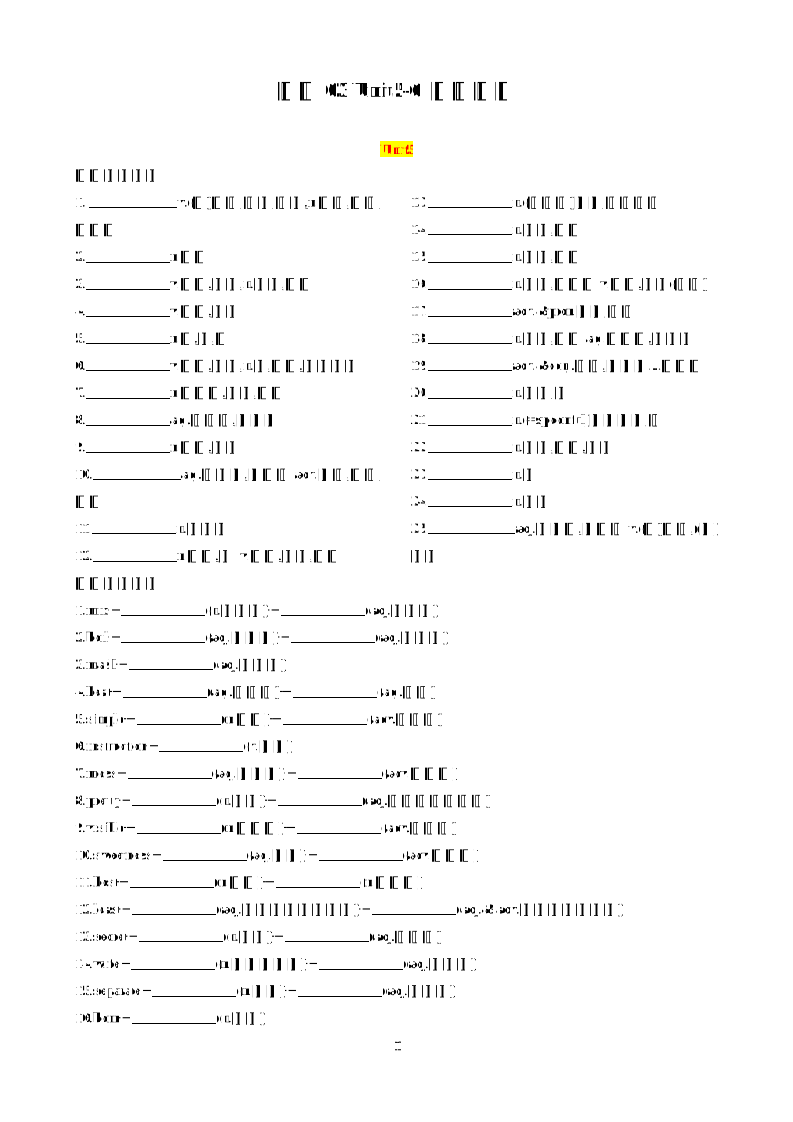
Unit5
一.重点单词
1
学科网(北京)股份有限公司
1. v.(使)混合,融合,调配,n.混合,混杂,混合料
2. n.面粉
3. v.煮沸,烧开,n.沸腾,沸点
4. v.捣烂,捣碎
5. n.碗,钵,盆
6. v.加热,变热,n.热,温度,炎热天气
7. n.食用油,石油,燃油
8. adj.简单的,朴素的
9. n.脏乱,凌乱
10. adj.漂亮的,美丽的adv.相当,十分,非常
11. n.圣诞节
12. n.梦想,梦 v.做梦,梦见,梦想
13. n.(综合性)大学,高等学府
14. n.回忆,记忆
15. n.学院,大学
16. n.主人,东道主v.主办,主持(活动)
17. adv.&pron.最小,最少
18. n.诀窍,秘密adj.秘密的,隐秘的
19. adv.&conj.每当,在任何…的时候
20. n.项目;条
21. n.(=spoonful)一勺的量,勺
22. n.夫妻,情侣,两人
23. n.岛
24. n.妻子
25. adj.单独的,分开的v.(使)分开,(使)分离
二.词汇拓展
1.mix→ (n.混合物)→ (adj.混合的)
2.boil→ (adj.沸腾的)→ (adj.煮熟的)
3.mash→ (adj.捣碎的)
4.heat→ (adj.加热的)→ (adj.热的)
5.simple→ (n.简单)→ (adv.简单地)
6.instruction→ (v.指导)
7.mess→ (adj.凌乱的)→ (adv.凌乱地)
8.pretty→ (n.漂亮)→ (adj.漂亮的,近义词)
9.visible→ (n.能见度)→ (adv.明显地)
10.sweetness→ (adj.甜的)→ (adv.甜美地)
11.host→ (n.主办)→ (n.女主人)
12.least→ (adj.小的;少的,原级)→ (adj.& adv.更少的,比较级)
13.secret→ (n.保密)→ (adj.秘密的)
14.wife→ (n.妻子们复数)→ (adj.妻子的)
15.separate→ (n.分离)→ (adj.分开的)
16.born→ (n.出生)
三.课文填空
1b 阅读文章并完成填空:阅读关于食物与回忆的文章,完成以下填空。
“Cooking is love made visible.” That is what my grandmother always told me.
Thanks to her, I love cooking. It's a great way for me 1 (share) my love with others. Every time I sit at the table, after cooking for my family, we create memories. The smells and the food's taste, along with our conversations, connect us to each other. What wonderful memories I have!
One of my favourite memories is my grandmother's pumpkin pie. She always made it in autumn, when the weather got colder. Her friendly kitchen was the perfect place 2 (warm) up and enjoy a taste of the changing seasons. I still remember the days when the smell of cinnamon filled the room 3 (介词) sweetness. Now, every time I smell cinnamon, I think of my grandmother's pumpkin pie.
My grandmother told me about her first pumpkin pie. When she was a college student in the US, she stayed with a host family. One year around Thanksgiving, the hostess taught her how 4 (make) a pumpkin pie. Many years later, she taught me how to make it too.
Pumpkin Pie Recipe
Ingredients: eggs, sugar, cinnamon, salt, pumpkin, cream, pie crust Instructions:
First, mix the eggs.
Then, add the sugar, cinnamon, salt, pumpkin, and cream.
Next, pour the mixture into the pie crust.
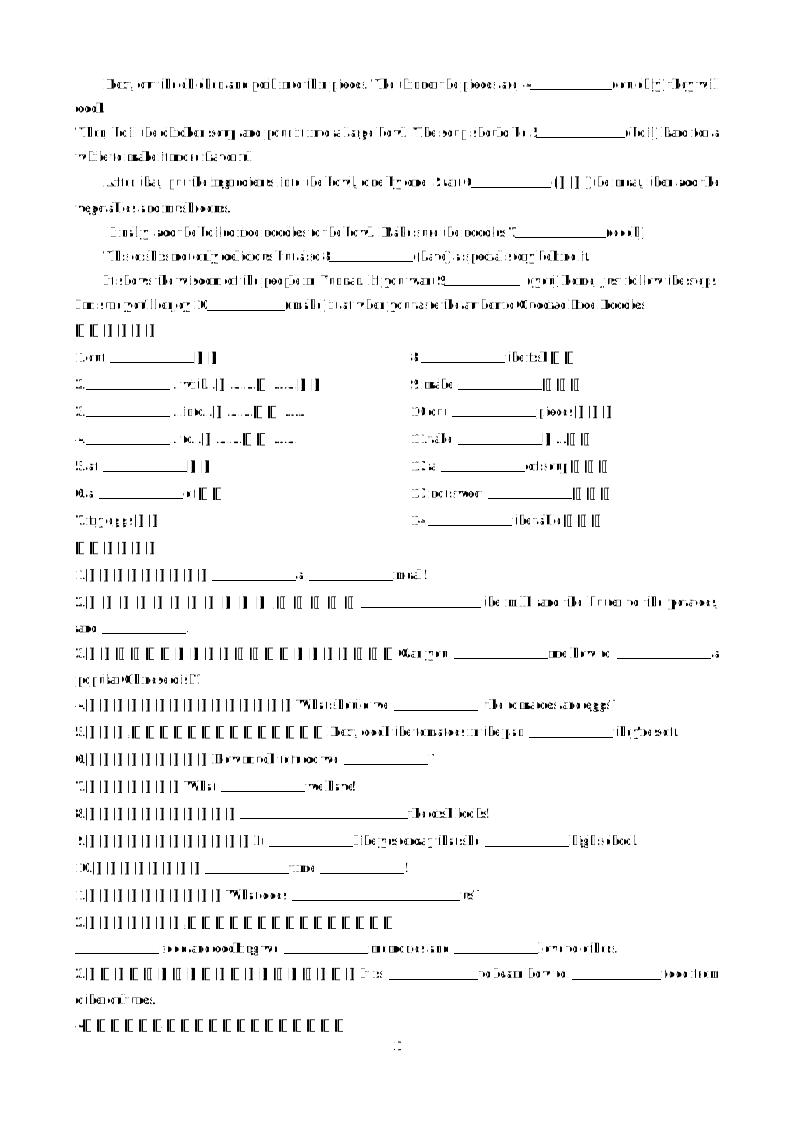
After that, place the pie in the oven and cook for 40 to 50 minutes. Make sure the oven 5 (set) to the right temperature.
Finally, let the pie cool for at least an hour before 6 (serve). This allows the flavors 7 (blend) well.
My grandmother loved learning how to make food from other cultures. “It's my
way of 8 (make) friends from around the world,” she said. Grandmother taught me the secret to cooking: Cook with love. Thanks to my grandmother, I love to try new food and new recipes from other countries and cultures.
According to the text, cooking not only brings delicious food but also 9 (help) us build closer relationships. We should cherish the memories 10 (create) during cooking and sharing food.
3a 阅读文章并完成填空:阅读关于过桥米线的文章,完成以下填空。
My Favourite Dish: Guoqiao Rice Noodles
Long ago, there was a couple 1 (live) in Yunnan Province, China. The husband studied on an island far from his home. When his wife went a long way to send meals, the food always got cold. One day, the wife boiled some chicken soup and used a large pot 2 (keep) it warm. And she kept the ingredients separate. She put the ingredients into the soup when she reached the island, and she found everything still hot. The Guoqiao Rice Noodles was born!
Here's how to make the dish:
First, wash the vegetables and mushrooms carefully. Make sure 3 (remove)
any dirt.
Next, cut the chicken and pork into thin pieces. The thinner the pieces are, 4 (quickly) they will cook.
Then, boil the chicken soup and pour it into a large bowl. The soup should be 5 (boil) hard for a while to make it more flavorful.
After that, put the ingredients into the bowl, one by one. Start 6 (介词)the meat, then add the vegetables and mushrooms.
Finally, add the boiled rice noodles to the bowl. Make sure the noodles 7 (cook).
This dish is not only delicious but also 8 (have) a special story behind it.
It shows the wisdom of the people in Yunnan. If you want 9 (you) home, just follow the steps. I'm sure you'll enjoy 10 (make) it at when you taste the authentic Guoqiao Rice Noodles.
四.重点短语
1.cut 切碎
2. ...with...把……和……混合
3. ...into...把……倒入……
4. ...to...把……加入……
5.at 至少
6.a of一盘
7.fry eggs煎蛋
8. the fish蒸鱼
9.make 做面条
10.cut pieces切成块
11.take 从...取出
12.a of soup一碗汤
13.not sweet 不够甜
14. the table摆餐具
五.重点句子
1.多么美味的一顿饭! a meal !
2.给土豆里面加黄油和牛奶,然后混合。 the milk and the butter to the potatoes, and .
3.你可以教我如何做一道非常受欢迎的中国菜吗?Can you me how to a popular Chinese dish?
4.我们应该怎么处理西红柿和鸡蛋?What should we the tomatoes and eggs?
5.接下来,在锅里炒西红柿直到它们变软。Next, cook the tomatoes in the pan they're soft.
6.我们需要多少豆腐?How much tofu do we ?
7.我们多幸运呀!What we have!
8.菜肴看起来多么美味呀! the dish looks!
9.感觉她昨天才开始上高中。It like yesterday that she high school.
10.时间过得真快呀! time !
1.烹饪给予了我们什么?What does us?
2.通过食物和烹饪,我们创造回忆并向他人表达爱意。
food and cooking we memories and love to others.
3.学习如何制作其他文化的食物是很有趣的。It is to learn how to food from other cultures.
4,我最喜爱的回忆之一是祖母做的南瓜派。
One of my is my grandmother's pumpkin pie.
5.她那温馨的厨房是取暖和品味四季变换之味的绝佳场所。
Her kitchen was the place to up and enjoy a taste of the changing seasons.
6.祖母教会了我烹饪的秘诀:用爱烹饪任。
Grandmother me the secret to : Cook love.
7.我喜欢烹饪,因为这是一个与他人分享爱的好方式。
I love to cook it is a good to love with others.
8.很久以前,有一对夫妇居住在中国的云南省。
Long ago, there a couple in Yunnan Province, China
6、 重点语法
感叹句
感叹句是用来表达强烈情感的句子,如惊讶、喜悦、赞美、厌恶等。
由 what 引导的感叹句,其句子结构可分为以下三种:
1. “What+a/an +形容词+可数名词单数+(主语+谓语)!”。
如: a kind boy he is!他是多么善良的男孩啊!
What an interesting book it is!它是一本多么有趣的书啊!
2. “What +形容词+可数名词复数+(主语+谓语)!”。
如: beautiful flowers they are!多么漂亮的花啊!
good children they are!他们是多么好的孩子啊!
3:“What +形容词+不可数名词+(主语+谓语)!”。
如: What fine weather it is today!今天天气多好啊!
important news it is!多重要的新闻啊!
由 How 引导的感叹句,其句子结构可分为以下三种:
1.How +形容词/副词+主语+谓语!”。如:
careful she is!她多么细心啊!(主语she后面是be动词is,所以How后面用形容词careful)
fast he runs!他跑得多快啊!(主语he后面是行为动词runs,所以How后面用副词fast)
2.“How +形容词+a/an +可数名词单数+主语+谓语!”。(注意:此句型可以与What+a/an+形容词
+可数名词单数+主语+谓语!句型相互转换)
beautiful a girl she is!她是个多么漂亮的姑娘啊! =What a beautiful girl she is!
3.“How +主语+谓语!”。 (即How可以修饰一个句子)
time flies!光阴似箭!How he missed his mother!他多么思念他的妈妈啊!
名词复数
(1)规则变化
可数名词有复数形式,不可数名词没有复数形式。可数名词单数变复数的方法,可归纳为:
方法
例词
一般在名词词尾加
apple→apples
map→maps
以s、 x、 sh、 ch等结尾的名词,在词尾加
class→classes
watch→watches
以"辅音字母+y"结尾的名词应先
dictionary→dictionaries
family→families
以f或fe结尾的大多数名词,
leaf→leaves
knife→knives
(2)不规则变化
①改变单数名词中的元音字母
man→ 男人 woman→ 女人
policeman→ 警察 foot→ 脚
tooth→ 牙齿
②词尾有变化
child→ 孩子
③单数和复数形式相同
sheep→ 绵羊 Chinese→ 中国人
Japanese→ 日本人
注意当名词修饰名词时,变复数时一般只将中心词变为复数形式。但当man/woman修饰名词时,变复数时要将中心词和man/woman都变成复数。
a boy student→two boy
a man teacher→three teachers
7、 写作
假如你是《美食味蕾》节目的嘉宾,受邀介绍一下炒鸡蛋的做法。你会如何介绍呢?请就此写一篇短文,要求语句通顺流畅,100词左右。
【范文赏读】
Unit6
一.重点单词
1. pron.你自己,您自己
2. n.工程师,技师
3. n.时装业,时尚
4. n.设计师
5. n.导演,主任,董事
6. n.音乐家,乐师
7. n.消防队员
8. n.经典作品,名著adj.最优秀的;古典的
9. n文学,文献
10. n.运动员
11. n.画家,油漆匠
12. n.商界人士,企业家
13. n.女演员
14. n.律师
15. n.法律,法规
16. n.洗澡,浴缸
17. v.想念,错过
18. adj.能够,有才能的
19. v.粘贴,将…刺入n.枝条,棍
20. v.(经过努力)达到,完成
21. adj.身体的;物质的
22. n.健康
23. adj.自信的;肯定的
24. adj.有条理的,有组织的
25. adv.聪明地,明智地
26. adj.可能的,合理的
27. v.介绍,引见,引进
28. n.意义,含义
29. v.未能(做到),失败
30. v.设计,计划n.设计,花纹
31. n.桥
32. ad.最后的,最终的n.决赛
33. n.信心,信任
34. v.(使)形成,组成n.类型,形式,表格
35. n.关系,联系
二.词汇拓展
1.yourself→ (pron.你们自己复数)
2.designer→ (v.设计)
3.director→ (v.指导)→ (adj.直接的)
4.musician→ (n.音乐)→ (adj.音乐的)
5.classic→ (adj.古典的)→ (adv.古典地)
6.literature→ (adj.文学的)→ (adv.文学上地)
7.photographer→ (n.照片)→ (v.拍照)
8.painter→ (v.绘画)→ (n.绘画)
9.businessman→ (n.商业)
10.actress→ (n.男演员)→ (v.行动)
11.law→ (n.律师)→ (adj.合法的)
12.resolution→ (v.决定)
13.achieve→ (n.成就)
14.physical→ (n.物理学)→ (adv.身体上)
15.health→ (adj.健康的)→ (adv.健康地)→ (adj.不健康的)
16.confident→ (n.自信)→ (adv.自信地)
17.organized→ (v.组织)→ (n.组织)→ (n.组织者)
18.wisely→ (adj.明智的)→ (n.智慧)
19.possible→ (n.可能性)→ (adv.可能地)→ (adj.不可能的)→ (n.不可能的事)
20.introduce→ (n.介绍)
21.meaning→ (v.意思是)→ (adj.有意义的)→ (adv.有意义地)→ (adj.无意义的)
22.fail→ (n.失败)
23.final→ (adv.最后)
24.relationship→ (v.涉及) → (adj.相关的)→ (n.关系)
25.energetic→ (n.能量)→ (adv.精力充沛地)
三.课文填空
1b 阅读文章并完成填空:阅读关于制定新年计划的文章,完成以下填空。
Do you know what a resolution is? A resolution is a promise that you make to yourself. People make resolutions 1 (improve) their lives. The most common kind is a New Year's resolution.
Resolutions can be about anything. Some are about physical health. For example,
some people may promise 2 (exercise) more or eat more healthily. People might decide they are going to take up a hobby, like painting or photography. And some resolutions have to do with self - improvement, like 3 (become) more confident or organized.
Although there are differences, most resolutions have one thing in common: people hardly ever keep them! But there are good reasons for this. Sometimes the resolutions may be too difficult 4 (keep). And sometimes people just forget about them.
To make your resolutions work, you need 5 (plan) them wisely. Always make sure your resolution is possible 6 (achieve). Don't set a goal that is too difficult or too much for you. And if you don't want to forget your resolutions, write them down. Also, talk about them with your family and friends. Encourage them 7 (remind) you of your goals.
So what resolutions are you going to make? How are you going to keep them? For example, if you want
8 (learn) a new language, you could set a mini-goal 9 (start) with learning 10 new words a day. It's important 10 (break) down your big goal into smaller, manageable steps.
3a 阅读文章并完成填空:阅读关于新年新计划的文章,完成以下填空。
As the year draws to a close, it is the perfect time 1 (think) about the changes we want to make in the coming new year. We can improve our lives by learning something new, forming good habits, working harder at something, or even improving our relationships with others. I hope to make next year better than this one, so I am going to make three resolutions.
The first one is about taking up a new hobby. I am going to join the school music club 2 (improve) my singing! I think singing is a great activity. And my friends and family all love my singing.
I am also going to get fitter. Besides jogging, I am going to do push-ups and sit -ups. I feel energetic after I exercise. I'm sure I'm going to be a 3 (healthy) and happier person.
Last but not least, my English isn't good enough, so I am going to study for two more hours each weekend. It might be hard, but I am determined 4 (get) a lot better at English. I will read more English books and watch English movies 5 (help) me improve my English.
I believe that if I stick to these resolutions and work hard, I 6 (make)great progress in the new year. I will also ask my parents and teachers 7 (help) me and give me some advice. It's important
8 (have) someone to support you when you are trying to make changes.
I'm looking forward to 9 (see) the results of my efforts. I know it won't be easy, but I'm ready 10 (face) the challenges.
四.重点短语
1. plans制定计划
2. job理想的工作
3. art lessons上美术课
4. hard 努力
5. on doing坚持做……
6.try one’s 尽某人最大努力
7.make 制定决心
8.take a hobby培养爱好
9. a club加入俱乐部
10. speaking English练习说英语
11. goals设定目标
12. every day每天锻炼
13. money存钱
14.study 出国留学
15. homework on time按时完成作业
16. in activities参加活动
17.get early早起
18.go bed early早睡
19. new friends交新朋友
20. for 准备
21. a healthy diet保持健康饮食
22. part in sports参加体育运动
23. a plan写计划
24. to 坚持
25. a summer camp参加夏令营
26. a weekly plan制定周计划
27. country外国
28.practice 练习画画
五.重点句子
1.约翰长大以后想成为什么样的人?What does John to be when he up?
2.他打算如何实现他的梦想?How he going to his dream?
3.它是一本由中国著名作家写的散文集。It's a book essays by a Chinese writer.
4.不是每个人都知道他们想成为什么。 everyone knows they want to be.
5.你打算读更多关于IT的书吗?Are you to read books IT?
6.你还打算做些什么?What are you going to ?
7.决心就是你对自己许下的承诺。A is a that you make to yourself.
8.为了让你的决心生效,你需要明智地规划它们。
make your resolutions work, you to plan them .
9.随着一年即将结束,现在是思考我们在即将到来的新一年里想要做出改变的绝佳时机。
As the year to a close, it is the perfect time to about the we want to make in the coming new year.
6、 重点语法
含be going to的一般将来时
1. be going to的用法
be going to是一种固定结构,后面要接动词原形。在含有be going to结构的句子中往往有表示将来的时间状语,如tomorrow、 next week等。其主要用法如下:
(1)表示经过考虑的将来打算、计划、决定等。
I’m going to Grandpa Li tomorrow. 我打算明天去看李爷爷。
(2)表示根据某种迹象"预测"将要发生的事情。
The ice is going to !冰就要破了!
(3)用于含条件状语从句的复合句的主句中,表示某条件下预计必定发生某种情况。
If he comes, there’s trouble.如果他来,准出乱子。
(4)表示马上就要发生的事情。
Please be quiet! The meeting is going to . 请安静!会议马上就要开始了。
(5)有时可以表示建议、询问或命令。
What are we going to about it?关于那件事,我们该怎么办?
2. 含be going to的there be句型
含be going to的there be句型为"There is/are going to be+其他.",常用来表示将有某事发生,其中going to后面的be不能改为have。
a football match next Saturday in our school. 下周六我们学校将有一场足球比赛。
动词不定式作宾语
动词不定式基本形式为"to+动词原形",其否定形式为"not+to+动词原形"。动词不定式为非谓语动词形式,没有人称和数的变化,它在句中可作主语、宾语、宾语补足语、表语、状语、定语等。本单元主要讲动词不定式作宾语的用法。
1.后常接动词不定式作宾语的动词
(1)动词不定式常在动词decide、 hope、 ask、 learn、 plan、 want、 expect、 agree等后作宾语。
I hope see you soon. 我希望很快见到你。
I want learn a foreign language.我想学一门外语。
(2)有些动词后既可接动词不定式作宾语,也可接动词-ing形式作宾语,但两者意思不同。
2. 后接"特殊疑问词+动词不定式结构"作宾语的动词
动词不定式常与特殊疑问词连用作decide、 know、 ask、 show、 teach、 discuss等动词的宾语,在功能上相当于一个宾语从句,但不构成复合结构。
I don’t know . (= I don’t know what I should do.) 我不知道该做什么。
3. it作形式宾语,动词不定式作真正的宾语
动词不定式作宾语,如果后面接宾语补足语,常用it作形式宾语,而把真正的宾语(动词不定式)放在宾语补足语之后,句型为"主语+谓语(think、 find、 feel、 make、 consider等)+it+宾语补足语+动词不定式"。
They found teenagers. 他们发现跟十几岁的孩子交谈很困难。
7、 写作
你们学校下周要进行英语作文征稿,主题为“My Dream Job”。请根据以下提示,写一篇英语作文介绍你的梦想。
提示:(1)What do you want to be?
(2)Why do you want to be a(n)...?
(3)How are you going to be a(n)...?
要求:(1)要求100词左右;
(2)可适当发挥想象。
【范文赏读】
My Dream Job
$
专题03 Unit5-6 知识清单
Unit5
一.重点单词
1
学科网(北京)股份有限公司
1.mix v.(使)混合,融合,调配,n.混合,混杂,混合料
2.flour n.面粉
3.boil v.煮沸,烧开,n.沸腾,沸点
4.mash v.捣烂,捣碎
5.bowl n.碗,钵,盆
6.heat v.加热,变热,n.热,温度,炎热天气
7.oil n.食用油,石油,燃油
8.simple adj.简单的,朴素的
9.mess n.脏乱,凌乱
10.pretty adj.漂亮的,美丽的adv.相当,十分,非常
11.Christmas n.圣诞节
12.dream n.梦想,梦 v.做梦,梦见,梦想
13.university n.(综合性)大学,高等学府
14.memory n.回忆,记忆
15.college n.学院,大学
16.host n.主人,东道主v.主办,主持(活动)
17.least adv.&pron.最小,最少
18.secret n.诀窍,秘密adj.秘密的,隐秘的
19.whenever adv.&conj.每当,在任何…的时候
20.item n.项目;条
21.spoon n.(=spoonful)一勺的量,勺
22.couple n.夫妻,情侣,两人
23.island n.岛
24.wife n.妻子
25.separate adj.单独的,分开的v.(使)分开,(使)分离
二.词汇拓展
1.mix→mixture (n.混合物)→mixed(adj.混合的)
2.boil→boiling (adj.沸腾的)→boiled (adj.煮熟的)
3.mash→mashed (adj.捣碎的)
4.heat→heated (adj.加热的)→hot (adj.热的)
5.simple→simplicity (n.简单)→simply (adv.简单地)
6.instruction→instruct (v.指导)
7.mess→messy (adj.凌乱的)→messily (adv.凌乱地)
8.pretty→prettiness (n.漂亮)→beautiful (adj.漂亮的,近义词)
9.visible→visibility (n.能见度)→visibly (adv.明显地)
10.sweetness→sweet (adj.甜的)→sweetly (adv.甜美地)
11.host→hosting (n.主办)→hostess (n.女主人)
12.least→little (adj.小的;少的,原级)→less (adj.& adv.更少的,比较级)
13.secret→secrecy (n.保密)→secret (adj.秘密的)
14.wife→wives (n.妻子们复数)→wifely (adj.妻子的)
15.separate→separation (n.分离)→separated (adj.分开的)
16.born→birth (n.出生)
三.课文填空
1b 阅读文章并完成填空:阅读关于食物与回忆的文章,完成以下填空。
“Cooking is love made visible.” That is what my grandmother always told me.
Thanks to her, I love cooking. It's a great way for me 1 (share) my love with others. Every time I sit at the table, after cooking for my family, we create memories. The smells and the food's taste, along with our conversations, connect us to each other. What wonderful memories I have!
One of my favourite memories is my grandmother's pumpkin pie. She always made it in autumn, when the weather got colder. Her friendly kitchen was the perfect place 2 (warm) up and enjoy a taste of the changing seasons. I still remember the days when the smell of cinnamon filled the room 3 (介词) sweetness. Now, every time I smell cinnamon, I think of my grandmother's pumpkin pie.
My grandmother told me about her first pumpkin pie. When she was a college student in the US, she stayed with a host family. One year around Thanksgiving, the hostess taught her how 4 (make) a pumpkin pie. Many years later, she taught me how to make it too.
Pumpkin Pie Recipe
Ingredients: eggs, sugar, cinnamon, salt, pumpkin, cream, pie crust Instructions:
First, mix the eggs.
Then, add the sugar, cinnamon, salt, pumpkin, and cream.
Next, pour the mixture into the pie crust.
After that, place the pie in the oven and cook for 40 to 50 minutes. Make sure the oven 5 (set) to the right temperature.
Finally, let the pie cool for at least an hour before 6 (serve). This allows the flavors 7 (blend) well.
My grandmother loved learning how to make food from other cultures. “It's my
way of 8 (make) friends from around the world,” she said. Grandmother taught me the secret to cooking: Cook with love. Thanks to my grandmother, I love to try new food and new recipes from other countries and cultures.
According to the text, cooking not only brings delicious food but also 9 (help) us build closer relationships. We should cherish the memories 10 (create) during cooking and sharing food.
1-10:to share, to warm, with, to make, is set, serving, to blend, making, helps, created
3a 阅读文章并完成填空:阅读关于过桥米线的文章,完成以下填空。
My Favourite Dish: Guoqiao Rice Noodles
Long ago, there was a couple 1 (live) in Yunnan Province, China. The husband studied on an island far from his home. When his wife went a long way to send meals, the food always got cold. One day, the wife boiled some chicken soup and used a large pot 2 (keep) it warm. And she kept the ingredients separate. She put the ingredients into the soup when she reached the island, and she found everything still hot. The Guoqiao Rice Noodles was born!
Here's how to make the dish:
First, wash the vegetables and mushrooms carefully. Make sure 3 (remove)
any dirt.
Next, cut the chicken and pork into thin pieces. The thinner the pieces are, 4 (quickly) they will cook.
Then, boil the chicken soup and pour it into a large bowl. The soup should be 5 (boil) hard for a while to make it more flavorful.
After that, put the ingredients into the bowl, one by one. Start 6 (介词)the meat, then add the vegetables and mushrooms.
Finally, add the boiled rice noodles to the bowl. Make sure the noodles 7 (cook).
This dish is not only delicious but also 8 (have) a special story behind it.
It shows the wisdom of the people in Yunnan. If you want 9 (you) home, just follow the steps. I'm sure you'll enjoy 10 (make) it at when you taste the authentic Guoqiao Rice Noodles.
1-10:living, to keep, to remove, the more quickly, boiling, with, are cooked, has, to make, yourself
四.重点短语
1.cut up切碎
2.mix...with...把……和……混合
3.pour...into...把……倒入……
4.add...to...把……加入……
5.at least至少
6.a plate of一盘
7.fry eggs煎蛋
8.steam the fish蒸鱼
9.make noodles做面条
10.cut into pieces切成块
11.take out 从...取出
12.a bowl of soup一碗汤
13.not sweet enough不够甜
14.set the table摆餐具
五.重点句子
1.多么美味的一顿饭!What a delicious meal !
2.给土豆里面加黄油和牛奶,然后混合。Add the milk and the butter to the potatoes, and mix.
3.你可以教我如何做一道非常受欢迎的中国菜吗?Can you teach me how to cook a popular Chinese dish?
4.我们应该怎么处理西红柿和鸡蛋?What should we do with the tomatoes and eggs?
5.接下来,在锅里炒西红柿直到它们变软。Next, cook the tomatoes in the pan until they're soft.
6.我们需要多少豆腐?How much tofu do we need?
7.我们多幸运呀!What luck we have!
8.菜肴看起来多么美味呀!How delicious the dish looks!
9.感觉她昨天才开始上高中。It feels like yesterday that she started high school.
10.时间过得真快呀!How time flies!
1.烹饪给予了我们什么?What does cooking give us?
2.通过食物和烹饪,我们创造回忆并向他人表达爱意。
Through food and cooking we create memories and show love to others.
3.学习如何制作其他文化的食物是很有趣的。It is fun to learn how to make food from other cultures.
4,我最喜爱的回忆之一是祖母做的南瓜派。
One of my favourite memories is my grandmother's pumpkin pie.
5.她那温馨的厨房是取暖和品味四季变换之味的绝佳场所。
Her friendly kitchen was the perfect place to warm up and enjoy a taste of the changing seasons.
6.祖母教会了我烹饪的秘诀:用爱烹饪任。
Grandmother taught me the secret to cooking: Cook with love.
7.我喜欢烹饪,因为这是一个与他人分享爱的好方式。
I love to cook because it is a good way to share love with others.
8.很久以前,有一对夫妇居住在中国的云南省。
Long ago, there was a couple living in Yunnan Province, China
6、 重点语法
感叹句
感叹句是用来表达强烈情感的句子,如惊讶、喜悦、赞美、厌恶等。
由 what 引导的感叹句,其句子结构可分为以下三种:
1. “What+a/an +形容词+可数名词单数+(主语+谓语)!”。
如: What a kind boy he is!他是多么善良的男孩啊!
What an interesting book it is!它是一本多么有趣的书啊!
2. “What +形容词+可数名词复数+(主语+谓语)!”。
如: What beautiful flowers they are!多么漂亮的花啊!
What good children they are!他们是多么好的孩子啊!
3:“What +形容词+不可数名词+(主语+谓语)!”。
如: What fine weather it is today!今天天气多好啊!
What important news it is!多重要的新闻啊!
由 How 引导的感叹句,其句子结构可分为以下三种:
1.How +形容词/副词+主语+谓语!”。如:
How careful she is!她多么细心啊!(主语she后面是be动词is,所以How后面用形容词careful) How fast he runs!他跑得多快啊!(主语he后面是行为动词runs,所以How后面用副词fast)
2.“How +形容词+a/an +可数名词单数+主语+谓语!”。(注意:此句型可以与What+a/an+形容词
+可数名词单数+主语+谓语!句型相互转换)
How beautiful a girl she is!她是个多么漂亮的姑娘啊! =What a beautiful girl she is!
3.“How +主语+谓语!”。 (即How可以修饰一个句子)
How time flies!光阴似箭!How he missed his mother!他多么思念他的妈妈啊!
名词复数
(1)规则变化
可数名词有复数形式,不可数名词没有复数形式。可数名词单数变复数的方法,可归纳为:
方法
例词
一般在名词词尾加-s。
apple→apples
map→maps
以s、 x、 sh、 ch等结尾的名词,在词尾加-es。
class→classes
watch→watches
以"辅音字母+y"结尾的名词应先变y为i, 然后再加-es。
dictionary→dictionaries
family→families
以f或fe结尾的大多数名词,应将f或fe变为v,再加-es。
leaf→leaves
knife→knives
(2)不规则变化
①改变单数名词中的元音字母
man→men 男人 woman→women 女人
policeman→policemen 警察 foot→feet 脚
tooth→teeth 牙齿
②词尾有变化
child→children 孩子
③单数和复数形式相同
sheep→sheep 绵羊 Chinese→Chinese 中国人
Japanese→Japanese 日本人
注意当名词修饰名词时,变复数时一般只将中心词变为复数形式。但当man/woman修饰名词时,变复数时要将中心词和man/woman都变成复数。
a boy student→two boy students
a man teacher→three men teachers
7、 写作
假如你是《美食味蕾》节目的嘉宾,受邀介绍一下炒鸡蛋的做法。你会如何介绍呢?请就此写一篇短文,要求语句通顺流畅,100词左右。
【范文赏读】
Hello, everyone! I’m so glad to share with you the recipe for stir-fried eggs and tomatoes.
First, wash and dice the tomatoes, then beat the eggs in a bowl until smooth. Then, heat oil in a pan, pour in the eggs, and stir-fry them. Once the eggs turn golden and fluffy, remove them from the pan. Next, toss the tomatoes into the pan and stir-fry until they are soft. Add a pinch of salt and a dash of sugar for extra flavor. Finally, mix the eggs well with the tomatoes in the pan.
This quick and delicious dish pairs perfectly with rice or noodles. Give it a try and impress your friends and family!
Unit6
一.重点单词
1.yourself pron.你自己,您自己
2.engineer n.工程师,技师
3.fashion n.时装业,时尚
4.designer n.设计师
5.director n.导演,主任,董事
6.musician n.音乐家,乐师
7.fireman n.消防队员
8.classic n.经典作品,名著adj.最优秀的;古典的
9.literature n文学,文献
10.athlete n.运动员
11.painter n.画家,油漆匠
12.businessman n.商界人士,企业家
13.actress n.女演员
14.lawyer n.律师
15.law n.法律,法规
16.bath n.洗澡,浴缸
17.miss v.想念,错过
18.able adj.能够,有才能的
19.stick v.粘贴,将…刺入n.枝条,棍
20.achieve v.(经过努力)达到,完成
21.physical adj.身体的;物质的
22.health n.健康
23.confident adj.自信的;肯定的
24.organized adj.有条理的,有组织的
25.wisely adv.聪明地,明智地
26.possible adj.可能的,合理的
27. introduce v.介绍,引见,引进
28.meaning n.意义,含义
29.fail v.未能(做到),失败
30. design v.设计,计划n.设计,花纹
31.bridge n.桥
32.final ad.最后的,最终的n.决赛
33.confidence n.信心,信任
34.form v.(使)形成,组成n.类型,形式,表格
35.relationship n.关系,联系
二.词汇拓展
1.yourself→yourselves (pron.你们自己复数)
2.designer→design (v.设计)
3.director→direct (v.指导)→direct (adj.直接的)
4.musician→music (n.音乐)→musical (adj.音乐的)
5.classic→classical (adj.古典的)→classically (adv.古典地)
6.literature→literary (adj.文学的)→literarily (adv.文学上地)
7.photographer→photo (n.照片)→photograph (v.拍照)
8.painter→paint (v.绘画)→painting (n.绘画)
9.businessman→business (n.商业)
10.actress→actor (n.男演员)→ act (v.行动)
11.law→lawyer (n.律师)→legal (adj.合法的)
12.resolution→resolve (v.决定)
13.achieve→achievement (n.成就)
14.physical→physics (n.物理学)→physically (adv.身体上)
15.health→healthy (adj.健康的)→healthily (adv.健康地)→unhealthy (adj.不健康的)
16.confident→confidence(n.自信)→confidently (adv.自信地)
17.organized→organize (v.组织)→organization(n.组织)→organizer (n.组织者)
18.wisely→wise(adj.明智的)→wisdom (n.智慧)
19.possible→possibility (n.可能性)→possibly (adv.可能地)→impossible(adj.不可能的)→impossibility (n.不可能的事)
20.introduce→introduction(n.介绍)
21.meaning→mean(v.意思是)→meaningful (adj.有意义的)→meaningfully(adv.有意义地)→meaningless (adj.无意义的)
22.fail→failure (n.失败)
23.final→finally (adv.最后)
24.relationship→relate (v.涉及) →related(adj.相关的)→relation (n.关系)
25.energetic→energy (n.能量)→energetically (adv.精力充沛地)
三.课文填空
1b 阅读文章并完成填空:阅读关于制定新年计划的文章,完成以下填空。
Do you know what a resolution is? A resolution is a promise that you make to yourself. People make resolutions 1 (improve) their lives. The most common kind is a New Year's resolution.
Resolutions can be about anything. Some are about physical health. For example,
some people may promise 2 (exercise) more or eat more healthily. People might decide they are going to take up a hobby, like painting or photography. And some resolutions have to do with self - improvement, like 3 (become) more confident or organized.
Although there are differences, most resolutions have one thing in common: people hardly ever keep them! But there are good reasons for this. Sometimes the resolutions may be too difficult 4 (keep). And sometimes people just forget about them.
To make your resolutions work, you need 5 (plan) them wisely. Always make sure your resolution is possible 6 (achieve). Don't set a goal that is too difficult or too much for you. And if you don't want to forget your resolutions, write them down. Also, talk about them with your family and friends. Encourage them 7 (remind) you of your goals.
So what resolutions are you going to make? How are you going to keep them? For example, if you want
8 (learn) a new language, you could set a mini-goal 9 (start) with learning 10 new words a day. It's important 10 (break) down your big goal into smaller, manageable steps.
1-10:to think, to improve, healthier, to get, to help, will make, to help, to have, seeing, to face
3a 阅读文章并完成填空:阅读关于新年新计划的文章,完成以下填空。
As the year draws to a close, it is the perfect time 1 (think) about the changes we want to make in the coming new year. We can improve our lives by learning something new, forming good habits, working harder at something, or even improving our relationships with others. I hope to make next year better than this one, so I am going to make three resolutions.
The first one is about taking up a new hobby. I am going to join the school music club 2 (improve) my singing! I think singing is a great activity. And my friends and family all love my singing.
I am also going to get fitter. Besides jogging, I am going to do push-ups and sit -ups. I feel energetic after I exercise. I'm sure I'm going to be a 3 (healthy) and happier person.
Last but not least, my English isn't good enough, so I am going to study for two more hours each weekend. It might be hard, but I am determined 4 (get) a lot better at English. I will read more English books and watch English movies 5 (help) me improve my English.
I believe that if I stick to these resolutions and work hard, I 6 (make)great progress in the new year. I will also ask my parents and teachers 7 (help) me and give me some advice. It's important
8 (have) someone to support you when you are trying to make changes.
I'm looking forward to 9 (see) the results of my efforts. I know it won't be easy, but I'm ready 10 (face) the challenges.
1-10:to improve, to exercise, becoming, to keep, to plan, to achieve, to remind, to learn, to start, to break
四.重点短语
1.make plans制定计划
2.dream job理想的工作
3.take art lessons上美术课
4.work hard 努力
5.keep on doing坚持做……
6.try one’s best尽某人最大努力
7.make resolutions制定决心
8.take up a hobby培养爱好
9.join a club加入俱乐部
10.practice speaking English练习说英语
11.set goals设定目标
12.exercise every day每天锻炼
13.save money存钱
14.study abroad出国留学
15.finish homework on time按时完成作业
16.participate in activities参加活动
17.get up early早起
18.go to bed early早睡
19.make new friends交新朋友
20.prepare for 准备
21.keep a healthy diet保持健康饮食
22.take part in sports参加体育运动
23.write a plan写计划
24.stick to 坚持
25.attend a summer camp参加夏令营
26.set a weekly plan制定周计划
27. foreign country外国
28.practice drawing练习画画
五.重点句子
1.约翰长大以后想成为什么样的人?What does John want to be when he grows up?
2.他打算如何实现他的梦想?How is he going to realize his dream?
3.它是一本由中国著名作家写的散文集。It's a book of essays by a famous Chinese writer.
4.不是每个人都知道他们想成为什么。Not everyone knows what they want to be.
5.你打算读更多关于IT的书吗?Are you going to read more books about IT?
6.你还打算做些什么?What else are you going to do?
7.决心就是你对自己许下的承诺。A resolution is a promise that you make to yourself.
8.为了让你的决心生效,你需要明智地规划它们。
To make your resolutions work, you need to plan them wisely.
9.随着一年即将结束,现在是思考我们在即将到来的新一年里想要做出改变的绝佳时机。
As the year draws to a close, it is the perfect time to think about the changes we want to make in the coming new year.
6、 重点语法
含be going to的一般将来时
1. be going to的用法
be going to是一种固定结构,后面要接动词原形。在含有be going to结构的句子中往往有表示将来的时间状语,如tomorrow、 next week等。其主要用法如下:
(1)表示经过考虑的将来打算、计划、决定等。
I’m going to see Grandpa Li tomorrow. 我打算明天去看李爷爷。
(2)表示根据某种迹象"预测"将要发生的事情。
The ice is going to break!冰就要破了!
(3)用于含条件状语从句的复合句的主句中,表示某条件下预计必定发生某种情况。
If he comes, there’s going to be trouble.如果他来,准出乱子。
(4)表示马上就要发生的事情。
Please be quiet! The meeting is going to begin. 请安静!会议马上就要开始了。
(5)有时可以表示建议、询问或命令。
What are we going to do about it?关于那件事,我们该怎么办?
2. 含be going to的there be句型
含be going to的there be句型为"There is/are going to be+其他.",常用来表示将有某事发生,其中going to后面的be不能改为have。
There is going to be a football match next Saturday in our school. 下周六我们学校将有一场足球比赛。
动词不定式作宾语
动词不定式基本形式为"to+动词原形",其否定形式为"not+to+动词原形"。动词不定式为非谓语动词形式,没有人称和数的变化,它在句中可作主语、宾语、宾语补足语、表语、状语、定语等。本单元主要讲动词不定式作宾语的用法。
1.后常接动词不定式作宾语的动词
(1)动词不定式常在动词decide、 hope、 ask、 learn、 plan、 want、 expect、 agree等后作宾语。
I hope to see you soon. 我希望很快见到你。
I want to learn a foreign language.我想学一门外语。
(2)有些动词后既可接动词不定式作宾语,也可接动词-ing形式作宾语,但两者意思不同。
2. 后接"特殊疑问词+动词不定式结构"作宾语的动词
动词不定式常与特殊疑问词连用作decide、 know、 ask、 show、 teach、 discuss等动词的宾语,在功能上相当于一个宾语从句,但不构成复合结构。
I don’t know what to do. (= I don’t know what I should do.) 我不知道该做什么。
3. it作形式宾语,动词不定式作真正的宾语
动词不定式作宾语,如果后面接宾语补足语,常用it作形式宾语,而把真正的宾语(动词不定式)放在宾语补足语之后,句型为"主语+谓语(think、 find、 feel、 make、 consider等)+it+宾语补足语+动词不定式"。
They found it difficult to talk with teenagers. 他们发现跟十几岁的孩子交谈很困难。
7、 写作
你们学校下周要进行英语作文征稿,主题为“My Dream Job”。请根据以下提示,写一篇英语作文介绍你的梦想。
提示:(1)What do you want to be?
(2)Why do you want to be a(n)...?
(3)How are you going to be a(n)...?
要求:(1)要求100词左右;
(2)可适当发挥想象。
【范文赏读】
My Dream Job
I’m eager to be a doctor in the future. I want to help people in need.
To achieve my dream, I am going to work harder especially in science courses like biology and chemistry. Good grades will help me get into a good college. When I grow older, I want to study in a medical university and spend years learning knowledge and skills. During holidays, I am going to volunteer at local hospitals or communities to learn more about health care. This will give me more experience.
I know there will be challenges, but I won’t give up. I’ll stick to my dream. I’m confident that I will be a great doctor and bring hope to patients.
$
资源预览图
1

2
3

相关资源
由于学科网是一个信息分享及获取的平台,不确保部分用户上传资料的 来源及知识产权归属。如您发现相关资料侵犯您的合法权益,请联系学科网,我们核实后将及时进行处理。