Unit5 Music 单元章节梳理知识清单--2025-2026学年高中英语人教版必修第二册
2025-12-19
|
19页
|
439人阅读
|
2人下载
普通
资源信息
| 学段 | 高中 |
|---|---|
| 学科 | 英语 |
| 教材版本 | 高中英语人教版必修第二册 |
| 年级 | 高一 |
| 章节 | Unit 5 Music |
| 类型 | 学案-知识清单 |
| 知识点 | - |
| 使用场景 | 同步教学-新授课 |
| 学年 | 2025-2026 |
| 地区(省份) | 全国 |
| 地区(市) | - |
| 地区(区县) | - |
| 文件格式 | DOCX |
| 文件大小 | 532 KB |
| 发布时间 | 2025-12-19 |
| 更新时间 | 2025-12-19 |
| 作者 | 匿名 |
| 品牌系列 | - |
| 审核时间 | 2025-12-19 |
| 下载链接 | https://m.zxxk.com/soft/55510290.html |
| 价格 | 2.00储值(1储值=1元) |
| 来源 | 学科网 |
摘要:
该高中英语Unit 5 Music知识清单系统梳理音乐主题语言知识体系。从重点单词、短语、句型入手,通过易混词汇语法辨析深化理解,进而掌握过去分词作表语/状语、独立主格结构等重难语法,最终落实到演讲稿写作实践,构建从基础输入到综合输出的学习支架。
知识链路按“基础-辨析-语法-应用”逻辑清晰呈现,易混易错点通过对比辨析(如cure/treat/heal区别)培养思维品质,重难语法结合实例解析提升语言能力,写作指导提供演讲稿结构与表达策略助力学习能力,单元框架含知识结构图示辅助系统认知。
内容正文:
大单元知识梳理
Unit 5 Music
基础知识清单
(一)重点单词
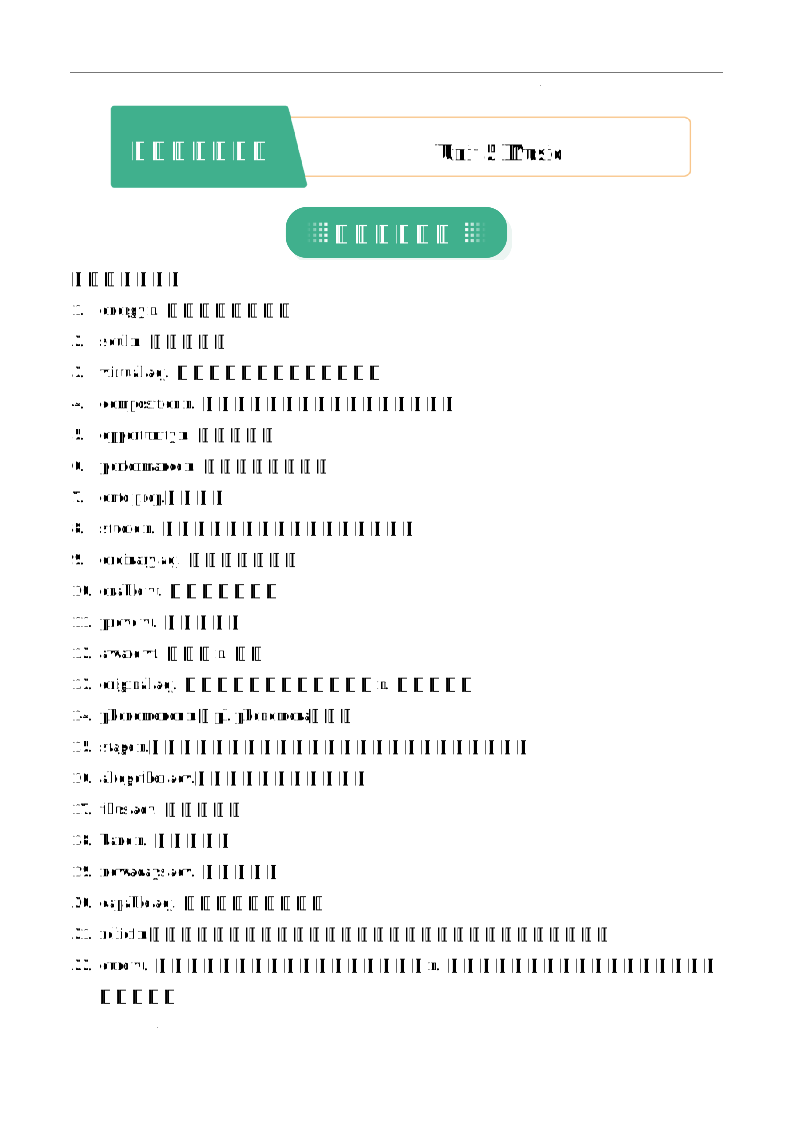
1. energy n. 能源;能量;精力
2. soul n. 灵魂;心灵
3. virtual adj. 很接近的;事实上的;虚拟的
4. composition n. 成分;(音乐、艺术、诗歌的)作品
5. opportunity n. 机会;时机
6. performance n. 表演;演技;表现
7. onto prep.(朝)向
8. studio n. 演播室;(音乐的)录音棚;工作室
9. ordinary adj. 普通的;平凡的
10. enable vt. 使能够;使可能
11. prove vt. 证明;展现
12. award vt. 授予;n. 奖品
13. original adj. 原来的;独创的;原作的;n. 原件;原作
14. phenomenon n.(pl. phenomena)现象
15. stage n.(发展或进展的)时期;阶段;(多指剧场中的)舞台
16. altogether adv.(用以强调)全部;总共
17. thus adv. 如此;因此
18. band n. 乐队;带子
19. nowadays adv. 现在;目前
20. capable adj. 有能力的;有才能的
21. relief n.(焦虑、痛苦的)减轻或消除;(不快过后的)宽慰、轻松或解脱
22. cure vt. 治愈;治好(疾病);解决(问题);n. 药物;治疗;(解决问题、改善糟糕情况的)措施
23. previous adj. 先前的;以往的
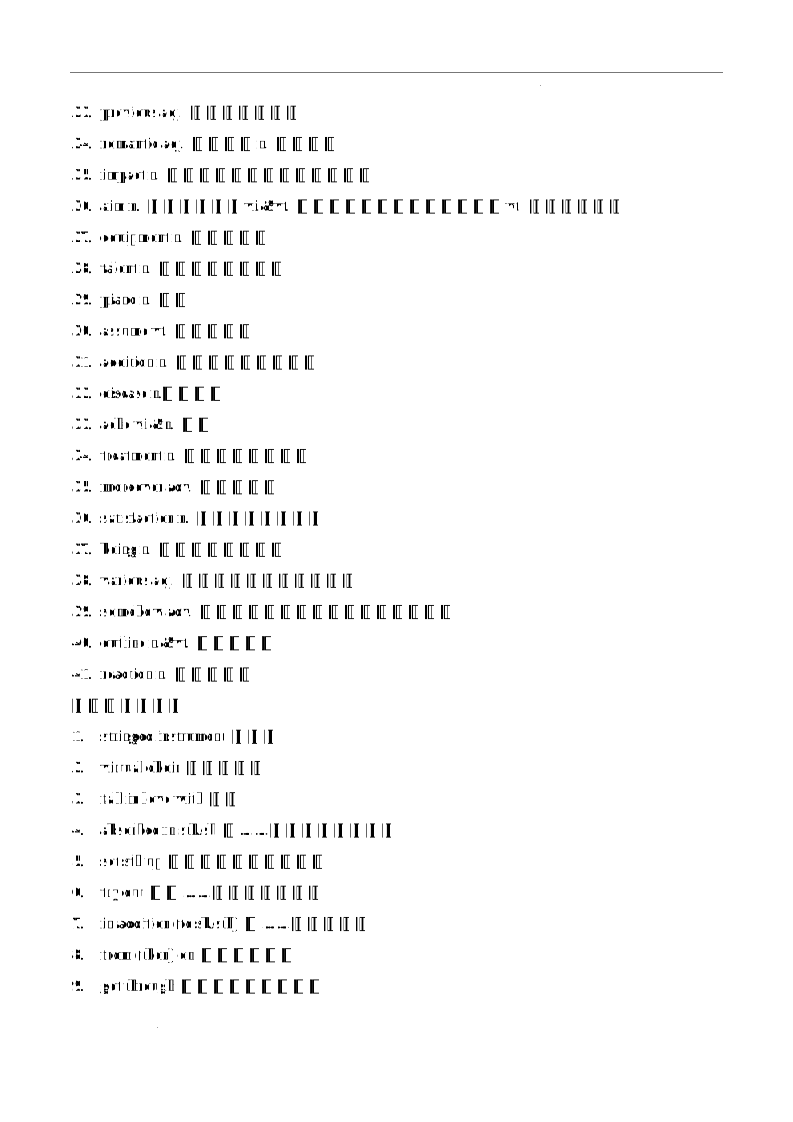
24. romantic adj. 浪漫的;n. 浪漫的人
25. impact n. 巨大影响;强大作用;冲击力
26. aim n. 目的;目标;vi.&vt. 力求达到;力争做到;瞄准;vt. 目的是;旨在
27. equipment n. 设备;装备
28. talent n. 天才;天资;天赋
29. piano n. 钢琴
30. assume vt. 以为;假设
31. addition n. 添加;加法;增加物
32. disease n.(疾)病
33. ache vi.&n. 疼痛
34. treatment n. 治疗;对待;处理
35. moreover adv. 而且;此外
36. satisfaction n. 满足;满意;欣慰
37. being n. 身心;存在;生物
38. various adj. 各种不同的;各种各样的
39. somehow adv. 以某种方式(或方法);不知怎么地
40. outline n.&vt. 概述;概要
41. reaction n. 反应;回应
(二)重点短语
1. stringed instrument 弦乐器
2. virtual choir 虚拟合唱团
3. fall in love with 爱上
4. absorbed in sth/sb 被……吸引住;专心致志
5. set sth up 安装好(设备或机器)
6. try out 参加……选拔(或试演)
7. in addition (to sb/sth) 除……以外(还)
8. from (then) on 从(那)时起
9. get through (设法)处理;完成
10. be capable of 能够
11. make a difference 有影响;起作用
12. remind sb of sb/sth 使某人想起
13. various kinds of 各种各样的
14. be familiar with 熟悉
15. have an impact on 对……有影响
16. aim to 旨在;目的是
17. at the same time 同时
18. give up 放弃
19. be proud of 为……感到骄傲
20. not only... but also... 不但……而且……
(三)重点句型
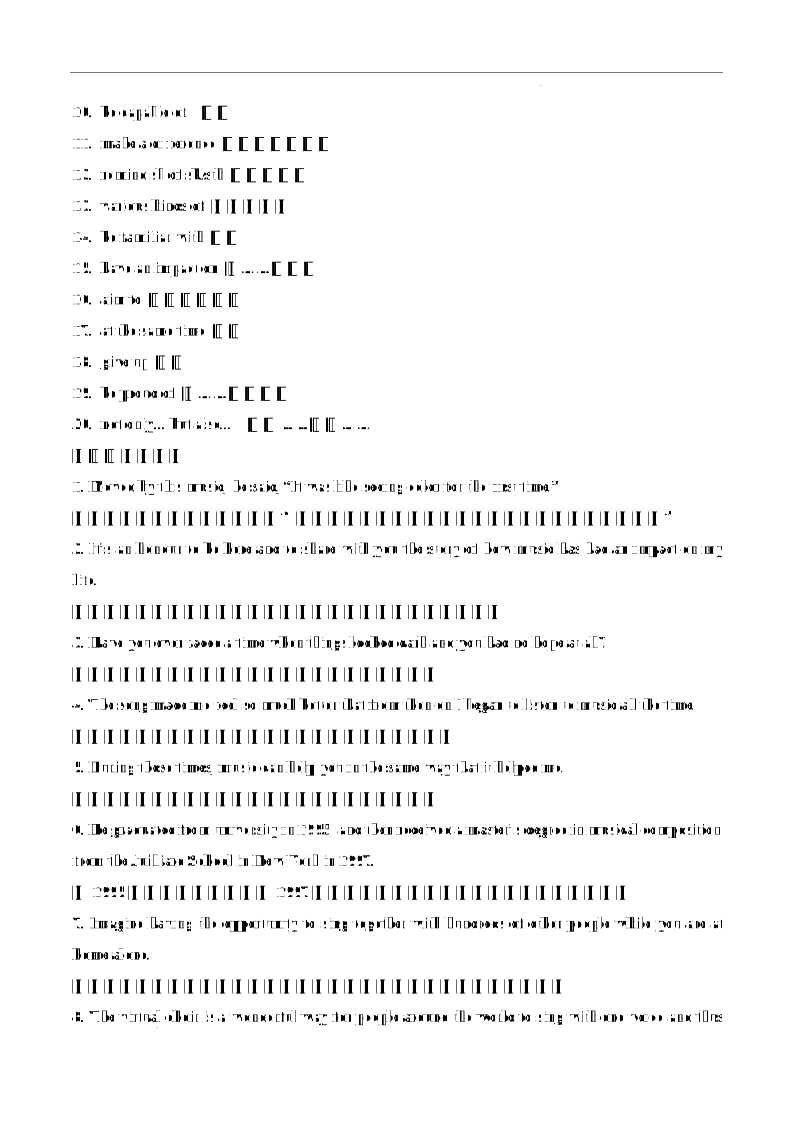
1. Moved by this music, he said, “It was like seeing color for the first time.”
他被这段音乐打动了,他说:“那种(兴奋的)感觉就如同是第一次看见色彩一样。”
2. It’s an honour to be here and to share with you the story of how music has had an impact on my life.
非常荣幸来到这里与大家分享音乐是如何影响了我的人生的。
3. Have you ever faced a time when things looked dark and you had no hope at all?
你是否曾经经历过黯淡无光、万念俱灰的一段时光?
4. The song made me feel so much better that from then on I began to listen to music all the time.
这首歌让我感觉好多了,从那以后我开始一直听音乐。
5. During those times, music can help you in the same way that it helped me.
在那时,音乐可以帮助你,就像它曾经帮助我一样。
6. He graduated from university in 1995, and then received a master’s degree in musical composition from the Juilliard School in New York in 1997.
他1995年大学毕业,随后于1997年获纽约茱莉亚音乐学院音乐创作硕士学位。
7. Imagine having the opportunity to sing together with hundreds of other people while you are at home alone.
想象一下,当你独自一人在家的时候,有机会和其他数百人一起唱歌。
8. The virtual choir is a wonderful way for people around the world to sing with one voice and thus make the world a better place.
虚拟合唱团是全世界人们用一个声音唱歌的好方法,从而使世界变得更好。
9. Even though he could not hear with his ears, he could still write music because he could hear music in his head.
尽管他不能用耳朵听,但他仍然可以写音乐因为他可以在脑子里听音乐。
易混易错清单
(一)opportunity
opportunity n. 机会;时机
opportunity of/for... ……的机会
offer/get/miss/lose/seize an opportunity 提供/得到/错过/失去/抓住机会
take the/this opportunity to do sth. 利用这个机会做某事
She finally got the opportunity of studying abroad after years of hard work.
经过多年努力,她终于得到了出国留学的机会。
The company offers young people many opportunities for career development.
这家公司为年轻人提供了很多职业发展的机会。
He missed the opportunity to interview the famous scientist because of the traffic jam.
因为堵车,他错过了采访那位著名科学家的机会。
I’d like to take this opportunity to thank everyone who supported me during the project.
我想借此机会感谢所有在项目期间支持我的人。
(二)relief
relief n. (焦虑、痛的)减轻或消除;(不快过后的)宽慰、轻松或解脱
in relief 如释重负;松了口气
to one’s relief 令某人欣慰的是
much to one's relief/to one's great relief 令某人非常欣慰的是
relieve vt. 减轻,缓解
When she heard the exam results were good, she sighed in relief.
听到考试成绩不错,她松了口气叹了口气。
To my relief, the missing cat was found safe and sound.
令我欣慰的是,那只走失的猫安然无恙地找到了。
Much to his relief, his application for the scholarship was approved.
令他非常欣慰的是,他的奖学金申请被批准了。
This medicine can relieve the pain in your knees effectively.
这种药能有效缓解你膝盖的疼痛。
(三)cure vs treat vs heal
cure:侧重“根治疾病、解决根本问题”,强调“结果痊愈”;
treat:侧重“对疾病进行医疗处理”,强调“治疗过程”,不必然指向痊愈;
heal:侧重“伤口愈合、身心康复”,可指身体创伤或心理创伤的恢复。
Doctors finally cured his chronic disease after years of research and treatment.
经过多年的研究和治疗,医生终于治好了他的慢性病。
There is no known cure for this rare genetic disorder yet.
目前尚无治疗这种罕见遗传病的已知疗法。
The doctor treated her fever with antibiotics and advised her to rest more.
医生用抗生素为她治疗发烧,并建议她多休息。
She underwent a long course of treatment for her back injury.
她因背部受伤接受了长期治疗。
The cut on her hand healed quickly with proper care, leaving no scar.
经过妥善护理,她手上的伤口很快愈合了,没有留下疤痕。
Time heals all wounds.
时间能治愈一切伤痛。
(四)be/get absorbed in sth./sb.
be/get absorbed in sth./sb. 被……吸引住
absorb one’s attention (=attract one’s attention) 吸引某人的注意力
absorb oneself in (=be absorbed in) 全神贯注于,专注于
absorb...into... 把……吸收进……,将……并入……
She was so absorbed in the novel that she didn’t hear the doorbell.
她太专注于那本小说了,连门铃响都没听见。
The colorful fireworks absorbed everyone’s attention as soon as they lit up the sky.
彩色烟花一照亮天空,就吸引了所有人的注意力。
He often absorbs himself in painting on weekends — it’s his favorite hobby.
他周末经常沉浸在绘画中,这是他最喜欢的爱好。
The small company was absorbed into a large enterprise last year.
这家小公司去年被一家大型企业并购了。
(五)aim
aim v. 力求达到,瞄准;目的是,旨在 n.目的;目标
aim to do sth./aim at doing sth. 力求做某事
aim (sth.) at... (使某物)针对某人;(用某物)瞄准某物
be aimed at (doing) sth. 旨在……;目的是……
achieve one's aim 达到某人的目的/目标
take aim at 瞄准……
aimless adj. 漫无目的的
The team aims to finish the project ahead of schedule / aims at finishing the project ahead of schedule.
这个团队力求提前完成项目。
The speaker aimed his remarks at the young people in the audience.
演讲者的话是针对听众中的年轻人说的。
She aimed the camera at the beautiful sunset and pressed the shutter.
她把相机对准美丽的日落,按下了快门。
This training program is aimed at improving employees’ communication skills.
这个培训项目旨在提升员工的沟通能力。
After years of hard work, she finally achieved her aim of becoming a doctor.
经过多年努力,她终于实现了成为一名医生的目标。
The hunter took careful aim at the deer before pulling the trigger.
猎人仔细瞄准鹿后,扣动了扳机。
He wandered aimlessly around the city all afternoon, not knowing where to go.
他整个下午漫无目的地在城里闲逛,不知道要去哪里。
(六)equipment
equipment n. 设备;装备
equip vt. 装备,配备;使能够胜任
equip...with... 给……配备……
be equipped with 装有……;具备……
equip sb. for sth. 使某人胜任某事
The school equipped each classroom with interactive whiteboards to improve teaching efficiency.
学校给每个教室配备了交互式白板,以提升教学效率。
This new laboratory is equipped with advanced instruments for scientific research.
这个新实验室装有用于科学研究的先进设备。
Years of practical experience equipped her for the challenging role of project manager.
多年的实践经验使她胜任项目经理这一具有挑战性的职位。
(七)talent
talent n. 天才;天资;天赋
have a talent for 在……方面有天赋
show a talent for 展现出……方面的天赋
show talent in 在……展现天分
be talented/gifted in/at 在……方面有天赋
She has a natural talent for playing the piano — she can play difficult pieces without much practice.她在弹钢琴方面有天生的天赋,不用太多练习就能弹奏难度高的曲子。
The little boy showed a talent for painting when he was only three years old.
这个小男孩在三岁时就展现出了绘画方面的天赋。
He never took formal acting lessons, but he shows great talent in performing on stage.
他从没上过正规的表演课,却在舞台表演中展现出极强的天分。
My cousin is talented in writing — her essays often win awards in school competitions.
我表姐在写作方面有天赋,她的作文经常在学校比赛中获奖。
(八)assume
assume v. 以为;假设
assume...to be/as... 假定……是……,认定……是……
It is assumed that... 据推测……
assuming conj. 假定,假设
assumption n. 假定,假设
make an assumption 作出假设认为
They assumed her to be an expert in environmental protection because of her rich experience.
由于她经验丰富,他们认定她是环境保护方面的专家。
It is assumed that the new policy will help reduce traffic congestion in the city center.
据推测,这项新政策将有助于缓解市中心的交通拥堵。
Assuming the weather is good, we’ll have a picnic by the lake this weekend.
假定天气晴好,我们这周末去湖边野餐。
His assumption that everyone would agree with his plan turned out to be wrong.
他认为所有人都会同意他计划的假设,结果证明是错误的。
Before conducting the experiment, the researchers made an assumption about the possible results.
进行实验前,研究人员对可能的结果作出了假设。
(九)satisfaction
satisfaction n. 满意;欣慰;令人满意的事物
with satisfaction 满足地
to one's satisfaction = to the satisfaction of sb. 使某人满意
satisfy v. 满足;使满意;使确信;向……证实
be satisfied to do sth 乐意做某事
be satisfied with... 对……感到满意
She nodded with satisfaction after reading her students’ well-written essays.
读完学生们写得很好的作文后,她满意地点了点头。
To our great satisfaction, the team completed the task perfectly ahead of time.
令我们非常满意的是,团队提前圆满完成了任务。
The hotel’s thoughtful service satisfied all the guests’ needs during their stay.
酒店周到的服务满足了所有客人住宿期间的需求。
He is satisfied to help others solve problems — it makes him feel meaningful.
他乐意帮别人解决问题,这让他觉得很有意义。
My parents are satisfied with my recent academic progress at school.
我父母对我最近在学校的学业进步感到满意。
(十)various
various adj. 各种不同的;各种各样的
vary v. 变化;使相异
vary with 随……而变化
vary from... to... 从……到……转变
vary in 在……方面相异
variety n. 种类品种;多样性
a variety of = varieties of 各种各样的
The price of fresh fruit varies with the season — it’s cheaper when fruits are in harvest.
新鲜水果的价格随季节变化,丰收时更便宜。
Temperatures in this region vary from 10℃ to 25℃ in spring, so you need to dress in layers.
这个地区春天的气温从 10℃到 25℃不等,所以要穿分层衣物。
These flowers vary in color and size — some are bright red, others are pale pink.
这些花在颜色和大小上各不相同,有的鲜红,有的淡粉。
The store sells a variety of organic vegetables, from carrots to spinach.
这家店售卖各种各样的有机蔬菜,从胡萝卜到菠菜都有。
Varieties of traditional crafts are displayed in the local museum, showing the area’s cultural heritage.
当地博物馆展出了多种传统手工艺品,展现了该地区的文化遗产。
(十一)reaction
reaction n. 反应;回应
in reaction to 针对……的反应
react vi. 回应;抗拒;发生反应
react to 对……作出反应;回应
react with 与……起化学反应
react on/upon 影响,起作用
react against 反抗对抗
In reaction to the public’s concerns, the government announced new measures to improve food safety.
针对公众的担忧,政府宣布了新的食品安全改进措施。
She didn’t react to his rude comments at all — she just smiled and walked away.
她对他无礼的言论毫无反应,只是笑了笑就走开了。
When iron reacts with oxygen and water, it rusts gradually over time.
铁与氧气和水发生化学反应时,会逐渐生锈。
The economic crisis reacted upon people’s spending habits, making them more cautious with money.
经济危机影响了人们的消费习惯,让他们花钱更谨慎。
Young people often react against strict rules, eager to pursue more freedom.
年轻人常常反抗严格的规定,渴望追求更多自由。
(十二)ordinary vs common vs usual
ordinary:侧重“平凡无特色,无突出之处”,强调“不特殊”,可用于形容人、事物、生活等;
common:侧重“常见的、普遍存在的”,强调“出现频率高”,搭配“common phenomenon(常见现象)”“common sense(常识);
usual:侧重“习惯性的、常规的”,强调“符合日常规律”,搭配“as usual(像往常一样)”。
He leads an ordinary life in a small town, working as a teacher and enjoying reading in his spare time.
他在小镇过着平凡的生活,当老师,闲暇时喜欢读书。
Air pollution is a common problem in many big cities, affecting people’s health.
空气污染是许多大城市的常见问题,影响着人们的健康。
She arrived at the office at her usual time, 8 o’clock sharp, with a cup of coffee.
她像往常一样 8 点整到办公室,手里拿着一杯咖啡。
(十三)enable vs allow vs permit
enable:侧重“通过提供条件、工具等使某人具备做某事的能力”,无“许可”意味,搭配“enable sb to do sth(使某人能做某事)”;
allow:侧重“主动同意、许可某人做某事”,语气较口语化,使用最广,搭配“allow sb to do sth /allow doing sth(允许做某事)”;
permit:侧重“依据规则、规定允许”,语气更正式,常见于书面语,搭配“permit sb to do sth /permit doing sth(允许做某事)”。
Advanced technology enables remote work, letting people cooperate without being in the same office.
先进技术使远程工作成为可能,让人们无需在同一办公室就能协作。
My parents allow me to travel alone during holidays, as long as I keep them updated.
父母允许我假期独自旅行,只要我及时向他们报备情况。
The rules of the library do not permit eating or drinking in the reading area.
图书馆规定不允许在阅览区进食或饮水。
(十四)aim vs goal vs purpose
aim:侧重“短期目标、行动意图”,搭配“aim to do sth(旨在做某事)、aim at(瞄准;针对)”;
goal:侧重“长期目标、需要努力达成的具体结果”,多与个人发展、事业相关;
purpose:侧重“做某事的核心目的、意图”,强调“为什么做”,搭配“on purpose(故意地)、for the purpose of(为了……目的)”。
The aim of this project is to promote cultural exchange between different countries.
这个项目的目的是促进各国之间的文化交流。
Her lifelong goal is to establish a charity organization to help homeless children.
她的毕生目标是成立一个慈善组织,帮助无家可归的儿童。
What is the real purpose of his visit? No one seems to know for sure.
他这次来访的真正目的是什么?似乎没人确切知道。
(十五)in addition vs besides vs except vs except for
in addition (to):表“除……之外还有”,补充同类内容,可单独使用或接名词;
besides:表“除……之外还有”,补充同类内容,可接名词或句子,可置于句首、句中或句末;
except:表“除……之外”,排除同类内容,接名词、代词或从句;
except for:表“除……之外”,排除不同类的“例外情况”,使整体描述更准确。
In addition to his academic achievements, he is also good at playing musical instruments.
除了学业成绩优异,他还擅长演奏乐器。
Besides English, she can also speak French and German fluently.
除了英语,她还能流利地说法语和德语。
All students passed the exam except Tom, who was absent due to illness.
除了因病缺席的汤姆,所有学生都通过了考试。
The article is well-written except for a few small grammar mistakes.
这篇文章写得很好,除了几处小的语法错误。
(十六)Imagine having the opportunity to sing together with hundreds of other people while you are at home alone.
想象一下,当你独自一人在家的时候,有机会和其他数百人一起唱歌。
祈使句
基本形式:祈使句以动词原形直接开头,省略主语“you”,用于直接向对方发出指令或请求。
命令:Close the door, please. 请关上门。
请求:Pass me the salt. 把盐递给我。
劝告:Eat more vegetables to stay healthy. 多吃蔬菜保持健康。
“祈使句+and/or +陈述句”结构
祈使句表“条件”,陈述句表“结果”,陈述句谓语常用一般将来时。
and表“顺承结果”:Work hard, and you will achieve your dream. 努力工作,你就会实现梦想。
or表“转折结果”:Hurry up, or you will miss the train. 快点,否则你会错过火车。
“名词短语+ and/or +陈述句”结构
名词短语是省略的祈使句(隐含“do sth.”的语义)。
A cup of coffee, and you will feel refreshed. 来杯咖啡,你就会神清气爽。
One more try, or you will regret it. 再试一次,否则你会后悔。
强调形式:“do+动词原形”
在动词原形前加“do”,表“务必、一定”,语气更强烈。
Do remember to call me when you arrive. 你到了务必给我打电话。
Do be careful when crossing the street. 过马路时一定要小心。
(十七)The virtual choir is a wonderful way for people around the world to sing with one voice and thus make the world a better place.
虚拟合唱团是全世界人们用一个声音唱歌的好方法,从而使世界变得更好。
make+宾语+宾语补足语(名词/形容词/过去分词/不定式)
The new policy made him a popular leader overnight. 新政策让他一夜之间成了受欢迎的领袖。
This decision will make our team stronger and more united.
这个决定会让我们团队更强大、更团结。
The loud music made her annoyed during the study. 学习时,大声的音乐让她很烦躁。
He spoke loudly to make himself heard in the noisy room.
在嘈杂的房间里,他大声说话以便让自己被听到。
Her story made us laugh uncontrollably. 她的故事让我们忍不住大笑。
“make it+形容词+真正宾语”结构
当宾补后接不定式(短语)或 that 从句时,常用it作形式宾语,将真正的宾语后置。
I find it necessary to learn a second language. 我发现学一门第二语言很有必要。
We make it clear that we support your decision. 我们明确表示支持你的决定。
表示职务的名词(如manager, monitor, president 等)作宾补时,前面不加冠词。
We made her chairperson of the club. 我们选她为俱乐部主席。
(十八)During those times, music can help you in the same way that it helped me.
在那些时期,音乐可以帮助你,就像它帮助我一样。
in the same way that...意为“就像……;正如……”,其中“that”引导定语从句修饰“way”,用于类比两种动作或状态的相似性。
She cares about her students in the same way that a mother cares about her children.
她关心学生就像母亲关心孩子一样。
We should solve this problem in the same way that we solved the last one.
我们应该像解决上一个问题那样解决这个问题。
“the way”可直接作连词引导方式状语从句,语义与“in the same way that...”一致,更简洁。
He walks the way his father did when he was young.
他走路的样子就像他父亲年轻时那样。
You should complete the task the way I showed you yesterday.
你应该按照我昨天教你的方式完成任务。
(十九)Even though he could not hear with his ears, he could still write music because he could hear music in his head.
尽管他不能用耳朵听,但他仍然可以写音乐因为他可以在脑子里听音乐。
even though/if引导的让步状语从句
“even though”与“even if”语义基本一致,均可引导让步状语从句,表“让步(事实/假设)”。
Even though she was tired, she finished the report on time.
尽管她很累,还是按时完成了报告。
Even if it rains tomorrow, we will still go hiking.
即使明天下雨,我们还是会去徒步。
“even if/though”引导的从句中,可用一般现在时代替一般将来时,表“对未来的假设”。
Even if you fail the exam, don’t lose heart.
即使你考试不及格,也别灰心。
Even though he doesn’t come tomorrow, the meeting will go on.
即使他明天不来,会议也会继续。
重难知识清单
(一)重点语法
过去分词作表语
1. 核心含义
表示主语的心理感觉或所处的状态,常与be动词、feel、seem等系动词搭配。
After solving the tough problem, he felt relaxed and confident.
解出这道难题后,他感到放松又自信。
The door has been closed for hours — no one can get in now.
门已经关了好几个小时了,现在没人能进去。
2. “get+过去分词”结构
表被动动作(强调动作发生):
The letter got sent by express mail yesterday.
这封信昨天通过快递寄出去了。
表状态变化(强调结果):
She got injured while playing basketball with her friends.
她和朋友打篮球时受伤了。
3. 过去分词作表语时与被动语态的区别
过去分词作表语时,强调主语所处的状态;而动词的被动语态表示主语是动作的承受者,强调动作。
The shop is closed on Mondays. 这家店周一休息。
The shop was closed by the manager last night. 这家店昨晚被经理关了。
4. 有些过去分词作表语时,相当于形容词,且大部分已转化为形容词,常见的有:
delighted, disappointed, discouraged, drunk, amused, astonished, interested, crowded, tired, satisfied, pleased, surprised, worried, excited, married, puzzled等。
The parents were delighted with their son’s excellent exam results.
父母对儿子优异的考试成绩感到高兴。
He looked puzzled when he heard the unexpected news.
听到这个意外的消息,他显得很困惑。
5. 充当形容词的动词-ing形式和过去分词的区别
动词-ing形式一般具有主动意义,表示“起某种作用”,多用于说明事物本身的性质、特征及给人的感觉,常译为“令人……的”;过去分词一般具有被动意义,表示“受某种影响”,多用于形容人的感觉,常译为“感到……的”。
This is an interesting book — I can’t put it down. 这是一本有趣的书,我放不下它。
We are interested in the history of ancient civilizations. 我们对古代文明史感兴趣。
过去分词作状语
过去分词作状语时,与句子主语构成逻辑动宾关系,可表示时间、原因、条件、方式、伴随、让步等,相当于对应的状语从句。
1. 原因状语
Moved by her selfless help, he decided to volunteer at the community center.
被她无私的帮助所感动,他决定去社区中心做志愿者。
2. 时间状语
Asked about his dream job, the boy said he wanted to be a scientist.
当被问及理想的工作时,男孩说他想成为一名科学家。
3. 条件状语
Given more practice, you will surely improve your spoken English.
如果多练习,你的英语口语肯定会提高。
4. 方式或伴随状语
Dressed in a traditional costume, she attended the cultural festival.
她穿着传统服饰参加了文化节。
Guided by the local villager, we found the hidden waterfall easily.
在当地村民的指引下,我们轻松找到了那处隐藏的瀑布。
5. 让步状语
Though defeated many times, he never gave up his pursuit of success.
尽管失败了很多次,他从未放弃对成功的追求。
6. 过去分词与现在分词作状语的区别
(1)逻辑关系
过去分词作状语时,过去分词所表示的动作与句子主语之间构成逻辑上的动宾关系。
Seen from the top of the mountain, the city looks more beautiful.
从山顶望去,这座城市看起来更漂亮了。
现在分词作状语时,现在分词所表示的动作与句子主语之间构成逻辑上的主谓关系。
Seeing the city from the top of the mountain, we felt proud.
从山顶看到这座城市,我们感到很自豪。
(2)时间概念
过去分词所表示的动作发生在谓语动作之前,或表示“一种状态”,与谓语动作同时发生或存在。现在分词的一般式(doing)表示的动作与谓语动作同时发生或在说话时正在进行。
Written with great care, the report was highly praised by the leader.
这份报告写得很用心,受到了领导的高度赞扬。
Walking along the river, we enjoyed the cool breeze. 沿着河边散步时,我们享受着凉爽的微风。
注意:部分过去分词来源于系表结构,作状语时不表示“被动关系”,其前不用being。常见的这种过去分词及短语有:lost in (陷入)、seated(坐着)、hidden(躲着)、lost/absorbed(沉溺于)、born in(出生于)、dressed in(穿着)、tired of(厌烦)等。
独立主格结构
非谓语动词作状语时,它的逻辑主语应和句子主语保持一致。但有时非谓语动词带有自己的逻辑主语,我们称之为独立主格结构,在句中作状语。
1. 独立主格结构的特点:
①逻辑主语与句子主语不同,独立存在;
②逻辑主语与后面的分词 / 不定式是主谓或动宾关系;
③用逗号与句子隔开,作状语(表时间、原因、条件等)。
2. 独立主格结构的构成:
①名词/代词+分词
The meeting finished, everyone went back to their work. 会议结束后,大家都回到了工作岗位。
②名词/代词+不定式
There being no bus, we had to walk home. 没有公交车,我们只好步行回家。
③with/without+名词/代词+分词
With the work done, we can finally have a rest. 工作完成了,我们终于可以休息了。
④特殊形式(名词+形容词/介词短语)
Weather permitting, we will have a picnic in the park this Sunday.
天气允许的话,我们这周日去公园野餐。
(二)写作指导
如何写演讲稿
本单元的写作任务是写一篇演讲稿。演讲稿属于应用文的一种,是为演讲准备的书面材料,通常用于对人们普遍关注的事物或问题发表意见、提出建议、发起倡议等。
1. 写作结构规划
(1)称呼:点明听众。最常用的是Ladies and gentlemen,也可根据不同情况,选用Fellow students,Distinguished guests,Mr Chairman,Honorable Judges(评委)等等。
(2)主体:点明主题,分析问题,根据具体问题提出具体的解决办法。该部分通常可分为两个段落来写:第一段指出演讲的主题,第二段分析具体问题,并给出解决办法。
(3)结尾:回扣主题,发起倡议。切记结尾一定要简洁,不要拉拉扯扯,说个没完。特别是不要受汉语影响,说些类似“准备不足,请谅解”“请批评指正”这样的废话。最普通的结尾就是:Thank you very much for your attention.
2. 常用表达
Ladies and gentlemen (Dear teachers and schoolmates), I’m Li Ming. I’m greatly honored to speak here on behalf of my school.
Good morning/afternoon/evening, everybody! Thank you for being on time/making the effort to come today.
Thank you for giving me the opportunity to make a speech about...
Today’s topic is...
Today we are here to talk about...
I’m going to talk about something that is vitally important to all of us.
We all ought to be aware of the following points.
I hope I have made myself understood.
I hope you have found this useful.
I believe the future of...is promising through the efforts of us all.
Just as the saying goes, “Individuals together can make quite a difference.” I’m greatly convinced that the world will be a more harmonious one (it will be a great success) through the joint efforts of all of us.
That’s all. Thank you for your listening/attention.
单元框架清单
学科网(北京)股份有限公司
$
资源预览图
1
2
3
相关资源
由于学科网是一个信息分享及获取的平台,不确保部分用户上传资料的 来源及知识产权归属。如您发现相关资料侵犯您的合法权益,请联系学科网,我们核实后将及时进行处理。