专题 Units 4~6 重点词汇句型语法&写作通用表达(期末复习知识清单)七年级英语上学期新教材外研版
2025-12-17
|
2份
|
51页
|
1613人阅读
|
57人下载
精品
资源信息
| 学段 | 初中 |
|---|---|
| 学科 | 英语 |
| 教材版本 | 初中英语外研版七年级上册 |
| 年级 | 七年级 |
| 章节 | - |
| 类型 | 学案-知识清单 |
| 知识点 | - |
| 使用场景 | 同步教学-期末 |
| 学年 | 2025-2026 |
| 地区(省份) | 全国 |
| 地区(市) | - |
| 地区(区县) | - |
| 文件格式 | ZIP |
| 文件大小 | 667 KB |
| 发布时间 | 2025-12-17 |
| 更新时间 | 2025-12-20 |
| 作者 | xkw_027340698 |
| 品牌系列 | 上好课·考点大串讲 |
| 审核时间 | 2025-12-17 |
| 下载链接 | https://m.zxxk.com/soft/55472111.html |
| 价格 | 4.00储值(1储值=1元) |
| 来源 | 学科网 |
摘要:
该初中英语单元知识清单系统整合Units 4-6内容,涵盖节日、植物、动物三大主题,包含词汇(分词性、音标、变形)、短语、句型、语法(频率副词等)及写作模块,搭建从基础词汇到语法应用再到写作输出的递进式学习支架。
清单通过“词性分类表”“语法对比表格”“写作模板句”构建知识体系,如重点词汇词性转换表呈现pollution-pollute等关联,语法部分用频率占比表解析副词用法,培养语言能力与思维品质。设计重点句型填空、易错点提示(如现在进行时双写规则),不同学生可高效记忆,教师可据此设计分层教学,提升课堂实效。
内容正文:
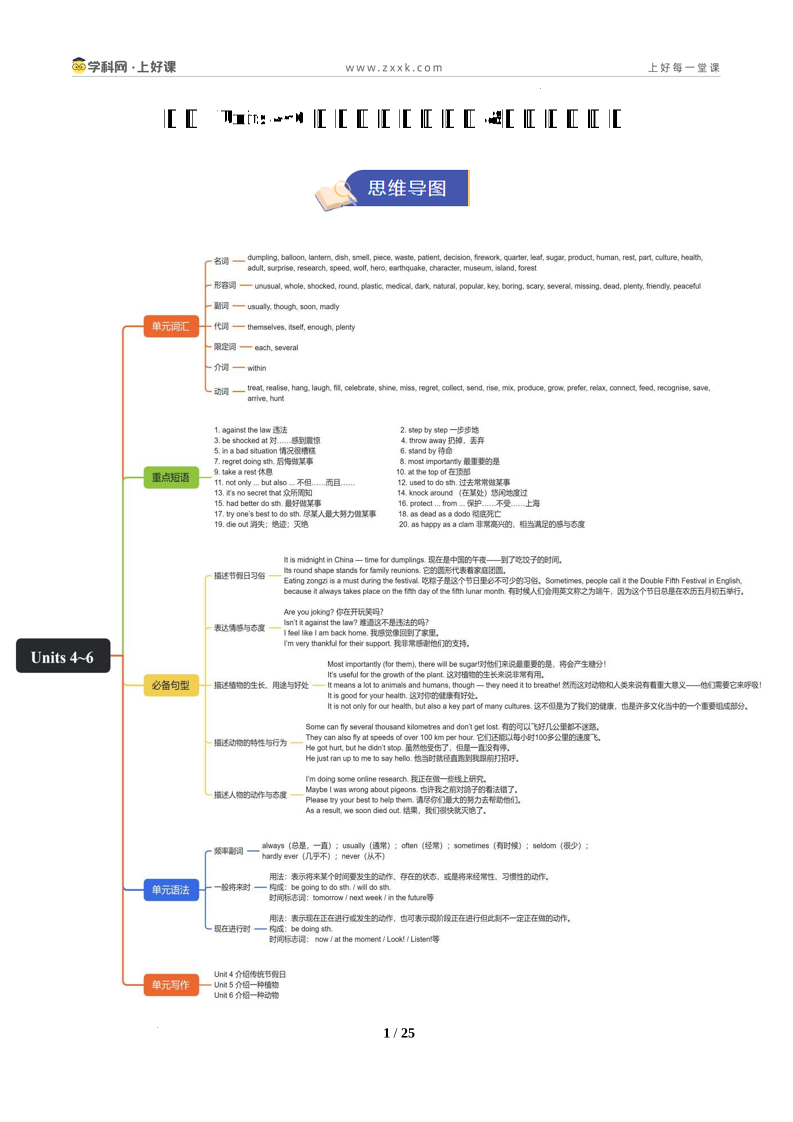
专题 Units 4~6 重点词汇句型语法&写作通用表达
Unit 4 Time to celebrate
重点单词
词性
单词
音标
词义
变形/复数
名词
university
/ˌjuːnɪˈvɜːsəti/
大学
复数:universities
dumpling
/ˈdʌmplɪŋ/
水饺
cucumber
/ˈkjuːkʌmbə/
黄瓜
balloon
/bəˈluːn/
气球
lantern
/ˈlæntən/
灯笼;提灯
dish
/dɪʃ/
(烹制好的)菜肴,
一道菜
复数:dishes
pork
/pɔːk/
猪肉
shape
/ʃeɪp/
形,形状,外形
reunion
/ˌriːˈjuːniən/
团圆,团聚
piece
/piːs/
块,片,段,截
knife
/naɪf/
刀
复数:knives
smell
/smel/
气味
Christmas
/ˈkrɪsməs/
圣诞节(期间)
waste
/weɪst/
废料,废弃物
pollution
/pəˈluːʃn/
污染
动词:pollute
meal
/miːl/
一餐,饭
duty
/ˈdjuːti/
职责,义务
break
/breɪk/
中断,暂停
emergency
/iˈmɜːdʒənsi/
紧急情况,不测事件
challenge
/ˈtʃælɪndʒ/
挑战,
具有挑战性的事物
patient
/ˈpeɪʃnt/
病人,患者
situation
/ˌsɪtʃuˈeɪʃn/
形势,情况,状况,局面
decision
/dɪˈsɪʒn/
决定,抉择
动词:decide
support
/səˈpɔːt/
支持
firework
/ˈfaɪəwɜːk/
烟火,烟花
复数:fireworks
形容词
unusual
/ʌnˈjuːʒuəl/
不平常的
反义词:usual
whole
/həʊl/
整个的,全部的
shocked
/ʃɒkt/
吃惊的,震惊的
round
/raʊnd/
圆形的,环形的
plastic
/ˈplæstɪk/
塑料制的
thirsty
/ˈθɜːsti/
渴的,口渴的
medical
/ˈmedɪkl/
医学的,医疗的
名词:medicine
副词
always
/ˈɔːlweɪz/
总是
usually
/ˈjuːʒuəli/
通常
often
/ˈɒfn/
经常
seldom
/ˈseldəm/
很少
hardly
/ˈhɑːdli/
几乎不
never
/ˈnevə/
从不
动词
treat
/triːt/
请客,款待,招待
名词:treatment
realise
/ˈrɪəlaɪz/
知道,明白,认识到
名词:realisation
hang
/hæŋ/
悬挂
过去式:hung
过去分词:hung
joke
/dʒəʊk/
说笑话,开玩笑
现在分词:joking
laugh
/lɑːf/
发出笑声,(大)笑
名词:laughter
fill
/fɪl/
弥漫,充满
celebrate
/ˈselɪbreɪt/
庆祝
名词:celebration
shine
/ʃaɪn/
发光,发亮
过去式:shined/shone
过去分词:shined/shone
miss
/mɪs/
错过
形容词:missing
regret
/rɪˈɡret/
后悔(做了某事),
对……感到遗憾
过去式:regretted
过去分词:regretted
重点词汇词性转换
1. unusual adj. 不平常的 → usual adj. 通常的;寻常的 → usually adv. 通常
2. treat v. 请客;款待;招待 → treatment n. 对待;治疗;处理
3. dish n. (烹制好的)菜肴;一道菜 → dishes 复数
4. knife n. 刀 → knives 复数
5. waste n. 废料;废弃物 → wasteful adj. 浪费的;挥霍的 → wasteless adj. 无穷无尽的
6. pollution n. 污染 → pollute v. 污染 → polluted adj. 受污染的
7. celebrate v. 庆祝 → celebration n. 庆祝;庆祝活动
8. emergency n. 紧急情况;不测时间 → emergent adj. 新兴的;处于发展初期的
9. miss v. 错过 → missing adj. 失踪的;不在的
10. challenge n. 挑战;具有挑战性的事物 → challenging adj. 具有挑战性的
11. patient n. 病人 → patiently adv. 耐心地 → patience n. 耐心
12. regret v. 后悔(做了某事);对……感到遗憾 → regretful adj. 遗憾的;后悔的 → regretless adj. 无悔的
13. decision n. 决定;抉择 → decide v. 决定
14. medical adj. 医学的;医疗的 → medicine n. 药;医学
重点短语
有限公1 / 1
学科网(北京)股份有限公司
1. around the world 全世界
2. treat sb. to sth. 请某人吃某物
3. at home 在家
4. watch sb. do sth. 看某人做某事
5. on the phone 在电话里
6. step by step 一步步地
7. in the dining room 在餐厅
8. the last dish 最后一道菜
9. against the law 违法
10. stand for 代表;象征
11. a piece of 一块;一片
12. put ... into ... 把……放进……
13. feel like 感觉就像
14. be back home 回到家
15. all by oneself 完全靠自己
16. at midnight 在午夜
17. be shocked at 对……感到震惊
18. stay up 熬夜
19. welcome to 欢迎到……
20. get to know 了解
21. in English 用英语
22. take place 发生
23. the dragon boat race 龙舟赛
24. be full of 充满
25. in the north of 在……的北方
26. in the south of 在……的南方
27. be sure to 一定
28. in the West 在西方(国家)
29. put up 搭起;张贴
30. each other 互相
31. each year 每一年
32. throw away 扔掉
33. cut down 砍伐
34. cause pollution 引起污染
35. think about 思考
36. make ... from ... 用……制成……
37. on the wall 在墙上
38. in the living room 在客厅
39. be sure about 对……有把握
40. family reunion 家庭团聚
41. in the emergency room 在急诊室
42. have to 不得不
43. without any breaks 不间断地
44. in a bad situation 情况很糟糕
45. need to do sth. 需要做某事
46. stand by 待命
47. regret doing sth. 后悔做某事
48. make the most of 充分利用
49. be thankful for 对……感激
50. millions of 数以百万计的
51. medical worker 医务工作者
52. give up 放弃
53. answer the call of duty 响应职责的召唤
54. in the heart of sb. 在某人的心中
55. in trouble 处于麻烦之中
56. take place 发生
重点句型
1. Today is the Spring Festival, so I want to treat her to a Chinese dinner. 今天是春节,所以我想请她吃一顿中餐。
2. It is midnight in China — time for dumplings. 现在是中国的午夜——到了吃饺子的时间。
3. My whole family come to help me on the phone. 全家人都在电话上帮我。
4. Step by step, they teach me. 他们一步步地教我。
5. Are you joking? 你在开玩笑吗?
6. Isn’t it against the law? 难道这不是违法的吗?
7. Its round shape stands for family reunions. 它的圆形代表着家庭团圆。
8. Emilia cuts a piece of it with her knife and puts it into her mouth. 艾米莉亚用刀切下一块,放到嘴里。
9. The smell of the dishes and the sound of our laughing fill the room. 饭菜的香气和我们的欢声笑语弥漫在整个房间。
10. I feel like I am back home. 我感觉像回到了家里。
11. Today, let’s get to know the Dragon Boat Festival! 今天,让我们来了解一下端午节。
12. Sometimes, people call it the Double Fifth Festival in English, because it always takes place on the fifth day of the fifth lunar month. 有时候人们会用英文称之为端午,因为这个节日总是在农历五月初五举行。
13. Eating zongzi is a must during the festival. 吃粽子是这个节日里必不可少的习俗。
14. Around the world, people throw away millions of turkeys. 全球各地的人们会扔掉数百万只火鸡。
15. People cut down nearly 120 million trees to use as Christmas trees. 人们为了用作圣诞树,砍伐了近 1.2 亿棵树。
16. She is much busier during festivals. 节日期间她会忙得多。
17. Sometimes she has to work without any breaks for 20 hours. 有时候她得连续工作 20 小时,中途没有任何休息。
18. Festivals are a challenge because our patients are often in a bad situation. 节日是一项挑战,因为我们的患者往往情况很糟糕。
19. We need to stand by every minute. 我们需要随时待命。
20. But she never regrets her decision to be an ER doctor. 但是她从未后悔自己成为急诊科医生的决定。
21. I’m very thankful for their support. 我非常感谢他们的支持。
22. Leng is only one of millions of medial workers in China. 冷是中国数百万医务工作者的其中一员。
23. They give up their family time to answer the call of duty. 他们放下与家人相伴的时光,响应使命的召唤。
重点语法
频率副词
频率副词是用于描述动作或事件发生频率的一类副词,它们通过具体词汇来表达行为或状态在一定时间内的频繁程度。
1. 常见频率副词及含义(按频率从高到低排序)
频率副词
中文含义
频率占比
always
总是,一直
100%(习惯性动作毫无例外)
usually
通常
80%(多数情况下如此,偶尔例外)
often
经常
60%(发生次数较多,规律性明显)
sometimes
有时
40%(偶尔发生,频率不固定)
seldom
很少,不常
20%(发生概率低,多为否定倾向)
hardly ever
几乎不
5%(接近不发生,仅极特殊情况出现)
never
从不
0%(完全不发生,表绝对否定)
2. 句中位置规则
句中位置
结构
例句
实义动词前
主语 + 频率副词 + 实义动词 + 其他
My parents always stay up during the Spring Festival. 我的父母在春节期间总是熬夜。
be动词后
主语 + be动词 + 频率副词 + 其他
The riversides are always full of people. 河边总是挤满了人。
助动词后
主语 + 助动词 + 频率副词 + 实义动词 + 其他
They have never been to Beijing.他们从没去过北京。
情态动词后
主语 + 情态动词 + 频率副词 + 实义动词 + 其他
We can usually finish homework before 9 pm. 我们通常能在晚上9点前完成作业。
特殊情况:sometimes可放句首、句中或句末,语气略有差异,但语法均正确。
句首(强调频率):Sometimes I walk to school.(有时我步行上学。)
句中(常规用法):I sometimes walk to school.
句末(口语化):I walk to school, sometimes.
3. 与时态的搭配
时态
用法
例句
一般现在时
表习惯性、经常性动作。
My mother usually cooks breakfast for us.我妈妈通常给我们做早餐。
现在完成时
表从过去到现在的动作频率,常与never, ever, already等连用。
I have never seen such a beautiful place.我从没见过这么美的地方。
单元写作通用表达&范文背诵
一、单元写作任务:介绍一个传统节日(说明文)
本单元的话题是“传统节日”,写作时一般是通过介绍该节日的基本信息,如名称、时间、地点、意义、传统庆祝方式,同时提出创新的庆祝方式,来表达自己对该节日的理解和认识。
二、通用表达
1. 通用时间表达
(1)主语 + usually + falls on + 具体时间
例句:The Lantern Festival usually falls on the fifteenth day of the first lunar month.(元宵节通常在正月十五。)
(2)主语 + is celebrated on + 具体时间
例句:Thanksgiving Day is celebrated on the fourth Thursday of November in the US.(美国的感恩节在十一月的第四个星期四。)
2. 通用地点表达
(1)主语 + 动词 + 地点状语 + 时间状语
例句:The whole family get together and have a large dinner at home on that day.(在那天,全家人在家里聚餐。)
(2)主语 + 动词 + 具体地点 + 目的状语
例句:Hundreds of people go to the riversides to watch the dragon boat race.(数以百计的人们都到河边去看龙舟赛。)
3. 通用行为表达
(1)主语 + always do sth . + 状语
例句:Grandma always makes zongzi by herself during the Dragon Boat Festival.(奶奶在端午节时总是自己包粽子。)
(2)No matter how + 形容词, 主语 + try to do sth.
例句:No matter how busy, family members try to go home for a big dinner.(无论有多忙,家人们都会尽量回家一起吃大餐。)
4. 通用感受表达
(1)主语 + makes sb. feel + 名词短语
例句:The festival makes me feel the warmth and love of my family.(这个节日使我感受到了家庭的温暖和爱。)
(2)地点 + be full of + 关于感受的名词
例句:The whole room is full of joy.(整间屋子都洋溢着欢乐。)
(3)主语 + be about more than + 名词 — it’s about + 名词短语
例句:The festival is about more than food — it’s about missing family and hoping for happiness.(这个节日不止关乎美食——更关乎思念家人与期盼幸福。)
三、范文背诵
Of all the traditional Chinese festivals, the Mid-Autumn Festival is my favorite. It falls on the 15th day of the eighth lunar month, usually in September or October. On this day, the moon is the roundest and brightest, so it’s also called the Moon Festival.
Family reunion is its most important tradition. No matter how busy, family members try to go home for a big dinner. My mom cooks delicious food like fresh fish and chicken. After that, we sit in the yard, enjoy the full moon and eat mooncakes. Mooncakes are round like the moon. They have different fillings. I prefer sweet ones.
Grandma often tells me the story of “Chang'e Flying to the Moon” under the moon. The festival is about more than food — it’s about missing family and hoping for happiness. If some family can’t return, we have video calls while watching the moon. The festival makes me feel the warmth and love of my family. I love it and look forward to it every year.
Unit 5 The power of plants
重点单词
词性
单词
音标
词义
变形/复数
名词
quarter
/ˈkwɔ:tə/
一刻钟,十五分钟
workshop
/ˈwɜ:kʃɒp/
车间,工场
leaf
/li:f/
叶,叶子
复数:leaves
root
/ruːt/
根
stem
/stem/
(植物的)茎,梗,柄
sugar
/ˈʃʊɡə/
糖
product
/ˈprɒdʌkt/
(自然过程或化学反应的)生成物
名词:production
oxygen
/ˈɒksɪdʒən/
氧
human
/ˈhju:mən/
人类,人
复数:humans
rest
/rest/
休息(时间)
seed
/si:d/
种子,籽
part
/pɑ:t/
部分
rainforest
/ˈreɪnfɒrɪst/
(热带)雨林
culture
/ˈkʌltʃə/
文化
形容词:cultural
health
/helθ/
健康(状况)
形容词:healthy
副词:healthily
rose
/rəʊz/
玫瑰,蔷薇
cotton
/ˈkɒtn/
棉花
bamboo
/ˌbæmˈbu:/
竹,竹子
news
/nju:z/
消息
coffee
/ˈkɒfi/
咖啡
secret
/ˈsi:krət/
秘密
husband
/ˈhʌzbənd/
丈夫
adult
/ˈædʌlt/
成人,成年人
weekend
/ˌwi:kˈend/
周末
yard
/jɑ:d/
庭院
biscuit
/ˈbɪskɪt/
饼干
限定词
each
/i:tʃ/
(两个或两个以上物或人中的)每个,各
形容词
dark
/dɑ:k/
昏暗的,黑暗的
名词:darkness
natural
/ˈnætʃrəl/
自然的,天然的
名词:nature
popular
/ˈpɒpjələ/
受大众喜爱的,
受欢迎的
名词:popularity
key
/ki:/
至关重要的,
必不可少的
副词
though
/ðəʊ/
可是,不过,然而
soon
/su:n/
不久,即刻,很快
介词
within
/wɪðˈɪn/
在(建筑或地区)里
动词
collect
/kəˈlekt/
收集,采集,使集中
名词:collection
send
/send/
送出,发出
过去式:sent
过去分词:sent
rise
/raɪz/
升高,上升
过去式:rose
过去分词:risen
mix
/mɪks/
(使)混合
名词:mixture
produce
/prəˈdju:s/
(自然地)生产,产生,出产
名词:product
breathe
/bri:ð/
呼吸
名词:breath
grow
/ɡrəʊ/
生长
过去式:grew
过去分词:grown
prefer
/prɪˈfɜ:/
更喜欢
名词:preference
chat
/tʃæt/
闲聊,闲谈,聊天
现在分词:chatting
relax
/rɪˈlæks/
放松,休息
形容词:relaxing/relaxed
名词:relaxation
connect
/kəˈnekt/
沟通,连接
名词:connection
重点词汇词性转换
1. collect v. 收集,采集;使集中 → collection n. 收集 → collector n. 收藏家
2. mix v. (使)混合 → mixture n. 混合物
3. produce v. (自然地)生产,产生,出产 → production n. 生产 → product n. 产物;产品
4. breathe v. 呼吸 → breath n. 呼吸
5. dark adj. 昏暗的;黑暗的 → darkness n. 黑暗;阴暗
6. natural adj. 自然的,天然的 → naturally adv. 自然地 → nature n. 自然界,大自然
7. grow v. 生长 → growth n. 生长;成长 → grown adj. 长大的 → growing adj. 成长中的
8. culture n. 文化 → cultural adj. 文化的 → culturally adv. 文化上地
9. health n. 健康 → healthy adj. 健康的 → healthily adv. 健康地 → unhealthy adj. 不健康的
10. popular adj. 受大众喜爱的,受欢迎的 → popularly adv. 广泛地,普遍地 → popularity n. 普及;流行
11. prefer v. 更喜欢 → preference n. 偏爱;喜爱
12. secret n. 秘密 → secretly adv. 秘密地,暗暗,暗自 → secretary n. 秘书
13. relax v. 放松,休息 → relaxing adj. 令人放松的 → relaxed adj. 感到放松的 → relaxation n. 放松
14. connect v. 沟通,连接 → connection n. 联系;关联 → connected adj. 有关联的,有联系的
重点短语
有限公1 / 1
学科网(北京)股份有限公司
1. in his green uniform 穿着他的绿色制服
2. start work 开始工作
3. send up water 输送水分
4. rise up to 上升到
5. most importantly 最重要的是
6. be useful for 对……有用
7. the growth of ... ……的生长
8. mean a lot to sb. 对某人而言意义重大
9. work hard 努力工作
10. get dark 天色变暗
11. take a rest 休息
12. millions of 数百万的
13. on earth 在地球上
14. more than 不仅仅,超过
15. come into 进入
16. turn into 变成
17. grow into 长成
18. different parts of ... ……的不同部位
19. change into 变换成
20. in autumn 在秋天
21. walk through the forest 穿过森林
22. be sure 确定,肯定
23. look up 往上看
24. at the top of ... 在……顶部
25. thousands of 数以千计的
26. Planting Day 植树节
27. in different ways 以不同的方式
28. for example 例如
29. the importance of ... ……的重要性
30. an ear of corn 玉米穗
31. start doing sth. 开始做某事
32. use sth. to do sth. 用……来做……
33. make toys 制作玩具
34. pay attention to 注意
35. less than 比……少
36. corn silk玉米须
37. make tea 泡茶
38. be good for ... 对……有好处
39. corn husk 玉米皮,玉米壳
40. ask for permission 请求允许
41. give permission 允许;批准
42. in a polite way 以一种礼貌的方式
43. have a conversation 进行一次交谈/对话
44. not only ... but also ... 不但……而且……
45. a key part of ... 一个重要组成部分
46. as ... as ... 与……一样
47. a cup of tea 一杯茶
48. used to do sth. 过去常常做某事
49. it’s no secret that 众所周知
50. afternoon tea 下午茶
52. all day 一整天
53. after school 放学后
54. come back 回来
55. in the yard 在院子里
56. black tea 红茶
57. way of connecting 连接方式
重点句型
1. He’s going to start work in the plant. 他准备在植物里工作。
2. Now workers form the Root send up water. 现在根部的工人们输送水分。
3. The water will rise up to the Leaf through the Stem. 水分将从茎部往上输送到叶子。
4. Most importantly (for them), there will be sugar!对他们来说最重要的是,将会产生糖分!
5. It’s useful for the growth of the plant. 这对植物的生长来说非常有用。
6. It means a lot to animals and humans, though — they need it to breathe! 然而这对动物和人类来说有着重大意义——他们需要它来呼吸!
7. The workers work hard. 工人们努力地工作。
8. Soon it’s going to get dark. 很快就要天黑了。
9. They will take a rest. 他们准备休息。
10. There are millions of plants on earth. 地球上有数百万种植物。
11. They give more than food and oxygen. 他们给予的不仅是食物和氧气。
12. Water, CO2 and sunlight will turn into sugar and oxygen. 水、二氧化碳和阳光将变成糖分和氧气。
13. The seeds will grow into tall plants. 这些种子将长成高大的植株。
14. The leaves will change into different colours in autumn. 在秋天,叶子将变成不同的颜色。
15. We are going to walk through the forest today. 我们今天准备穿越森林。
16. I’m sure it will rain later. 我非常确定晚点会下雨。
17. You will see clouds at the top of these trees. 你可以看到这些树木顶端的云。
18. These trees can live for thousands of years. 这些树可以存活上千年。
19. People started growing corn in Mexico about 9,000 years ago! 大约9000年前,墨西哥人就开始种植玉米了!
20. People even use it to make toys. 人们甚至用它来制作玩具。
21. It is good for your health. 这对你的健康有好处。
22. It is not only for our health, but also a key part of many cultures. 这不但是为了我们的健康,也是许多文化当中的一个重要组成部分。
23. In Chengdu, we have as many teahouses as leaves in a cup of tea! 在成都,我们有着跟一杯茶的叶子数量一样多的茶馆。
24. Grandpa used to take me to the teahouse. 爷爷过去经常带我去茶馆。
25. It’s no secret that Brits love afternoon tea. 众所周知,英国人喜欢喝下午茶。
26. It’s our way of connecting. 这是我们彼此联结的方式。
重点语法
一般将来时
一般将来时用于表示将来某个时间要发生的动作、存在的状态,或是将来经常性、习惯性的动作,常搭配 tomorrow, next week, in the future 等表示将来的时间状语。
1. be going to
用法
表示打算做某事、计划做某事或者有意做某事。
肯定句
主语 + am/is/are + going to + 动词原形
例句:I’m going to Beijing next Monday. (我下周一打算去北京。)
否定句
主语 + am/is/are + not + going to + 动词原形
例句:We are not going to watch the movie tonight. (我们今晚不打算去看那部电影。)
一般疑问句
Am/Is/Are + 主语 + going to + 动词原形?
肯定回答:Yes, 人称代词主格 + am/is/are.
否定回答:No, 人称代词主格 + am not / isn’t / aren’t.
例句:Is he going to the party tomorrow? (他明天打算去那个派对吗?)
Yes, he is. (是的,他打算去。)
No, he isn’t. (不,他不打算去。)
特殊疑问句
特殊疑问词 + am/is/are + 主语 + going to + 动词原形?
例句:What are you going to buy for your Mum on Mother’s Day? (你打算在母亲节为你妈妈买什么?)
2. will
用法
用来描述未来的事情或表达对将来的预测。
肯定句
主语 + will + 动词原形
例句:It will rain later. (晚点会下雨。)
否定句
主语 + will + not + 动词原形
例句:She will not tell you about the news. (她不会把那个消息告诉你。)
一般疑问句
Will + 主语 + 动词原形?
肯定回答:Yes, 人称代词主格 + will.
否定回答:No, 人称代词主格 + won’t.
例句:Will you play basketball with me this afternoon? (你今天下午跟我一起打篮球吗?)
Yes, I will. (是的,我去。)
No, I won’t. (不,我不去。)
特殊疑问句
特殊疑问词 + will + 主语 + 动词原形?
例句:What will they go for a trip? (他们会去哪儿旅行?)
3. will和be going to的区别
对比维度
will
be going to
计划性
无计划,多为临时决定或突发想法
有明确计划,是提前打算好的事
预测依据
基于主观想法、经验或客观事实进行的预测,无明显即时迹象
基于眼前明显的迹象(如天气、场景等)判断即将发生
典型语境
回应他人需求、突发承诺、日常预测
谈论既定计划、描述眼前即将发生的情况
例句
(1) — My pen is broken.
— I will buy a new one for you.(临时回应)
(2) It will be cold in winter.(客观预测)
(1) I am going to buy a new pen. I’ve saved money for it.(提前计划)
(2) Look at the black clouds! It is going to rain.(根据迹象)
4. 常见易错点
(1) 结构错误:will 后必须接动词原形,不可加 -ing 或 -ed。如:
He will goes to school. (×)
He will go to school. (√ )
(2)be动词遗漏:be going to 中,am/is/are 不可省略,且需随主语变化。如:
They going to play football. (×)
They are going to play football. (√ )
(3) 疑问句式错误:将 will/be 动词提前时,注意主语位置。如:
You will go to the park? (×)
Will you go to the park? (√ )
(4)语义混淆:根据语境判断用 will 还是 be going to,避免仅从时间状语判断。
单元写作通用表达&范文背诵
一、单元写作任务:介绍一种植物(说明文)
本单元的话题是“植物的力量”,介绍一种熟悉的植物(如竹子、仙人掌、向日葵等),描述其基本特征,并通过运用本单元的核心词汇和句型,说明该植物的“力量”(如净化空气、提供食物、象征精神等),表达自己的喜爱理由。
二、通用表达
1. 通用时间表达
(1)主语(植物名)+ 动词 + 形容词/副词 + in +地点状语 + 时间状语
例句:The lotus looks very beautiful in the lake in summer.(夏天湖里的荷花看起来很美。)
(2)It takes + 时间段 + for 主语 (植物名) + to + 生长类动词
例句:It takes a few years for bamboo to become thick. (竹子需要花好几年的时间才能变粗。)
2. 通用地点表达
(1)主语(植物名)+ grows + in +地点状语
例句:Bamboo grows in forests of Asia.(竹子长在亚洲的森林里。)
(2)主语(植物名)+ can be found + in +地点状语
例句:A sunflower can be found in many warm countries. (向日葵在许多温暖的国家都能找到。)
3. 通用行为表达
(1)主语 + 行为动词 (have, smell, grow 等) + 宾语 / 补语
例句:A rose has soft petals and a sweet smell. (玫瑰有着柔软的花瓣和怡人的香气。)
(2)主语 + can + 行为动词 + 宾语 / 补语
例句:A tulip can stand straight in the wind with its strong stem. (郁金香凭借它粗壮的花茎,能在风中傲然挺立。)
4. 通用感受表达
(1)I think + 主语 + is + 形容词
例句:I think the sunflower is a very cheerful plant. (我认为向日葵是一种非常朝气蓬勃的植物。)
(2)主语 + makes me feel + 形容词
例句:This kind of plant makes me feel calm and peaceful. (这种植物让我感到平静而安宁。)
三、范文背诵
Today, I’d like to introduce a kind of amazing plant — bamboo. In China, bamboo has a special meaning. We always see bamboo as the symbol of persistence.
Bamboo mainly grows in the southern part of China and it can grow very tall. In spring, baby bamboo comes out of the earth, and we call it sun. We can cook dishes with it. It is very delicious. Unlike most trees, bamboo has a hollow stem. In summer and autumn, it grows taller day by day with green leaves. When bamboo grows tall enough, people cut it to make furniture. Besides, a lot of artists love drawing bamboo because it also stands for modesty and honesty.
Unit 6 Fantastic friends
重点单词
词性
单词
音标
词义
变形/复数
名词
piegeon
/ˈpɪdʒɪn/
鸽子
surprise
/səˈpraɪz/
意想不到的事
形容词:surprising
surprised
droppings
/ˈdrɒpɪŋz/
(兽或鸟的)粪
research
/rɪˈsɜ:tʃ/
研究,调查
mirror
/ˈmɪrə/
镜子
kilometre
/ˈkɪləˌmi:tə/
千米,公里
speed
/spi:d/
速度,速率
beaver
/ˈbi:və/
河狸,海狸
wolf
/wʊlf/
狼
复数:wolves
engineer
/ˌendʒɪˈnɪə/
工程师,设计师
hero
/ˈhɪərəʊ/
英雄
复数:heroes
rescue
/ˈreskju:/
营救,救援
earthquake
/ˈɜ:θkweɪk/
地震
dodo
/ˈdəʊdəʊ/
渡渡鸟
character
/ˈkærəktə/
(书、剧本、电影中的)
人物,角色
museum
/mjuˈzi:əm/
博物馆,博物院
island
/ˈaɪlənd/
岛,岛屿
ocean
/ˈəʊʃn/
海洋,大海
forest
/ˈfɒrɪst/
森林,林区
代词
themselves
/ðəmˈselvz/
它们自己;他们自己;
她们自己
itself
/ɪtˈself/
自己,自身
enough
/ɪˈnʌf/
足够
plenty
/ˈplenti/
丰富,充足,众多,大量
限定词
several
/ˈsevrəl/
几个,数个,一些
形容词
boring
/ˈbɔ:rɪŋ/
无趣的,无聊的,乏味的
形容词:bored
scary
/ˈskeəri/
可怕的,骇人的,恐怖的
形容词:scared
amazing
/əˈmeɪzɪŋ/
惊人的;了不起的
形容词:amazed
missing
/ˈmɪsɪŋ/
找不到的
dead
/ded/
死的,去世的
动词:die
名词:death
friendly
/ˈfrendli/
友好的,友善的
peaceful
/ˈpiːsfl/
和平的,非暴力的
副词:peacefully
full
/fʊl/
满的;满是……的
fantastic
/fænˈtæstɪk/
极好的,吸引人的,有趣的
副词
madly
/ˈmædli/
发狂地;无法控制地
形容词:mad
maybe
/ˈmeɪbi/
也许,大概,可能
动词
feed
/fiːd/
喂养,饲养,给……食物
过去式:fed
过去分词:fed
recognise
/'rekəgnaɪz/
认出;认识;辨认出
名词:recognisation
save
/seɪv/
救,拯救,挽救
形容词:safe
副词:safely
名词:safety
arrive
/əˈraɪv/
到达,抵达
hunt
/hʌnt/
打猎,猎杀
名词:hunter
重点词汇词性转换
1. surprise n. 意想不到的事 → surprising adj. 令人惊讶的 → surprised adj. 感到惊讶的
2. boring adj. 无趣的,无聊的,乏味的 → bored adv. 感到无聊的
3. madly adv. 发狂地;无法控制地 → mad adj. 疯狂的 → madness n. 疯狂;愚蠢的行为
4. scary adj. 可怕的,骇人的,恐怖的 → scared adj. 害怕的 → scaring v. 使害怕,使恐惧
5. recognise v. 认出;认识;辨认出 → recognisation n. 认可;意识
6. amazing adj. 惊人的;了不起的 → amazed adj. 吃惊的
7. save v. 救,拯救,挽救 → safe adj. 安全的 → safely adv. 安全地 → safety n. 安全
8. dead adj. 死的,去世的 → die v. 死,死亡 → death n. 死,死亡 → dying adj. 奄奄一息的
9. friendly adj. 友好的,友善的 → friend n. 朋友 → friendship n. 友谊
10. peaceful adj. 和平的,非暴力的 → peacefully adv. 和平地,安静地,安详地
11. hunt v. 打猎,猎杀 → hunting n. 打猎 → hunter n. 猎人
12. clever adj. 聪明的 → cleverness n. 聪明
13. interview v&n. 采访 → interviewer n. 采访者 → interviewee n. 被采访者
14. actually adv. 事实上 → actual adj. 真实的,实际的
15. weight n. 重量 → weigh v. 重,称重量
重点短语
有限公1 / 1
学科网(北京)股份有限公司
1. knock around (在某处)悠闲地度过
2. the whole morning 一整个早上
3. here and there 到处
4. do some online research 做一些线上研究
5. had better do sth. 最好做某事
6. look at 看……
7. be wrong about ... 对……理解错误
8. get lost 迷路
9. at speeds of ... 以……的速度
10. know about 了解
11. look like 看起来像
12. by the river 在河边
13. protect ... from ... 不受……之害
14. be done 完成
15. think of 认为,觉得
16. in memory of 为了纪念
17. have a good sense of smell 嗅觉很灵敏
18. over the years 长年累月
19. take place 发生
20. at the age of ... 在……岁时
21. interview with sb. 采访某人
22. run up to sb. 跑向某人
23. say hello 打招呼
24. get hurt 受伤
25. on the second day 在第二天
26. avoid doing sth. 避免做某事
27. take over 接手,接管
28. happen to sb. 发生在某人身上
29. for real 真的,认真的
30. in the happy old days 在过去快乐的日子里
31. plenty of 大量,许多
32. cut down 砍伐
33. be gone 消失,不见了
34. what’s more 而且
35. as a result 结果
36. die out 消失,绝迹,灭绝
37. be full of 充满
38. try one’s best to do sth. 尽某人最大的努力做某事
39. as happy as a clam 非常高兴的,相当满足的
40. as dead as a dodo 彻底死亡
重点句型
1. They just knock around — for the the whole morning! 它们整个上午都在悠闲地度过!
2. They leave droppings here and there. 它们的粪便到处都是。
3. I’m doing some online research. 我正在做一些线上研究。
4. I’d better go and watch them again. 我最好再去看一下它们。
5. Maybe I was wrong about pigeons. 也许我之前对鸽子的看法错了。
6. Some can fly several thousand kilometres and don’t get lost. 有的可以飞好几公里都不迷路。
7. They can also fly at speeds of over 100 km per hour. 它们还能以每小时100多公里的速度飞。
8. That’s as fast as my dad’s car! 那跟我爸爸的汽车一样快!
9. They are AMAZING — I just didn’t know enough about them! 它们太了不起了——我只是之前对它们了解得不够多!
10. The pool will protect them from wolves, bears, etc. 这片水域能保护它们免受狼、熊等动物的伤害。
11. Now the work is done! 现在工作完成了!
12. Bingjie had a good sense of smell. 冰洁的嗅觉很灵敏。
13. His most famous rescue took place after the 2008 Wenchuan earthquake. 他最著名的一次搜救发生在2008年的汶川地震。
14. Bingjie died at the age of 14. 冰洁在14岁的时候死了。
15. He just ran up to me to say hello. 他当时就径直跑到我跟前打招呼。
16. He got hurt, but he didn’t stop. 虽然他受伤了,但是一直没有停。
17. On the second day, he found a six-year-old girl. 在第二天,他找到一名6岁的女孩。
18. Actually, there used to be thousands of us — for real. 其实以前我们有上千只呢——真的。
19. In the happy old days, there was plenty of food to eat. 在过去那些快乐的日子里,有大量的食物可以吃。
20. They cut down the trees and our lovely forest was gone. 他们砍倒了树木,我们这片可爱的森林就这样消失了。
21. What’s more, their pigs, cats and dogs ate our eggs. 而且,他们的猪、猫和狗吃了我们的蛋。
22. As a result, we soon died out. 结果,我们很快就灭绝了。
23. Please try your best to help them. 请尽你们最大的努力去帮助他们。
24. Make them as happy as a clam, not as dead as a dodo. 让他们过得快乐,而不是灭绝。
重点语法
现在进行时
现在进行时表示现在正在进行或发生的动作,也可表示现阶段正在进行但此刻不一定正在做的动作,常搭配 now, at the moment, Look!, Listen! 等提示词。
1. 基本结构
句式
基本结构
例句
肯定句
主语 + am/is/are + 动词-ing形式
I am reading a storybook now. (我现在正在读一本故事书。)
否定句
主语 + am/is/are + not + 动词-ing形式
He is not watching TV. (他没有在看电视。)
一般疑问句
Am/Is/Are + 主语 + 动词-ing形式?
肯定回答:
Yes, 人称代词主格 + am/is/are.
否定回答:
No, 人称代词主格 + am not/isn’t/aren’t.
Is she drawing a picture? (她正在画画吗?)
Yes, she is. (是的,她在画。)
No, she isn’t. (不,她没有在画。
特殊疑问句
特殊疑问词 + am/is/are + 主语 + 动词-ing形式?
What are they talking about? (他们正在谈论什么?)
3. 现在分词变化规则
动词原形
变化规则
举例
一般情况
直接加-ing
play → playing
read → reading
以不发音的e结尾
去e加-ing
write → writing
take → taking
重读闭音节结尾,且末尾只有一个辅音字母
双写辅音字母加-ing
run → running
swim → swimming
以ie结尾
变ie为y加-ing
lie → lying
die → dying
4. 现在进行时与一般现在时的区别
对比维度
现在进行时
一般现在时
动作状态
动作正在进行或现阶段持续
动作是经常性、习惯性的,或表示客观真理
时间状语
now, at the moment, Look!, Listen!
usually, often, every day, sometimes
动词形式
am/is/are + 动词-ing
动词原形(主语为三单时用动词三单形式)
例句
She is dancing in the hall now.
She dances in the hall every weekend.
5. 常见易错点
(1)动词-ing形式变化错误
错误:He is runing on the road.
正确:He is running on the road. (重读闭音节结尾,双写n加-ing)
错误:They are writeing a letter.
正确:They are writing a letter. (去e加-ing)
(2)be动词遗漏或形式错误
错误:He playing computer games.
正确:He is playing computer games. (不可遗漏be动词)
错误:She am reading a newspaper.
正确:She is reading a newspaper. (主语为she,be动词用is)
(3)误用场景:静态动词不能用于现在进行时
表示状态、情感、感官的静态动词(如 like, love, know, see, hear, have 等),一般不用于现在进行时。
错误:I am liking this song very much.
正确:I like this song very much.
(4)疑问句式语序错误
错误:You are doing your homework?
正确:Are you doing your homework? (be动词需提前至句首)
单元写作通用表达&范文背诵
一、单元写作任务:介绍一种动物(说明文)
本单元的话题是“Fantastic friends(奇妙的朋友)”,介绍一种熟悉的动物(如大熊猫、大象、小狗、海豚等),描述其基本特征,并通过运用本单元的核心词汇和句型,说明该动物的“奇妙之处”(如独特本领、与人的亲密关系、生态价值等),表达自己的喜爱理由。
二、通用表达
1. 通用外形描述表达
(1)主语(动物名)+ has + 外貌特征(名词短语)
例句:The giant panda has black eyes and a round body.(大熊猫有着黑色的眼睛和圆圆的身体。)
(2)主语(动物名)+ looks + 形容词 + with + 补充特征
例句:The elephant looks strong with its long trunk.(大象有着长长的鼻子,看起来很壮实。)
2. 通用栖息地与习性表达
(1)主语(动物名)+ lives + in + 地点状语
例句:The giant panda lives in the bamboo forests of Sichuan.(大熊猫生活在四川的竹林里。)
(2)主语(动物名)+ likes + doing sth. / to do sth. + 时间/地点状语
例句:The dolphin likes jumping out of the water in the sea.(海豚喜欢在海里跳出水面。)
3. 通用能力与行为表达
(1)主语(动物名)+ can + 情态动词(能力)+ 行为动词
例句:The dog can help people find the way home.(狗能帮助人们找到回家的路。)
(2)主语(动物名)+ is good at + doing sth.(擅长的本领)
例句:The cat is good at catching mice.(猫擅长抓老鼠。)
4. 通用情感与关系表达
(1)I think + 主语(动物名)+ is + 情感类形容词
例句:I think the dolphin is a very clever animal.(我认为海豚是一种非常聪明的动物。)
(2)主语(动物名)+ is + one of + 形容词最高级 + 名词复数 + for sb.
例句:The dog is one of the most helpful friends for humans.(狗是人类最有帮助的朋友之一。)
三、范文背诵
Today, I’d like to introduce a kind of fantastic animal — the giant panda. In China, the giant panda is a national treasure and it’s also a symbol of peace and friendship between countries.
The giant panda mainly lives in the bamboo forests of Sichuan, Shaanxi and Gansu. It has a lovely appearance: black ears, black eye patches, and a white fat body. It looks like a cute doll, which makes everyone love it at first sight. Bamboo is the favorite food of the giant panda. It takes a giant panda about 12 hours a day to eat bamboo.
The giant panda is very clever. It can climb trees quickly even though it is fat. Now, the number of giant pandas is becoming more and more because people are protecting them well. Many foreign friends come to China just to see this lovely animal. I think the giant panda is not only a fantastic friend of humans but also a bridge of friendship. I really love this kind of cute animal.
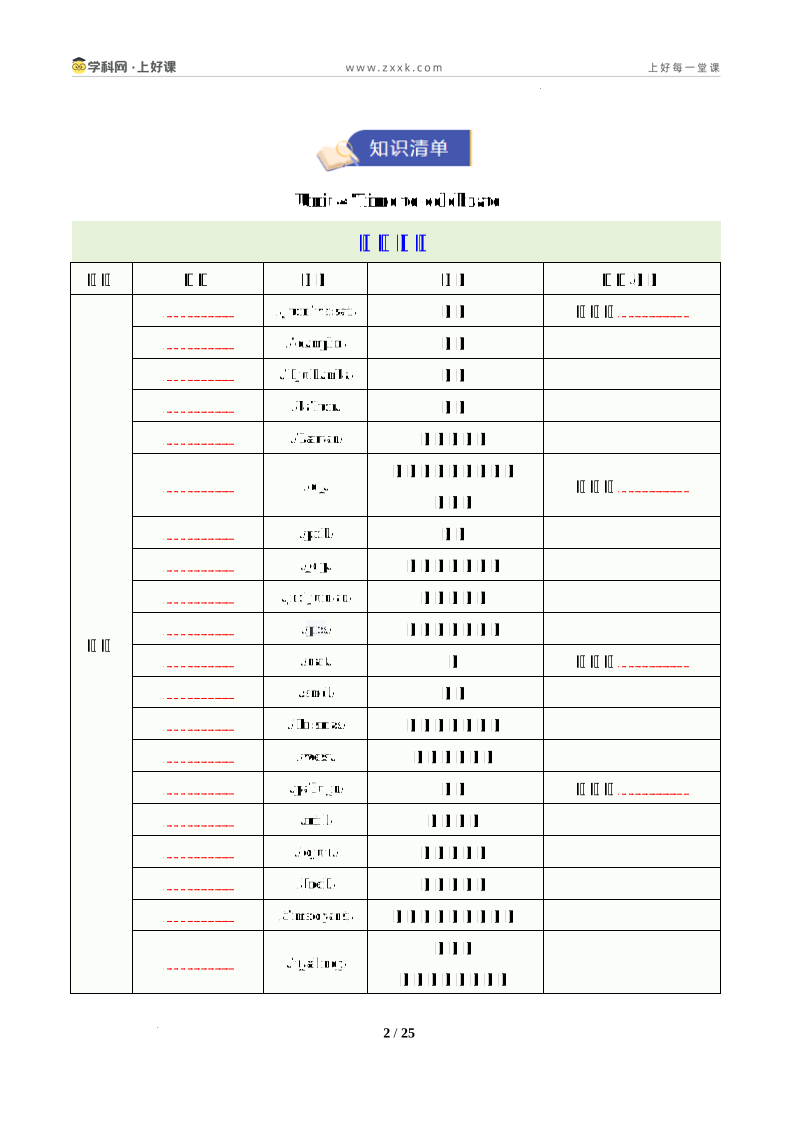
$专题 Units 4~6 重点词汇句型语法&写作通用表达
Unit 4 Time to celebrate
重点单词
词性
单词
音标
词义
变形/复数
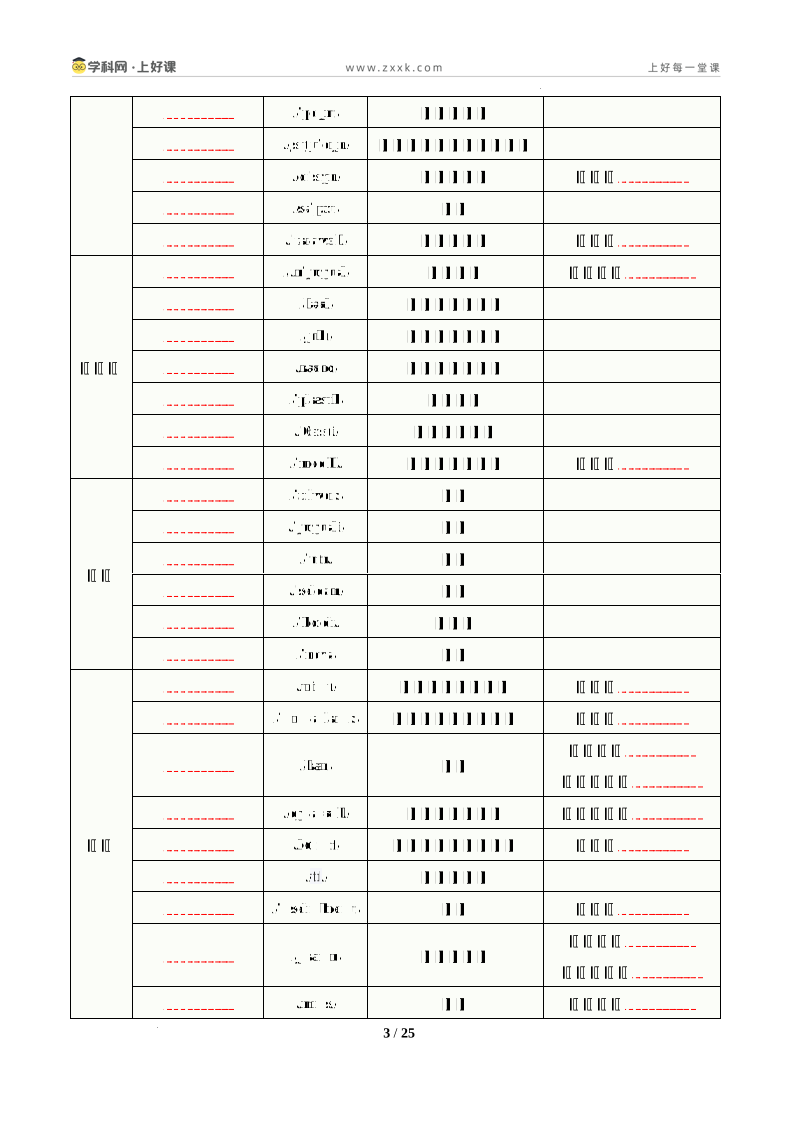
名词
__________
/ˌjuːnɪˈvɜːsəti/
大学
复数:__________
__________
/ˈdʌmplɪŋ/
水饺
__________
/ˈkjuːkʌmbə/
黄瓜
__________
/bəˈluːn/
气球
__________
/ˈlæntən/
灯笼;提灯
__________
/dɪʃ/
(烹制好的)菜肴,
一道菜
复数:__________
__________
/pɔːk/
猪肉
__________
/ʃeɪp/
形,形状,外形
__________
/ˌriːˈjuːniən/
团圆,团聚
__________
/piːs/
块,片,段,截
__________
/naɪf/
刀
复数:__________
__________
/smel/
气味
__________
/ˈkrɪsməs/
圣诞节(期间)
__________
/weɪst/
废料,废弃物
__________
/pəˈluːʃn/
污染
动词:__________
__________
/miːl/
一餐,饭
__________
/ˈdjuːti/
职责,义务
__________
/breɪk/
中断,暂停
__________
/iˈmɜːdʒənsi/
紧急情况,不测事件
__________
/ˈtʃælɪndʒ/
挑战,
具有挑战性的事物
__________
/ˈpeɪʃnt/
病人,患者
__________
/ˌsɪtʃuˈeɪʃn/
形势,情况,状况,局面
__________
/dɪˈsɪʒn/
决定,抉择
动词:__________
__________
/səˈpɔːt/
支持
__________
/ˈfaɪəwɜːk/
烟火,烟花
复数:__________
形容词
__________
/ʌnˈjuːʒuəl/
不平常的
反义词:__________
__________
/həʊl/
整个的,全部的
__________
/ʃɒkt/
吃惊的,震惊的
__________
/raʊnd/
圆形的,环形的
__________
/ˈplæstɪk/
塑料制的
__________
/ˈθɜːsti/
渴的,口渴的
__________
/ˈmedɪkl/
医学的,医疗的
名词:__________
副词
__________
/ˈɔːlweɪz/
总是
__________
/ˈjuːʒuəli/
通常
__________
/ˈɒfn/
经常
__________
/ˈseldəm/
很少
__________
/ˈhɑːdli/
几乎不
__________
/ˈnevə/
从不
动词
__________
/triːt/
请客,款待,招待
名词:__________
__________
/ˈrɪəlaɪz/
知道,明白,认识到
名词:__________
__________
/hæŋ/
悬挂
过去式:__________
过去分词:__________
__________
/dʒəʊk/
说笑话,开玩笑
现在分词:__________
__________
/lɑːf/
发出笑声,(大)笑
名词:__________
__________
/fɪl/
弥漫,充满
__________
/ˈselɪbreɪt/
庆祝
名词:__________
__________
/ʃaɪn/
发光,发亮
过去式:__________
过去分词:__________
__________
/mɪs/
错过
形容词:__________
__________
/rɪˈɡret/
后悔(做了某事),
对……感到遗憾
过去式:__________
过去分词:__________
重点词汇词性转换
1. unusual adj. 不平常的 → usual adj. 通常的;寻常的 → usually adv. 通常
2. treat v. 请客;款待;招待 → treatment n. 对待;治疗;处理
3. dish n. (烹制好的)菜肴;一道菜 → dishes 复数
4. knife n. 刀 → knives 复数
5. waste n. 废料;废弃物 → wasteful adj. 浪费的;挥霍的 → wasteless adj. 无穷无尽的
6. pollution n. 污染 → pollute v. 污染 → polluted adj. 受污染的
7. celebrate v. 庆祝 → celebration n. 庆祝;庆祝活动
8. emergency n. 紧急情况;不测时间 → emergent adj. 新兴的;处于发展初期的
9. miss v. 错过 → missing adj. 失踪的;不在的
10. challenge n. 挑战;具有挑战性的事物 → challenging adj. 具有挑战性的
11. patient n. 病人 → patiently adv. 耐心地 → patience n. 耐心
12. regret v. 后悔(做了某事);对……感到遗憾 → regretful adj. 遗憾的;后悔的 → regretless adj. 无悔的
13. decision n. 决定;抉择 → decide v. 决定
14. medical adj. 医学的;医疗的 → medicine n. 药;医学
重点短语
有限公1 / 1
学科网(北京)股份有限公司
1. ___________________ 全世界
2. ___________________ 请某人吃某物
3. ___________________ 在家
4. ___________________ 看某人做某事
5. ___________________ 在电话里
6. ___________________ 一步步地
7. ___________________ 在餐厅
8. ___________________ 最后一道菜
9. ___________________ 违法
10. ___________________ 代表;象征
11. ___________________ 一块;一片
12. ___________________ 把……放进……
13. ___________________ 感觉就像
14. ___________________ 回到家
15. ___________________ 完全靠自己
16. ___________________ 在午夜
17. ___________________ 对……感到震惊
18. ___________________ 熬夜
19. ___________________ 欢迎到……
20. ___________________ 了解
21. ___________________ 用英语
22. ___________________ 发生
23. ___________________ 龙舟赛
24. ___________________ 充满
25. ___________________ 在……的北方
26. ___________________ 在……的南方
27. ___________________ 一定
28. ___________________ 在西方(国家)
29. ___________________ 搭起;张贴
30. ___________________ 互相
31. ___________________ 每一年
32. ___________________ 扔掉
33. ___________________ 砍伐
34. ___________________ 引起污染
35. ___________________ 思考
36. ___________________ 用……制成……
37. ___________________ 在墙上
38. ___________________ 在客厅
39. ___________________ 对……有把握
40. ___________________ 家庭团聚
41. ___________________ 在急诊室
42. ___________________ 不得不
43. ___________________ 不间断地
44. ___________________ 情况很糟糕
45. ___________________ 需要做某事
46. ___________________ 待命
47. ___________________ 后悔做某事
48. ___________________ 充分利用
49. ___________________ 对……感激
50. ___________________ 数以百万计的
51. ___________________ 医务工作者
52. ___________________ 放弃
53. ___________________ 响应职责的召唤
54. ___________________ 在某人的心中
55. ___________________ 处于麻烦之中
56. ___________________ 发生
重点句型
1. Today is the Spring Festival, so I want to ____________ her ____________ a Chinese dinner. 今天是春节,所以我想请她吃一顿中餐。
2. It is midnight in China — ____________ ____________ dumplings. 现在是中国的午夜——到了吃饺子的时间。
3. My whole family come to help me ____________ ____________ ____________. 全家人都在电话上帮我。
4. ____________ ____________ ____________, they teach me. 他们一步步地教我。
5. ____________ you ____________? 你在开玩笑吗?
6. Isn’t it ____________ ____________ ____________? 难道这不是违法的吗?
7. Its round shape ____________ ____________ family ____________. 它的圆形代表着家庭团圆。
8. Emilia cuts ____________ ____________ ____________ it with her knife and ____________ it ____________ her mouth. 艾米莉亚用刀切下一块,放到嘴里。
9. ____________ ____________ ____________ the dishes and the sound of our laughing fill the room. 饭菜的香气和我们的欢声笑语弥漫在整个房间。
10. I ____________ ____________ I am back home. 我感觉像回到了家里。
11. Today, let’s ____________ ____________ ____________ the Dragon Boat Festival! 今天,让我们来了解一下端午节。
12. Sometimes, people call it the Double Fifth Festival in English, because it always ____________ ____________ ____________ ____________ ____________ ____________ of the fifth lunar month. 有时候人们会用英文称之为端午,因为这个节日总是在农历五月初五举行。
13. Eating zongzi is a ____________ during the festival. 吃粽子是这个节日里必不可少的习俗。
14. ____________ ____________ ____________, people ____________ ____________ ____________ ____________ turkeys. 全球各地的人们会扔掉数百万只火鸡。
15. People ____________ ____________ nearly 120 million trees to ____________ ____________ Christmas trees. 人们为了用作圣诞树,砍伐了近 1.2 亿棵树。
16. She is ____________ ____________ during festivals. 节日期间她会忙得多。
17. Sometimes she ____________ ____________ work ____________ ____________ ____________ for 20 hours. 有时候她得连续工作 20 小时,中途没有任何休息。
18. Festivals are a ____________ because our patients are often ____________ ____________ ____________ ____________. 节日是一项挑战,因为我们的患者往往情况很糟糕。
19. We ____________ ____________ ____________ ____________ every minute. 我们需要随时待命。
20. But she never ____________ her ____________ to be an ER doctor. 但是她从未后悔自己成为急诊科医生的决定。
21. I’m very ____________ ____________ their support. 我非常感谢他们的支持。
22. Leng is only one of millions of ____________ ____________ in China. 冷是中国数百万医务工作者的其中一员。
23. They ____________ ____________ their family time to ____________ ____________ ____________ ____________ ____________. 他们放下与家人相伴的时光,响应使命的召唤。
重点语法
频率副词
频率副词是用于描述动作或事件发生频率的一类副词,它们通过具体词汇来表达行为或状态在一定时间内的频繁程度。
1. 常见频率副词及含义(按频率从高到低排序)
频率副词
中文含义
频率占比
always
总是,一直
100%(习惯性动作毫无例外)
usually
通常
80%(多数情况下如此,偶尔例外)
often
经常
60%(发生次数较多,规律性明显)
sometimes
有时
40%(偶尔发生,频率不固定)
seldom
很少,不常
20%(发生概率低,多为否定倾向)
hardly ever
几乎不
5%(接近不发生,仅极特殊情况出现)
never
从不
0%(完全不发生,表绝对否定)
2. 句中位置规则
句中位置
结构
例句
实义动词前
主语 + 频率副词 + 实义动词 + 其他
My parents always stay up during the Spring Festival. 我的父母在春节期间总是熬夜。
be动词后
主语 + be动词 + 频率副词 + 其他
The riversides are always full of people. 河边总是挤满了人。
助动词后
主语 + 助动词 + 频率副词 + 实义动词 + 其他
They have never been to Beijing.他们从没去过北京。
情态动词后
主语 + 情态动词 + 频率副词 + 实义动词 + 其他
We can usually finish homework before 9 pm. 我们通常能在晚上9点前完成作业。
特殊情况:sometimes可放句首、句中或句末,语气略有差异,但语法均正确。
句首(强调频率):Sometimes I walk to school.(有时我步行上学。)
句中(常规用法):I sometimes walk to school.
句末(口语化):I walk to school, sometimes.
3. 与时态的搭配
时态
用法
例句
一般现在时
表习惯性、经常性动作。
My mother usually cooks breakfast for us.我妈妈通常给我们做早餐。
现在完成时
表从过去到现在的动作频率,常与never, ever, already等连用。
I have never seen such a beautiful place.我从没见过这么美的地方。
单元写作通用表达&范文背诵
一、单元写作任务:介绍一个传统节日(说明文)
本单元的话题是“传统节日”,写作时一般是通过介绍该节日的基本信息,如名称、时间、地点、意义、传统庆祝方式,同时提出创新的庆祝方式,来表达自己对该节日的理解和认识。
二、通用表达
1. 通用时间表达
(1)主语 + usually + falls on + 具体时间
例句:The Lantern Festival usually falls on the fifteenth day of the first lunar month.(元宵节通常在正月十五。)
(2)主语 + is celebrated on + 具体时间
例句:Thanksgiving Day is celebrated on the fourth Thursday of November in the US.(美国的感恩节在十一月的第四个星期四。)
2. 通用地点表达
(1)主语 + 动词 + 地点状语 + 时间状语
例句:The whole family get together and have a large dinner at home on that day.(在那天,全家人在家里聚餐。)
(2)主语 + 动词 + 具体地点 + 目的状语
例句:Hundreds of people go to the riversides to watch the dragon boat race.(数以百计的人们都到河边去看龙舟赛。)
3. 通用行为表达
(1)主语 + always do sth . + 状语
例句:Grandma always makes zongzi by herself during the Dragon Boat Festival.(奶奶在端午节时总是自己包粽子。)
(2)No matter how + 形容词, 主语 + try to do sth.
例句:No matter how busy, family members try to go home for a big dinner.(无论有多忙,家人们都会尽量回家一起吃大餐。)
4. 通用感受表达
(1)主语 + makes sb. feel + 名词短语
例句:The festival makes me feel the warmth and love of my family.(这个节日使我感受到了家庭的温暖和爱。)
(2)地点 + be full of + 关于感受的名词
例句:The whole room is full of joy.(整间屋子都洋溢着欢乐。)
(3)主语 + be about more than + 名词 — it’s about + 名词短语
例句:The festival is about more than food — it’s about missing family and hoping for happiness.(这个节日不止关乎美食——更关乎思念家人与期盼幸福。)
三、范文背诵
_________________________________________________________________________________________________________________________________________________________________________________________________________________________________________________________________________________________________________________________________________________________________________________________________________________________________________________________________________________________________________________________________________________________________________________________________________________________________________________________________________________________________________________________________________________________________________________________________________________________________________________________________________________________________________________________________________________________________________________________________________________________________________________________________________________________________________________________________________________________________________________________________________________________________
Unit 5 The power of plants
重点单词
词性
单词
音标
词义
变形/复数
名词
__________
/ˈkwɔ:tə/
一刻钟,十五分钟
__________
/ˈwɜ:kʃɒp/
车间,工场
__________
/li:f/
叶,叶子
复数:__________
__________
/ruːt/
根
__________
/stem/
(植物的)茎,梗,柄
__________
/ˈʃʊɡə/
糖
__________
/ˈprɒdʌkt/
(自然过程或化学反应的)生成物
名词:__________
__________
/ˈɒksɪdʒən/
氧
__________
/ˈhju:mən/
人类,人
复数:__________
__________
/rest/
休息(时间)
__________
/si:d/
种子,籽
__________
/pɑ:t/
部分
__________
/ˈreɪnfɒrɪst/
(热带)雨林
__________
/ˈkʌltʃə/
文化
形容词:__________
__________
/helθ/
健康(状况)
形容词:__________
副词:__________
__________
/rəʊz/
玫瑰,蔷薇
__________
/ˈkɒtn/
棉花
__________
/ˌbæmˈbu:/
竹,竹子
__________
/nju:z/
消息
__________
/ˈkɒfi/
咖啡
__________
/ˈsi:krət/
秘密
__________
/ˈhʌzbənd/
丈夫
__________
/ˈædʌlt/
成人,成年人
__________
/ˌwi:kˈend/
周末
__________
/jɑ:d/
庭院
__________
/ˈbɪskɪt/
饼干
限定词
__________
/i:tʃ/
(两个或两个以上物或人中的)每个,各
形容词
__________
/dɑ:k/
昏暗的,黑暗的
名词:__________
__________
/ˈnætʃrəl/
自然的,天然的
名词:__________
__________
/ˈpɒpjələ/
受大众喜爱的,
受欢迎的
名词:__________
__________
/ki:/
至关重要的,
必不可少的
副词
__________
/ðəʊ/
可是,不过,然而
__________
/su:n/
不久,即刻,很快
介词
__________
/wɪðˈɪn/
在(建筑或地区)里
动词
__________
/kəˈlekt/
收集,采集,使集中
名词:__________
__________
/send/
送出,发出
过去式:__________
过去分词:__________
__________
/raɪz/
升高,上升
过去式:__________
过去分词:__________
__________
/mɪks/
(使)混合
名词:__________
__________
/prəˈdju:s/
(自然地)生产,产生,出产
名词:__________
__________
/bri:ð/
呼吸
名词:__________
__________
/ɡrəʊ/
生长
过去式:__________
过去分词:__________
__________
/prɪˈfɜ:/
更喜欢
名词:__________
__________
/tʃæt/
闲聊,闲谈,聊天
现在分词:__________
__________
/rɪˈlæks/
放松,休息
形容词:__________
__________
名词:__________
__________
/kəˈnekt/
沟通,连接
名词:__________
重点词汇词性转换
1. collect v. 收集,采集;使集中 → collection n. 收集 → collector n. 收藏家
2. mix v. (使)混合 → mixture n. 混合物
3. produce v. (自然地)生产,产生,出产 → production n. 生产 → product n. 产物;产品
4. breathe v. 呼吸 → breath n. 呼吸
5. dark adj. 昏暗的;黑暗的 → darkness n. 黑暗;阴暗
6. natural adj. 自然的,天然的 → naturally adv. 自然地 → nature n. 自然界,大自然
7. grow v. 生长 → growth n. 生长;成长 → grown adj. 长大的 → growing adj. 成长中的
8. culture n. 文化 → cultural adj. 文化的 → culturally adv. 文化上地
9. health n. 健康 → healthy adj. 健康的 → healthily adv. 健康地 → unhealthy adj. 不健康的
10. popular adj. 受大众喜爱的,受欢迎的 → popularly adv. 广泛地,普遍地 → popularity n. 普及;流行
11. prefer v. 更喜欢 → preference n. 偏爱;喜爱
12. secret n. 秘密 → secretly adv. 秘密地,暗暗,暗自 → secretary n. 秘书
13. relax v. 放松,休息 → relaxing adj. 令人放松的 → relaxed adj. 感到放松的 → relaxation n. 放松
14. connect v. 沟通,连接 → connection n. 联系;关联 → connected adj. 有关联的,有联系的
重点短语
有限公1 / 1
学科网(北京)股份有限公司
1. __________________ 穿着他的绿色制服
2. __________________ 开始工作
3. __________________ 输送水分
4. __________________ 上升到
5. __________________ 最重要的是
6. __________________ 对……有用
7. __________________ ……的生长
8. ________________ 对某人而言意义重大
9. __________________ 努力工作
10. __________________ 天色变暗
11. __________________ 休息
12. __________________ 数百万的
13. __________________ 在地球上
14. __________________ 不仅仅,超过
15. __________________ 进入
16. __________________ 变成
17. __________________ 长成
18. __________________ ……的不同部位
19. __________________ 变换成
20. __________________ 在秋天
21. __________________ 穿过森林
22. __________________ 确定,肯定
23. __________________ 往上看
24. __________________ 在……顶部
25. __________________ 数以千计的
26. __________________ 植树节
27. __________________ 以不同的方式
28. __________________ 例如
29. __________________ ……的重要性
30. __________________ 玉米穗
31. __________________ 开始做某事
32. __________________ 用……来做……
33. __________________ 制作玩具
34. __________________ 注意
35. __________________ 比……少
36. __________________ 玉米须
37. __________________ 泡茶
38. __________________ 对……有好处
39. __________________ 玉米皮,玉米壳
40. __________________ 请求允许
41. __________________ 允许;批准
42. _________________ 以一种礼貌的方式
43. ________________ 进行一次交谈/对话
44. _________________ 不但……而且……
45. _________________ 一个重要组成部分
46. __________________ 与……一样
47. __________________ 一杯茶
48. __________________ 过去常常做某事
49. __________________ 众所周知
50. __________________ 下午茶
52. __________________ 一整天
53. __________________ 放学后
54. __________________ 回来
55. __________________ 在院子里
56. __________________ 红茶
57. __________________ 连接方式
重点句型
1. He’s going to start work in the plant. 他准备在植物里工作。
2. Now workers form the Root send up water. 现在根部的工人们输送水分。
3. The water will rise up to the Leaf through the Stem. 水分将从茎部往上输送到叶子。
4. Most importantly (for them), there will be sugar!对他们来说最重要的是,将会产生糖分!
5. It’s useful for the growth of the plant. 这对植物的生长来说非常有用。
6. It means a lot to animals and humans, though — they need it to breathe! 然而这对动物和人类来说有着重大意义——他们需要它来呼吸!
7. The workers work hard. 工人们努力地工作。
8. Soon it’s going to get dark. 很快就要天黑了。
9. They will take a rest. 他们准备休息。
10. There are millions of plants on earth. 地球上有数百万种植物。
11. They give more than food and oxygen. 他们给予的不仅是食物和氧气。
12. Water, CO2 and sunlight will turn into sugar and oxygen. 水、二氧化碳和阳光将变成糖分和氧气。
13. The seeds will grow into tall plants. 这些种子将长成高大的植株。
14. The leaves will change into different colours in autumn. 在秋天,叶子将变成不同的颜色。
15. We are going to walk through the forest today. 我们今天准备穿越森林。
16. I’m sure it will rain later. 我非常确定晚点会下雨。
17. You will see clouds at the top of these trees. 你可以看到这些树木顶端的云。
18. These trees can live for thousands of years. 这些树可以存活上千年。
19. People started growing corn in Mexico about 9,000 years ago! 大约9000年前,墨西哥人就开始种植玉米了!
20. People even use it to make toys. 人们甚至用它来制作玩具。
21. It is good for your health. 这对你的健康有好处。
22. It is not only for our health, but also a key part of many cultures. 这不但是为了我们的健康,也是许多文化当中的一个重要组成部分。
23. In Chengdu, we have as many teahouses as leaves in a cup of tea! 在成都,我们有着跟一杯茶的叶子数量一样多的茶馆。
24. Grandpa used to take me to the teahouse. 爷爷过去经常带我去茶馆。
25. It’s no secret that Brits love afternoon tea. 众所周知,英国人喜欢喝下午茶。
26. It’s our way of connecting. 这是我们彼此联结的方式。
重点语法
一般将来时
一般将来时用于表示将来某个时间要发生的动作、存在的状态,或是将来经常性、习惯性的动作,常搭配 tomorrow, next week, in the future 等表示将来的时间状语。
1. be going to
用法
表示打算做某事、计划做某事或者有意做某事。
肯定句
主语 + am/is/are + going to + 动词原形
例句:I’m going to Beijing next Monday. (我下周一打算去北京。)
否定句
主语 + am/is/are + not + going to + 动词原形
例句:We are not going to watch the movie tonight. (我们今晚不打算去看那部电影。)
一般疑问句
Am/Is/Are + 主语 + going to + 动词原形?
肯定回答:Yes, 人称代词主格 + am/is/are.
否定回答:No, 人称代词主格 + am not / isn’t / aren’t.
例句:Is he going to the party tomorrow? (他明天打算去那个派对吗?)
Yes, he is. (是的,他打算去。)
No, he isn’t. (不,他不打算去。)
特殊疑问句
特殊疑问词 + am/is/are + 主语 + going to + 动词原形?
例句:What are you going to buy for your Mum on Mother’s Day? (你打算在母亲节为你妈妈买什么?)
2. will
用法
用来描述未来的事情或表达对将来的预测。
肯定句
主语 + will + 动词原形
例句:It will rain later. (晚点会下雨。)
否定句
主语 + will + not + 动词原形
例句:She will not tell you about the news. (她不会把那个消息告诉你。)
一般疑问句
Will + 主语 + 动词原形?
肯定回答:Yes, 人称代词主格 + will.
否定回答:No, 人称代词主格 + won’t.
例句:Will you play basketball with me this afternoon? (你今天下午跟我一起打篮球吗?)
Yes, I will. (是的,我去。)
No, I won’t. (不,我不去。)
特殊疑问句
特殊疑问词 + will + 主语 + 动词原形?
例句:What will they go for a trip? (他们会去哪儿旅行?)
3. will和be going to的区别
对比维度
will
be going to
计划性
无计划,多为临时决定或突发想法
有明确计划,是提前打算好的事
预测依据
基于主观想法、经验或客观事实进行的预测,无明显即时迹象
基于眼前明显的迹象(如天气、场景等)判断即将发生
典型语境
回应他人需求、突发承诺、日常预测
谈论既定计划、描述眼前即将发生的情况
例句
(1) — My pen is broken.
— I will buy a new one for you.(临时回应)
(2) It will be cold in winter.(客观预测)
(1) I am going to buy a new pen. I’ve saved money for it.(提前计划)
(2) Look at the black clouds! It is going to rain.(根据迹象)
4. 常见易错点
(1) 结构错误:will 后必须接动词原形,不可加 -ing 或 -ed。如:
He will goes to school. (×)
He will go to school. (√ )
(2)be动词遗漏:be going to 中,am/is/are 不可省略,且需随主语变化。如:
They going to play football. (×)
They are going to play football. (√ )
(3) 疑问句式错误:将 will/be 动词提前时,注意主语位置。如:
You will go to the park? (×)
Will you go to the park? (√ )
(4)语义混淆:根据语境判断用 will 还是 be going to,避免仅从时间状语判断。
单元写作通用表达&范文背诵
一、单元写作任务:介绍一种植物(说明文)
本单元的话题是“植物的力量”,介绍一种熟悉的植物(如竹子、仙人掌、向日葵等),描述其基本特征,并通过运用本单元的核心词汇和句型,说明该植物的“力量”(如净化空气、提供食物、象征精神等),表达自己的喜爱理由。
二、通用表达
1. 通用时间表达
(1)主语(植物名)+ 动词 + 形容词/副词 + in +地点状语 + 时间状语
例句:The lotus looks very beautiful in the lake in summer.(夏天湖里的荷花看起来很美。)
(2)It takes + 时间段 + for 主语 (植物名) + to + 生长类动词
例句:It takes a few years for bamboo to become thick. (竹子需要花好几年的时间才能变粗。)
2. 通用地点表达
(1)主语(植物名)+ grows + in +地点状语
例句:Bamboo grows in forests of Asia.(竹子长在亚洲的森林里。)
(2)主语(植物名)+ can be found + in +地点状语
例句:A sunflower can be found in many warm countries. (向日葵在许多温暖的国家都能找到。)
3. 通用行为表达
(1)主语 + 行为动词 (have, smell, grow 等) + 宾语 / 补语
例句:A rose has soft petals and a sweet smell. (玫瑰有着柔软的花瓣和怡人的香气。)
(2)主语 + can + 行为动词 + 宾语 / 补语
例句:A tulip can stand straight in the wind with its strong stem. (郁金香凭借它粗壮的花茎,能在风中傲然挺立。)
4. 通用感受表达
(1)I think + 主语 + is + 形容词
例句:I think the sunflower is a very cheerful plant. (我认为向日葵是一种非常朝气蓬勃的植物。)
(2)主语 + makes me feel + 形容词
例句:This kind of plant makes me feel calm and peaceful. (这种植物让我感到平静而安宁。)
三、范文背诵
____________________________________________________________________________________________________________________________________________________________________________________________________________________________________________________________________________________________________________________________________________________________________________________________________________________________________________________________________________________________________________________________________________________________________________________________________________________________________________________________________________________________________________________________________________________________________________________________________________________________________________________________________________________________________________________________________________________________________________________Unit 6 Fantastic friends
重点单词
词性
单词
音标
词义
变形/复数
名词
__________
/ˈpɪdʒɪn/
鸽子
__________
/səˈpraɪz/
意想不到的事
形容词:________
________
__________
/ˈdrɒpɪŋz/
(兽或鸟的)粪
__________
/rɪˈsɜ:tʃ/
研究,调查
__________
/ˈmɪrə/
镜子
__________
/ˈkɪləˌmi:tə/
千米,公里
__________
/spi:d/
速度,速率
__________
/ˈbi:və/
河狸,海狸
__________
/wʊlf/
狼
复数:__________
__________
/ˌendʒɪˈnɪə/
工程师,设计师
__________
/ˈhɪərəʊ/
英雄
复数:__________
__________
/ˈreskju:/
营救,救援
__________
/ˈɜ:θkweɪk/
地震
__________
/ˈdəʊdəʊ/
渡渡鸟
__________
/ˈkærəktə/
(书、剧本、电影中的)
人物,角色
__________
/mjuˈzi:əm/
博物馆,博物院
__________
/ˈaɪlənd/
岛,岛屿
__________
/ˈəʊʃn/
海洋,大海
__________
/ˈfɒrɪst/
森林,林区
代词
__________
/ðəmˈselvz/
它们自己;他们自己;
她们自己
__________
/ɪtˈself/
自己,自身
__________
/ɪˈnʌf/
足够
__________
/ˈplenti/
丰富,充足,众多,大量
限定词
__________
/ˈsevrəl/
几个,数个,一些
形容词
__________
/ˈbɔ:rɪŋ/
无趣的,无聊的,乏味的
形容词:_________
__________
/ˈskeəri/
可怕的,骇人的,恐怖的
形容词:_________
__________
/əˈmeɪzɪŋ/
惊人的;了不起的
形容词:_________
__________
/ˈmɪsɪŋ/
找不到的
__________
/ded/
死的,去世的
动词:_________
名词:_________
__________
/ˈfrendli/
友好的,友善的
__________
/ˈpiːsfl/
和平的,非暴力的
副词:_________
__________
/fʊl/
满的;满是……的
__________
/fænˈtæstɪk/
极好的,吸引人的,有趣的
副词
__________
/ˈmædli/
发狂地;无法控制地
形容词:_________
__________
/ˈmeɪbi/
也许,大概,可能
动词
__________
/fiːd/
喂养,饲养,给……食物
过去式:_________
过去分词:_______
__________
/'rekəgnaɪz/
认出;认识;辨认出
名词:_________
__________
/seɪv/
救,拯救,挽救
形容词:_________
副词:_________
名词:_________
__________
/əˈraɪv/
到达,抵达
__________
/hʌnt/
打猎,猎杀
名词:_________
重点词汇词性转换
1. surprise n. 意想不到的事 → surprising adj. 令人惊讶的 → surprised adj. 感到惊讶的
2. boring adj. 无趣的,无聊的,乏味的 → bored adv. 感到无聊的
3. madly adv. 发狂地;无法控制地 → mad adj. 疯狂的 → madness n. 疯狂;愚蠢的行为
4. scary adj. 可怕的,骇人的,恐怖的 → scared adj. 害怕的 → scaring v. 使害怕,使恐惧
5. recognise v. 认出;认识;辨认出 → recognisation n. 认可;意识
6. amazing adj. 惊人的;了不起的 → amazed adj. 吃惊的
7. save v. 救,拯救,挽救 → safe adj. 安全的 → safely adv. 安全地 → safety n. 安全
8. dead adj. 死的,去世的 → die v. 死,死亡 → death n. 死,死亡 → dying adj. 奄奄一息的
9. friendly adj. 友好的,友善的 → friend n. 朋友 → friendship n. 友谊
10. peaceful adj. 和平的,非暴力的 → peacefully adv. 和平地,安静地,安详地
11. hunt v. 打猎,猎杀 → hunting n. 打猎 → hunter n. 猎人
12. clever adj. 聪明的 → cleverness n. 聪明
13. interview v&n. 采访 → interviewer n. 采访者 → interviewee n. 被采访者
14. actually adv. 事实上 → actual adj. 真实的,实际的
15. weight n. 重量 → weigh v. 重,称重量
重点短语
有限公1 / 1
学科网(北京)股份有限公司
1. _______________ (在某处)悠闲地度过
2. __________________ 一整个早上
3. __________________ 到处
4. __________________ 做一些线上研究
5. __________________ 最好做某事
6. __________________ 看……
7. __________________ 对……理解错误
8. __________________ 迷路
9. __________________ 以……的速度
10. __________________ 了解
11. __________________ 看起来像
12. __________________ 在河边
13. __________________ 不受……之害
14. __________________ 完成
15. __________________ 认为,觉得
16. __________________ 为了纪念
17. __________________ 嗅觉很灵敏
18. __________________ 长年累月
19. __________________ 发生
20. __________________ 在……岁时
21. __________________ 采访某人
22. __________________ 跑向某人
23. __________________ 打招呼
24. __________________ 受伤
25. __________________ 在第二天
26. __________________ 避免做某事
27. __________________ 接手,接管
28. __________________ 发生在某人身上
29. __________________ 真的,认真的
30. __________________ 在过去快乐的日子里
31. __________________ 大量,许多
32. __________________ 砍伐
33. __________________ 消失,不见了
34. __________________ 而且
35. __________________ 结果
36. __________________ 消失,绝迹,灭绝
37. __________________ 充满
38. __________________ 尽某人最大的努力做某事
39. __________________ 非常高兴的,相当满足的
40. __________________ 彻底死亡
重点句型
1. They just ____________ ____________ — for ____________ ____________ ____________ ____________! 它们整个上午都在悠闲地度过!
2. They leave droppings ____________ ____________ ____________. 它们的粪便到处都是。
3. ____________ ____________ some online ____________. 我正在做一些线上研究。
4. ____________ ____________ go and watch them again. 我最好再去看一下它们。
5. Maybe I ____________ ____________ ____________ pigeons. 也许我之前对鸽子的看法错了。
6. Some can fly several thousand kilometres and don’t ____________ ____________. 有的可以飞好几公里都不迷路。
7. They can also fly ____________ ____________ ____________ over 100 km per hour. 它们还能以每小时100多公里的速度飞。
8. That’s ____________ ____________ ____________ my dad’s car! 那跟我爸爸的汽车一样快!
9. They are AMAZING — I just didn’t ____________ ____________ ____________ them! 它们太了不起了——我只是之前对它们了解得不够多!
10. The pool will ____________ them ____________ ____________, bears, etc. 这片水域能保护它们免受狼、熊等动物的伤害。
11. Now the work ____________ ____________! 现在工作完成了!
12. Bingjie ____________ ____________ ____________ ____________ ____________ smell. 冰洁的嗅觉很灵敏。
13. His most famous rescue ____________ ____________ after the 2008 Wenchuan ____________. 他最著名的一次搜救发生在2008年的汶川地震。
14. Bingjie died ____________ ____________ ____________ ____________ 14. 冰洁在14岁的时候死了。
15. He just ____________ ____________ ____________ me to ____________ ____________. 他当时就径直跑到我跟前打招呼。
16. He ____________ ____________, but he didn’t stop. 虽然他受伤了,但是一直没有停。
17. ____________ ____________ ____________ ____________, he found a six-year-old girl. 在第二天,他找到一名6岁的女孩。
18. ____________, there ____________ ____________ be thousands of us — ____________ ____________. 其实以前我们有上千只呢——真的。
19. ____________ ____________ ____________ ____________ ____________, there was ____________ ____________ food to eat. 在过去那些快乐的日子里,有大量的食物可以吃。
20. They ____________ ____________ the trees and our lovely forest ____________ ____________. 他们砍倒了树木,我们这片可爱的森林就这样消失了。
21. ____________ ____________, their pigs, cats and dogs ate our eggs. 而且,他们的猪、猫和狗吃了我们的蛋。
22. ____________ ____________ ____________, we soon ____________ ____________. 结果,我们很快就灭绝了。
23. Please ____________ ____________ ____________ ____________ help them. 请尽你们最大的努力去帮助他们。
24. Make them ____________ ____________ ____________ ____________ ____________, not ____________ ____________ ____________ ____________ ____________. 让他们过得快乐,而不是灭绝。
重点语法
现在进行时
现在进行时表示现在正在进行或发生的动作,也可表示现阶段正在进行但此刻不一定正在做的动作,常搭配 now, at the moment, Look!, Listen! 等提示词。
1. 基本结构
句式
基本结构
例句
肯定句
主语 + am/is/are + 动词-ing形式
I am reading a storybook now. (我现在正在读一本故事书。)
否定句
主语 + am/is/are + not + 动词-ing形式
He is not watching TV. (他没有在看电视。)
一般疑问句
Am/Is/Are + 主语 + 动词-ing形式?
肯定回答:
Yes, 人称代词主格 + am/is/are.
否定回答:
No, 人称代词主格 + am not/isn’t/aren’t.
Is she drawing a picture? (她正在画画吗?)
Yes, she is. (是的,她在画。)
No, she isn’t. (不,她没有在画。
特殊疑问句
特殊疑问词 + am/is/are + 主语 + 动词-ing形式?
What are they talking about? (他们正在谈论什么?)
3. 现在分词变化规则
动词原形
变化规则
举例
一般情况
直接加-ing
play → playing
read → reading
以不发音的e结尾
去e加-ing
write → writing
take → taking
重读闭音节结尾,且末尾只有一个辅音字母
双写辅音字母加-ing
run → running
swim → swimming
以ie结尾
变ie为y加-ing
lie → lying
die → dying
4. 现在进行时与一般现在时的区别
对比维度
现在进行时
一般现在时
动作状态
动作正在进行或现阶段持续
动作是经常性、习惯性的,或表示客观真理
时间状语
now, at the moment, Look!, Listen!
usually, often, every day, sometimes
动词形式
am/is/are + 动词-ing
动词原形(主语为三单时用动词三单形式)
例句
She is dancing in the hall now.
She dances in the hall every weekend.
5. 常见易错点
(1)动词-ing形式变化错误
错误:He is runing on the road.
正确:He is running on the road. (重读闭音节结尾,双写n加-ing)
错误:They are writeing a letter.
正确:They are writing a letter. (去e加-ing)
(2)be动词遗漏或形式错误
错误:He playing computer games.
正确:He is playing computer games. (不可遗漏be动词)
错误:She am reading a newspaper.
正确:She is reading a newspaper. (主语为she,be动词用is)
(3)误用场景:静态动词不能用于现在进行时
表示状态、情感、感官的静态动词(如 like, love, know, see, hear, have 等),一般不用于现在进行时。
错误:I am liking this song very much.
正确:I like this song very much.
(4)疑问句式语序错误
错误:You are doing your homework?
正确:Are you doing your homework? (be动词需提前至句首)
单元写作通用表达&范文背诵
一、单元写作任务:介绍一种动物(说明文)
本单元的话题是“Fantastic friends(奇妙的朋友)”,介绍一种熟悉的动物(如大熊猫、大象、小狗、海豚等),描述其基本特征,并通过运用本单元的核心词汇和句型,说明该动物的“奇妙之处”(如独特本领、与人的亲密关系、生态价值等),表达自己的喜爱理由。
二、通用表达
1. 通用外形描述表达
(1)主语(动物名)+ has + 外貌特征(名词短语)
例句:The giant panda has black eyes and a round body.(大熊猫有着黑色的眼睛和圆圆的身体。)
(2)主语(动物名)+ looks + 形容词 + with + 补充特征
例句:The elephant looks strong with its long trunk.(大象有着长长的鼻子,看起来很壮实。)
2. 通用栖息地与习性表达
(1)主语(动物名)+ lives + in + 地点状语
例句:The giant panda lives in the bamboo forests of Sichuan.(大熊猫生活在四川的竹林里。)
(2)主语(动物名)+ likes + doing sth. / to do sth. + 时间/地点状语
例句:The dolphin likes jumping out of the water in the sea.(海豚喜欢在海里跳出水面。)
3. 通用能力与行为表达
(1)主语(动物名)+ can + 情态动词(能力)+ 行为动词
例句:The dog can help people find the way home.(狗能帮助人们找到回家的路。)
(2)主语(动物名)+ is good at + doing sth.(擅长的本领)
例句:The cat is good at catching mice.(猫擅长抓老鼠。)
4. 通用情感与关系表达
(1)I think + 主语(动物名)+ is + 情感类形容词
例句:I think the dolphin is a very clever animal.(我认为海豚是一种非常聪明的动物。)
(2)主语(动物名)+ is + one of + 形容词最高级 + 名词复数 + for sb.
例句:The dog is one of the most helpful friends for humans.(狗是人类最有帮助的朋友之一。)
三、范文背诵
_________________________________________________________________________________________________________________________________________________________________________________________________________________________________________________________________________________________________________________________________________________________________________________________________________________________________________________________________________________________________________________________________________________________________________________________________________________________________________________________________________________________________________________________________________________________________________________________________________________________________________________________________________________________________________________________________________________________________________________________________________________________________________________________________________________________________________________________________________________________________________________________________________________________________
$
资源预览图
1
2
3

相关资源
由于学科网是一个信息分享及获取的平台,不确保部分用户上传资料的 来源及知识产权归属。如您发现相关资料侵犯您的合法权益,请联系学科网,我们核实后将及时进行处理。