Unit 7 Section A(2a-2e)-【精品课】2025-2026学年八年级英语上册同步精品课件(人教版2024)
2025-12-16
|
37页
|
892人阅读
|
3人下载
精品
资源信息
| 学段 | 初中 |
|---|---|
| 学科 | 英语 |
| 教材版本 | 初中英语人教版八年级上册 |
| 年级 | 八年级 |
| 章节 | 2a-2e |
| 类型 | 课件 |
| 知识点 | - |
| 使用场景 | 同步教学-新授课 |
| 学年 | 2025-2026 |
| 地区(省份) | 全国 |
| 地区(市) | - |
| 地区(区县) | - |
| 文件格式 | PPTX |
| 文件大小 | 67.55 MB |
| 发布时间 | 2025-12-16 |
| 更新时间 | 2025-12-16 |
| 作者 | Fleeting blank |
| 品牌系列 | - |
| 审核时间 | 2025-12-16 |
| 下载链接 | https://m.zxxk.com/soft/55455436.html |
| 价格 | 3.00储值(1储值=1元) |
| 来源 | 学科网 |
内容正文:
Unit7
When Tomorrow Comes
SectionA (2a-2e)
1. master the key words and sentences patterns, such as: technology, video, education, partner, —What will the...be like?—There will be...;
2. learn the details of the dialogue understand the predictions about future life through listening.
3. apply the sentence structure and vocabulary we have learned to make our own predictions for the future.
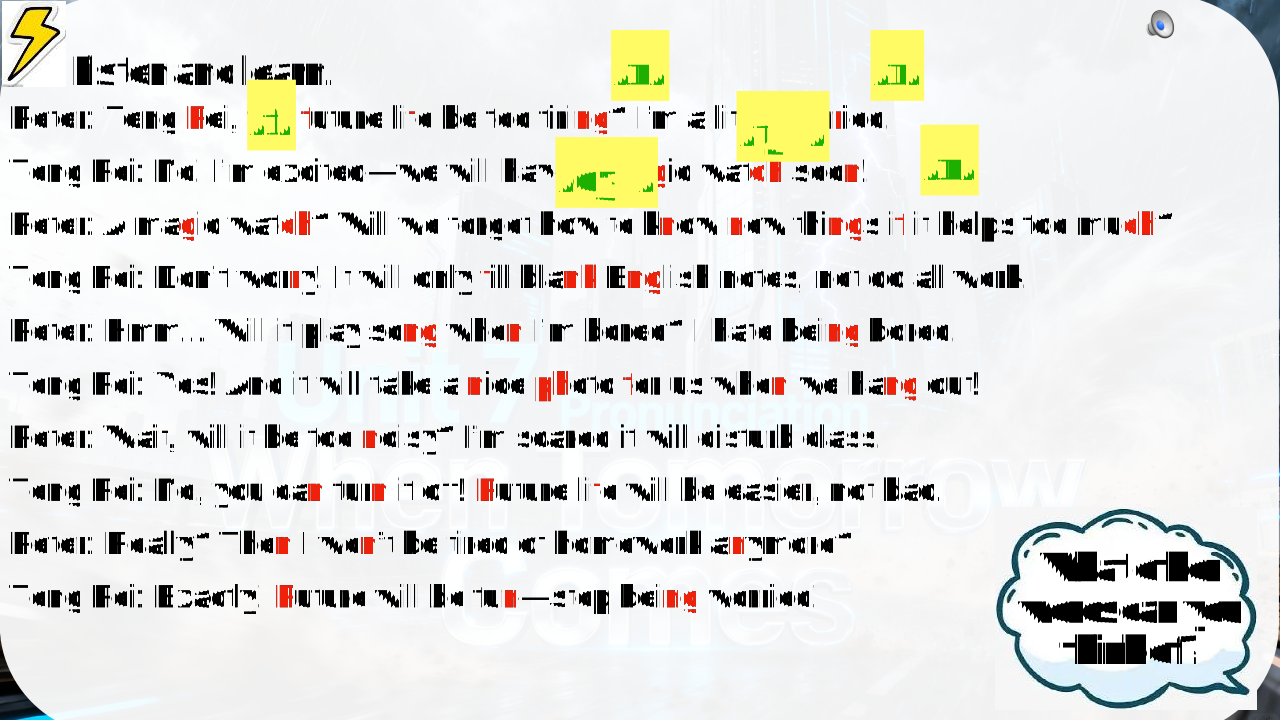
Peter: Teng Fei, will future life be too tiring? I’m a little worried.
Teng Fei: No! I’m excited—we will have a magic watch soon!
Peter: A magic watch? Will we forget how to know new things if it helps too much?
Teng Fei: Don’t worry! It will only fill blank English notes, not do all work.
Peter: Hmm... Will it play song when I’m bored? I hate being bored.
Teng Fei: Yes! And it will take a nice photo for us when we hang out!
Peter: Wait, will it be too noisy? I’m scared it will disturb class.
Teng Fei: No, you can turn it off! Future life will be easier, not bad.
Peter: Really? Then I won’t be tired of homework anymore?
Teng Fei: Exactly! Future will be fun—stop being worried!
Listen and learn.
Peter: Teng Fei, will future life be too tiring? I’m a little worried.
Teng Fei: No! I’m excited—we will have a magic watch soon!
Peter: A magic watch? Will we forget how to know new things if it helps too much?
Teng Fei: Don’t worry! It will only fill blank English notes, not do all work.
Peter: Hmm... Will it play song when I’m bored? I hate being bored.
Teng Fei: Yes! And it will take a nice photo for us when we hang out!
Peter: Wait, will it be too noisy? I’m scared it will disturb class.
Teng Fei: No, you can turn it off! Future life will be easier, not bad.
Peter: Really? Then I won’t be tired of homework anymore?
Teng Fei: Exactly! Future will be fun—stop being worried!
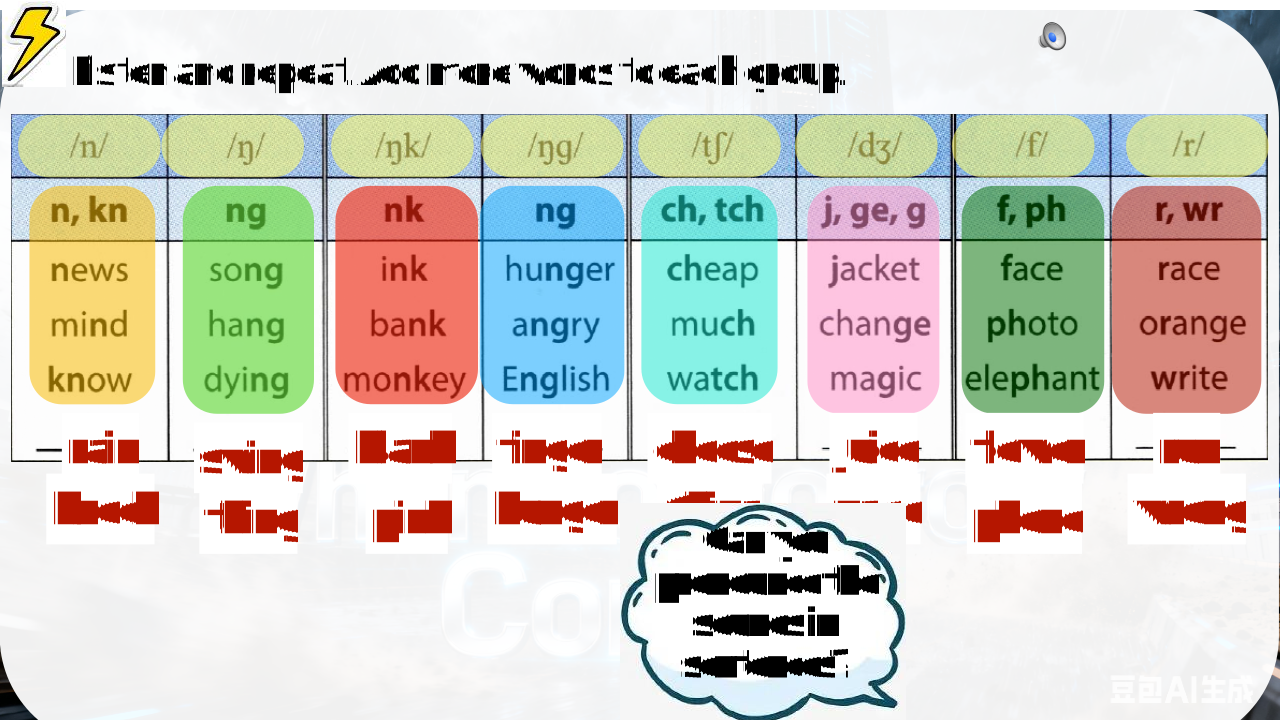
/f/
/ŋ/
/dʒ/
/tʃ/
/n/
/r/
What other words can you think of?
Listen and repeat. Add more words to each group.
rain
knock
swing
thing
blank
pink
finger
hunger
cheese
China
juice
page
flower
phone
run
wrong
Can you pronounce the sounds in sentences?
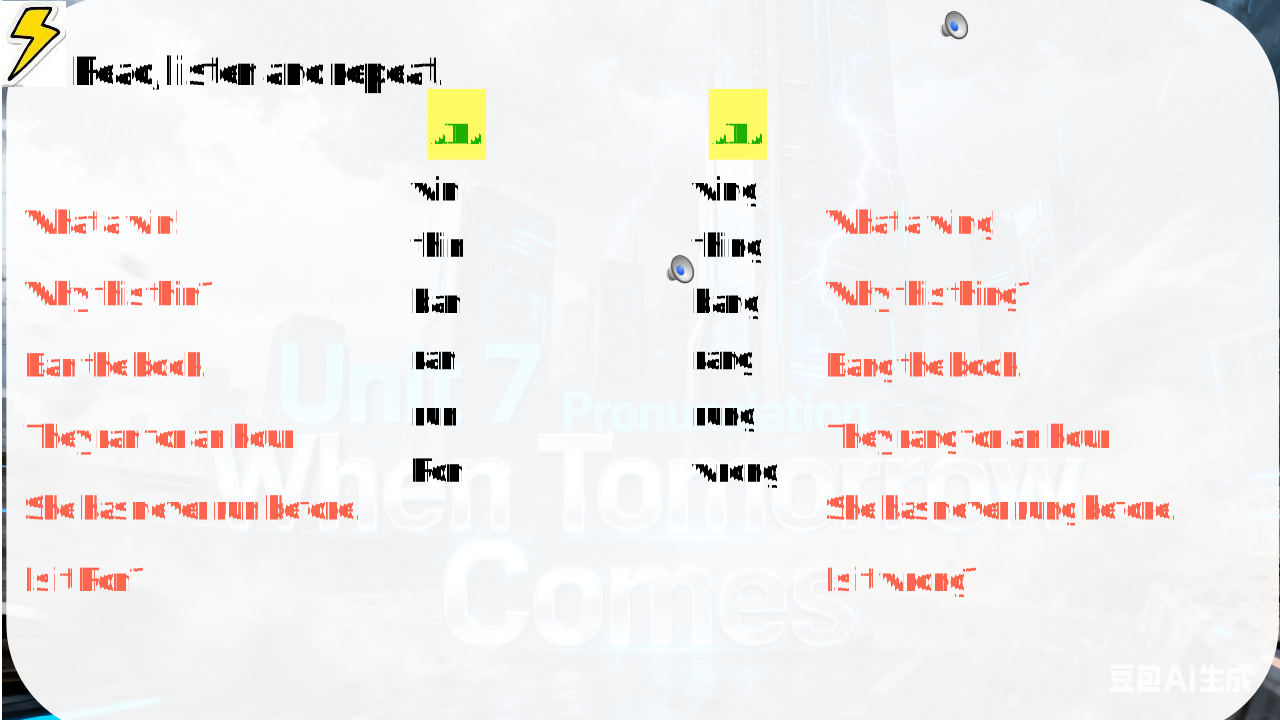
Read, listen and repeat.
win
thin
ban
ran
run
Ron
/ŋ/
/n/
wing
thing
bang
rang
rung
wrong
What a win!
Why this thin?
Ban the book.
They ran for an hour
She has never run before.
Is it Ron?
What a wing!
Why this thing?
Bang the book.
They rang for an hour
She has never rung before.
Is it wrong?
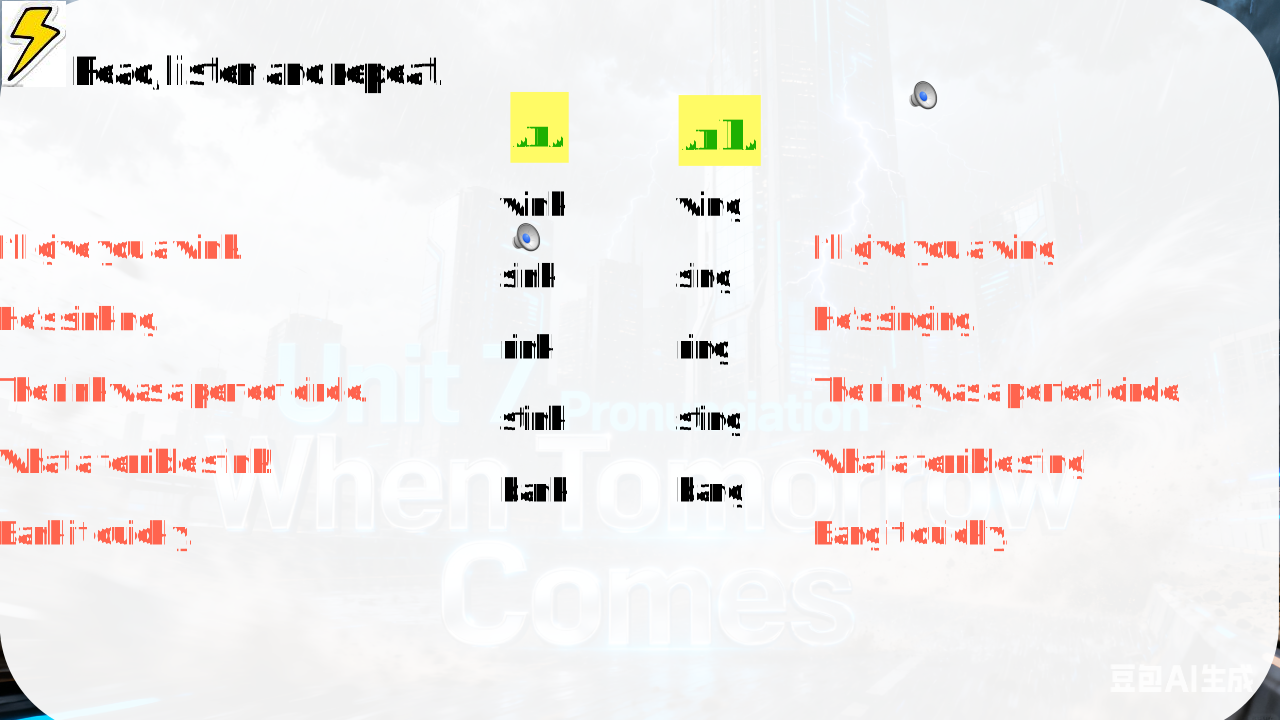
Read, listen and repeat.
/ŋ/
/ŋk/
wink
sink
rink
stink
bank
wing
sing
ring
sting
bang
I’ll give you a wink.
He’s sinking.
The rink was a perfect circle.
What a terrible stink!
Bank it quickly.
I’ll give you a wing.
He’s singing.
The ring was a perfect circle.
What a terrible sting!
Bang it quickly.
Listen carefully to find out 8 errors and correct them.
DUNCAN KING: (angrily) Bang! Bang! Bang! Sharon! What are the Langs doing at nine o'clock on Sunday evening?
SHARON KING: Well, Angus Lang is talking, Duncan.
DUNCAN KING: Yes, but what's the banging noise, Sharon?
SHARON KING: (looking out of the window) Angus is standing on a ladder and banging some nails into the wall with a hammer. Now he's putting some strong string on the nails.
DUNCAN KING: And what's Susan Lang saying?
SHARON KING: Susan's bringing something pink for Angus to drink. Now she's putting it under the ladder, and ... Ohh!
DUNCAN KING: What's happening?
SHARON KING: The ladder's falling ...
DUNCAN KING: What's Angus doing?
SHARON KING: He's holding the string in his fingers and he's whispering to Susan.
DUNCAN KING: And is Susan helping him?
SHARON KING: No. She's walking to our house. Now she's ringing our bell.
DUNCAN KING: I'm not going to answer it. I'm sleeping.
/ŋ/
/ŋk/
/ŋg/
-ing结构中常见/ŋg/
morning
singing
hanging
doing
interesting
going
shouting
running
How are they feeling?
Angry
Scared
/ŋg/
/dʒ/
/tʃ/
Read, listen and repeat.
cheap
choke
riches
cherries
larch
H
jeep
joke
ridges
Jerry’s
large
age
It’s a cheap type of car.
Are you choking?
A land full of riches.
Do you like cherries?
I want a larch tree.
Do I write ‘H’ here?
It’s a jeep type of car.
Are you joking?
A land full of ridges.
Do you like Jerry’s?
I want a large tree.
Do I write ‘age’ here?
Read, listen and repeat.
CHARLES: Good morning, Mrs Church.
MRS CHURCH: Good morning, Charles. I'd like some chops for the children’s lunch.
CHARLES: Chump chops or shoulder chops, Mrs Church?
MRS CHURCH: I'll have four shoulder chops, and I want a small chicken.
CHARLES: Would you like to choose a chicken, Mrs Church?
MRS CHURCH: Which one is cheaper?
CHARLES: This one's the cheapest. It's a delicious chicken.
MRS CHURCH: How much is all that? I haven't got cash. Can I pay by credit
card?
CHARLES: Of course, Mrs Church.
/tʃ/
How are they feeling?
Happy
Cheerful
Listen and fill in the blanks.
/dʒ/
JERRY: Just outside this there's a very dangerous bridge.
JOHN: Yes. Charles told me two jeeps crashed on it in . What happened?
JERRY: Well, George Churchill was the driver of the larger jeep, and he was driving very .
JOHN: George Churchill? Do I know George Churchill?
JERRY: Yes. That ginger-haired chap. He's the of the travel agency in Chester.
JOHN: Oh, yes. I remember George. He's always telling jokes. Well, was anybody injured?
JERRY: Oh, yes. The other jeep went over the edge of the , and two children and another were badly injured.
JOHN: Oh dear! Were both the jeeps ?
JERRY: Oh, yes.
JOHN: And what happened to George?
JERRY: George? He's telling . in jail now, I suppose!
jokes
bridge
village
damaged
manager
passenger
January
dangerously
How are they feeling?
Interested
Amused
Read, listen and repeat.
/f/
PHOTOGRAPHER: Good afternoon! How may I help you?
FRED: I'm Fred Phillips. I want a photograph of myself and my wife Phillippa.
PHOTOGRAPHER: Certainly, Mr Phillips. Please fill in this form.
PHILLIPPA: I'll fill it in, Fred.
PHOTOGRAPHER: Please use this felt-tipped pen, Mrs Phillips. Mr Phillips, do you prefer a full front photograph or a profile?
FRED: A full front, don't you think, Phillippa?
PHILLIPPA: Yes. A full front photograph.
FRED: Full front.
PHILLIPPA: It's finished.
PHOTOGRAPHER: Thank you, Mrs Phillips.
How are they feeling?
Serious
Read, listen and repeat.
/r/
LARA: Are all the children grown up now, Ruth?
RUTH: Oh, yes, Lara. Ruby is the cleverest one. She's a librarian in the public library.
LARA: Very interesting. And what about Laura?
RUTH: She's a secretary at the central railway station.
LARA: And what about Rose? She was always a very pretty child.
RUTH: Rose is a waitress in a restaurant in Paris.
How are they feeling?
Interested
Proud
Listen and match the emotions with the sentences.
What an exciting sci-fi film! I really loved the story.
Can you hear the wind? It sounds scary!
My test is next week but I don't have time to study.
It’s still raining. There’s nothing to do.
I can hardly keep my eye open. I'm going to bed now.
bored
excited
scared
tired
worried
Read the sentences to each other with emotions .
Read the following sentences with correct emotions.
Oh my God! I can't believe what I am seeing!
I won the first prize in the competition. It's like a dream come true.
My heart is in my mouth as I'm about to give a speech in front of so many teachers and students.
I'm so mad at the way he treated me. It's just so unfair.
There is a strange noise outside, and I don't know what it is.
Surprised
Happy, excited
Nervous
Angry
Afraid
Read the conversation with emotions.
Peter: Teng Fei, will future life be too tiring? I’m a little worried.
Teng Fei: No! I’m excited—we will have a magic watch soon!
Peter: A magic watch? Will we forget how to know new things if it helps too much?
Teng Fei: Don’t worry! It will only fill blank English notes, not do all work.
Peter: Hmm... Will it play song when I’m bored? I hate being bored.
Teng Fei: Yes! And it will take a nice photo for us when we hang out!
Peter: Wait, will it be too noisy? I’m scared it will disturb class.
Teng Fei: No, you can turn it off! Future life will be easier, not bad.
Peter: Really? Then I won’t be tired of homework anymore?
Teng Fei: Exactly! Future will be fun—stop being worried!
How are they feeling?
Worried
Excited
Let’s watch
How will the future life be like in 100 years?
What amazing things did you see in the video?
Let’s share
Let’s predict
Helen also sees Jennifer watching a video about future predictions. What might they discuss?
/tekˈnɒlədʒi/ n. 科技
Let’s listen
Listening tip1:
Before liestening, read the sentence before and after to predict the answers.
B
A
D
C
Listening tip2:
Pay attention to the context and the linking words.
What aspects of future life do they talk about?
Let’s read
People in cities(population)
Education
Health care
aspects of future life
Transport system
Length of life
B. there will be more people in cities
A. there will be fewer traffic accidents
D. people will live longer
C. we’ll have better health care technology
/ˌedʒuˈkeɪʃn/
n. 教育
/leŋθ/
n. 时长;长度
Helen: Hi, Jennifer. What's up?
Jennifer: Oh, hi, Helen. I'm watching a video about future predictions.
Helen: So, what will the future be like?
Jennifer: Well, there will be more people in cities, but the transport system will be more efficient. It means that there will be fewer traffic accidents.
Helen: Sounds great! Any other predictions?
Jennifer: Students probably won't go to a school in the future. They will study at home or any place they want.
Helen: Oh, but I really like going to school! Anything else?
Jennifer: And people will live longer.
Helen: Really? Why?
Jennifer: Because we'll have better health care technology in our homes. Machines will tell us how to solve small health problems before they become bigger.
Helen: That'll be great. How long will most people live?
Jennifer: Well, more people will live to be over 100 years old. Some may even live to be 150.
Helen: Wow, that sounds wonderful!
What will the future be like?
People in cities
Transport system
Education
Health care
Length of life
more people
more efficient,
fewer traffic accidents
study at home or any place the students want
live to be over 100 years, even 150
home health care,
machines help solve small health problems
Let’s read
Read the conversation and complete the table.
2b
Helen: Hi, Jennifer. What's up?
Jennifer: Oh, hi, Helen. I'm watching a video about future predictions.
Helen: So, what will the future be like?
Jennifer: Well, there will be more people in cities, but the transport system will be more efficient. It means that there will be fewer traffic accidents.
Helen: Sounds great! Any other predictions?
Jennifer: Students probably won't go to a school in the future. They will study at home or any place they want.
Helen: Oh, but I really like going to school! Anything else?
Jennifer: And people will live longer .
Helen: Really? Why?
Jennifer: Because we'll have better health care technology in our homes. Machines will tell us how to solve small health problems before they become bigger.
Helen: That'll be great. How long will most people live?
Jennifer: Well, more people will live to be over 100 years old. Some may even live to be 150.
Helen: Wow, that sounds wonderful!
1.What is Jennifer watching?
2. Is Helen interested in the future? How do you know?
A video about future predictions.
Yes, Helen is interested.
She asks questions about future predictions and wants to know more.
She has a positive attitude.
Read and answer
Read again and answer the questions.
2c
3. Is the video positive about the future or not? How do you know?
Read and answer
Use some positive words :
efficient, fewer, better, even
Yes, it is. Jennifer mentions improvements like:
More efficient transport (fewer accidents)
Different education (studying anywhere)
Better health care (living longer, up to 150 years)
Listen to the conversation again. Then role-play it.
Helen: Hi, Jennifer. What’s up?
Jennifer: Oh, hi, Helen. I’m watching a video about future predictions.
Helen: So, what will the future be like?
Jennifer: Well, there will be more people in cities, but the transport system will be more efficient.
2d
Role-play the conversations.
Actors should:
✭✭✭Use correct language.
(使用正确语言)
✭✭Speak loudly and clearly with feelings.
(言语饱含热情,大声且清晰)
✭✭Correct tones and proper body language.
(正确语调和恰当的身体语言)
✭✭✭Without books.
(脱离课本)
Actor 1: Helen
Actor 2: Jennifer
Pair work
行业PPT模板http://www.1ppt.com/hangye/
行业PPT模板http://www.1ppt.com/hangye/
单击此处编辑母版标题样式
单击此处编辑母版文本样式
单击此处编辑母版文本样式
二级
三级
四级
五级
25
Part 3. What do you think life will be like in the future? Make up a conversation about your future predictions.
2e
Topic My prediction My partner’s prediction
Home
Population
Transport
Job
Free time
A: Do you think there will be more / less / fewer … in the future?
B: Yes, I think there will … / Well, I don’t think there will …
A: Do you think we will …?
B: …
topic /ˈtɒpɪk/ n. 话题;题目;标题
partner /ˈpɑːtnə(r)/ n. 搭档;同伴
For example
Topic My prediction My partner’s prediction
Home
Population
Transport
Job
Free time
Homes will be fully smart, with robots doing most housework.
Homes will have more green spaces inside, like small gardens.
The world population will grow more slowly.
The population in big cities will decrease as people move to suburbs.
Flying cars will be common for short trips.
Maglev trains will connect more cities at very high speeds.
More jobs will be related to AI and data analysis.
There will be more jobs in space-related industries.
People will spend more free time on virtual-reality travel.
People will use free time to learn new skills in community centers.
输入您的标题
Language Points!
1. What’s up? 怎么了?
What’s up? 可以翻译为“怎么了;出什么事了;近来如何”
【类似表达】
(1) How’s it going? 最近怎么样;进展如何
日常寒暄,问对方生活近况,也能用于询问工作、项目等进展,比如 “How’s it going with your new project?(你的新项目进展咋样啦? )” 。
(2) How’s everything? 一切都好吗;一切进展如何
从更全面的角度,关心对方生活各方面(工作、家庭、心情等 )的状态,比如许久未见的同学,问 “How’s everything?(一切都还好不? )” ,想了解整体情况 。
Language Points!
2. So, what will the future be like? 那么,未来会是什么样子呢?
【辨析】
(1) What...be like?:侧重询问事物的具体特征、样子或性质(如 “未来的科技、社会形态是怎样的”),回答需描述具体属性。
例:The future will be like a world full of smart technologies.
未来会像一个充满智能科技的世界。
(2) How...be?:侧重询问事物的状态、方式或程度(如 “未来会如何发展”),回答需说明过程或感受。
例:How will the future be different from now? 未来会如何与现在不同?
Language Points!
3. How long will most people live? 大多数人会活多久?
how long 多长,多久
【辨析】
疑问词 提问对象 常见回答示例 例句
how long 时间长度 / 事物长度 时间段(如 30 年、5 米) How long does a marathon last?
how far 距离 距离数值(如 10 公里、500 米) How far is the school from here?
how soon 将来的时间点(“多久之后”) “in + 时间段”(如 in a week 一周后) How soon will the project be finished?
how many 可数名词的数量 具体数字(如 5 本书、10 个人) How many students are in the class?
how much 不可数名词的数量 / 价格 数量(如 2 升水)或价格(如 $10) How much water is in the bottle?
How much is the ticket?
Language Points!
4. Well, more people will live to be over 100 years old. 嗯,更多人将活到 100 岁以上。
陈述句,使用 “will + 动词原形” 的一般将来时,表达对未来的预测。
【拓展】over词义
(1) “在…… 上方 / 超过”①空间上的 “在…… 正上方”(不接触)
例:A bridge is over the river.(河上有一座桥。)
对比:on(接触表面),above(不一定正上方)。
②数量 / 程度上的 “超过;多于”(= more than)
Language Points!
例:over 100 people(超过 100 人)
over 50% of the population(超过 50% 的人口)
在本句中的用法:over 100 years old = 超过 100 岁,强调年龄的界限。
③时间上的 “在…… 期间”
例:Discuss it over dinner. 吃饭时讨论这事。
搭配:over the years(多年来)、over night(一夜之间)。
(2) 遍及 / 结束 / 关于
①遍及;覆盖”(= all over)
例:Snow is over the ground. 地上全是雪。
Language Points!
短语:all over the world(全世界)。
②“结束;完结”(= finished)
例:The game is over.(比赛结束了。)
搭配:over and done with(彻底结束)。
③“关于;对于”(= about)
例:They argued over money.(他们为钱争吵。)
类似用法:quarrel over sth.(为某事争吵)。
1. Traffic systems need to be more ____________(效率高的;有功效的) to reduce congestion in cities.
2. ______________(科技) helps make transport faster, like high-speed trains and self-driving cars.
3. A video about future ____________(教育) might show students learning through virtual reality.
4. Working with a partner, we discussed how efficient ______________(交通运输系统) improves daily life.
Exercise-根据句意和汉语提示完成句子
efficient
Technology
education
transport
输入您的标题
Exercise-翻译题
1. 交通系统将变得更高效。
The traffic system will become more efficient.
2. 科技将改变未来的运输方式。
Technology will change future transport methods.
3. 这个视频将讨论教育的未来。
This video will discuss the future of education.
4. 我和搭档将设计高效的运输系统。
My partner and I will design an efficient transport system.
输入您的标题
What are the benefits of predicting the future?
It helps us get ready for what's coming and make good choices.
Unit 7 Section A 2a~2e
Must-do 必做
1. Recite the key words, phrases and sentence patterns in 2a.
2. Record a video with your friend about what you both think the future will be like, and write down the content of your conversation.
Choose to do 选做
1.Create a poster about future life, label the content of the pictures in English, and write down your expectations and predictions for future life on the poster.
Homework
null
46656.0
null
213198.3
null
26488.3
null
29988.79
null
27141.377
null
22726.582
null
77557.305
null
32992.92
null
34090.008
null
39105.258
null
56005.605
null
33802.676
null
23797.627
null
54020.402
null
86857.805
null
87693.805
$
资源预览图
1

2
3
4
5
6

相关资源
由于学科网是一个信息分享及获取的平台,不确保部分用户上传资料的 来源及知识产权归属。如您发现相关资料侵犯您的合法权益,请联系学科网,我们核实后将及时进行处理。