Unit 6 SectionA 1a-Pronunciation 课件2025-2026学年人教版英语七年级上册
2025-12-06
|
24页
|
366人阅读
|
1人下载
普通
资源信息
| 学段 | 初中 |
|---|---|
| 学科 | 英语 |
| 教材版本 | 初中英语人教版七年级上册 |
| 年级 | 七年级 |
| 章节 | 1a-1e,Pronunciation |
| 类型 | 课件 |
| 知识点 | - |
| 使用场景 | 同步教学-新授课 |
| 学年 | 2025-2026 |
| 地区(省份) | 全国 |
| 地区(市) | - |
| 地区(区县) | - |
| 文件格式 | PPTX |
| 文件大小 | 7.23 MB |
| 发布时间 | 2025-12-06 |
| 更新时间 | 2025-12-06 |
| 作者 | 志高茶吧机运城总代(15203488487) |
| 品牌系列 | - |
| 审核时间 | 2025-12-06 |
| 下载链接 | https://m.zxxk.com/soft/55305613.html |
| 价格 | 1.00储值(1储值=1元) |
| 来源 | 学科网 |
摘要:
该初中英语课件围绕“日常作息与时间表达”核心,从图片情境提问导入,通过学习起床、穿衣等日常活动短语,归纳整点、半点等时间表达规则,结合听力辨活动、对话练提问,构建从具体到抽象的语言学习支架。
其亮点在于融合语言能力、思维品质与学习能力培养,如用图片直观呈现日常活动(如get up, brush teeth)、听力材料(1b听辨Peter晨间活动)提升语言应用,引导归纳时间规则(顺读逆读等)和反思表格(自评时间表达能力)培养思维,作业反思作息与拓展学习促进主动学习。学生能提升交流能力与时间管理意识,教师可借结构化活动高效教学。
内容正文:
Unit 6 A Day in the Life
Lesson 1 Opening Page, Section A 1a–1d, Pronunciation
Learning objectives:
1.能正确识别含有时针和分针的钟表图显示的具体时刻,并能用
英语正确描述这些时刻。
2.能通过听获取有关生活作息的细节信息,包括具体的日常活动
以及这些活动的具体时间。
3.能使用what time 和when 引导的特殊疑问句与同伴相互询问晨间作息,
并能使用正确的时间表达法描述具体时间。
4.能结合听力语境中人物的作息习惯来对比和反思自己的日常作息习惯。
A Day in the Life
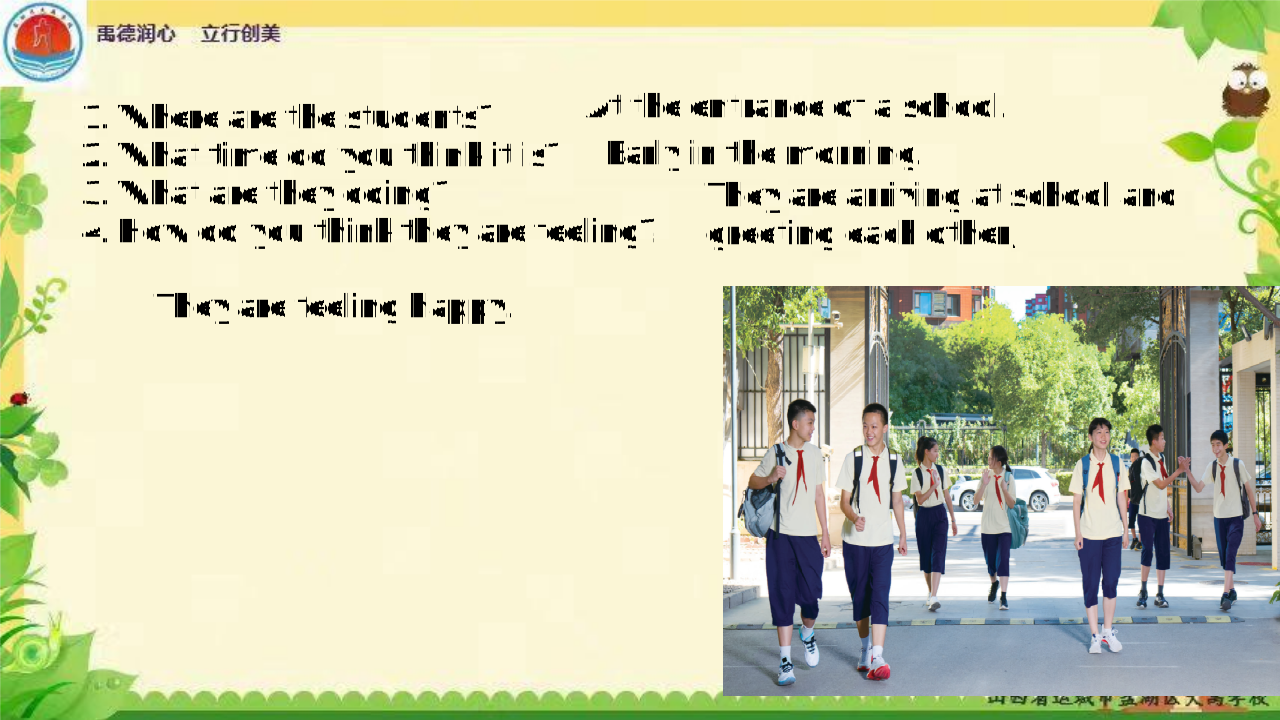
Look at the title and the photo. What do you think this unit is about?
1. Where are the students?
2. What time do you think it is?
3. What are they doing?
4. How do you think they are feeling?
At the entrance of a school.
Early in the morning.
They are arriving at school and
greeting each other,
They are feeling happy.
Look at the opening page and answer the questions.
(1) What do you see in the photo?
(2) How long do you study every day?
(3) What do you do every day? How do
you spend your school day?
I can see students coming through the gate to their school.
I study for...hours at school every day.
Look at the pictures and speak out the routine (常规) on a school day.
get dressed
/drest/
get up
brush teeth 刷牙
/brʌʃ/ /tiːθ/
have / eat breakfast
穿衣服
Look at the pictures and speak out the routine (常规) on a school day.
go to school
on duty
/ˈdjuːti/
have class
have lunch
值日
/lʌntʃ/
/tʃ/
Look at the pictures and speak out the routine (常规) on a school day.
play sport
have dinner
do homework
do some reading
Look at the pictures and speak out the routine (常规) on a school day.
take a shower
/ˈʃaʊə(r)/
go to bed
淋浴
brush teeth 刷牙
Read the new phrases after the teacher.
/brʌʃ/
take a shower
/ˈʃaʊə(r)/ n. 淋浴
get dressed 穿衣服
/drest/
/s/
/tiːθ/
/ʃ/
on duty
/ˈdjuːti/ n. 值日
/θ/
Activity Time Description
get up Every morning, I get up at six.
Every morning, I get up at six o'clock.
have breakfast At six fifteen, I have breakfast at home.
At a quarter past six, I have breakfast at home.
...
Find out the rules about telling time.
(1) 整点:
• 基数词 (+ o’clock)
(2) 非整点:
• 顺读法(直接法):小时+分钟
/ʒ/
— What time / When do you usually get up?
— I usually get up at seven (o’clock).
/ˈjuːʒuəli/ adv. 通常地
— What time / When do you read books?
— I read books at nine four.
(2) 非整点:
• 逆读法(间接法):先分钟,后小时
①分钟数小于 30:分钟+past+小时.
②分钟数大于 30:(60-分钟数)+to+(小时数+1).
— What time / When do you play sport?
— I play sport at four past nine.
— What time / When do you have math class?
— I have math class at five to four.
③半点:用 half (n. 一半)
④一刻钟:用 quarter (n. 15 分钟,四分之一)
— What time / When do you usually go to bed?
— I usually go to bed at half past nine.
— What time / When do you go to school?
— I go to school at a quarter to eight.
1a. Match the clocks with the times.
_____ one forty-five / a quarter to two _____ six fifteen / a quarter past six
_____ eight / eight o’clock _____ four thirty / half past four
A: What’s the time? / What time is it?
B: It’s ...
C
D
A
B
1b. Listen to the first conversation and tick Peter’s activities this morning.
□ take a shower □ get dressed
□ brush his teeth □ have breakfast at home
Peter gets dressed and brushes his teeth this morning, but he doesn’t take a shower or have breakfast at home.
1c. Listen to the second conversation. Why are Peter and Han Lin at school early? Match the names with the reasons.
(1) Peter A. do some reading before class
(2) Han Lin B. on duty
Peter is on duty today.
Han Lin likes to do some reading before class.
1d. Listen to the two conversations again and fill in the blanks.
(1) Peter’s school begins at _____________________.
(2) Peter usually gets up at _____________________.
(3) Peter usually has breakfast at _________________.
(4) Peter usually takes a shower __________________.
(5) Han Lin usually takes a shower ________________.
eight
half past six
ten to seven
in the morning
at night
different
(不同的)
Read after the two conversations and answer the questions.
(1) How to ask about time? (2) How to make good use of time?
Conversation 1
Mum: Peter! Get up! You’re late!
Peter: What time is it?
Mum: A quarter past six.
Peter: It’s too early! School is at eight.
Mum: But you’re on duty today!
Peter: Oh, no! I’m late!
Mum: Quickly! There’s no time for a shower. Get dressed and go.
Peter: I can still brush my teeth.
Mum: And here’s your breakfast. Take it to school.
Peter: Thank you, Mum! Bye!
Mum: Be safe.
to show
nervousness
紧张感
ask about time
Read after the two conversations and answer the questions.
(1) How to ask about time? (2) How to make good use of time?
Conversation 2
Han Lin: Why are you at school so early, Peter? It’s only seven o’clock.
Peter: I’m on duty today. You’re here early too, Han Lin!
Han Lin: I like to do some reading before class. What time do you usually get up?
Peter: At half past six.
Han Lin: When do you have breakfast?
Peter: At ten to seven. Before that, I brush my teeth and take a shower.
Han Lin: Oh, I usually take a shower at night.
Peter: Really? My family take showers in the morning.
ask about time
Read after the two conversations and answer the questions.
(1) How to ask about time?
— What time is it?
— It’s +时间 / 时间.
— What time / When do you ...?
— I ... at + 时间 / At + 时间.
(2) How to make good use of time?
• Get up early. The early bird catches the worm.
• Do some reading before class.
1e. Work in pairs. Talk about your school day routine in the morning. How can you make good use of your time?
Example:
A: What time do you usually get up?
B: I usually get up at ...
A: When do you have breakfast?
B: I usually have breakfast at ...
...
get up
get dressed
brush teeth
have breakfast
on duty
do some reading
have class
How well can you do these things? Very well OK Needs
work
I can tell the time in English.
I can get the main idea and details of the listening materials.
I can ask about daily routines with what time and when.
I can learn the importance of making use of my morning time.
Finish the reflecting chart.
Homework
You must ...
write down the conversation between you and your partner on your
morning routine, improve it and reflect on how well you use your time.
You may ...
surf the internet to learn more about how to make good use of your
morning time.
null
Other
40646.402
Other
40724.766
Other
80431.055
$
资源预览图
1

2

3
4

5

6
相关资源
由于学科网是一个信息分享及获取的平台,不确保部分用户上传资料的 来源及知识产权归属。如您发现相关资料侵犯您的合法权益,请联系学科网,我们核实后将及时进行处理。