Unit5 Grammar- Word power 知识总结与拓展 2025-2026学年译林版八年级英语上学期
2025-11-30
|
6页
|
425人阅读
|
17人下载
普通
摘要:
该初中英语知识清单系统梳理了8A Unit 5核心内容。从重点词汇(如arrive、necessary的用法及辨析)入手,过渡到动词不定式的语法功能(作宾语、宾补、目的状语),再延伸至Word power的构词法(动词变名词、形容词变名词的词缀规则),搭建从基础词汇到语法应用再到构词拓展的学习支架。
知识链路按“词汇用法-语法功能-构词规律”递进,逻辑清晰。通过对比辨析(如arrive与reach、accept与receive)提升语言能力,动词不定式分类讲解培养思维品质,词缀规则总结及单选、翻译等多样化习题助力学习能力,体现英语学科“用法-结构-拓展”的特色学习方法。
内容正文:
8A Unit 5知识总结与拓展
【8A Unit 5 Grammar --- Word power】
【重点语言知识点精讲】
知识点1. When we arrived at the zoo, the pandas started to come out of their home. (P 70)
【回顾】arrive的相关用法
arrive是不及物动词, 不能直接接宾语, 必须与介词搭配使用, 其名词为: 。[答案]arrival
①arrive in+大地方(国家、城市等较大的区域)
e.g. We will arrive in Beijing tomorrow morning. 我们将在明天早上抵达北京。
②arrive at+小地方(具体地点、建筑、场所)
e.g. Please call me when you arrive at the airport. 你到达机场时请给我打电话。
[注]当后面的地点为here, there, home, abroad这样的副词, 则不需要介词。
[拓]与get to 和reach 区别
①get to, 短语动词, get to+地点(口语中最常用)。 e.g. We got to the hotel.
②reach, 及物动词, 后面直接加地点作宾语。 e.g. We reached the hotel.
【翻译】你能告诉我明天你什么到?
[答案] Can/Could you tell me when you arrive tomorrow?
知识点2. Use the plural/ˈplʊərəl/ form if necessary. (P 72)
【词汇】necessary [词性词意] --- adv.必要地 --- adj.没必要的
---*necessity/nəˈsesəti/ 常用的表达:①if necessary
②when necessary ③It is necessary (for sb) to do sth
e.g.It doesn’t seem necessary for us to meet. 我们似乎没必要见面。
Only use your car when absolutely necessary. 非用不可的时候才用你的汽车。
[答案] adj.必要的; necessarily; unnecessary; n.必要, 必需品
①如果必要的话 ②必要时 ③做某事(对某人来说)是必要的。
【翻译】掌握实操技能对学生来说是多么必要啊!
[答案]How necessary it is for students to master the hands-on skills!
知识点3. We should not hurt them for any reason. (P 72)
【讲解】reason的相关用法总结
1)reason n.原因, 理由 --- adj.合理的, 公道的 --- adv.合理地
2)①We aren’t going for the simple reason that we can’t afford it. [reason: ]
2)②Human beings have the power of reason. [reason: ]
2)③She reasons that she must leave her bag on the train. [reason: ]
[答案] reasonable; reasonably; 2)①n.原因, 理由 ②n.理性, 理智 ③v.推理, 论断
【搭配】①the reason for (doing) sth ②the reason why +句子
③the reason that
[答案]①(做)某事的原因 ②为什么......的原因 ③......的原因
【辨析】reason与cause
reason: 指解释某事为何发生或某人为何如此做的“理由”, 带有主观性和解释性。the reason for
e.g.The reason she was late was that her alarm didn’t go off. 她迟到的理由是闹钟没响。
cause: 指直接导致某事发生的“原因”, 强调客观的因果关系。the cause of
e.g. The cause of the fire was a faulty wire. 火灾的原因是电线故障。
【翻译】这就是我下定决心学好法语的原因。
[答案]This is the reason that I made up my mind to learn French well.
知识点4. We hope you can accept our invitation to protect them. (P 72)
【讲解】accept --- adj.可接受的 ---*acceptance ;例句如下:
[答案]v.接受; acceptable; n.接受
①He accepted my apology. 他接受了我的道歉。
②I accept that I made a mistake. 我承认我犯了一个错误。
【辨析】 accept v& receive
1)receive, “收到, 接到”, 客观行为, 指“接到”物品、信息等,不涉及主观意愿
I received a gift from him. 我收到了他的一份礼物。[ 只说明“收到”这个动作]
2)accept, “接受, 同意”, 主观意愿, 表示乐意“接受”或“同意”
I accepted his gift. 我接受了他的礼物。[说明主观上“愿意收下”]
[经典对比句]
I received an invitation to the party, but I did not accept it. 我收到了派对的邀请, 但我没有接受/答应去。
[received: 客观收到了邀请函; did not accept: 主观决定不参加]
【翻译】1.你收到我昨天发的信息了吗?
2.我几乎无法接受他去世的事实。
[答案]1.Did you receive the message I sent you yesterday?
[答案]2.I can hardly accept the fact that he died.
知识点5. 词组表达:
1.完成她的文章 2.在......的帮助下
[答案]1.complete her article 2.with the help of ...
3.几分钟后 4.试图爬上树
[答案]3.a few minutes later(several det.几个) 4.manage to climb up the tree
5.无法下来 [拓展] n.失败
[答案]5.fail to get down; failure
6.express purposes/ˈpɜːpəs/ 7.especially in formal writing
[答案]6.表达/明确目的 7.尤其在正式写作中
8.发出很大的声音 9.学习捕猎技巧
[答案]8.make loud sounds 9.learn hunting skills
10.in this structure/ˈstrʌktʃə(r)/ 11.express a negative meaning
[答案]10.在该结构中 11.表达否定含义
12.use a dictionary to help you
[答案]12.使用字典来帮助你
13.处在危险之中
[词汇拓展]①dangerous ②endanger ③*endangered
[答案]in danger; ①adj.危险的 ②vt.危及 ③adj.濒危的
【8A Unit 5 Grammar】
【语法知识点总结与练习】
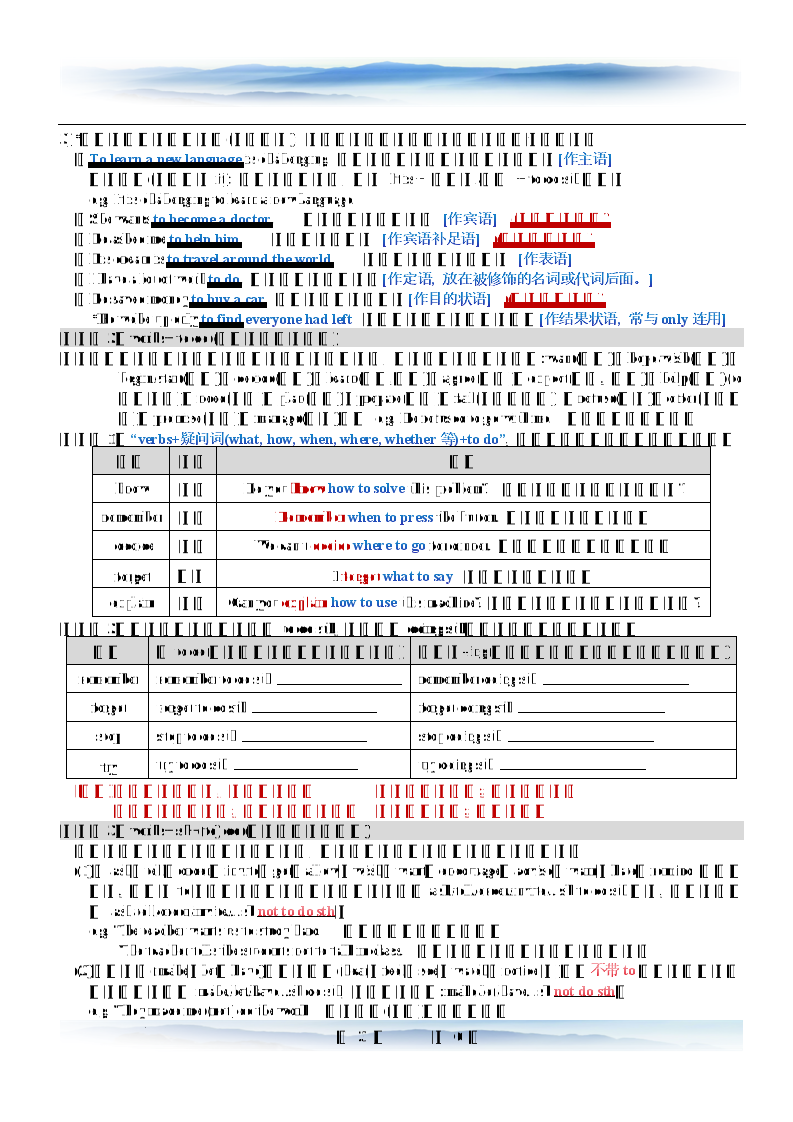
【语法1】动词不定式概述
1)定义: 动词不定式是动词的一种非谓语形式, 不能单独作谓语, 因此不受主语人称和数的限制。其基本结构是: to +动词原形(to do), 其否定形式为:not to do。e.g. He decided not to go. 他决定不去了。
2)*动词不定式的核心用法(句法功能): 在句中几乎可以充当除谓语以外的所有成分。
①To learn a new language is challenging. 学习一门新语言是具有挑战性的。[作主语]
常用句型(形式主语it): 为了使句子平衡, 常用 It is + 形容词/名词 + to do sth结构。
e.g. It is challenging to learn a new language.
②She wants to become a doctor. 她想成为一名医生。 [作宾语] (本单元的重点)
③He asked me to help him. 他请我帮助他。 [作宾语补足语] (本单元的重点)
④His dream is to travel around the world. 他的梦想是环游世界。 [作表语]
⑤I have a lot of work to do. 我有很多工作要做。[作定语, 放在被修饰的名词或代词后面。]
⑥He saved money to buy a car. 他省钱是为了买车。[作目的状语] (本单元的重点)
*He woke up only to find everyone had left. 他醒来却发现大家都走了。[作结果状语, 常与only连用]
【语法2】verbs+ to do (动词不定式作宾语)
【讲解】动词不定式在句子中充当谓语动词的宾语, 这类谓语动词常见的有:want(想要)、hope/wish(希望)、begin/start(开始)、decide(决定)、learn(学习,学会)、agree(同意)、expect(期待, 预料)、help(帮助)(to可以省略)、need(需要)、plan(计划)、prepare(准备)、fail(失败、未能) 、refuse(拒绝)、offer(主动提出)、promise(承诺)、manage(设法)等。 e.g. He refused to go with me. 他拒绝和我一起去。
【拓展1】“verbs+疑问词(what, how, when, where, whether等)+to do”, 相当于一个简化的宾语从句。例如
动词
中文
例句
know
知道
Do you know how to solve this problem? 你知道如何解决这个问题吗?
remember
记住
Remember when to press the button. 记住什么时候按按钮。
decide
决定
We can’t decide where to go for dinner. 我们决定不了去哪吃晚饭。
forget
忘记
I forgot what to say. 我忘了该说什么了。
explain
解释
Can you explain how to use this machine? 你能解释一下怎么用这台机器吗?
【拓展2】有些动词后面既可以加to do sth, 也可以接doing sth。但表达的含义是不同的。
动词
接to do(表示未发生的、一次性的动作)
接动词-ing(表示已发生的、习惯性的动作或经历)
remember
remember to do sth
remember doing sth
forget
forget to do sth
forget doing sth
stop
stop to do sth
stop doing sth
try
try to do sth
try doing sth
[答案]①记得去做某事; 记得做过某事 ②忘记去做某事; 忘记做过某事
[答案]③停下来去做某事; 停止正在做的事情 ④努力做某事; 尝试做某事
【语法3】verbs+ sb+(to) do (动词不定式作宾补)
动词不定式可以用来说明宾语的情况, 此时动词不定式在句中充当宾语补足语。
(1)在ask、tell、order、invite、get、allow、wish、want、encourage、advise、warn、hate、remind 等动词之后, 常用带to的动词不定式作宾语补足语。即构成ask/tell/order/invite/...sb to do sth结构, 其否定形式为 ask/tell/order/invite/...sb not to do sth。
e.g. The teacher wants us to study hard. 老师想要我们努力学习。
The teacher tells the students not to talk in class. 老师告诉学生们不要在课堂上讲话。
(2)使役动词(make、let、have)和感官动词(hear、feel、see、watch、notice等)后跟不带to的动词不定式作宾语补足语。即make/let/have...sb do sth, 其否定形式为:make/let/have...sb not do sth。
e.g. They made me (not) do the work. 他们让我(不要)做这项工作。
I often hear the boy sing the same song. 我经常听到那个男孩唱同一首歌。
【注意】hear/see/notice/... sb do sth 与hear/see/notice/... sb doing sth的区别
①hear/see/notice/...sb do sth 听见/看见/察觉/......某人经常做某事(或表示整个事件的全过程)
②hear/see/notice/... sb doing sth 听见/看见/察觉/......某人正在做某事
【拓展】固定搭配:①had better (not) do sth ②would rather do sth
固定搭配:③why not do sth? e.g. You’d better go now. 你最好现在就走。
[答案]①最好(不要)做某事 ②宁愿做某事 ③为什么不做某事?
(3)动词help后跟动词不定式作宾语补足语时, 动词不定式可带to也可不带 to。
e.g. She often helps her mother ( to ) do the housework. 她经常帮她妈妈做家务。
【语法4】动词不定式(to do)表目的
【讲解】当我们要表达“为了做某事”时, 就可以使用“to do”不定式。它相当于中文里的“为了...”、“以便...”、“用来...”。基本结构:主语+谓语+宾语+ to do.../ 主语+谓语+to do... 例句如下:
①I saved money to buy a new computer. 我存钱是为了买一台新电脑。
②He went(vi.) to the library to study. 他去图书馆学习。
[注]为了特别强调目的, 可以将“to do”短语提到句首, 并用逗号与主句隔开。这种用法语气更强。
e.g. To improve your English, you need to practice every day. 为了提高英语, 你需要每天练习。
【拓展1】“in order to”和“so as to”的意思与简单的“to”完全相同, 但语气更正式, 目的性更强, 常用于书面语。即: in order to do sth(为了做某事) = so as to do sth(以便做某事) [否定形式 “in order not to”或“so as not to”]
e.g. We need to leave early in order to avoid the traffic jam. 我们需要早点出发, 以避开交通拥堵。
He spoke slowly and clearly so as to make himself understood. 他说得慢且清晰, 以便让大家听懂。
[注]“in order to”可以放在句首, 而 “so as to” 通常不放在句首。
【拓展2】*“for”后面接名词或动词-ing形式, 也可以表示用途或目的, 但不能接动词原形。
e.g. This is a tool for fixing computers. 这是一件用于修理电脑的工具。= This is a tool for computer repair.
【当堂练习】
一、单项选择。
( )1. Would you please ________ the children ________ with the snake?
A. to ask; not to play B. ask; not to play C. ask; not play D. ask; don’t play
( )2. I’m trying ________ my bike. Could you show us how it?
A. to mend; to do B. mending; doing C. to mend; doing D. mending; to do
( )3. I haven’t got a seat ________ on the bus. Will you make room for me?
A. to sit B. to sit on C. sitting on D. sitting
( )4. You’d better ________ any noise. I’ve got something important .
A. not to make; to do B. not make; to do C. not make; doing D. not to make; doing
( )5. In order ________ the earliest bus, he didn’t stop ________ breakfast after getting downstairs.
A. to miss; to have B. not to miss; having C. to miss; having D. not to miss; to have
( )6. It is necessary me a plan for my studies before a new term.
A. for; to make B. of ; to make C. for; making D. of; making
[答案]BABBDA
二、用括号内所给词的适当形式填空。
7. What great fun it is (see)many wonderful animal in this zoo!
8. My mother always asks me to check whether(是否) the lights are on when (leave).
9. We all don’t know when (leave) Changzhou for Shanghai.
10. Why not (stop) (have) a rest after doing two hours of housework.
11. I often heard him (practise) playing the piano last month.
12. It’s polite (wait) for everyone to be served before eating.
[答案]7.to see 8.leaving 9. to leave 10. stop; to have 11.practise 12.to wait
三、翻译句子。
13.当地人正在尽力采取行动来保护环境。
14.如果无法决定接下来做什么, 你可以先休息下。
15.为了保护保护这些动物免受捕猎, 政府准备建立更多的自然保护区。
[答案]13.Local people are trying their best to take action to protect the environment.
14.If you can’t decide what to do next, you can take/have a break first.
15.To protect these animals from hunting, the government plans to build more nature reserves.
【8A Unit 5 Word power】
【知识点总结】
【讲解1】英语中想要把一个动词变成名词, 主要由以下几种词缀
1) -ing 含义: 将动词变为名词(即动名词), 表示该行为本身。
1) -ing 例子: ①swim → swimming ②build → building ③feel → feeling
2) -tion / -sion / -ion
含义: 这是最庞大、最重要的一类名词后缀, 表示行为、状态或结果。
①以-te结尾的动词, 常变为 -tion: complete → completion(完成)
②以-ss结尾的动词, 常变为 -ssion: discuss → discussion(讨论)
③以-de结尾的动词, 常变为 -sion: decide → decision(决定)
其他常见变化: inform → (信息), educate → (教育)
[答案]information; education
[其他词缀拓展]
3) -ment 含义: 表示行为的过程或结果。这也是常见的名词化后缀。通常直接加在动词后。
3) -ment 例子: ①achieve(实现) → achievement(成就) ②govern(统治) → government(政府)
3) -ment 例子: ③develop(发展) → development(发展) ④agree(同意) → agreement(协议)
4) -ance / -ence 含义: 表示行为、状态或性质。通常加在动词后构成抽象名词。
4) -ance / -ence 例子: ①appear(出现) → appearance(外表) ②perform(表演) → performance(表演)
4) -ance / -ence 例子: ③depend(依赖) → (依赖) *④exist(存在) → existence(存在)
[答案]dependence
*5) -al 含义: 表示行为或过程。
5) -al 例子: ①arrive(到达) → arrival(到达) ②refuse(拒绝) → refusal(拒绝)
*6) -ure 含义: 表示行为或结果。
6) -ure 例子: ①please(使高兴) → pleasure(愉快) ②fail(失败) → (失败) [答案]failure
*7)其他常见词缀:
①pack(打包) → package(包裹) ②marry(嫁, 娶) → (婚姻) ③bake(烘焙) → bakery(面包店)
④die(死亡) → (死亡) ⑤grow(生长) → (成长) *⑥fly(飞) → flight 航班, 飞行)
[答案]②marriage ④death ⑤growth
【讲解2】英语中想要把一个形容词变成名词, 主要由以下几种词缀
1) -ness 含义: 这是最常用的后缀, 加在形容词后, 表示该性质或状态。几乎可以加在任何形容词后。
1) -ness 例子: ①kind(善良的) → kindness(善良) ②happy(快乐的) → (快乐,幸福)
1) -ness 例子: ③dark(黑暗的) → darkness(黑暗) ④aware(意识到的) → (意识)
[答案]②happiness ④awareness
[其他词缀拓展]
2) -ity 含义: 表示状态或特性。非常常见, 常用于源自拉丁语的词汇, 构成更正式的抽象名词。
2) -ity 规则: 常伴有拼写变化(如辅音变音、去 e 等)。
2) -ity 例子: ①possible(可能的) → possibility(可能性) ②active(活跃的) → activity(活动)
2) -ity 例子: ③real(真实的) → (现实) *④curious(好奇的) → (好奇心)
[答案]③reality ④curiosity
3) -ence / -ance 含义: 表示状态或性质。这些后缀通常与以-ent或-ant结尾的形容词配对。
3) -ence / -ance 规则: (1)形容词(-ent) → 名词(-ence) (2)形容词(-ant) → 名词(-ance)
3) -ence / -ance 例子: ①different(不同的) → difference(不同点) ②patient(耐心的) → (耐心)
3) -ence / -ance 例子: ③important(重要的) → importance(重要性) ④distant(遥远的) → (距离)
3) -ence / -ance 例子: ⑤confident(自信的) → (自信)
[答案]②patience ④distance ⑤confidence
4) -th 含义: 表示状态或性质。数量不多但很重要。
4) -th 例子: ①warm(温暖的) → warmth(温暖) ②long(长的) → (长度)
-th 例子: ③wide(宽的) → (宽度) ④strong(强壮的) → (力量)
-th 例子: ⑤true(真实的) → (真理)
[答案]②length ③width ④strength ⑤truth
5) -dom 含义: 表示状态、领域或集体。
5) -dom 例子: ①wise(智慧的) → (智慧) ②free(自由的) → (自由)
-dom 例子: ③bored(无聊的) → (无聊) ④king(国王) → kingdom(王国)
[答案]①wisdom ②freedom ③boredom
6) -y / -ty 含义: 表示状态或特性。-ty比 -y更常见。
6) -y / -ty 例子: ①safe(安全的) → (安全) ②honest(诚实的) → (诚实)
6) -y / -ty 例子: ③difficult(困难的) → difficulty(困难) *④certain(确定的) → certainty(确定性)
[答案]①safety ②honesty
4
第 1 页 共 3 页
学科网(北京)股份有限公司
$
资源预览图

1

2
3
相关资源
示范课
由于学科网是一个信息分享及获取的平台,不确保部分用户上传资料的 来源及知识产权归属。如您发现相关资料侵犯您的合法权益,请联系学科网,我们核实后将及时进行处理。