Unit 5 Going on an exchange trip 重点语法:现在完成时精讲精练65题-2025-2026学年八年级英语上册重难点讲练全攻略(沪教版2024)
2025-11-07
|
2份
|
22页
|
400人阅读
|
38人下载

资源信息
| 学段 | 初中 |
|---|---|
| 学科 | 英语 |
| 教材版本 | 初中英语沪教版八年级上册 |
| 年级 | 八年级 |
| 章节 | Unit 5 Going on an exchange trip |
| 类型 | 题集-专项训练 |
| 知识点 | - |
| 使用场景 | 同步教学-单元练习 |
| 学年 | 2025-2026 |
| 地区(省份) | 全国 |
| 地区(市) | - |
| 地区(区县) | - |
| 文件格式 | ZIP |
| 文件大小 | 102 KB |
| 发布时间 | 2025-11-07 |
| 更新时间 | 2025-11-07 |
| 作者 | 初高中原创精品库 |
| 品牌系列 | - |
| 审核时间 | 2025-11-07 |
| 下载链接 | https://m.zxxk.com/soft/54754184.html |
| 价格 | 3.00储值(1储值=1元) |
| 来源 | 学科网 |
内容正文:
2025-2026学年一线教师制作新教材英语同步精品系列资料,名师遴选!
2025-2026学年一线教师制作新教材英语同步精品系列资料,名师遴选!
学校:___________姓名:___________班级:___________考号:___________
Unit 5 Going on an exchange trip
重点语法:现在完成时精讲精练65题
语法知识精讲
项目
具体内容
核心定义
表示过去发生的动作对现在造成的影响 / 结果,或动作从过去持续到现在(可能继续)。
基本结构
肯定式:主语 + have/has + 过去分词(V-ed)
否定式:主语 + have/has + not + 过去分词
疑问式:Have/Has + 主语 + 过去分词?
have/has 用法区别
主语为第一、二人称(I/we/you)及复数名词 / 代词 → 用 have主语为第三人称单数(he/she/it)及单数名词 → 用 has
常用时间标志词
already(已,肯定句)、yet(还,否定 / 疑问句)、ever(曾经)、never(从未)、just(刚刚)、for + 时间段、since + 时间点 / 从句、so far(到目前为止)
核心用法(含例句)
1. 动作对现在有影响:He has finished his homework.(他已做完作业,现在没事了)
2. 动作持续到现在:We have lived here for 5 years.(我们在这住了 5 年,现在还住)
与一般过去时的区别
现在完成时:强调 “现在的联系”,不具体说过去时间一般过去时:强调 “过去的动作”,常跟具体时间(如 yesterday/last week)
常见易错点
1. 不能与具体过去时间状语(yesterday/ago)连用
2. for 后接时间段(3 days),since 后接时间点(2020 年)
3. 不规则动词需牢记过去分词(如 eat→eaten,go→gone)
语法知识精练
一、单项选择
1.They ________ a lot of Chinese words since they came to China.
A.learnt B.learn C.will learn D.have learnt
【答案】D
【详解】句意:自从他们来到中国,他们已经学会了很多汉语词汇。
考查时态。根据“since they came to China”可知,“since + 一般过去时”意为“自从过去的某个时候起”,是现在完成时的标志词,且主语They为复数,用have learnt。故选D。
2.My uncle ________ at the TV station since he graduated from university five years ago.
A.works B.worked C.has worked D.was working
【答案】C
【详解】句意:我叔叔自从五年前大学毕业以来就在电视台工作。
考查现在完成时的用法。根据句中“since he graduated from university five years ago”这一标志性时间状语可知,主句应用现在完成时,故选C。
3.My uncle ________ in this factory for 10 years. He likes his job very much.
A.works B.worked C.has worked D.will work
【答案】C
【详解】句意:我的叔叔在这家工厂工作10年了。他非常喜欢他的工作。
考查动词时态辨析。根据“for 10 years”,可知此处需体现“工作”这一动作从过去开始,一直持续到现在,符合现在完成时的用法。故选C。
4.—How long ________ you ________ this book?
—For two weeks. I must return it to the library tomorrow.
A.have; borrowed B.have; kept C.did; borrow D.do; keep
【答案】B
【详解】句意:——你借这本书多久了?——两周了。我明天必须把它还给图书馆。
考查现在完成时和动词辨析。根据答句“For two weeks.”可知,问句时态应为现在完成时,其结构为“have/has+动词的过去分词”,所以C选项“did; borrow”和D选项“do; keep”时态不符,可排除;A选项“have; borrowed”中borrow“借入”是短暂性动词,不能与表示一段时间的“for two weeks”连用;B选项“have; kept”中keep“保留,保存”是延续性动词,可以与表示一段时间的“for two weeks”连用,符合题意。故选B。
5.—How long ________ your parents ________ in this town?
—Since they got married 25 years ago.
A.do; live B.have; lived C.did; live D.will; live
【答案】B
【详解】句意:——你的父母在这个城镇住了多久了?——自从25年前他们结婚以来。
考查现在完成时。根据“Since they got married 25 years ago”可知,句子要用现在完成时来询问 “居住多久” ,现在完成时的结构为“have/has+过去分词”,主语“your parents”是复数,助动词用“have”,“live”的过去分词是“lived”。故选B。
6.—How long ________ you ________ this book from the school library?
—For two weeks. I must return it this Friday.
A.have; borrowed B.did; borrow C.have; kept D.do; keep
【答案】C
【详解】句意:——你从学校图书馆借这本书多久了?——两周了。我必须这周五归还。
考查现在完成时的用法。根据“For two weeks”可知此处需用现在完成时,且动词需能延续。borrow是短暂性动词,不能与时间段连用;keep是持续性动词,可与时间段搭配。句子结构为“How long have you kept…?”,表示“你持有……多久了”。keep意思是“持有”,其过去分词为kept,符合语境。故选C。
7.It ________ ten years since my uncle ________ to work in Beijing.
A.is; went B.has been; has gone C.was; went D.has been; went
【答案】D
【详解】句意:自从我叔叔去北京工作已经有十年的时间了。
考查时态。 根据“since + 一般过去时从句”搭配现在完成时可知,主语it为三单,主句用has been;since引导的从句用一般过去时,go的过去式为went。故选D。
8.Peter ________ playing football since he was six years old. Now he is one of the best players in his school team.
A.practices B.practiced C.has practiced D.will practice
【答案】C
【详解】句意:彼得从六岁起就一直在练习踢足球。现在他是校队里最优秀的球员之一。
考查时态辨析。practices练习,一般现在时;practiced一般过去时;has practiced现在完成时;will practice一般将来时。根据“since he was six years old”可知,这句话时态要用现在完成时,现在完成时的结构是“have/has+过去分词”,主语Peter是第三人称单数,助动词用has,practice的过去分词是practiced。故选C。
9.—It’s dangerous to swim in that river.
—Yes, you are right. The government ________ people ________ swim in it recently.
A.warned; don’t B.has warned; not to C.led; to not D.let; not to
【答案】B
【详解】句意:——在那条河里游泳很危险。——是的,你说得对。政府最近警告人们不要在那里游泳。
考查动词搭配和时态。warned“警告”,过去式或过去分词;led“领导”,过去式或过去分词。根据“recently”可知,动作发生在最近并对现在有影响,需用现在完成时,其结构为have/has done;“warn sb. not to do sth.”为固定搭配,表示“警告某人不要做某事”,符合语境。故选B。
10.—Excuse me, can I use your dictionary? I ________ mine at home.
—Of course. Here you are.
A.have left B.leave C.will leave D.was leaving
【答案】A
【详解】句意:——打扰一下,我能用你的字典吗?我把我的字典忘在家里了。——当然可以。给你。
考查现在完成时。根据语境可知,此处表示把字典忘在家里这个动作已经发生,并且对现在造成了影响,即现在没有字典可用,所以应该用现在完成时。故选A。
11.—I’m sorry for being late.
—Never mind. The meeting ________ for only 5 minutes.
A.has been over B.has been on C.has finished D.begin
【答案】B
【详解】句意:——很抱歉我迟到了。——没关系。会议才开始了5分钟。
考查现在完成时。 has been over已经结束;has been on已经开始了;has finished已经结束;begin开始。根据“—I’m sorry for being late. —Never mind. The meeting...for only 5 minutes.”可知,句中“for only 5 minutes”是现在完成时的标志,谓语应该使用延续性动词,因此使用“has been on”,表示会议已开始且在进行中。故选B。
12.All of us ________ great progress in the last two years.
A.made B.are making C.will make D.have made
【答案】D
【详解】句意:在过去的两年里我们所有人都取得了很大的进步。
考查现在完成时。made过去式;are making现在进行时;will make一般将来时;have made现在完成时。根据“in the last two years”可知,是现在完成时,其结构是“have/has + 过去分词”,主语“All of us”是复数,助动词用have,make的过去分词是made。故选D。
13.—Paul, why are you still here? School has been over for half an hour.
—I ________ my work yet. I still need one more hour.
A.won’t finish B.haven’t finished
C.didn’t finish D.don’t finish
【答案】B
【详解】句意:——Paul,你为什么还在这儿?放学都半小时了。——我还没完成我的工作。我还需要一个小时。
考查现在完成时。won’t finish将不会完成,一般将来时;haven’t finished还没有完成,现在完成时;didn’t finish没有完成,一般过去时;don’t finish没有完成,一般现在时。根据句中yet以及语境可知,保罗直到现在还没有完成作业,应用现在完成时表示从过去某一时刻开始一直持续到现在的动作或状态,且动作还未完成,所以用haven’t finished。故选B。
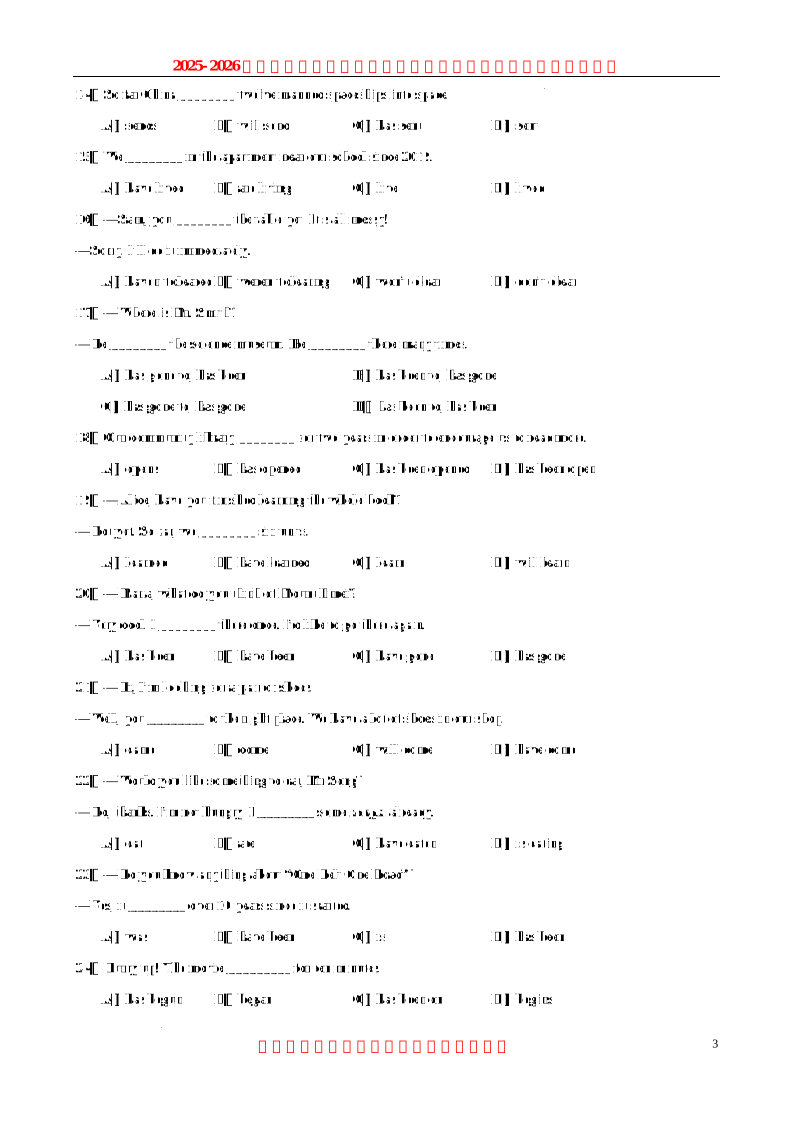
14.So far China ________ twelve manned spaceships into space.
A.sends B.will send C.has sent D.sent
【答案】C
【详解】句意:到目前为止,中国已经向太空发射了十二艘载人航天飞船。
考查现在完成时。sends发送,一般现在时;will send将发送,一般将来时;has sent已发送,现在完成时;sent发送,一般过去时。根据时间状语“So far(到目前为止)”可知,此句应用现在完成时,表示从过去某一时间点开始,一直持续到现在,并可能继续持续下去的动作或状态。故选C。
15.We ________ in the apartment near our school since 2019.
A.have lived B.are living C.live D.lived
【答案】A
【详解】句意:自2019年以来,我们一直住在学校附近的公寓里。
考查现在完成时态。根据“since 2019”可知,此处用现在完成时,其结构是“have/has + done”,主语“We”是复数,所以用have。故选A。
16.—Sam, you ________ the table yet. It’s all messy!
—Sorry. I’ll do it immediately.
A.haven’t cleared B.weren’t clearing C.won’t clear D.don’t clear
【答案】A
【详解】句意:——萨姆,你还没收拾桌子呢。桌子一团糟!——抱歉。我马上收拾。
考查动词时态。根据“yet”和“It’s all messy!”可知,“桌子还很乱”是“没收拾桌子”这一动作对现在造成的直接影响,符合现在完成时“强调动作未完成且对现在有影响”的用法,因此这里应用现在完成时,其结构为have/has done,主语为“you”,助动词应用have,否定形式为haven’t,动词clear的过去分词为cleared。故选A。
17.—Where is Mr. Smith?
—He ________ the science museum. He ________ there many times.
A.has gone to; has been B.has been to; has gone
C.has gone to; has gone D.has been to; has been
【答案】A
【详解】句意:——史密斯先生在哪里?——他去了科学博物馆。他已经去过那里很多次了。
考查现在完成时。has gone to去了(未回来);has been to去过(已回来)。根据“Where is Mr. Smith?”可知,第一空表示去了科学博物馆还未回来,故第一空用has gone to。根据“many times”可知,第二空表示去过那里很多次,用has been。故选A。
18.Our community library ________ for two years in order to encourage us to read more.
A.opens B.has opened C.has been opened D.has been open
【答案】D
【详解】句意:为了鼓励我们多读书,我们的社区图书馆已经开放两年了。
考查现在完成时。opens一般现在时;has opened现在完成时;has been opened现在完成时的被动语态;has been open现在完成时,open为形容词,意为“开着的”。根据句中“for two years”可知,句中时态应为现在完成时,且句中“for two years”表示一段时间,所以此处应使用延续性动词,open用作动词时是非延续性动词,不能用在现在完成时态中,当表示开着的这种状态时用be open,所以此处使用has been open。故选D。
19.—Alice, have you finished learning the whole book?
—Not yet. So far, we ________ six units.
A.learned B.have learned C.learn D.will learn
【答案】B
【详解】句意:——爱丽丝,你学完整本书了吗?——还没有。到目前为止,我们已经学了六个单元。
考查现在完成时。learned一般过去时;have learned现在完成时;learn一般现在时;will learn一般将来时。根据“So far”可知,句子时态是现在完成时,其结构为“have/has+done”,主语是we,所以此处用have learned。故选B。
20.—Maria, what do you think of Mount Emei?
—Very cool. I ________ there once. I’d like to go there again.
A.has been B.have been C.have gone D.has gone
【答案】B
【详解】句意:——Maria,你觉得峨眉山怎么样?——非常酷。我曾经去过那里一次。我想再去那里。
考查现在完成时。has been去过(已经回来),第三人称单数形式;have been去过(已经回来),非第三人称单数形式;have gone去了(还没回来),非第三人称单数形式;has gone去了(还没回来),第三人称单数形式。根据“I’d like to go there again.”可知,曾经去过那里,现在已回来,且主语是“I”,用have been。故选B。
21.—Hi, I’m looking for a pair of shoes.
—Well, you ________ to the right place. We have a lot of shoes in our shop.
A.came B.come C.will come D.have come
【答案】D
【详解】句意:——你好,我想买一双鞋。——嗯,你来对地方了,我们店里有很多鞋。
考查现在完成时的用法。此处用现在完成时强调“来到对的地方”这个动作对现在的影响(店里有很多鞋,能满足找鞋的需求)。故选D。
22.—Would you like something to eat, Mr Song?
—No, thanks. I’m not hungry. I ________ some zongzi already.
A.eat B.ate C.have eaten D.is eating
【答案】C
【详解】句意:——你想吃点什么吗,宋先生?——不了,谢谢。我不饿。我已经吃了些粽子了。
考查时态。根据“I’m not hungry.”以及“already”可知,“吃”是过去发生的动作,但对现在造成了影响,用现在完成时,C项符合。故选C。
23.—Do you know anything about “One Belt One Road”?
—Yes, it ________ over 10 years since it started.
A.was B.have been C.is D.has been
【答案】D
【详解】句意:——你知道关于“一带一路”的事情吗?——是的,自从它开始实施到现在已经有10多年了。
考查现在完成时。根据“since it started”可知,此处用现在完成时,结构是“have/has+过去分词”,且主语“it”是第三人称单数,所以用has been。故选D。
24.Hurry up! The movie _________ for ten minutes.
A.has begun B.began C.has been on D.begins
【答案】C
【详解】句意:快点!电影已经开始十分钟了。
考查现在完成时和延续性动词。has begun已经开始,为现在完成时,但是begin为瞬间性动词,不能与表示一段时间的状语连用;began开始,为一般过去时;has been on已经开始,为现在完成时,且be on为延续性动词,可以与表示一段时间的状语连用;begins开始,为一般现在时。根据时间状语for ten minutes可知,此处应该用延续性动词,且应该用现在完成时表示动作从过去某一时间开始一直持续到现在,所以应该用has been on。故选C。
25.—How long has he _________?
—Since 2016.
A.been to Beijing B.become a policeman
C.joined the art club D.studied in this school
【答案】D
【详解】句意:——他在这所学校学习多久了?——自2016年起。
考查现在完成时。been to Beijing去过北京;become a policeman成为一名警察;joined the art club加入艺术俱乐部;studied in this school在这所学校学习。根据“How long has he …?”及选项可知,此处为现在完成时,表示动作从过去开始,一直持续到现在,因此动词必须是可持续的动作或状态动词,ABC三项中动词均为瞬间动词。故选D。
26.—Where is your father? I need to talk to him.
—Sorry, he ________ Beijing. He’ll be back next week. By the way, I ________ Beijing before, and I ________ there for five years.
A.have gone to; have been to; has been in B.has gone to; have been in; have gone to
C.has gone to; have been to; have been D.have been to; has gone to; has been in
【答案】C
【详解】句意:——你爸爸在哪儿?我得跟他谈谈。——对不起,他去北京了。他下周会回来。顺便说一下,我以前去过北京,我在那里待了五年。
考查现在完成时。第一空根据“Sorry, he … Beijing. He’ll be back next week.”可知,这里表示父亲去了北京但还未返回,主语是第三人称单数,因此用has gone to;第二空根据“By the way, I … Beijing before,”可知,这里表示曾经去过北京,现已返回,应使用have been to;第三空根据“and I … there for five years.”可知,这里表示过去在北京停留了五年的时间段,强调状态的持续,应使用have been后接地点副词there。故选C。
27.In recent years, city walk ________ popular ________ young people.
A.becomes, with B.will become, among C.has become, with D.became, by
【答案】C
【详解】句意:近年来,城市漫步受到年轻人的欢迎。
考查动词时态和形容词短语。with和;among在……之间;by被。时间状语“In recent years”表示从过去持续到现在的动作,需用现在完成时;结合“popular…young people.”可知,此处指“受到年轻人的欢迎”,“popular with”为固定搭配,表示“受……欢迎”,故选C。
28.Maddie ________me a lot. I know that everyone is special and different now.
A.changed B.have changed C.has changed D.changes
【答案】C
【详解】句意:Maddie 改变了我很多。我现在知道每个人都是独特且不同的。
考查动词时态。 根据“Maddie ... me a lot. I know that everyone is special and different now.”可知,Maddie的改变行为发生在过去,但对现在产生了影响,因此时态用现在完成时,主语是第三人称单数,助动词用has。故选C。
29.—______ you ______ the new poem yet?
—Yes, I read it this morning.
A.Have; read B.Did; read C.Will; read D.Do; read
【答案】A
【详解】句意:——你已经读过这首新诗了吗?——是的,我今天早上读的。
考查动词时态。根据答句中的时间状语this morning可知,动作发生在过去,但问句中的yet提示动作与现在有关,强调对现在的影响或结果,因此应使用现在完成时。故选A。
30.Tea was born in China over 4,000 years ago. It ________ a part of people’s lives around the world.
A.became B.has become C.was becoming D.become
【答案】B
【详解】句意:茶4000多年前诞生于中国。它已经成为世界各地人们生活的一部分。
考查时态。became过去式;has become用于现在完成时;was becoming用于过去进行时;become成为,动词原形。根据语境可知,茶4000多年前诞生于中国,从过去一直持续到现在,已经成为世界各地人们生活的一部分,强调这种从过去到现在的影响和结果,所以用现在完成时“has become”更合适。故选B。
二、单词拼写
31.We (hear) about that interesting movie recently.
【答案】have heard
【详解】句意:我们最近听说了那部有趣的电影。hear“听”,时间状语“recently”表示近期发生且与现在有关联的动作,需用现在完成时(have/has + 过去分词),hear的过去分词形式为“heard”。故填have heard。
32.I (learn) to play the guitar since I was ten years old.
【答案】have learned/have learnt
【详解】句意:我自从十岁起就一直在学习弹吉他。根据“...since I was ten years old.”可知,句子时态为现在完成时,现在完成时的结构是“have/has + 过去分词”,主语是I,助动词用have,learn的过去分词是learned或learnt。故填have learned/have learnt。
33.My mom (make) this kind of cake for three years.
【答案】has made
【详解】句意:我妈妈做这种蛋糕已经三年了。根据“for three years”可知,句子时态为现在完成时,结构为“have/has + 动词过去分词”,主语为“My mom”,助动词需用has。故填has made。
34.Science (develop) quickly these years, so students can learn new things.
【答案】has developed
【详解】句意:这些年科学发展得很快,所以学生们能学习新事物。根据“these years”可知,本句时态是现在完成时(have/has + 过去分词);主语“Science”是不可数名词,助动词用has,develop的过去分词为developed,故填has developed。
35.—Mum, I (cleaned) the living room already.
—Good job! It is so tidy now.
【答案】have cleaned
【详解】句意:——妈妈,我已经打扫了客厅。——做得好!现在它很整洁。根据“already”可知,此句时态是现在完成时,结构为 “have/has + 过去分词”;主语是 “I”,用have,clean的过去分词是cleaned,故填have cleaned。
36.My uncle’s new book (come) out. I can’t wait to read it so I have just bought one.
【答案】has come
【详解】句意:我叔叔的新书出版了。根据“I can’t wait to read it so I have just bought one.”可知,我已经买了一本书。即“come out”这个动作已经发生,且对现在产生了影响,所以要用现在完成时,主语“My uncle’s new book”是第三人称单数,所以助动词用“has”,“come”的过去分词还是“come”。故填has come。
37.After decades, the small village (turn) into a bustling city.
【答案】has turned
【详解】句意:几十年后,这个小村庄已变成了一个繁华的城市。由“After decades”可知,表示从过去持续到现在的变化,强调动作已完成并对现在有影响,因此需用现在完成时(have/has + 过去分词);主语 “the small village”是单数第三人称,故助动词用has,动词 “turn” 的过去分词为 turned。故填has turned。
38.The 74-year-old (sell) ice creams for the past 17 years in Singapore.
【答案】has sold
【详解】句意:这位74岁的老人在过去17年里一直在新加坡卖冰淇淋。根据“for the past 17 years”可知,句子时态为现在完成时,结构为have/has done,主语为第三人称单数,所以助动词用has,sell的过去分词是sold。故填has sold。
39.So far, my uncle (travel) to many places.
【答案】has travelled/has traveled
【详解】句意:到目前为止,我的叔叔已经去过很多地方旅行。根据“So far”可知用现在完成时,主语“my uncle”后接助动词has,travel的过去分词travelled/traveled,故填has travelled/has traveled。
40.—How long you (study) here?
—For about two years so far. I have made a lot of friends here.
【答案】 have studied
【详解】句意:——你在这里学习多久了?——到目前为止大约两年了。我在这里交了很多朋友。根据答句“For about two years so far.”可知,问句应用现在完成时,其结构为:have/has+过去分词。主语是you,助动词用have,study的过去分词是studied。故填have;studied。
41.The Greens (live) in China for five years and they like Chinese culture.
【答案】have lived
【详解】句意:格林一家在中国住了五年,他们喜欢中国文化。根据“for five years”可知此处需要填入现在完成时,主语“The Greens”后接助动词have,live的过去分词形式lived。故填have lived。
42.My father (work) in this factory since 2018. In these years, he has witnessed (目睹) the changes of the factory.
【答案】has worked
【详解】句意:我父亲自2018年以来一直在这家工厂工作。这些年来,他目睹了工厂的变化。根据“...since 2018”可知,句子时态为现在完成时,其结构为“have/has+过去分词”。主语“My father”是第三人称单数,助动词用“has”,“work”的过去分词是“worked”。故填has worked。
43.I (read) this English storybook twice, and I still think it’s very interesting.
【答案】have read
【详解】句意:这本英语故事书我已经读了两遍了,我仍然觉得它很有趣。根据“twice”可知,句子强调过去的动作对现在造成的影响,要用现在完成时,主语I是第一人称单数,助动词用have,read的过去分词为read。故填have read。
44.My cousin (grow) two centimeters taller this summer vacation.
【答案】has grown
【详解】句意:这个暑假我表弟长高了两厘米。根据“My cousin ... two centimeters taller this summer vacation.”可知,这个暑假已经长高了两厘米了,是现在完成时have/has done,强调“长高”这个过去的动作对现在造成的结果。主语是“My cousin”,助动词用has,grow的过去分词是grown。故填has grown。
45.The teacher (invite) all the students to share their stories about “self-confidence” already.
【答案】has invited
【详解】句意:老师已经邀请了所有的学生来分享他们关于“自信”的故事。根据“already”可知,句子时态为现在完成时。主语“The teacher”是第三人称单数,所以助动词用has,invite的过去分词是invited。故填has invited。
三、完成句子
46.自从2020年以来,我的家乡发生了巨大的变化。
Great changes in my hometown since 2020.
【答案】 have taken place
【详解】根据中英文对照,空格处缺“发生”,“take place”是固定短语,意为“发生”,且“since 2020”是现在完成时的标志词,主语“Great changes”是复数,现在完成时的结构为“have+过去分词”,“take”的过去分词是“taken”。故填have;taken;place。
47.Machines have replaced human labour in many industries.(同义句转换)
Machines have place of human labour in many industries.
【答案】taken the
【详解】句意:在许多行业中,机器已经取代了人力劳动。“take the place of”是一个固定短语,意思是“取代,代替”,与原句中replace“取代”的意思相近;原句“have replaced”是现在完成时,同义句保持一致,此处应填“taken the”。故填taken the。
48.迄今为止,很少有朋友长期坚持跑步。
So far, few of my friends have running.
【答案】 stuck to
【详解】句意:迄今为止,很少有朋友长期坚持跑步。“坚持”对应的短语是“stick to”,根据“So far”可知,句子用现在完成时,其结构为“have+过去分词”,“stick”的过去分词是“stuck”。故填stuck;to。
49.你考虑过如何使用这个工具吗?
Have you how to use this tool?
【答案】 thought about
【详解】根据中英文对照可知,此处缺少“考虑”,think about“考虑”,动词短语,根据“Have you...how to use this tool?”可知,本句为现在完成时态,动词应用过去分词,think about的过去分词为thought about。故填thought;about。
50.He has lived in Beijing for three years. (对划线部分提问)
has he for three years?
【答案】 Where lived
【详解】句意:他已经在北京住了三年了。句子划线部分“in Beijing”表示地点,对地点提问应用where,置于句首,首字母要大写;原句为现在完成时 (has lived),提问时需将助动词“has”置于疑问词和主语“he”之间,同时保留谓语动词的过去分词“lived”,其余成分不变。故填 Where;lived。
51.Many volunteers have offered a lot of help to the community in the past ten years. (对划线部分提问)
many volunteers offered to the community in the past ten years?
【答案】 What have
【详解】句意:在过去的十年里,许多志愿者为社区提供了很多帮助。划线部分是对事物提问,用疑问词what,此处是特殊疑问句,谓语现在完成时,主语many volunteers是复数形式,因此助动词用have。故填What;have。
52.She has kept the little dog since she found it in the street. (对划线部分提问)
has she kept the little dog?
【答案】 How long
【详解】句意:自从她在街上发现这只小狗以来,就一直养着它。划线部分“since she found it in the street”是表示时间段的状语,用于说明“养小狗”这个动作持续的时间起点。当对表示时间段的状语提问时,要用“how long(多久)”来引导特殊疑问句,询问动作持续的时间长度。故填How;long。
53.The invention of the Internet has changed the way we communicate. (对画线部分提问)
the invention of the Internet changed?
【答案】What has
【详解】句意:互联网的发明改变了我们沟通的方式。原句时态是现在完成时态,画线部分“the way we communicate”是动词“changed”的宾语,使用疑问词“what”提问,位于句首,首字母大写,助动词“has”提到主语“the invention of the Internet”之前。故填What has。
54.have, the science museum, ever, you, before, visited, (?)(连词成句)
【答案】Have you ever visited the science museum before?
【详解】根据所给词及标点可知,这是一个现在完成时的疑问句,询问对方以前是否曾经参观过科学博物馆,句子结构:助动词“Have” + 主语“you” + 副词“ever”+ 过去分词“visited” + 宾语“the science museum” + 副词“before”。故填Have you ever visited the science museum before?“你以前参观过科学博物馆吗?”
55.has lot over the town the years a changed (.)
【答案】The town has changed a lot over the years
【详解】结合所给单词及标点符号可知,该句为陈述句,时态为现在完成时。the town“这个小镇”,作主语,首字母大写;has changed a lot“已经改变了许多”;over the years“这些年”,介词短语作时间状语。故填The town has changed a lot over the years“这些年来,这个小镇变化很大”。
56.has / transport / over / years / developed / past / the / quickly / many
【答案】Transport has developed quickly over the past many years.
【详解】根据词汇提示可知,句子是陈述句,且时态为现在完成时(has+过去分词)。主语是Transport“交通”;has developed是谓语,其中developed是实义动词develop的过去分词,构成现在完成时结构;quickly是副词,修饰谓语动词;over the past many years是时间状语,说明动作发生的时间范围,故填Transport has developed quickly over the past many years.“在过去的许多年里,交通发展迅速。”
57.museum, ever, have, to, the, you, space, been
?
【答案】Have you ever been to the space museum
【详解】根据所给英语单词以及符号可知,此句为一般疑问句,时态为现在完成时,have助动词,常用于完成时,位于句首,后加主语you“你”;ever“曾经”,位于动词之前;been to“去”;the space museum“太空博物馆”,名词作宾语。故填Have you ever been to the space museum“你去过太空博物馆吗”。
58.has famous China for silk years of been for hundreds
【答案】China has been famous for silk for hundreds of years./Has China been famous for silk for hundreds of years?
【详解】分析所给单词可知可用陈述句或疑问句的形式,China作主语,助动词has与过去分词been构成现在完成时的谓语结构,be famous for“以……而著名”,silk作介词for的宾语,for hundreds of years作时间状语,放句末;助动词has也可提到主语前构成一般疑问句。故答案为:China has been famous for silk for hundreds of years./Has China been famous for silk for hundreds of years?“中国以丝绸闻名已有数百年历史。/中国以丝绸闻名已有数百年了吗?”
59.away Nancy since has from been home last year (连词成句)
【答案】Nancy has been away from home since last year./Since last year Nancy has been away from home./Has Nancy been away from home since last year?/Since last year has Nancy been away from home?
【详解】根据所给词可知,此处可为陈述句,Nancy,主语,has been away from home“离开家”,since last year“自去年以来”,时间状语,可放置句首或句末,此句也可是一般疑问句,在陈述句基础上,将has放置主语前,英语句子中,句首首字母大写。故填Nancy has been away from home since last year.“南希自去年以来一直不在家。”/Since last year Nancy has been away from home.“自从去年以来,南希一直不在家。”/Has Nancy been away from home since last year?“南希从去年起就离开家了吗?”/Since last year has Nancy been away from home?“从去年起,南希就离开家了吗?”
60.I met Tom five years ago. (用know改为同义句)
Tom and I each other .
【答案】 have known for five years
【详解】句意:我五年前认识了汤姆。考查现在完成时。原句是一般过去时,用“know”改写同义句,用现在完成时,其结构为“have/has+过去分词”。主语“Tom and I”是复数,用have,know的过去分词是known,“for+时间段”表示持续的时间,即for five years。故填have;known;for;five;years。
61.Tom has known me for ten years. (改为同义句)
Tom has known me ten years .
【答案】 since ago
【详解】句意:汤姆认识我已经十年了。根据“for ten years”可知表示时间段也可以用“since+时间点”来替换,故此处可改为since ten years ago。故填since;ago。
62.He left his hometown two years ago to study in college. (改为同义句)
He has from his hometown for two years to study in college.
【答案】 been away
【详解】句意:他两年前离开家乡去上大学。根据“for two years”可知,此处用现在完成时态,left是短暂性动词,不能与时间段连用,应该改为其延续性动词be away。现在完成时态的结构是“have/has done”,be的过去分词是been。故填been;away。
63.My parents have got on well with our neighbours since we moved here. (改为一般疑问句)
on well with your neighbours since you moved here?
【答案】 Have your parents got
【详解】句意:自从我们搬到这里以来,我父母和邻居们相处得很好。原句“My parents have got on well with our neighbours since we moved here.”是现在完成时的陈述句。变一般疑问句时,将助动词have提到句首,第一人称my和our要变为第二人称your,第一人称we变为第二人称you,其他部分不变。故填Have;your;parents;got。
64.Jane has been to Shanghai many times. (用never改为否定句)
Jane to Shanghai.
【答案】 has never been
【详解】句意:简去过上海很多次了。原句“Jane has been to Shanghai many times.”是现在完成时,结构为“have/has+过去分词”,要将其改为否定句,在助动词has后加never,同时删掉many times。故填has;never;been。
65.They have never taken action to save water. (改为一般疑问句)
they taken action to save water?
【答案】 Have ever
【详解】句意:他们从未采取行动节约用水。原句为现在完成时的否定句,句中有助动词have,改为一般疑问句时,需将have提到句首,其他部分保持不变;never表示“从未”,改为一般疑问句时,要把never变为ever,表示“曾经”。故填Have;ever。
10
同步新教材,周周有练习,月月有重点!
15
同步新教材,周周有练习,月月有重点!
学科网(北京)股份有限公司
$
2025-2026学年一线教师制作新教材英语同步精品系列资料,名师遴选!
2025-2026学年一线教师制作新教材英语同步精品系列资料,名师遴选!
学校:___________姓名:___________班级:___________考号:___________
Unit 5 Going on an exchange trip
重点语法:现在完成时精讲精练65题
语法知识精讲
项目
具体内容
核心定义
表示过去发生的动作对现在造成的影响 / 结果,或动作从过去持续到现在(可能继续)。
基本结构
肯定式:主语 + have/has + 过去分词(V-ed)
否定式:主语 + have/has + not + 过去分词
疑问式:Have/Has + 主语 + 过去分词?
have/has 用法区别
主语为第一、二人称(I/we/you)及复数名词 / 代词 → 用 have主语为第三人称单数(he/she/it)及单数名词 → 用 has
常用时间标志词
already(已,肯定句)、yet(还,否定 / 疑问句)、ever(曾经)、never(从未)、just(刚刚)、for + 时间段、since + 时间点 / 从句、so far(到目前为止)
核心用法(含例句)
1. 动作对现在有影响:He has finished his homework.(他已做完作业,现在没事了)
2. 动作持续到现在:We have lived here for 5 years.(我们在这住了 5 年,现在还住)
与一般过去时的区别
现在完成时:强调 “现在的联系”,不具体说过去时间一般过去时:强调 “过去的动作”,常跟具体时间(如 yesterday/last week)
常见易错点
1. 不能与具体过去时间状语(yesterday/ago)连用
2. for 后接时间段(3 days),since 后接时间点(2020 年)
3. 不规则动词需牢记过去分词(如 eat→eaten,go→gone)
语法知识精练
一、单项选择
1.They ________ a lot of Chinese words since they came to China.
A.learnt B.learn C.will learn D.have learnt
2.My uncle ________ at the TV station since he graduated from university five years ago.
A.works B.worked C.has worked D.was working
3.My uncle ________ in this factory for 10 years. He likes his job very much.
A.works B.worked C.has worked D.will work
4.—How long ________ you ________ this book?
—For two weeks. I must return it to the library tomorrow.
A.have; borrowed B.have; kept C.did; borrow D.do; keep
5.—How long ________ your parents ________ in this town?
—Since they got married 25 years ago.
A.do; live B.have; lived C.did; live D.will; live
6.—How long ________ you ________ this book from the school library?
—For two weeks. I must return it this Friday.
A.have; borrowed B.did; borrow C.have; kept D.do; keep
7.It ________ ten years since my uncle ________ to work in Beijing.
A.is; went B.has been; has gone C.was; went D.has been; went
8.Peter ________ playing football since he was six years old. Now he is one of the best players in his school team.
A.practices B.practiced C.has practiced D.will practice
9.—It’s dangerous to swim in that river.
—Yes, you are right. The government ________ people ________ swim in it recently.
A.warned; don’t B.has warned; not to C.led; to not D.let; not to
10.—Excuse me, can I use your dictionary? I ________ mine at home.
—Of course. Here you are.
A.have left B.leave C.will leave D.was leaving
11.—I’m sorry for being late.
—Never mind. The meeting ________ for only 5 minutes.
A.has been over B.has been on C.has finished D.begin
12.All of us ________ great progress in the last two years.
A.made B.are making C.will make D.have made
13.—Paul, why are you still here? School has been over for half an hour.
—I ________ my work yet. I still need one more hour.
A.won’t finish B.haven’t finished
C.didn’t finish D.don’t finish
14.So far China ________ twelve manned spaceships into space.
A.sends B.will send C.has sent D.sent
15.We ________ in the apartment near our school since 2019.
A.have lived B.are living C.live D.lived
16.—Sam, you ________ the table yet. It’s all messy!
—Sorry. I’ll do it immediately.
A.haven’t cleared B.weren’t clearing C.won’t clear D.don’t clear
17.—Where is Mr. Smith?
—He ________ the science museum. He ________ there many times.
A.has gone to; has been B.has been to; has gone
C.has gone to; has gone D.has been to; has been
18.Our community library ________ for two years in order to encourage us to read more.
A.opens B.has opened C.has been opened D.has been open
19.—Alice, have you finished learning the whole book?
—Not yet. So far, we ________ six units.
A.learned B.have learned C.learn D.will learn
20.—Maria, what do you think of Mount Emei?
—Very cool. I ________ there once. I’d like to go there again.
A.has been B.have been C.have gone D.has gone
21.—Hi, I’m looking for a pair of shoes.
—Well, you ________ to the right place. We have a lot of shoes in our shop.
A.came B.come C.will come D.have come
22.—Would you like something to eat, Mr Song?
—No, thanks. I’m not hungry. I ________ some zongzi already.
A.eat B.ate C.have eaten D.is eating
23.—Do you know anything about “One Belt One Road”?
—Yes, it ________ over 10 years since it started.
A.was B.have been C.is D.has been
24.Hurry up! The movie _________ for ten minutes.
A.has begun B.began C.has been on D.begins
25.—How long has he _________?
—Since 2016.
A.been to Beijing B.become a policeman
C.joined the art club D.studied in this school
26.—Where is your father? I need to talk to him.
—Sorry, he ________ Beijing. He’ll be back next week. By the way, I ________ Beijing before, and I ________ there for five years.
A.have gone to; have been to; has been in B.has gone to; have been in; have gone to
C.has gone to; have been to; have been D.have been to; has gone to; has been in
27.In recent years, city walk ________ popular ________ young people.
A.becomes, with B.will become, among C.has become, with D.became, by
28.Maddie ________me a lot. I know that everyone is special and different now.
A.changed B.have changed C.has changed D.changes
29.—______ you ______ the new poem yet?
—Yes, I read it this morning.
A.Have; read B.Did; read C.Will; read D.Do; read
30.Tea was born in China over 4,000 years ago. It ________ a part of people’s lives around the world.
A.became B.has become C.was becoming D.become
二、单词拼写
31.We (hear) about that interesting movie recently.
32.I (learn) to play the guitar since I was ten years old.
33.My mom (make) this kind of cake for three years.
34.Science (develop) quickly these years, so students can learn new things.
35.—Mum, I (cleaned) the living room already.
—Good job! It is so tidy now.
36.My uncle’s new book (come) out. I can’t wait to read it so I have just bought one.
37.After decades, the small village (turn) into a bustling city.
38.The 74-year-old (sell) ice creams for the past 17 years in Singapore.
39.So far, my uncle (travel) to many places.
40.—How long you (study) here?
—For about two years so far. I have made a lot of friends here.
41.The Greens (live) in China for five years and they like Chinese culture.
42.My father (work) in this factory since 2018. In these years, he has witnessed (目睹) the changes of the factory.
43.I (read) this English storybook twice, and I still think it’s very interesting.
44.My cousin (grow) two centimeters taller this summer vacation.
45.The teacher (invite) all the students to share their stories about “self-confidence” already.
三、完成句子
46.自从2020年以来,我的家乡发生了巨大的变化。
Great changes in my hometown since 2020.
47.Machines have replaced human labour in many industries.(同义句转换)
Machines have place of human labour in many industries.
48.迄今为止,很少有朋友长期坚持跑步。
So far, few of my friends have running.
49.你考虑过如何使用这个工具吗?
Have you how to use this tool?
50.He has lived in Beijing for three years. (对划线部分提问)
has he for three years?
51.Many volunteers have offered a lot of help to the community in the past ten years. (对划线部分提问)
many volunteers offered to the community in the past ten years?
52.She has kept the little dog since she found it in the street. (对划线部分提问)
has she kept the little dog?
53.The invention of the Internet has changed the way we communicate. (对画线部分提问)
the invention of the Internet changed?
54.have, the science museum, ever, you, before, visited, (?)(连词成句)
55.has lot over the town the years a changed (.)
56.has / transport / over / years / developed / past / the / quickly / many
57.museum, ever, have, to, the, you, space, been
?
58.has famous China for silk years of been for hundreds
59.away Nancy since has from been home last year (连词成句)
60.I met Tom five years ago. (用know改为同义句)
Tom and I each other .
61.Tom has known me for ten years. (改为同义句)
Tom has known me ten years .
62.He left his hometown two years ago to study in college. (改为同义句)
He has from his hometown for two years to study in college.
63.My parents have got on well with our neighbours since we moved here. (改为一般疑问句)
on well with your neighbours since you moved here?
64.Jane has been to Shanghai many times. (用never改为否定句)
Jane to Shanghai.
65.They have never taken action to save water. (改为一般疑问句)
they taken action to save water?
6
同步新教材,周周有练习,月月有重点!
5
同步新教材,周周有练习,月月有重点!
学科网(北京)股份有限公司
$
资源预览图

1

2
3

相关资源
由于学科网是一个信息分享及获取的平台,不确保部分用户上传资料的 来源及知识产权归属。如您发现相关资料侵犯您的合法权益,请联系学科网,我们核实后将及时进行处理。