Unit 8 Culture Shapes Us Lesson 45 Different Manners 课件2025-2026学年冀教版(2012)英语九年级全册
2025-10-25
|
26页
|
242人阅读
|
4人下载
普通
资源信息
| 学段 | 初中 |
|---|---|
| 学科 | 英语 |
| 教材版本 | 初中英语冀教版(2012)九年级全册 |
| 年级 | 九年级 |
| 章节 | Lesson 45:Different Manners |
| 类型 | 课件 |
| 知识点 | - |
| 使用场景 | 同步教学-新授课 |
| 学年 | 2025-2026 |
| 地区(省份) | 全国 |
| 地区(市) | - |
| 地区(区县) | - |
| 文件格式 | PPTX |
| 文件大小 | 6.99 MB |
| 发布时间 | 2025-10-25 |
| 更新时间 | 2025-10-25 |
| 作者 | 匿名 |
| 品牌系列 | - |
| 审核时间 | 2025-10-25 |
| 下载链接 | https://m.zxxk.com/soft/54554959.html |
| 价格 | 1.00储值(1储值=1元) |
| 来源 | 学科网 |
内容正文:
Lesson 45
Different Manners
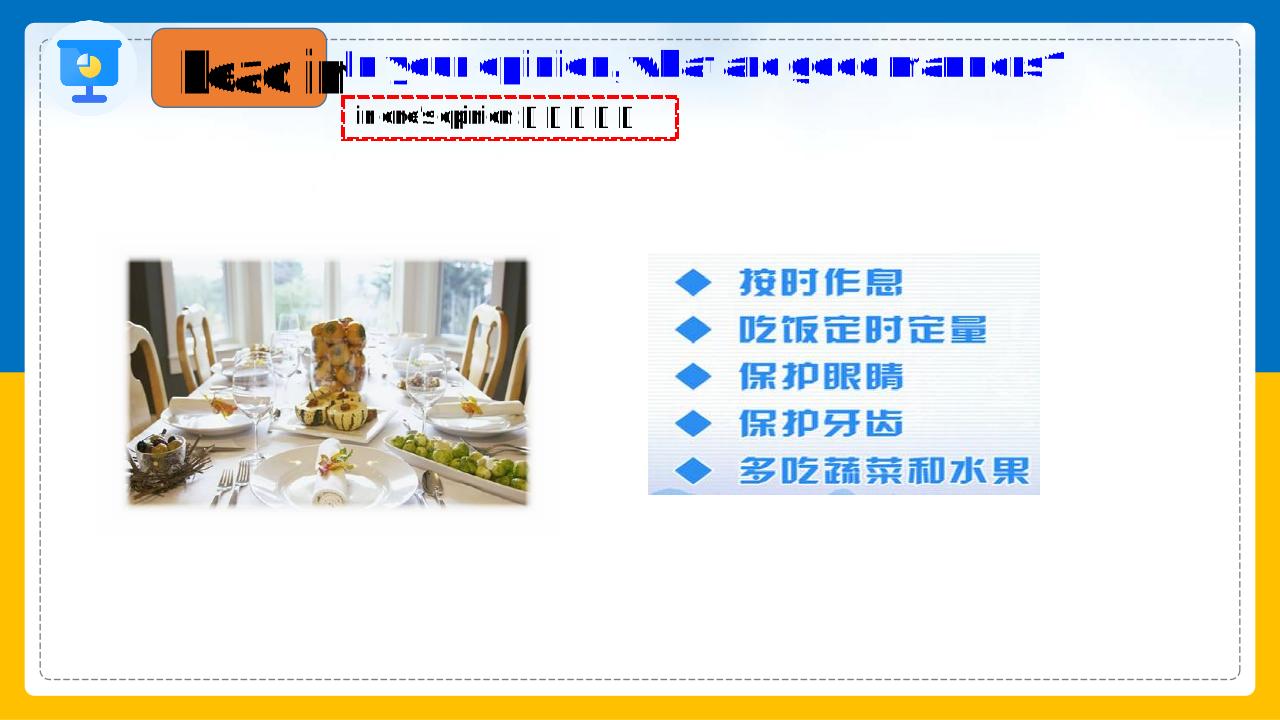
Lead in
In your opinion, what are good manners?
in one’s opinion :在某人看来
In China
shake hands
When people meet a friend
In America
In Japan
hug each other
bow to each other
Lead in
The manners are different!
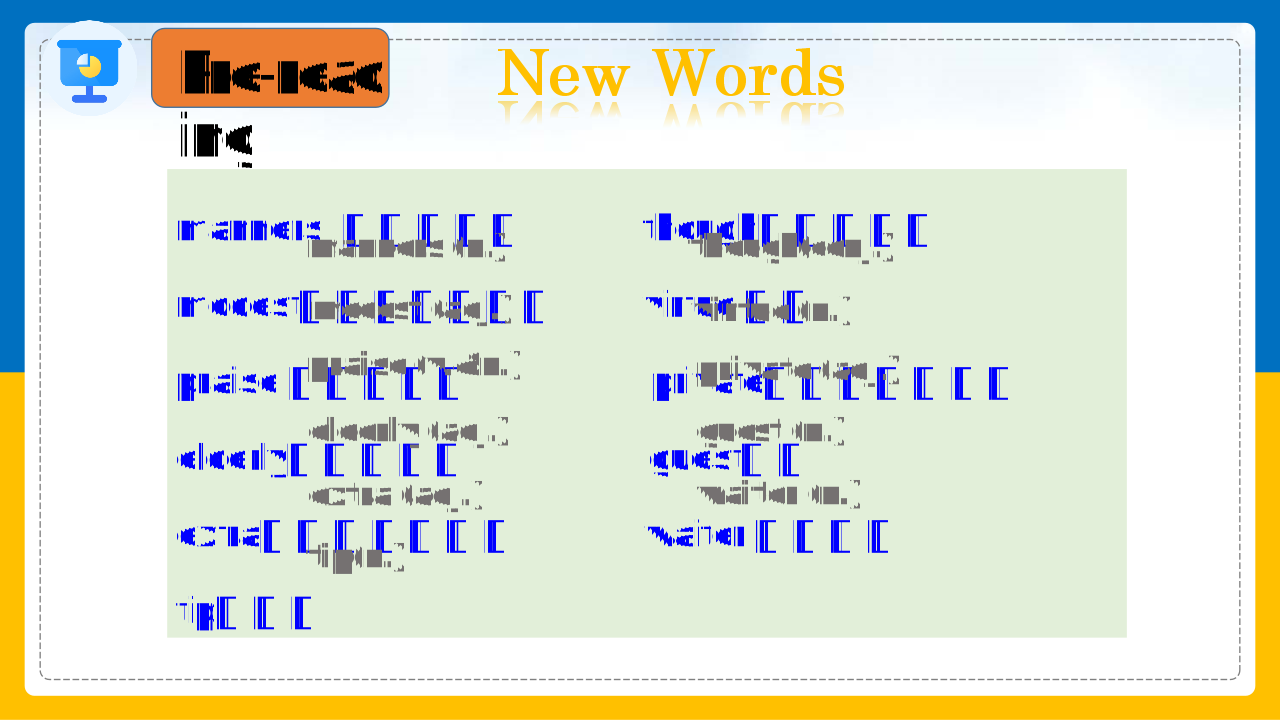
manners 礼貌;习俗 though虽然;尽管
modest谦虚的;谦恭的 virtue 美德
praise 称赞;赞扬 private私人的;私有的
elderly上了年纪的 guest客人
extra额外的;另外的 waiter 男服务员
tip给小费
manners (n.)
New Words
modest (adj.)
praise (v.&n.)
virtue (n.)
though(conj.)
elderly (adj.)
private (adj.)
waiter (n.)
extra (adj.)
guest (n.)
tip(n.)
Pre-reading
Read the first two paragraphs and answer the questions.
How long has Wu Zhou lived in Canada?
He has lived there for twenty-three years.
Why doesn't he feel Canadian?
Because north American manners and Chinese manners are so different.
Fast reading
Pre-reading
Listen to the tape and answer the questions.
What’s his name?
How long has he lived in Canada?
What does he call himself in Canada?
His name is Wu Zhou.
He has lived there for twenty-three years.
He calls himself Joe Wu.
How long…多久 回答for+时间段
合作探究一:阅读课文P3—P8,完成下列任务
1. Cultural differences between
China and Canada (具体文化差异)
My name is Wu Zhou. I have lived in Canada for twenty-three years. In Canada, I call myself Joe Wu. Joe is an English name that sounds like Zhou.
8
单击此处编辑母版标题样式
China Canada
being praised should be modest
asking ages children’s or adults’
offering a seat is polite but the elder will feel embarrassed
having meals with guests pass food to guests
paying for meals take turns
giving tips always
say“Thanks”
put food on their plates
share the cost
children's
is polite
seldom
重点探究
In your opinion, what are you good manners?
Do you think cultures shape manners?
Is it a good manner?
Why do you think so?
My name is Wu Zhou, I have lived in Canada for twenty-three years. In Canada, I call myself Joe Wu. Joe is an English name that sounds like Zhou.
Though I have lived here for a long time, I still don’t feel Canadian. This is probably because North American manners and Chinese manners are so different.
In China, being modest is a virtue, If someone praises you and says that your English is excellent, you should be modest and say, “No, no. My English is still poor.”
I have many good friends in Canada, though Canadian culture is different from Chinese culture.
1. embarrassed about sth. 对……感到尴尬
2. be done 做;完毕
embarrass vt.& vi. (使)窘迫,(使)局促不安;
e.g. I was embarrassed about what had happened.
我对发生的事情感到尴尬。
e.g. We must see what can be done.
我们应该看看有什么能做的。
What is the next thing to be done?
其次要做的事是什么?
3. pay for 赔偿; 为……付钱;
e.g. I have to pay for repairs to the house.
我不得不支付房屋维修费用。
(1)pay 支付,作为及物动词,宾语可以是“人”、“钱”。
e.g. He paid the taxi and hurried to the station.
他付了出租车的钱,急忙向车站赶去。
(2)pay for 宾语为“物”、“事”,for表示支付的原因。
e.g. You’ll have to pay me ten dollars a week for your meals.
你得每周付给我十美元饭钱。
1 Read the lesson and match the behaviours with the correct countries.
China
Canada
asking an adult’ s age
putting food on a guest’ s plate
giving a tip to waiters and hotel workers
sharing the cost of a meal in a restaurant
Let's Do It!
了解不同国家不同的风俗习惯
When people meet a friend
In China
In America
In Japan
shake hands
hug each other
bow to each other
But in North America, this is usually a sign of being weak and not confident. You should just say, “thank you.”
In Canada, people only ask children about their age. It’s not polite to ask an adult’s age. They think it is private. But this is common in many places in China.
In both China and North America, it is polite to offer an elderly person a seat on the bus. In North America, however, an elderly person may feel embarrassed about being offered a seat.
experience v. 体验;经历
n. 经验;经历
(1) experience作动词时,可意为“体验;经历”。
※We had never experienced this kind of holiday before and had no idea what to expect. 我们以前从未经历过这种假期,不知道有什么可期待的。
2. It’s interesting to experience two different cultures.
体验两种不同的文化很有趣。
(2) experience 作名词,意为“经验”时,是不可数名词。
※He has a lot of experience in teaching.
他有丰富的教学经验。
experience作名词,意为“经历”时,是可数名词。
※He had a scary experience on the trip to Yunnan.
他在去云南旅行的途中,有一段可怕的经历。
In China
In the West
When people have a meal
2 Match and complete the sentences.
Although people have different cultures and customs,
Brian hasn’t been to China,
He has been at the new school for only a few days,
Though Liu Feng has many friends in America,
but he has already made many friends there.
they have the same feelings.
he still feels lonely.
but he knows a lot about our country.
Let's Do It!
In China
In the West
Different festivals
Christmas
the Spring Festival
1. Important sentences:
(1)Though I have lived here for a long time, I still don't feel
Canadian.
(2)I have many good friends in Canada although Canadian
culture is different from Chinese culture.
(3)When Chinese people eat out in a restaurant, they may
take turns paying for the meal.
(4)In Canada, however, people often share the cost of a meal.
My name is Wu Zhou, I have lived in Canada for twenty-three years. In Canada, I call myself Joe Wu. Joe is an English name that sounds like Zhou.
Though I have lived here for a long time, I still don’t feel Canadian. This is probably because North American manners and Chinese manners are so different.
In China, being modest is a virtue, If someone praises you and says that your English is excellent, you should be modest and say, “No, no. My English is still poor.”
I have many good friends in Canada, though Canadian culture is different from Chinese culture.
Sum up
1. Vocabulary:
manners, though, modest, virtue, praise, private, elderly,
guest, extra, waiter, tip
2. Structures and expressions:
take turns
Practice
根据句意及首字母或汉语提示完成句子。
1.T________ he lives alone,he is happy.
2.He can look after the g_________ very well who will visit him.
3.The p________ of his friends made the boy feel very proud.
4.It′s not polite to ask some p______ questions in the western countries.
5.Different cultures ________(影响……的发展) different people.
hough
uest/guests
raise
rivate
shape
Homework
1. Learn the new words and phrases by heart and finish the
exercises of L45 in workbook.
2. Listen to the lesson and read for twenty minutes.
3. Make a project about different manners in one of the
countries you'd like to travel to.
¿É¿ÉÓ¢ÓïÍøwww.kekenet.com[Òô¹ì 002]
, track 002
121104.0
dou -
Lesson 45 ¿ÎÎÄ
125209.305
$
资源预览图
1
2

3
4

5

6
相关资源
由于学科网是一个信息分享及获取的平台,不确保部分用户上传资料的 来源及知识产权归属。如您发现相关资料侵犯您的合法权益,请联系学科网,我们核实后将及时进行处理。