Unit 8 Culture Shapes Us Lesson 45 Different Manners 课件 2025-2026学年冀教版(2012)九年级英语全册
2025-10-08
|
27页
|
431人阅读
|
247人下载
普通
资源信息
| 学段 | 初中 |
|---|---|
| 学科 | 英语 |
| 教材版本 | 初中英语冀教版(2012)九年级全册 |
| 年级 | 九年级 |
| 章节 | Lesson 45:Different Manners |
| 类型 | 课件 |
| 知识点 | - |
| 使用场景 | 同步教学-新授课 |
| 学年 | 2025-2026 |
| 地区(省份) | 全国 |
| 地区(市) | - |
| 地区(区县) | - |
| 文件格式 | PPTX |
| 文件大小 | 7.19 MB |
| 发布时间 | 2025-10-08 |
| 更新时间 | 2025-10-08 |
| 作者 | 匿名 |
| 品牌系列 | - |
| 审核时间 | 2025-10-08 |
| 下载链接 | https://m.zxxk.com/soft/54246264.html |
| 价格 | 0.00储值(1储值=1元) |
| 来源 | 学科网 |
内容正文:
Unit 8
Lesson 45
Different Manners
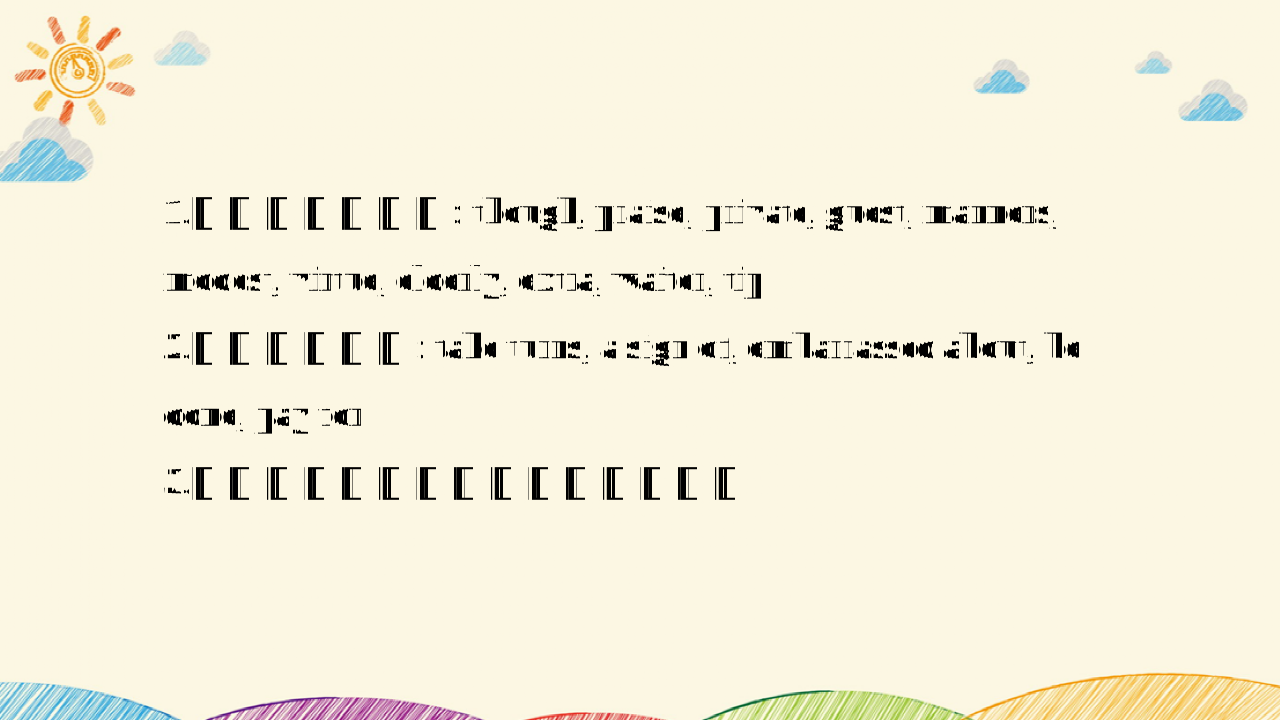
1.掌握本课新单词: though, praise, private, guest, manners, modest, virtue, elderly, extra, waiter, tip
2.掌握本课短语: take turns, a sign of, embarrassed about, be done, pay for
3.了解加拿大与中国之间的礼仪差异
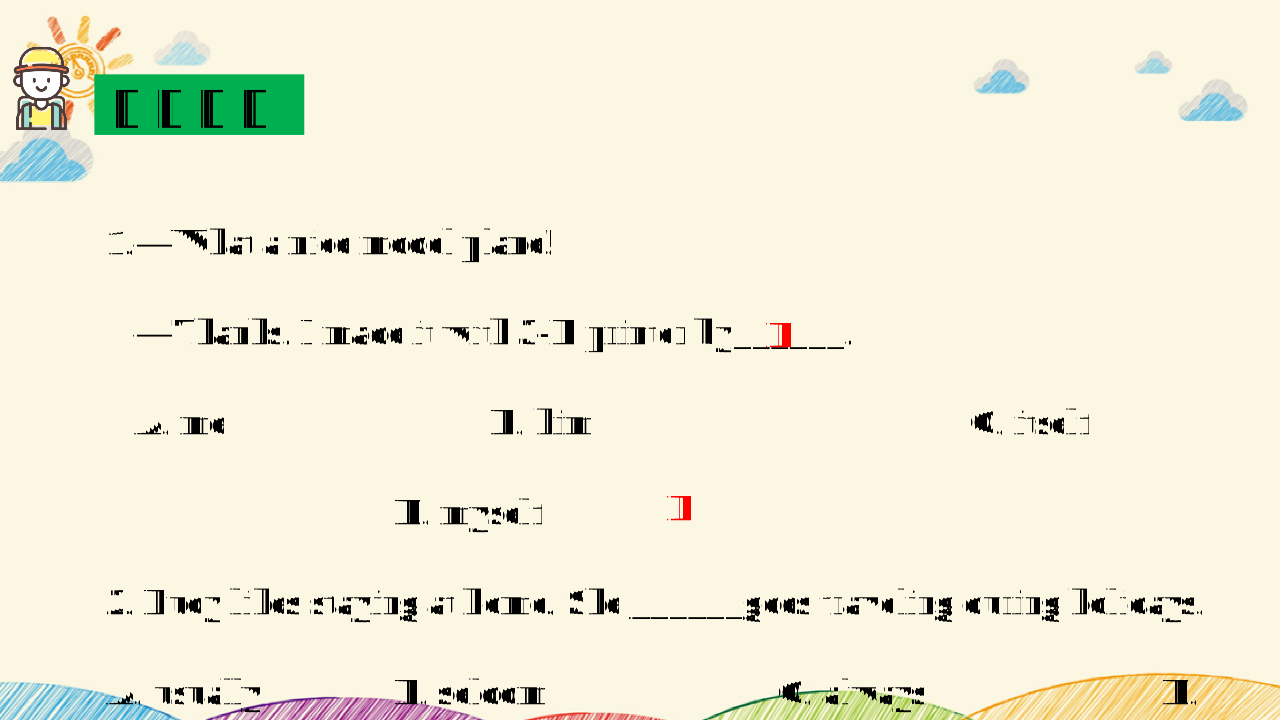
预习检测
1.—What a nice model plane!
—Thanks. I made it with 3-D printer by______.
A. me B. him C. itself D. myself
2. Lucy likes staying at home. She ______goes traveling during holidays.
A. usually B. seldom C. always D. often
D
B
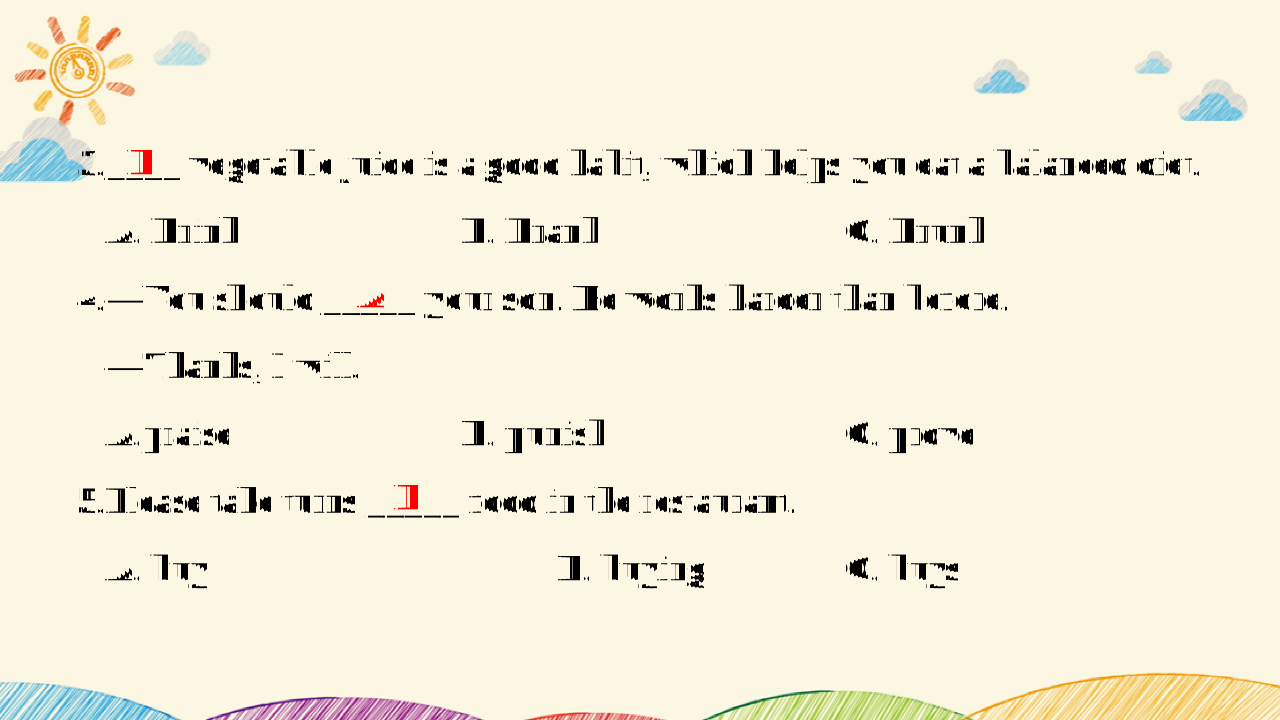
3.____ vegetable juice is a good habit, which helps you eat a balanced diet.
A. Drink B. Drank C. Drunk D. Drinking
4.—You should _____ your son. He works harder than before.
—Thanks, I will.
A.praise B. punish C. prove D. provide
5.Please take turns _____ food in the restaurant.
A. buy B. buying C. buys D. bought
D
A
B
新课导入
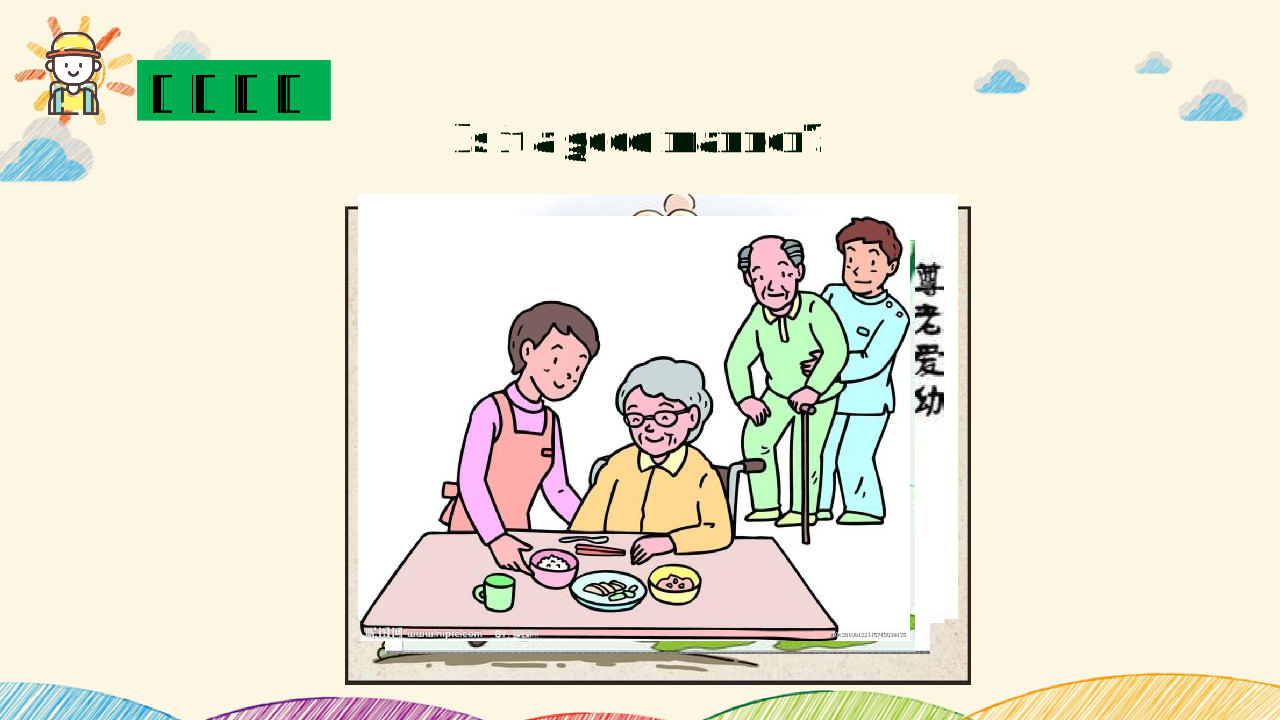
Is it a good manner?
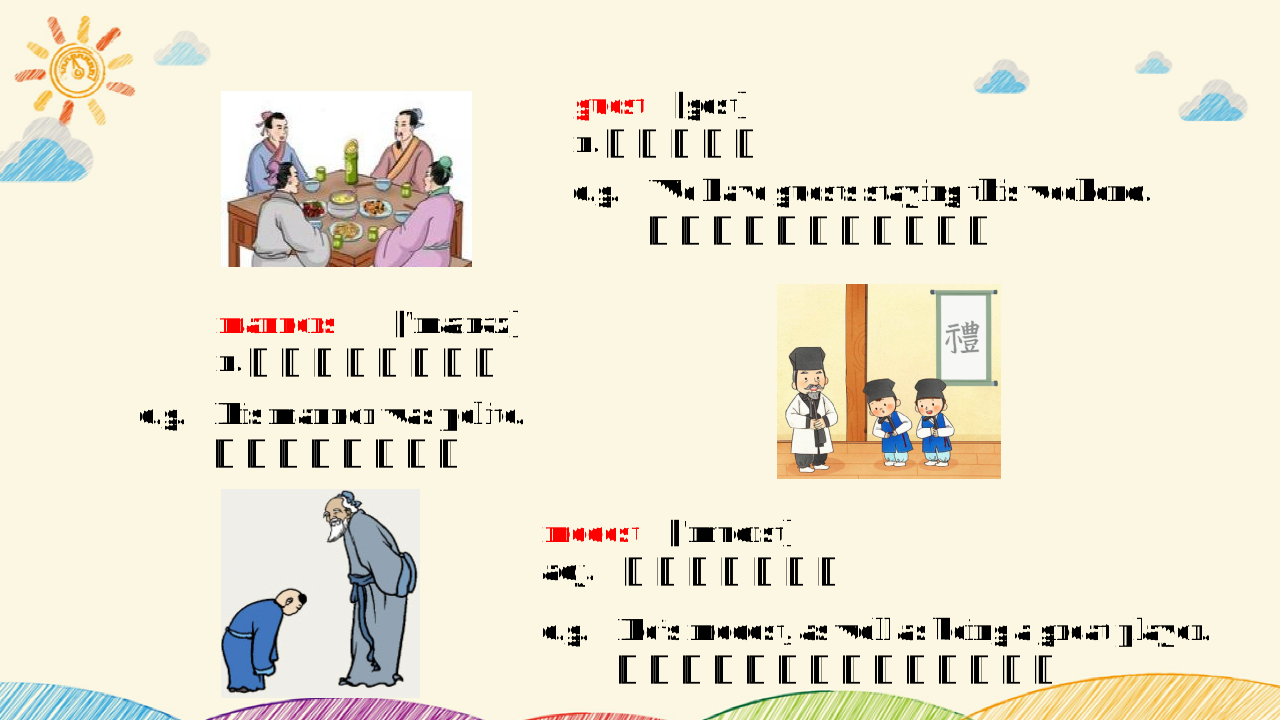
guest [gest]
n. 客人;旅客
e.g. We have guests staying this weekend.
这周末我家有客人来住。
manners ['mænəz]
n. 礼貌;礼仪;习俗
e.g. His manner was polite.
他举止彬彬有礼。
modest ['mɒdɪst]
adj. 谦虚的,谦逊的
e.g. He’s modest, as well as being a great player.
他是一名谦虚而伟大的运动员。
virtue ['vɜ:tʃu:]
n. 美德;德行;价值
the elderly 老年人
elderly ['eldəli]
adj. 上了年纪的; 较老的 n. 老人
e.g. The film is about an elderly woman.
电影讲述的是一位老太太的故事。
e.g. His virtue is patience.
耐心是他的美德。
extra [ˈekstrə]
adj. 额外的 n. 附加物
e.g. The meeting is going to be a lot of extra work.
这次会议将意味着很多额外工作。
waitress n. 女服务员
e.g. Waiter, could you bring me some water?
服务员,给我送点儿水来好吗?
waiter [ˈweɪtə(r)]
n. 服务员;侍者
重点探究
In your opinion, what are you good manners?
Do you think cultures shape manners?
Is it a good manner?
Why do you think so?
知识梳理
1. take turns 依次,轮流表达
take turns doing sth./ take turns to do sth.轮流做某事
还可以搭配介词at, in, on或about
e.g. We took turns taking /to take care of my grandparents.
我们家人轮流照顾我的祖父母。
We take turns in cleaning the classrooms.
我们轮流打扫教室。
My name is Wu Zhou, I have lived in Canada for twenty-three years. In Canada, I call myself Joe Wu. Joe is an English name that sounds like Zhou.
Though I have lived here for a long time, I still don’t feel Canadian. This is probably because North American manners and Chinese manners are so different.
In China, being modest is a virtue, If someone praises you and says that your English is excellent, you should be modest and say, “No, no. My English is still poor.”
I have many good friends in Canada, though Canadian culture is different from Chinese culture.
合作探究一:阅读课文P3—P8,完成下列任务
1. Cultural differences between
China and Canada (具体文化差异)
Different Manners
China Canada
being praised should be modest
asking ages children’s or adults’
offering a seat is polite but the elder will feel embarrassed
having meals with guests pass food to guests
paying for meals take turns
giving tips always
say“Thanks”
put food on their plates
share the cost
children's
is polite
seldom
I have many good friends in Canada, though Canadian culture is different from Chinese culture.
My name is Wu Zhou. I have lived in Canada for twenty-three years. In Canada, I call myself Joe Wu. Joe is an English name that sounds like Zhou.
Though I have lived here for a long time, I still don't feel Canadian. This is probably because North American manners and Chinese manners are so different.
The writer’s feelings(感受):
(It’s interesting to experience two different cultures. He thinks understanding cultural differences really helps us to understand each other.)
1.sound like 听起来像
2.praise sb. 赞扬某人
3.ask sb. about sth. 询问某人某事
4.offer sb. sth. 给某人提供某物
2.feel embarrassed about对…感到尴尬
3.take turns 轮流
4.pay for 付款
5.share the cost 分摊费用
6.on the plate 在盘子里
7.give extra money to --- 给----额外的钱
Different Manners
China Canada
being praised should be modest
asking ages children’s or adults’
offering a seat is polite but the elder will feel embarrassed
having meals with guests pass food to guests
paying for meals take turns
giving tips always
post-reading
In China, people seldom give extra money to waiters, waitresses, taxi drivers or hotel workers. In North America, this is always done. It is called “tipping”.
It's interesting to experience two different cultures. I think understanding cultural differences really helps us to understand each other, live together and work together.
It’s interesting to experience two different cultures. I think understanding cultural differences really helps us to understand each other, live together and work together.
post-reading
In China, being modest is a virtue. If someone praises you and says that your English is excellent, you should be modest and say,"No, no. My English is still poor," But in North America, this is usually a sign of being weak and not confident, You should just say, “Thank you,”
In Canada, people only ask children about their age. It's not polite to ask an adult's age. They think it is private. But this is common in many places in China.
1. Different manners.
manner 方式;态度;习惯
他以恰当的方式跟我说话。
He spoke to me in a proper manner.
她的态度表现了她的愤怒。
Her manner showed her anger.
知识点讲解
1. Though I have lived here for a long time, I still don't feel Canadian.
though
虽然;尽管;然而
although
虽然;尽管;然而
What have you learned in this class?
Reading skills
Cultural differences
Summary
Language points
24
I. 用所给单词的适当形式填空
1. I ___________(live) in this city for a long time.
2. _________(be) modest is a virtue in our country.
3. It’s not polite to ask an _________ (adult) age in Western countries.
4. Both Li Ming and Jenny ________(speak) English well.
5. The students in our class take turns _________(clean) the blackboard.
have lived
Being
adult’s
speak
cleaning
Review the lesson.
Write down your ideas about cultural
difference. (around 60 words)
Homework
26
When in Rome, do as the Romans do!
入乡随俗!
Have a nice day!
27
Lesson 45 ¿ÎÎÄ
125209.305
$
资源预览图
1
2
3
4
5
6
相关资源
由于学科网是一个信息分享及获取的平台,不确保部分用户上传资料的 来源及知识产权归属。如您发现相关资料侵犯您的合法权益,请联系学科网,我们核实后将及时进行处理。