Unit 6 Space and beyond Using language 课件-2024-2025学年高中英语外研版选择性必修第四册
2025-10-23
|
52页
|
287人阅读
|
0人下载
特供
资源信息
| 学段 | 高中 |
|---|---|
| 学科 | 英语 |
| 教材版本 | 高中英语外研版选择性必修第四册 |
| 年级 | 高二 |
| 章节 | Using language |
| 类型 | 课件 |
| 知识点 | - |
| 使用场景 | 同步教学-新授课 |
| 学年 | 2025-2026 |
| 地区(省份) | 全国 |
| 地区(市) | - |
| 地区(区县) | - |
| 文件格式 | PPTX |
| 文件大小 | 61.77 MB |
| 发布时间 | 2025-10-23 |
| 更新时间 | 2025-10-23 |
| 作者 | 匿名 |
| 品牌系列 | - |
| 审核时间 | 2025-10-23 |
| 下载链接 | https://m.zxxk.com/soft/54510685.html |
| 价格 | 2.00储值(1储值=1元) |
| 来源 | 学科网 |
摘要:
该高中英语课件围绕“Space and beyond”主题,聚焦情态动词用法辨析与Fermi Paradox相关语言技能,通过阅读文本中的太空事件例句(如登月、挑战者号悲剧)导入,搭建从提取例句、分类练习到语法总结与语用输出的学习支架,衔接阅读输入与语言运用。
其亮点在于情境化与任务驱动,结合语言能力(用情态动词描述火星图片故事)和思维品质(分析访谈观点、组织太空营信息),通过听力音频、故事创作等活动整合技能。学生提升语言综合运用与逻辑思维,教师获得结构化真实语料,优化教学效率。
内容正文:
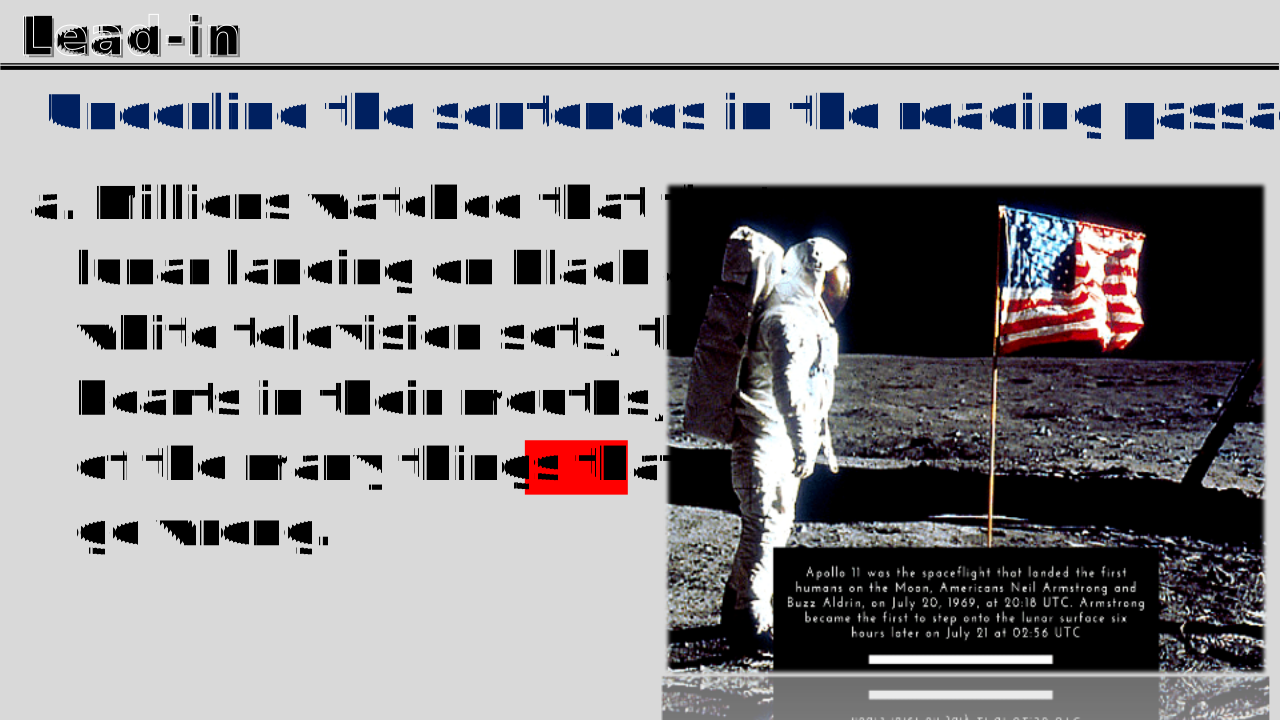
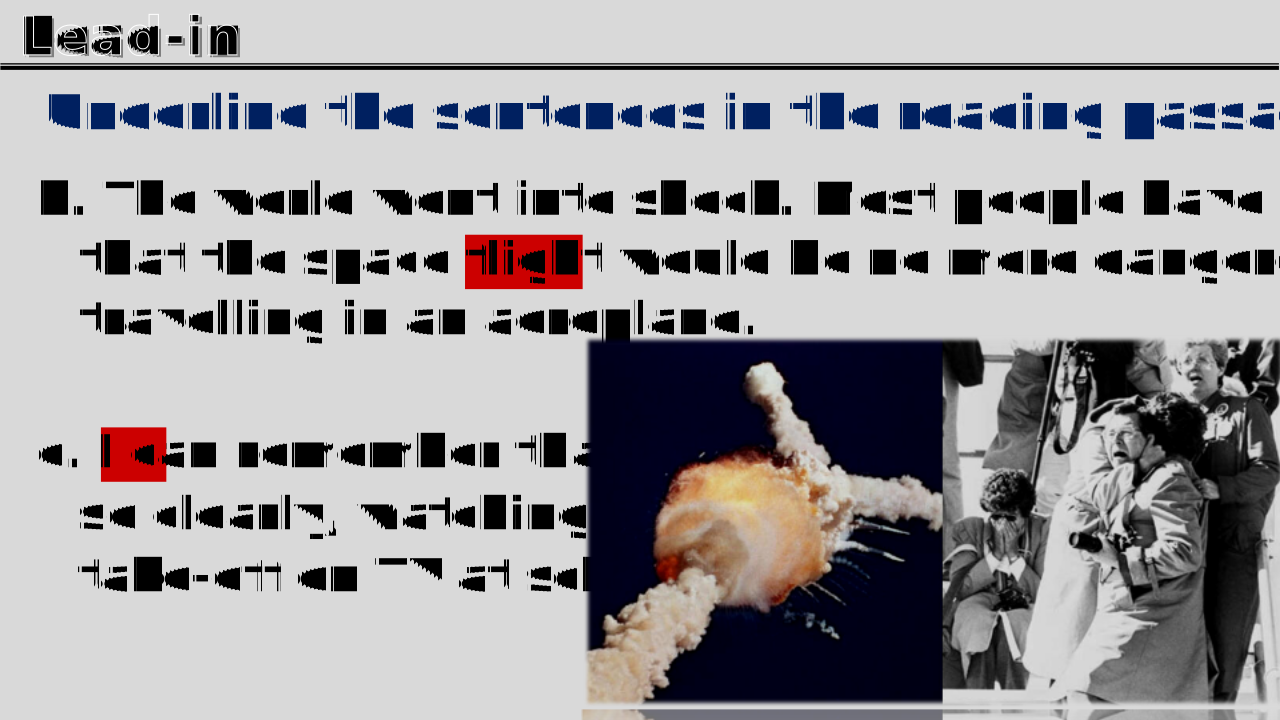
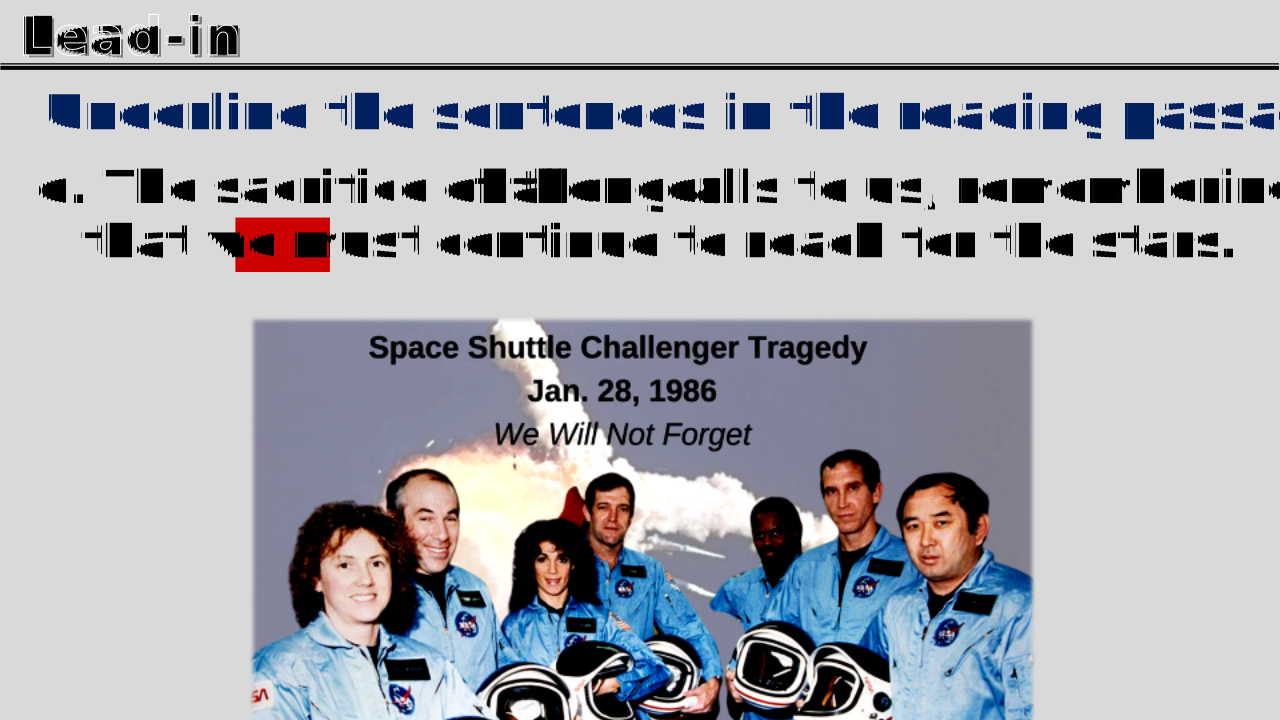
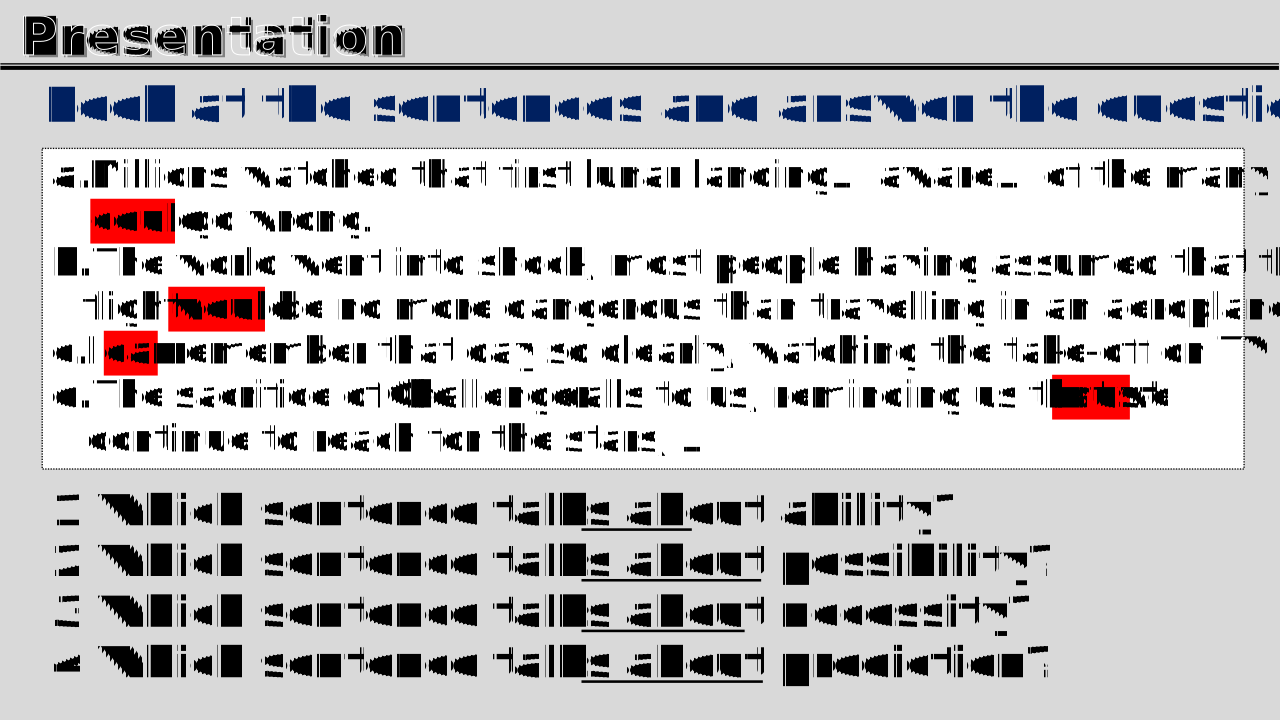
Using language P86-87 新外研选择性必修Book 4 Unit 6 Space and beyond In this class, you will distinguish the usage of modals by analysing the sentences from reading passage. practise using modals correctly. Learning objectives Lead-in a. Millions watched that first lunar landing on black and white television sets, their hearts in their mouths, aware of the many things that could go wrong. Underline the sentences in the reading passage. Lead-in b. The world went into shock. Most people have assumed that the space flight would be no more dangerous than travelling in an aeroplane. c. I can remember that day so clearly, watching the take-off on TV at school. Underline the sentences in the reading passage. Lead-in d. The sacrifice of the challenger calls to us, remembering us that we must continue to reach for the stars. Underline the sentences in the reading passage. a. Millions watched that first lunar landing… aware… of the many things that could go wrong. b. The world went into shock, most people having assumed that this space flight would be no more dangerous than travelling in an aeroplane. c. I can remember that day so clearly, watching the take-off on TV at school, … d. The sacrifice of the Challenger calls to us, reminding us that we must continue to reach for the stars, … Look at the sentences and answer the questions. Presentation 1 Which sentence talks about ability? 2 Which sentence talks about possibility? 3 Which sentence talks about necessity? 4 Which sentence talks about prediction? a. Millions watched that first lunar landing… aware… of the many things that could go wrong. b. The world went into shock, most people having assumed that this space flight would be no more dangerous than travelling in an aeroplane. c. I can remember that day so clearly, watching the take-off on TV at school, … d. The sacrifice of the Challenger calls to us, reminding us that we must continue to reach for the stars, … Look at the sentences and answer the questions. Presentation ability possibility necessity prediction Look for more sentences with modals in the reading passage. Presentation With the eyes of the students across the nation upon her, she might have inspired an entirely new generation of astronauts and space scientists. The sacrifice of the challenger calls to us, remembering us that we must continue to reach for the stars, no matter how distant they might seem. possibility possibility 情态动词,即表示人的情感和态度的动词,它们本身有一定的词义,但是不能独立作谓语,只能跟动词原形一起构成谓语。 常见的情态动词主要有:can (could), may (might), must, need, shall (should), will (would), dare等。 Summary Modals 情态动词 用法 例句 表示能力, 意为“能,会”; could表示过去的能力。 She can speak French fluently. 她能讲一口流利的法语。 can可用于肯定句中,表示客观或理论上的可能性。 An experienced teacher can make mistakes. 一位有经验的老师也会犯错。 表示请求或允许。在疑问句中,could可以代替can,语气更委婉,肯定回答时要用can,不用could。 — Can/Could I use your bike tomorrow morning? 明天上午我可以用你的自行车吗? — Yes, you can. 是的,可以。 表示说话者的主观推测,意为“可能”,用于否定句和疑问句中。can比could语气强。 He can’t be our manager. He has gone to Beijing. 他不可能是我们经理。他已经去北京了。 表示惊异、怀疑、迷惑等态度,常用于否定句和疑问句中。 How can you treat me like that? 你怎么能那样对我? 一、常见情态动词的用法:can和could 用法 例句 表示请求或许可。在疑问句中,might可以代替may,语气更加委婉。给予许可时用may,不用might。 — Might I ask for a picture of your little daughter? — Yes, you may. — 我可以要一张你小女儿的照片吗? — 是的, 可以。 表示推测,意为“或许,可能”,通常用于肯定句和否定句中。might比may语气弱。 — I really don’t like James. Why did you invite him? — Don’t worry. He might not come. — 我真的不喜欢詹姆斯。你为什么邀请他? — 别担心。他或许不会来。 表示祝愿,常用结构为:May+主语+动词原形! May you be happy every day! 愿你快乐每一天! 一、常见情态动词的用法:may和might 用法 例句 表示义务,意为“必须”。must强调说话人的主观看法, have to则强调客观需要;在回答带有must的问句时,否定式常用need not (needn’t)或don’t have to,而不是用must not。 We must act as quickly as possible now. 现在我们必须尽快采取行动。 I have to go now, because my mother is in hospital. 我现在不得不走了,因为我母亲在住院。 must用来表示推测,意为“一定”,只能用在肯定句中。must的肯定程度比can强。 You must be hungry after a long walk. 长途跋涉之后,你肯定饿了。 must表示“偏要,非要……不可”。常用于疑问句和条件句中,偶尔也用于陈述句中。 If you must go, at least wait until the storm is over. 如果你非要走,至少要等到暴风雨停了。 mustn’t表示禁止,意为“不得,不允许;一定不要”。 You mustn’t play with the knife, or you may hurt yourself. 你千万不要玩刀,否则会伤到自己的。 一、常见情态动词的用法:must和have to 用法 例句 用于第一、三人称的疑问句中,表示说话者征求对方的意见。 Shall he come in now? 他现在可以进来吗? 用于第二、三人称的陈述句中,表示说话者的命令、警告、威胁、允诺、决心等。 You shall be punished for what you have done. 你会为你的所作所为受到惩罚。 用于条约、规定、法令、法律等文件中表示义务规定,意为“必须”。 One of our rules is that every student shall wear school uniform while at school. 我们有一条规定,那就是每个学生在校期间都必须穿校服。 一、常见情态动词的用法:shall 用法 例句 should表示责任、义务、劝告、建议等,意为“应该”。 We should be strict with ourselves. 我们应该严格要求自己。 should表示出乎意料、惊讶的口气,意为“竟然,居然”。 Such a gentleman should do that. 这样一位绅士竟然会做那种事。 ought to表示义务、责任、劝告等,意为“应该”,语气比should略重。 You ought not to be so selfish. 你不应该这么自私。 should和ought to表示推测,指合乎理想的情况或结果,意为“按说应该”。 Try phoning Robert—he should be home by now. 给罗伯特打个电话试试,他现在应该到家了。 一、常见情态动词的用法:should和ought to 用法 例句 与各种人称连用,用于陈述句中,表示主语的意志、意愿或决心。will指现在,would指过去。 I will never talk to him again. 我再也不会和他说话了。 表示征求意见或提出请求,多用于第二人称疑问句中。would比will语气委婉。 Will/Would you please close the window? 请把窗户关上好吗? 表示习惯性动作、固有属性或必然趋势,意为“总是;习惯于”。will指现在,would指过去。 Fish will die without water. 没有水,鱼会死的。 一、常见情态动词的用法:will和would 用法 例句 used to do表示“过去常常做……”。 There used to be a building at the street corner, but now it is a library. 街道拐角处过去有座楼房,而现在是一个图书馆。 had better do表示“最好做……”,其否定形式为had better not do。 One had better see life in its various aspects when young. 一个人最好在年轻时就能看到生活的各个方面。 would rather do than do表示“宁愿做……”。 I would rather stare at the star-filled sky than watch a TV set. 我宁可凝视繁星满天的夜空也不愿看电视。 二、其他情态动词的用法 could have done 本可以 can’t/couldn’t have done 不可能做过 may/might have done 可能做过 must have done 一定做过 should/ought to have done 本应该/竟然做过 needn’t have done 本不需要做 had better have done 当时最好做过 would like/love to have done 宁愿做过 From what you said,she must have told you all about it. 从你所说的来看,她一定把一切都告诉你了。 Mr Smith can’t have gone to Beijing, for I saw him in the library just now. 史密斯先生不可能去北京了,因为我刚才还在图书馆看见他了。 三、情态动词+have done Read the passage and choose the correct modals. On 15 October 1997, the Cassini spacecraft set out on a mission to explore the planet Saturn. So great was the distance from Earth that it would/shall need to travel for almost six years to reach its destination. When it reached Saturn, it sent back amazing images of the planet’s famous rings viewed in ultraviolet light. Cassini made numerous trips around Saturn so it could /must collect data. Over the following years, Cassini took some 450, 000 images of the planet and its moons. Finally, on 15 September 2017, Cassini was pointed towards Saturn so that it should / would meet a fiery end. Scientists had decided that Cassini could /must be destroyed this way, so it must/would not collide with any of Saturn’s moons. In its nearly 20-year mission, Cassini provided so much information that scientists could/ would not process it all. No wonder so many people took to social media to bid it goodbye, saying, “Farewell, dear Cassini! We shall / should never forget you!” Practice √ √ √ √ √ √ √ prediction ability prediction necessity prediction ability determination Look at the picture and tell a story using modals where appropriate. Production Zhurong 4th Space flight Mount Olympus I couldn’t believe it when I looked into the Martian sky … could; might; must; shall; would… Look at the picture and tell a story using modals where appropriate. Production could; might; must; shall; would… I couldn’t believe it when I looked into the Martian sky, which was dark yellowish-brown for plenty of dust remained in the atmosphere. In the distance stood an active volcano whose next eruption might be a few years later. What impressed me most was Zhurong 4th, which could travel faster and farther and would continue travelling south. Never in my dream could I imagine that plants were growing there, with reddish-orange flowers like thistles (蓟). Never shall I forget that day! You should see it with you own eyes! Take it in turns to draw a picture of space exploration and ask your partner to tell a story based on it. Production Organise ideas in a logical way. Use modals where appropriate. Thank you! Using language P87-89 新外研选择性必修Book 4 Unit 6 Space and beyond In this class, you will Learning objectives learn about the definition of the Fermi Paradox. listen to an interview about a discussion programme and learn to express opinions and hopes. acquire information concerning the space camp and organise your ideas. Lead-in The Fermi Paradox: according to some calculations, there should be many other civilizations out there, but there is no evidence of these at all. No spacecraft, no radio transmissions, nothing. So, as Fermi said, "Where is everybody?" Discussion programme: Science, fact or fiction? Activity 1 Listen to the interview and choose the questions discussed. 1. Is there life on other planets? 2. What would life on other planets look like? 3. Should we use robots to explore space? 4. What is the Fermi Paradox? 5. Will people ever make contact with life on other planets? Scientist: Eric Pringle Science fiction author: Sophie Ellis Interviewer: Welcome to our discussion programme, Science, Fact or Fiction?. On tonight's show, we'll talk about life on other planets with scientist Eric Pringle, and science fiction author Sophie Ellis. Sophie, can I start with you on a favourite topic for science fiction authors? Is there life on other planets? ... Interviewer: Well, let's assume life is out there. What would this life look like? ... Interviewer: I can understand both points of view. It would be wonderful if we could see what they look like. Will humans one day travel to make contact with them? ... Activity 1 Listen to the interview and choose the questions discussed. 1. Is there life on other planets? 2. What would life on other planets look like? 3. Should we use robots to explore space? 4. What is the Fermi Paradox? 5. Will people ever make contact with life on other planets? √ √ √ Activity 2 Listen again and complete the table. Q1 Is there life on other planets? Answers Sophie: There must be millions of planets like ours, and some could have life 1 _. Eric: You would think it likely that 2 _. But that’s 3_the Fermi Paradox. Interviewer: Welcome to our discussion programme, Science, Fact or Fiction?. On tonight's show, we'll talk about life on other planets with scientist Eric Pringle, and science fiction author Sophie Ellis. Sophie, can I start with you on a favourite topic for science fiction authors? Is there life on other planets? Sophie: I think there definitely is. There must be millions and millions of planets like our Earth out there. And on some of them there will be forms of life, maybe similar to our own. Interviewer: Eric? Eric: As a scientist, I can't agree with Sophie here. Statistically, you would think it likely that there are forms of life somewhere. But that's without considering the Fermi Paradox. Activity 2 Listen again and complete the table. Q1 Is there life on other planets? Answers Sophie: There must be millions of planets like ours, and some could have life 1 _. Eric: You would think it likely that 2 _. But that’s 3_the Fermi Paradox. similar to our own there are forms of life without considering Activity 2 Listen again and complete the table. Q2 What would life on other planets look like? Answers Sophie: Life on other planets won't look like us because 4_. Eric: Because evolution 5 _, life on other planets is likely to look like us. Interviewer: Well, let's assume life is out there. What would this life look like? Sophie: Since conditions on other planets won't be like those on Earth, it isn’t reasonable to think that they will be like us at all. For example, on an ocean planet, they could look like fish. It has even been suggested that on a cloud planet they could look like balloons. Interviewer: What do you think, Eric? Eric: Well, there's evidence that evolution would work the same way everywhere, so it's actually quite likely that life on other planets would in many ways look like us. Possibly they’re smarter and more advanced. Activity 2 Listen again and complete the table. Q2 What would life on other planets look like? Answers Sophie: Life on other planets won't look like us because 4_. Eric: Because evolution 5 _, life on other planets is likely to look like us. conditions on other planets won’t be like those on Earth would work the same way everywhere Activity 2 Listen again and complete the table. Q3 Will people ever make contact with life on other planets? Answers Eric: We cannot 6 _,which means it would take more than a lifetime to reach planets where there might be life. Sophie: Maybe we don't need to travel in straight lines. Perhaps we will be able to 7_ to make contact with life on other planets. Interviewer: I can understand both points of view. It would be wonderful if we could see what they look like. Will humans one day travel to make contact with them? Eric: No, I'm afraid not. This only exists in the imagination of science fiction writers. The fact that we cannot travel faster than light, 300,000 kilometres a second, means that it will take more than a lifetime to reach planets where there might be life. Interviewer: What’s your opinion, Sophie? Sophie: I take your point, but maybe we won't need to travel in straight lines. Perhaps we will be able to take short cuts, through a “wormhole” in space, for example. The fact is the imagination of science fiction writers has often pointed the way to the future. Just think of all the predictions about space travel made by Arthur C. Clarke. Activity 2 Listen again and complete the table. Q3 Will people ever make contact with life on other planets? Answers Eric: We cannot 6 _, which means it would take more than a lifetime to reach planets where there might be life. Sophie: Maybe we don't need to travel in straight lines. Perhaps we will be able to 7_ to make contact with life on other planets. travel faster than light take short cuts, through a “wormhole” in space Listening text Interviewer: Welcome to our discussion programme, Science, Fact or Fiction?. On tonight's show, we'll talk about life on other planets with scientist Eric Pringle, and science fiction author Sophie Ellis. Sophie, can I start with you on a favourite topic for science fiction authors? Is there life on other planets? Sophie: I think there definitely is. There must be millions and millions of planets like our Earth out there. And on some of them there will be forms of life, maybe similar to our own. Interviewer: Eric? Eric: As a scientist, I can't agree with Sophie here. Statistically, you would think it likely that there are forms of life somewhere. But that's without considering the Fermi Paradox. Listening text Interviewer: What do you say to that, Sophie? Sophie: I'm afraid I don't agree that the Fermi Paradox is a problem. Maybe they don't even want to communicate with us, just as we don't want to communicate with mice! Eric: I admit that this is a possible answer to the Fermi Paradox. But we just don't know at the moment. Interviewer: Well, let's assume life is out there. What would this life look like? Sophie: Since conditions on other planets won't be like those on Earth, it isn’t reasonable to think that they will be like us at all. For example, on an ocean planet, they could look like fish. It has even been suggested that on a cloud planet they could look like balloons. Interviewer: What do you think, Eric? Listening text Eric: Well, there's evidence that evolution would work the same way everywhere, so it's actually quite likely that life on other planets would in many ways look like us. Possibly they’re smarter and more advanced. Interviewer: I can understand both points of view. It would be wonderful if we could see what they look like. Will humans one day travel to make contact with them? Eric: No, I'm afraid not. This only exists in the imagination of science fiction writers. The fact that we cannot travel faster than light, 300,000 kilometres a second, means that it will take more than a lifetime to reach planets where there might be life. Interviewer: What’s your opinion, Sophie? Listening text Sophie: I take your point, but maybe we won't need to travel in straight lines. Perhaps we will be able to take short cuts, through a “wormhole” in space, for example. The fact is the imagination of science fiction writers has often pointed the way to the future. Just think of all the predictions about space travel made by Arthur C. Clarke. Interviewer: I think you've both made good points. Thank you for being on the programme, and let's hope that one day we will find out the solution to the Fermi Paradox-and maybe contact other civilisations! Now work in groups of three and act out the interview. Activity 3 Complete the boxes with the expressions from the interview. I think there definitely is. Since..., it isn't reasonable to... There's evidence that... It would be wonderful if... The fact that... means... Let's hope that... Expressing opinions Expressing hopes I think there definitely is. Since..., it isn't reasonable to... There's evidence that... The fact that... means... It would be wonderful if... Let's hope that... Activity 4 A space camp provides a hands-on educational experience for young people interested in space exploration, covering STEM subjects, astronaut training, teamwork skills and career opportunities. Space Camp Activity 4 Work in pairs. Read the passage and answer the questions. The dramatic scientific developments of recent years have brought space exploration back to public attention. As getting into space is however, still not an easy task, more and more space camps and other places are providing simulated space adventures. The Space Camp, founded in 1982 under NASA, is an educational camp, where children can learn about space travel and astronomy, and even have the chance to have lunch with an astronaut! So far, the camp has inspired hundreds of thousands of young people from the US and from elsewhere around the world. What's more, some of its ex-students have even grown up to become astronauts! 1. What is the passage mainly about? Activity 4 Work in pairs. Read the passage and answer the questions. The dramatic scientific developments of recent years have brought space exploration back to public attention. As getting into space is however, still not an easy task, more and more space camps and other places are providing simulated space adventures. The Space Camp, founded in 1982 under NASA, is an educational camp, where children can learn about space travel and astronomy, and even have the chance to have lunch with an astronaut! So far, the camp has inspired hundreds of thousands of young people from the US and from elsewhere around the world. What's more, some of its ex-students have even grown up to become astronauts! 2. Would you like to take part in a space camp? Why or why not? Activity 5 Read the advertisement for the space camp and find out what students can do there. Activity 5 Pay attention to the words and expressions in bold. Activity 6 Complete the email with the correct form of the words and expressions in the advertisement. observatory\lunar eclipse\launch a model rocket\put on a spacesuit \capsule\spacewalk\zero gravity\space sick Dear Ted, Remember when I told you I'd signed up for the space programme? Well I just got back from a week of simulated manned flight activities, and it was awesome! We started out with some theory, learning about astronomy in the 1._, and then 2. _model rockets. After that we tried the simulator. observatory launched Activity 6 observatory\lunar eclipse\launch a model rocket\put on a spacesuit \capsule\spacewalk\zero gravity\space sick I put on a 3 _ and went for a walk in 4 _. It's strange to float around like that-in fact, a lot of people get 5 _! Luckily, I felt fine. Then I returned to the 6_ and travelled to the "Moon“ for some lunar exploration. You should join the programme too-you'd love it! Write soon! Yours, Kim spacesuit a world with zero gravity space sick capsule Activity 7 Imagine you are going to apply for the programme. Organise your ideas for the short video by answering the questions. 1. Why do you want to take part in the programme? 2. What activities would you like to experience? 3. What is it about space that most interests you? What have you learnt about it? Activity 8 Present your ideas for the short video in class using the words and expressions in this section. Now think about how well you structured your introduction and what you could do to improve. Thank you! null Other 185767.05 $
资源预览图
1
2
3
4
5
6
相关资源
由于学科网是一个信息分享及获取的平台,不确保部分用户上传资料的 来源及知识产权归属。如您发现相关资料侵犯您的合法权益,请联系学科网,我们核实后将及时进行处理。