Unit 4 Section B 2a-2e-【学霸笔记·初中同步授课课件】2025-2026学年八年级上册英语(鲁教版五四制)
2025-10-08
|
25页
|
40人阅读
|
3人下载
教辅

资源信息
| 学段 | 初中 |
|---|---|
| 学科 | 英语 |
| 教材版本 | 初中英语鲁教版(五四学制)(2012)八年级上册 |
| 年级 | 八年级 |
| 章节 | Section B |
| 类型 | 课件 |
| 知识点 | - |
| 使用场景 | 同步教学-新授课 |
| 学年 | 2025-2026 |
| 地区(省份) | 全国 |
| 地区(市) | - |
| 地区(区县) | - |
| 文件格式 | PPTX |
| 文件大小 | 6.75 MB |
| 发布时间 | 2025-10-08 |
| 更新时间 | 2025-10-08 |
| 作者 | 高智传媒科技中心 |
| 品牌系列 | 学霸笔记·初中同步精讲 |
| 审核时间 | 2025-09-23 |
| 下载链接 | https://m.zxxk.com/soft/54048987.html |
| 价格 | 2.00储值(1储值=1元) |
| 来源 | 学科网 |
摘要:
该初中英语课件围绕戏剧文体(play)阅读展开,聚焦《Hansel and Gretel》故事,通过情境导入激活学生对西方童话(如《小红帽》《灰姑娘》)的已知认知,衔接新课并引导学生通过Skimming识别戏剧要素(场景、对白、旁白),构建“旧知-新知”学习支架。
其亮点在于融合文化意识与思维品质,引入西方童话对比增强跨文化认知,通过时间线索划分故事结构(Scenes 1-3开始等)并设计细节题(判断对错、匹配场景)培养分析推断能力。语言能力方面,结合戏剧文本解析whole与all辨析、感叹句转化等语言点,搭配Pair work编对话与结构化小结,助力学生提升阅读策略和语言运用能力,教师可借助清晰环节设计提高教学效率。
内容正文:
Unit 4
An old man tried to move the mountains.
Section B 2a-2e
情 境 导 入
Lead-in
have special menings to Chinese people.
2a
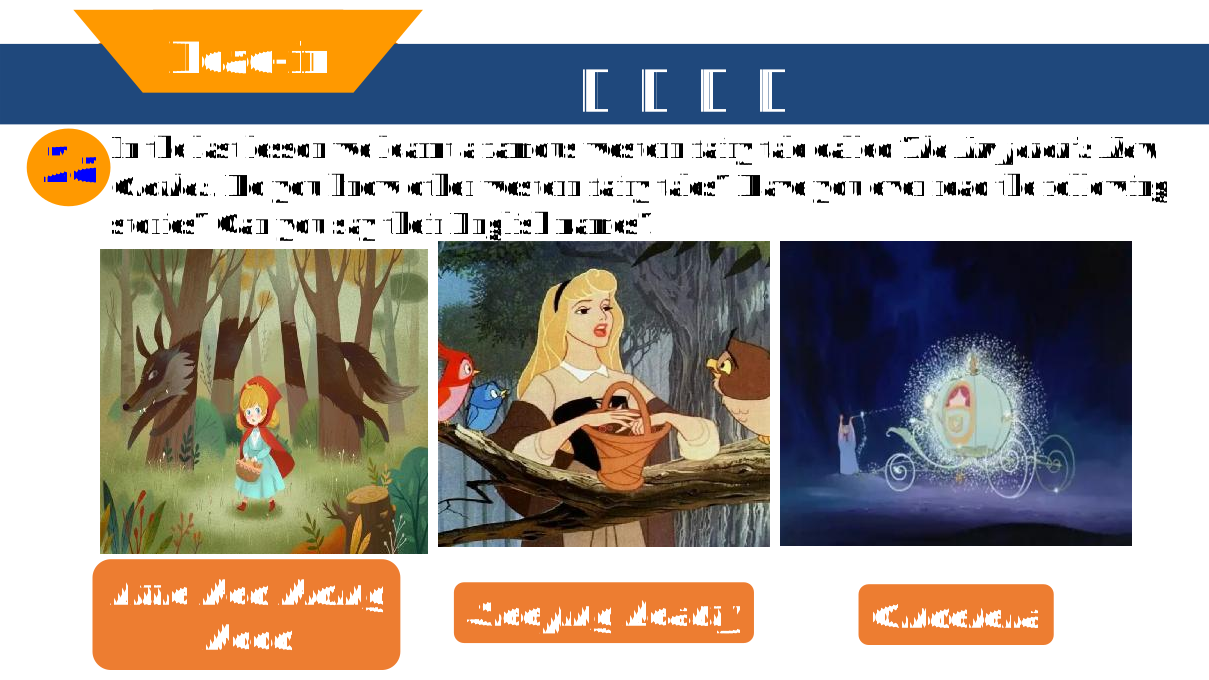
In the last lesson we learnt a famous western fairy tale called The Emperor’s New Clothes. Do you know other western fairy tales? Have you ever read the following stories? Can you say their English names?
Sleeping Beauty
Cinderella
Little Red Riding Hood
情 境 导 入
Lead-in
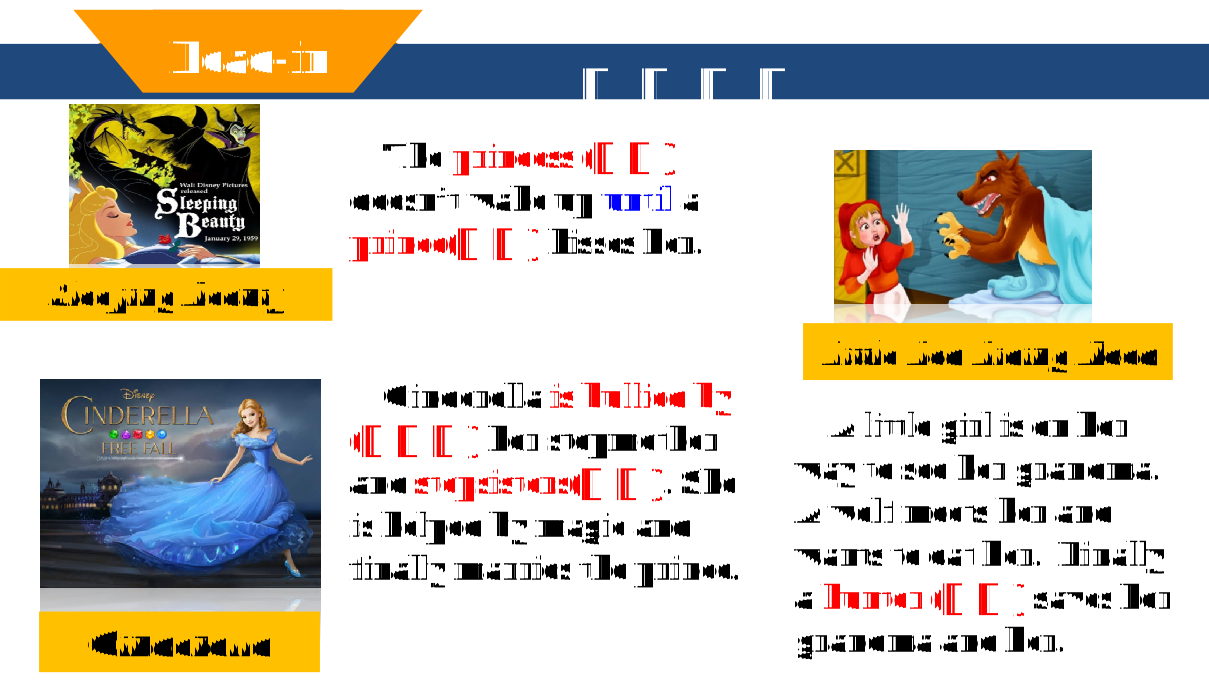
Little Red Riding Hood
A little girl is on her way to see her grandma. A wolf meets her and wants to eat her. Finally a hunter (猎人) saves her grandma and her.
Sleeping Beauty
The princess (公主) doesn’t wake up until a prince(王子) kisses her.
Cinderella
Cinderella is bullied by (被欺负) her stepmother and stepsisters(继姐). She is helped by magic and finally marries the prince.
情 境 导 入
Lead-in
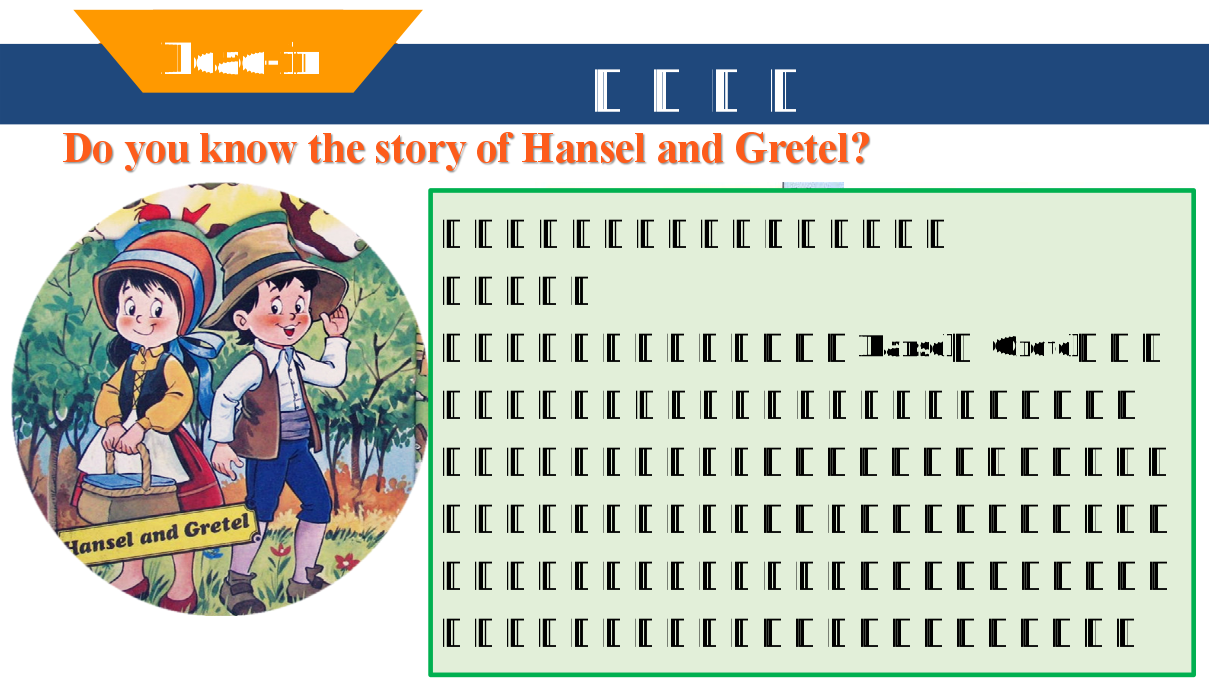
Do you know the story of Hansel and Gretel?
又名:《糖果屋历险记》《糖果屋》
故事概况:
故事讲述的是一对可怜的兄妹Hansel和 Gretel遭到了继母的抛弃,流落荒林,最后来到了一座糖果屋,饥饿难忍的兄妹俩迫不及待的吃了起来。但是糖果屋的主人是一个吃人的女巫,她把兄妹俩抓了起来,想要把哥哥养得胖胖的,然后吃了哥哥。但兄妹俩凭借着自己的智慧战胜了女巫,并且找到了回家的路。
新课探究
Before reading
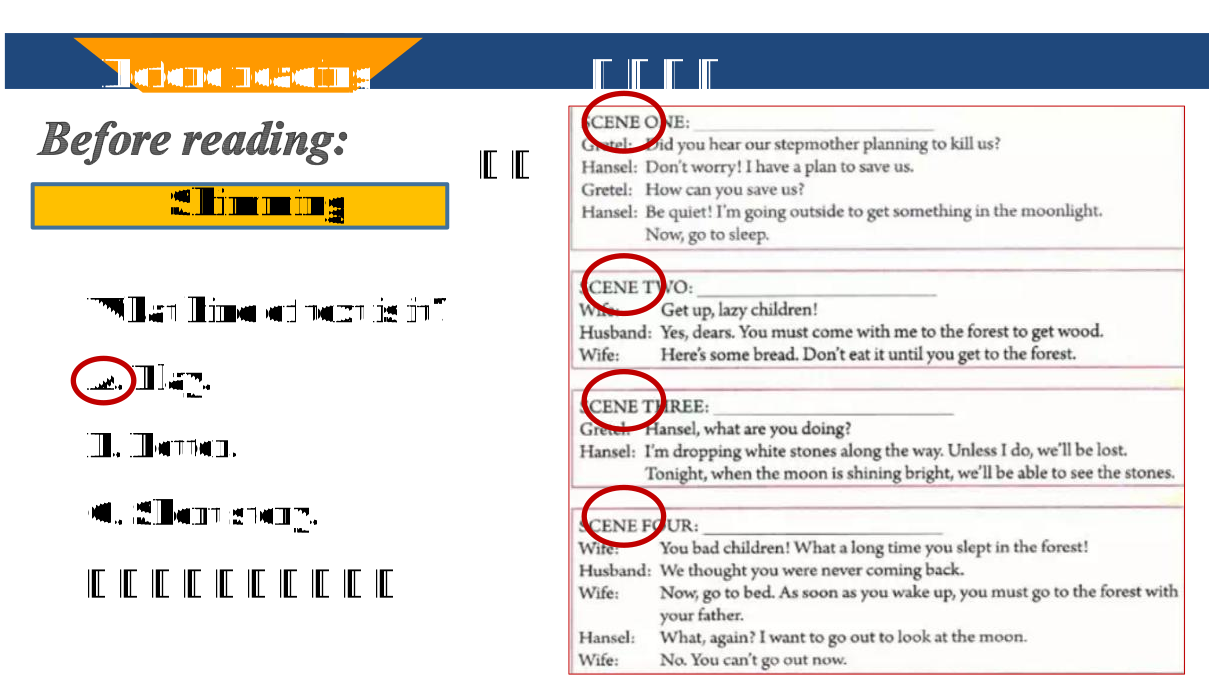
Before reading:
What kind of text is it?
A. Play.
B. Letter.
C. Short story.
场景
场景是戏剧文体的标志
Skimming
新 课 探 究
Before reading
新课探究
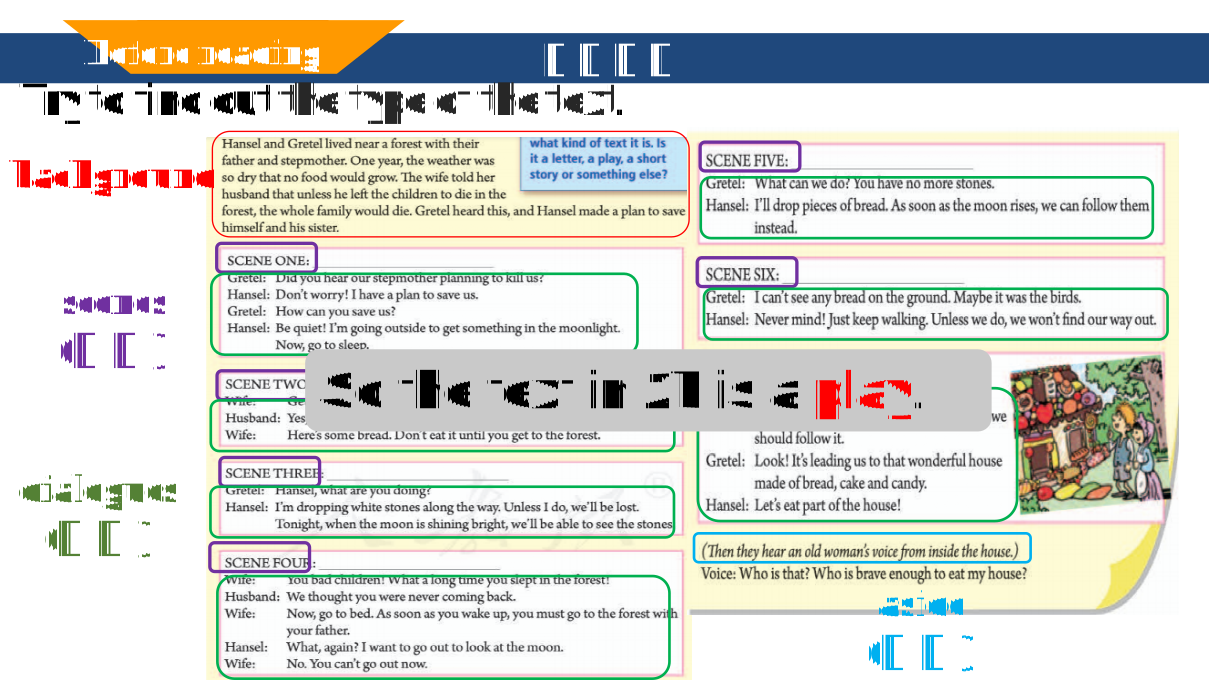
Try to find out the type of the text.
background
scenes
(场景)
dialogues
(对白)
aside
(旁白)
So the text in 2b is a play.
While reading
新课探究
Read the whole play and answer the questions.
1. How many scenes are there in the story?
There are seven scenes.
Part 1
Part 2
Part 3
Scenes 1-3
Scenes 4-6
Scene7
2. We can divide the story
into three parts.
Part 1: beginning
开始
Part 2: development
发展
Part 3: climax
高潮
阅读策略:根据时间线索,把故事分为三部分.
Fast reading
While reading
新课探究
Match each description with the correct scene.
G. The children learn that
something bad is going to happen.
B. The children
wake up.
D. Gretel learns
about Hansel’s plan.
E. The children surprise the parents.
F. Hansel has to
change his plan.
C. The children cannot find
the pieces of bread.
A. The children get lost.
While reading
新课探究
A. The children get lost.
B. The children wake up.
C. The children cannot find the pieces of bread.
D. Gretel learns about Hansel’s plan.
E. The children surprise the parents.
F. Hansel has to change his plan.
G. The children learn that something bad is going to happen.
Scene 1
Scene 2
Scene 3
Scene 4
Scene 5
Scene 6
Scene 7
Match each description with the correct scene.
2c
Careful reading
While reading
新课探究
Read Paragraph 1 and fill in the blanks.
Questions. Answers.
1. Where did Hansel and Gretel live? They lived ________________.
2. How was the weather one year? It was ________________.
3. What’s the result of the weather? ______________________.
4. What did the stepmother tell the father? She told the father unless he ___________________________, the whole family would die.
5. What do you think of the stepmother? She is ____________________________.
near a forest
so dry
No food would grow
left the children to die in the forest
bad/unkind/stonehearted (铁石心肠的)
While reading
新课探究
Read Scene 1 and Scene 3 and choose the correct answers.
( ) 1. What does Hansel get in the moonlight? ___________.
A. Leaves B. Stones C. Sand D. Tree branches(树枝)
( ) 2. What does the stepmother give to the children? ___________.
Some bread and cheese B. Some white stones
C. Only some bread D. Two eggs and some bread
( ) 3. What do you think of Hansel? He is ___________.
clever B. stupid
C. stonehearted D. happy
B
C
A
While reading
新课探究
Read Scene 4 and Scene 5 carefully and judge whether the following sentences are true or false.
1. Gretel and Hansel fail to go back home for the first time. ( )
2. Their parents are surprised and happy to see them come
back. ( )
3. Their parents decide to leave them in the forest again. ( )
4. Hansel wants to go out to look at the moon but his father
doesn’t agree. ( )
5. This time, Gretel suggests that they can drop pieces of bread
and follow them to go back home. ( )
F
F
T
F
F
While reading
新课探究
Read Scene 6 and Scene 7, and then answer the questions.
1. Are they successful the second time?
2. What does Hansel suggest to do then?
3. Where does the bird lead Gretel and Hansel?
4. What do Gretel and Hansel want to do?
No, they aren’t.
He suggests that they should just keep walking.
To a wonderful house made of bread, cake and candy.
They want to eat part of the house.
13
While reading
新课探究
Read the play again and answer the questions.
1. Why does the wife tell her husband to leave the children in
the forest?
2. What does Hansel go out to get?
3. Why does he do this in the moonlight?
Because the weather was so dry that no food would grow. Unless they left
the children to die in the forest, the whole family would die.
He goes out to get some white stones.
Because when the moon is shining bright, they will be able to see the stones.
2d
14
While reading
新课探究
4. How do Hansel and Gretel find their way home?
5. Why do Hansel and Gretel get lost the second time?
Because the birds eat the bread they drop on the ground.
They can follow the white stones home.
Pair work
新课探究
Can you imagine what will happen then?
Work in groups and try to make up a dialog among the old woman, Hansel and Gretel. You need to act your dialog next time.
Narration: (Then they hear an old woman’s voice from inside the house.)
Old woman: Who is that? Who is brave enough
to eat my house?
Hansel: …
Gretel: …
…
Scene 8
Get up!
Language points
新课探究
1. The wife told her husband that unless he left the children to die in the forest, the whole family would die. (教材P30 2b)
【易混辨析】 whole 与 all
whole 位于冠词、物主代词等限定词之后,即“限定词 + whole + 名词”。 the whole family
all 位于冠词、物主代词等限定词之前,即“all + 限定词 + 名词”。 all the family
注意:whole 一般不用来修饰不可数名词或物质名词
whole adj. 全部的;整体的
Point
Language points
新课探究
2. Tonight, when the moon is shining bright, we’ll be able to see the stones. (教材P30 2b)
① bright 此处作副词,意为“光亮地;明亮地”常与动词 burn,shine 等连用。
The stars were shining bright.
② bright 还可作形容词,意为“明亮的;光线充足的”,其比较级为brighter, 最高级为brightest。
The room is comfortable and bright.
bright adv. 光亮地;明亮地 adj. 明亮的;光线充足的
Point
Language points
新课探究
3. What a long time you slept in the forest! (教材P30 2b)
本句是what引导的感叹句。这种感叹句的中心词是名词或名词短语。 其结构为:
what 引导的感叹句
Point
What an easy question (it is)!
What nice music!
【拓展延伸】how也可引导感叹句, 这种感叹句的中心词是形容词或副词。 其结构是: How+形容词/副词(+主语+谓语)!
How hard the workers are working!
【特别提醒】what引导的感叹句有时可与how引导感叹句进行相互转化。
What an interesting story it is! = How interesting the story is!
what感叹句
What+a(n) (形容词)+可数名词单数(+主语+谓语)!
What+ (形容词)+可数名词复数或不可数名词(+主语+谓语)!
Language points
新课探究
4. It’s leading us to that wonderful house made of bread, cake and candy. (教材P31 2b)
lead在此作动词,意为“带路;领路”。此外,lead还可表示“通向;导致;过(某种生活)”等。 lead的过去式和过去分词均为led。
lead v. 带路;领路
Point
Language points
课堂小结
5. Then they hear an old woman’s voice from inside the house.
(教材P31 2b)
【易混辨析】 voice, sound 与 noise
voice 指人的声音或说话、唱歌发出的声音。 She said in a low voice.
sound 泛指自然界的各种声音。 I heard a strange sound.
noise 多指不悦耳的“噪声,喧闹声”。 What’s up? There’s such a loud noise in the classroom.
voice n. 声音
Point
Exercise
新课探究
Ⅰ. 根据句意,从方框中选择恰当的单词填空,注意形式变化。每词限用一次。
1. You could tell from her _______ that she wasn’t happy.
2. Love makes some people _______ and some people crazy.
3. Although the sun was _______ it wasn’t very warm.
4. It’s a _______ sunny day. Why don’t we go out to play?
5. It’s very sad when husbands and _______ quarrel (吵架) with each other.
shine voice brave wife bright
voice
brave
shining
bright
wives
Exercise
新课探究
Ⅱ. 根据汉语意思及括号内所给英文提示语,将下列句子翻译成英语。
1. 因为我的工作,我不得不搬家。(because of)
2. 导游把我们带到了博物馆的另一个房间。(lead)
3. 那年他们在北京度过了整个夏天。 (whole)
4. 我们制订了一个计划,为贫困儿童筹款。(make a plan)
I had to move because of my job.
The guide led us to another room in the museum.
They spent the whole summer in Beijing that year.
We made a plan to raise money for the poor children.
Summary
课堂小结
In the forest
dry
followed the stones
The birds
THANK YOU
$
资源预览图
1
2
3
4
5
6

相关资源
由于学科网是一个信息分享及获取的平台,不确保部分用户上传资料的 来源及知识产权归属。如您发现相关资料侵犯您的合法权益,请联系学科网,我们核实后将及时进行处理。