Unit 7 Section A Pronunciation 1-2 教案2025-2026学年人教版(2024)八年级英语上册
2025-09-19
|
3页
|
292人阅读
|
8人下载
普通
资源信息
| 学段 | 初中 |
|---|---|
| 学科 | 英语 |
| 教材版本 | 初中英语人教版八年级上册 |
| 年级 | 八年级 |
| 章节 | Pronunciation |
| 类型 | 教案 |
| 知识点 | - |
| 使用场景 | 同步教学-新授课 |
| 学年 | 2025-2026 |
| 地区(省份) | 全国 |
| 地区(市) | - |
| 地区(区县) | - |
| 文件格式 | DOCX |
| 文件大小 | 34 KB |
| 发布时间 | 2025-09-19 |
| 更新时间 | 2025-09-19 |
| 作者 | 匿名 |
| 品牌系列 | - |
| 审核时间 | 2025-09-19 |
| 下载链接 | https://m.zxxk.com/soft/54007122.html |
| 价格 | 0.50储值(1储值=1元) |
| 来源 | 学科网 |
摘要:
该教案聚焦人教版英语八年级上册Unit 7 Section A的发音教学,围绕/n/、/ŋ/、/tʃ/等八个核心辅音音素及其拼写规律展开,通过“Sound Bingo”游戏导入,自然衔接听辨与模仿练习,再以情感语调训练为桥梁,实现从语音知识到语言表达能力的迁移,构建清晰的学习支架。
本教案亮点突出,融合语言能力、思维品质与学习能力三大核心素养。例如,在Activity 2中引导学生通过不同语调表达“excited”“worried”等情绪,不仅提升语音准确性,更发展其对语境和情感的理解力,体现思维品质的进阶;设计“Emotion Express”游戏和原创对话创作环节,激发学生主动运用目标音素进行真实交际,强化语言能力与学习策略意识。教师可直接使用配套PPT、音频材料及情绪卡片开展高效课堂,学生则在趣味实践中掌握发音技巧,增强自信与表达欲,真正实现“学中用,用中学”。
内容正文:
人教版英语(2024)八年级上册电子教案
学科
English
年级
8
上课时间
总 节 次
课题
Unit 7 When Tomorrow Comes
Section A Pronunciation (1-2)
学情教材分析
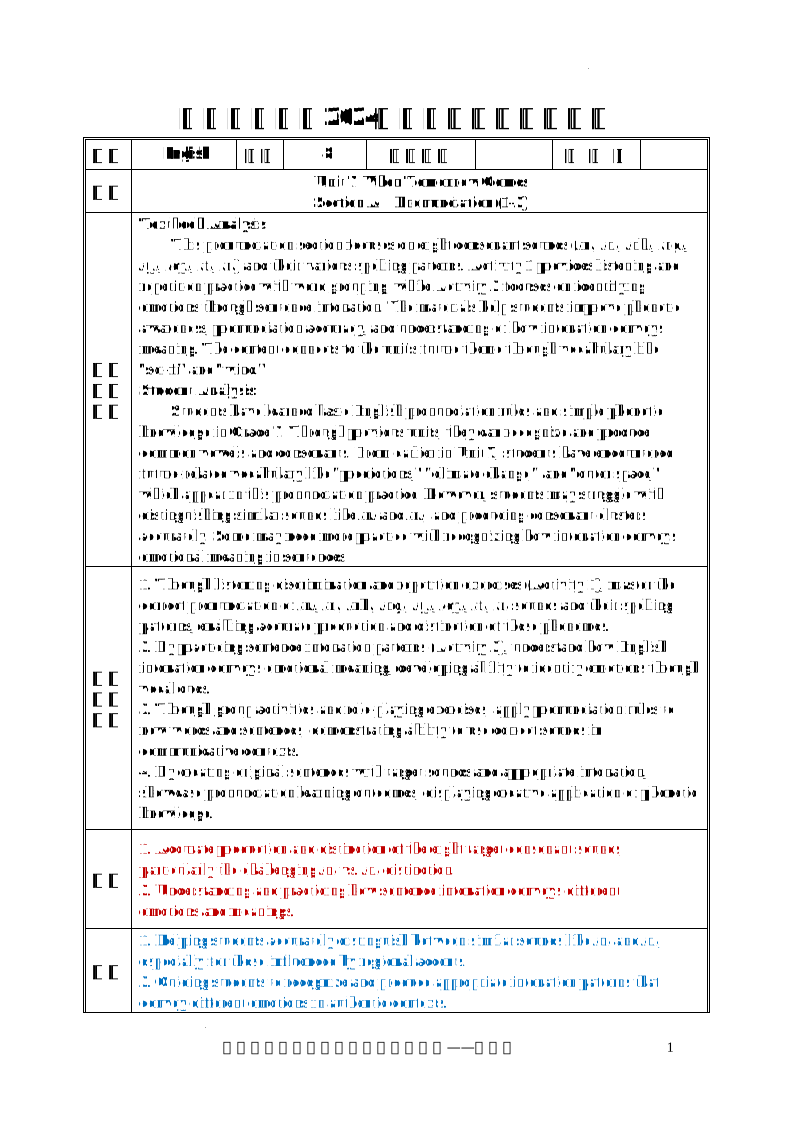
Textbook Analysis:
This pronunciation section focuses on eight consonant sounds (/n/, /ŋ/, /ŋk/, /ŋɡ/, /tʃ/, /dʒ/, /f/, /r/) and their various spelling patterns. Activity 1 provides listening and repetition practice with word grouping, while Activity 2 focuses on identifying emotions through sentence intonation. The materials help students improve phonetic awareness, pronunciation accuracy, and understanding of how intonation conveys meaning. The content connects to the unit's future theme through vocabulary like "sci-fi" and "wind."
Student Analysis:
Students have learned basic English pronunciation rules and simple phonetic knowledge in Grade 7. Through previous units, they can recognize and produce common vowels and consonants. From earlier in Unit 7, students have encountered future-related vocabulary like "predictions," "climate change," and "outer space," which appear in this pronunciation practice. However, students may struggle with distinguishing similar sounds like /n/ and /ŋ/, and producing consonant clusters accurately. Some may need more practice with recognizing how intonation conveys emotional meaning in sentences.
核心素养目标
1. Through listening discrimination and repetition exercises (Activity 1), master the correct pronunciation of /n/, /ŋ/, /ŋk/, /ŋɡ/, /tʃ/, /dʒ/, /f/, /r/ sounds and their spelling patterns, enabling accurate production and distinction of these phonemes.
2. By practicing sentence intonation patterns (Activity 2), understand how English intonation conveys emotional meaning, developing ability to identify emotions through vocal cues.
3. Through group activities and role-playing exercises, apply pronunciation rules to new words and sentences, demonstrating ability to use correct sounds in communicative contexts.
4. By creating original sentences with target sounds and appropriate intonation, showcase pronunciation learning outcomes, displaying creative application of phonetic knowledge.
重点
1. Accurate production and distinction of the eight target consonant sounds, particularly the challenging /n/ vs. /ŋ/ distinction.
2. Understanding and practicing how sentence intonation conveys different emotions and meanings.
难点
1. Helping students accurately distinguish between similar sounds like /n/ and /ŋ/, especially for those influenced by regional accents.
2. Guiding students to recognize and produce appropriate intonation patterns that convey different emotions in authentic contexts.
板
书
设
计
Sound
Spelling
Examples
/n/
n, kn
news, mind, know
/ŋ/
ng
song, hang, dying
/ŋk/
nk
ink, bank, monkey
/ŋɡ/
ng
hunger, angry, English
/tʃ/
ch, tch
cheap, much, watch
/dʒ/
j, ge, g
jacket, change, magic
/f/
f, ph
face, photo, elephant
/r/
r, wr
race, orange, write
Emotion Intonation Patterns:
Excited: Rising-falling pitch
Scared: High, tense pitch
Worried: Uneven, wavering pitch
Bored: Flat, low pitch
Tired: Slow, falling pitch
Practice Sentence:
What an exciting sci-fi film!
(Try saying with different emotions)
教学准备
1. Teaching PPT with sound demonstrations
2. Audio materials for listening activities
3. Phonetic symbol cards
4. Emotion picture cards
5. Worksheets for practice exercises
教
学
过
程
教学内容
教师活动
学生活动
Ⅰ. Warm-Up
Sound recognition game and emotion expression introduction
【 5 min】
1. Begin with a "Sound Bingo" game using words from the unit that contain target sounds.
2. Demonstrate how the same sentence can express different emotions through intonation changes.
3. Introduce today's learning objectives: practicing eight consonant sounds and emotional intonation.
1. Participate in Sound Bingo by identifying words with specific sounds.
2. Listen to how intonation changes meaning in sample sentences.
3. Understand the focus on consonant sounds and emotional expression.
Ⅱ. Presentation
Sound presentation and discrimination for Activity 1
【 12 min】
1. Present each target sound with mouth position demonstrations and spelling patterns.
2. Play the audio for Activity 1 and model correct pronunciation of each word group.
3. Guide students to add one more word to each sound category as instructed.
1. Observe mouth positions and practice producing each target sound.
2. Listen and repeat after the audio, focusing on accurate pronunciation.
3. Brainstorm and add one additional word to each sound category.
Ⅲ. Practice
Intonation practice with emotions for Activity 2
【 15 min】
1. Explain how intonation conveys different emotions, demonstrating with sample sentences.
2. Play the audio for Activity 2 and guide students to match sentences with emotions.
3. Organize pair practice where students say sentences with different emotional intonations.
1. Listen to demonstrations of emotional intonation patterns and practice imitating them.
2. Complete Activity 2 by matching sentences with the correct emotions.
3. Practice saying sentences with different emotional intonations in pairs.
Ⅳ. Promotion
Creative application of sounds and intonation
【 10 min】
1. Organize a "Emotion Express" game where students say phrases with different feelings.
2. Have students create short dialogues using target sounds and emotional intonation.
3. Provide feedback on pronunciation and intonation accuracy during presentations.
1. Participate in the "Emotion Express" game by saying phrases with specified emotions.
2. Create and practice short dialogues that use target sounds and emotional intonation.
3. Present dialogues to the class, focusing on clear pronunciation and expressive intonation.
作业
布置
Must do:
1. Record yourself reading all words from Activity 1 with correct pronunciation.
2. Practice saying the sentences from Activity 2 with five different emotions.
Choose to do:
1. Create a short story using at least 10 words containing the target sounds.
2. Find a movie clip showing different emotions and analyze the intonation patterns.
预计时长:≤20分钟
教学
后记
教育之于心灵,犹雕刻之于大理石。——爱迪生 5
学科网(北京)股份有限公司
$
资源预览图
1
相关资源
由于学科网是一个信息分享及获取的平台,不确保部分用户上传资料的 来源及知识产权归属。如您发现相关资料侵犯您的合法权益,请联系学科网,我们核实后将及时进行处理。